
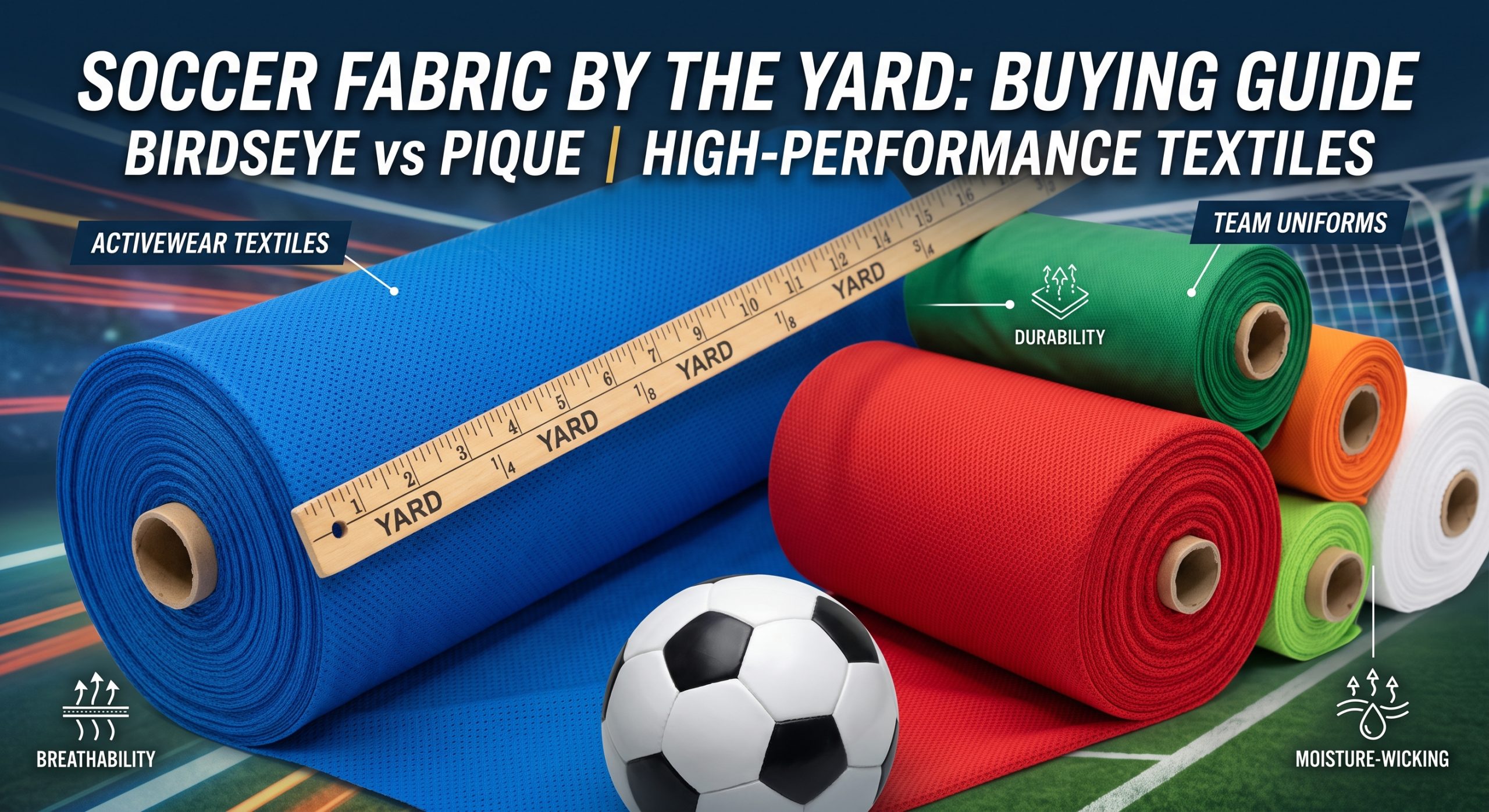
Selecting high-performance soccer fabric by the yard provides activewear brands and garment manufacturers with exact control over breathability, durability, and fabric weight. Poorly chosen activewear materials cause excessive player sweating, skin chafing, and premature jersey tearing during intense matches. One disappointing season with heavy, clingy uniforms damages your sportswear brand’s reputation among athletic clubs and buyers. Choosing between bird’s eye mesh and pique knit solves your sourcing challenges by matching fabric texture and airflow directly to player environment demands.
Why Choose Soccer Fabric By The Yard For Apparel?
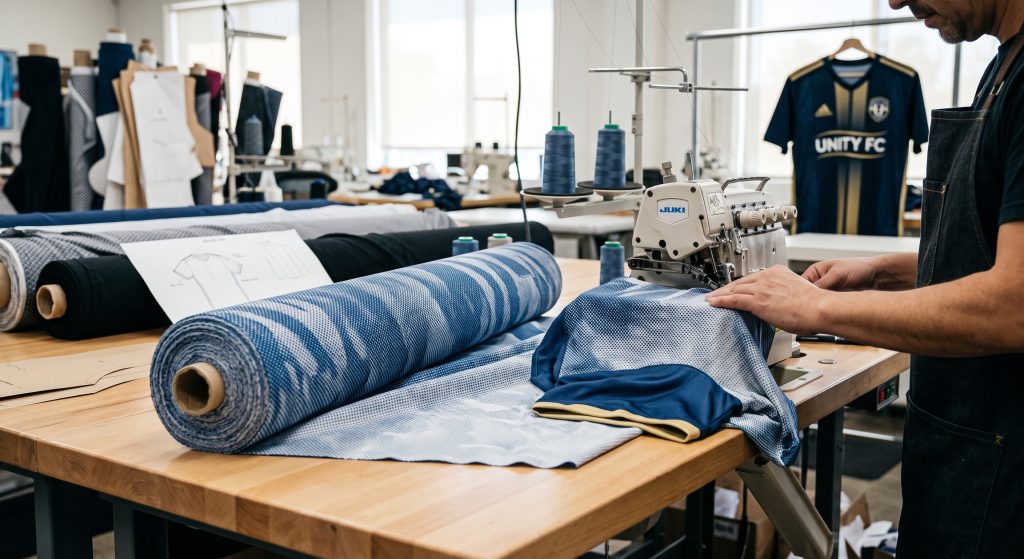
Selecting soccer fabric by the yard gives apparel manufacturers complete control over garment weight, breathability, and customization options for professional athletic wear. Standard off-the-shelf garments rarely meet the custom specifications required by professional sports clubs and athletic brands. Purchasing raw materials allows you to tailor seam construction and fit precisely.
What makes athletic textiles suitable for team kits?
Here’s the deal: high-performance activewear demands specific technical attributes that standard cotton or heavy knits cannot provide.
- High tensile strength to withstand pulling
- Rapid air circulation for temperature control
- Lightweight construction to reduce athlete fatigue
How does hand feel impact player comfort?
Think about it: skin friction during a ninety-minute match directly affects athlete focus and movement.
- Smooth interior face reduces chafing
- Soft yarn selection prevents skin irritation
Key Takeaway: Choosing high-grade activewear material ensures your finished jerseys offer top-tier athletic comfort and long-lasting wear.
| Attribute | Standard Knit | Performance Soccer Knit |
| Airflow | Low | High |
| Weight | Heavy | Lightweight |
| Durability | Moderate | High |
Comparing technical attributes highlights why specialized knits outperform basic textiles in athletic applications.
Is Birdseye Best For Soccer Fabric By The Yard?
Birdseye mesh is often considered the top choice for soccer fabric by the yard when maximum airflow and rapid heat dissipation are required. With its signature micro-hole pattern, birdseye fabric provides exceptional ventilation during intense physical exertion. You can easily spot this fabric on professional match kits across major leagues.
How do micro-holes boost field airflow?
What’s the real story? The tiny tuck stitches form small synthetic eyelets that pull heat away from body skin continuously.
- Continuous ventilation channels across the jersey
- Reduced garment cling during heavy perspiration
Why is birdseye mesh favored for sublimation?
Guess what? The flat surface between eyelet voids allows vivid ink penetration without blurring design details.
- Crisp graphic prints on team uniforms
- Excellent color retention after repeated washings
Key Takeaway: Birdseye mesh gives activewear brands superior ventilation and vibrant custom printing capabilities for high-performance kits.
| Feature | Birdseye Mesh Specification |
| Structure | Micro-hole eyelet tuck stitch |
| Primary Advantage | Superior air ventilation |
| Ideal Application | Match jerseys & activewear |
Selecting birdseye structures gives your players an edge in hot playing conditions.
Does Pique Work For Soccer Fabric By The Yard?
Pique knit works exceptionally well for soccer fabric by the yard when you need structured durability, classic texture, and formal team wear. Pique features a distinct geometric honeycomb or waffle pattern created by alternating tuck and float stitches. This double-knit construction gives training tops and staff polos a refined look with robust durability.
Why choose honeycomb texture for sportswear?
Here is the kicker: the raised waffle structure creates spatial separation between skin and fabric, improving body airflow.
- Architectural grid that holds garment shape
- Premium appearance suitable for sideline polos
Is pique durable enough for daily training?
Let’s face it: daily training gear suffers heavy wear, making structural integrity a top priority for gear buyers.
- High resistance to snagging and surface pill
- Maintains collar and cuff shape over time
Key Takeaway: Pique knit delivers structural stability and a polished look ideal for sideline apparel, staff uniforms, and training gear.
| Feature | Pique Knit Specification |
| Structure | Waffle honeycomb double-knit |
| Primary Advantage | Structural stability & polish |
| Ideal Application | Training tops & staff polos |
Integrating pique textiles ensures your garment lines maintain sharp structure throughout long seasons.
How Does Feel Differ In Soccer Fabric By The Yard?
Feel differs significantly because birdseye offers a smooth, slick surface whereas pique presents a textured, substantial hand feel. Selecting the right soccer fabric by the yard requires balancing tactile preference against environmental demands. Players prefer slippery smooth surfaces for active play, while coaching staff favor structured warmth.
How does texture impact skin friction?
You might be wondering: how much difference tactile texture makes during ninety minutes of dynamic running.
- Birdseye slides smoothly without skin irritation
- Pique provides structured body without sticking
Which fabric provides lighter drape?
Truth be told: light drape allows unrestricted player movement during fast sprints and direction changes.
- Birdseye drapes lightly over muscle groups
- Pique holds tailored form for sharp silhouettes
Key Takeaway: Evaluating tactile differences helps sourcing managers match fabric properties to specific player preferences and garment roles.
| Tactile Metric | Birdseye Mesh | Pique Knit |
| Surface Touch | Smooth & slick | Raised waffle texture |
| Garment Drape | Soft & flowing | Structured & firm |
| Skin Friction | Minimal | Moderate |
Matching hand feel to specific garment end-uses maximizes athlete comfort and garment utility.
Which Soccer Fabric By The Yard Breathes Better?
Birdseye knit breathes better than pique knit during high-intensity matches due to its open micro-eyelet perforation structure. Breathability measures how easily air moves through textile gaps to cool skin surfaces during physical activity. When choosing soccer fabric by the yard, airflow rate dictates thermal comfort in hot climates.
How do eyelets improve thermal regulation?
Here is the deal: direct perforation gaps allow trapped heat to escape instantly without waiting for moisture buildup.
- Rapid air circulation cools body temperature
- Prevents heat retention in warm match conditions
When is pique breathability preferred?
Think about it: cooler conditions or moderate training sessions require balanced thermal retention alongside airflow.
- Controlled air exchange keeps muscles warm
- Perfect balance for spring and autumn sessions
Key Takeaway: Choosing birdseye maximizes cooling in hot conditions, while pique offers balanced breathability for moderate weather gear.
| Performance Factor | Birdseye Mesh | Pique Knit |
| CFM Airflow Rating | High (180+ CFM) | Medium (110+ CFM) |
| Cooling Efficiency | Instant heat venting | Gradual air exchange |
Selecting the optimal airflow profile keeps athletes performing at peak physical levels.
How Is Moisture Managed In Soccer Fabric By The Yard?
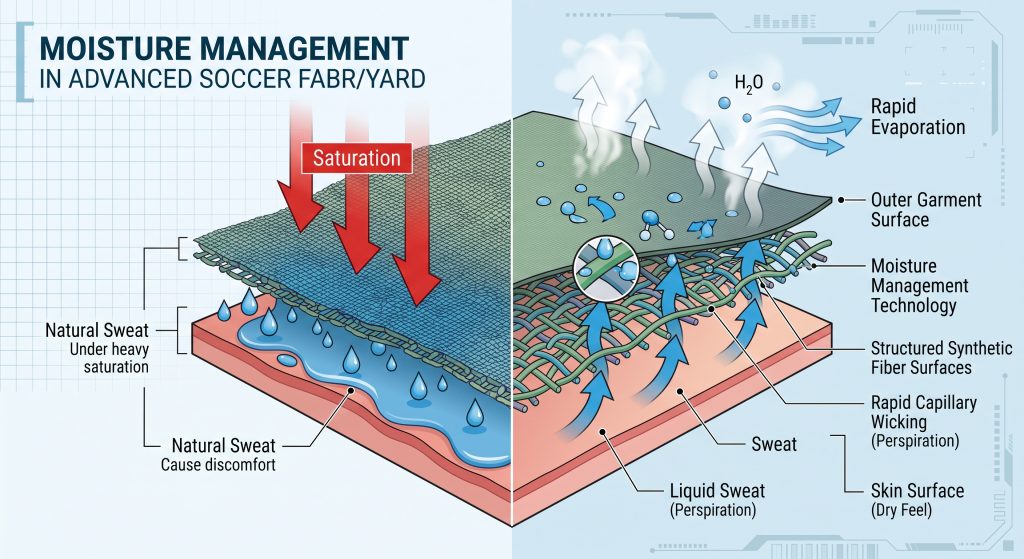
Moisture is managed through rapid capillary wicking across synthetic fiber surfaces in modern soccer fabric by the yard. Sweating is natural, but heavy fabric saturation ruins athletic performance and causes severe discomfort. Premium soccer fabric channels liquid sweat away from skin toward outer garment surfaces where evaporation occurs fast.
How does capillary action speed up drying?
What is the real story? Micro-fine synthetic fibers pull moisture along tiny surface channels toward the fabric exterior.
- Rapid liquid dispersal across outer surface
- Accelerates drying time during active play
Does fabric weave alter dry times?
Guess what? Birdseye mesh dries faster than pique knit because its thinner cross-section holds less liquid volume.
- Birdseye offers ultra-fast dry cycles
- Pique holds slightly more body moisture
Key Takeaway: Proper moisture management prevents garment heavying and keeps players dry across demanding match conditions.
| Moisture Metric | Birdseye Mesh | Pique Knit |
| Drying Speed | Under 15 minutes | 20-25 minutes |
| Moisture Spreading Rate | Fast capillary action | Steady dispersion |
High wicking efficiency protects players from wet garment weight during intense physical activity.
What Structural Differences Mark Soccer Fabric By The Yard?
Structural differences include birdseye’s single-knit micro-hole arrangement versus pique’s double-knit raised geometric pattern. Technical buyers must evaluate structural parameters when specifying soccer fabric by the yard for custom garment lines. Knitted architecture dictates weight per square meter, elasticity recovery, and tensile strength.
How does stitch pattern influence fabric weight?
Here is the kicker: double-knit structures require more yarn loops per inch, resulting in heavier fabric weight.
- Birdseye weights range from 130 to 160 GSM
- Pique weights range from 180 to 220 GSM
What affects stretch and shape recovery?
Let us face it: activewear must flex freely with athlete movement while returning to shape without sagging.
- Birdseye provides flexible horizontal stretch
- Pique delivers robust multidirectional recovery
Key Takeaway: Understanding technical knit structures allows apparel manufacturers to select exact fabric weights for specific sportswear products.
| Structural Metric | Birdseye Knit | Pique Knit |
| Knit Type | Single-knit tuck stitch | Double-knit float stitch |
| Average Weight | 130 – 160 GSM | 180 – 220 GSM |
| Elastic Recovery | High horizontal flexibility | Dimensional stability |
Analyzing structural parameters ensures your technical specifications match final product performance targets.
Can Pique And Birdseye Soccer Fabric By The Yard Last?
Pique and birdseye soccer fabric by the yard last through seasons of hard wear when constructed from premium synthetic polymers. Athletic garments endure harsh friction from sliding tackles, opponent pulling, and frequent high-temperature washing. Sourcing durable textiles minimizes returns and reinforces your brand’s reputation for quality.
How do these knits resist surface abrasion?
You might be wondering: which knit pattern withstands turf contact and shoulder pulls better over time.
- Pique resists surface snagging due to compact loops
- Birdseye maintains smooth faces despite friction
What maintains color fastness through washing?
Truth be told: professional kits undergo rigorous washing routines that test dye bond stability.
- High color fastness protects vibrant team shades
- Zero shrinkage when washed under standard care protocols
Key Takeaway: Both knits provide outstanding longevity when produced using high-grade polyester or nylon activewear filaments.
| Durability Metric | Birdseye Performance | Pique Performance |
| Abrasion Resistance | Good | Excellent |
| Pilling Resistance | Grade 4+ | Grade 4+ |
| Wash Fastness | Level 4-5 | Level 4-5 |
High durability standards prevent premature garment wear, giving sports brands long-term client trust.
How To Source Soccer Fabric By The Yard For Teams?
Sourcing soccer fabric by the yard for teams requires verifying GSM consistency, minimum order quantities, and custom dyeing capabilities. Efficient supply chain procurement demands clear communication between apparel brands and mill manufacturing partners. Setting exact technical parameters upfront prevents costly bulk production errors down the line.
What order parameters should you verify first?
Here is the deal: establishing realistic production quantities and color matching protocols protects your timeline.
- Minimum order quantity per custom color way
- Lab dip approval steps for pantone matching
Why is print compatibility crucial for team kits?
Think about it: modern team kits rely heavily on full sublimation printing for sponsor logos and numbers.
- Polyester content must exceed 85% for sublimation
- Smooth face finish prevents print blurring
Key Takeaway: Rigorous supplier vetting guarantees smooth bulk production and exact color matching for full team uniform runs.
| Sourcing Checklist Parameter | Requirement Standard |
| Material Composition | 100% Polyester or Poly-Spandex |
| Color Matching | Lab Dip Pantone Pass |
| Lead Time | 15 – 25 Days Bulk Production |
Following structured sourcing checklists minimizes production delays and ensures consistent kit manufacturing.
Where To Buy Wholesale Soccer Fabric By The Yard?
Buying wholesale soccer fabric by the yard directly from specialized manufacturing mills offers the best pricing and quality control. Sourcing directly from established athletic textile factories cuts middleman markups while giving you access to custom finishing treatments. Partnering with experienced mills secures long-term material consistency for your sportswear lines.
How to evaluate foreign textile manufacturers?
What is the real story? Direct factory audits and sample testing reveal true manufacturing capacity and quality control.
- Verify ISO quality management certifications
- Request sample yardage for pre-production testing
What shipping and quality checks protect your order?
Guess what? Implementing third-party pre-shipment inspections prevents receiving substandard yardage at your facility.
- Four-point inspection system for fabric defects
- Moisture-proof packaging for international transit
Key Takeaway: Partnering directly with experienced activewear fabric mills yields optimal pricing, high quality, and custom development flexibility.
| Procurement Channel | Direct Mill Sourcing | Local Wholesaler |
| Pricing Level | Direct Factory Rates | Higher Markup |
| Customization | Full Custom Dyeing & Weight | Stock Options Only |
| Quality Control | Direct Factory Inspection | Limited Batch Testing |
Direct factory partnerships provide maximum profitability and technical flexibility for growing activewear brands.
Summary & Action Plan
Selecting between bird’s eye mesh and pique knit determines whether your activewear line delivers breezy ventilation or structured, durable comfort. By understanding yarn structures, airflow metrics, and skin friction dynamics, you can source high-performance materials tailored specifically to your athletes’ demands. We supply premium functional knits directly from certified manufacturing facilities, ensuring your brand receives consistent quality and fast production turnarounds. Partner with us to upgrade your sports garment collection—contact us today to request custom swatch samples and factory-direct pricing for your next apparel run.
FAQ Section
Q1: Can I use birdseye mesh for winter soccer uniforms?
No, birdseye mesh is engineered specifically for hot weather performance due to its micro-hole ventilation. In cold weather, this high air permeability leads to rapid body heat loss.
Q2: What’s the best fabric weight for match day soccer jerseys?
A lightweight range between 130 GSM and 150 GSM offers the best balance of agility and durability for match day jerseys. Heavier textiles add unnecessary weight during intense play.
Q3: How do I know if pique knit is right for my sportswear line?
Pique knit is ideal if your garment line focuses on polo shirts, training tops, or staff gear requiring structured shape and high abrasion resistance. For pure athletic performance during high-temperature matches, open mesh remains superior.
Q4: Can I apply custom sublimation printing on both birdseye and pique fabrics?
Yes, both fabrics take sublimation printing exceptionally well provided they consist of 100% polyester synthetic fibers. Birdseye offers a slightly smoother surface for micro-graphic details, while pique gives prints a distinct textured look.
Q5: What’s the best way to prevent pilling on soccer jerseys?
Choosing high-filament synthetic yarns with compact knitting structures prevents surface fibers from entangling and forming pills. Proper washing care without abrasive Velcro contact also extends garment lifespan.