
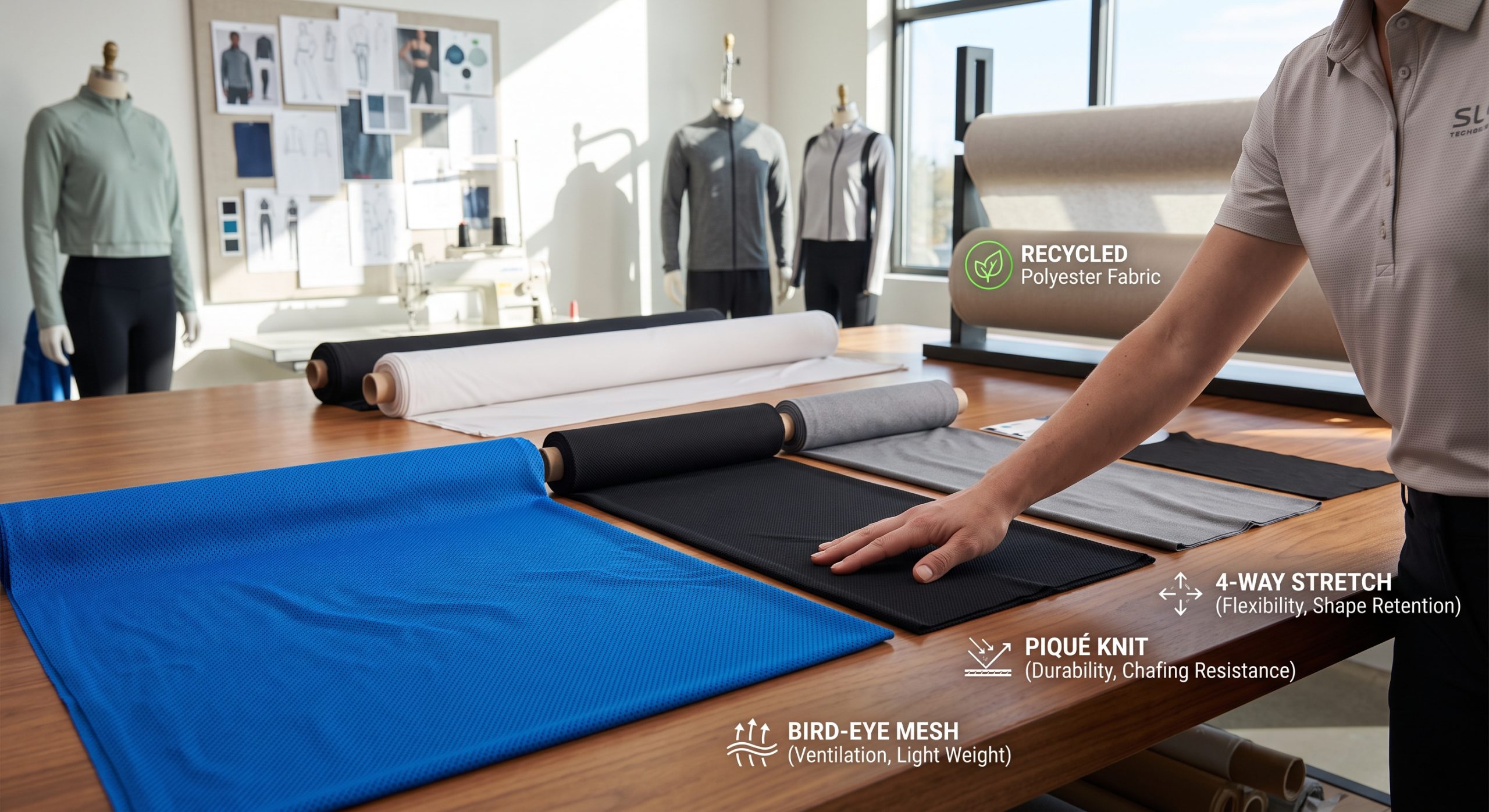
Sportswear fabrics are specialized synthetic or blended textiles engineered for moisture wicking, thermal regulation, and structural durability during physical exercise. Athletic apparel brand managers and production directors frequently face issues with frayed seams and heavy, damp garments during intensive workout programs. Cheap textiles sag under stress, trap body sweat, and break down quickly in commercial laundry equipment, wasting team budgets and disappointing active users. Procuring commercial-grade activewear fabrics provides long-lasting structural durability, rapid drying action, and dynamic stretch across all training conditions.
What Defines Premium activewear fabrics Performance?
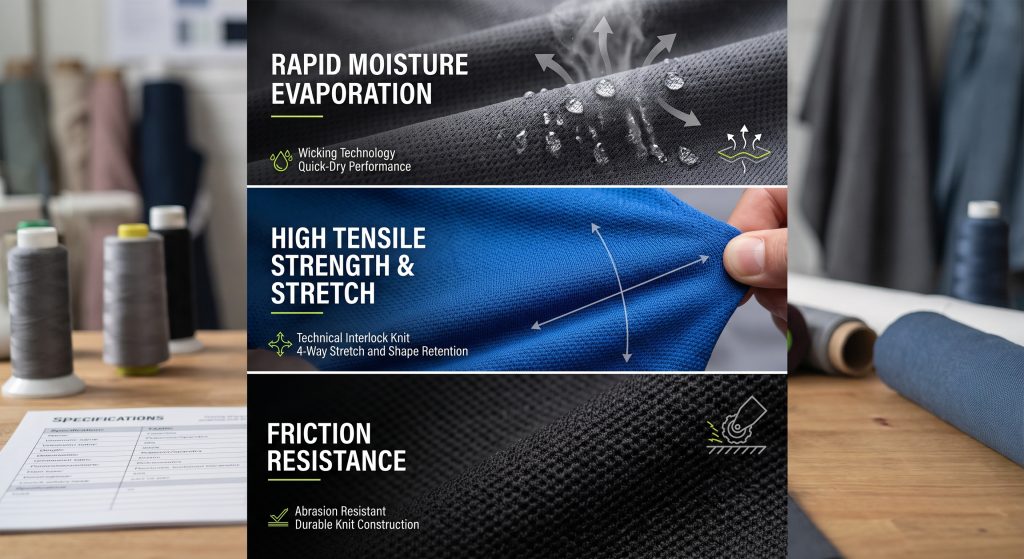
Premium activewear fabrics are defined by high tensile strength, rapid moisture evaporation, and friction-resistant knit patterns. Choosing quality activewear fabrics allows garment manufacturers to build resilient workout gear tailored for specific field positions. Here’s the deal: synthetic fibers knitted into specialized structures alter garment performance on the field dramatically.
Athletes demand technical textiles that resist tearing during aggressive contact drills. Selecting between distinct knit architectures dictates how long garments remain presentable across multi-year training programs.
What makes bird-eye mesh distinct?
Bird-eye mesh features microscopic perforations that optimize continuous air exchange during workouts. The open surface structure allows heat to escape quickly while keeping total material weight light.
- Open surface pores accelerate liquid evaporation.
- Soft interior texture prevents chafing against bare skin.
- Lightweight yarn structure reduces athlete muscle fatigue.
How does pique weave handle wear?
Pique knit utilizes a raised geometric structure that increases material density against physical contact. Think about it: high-impact fitness training requires textiles that withstand constant rubbing.
- Raised surface ridges resist snagging on fitness equipment.
- Dense structural weave maintains uniform appearance over time.
- Strong yarn bonds withstand frequent industrial laundering cycles.
Key Takeaway: Choosing bird-eye mesh provides maximum cooling during high-heat workouts, while pique knit offers robust wear resistance for heavy training gear.
| Structural Feature | Bird-Eye Mesh | Pique Knit |
| Weave Pattern | Circular Micro-Pores | Raised Geometric Ridges |
| Air Permeability | High Airflow | Moderate Airflow |
| Primary Strength | Sweat Evaporation | Surface Friction Defense |
This structural comparison shows how distinct knit selections directly influence garment ventilation and long-term durability.
The data confirms that open perforation patterns deliver superior cooling, whereas raised weaves protect high-wear zones.
How Do Synthetic activewear fabrics Manage Sweat?
Synthetic activewear fabrics manage sweat through hydrophobic capillary channels that pull liquid away from skin to the outer fabric surface. Specifying high-performance activewear fabrics stops wet clothing from clinging to body surfaces during high-intensity training shifts. What’s the real story? Poor moisture management leads to skin irritation and early muscle fatigue during long athletic matches.
Engineered polyester strands convert liquid perspiration into broad surface moisture that dries rapidly in surrounding air.
How does capillary action transport liquid?
Microscopic channels within engineered synthetic yarns draw moisture upward away from skin. Hydrophobic fibers refuse to store water internally, forcing sweat outward across a wide surface area.
- Micro-channels push moisture to outer garment surfaces.
- Non-absorbent polyester fibers keep overall weight light.
- Broad liquid dispersal shortens total drying duration.
Why does evaporation speed matter to athletes?
Fast evaporation prevents clothing from absorbing excessive sweat weight during competitive play. Look at it this way: lightweight gear helps players maintain quick movement reactions late into matches.
- Rapid drying prevents sudden post-workout chills.
- Dry textiles reduce uncomfortable friction chafing.
Key Takeaway: Technical capillary channels keep athletes dry, preventing garment cling and maintaining physical comfort during intense physical output.
| Moisture Parameter | Basic Synthetic Knit | Technical Wicking Fabric |
| Liquid Absorption | High Retention | Surface Transport Only |
| Evaporation Time | 30-40 Minutes | Under 15 Minutes |
| Garment Cling Risk | High | Minimal |
This performance matrix illustrates how capillary yarn construction accelerates sweat evaporation compared to standard textiles.
The metrics demonstrate that technical wicking channels significantly reduce drying time, enhancing athlete endurance during long sessions.
Why Choose Breathable activewear fabrics for Gyms?
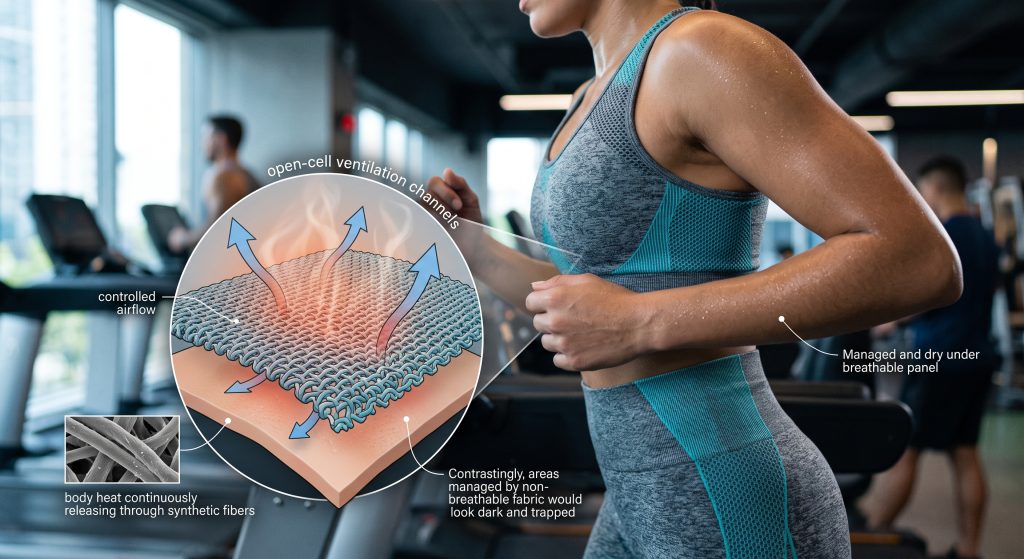
Breathable activewear fabrics are essential for indoor gyms because open knit structures prevent thermal buildup in enclosed spaces. Procuring breathable activewear fabrics allows fitness brands to design cool apparel suited for high-temperature workout rooms. Here is the secret: controlled airflow keeps skin temperatures stable during grueling cardio routines.
Airflow dynamics rely on open-cell ventilation channels that release body heat continuous through synthetic fibers.
Why is open-cell ventilation effective?
Open perforations in technical knits create direct channels for trapped body heat to vent outward. Continuous air movement across skin channels keeps athletes cool during repetitive lifting sets.
- Perforated knits encourage continuous ventilation.
- Open airflow reduces sweat accumulation under arms.
- Lightweight yarn setups prevent trapped heat pockets.
How do knit patterns control airflow?
Specific mesh arrangements direct incoming breeze straight across active muscle zones. You might be wondering: can open knits hold structural strength during heavy workouts? High-tenacity synthetic yarns maintain shape even with high open-surface ratios.
- Strategic mesh layouts target high-sweat body regions.
- Interlocked yarn loops preserve structural integrity under tension.
Key Takeaway: Deploying open-cell mesh textiles ensures optimal thermal release, allowing athletes to train longer without overheating.
| Ventilation Metric | Standard Cotton | Open-Cell Mesh |
| Air Permeability | Low | Maximum |
| Heat Dissipation | Traps Moisture | Continuous Release |
| Suitability | Casual Wear | Intense Gym Workouts |
This comparative breakdown highlights why engineered mesh far outperforms traditional natural fibers in indoor fitness environments.
The results establish open-cell mesh as the top choice for maintaining cool body temperatures inside warm indoor facilities.
Which Stretch activewear fabrics Deliver Best Flex?
Four-way elastane blends deliver the best flexibility by allowing unrestricted movement in every movement direction. Selecting resilient activewear fabrics ensures that body-conforming garments retain shape memory through repetitive stretching cycles. Believe it or not: restricted garment flex slows down stride length and reduces arm movement precision.
Integrating flexible elastane filaments into strong polyester knits prevents seam strain during maximum physical extension.
Why is four-way stretch needed for mobility?
Four-way flex textiles expand horizontally and vertically to accommodate dynamic joint movements. Athletes execute deep lunges and overhead reaches without feeling fabric tension against muscles.
- Multi-directional stretch allows full movement range.
- Reduced resistance at knees and shoulder joints.
- Lower tension on sewn garment seams.
How does elastane recover original shape?
High-grade elastane strands snap back to original dimensions immediately after physical pulling stops. Ready for the good part? Premium flex blends resist sagging at elbows and knees over long usage periods.
- Strong elastic memory prevents permanent bagging.
- Form-fitting knits hold snug sizing after laundering.
Key Takeaway: Blending four-way elastane with continuous polyester guarantees maximum physical freedom while preserving crisp garment shape.
| Stretch Category | Directional Flex | Shape Recovery | Primary Garment Use |
| 2-Way Stretch | Horizontal Only | Moderate | Basic Training Shirts |
| 4-Way Elastane | Multi-Directional | Exceptional | Leggings & Flex Tops |
| Mechanical Knit | Yield Flex Only | Good | Loose Outer Shorts |
This elasticity table reveals how multi-directional flex construction improves garment comfort and structural recovery under strain.
The data proves that four-way elastane blends offer unmatched movement capability and long-term shape retention for active wear.
How Do Eco-Friendly activewear fabrics Perform?
Eco-friendly activewear fabrics deliver equal moisture management and tear resistance compared to conventional virgin synthetics. Sourcing sustainable activewear fabrics enables apparel lines to meet environmental standards without sacrificing technical field performance. This is where it gets interesting: recycled polyester fibers match the exact tensile strength of newly petroleum-extracted yarns.
Advanced mechanical recycling transforms post-consumer plastic bottles into high-tenacity filament yarns suitable for athletic wear.
How is recycled polyester produced?
Post-consumer plastic containers are cleaned, melted, and spun into fine synthetic filaments. These eco-friendly yarns are then knitted into breathable athletic mesh and stretch textiles.
- Plastic waste conversion cuts raw material consumption.
- Purified polyester filaments ensure smooth surface texture.
- Recycled fibers accept vivid sublimation printing dyes.
Do green fabrics match synthetic strength?
Modern recycled polyesters undergo strict quality testing to match virgin material tear specs. Make no mistake: eco-conscious apparel withstands aggressive sliding and commercial washing just as well.
- Equivalent tensile strength prevents premature ripping.
- Identical wicking channel performance across fibers.
Key Takeaway: Utilizing recycled polyester provides top-tier technical performance while aligning your apparel line with sustainable sourcing goals.
| Material Type | Tensile Rating | Wicking Efficiency | Ecological Impact |
| Virgin Polyester | High | Excellent | High Carbon Output |
| Recycled Polyester | High | Identical | Low Carbon Footprint |
This comparison confirms that recycled synthetic textiles achieve equal technical metrics while significantly lowering environmental impact.
The metrics demonstrate that sustainable polyester matches virgin synthetics in functional strength, making eco-sourcing highly viable.
What Makes Durable activewear fabrics Resist Tears?
Durable activewear fabrics resist tears through high-tenacity continuous filament yarns interlocked in multi-ply knits. Specifying tough activewear fabrics prevents garment fraying when athletes contact turf surfaces or rough weight bars. Here’s the bottom line: weak materials tear easily at stress points, leading to costly uniform replacements.
Engineered synthetic structures absorb external friction while distributing mechanical tension evenly across fabric surfaces.
What prevents seam tearing during friction?
High yarn density combined with reinforced stitching prevents seam separation during heavy contact drills. Interlocked knits hold individual threads in place, stopping small snags from expanding into large rips.
- High density knits resist rough equipment chafing.
- Interlocked thread loops stop tear propagation.
- Strong seam construction withstands dynamic pulling.
How do continuous filament yarns protect gear?
Long continuous polyester filaments lack weak break points found in short natural fibers. That is not all: smooth filament surfaces resist pilling when rubbed against rough surfaces.
- Continuous filaments eliminate short fiber pilling.
- High tensile strength resists heavy pulling force.
Key Takeaway: High-tenacity continuous filament knits guard against abrasive wear, extending garment life across demanding seasons.
| Material Grade | Tensile Strength | Surface Pilling Risk | Expected Service Life |
| Short-Staple Knit | Moderate | High | 1 Season |
| Continuous Filament | High | Low | 2-3 Seasons |
| Reinforced Double Knit | Superior | Minimal | 3+ Seasons |
This durability chart details how yarn selection directly correlates with resistance to friction and long-term garment survival.
The data establishes continuous filament construction as a requirement for long-lasting sports apparel exposed to friction.
Why Do Weight Classes Matter in activewear fabrics?
Weight classes matter because material thickness dictates the balance between agile speed and protective durability. Sourcing proper weight activewear fabrics lets production teams match material GSM specs to specific athletic applications. Check this out: heavy fabrics protect sliding legs, while light knits keep runners cool.
Selecting appropriate grams per square meter ensures garments suit their intended climate and movement requirements.
What GSM range fits summer running shirts?
Lightweight textiles ranging between 130 GSM and 160 GSM provide maximum airflow for endurance running. The reduced material mass keeps athletes cool during hot outdoor events.
- Low mass fabric minimizes energy expenditure.
- Open weave structures maximize breeze penetration.
- Thin profile dries rapidly in warm air.
Why do heavy pants require dense knits?
Athletic pants require dense 220 GSM to 260 GSM knits to survive ground abrasion during sliding plays. Plain and simple: thin materials shred immediately when dragged across clay or turf.
- Thick yarn layers shield skin from turf burns.
- Dense knits provide structural support for pockets.
Key Takeaway: Tailoring GSM weights to specific garment functions delivers optimal speed for tops and maximum protection for bottoms.
| Weight Class | GSM Range | Best Garment Application | Primary Benefit |
| Featherweight | 130 – 150 GSM | Marathon Tops | Agility & Cooling |
| Midweight | 160 – 200 GSM | All-Purpose Gym Tees | Balanced Comfort |
| Heavyweight | 210 – 260 GSM | Athletic Pants & Jackets | Friction Resistance |
This weight distribution guide outlines how choosing the right GSM optimizes athletic movement and structural defense.
The analysis proves that matching material density to movement demands ensures long garment life without restricting movement.
How Do Cold Climates Impact activewear fabrics?
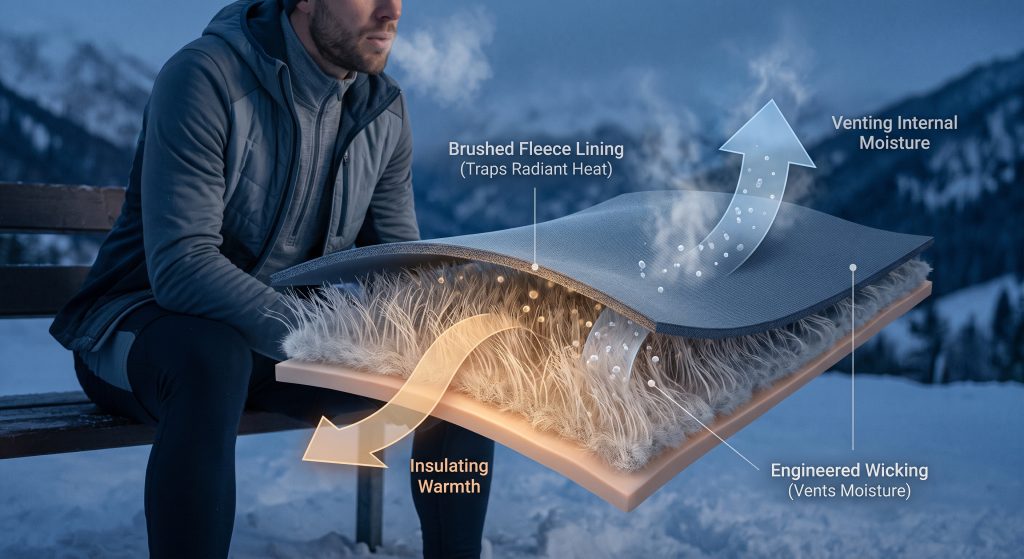
Cold climates require thermal activewear fabrics that trap insulating warmth while venting internal moisture outward. Choosing cold-weather activewear fabrics prevents body chilling during bench breaks in outdoor winter sports. Keep this in mind: damp inner wear in freezing air quickly leads to dangerous muscle stiffness.
Dual-layer knits utilize brushed fleece interiors to capture radiant body heat alongside breathable exterior surfaces.
How do textured ridges retain body warmth?
Brushed inner knits capture small pockets of warm air against the skin surface. This micro-climate layer insulates the body against cold ambient breezes without requiring bulky outerwear.
- Soft brushed interiors trap warm boundary air.
- Lightweight insulation avoids heavy garment bulk.
- Outer surface blocks mild wind penetration.
Can thin mesh cause rapid muscle chilling?
Uninsulated open mesh admits cold drafts, causing body temperatures to drop rapidly during rest periods. Now consider this: reserve unlined mesh for underarm flex zones in cold weather apparel.
- Unshielded mesh lets cold drafts hit warm skin.
- Sudden cooling leads to muscle stiffness.
Key Takeaway: Deploying brushed dual-layer knits keeps athletes warm during cold outdoor sessions while maintaining sweat ventilation.
| Climate Condition | Recommended Structure | Functional Benefit |
| Freezing Outdoor Air | Brushed Thermal Fleece | Retains Core Body Heat |
| Cold Wind Exposure | Wind-Resistant Shell | Blocks Chilly Air Drafts |
| Variable Winter Training | Moisture-Wicking Dual Knit | Prevents Sweat Cooling |
This weather adaptation chart highlights how specialized thermal knits balance heat retention with continuous moisture management.
The findings confirm that dual-layer thermal knits protect athletes from sudden chills without creating excessive bulk.
How Should You Wash Custom activewear fabrics Gear?
Custom activewear fabrics should be washed in cold water with liquid detergent and air-dried away from machine heat. Following correct care guidelines for activewear fabrics preserves moisture-wicking treatments and protects elastane fibers. Here is the truth: high dryer heat destroys synthetic elastic strands, causing garments to lose shape.
Proper laundering prevents surface pilling while keeping custom sublimated colors bright across multiple seasons.
Why do softeners ruin synthetic wicking channels?
Chemical fabric softeners leave a microscopic waxy film over synthetic fibers, clogging open air pores. This coating prevents water from moving along capillary channels, ruining wicking capabilities.
- Waxy residues clog microscopic airflow channels.
- Trapped moisture causes lingering fabric odors.
- Softeners break down surface moisture treatments.
What wash setting preserves dynamic stretch?
Cold water cycles protect elastane strands from thermal damage and prevent color bleeding on sublimated prints. What’s the catch? Washing in hot water causes elastic strands to break, leading to sagging seams.
- Cold wash cycles protect elastic fiber memory.
- Mild liquid detergents clean without residue buildup.
Key Takeaway: Washing team gear in cold water and air-drying doubles garment service life while maintaining peak wicking performance.
| Laundering Step | Correct Method | Harmful Action |
| Water Temperature | Cold Wash (30°C) | Hot Water Wash |
| Cleaning Product | Mild Liquid Detergent | Fabric Softener / Bleach |
| Drying Process | Air Dry on Rack | High Heat Machine Dryer |
This maintenance guide clarifies simple cleaning protocols that preserve technical features and vibrant colors over time.
Adhering to cold washing and air drying routines ensures long-term elasticity and functional wicking performance.
Which activewear fabrics Best Suit Apparel Brands?
Apparel brands achieve peak performance by combining bird-eye mesh torsos with elastane-blended sleeves for hybrid garment designs. Ordering specialized activewear fabrics directly from established manufacturers secures consistent dye matching across product lines. The best part? Strategic material placement delivers tailored ventilation and stretch exactly where athletes need it.
Procuring bulk textile rolls directly from mills lowers unit costs while establishing reliable multi-season inventory.
Why combine distinct knit panels in garments?
Hybrid garment construction places lightweight mesh across high-heat zones and durable stretch knits across high-stress sleeve panels. This approach balances breathability, flex, and abrasion defense in a single shirt.
- Breathable mesh torsos speed sweat evaporation.
- Flexible sleeves enable full arm mobility.
- Durable shoulder panels resist friction wear.
How does bulk ordering protect brand budgets?
Purchasing raw fabric rolls directly from mills reduces per-yard expenses and ensures identical dye lots across reorders. Here is what matters: uniform color matching builds strong brand trust among commercial clients.
- Bulk purchasing delivers significant per-yard savings.
- Consistent dye lots ensure exact color matching across runs.
Key Takeaway: Implementing hybrid panel designs and bulk fabric purchasing optimizes garment performance while protecting business margins.
| Garment Section | Recommended Textile | Tactical Advantage |
| Torso Main Body | Bird-Eye Mesh | Maximum Heat Release |
| Sleeves & Shoulders | 4-Way Stretch Pique | Friction Defense & Flex |
| Underarm Inserts | Flex Micro-Mesh | Focused Sweating Relief |
This hybrid design framework illustrates how combining specialized knits produces superior functional sportswear.
The strategic layout demonstrates that hybrid fabric allocation yields optimal comfort, durability, and visual consistency for brands.
Equipping successful sports apparel lines requires selecting technical textiles that balance tear durability, moisture control, and movement flex. Combining breathable mesh main bodies with reinforced stretch sleeves solves common athlete chafing and early garment wear effectively. Partnering directly with a dedicated manufacturing mill guarantees consistent dye matching, high tensile strength, and multi-season performance. Feel free to contact us today to request custom fabric swatches and discuss tailored textile solutions for your brand.
FAQ
Q1: Can I use lightweight mesh for athletic pants?
No, lightweight mesh lacks the structural density needed for high-impact floor sliding. Open perforations catch easily on surfaces, causing premature tearing during heavy contact.
Q2: What’s the best fabric weight for summer workout shirts?
A 130 to 160 GSM bird-eye mesh delivers the ideal balance of cooling and durability. This weight range maximizes airflow without becoming see-through when damp.
Q3: How do I know if pique fabric is right for my brand?
Choose pique fabric if your primary focus is surface durability and long-term shape retention. Pique knit excels in high-friction zones and structured outerwear.
Q4: Can I combine different synthetic fabrics in one garment?
Yes, hybrid garment construction represents the standard industry approach for premium athletic gear. Combining mesh torsos with elastane sleeves optimizes overall performance.
Q5: How do I prevent color fading on sublimated sports gear?
Wash team apparel in cold water with mild liquid detergent and air-dry away from direct heat. Avoiding hot dryers preserves synthetic fibers and keeps printed dyes vibrant.