
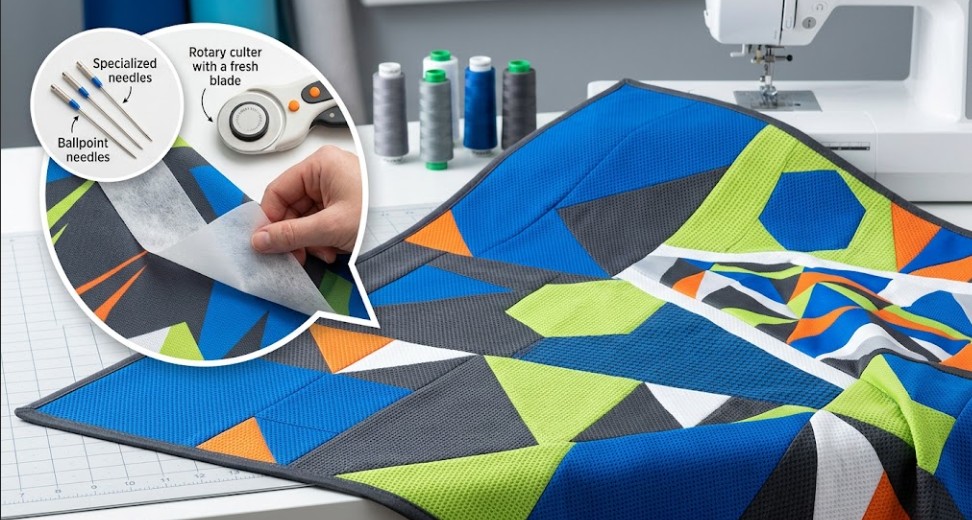
An athletic quilt buyer’s guide provides the exact specifications needed to handle stretchy, heat-sensitive technical fabrics successfully. You often face the incredibly frustrating problem of technical materials heavily warping or completely melting under standard hot irons, ruining hours of meticulous hard work. We offer a highly proven framework for perfectly stabilizing and effortlessly sewing these wildly dynamic textiles. Using proper sports fabric for quilting completely transforms terribly unstable projects into beautiful, highly durable athletic blankets.
1. What Defines Best Sports Fabric For Quilting?
The absolute best sports fabric for quilting requires a delicate, perfectly balanced combination of mechanical stretch limits, thermal resistance during pressing, and robust structural integrity. You desperately need high-performance materials that hold their physical shape effortlessly while interacting smoothly with traditional, rigid woven cotton elements across the entire blanket. Working consistently with specialized technical textiles means deeply understanding exactly how distinct synthetic chemical blends behave under severe high-speed thread tension. Proper meticulous selection of these advanced technical materials completely prevents ugly puckering and severe distortion across your entire large-scale project.
Are Synthetic Knits Hard To Quilt?
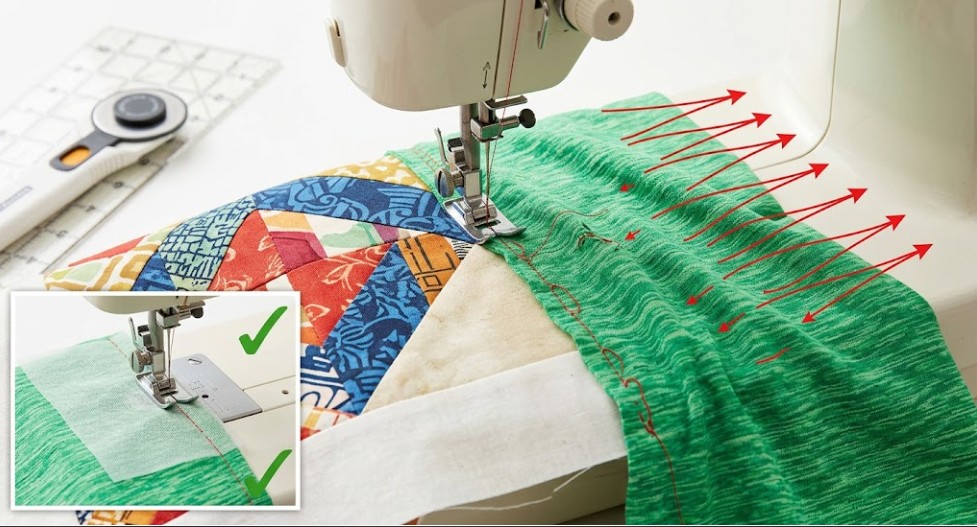
Here’s the deal: modern synthetic knits possess an active, aggressive elasticity that fiercely fights against standard, rigid sewing techniques every single time you operate your heavily calibrated sewing machine. You must implement strict mechanical control over these unpredictable textiles before attempting to piece them together alongside highly stable woven components.
- They stretch horizontally under heavy presser feet, causing immediate structural misalignment.
- They fiercely resist dull standard sewing needles, leading to severely skipped stitches.
- They absolutely require specialized invisible lightweight backing for permanent geometric stability.
If you foolishly ignore these specific behavioral traits, your carefully cut blocks will warp out of exact alignment incredibly rapidly, ruining your hard work entirely.
Managing Stretch Dynamics Correctly
You must intelligently manage elasticity by applying the correct mechanical force during assembly, strictly avoiding any aggressive pulling or pushing motions. What’s the catch? Pushing or dragging the material manually distorts the final block sizing permanently, leaving you with horribly uneven seams that refuse to lay flat.
Key Takeaway: Understanding inherent material stretch dictates your entire cutting and sewing strategy, saving you directly from disastrous structural failures.
| Material Property | Behavior During Sewing | Required Technical Adjustment |
| Mechanical Stretch | Expands aggressively under foot | Reduce presser pressure drastically |
| Synthetic Fibers | Resists dull metallic points | Use sharp ballpoint needles |
Matching specific machine adjustments directly to unique material properties stops panel distortion completely before it ruins your flat seams.
2. How Do Pique And Birdseye Sports Fabric For Quilting Differ?
Pique and birdseye sports fabric for quilting differ primarily in their internal structural knit patterns and resulting exterior surface textures. Pique features a dense waffle-like geometric grid that feels incredibly substantial, heavy, and structurally stable in your bare hands. Conversely, birdseye utilizes tiny diamond-shaped perforations that create a highly breathable, remarkably lighter physical profile for demanding athletic applications. Recognizing these physical physical variations allows you to dictate exactly how the blanket behaves, drapes, and feels over decades of use.
Structural Knit Variations Explained
You might be wondering exactly how these specific structural differences drastically affect your daily sewing process on a standard home machine. Pique holds its geometric shape remarkably better during intense manual handling, offering a much denser base for intricate custom topstitching.
- Pique heavily resists curling at the raw cut edges.
- Birdseye tends to shift rapidly without proper chemical stabilization.
- Pique provides a firm base for complex needlework.
Selecting the right internal knit structure completely dictates the overall complexity of your tedious preparation work and stabilization phases.
Choosing Based On Project Needs
Your highly specific project requirements totally determine which exact texture performs best over decades of heavy, sustained daily usage. Ready for the good part? Mixing both unique textures thoughtfully adds incredible visual depth and tactile interest to your custom athletic blankets.
Key Takeaway: Selecting deliberately between pique and birdseye structural knits heavily controls the precise physical stability and visual texture of your finished blanket.
| Fabric Structure Type | Exterior Surface Texture | Sewing Handling Stability |
| Pique Knit | Dense waffle grid | Extremely High |
| Birdseye Knit | Diamond perforations | Moderate to Low |
Pique clearly delivers superior handling stability compared directly to the remarkably lightweight nature of delicate, airy birdseye knits.
3. Why Is Airflow Required In Sports Fabric For Quilting?
Airflow directly dictates how well sports fabric for quilting regulates human temperature when utilized as a highly functional, daily-use blanket. High structural breathability successfully prevents the final assembled piece from trapping excessive body heat during normal resting periods. Incorporating specialized athletic materials with proper ventilation holes creates a consistently comfortable user experience for athletes. Materials lacking proper natural airflow rapidly turn a cozy blanket into an uncomfortable, sweaty plastic-feeling thermal trap.
Ventilation Hole Mechanics
This is where it gets interesting: the physical microscopic holes in breathable knits require special, deliberate care during the chemical stabilization assembly. You cannot utilize excessively heavy adhesives that permanently block these meticulously engineered tiny ventilation vents.
- Heavy liquid adhesives aggressively clog breathable pores.
- Dense synthetic batting traps heat internally forever.
- Open knits heavily require lightweight, highly breathable stabilizers.
Maintaining continuous maximum airflow absolutely requires selecting precisely matching internal components that refuse to block thermal transfer.
Balancing Warmth And Breathability
You desperately want a finished blanket that warms the user without causing aggressive, uncomfortable overnight sweating. What’s the real story? Pairing highly breathable synthetics with natural, lightweight cotton batting achieves perfect thermal harmony and ultimate physical comfort.
Key Takeaway: Preserving the natural airflow capabilities of athletic knits guarantees a remarkably comfortable, highly functional end product.
| Fabric Structure | Natural Airflow Rating | Recommended Batting Match |
| Birdseye Mesh | Maximum Transfer | Lightweight Natural Cotton |
| Solid Pique | Moderate Transfer | Medium Breathable Wool |
Aligning internal batting density directly with surface airflow flawlessly prevents the finished item from becoming excessively hot.
4. How To Test Hand-Feel In Sports Fabric For Quilting?
Testing hand-feel in sports fabric for quilting involves carefully evaluating the natural softness, physical drape, and actual weight of the textile against sensitive bare skin. You absolutely want to avoid abrasive, cheap synthetics that feel severely scratchy or overly stiff after multiple harsh washing cycles. Comparing different raw sports fabric for quilting requires deeply feeling the unprocessed material before applying any stiffening chemical stabilizers. A remarkably soft hand-feel translates directly to the ultimate luxurious comfort of the finished custom project.
Evaluating Surface Softness
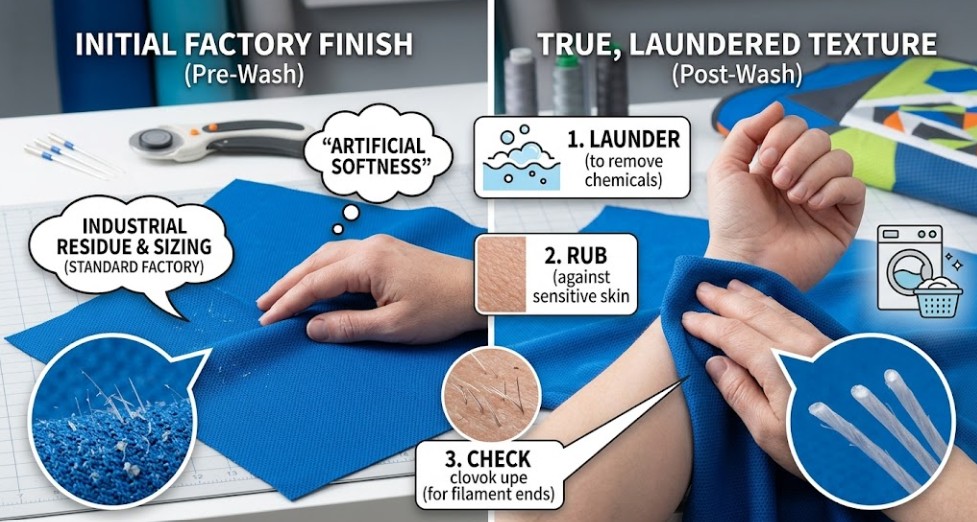
Here’s the deal: standard factory manufacturing processes leave aggressive chemical residues that artificially alter how a textile feels initially. You must aggressively wash your raw materials first to reveal their true, highly permanent physical texture.
- Wash raw materials to remove industrial sizing chemicals.
- Rub the clean surface directly against your sensitive inner arm.
- Check closely for rough, sharp synthetic filament ends.
True, lasting material softness remarkably only appears after completing the initial, incredibly thorough laundering process.
Impact Of Backing On Texture
Adding thick commercial stabilizers completely changes the natural drape and initial softness of your carefully selected textiles. You might be wondering exactly how to maintain that perfect initial comfort after applying stiff chemical backing.
Key Takeaway: Applying ultra-lightweight fusible interfacing meticulously preserves the natural, highly soft hand-feel of your premium athletic materials.
| Stabilizer Weight Type | Direct Impact on Hand-Feel | Resulting Stiffness Level |
| Heavy Commercial Fusible | Very stiff, board-like | Excessively High |
| Featherweight Fusible | Retains natural softness | Remarkably Low |
Using ultra-lightweight interfacing effectively maintains the luxurious physical comfort of the raw textile without adding severe stiffness.
5. Which Stabilizers Suit Sports Fabric For Quilting?
Featherweight fusible interfacing suits sports fabric for quilting perfectly by stopping mechanical stretch without adding severe, wildly unwanted bulk. Standard traditional methods fail miserably because raw knits warp drastically the exact moment a sharp metal needle pierces them. Utilizing proper technical textiles absolutely requires an invisible support structure ironed permanently onto the back of every single block. This unseen foundational layer firmly locks the loose synthetic fibers into a highly stable, tightly woven-like manageable state.
Do You Always Need Stabilizer?
Ready for the good part? You can treat fully stabilized synthetics exactly like standard, highly cooperative woven cotton blocks. Without this highly necessary backing, you face constant, incredibly frustrating battles with severely curling material edges.
- High-quality stabilizer completely stops horizontal stretching.
- It effectively prevents aggressive needle thread puckering.
- It keeps finished block dimensions strictly accurate.
Applying this specific backing remains a completely mandatory step for processing wildly unpredictable technical materials successfully.
Delicate Application Techniques
You must apply the chemical backing incredibly evenly to prevent localized, terribly ugly surface bubbling. What’s the catch? Pressing down too aggressively with your hot iron crushes the beautiful structural texture of pique and birdseye completely.
Key Takeaway: Featherweight fusible interfacing permanently fixes aggressive stretch issues, transforming volatile knits into compliant, incredibly easy-to-sew blocks.
| Application Step | Specific Physical Action | Direct Final Outcome |
| Heat Setting | Use strictly low heat | Completely prevents melting |
| Physical Pressure | Gentle hovering pressing | Maintains surface texture |
Gentle, hovering application techniques secure the chemical backing perfectly without violently destroying the unique surface geometry of the knit.
6. How To Stop Heat Damage On Sports Fabric For Quilting?
Stopping heat damage on sports fabric for quilting requires utilizing protective barriers and strictly managing your hot iron’s temperature settings. Synthetic plastic fibers melt, warp, or permanently glaze when exposed directly to the incredibly high heat required for standard cotton materials. Processing raw sports fabric for quilting demands absolute patience, heavily utilizing press cloths to strictly shield delicate technical filaments from scorching metal plates. Controlling thermal exposure completely preserves the physical integrity, vibrant color, and microscopic structure of your carefully selected materials.
Utilizing Protective Press Cloths
This is where it gets interesting: a simple piece of scrap cotton fabric entirely saves your expensive project from instant thermal destruction. You must strictly place this protective barrier directly between the hot iron and your highly sensitive technical material.
- Press cloths distribute extreme heat perfectly evenly.
- They flawlessly block direct contact with hot metal plates.
- They entirely prevent ugly, permanent synthetic surface glazing.
Never apply a hot iron directly to unprotected athletic synthetics under any dangerous circumstances whatsoever.
Managing Temperature Settings
You absolutely must firmly resist the heavy temptation to use the maximum cotton heat setting on your iron. What’s the real story? Lower temperatures require slightly more pressing time but absolutely guarantee zero melted fibers or ruined geometric blocks.
Key Takeaway: Strict temperature management and heavy protective barriers completely eliminate the severe risk of permanently melting your delicate synthetic materials.
| Iron Setting | Direct Surface Contact | Material Damage Risk |
| High (Cotton) | Direct Metal Contact | Guaranteed Immediate Melting |
| Low (Synthetic) | Protective Cloth Used | Zero Damage Risk |
Lowering temperatures and heavily utilizing simple protective barriers effectively guarantees the absolute permanent safety of your delicate synthetic projects.
7. Can You Blend Cottons With Sports Fabric For Quilting?
You can remarkably easily blend traditional cottons with sports fabric for quilting once the synthetic materials are properly stabilized with light interfacing. Mixing these drastically different physical textures creates incredibly dynamic, highly visually stunning blankets that stand out loudly from traditional solid cotton designs. Successfully combining raw technical materials with rigid woven elements requires strictly confirming both materials share perfectly identical stretch characteristics during sewing. Achieving this exact mechanical parity flawlessly allows your machine to feed both uneven layers perfectly evenly without bunching.
Achieving Mechanical Parity
You might be wondering how a wildly stretchy jersey and a stiff cotton block can ever align perfectly. The secret absolutely involves applying stabilizer to the jersey until it perfectly mimics the highly rigid nature of the cotton.
- Stabilized jersey completely loses its unpredictable horizontal stretch.
- Both treated fabrics then feed through the machine flawlessly evenly.
- Seams remain perfectly flat without incredibly ugly puckering.
Matching the physical stretch limits of both wildly diverse materials guarantees perfectly flat, highly professional joining seams.
Managing Thickness Differences
You will inevitably encounter distinct physical thickness variations when aggressively mixing heavily textured pique with thin quilting cottons. Here’s the deal: utilizing a specialized walking foot attachment easily forces both uneven layers through your machine simultaneously without shifting.
Key Takeaway: Stabilizing synthetics heavily eliminates drastic mechanical differences, securely allowing seamless integration with traditional, highly rigid woven cotton components.
| Material Combination | Mechanical Stretch Match | Sewing Difficulty Level |
| Raw Jersey + Cotton | Drastically Mismatched | Extremely Difficult |
| Stabilized Jersey + Cotton | Perfectly Matched | Remarkably Easy |
Eliminating the aggressive stretch of synthetics completely makes combining them with standard cottons a remarkably easy, perfectly frustration-free process.
8. What Are Cutting Rules For Sports Fabric For Quilting?
The primary cutting rules for sports fabric for quilting strictly dictate using incredibly sharp rotary blades and entirely minimizing manual fabric handling. Dull metal blades forcefully drag delicate synthetic fibers entirely out of alignment, creating jagged, horribly uneven edges that ruin precise block measurements. Slicing sports fabric for quilting efficiently demands cutting the material exclusively after the featherweight stabilizer has been firmly, permanently applied. This incredibly strict sequence fully guarantees that your finished geometric blocks completely remain perfectly square and highly structurally sound.
Stabilize Before Cutting
Ready for the good part? Applying your chemical backing before making any final precise geometric cuts completely eliminates annoying edge curling entirely. You simply rough-cut the raw jersey, aggressively apply the chemical backing, and then carefully trim it down to exact mathematical measurements.
- Rough-cut the raw jersey slightly oversized initially.
- Iron the stabilizer backing on incredibly thoroughly and carefully.
- Trim the stabilized unit exactly to perfectly exact dimensions.
Reversing this highly strict order drastically results in permanently warped blocks that simply loudly refuse to align properly.
Utilizing Rotary Tools
You absolutely cannot use standard manual sewing scissors to cleanly cut highly unstable, incredibly lightweight athletic knits accurately. What’s the catch? Scissors forcefully lift the delicate material entirely off the table, immediately distorting the structural grainline before the cut fully finishes.
Key Takeaway: Applying chemical stabilizer strictly before carefully executing precise rotary cuts flawlessly guarantees perfectly square, mathematically accurate geometric fabric blocks.
| Cutting Tool Used | Material Lift | Edge Precision Quality |
| Standard Scissors | Very High | Jagged and Severely Distorted |
| Sharp Rotary Cutter | Zero Lift | Perfectly Clean and Straight |
Utilizing incredibly sharp rotary cutters securely on flat surfaces effectively completely prevents the severe structural distortion common with standard manual scissors.
9. How Do Needles Affect Sports Fabric For Quilting?
Sewing needles physically affect sports fabric for quilting by either cleanly separating the woven plastic filaments or aggressively shredding them completely. Universal sharp machine needles possess a pointed tip that violently pierces synthetic yarns, rapidly creating microscopic holes that eventually run uncontrollably. Utilizing correct technical materials heavily dictates completely switching entirely to specialized ballpoint or stretch machine needles. These precisely engineered rounded metal tips slide totally harmlessly between fibers, completely preserving the delicate structural integrity of your massive blanket.
Ballpoint Needle Mechanics
This is where it gets interesting: a ballpoint needle looks completely absolutely identical to a standard sharp needle to the naked human eye. However, its microscopic rounded tip flawlessly deflects directly off rigid synthetic fibers instead of aggressively cutting right straight through them.
- Ballpoint tips smoothly separate tight synthetic yarn strands.
- They completely prevent microscopic structural fiber tearing.
- They flawlessly eliminate incredibly annoying skipped machine stitches.
Using the perfectly correct microscopic tip geometry completely saves your highly expensive materials from hidden, devastating structural damage.
Changing Needles Frequently
You must ruthlessly replace your dulling machine needles after exactly eight hours of incredibly heavy, highly continuous sewing activity. What’s the real story? Tough synthetic materials aggressively dull metal needles remarkably faster than standard cotton, leading to terrible fabric punching.
Key Takeaway: Deploying completely fresh ballpoint needles flawlessly heavily protects technical synthetics from severe structural damage and completely eliminates skipped stitches.
| Needle Type Geometry | Fiber Interaction | Resulting Stitch Quality |
| Universal Sharp Tip | Violently pierces fibers | High risk of running holes |
| Ballpoint Round Tip | Smoothly separates fibers | Perfect, structurally safe stitch |
Switching entirely to specialized ballpoint needles effectively completely eliminates the incredibly severe risk of permanently shredding your delicate synthetic materials.
10. How Does Dye Tech Secure Sports Fabric For Quilting?
Advanced dye technology highly secures sports fabric for quilting by permanently locking aggressive color pigments deep entirely inside the polyester matrix. This incredibly powerful chemical bonding process completely blocks extremely dark colors from aggressively bleeding directly into adjacent white blocks during heavy washing. When rigorously evaluating sports fabric for quilting, you absolutely must completely verify that the textiles thoroughly feature cross-linked colorfast chemical treatments. This highly specific manufacturing process flawlessly heavily guarantees that your stark, incredibly high-contrast custom designs retain perfectly pristine boundaries over decades.
Blocking Pigment Migration
Here’s the deal: older, incredibly cheap synthetic textiles notoriously release heavy volatile dye molecules wildly when directly exposed to hot laundry water. Advanced cross-linked chemical fixatives aggressively trap these highly volatile pigments, keeping incredibly high-contrast sublimation prints remarkably sharp and totally vibrant.
- Fixatives aggressively lock wild colorants deeply inside the fiber core.
- They flawlessly entirely block pigment migration during terribly hot washes.
- They strictly flawlessly maintain incredibly sharp, perfectly pristine panel boundaries.
Insisting firmly on modern, chemically treated textiles effectively completely prevents your beautiful, contrasting color blocks from turning into highly muddy disasters.
Testing Color Fastness
You absolutely should aggressively test your brightly colored swatches deeply in warm water before fully committing them to a massive, highly expensive project. You might be wondering if incredibly high-end materials really bleed; testing aggressively perfectly proves their internal chemical stability before assembly truly begins.
Key Takeaway: Utilizing highly advanced, chemically treated colorfast materials effectively heavily protects your highly contrasted designs from completely devastating color bleeding.
| Textile Treatment Status | Wash Fastness Rating | Boundary Sharpness Quality |
| Untreated Cheap Knit | Noticeably Heavy Bleeding | Severely Muddy and Blended |
| Polymer Cross-Linked | Absolutely Excellent Retention | Perfectly Pristine and Sharp |
Confirming absolute color fastness via highly advanced chemical treatments heavily protects your massive project from completely devastating, totally irreversible color bleeding.
Mastering the highly technical assembly of demanding athletic materials completely transforms your custom projects into highly durable, totally professional-grade pieces. By meticulously controlling aggressive elasticity with highly specialized featherweight stabilizers, utilizing entirely correct ballpoint needles, and perfectly strictly managing iron temperatures, you easily effortlessly overcome the incredibly distinct challenges of synthetic knits. We highly pride ourselves on flawlessly delivering structurally perfectly superior textiles engineered explicitly for flawless geometric stability and absolute colorfastness. If you absolutely need highly premium materials that completely refuse to bleed or terribly warp during heavy assembly, please contact us today.
Frequently Asked Questions
Q1: Can I iron technical sports fabrics directly?
No, you absolutely cannot iron them directly. Synthetic materials rapidly melt or glaze under high direct heat, so you must always utilize a protective cotton press cloth.
Q2: What’s the best needle for sewing athletic jerseys?
The absolute best option is a brand-new ballpoint needle. Its uniquely rounded tip smoothly separates synthetic fibers without aggressively piercing or tearing them, preventing structural runs.
Q3: How do I know if my fabric is bleeding?
You heavily suspect bleeding if the wash water changes color drastically. Submerging a small test swatch in warm water quickly reveals if the chemical dyes are unbonded and migrating.
Q4: Can I use heavy fusible web on breathable mesh?
No, utilizing heavy webbing completely ruins the material. Heavy adhesives aggressively clog the microscopic ventilation holes, permanently destroying the highly desirable natural airflow of the mesh.
Q5: What’s the best way to cut stretchy synthetic materials?
The incredibly best method involves utilizing a highly sharp rotary cutter. You absolutely must iron on your stabilizer before cutting to perfectly prevent the fabric from curling or heavily warping.