
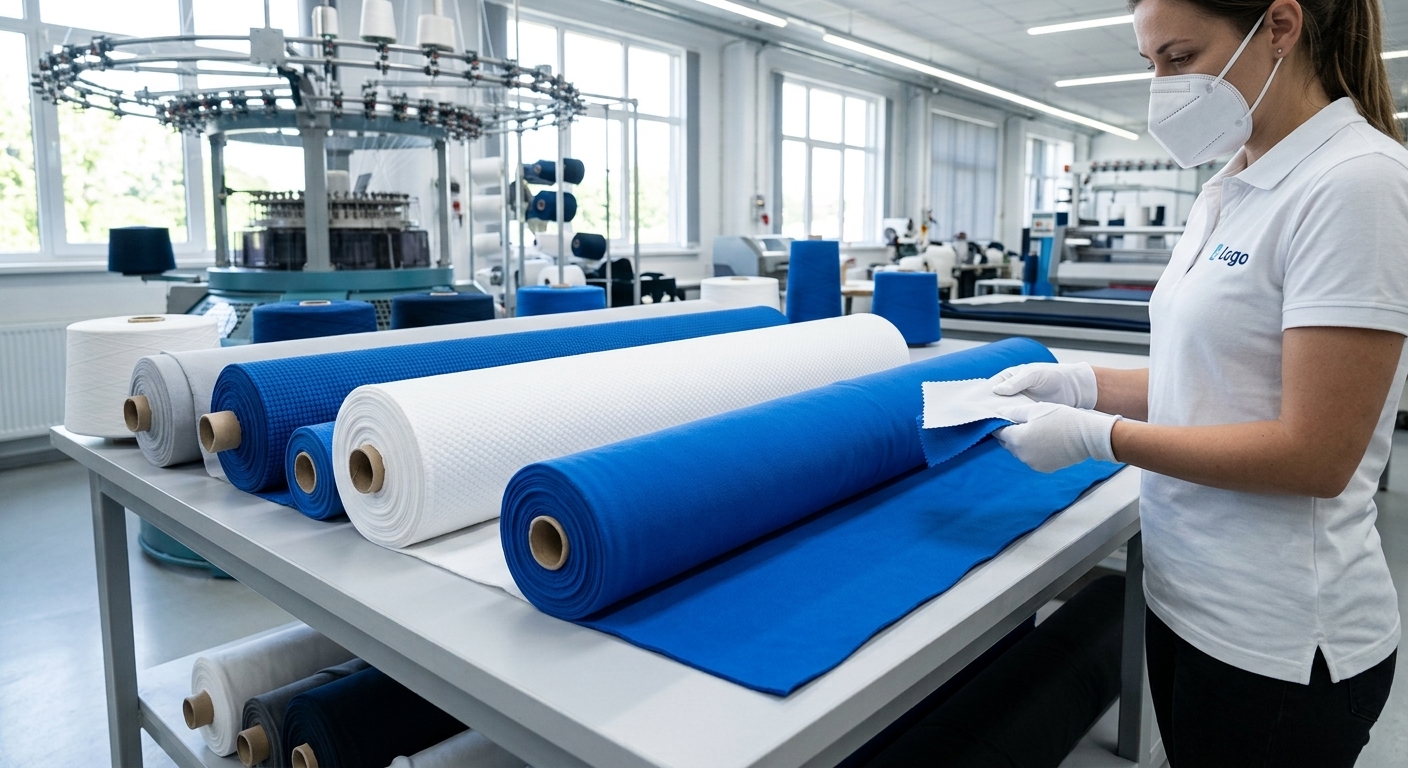
Technical performance garment production requires specialized heavy insulated knits that manage human thermal distribution during intense athletic conditioning exercises. Commercial apparel brands often encounter severe batch defects like rapid fiber pilling or excessive shrinkage after completing standard factory sublimation processing. These manufacturing failures destroy product retail value and disrupt tight delivery schedules for volume procurement contracts. Our mill provides globally certified circular knit solutions designed specifically for demanding commercial garment manufacturing plants. Purchasing premium sports fleece fabric by the yard provides a structurally stable foundation that resolves common production vulnerabilities while preserving excellent tactile softness. Your design teams can confidently execute precise pattern cuts knowing these advanced synthetic materials resist high thermal tension beautifully during commercial garment assembly.
1. Why Does Sports Fleece Fabric By The Yard Overheat Athletes?
Excessive insulation happens when dense synthetic yarn structures trap humid air pockets instead of facilitating rapid evaporation during intensive aerobic workouts. Selecting improper low-grade sports fleece fabric by the yard results in heavy moisture accumulation that restricts natural body cooling mechanisms. Industrial mills must engineer advanced knit geometries containing micro-channels that pull sweat away from skin surfaces smoothly. Balancing fabric density with fiber breathability allows apparel factories to construct high-end training gear that maintains comfortable thermal zones. Utilizing structured multi-layer configurations ensures that moving heat escapes efficiently while keeping outer environmental chill locked out completely.
Structural Venting Mechanics Explained
Woven performance insulation requires integrated ventilation pathways to sustain comfortable interior microclimates during high-intensity competitive training. Here’s the deal: traditional brushing techniques create thick fuzzy barriers that obstruct natural airflow and increase garment weight significantly. Utilizing advanced manufacturing methods preserves sports fleece fabric by the yard performance capability under intense physical strain.
- Micro-perforated backing systems allow hot air vapor to escape instantly from high-motion garment insulation zones.
- Hydrophobic interior filaments actively repel liquid sweat droplets outward toward exterior evaporation layers during workouts.
- Open cell geometry prevents moisture saturation within internal knit voids, maintaining lightweight comfort across active panels.
Managing these mechanical knitting variables protects athletic wear lines from catastrophic field performance failures during cold climate sports tournaments.
Key Takeaway: Thermal Regulation Impact
Selecting properly ventilated synthetic insulation protects commercial activewear brands from costly retail inventory returns driven by consumer discomfort.
| Fabric Subtype | Air Permeability Rating | Primary Training Environment |
| Brushed Single Fleece | Low Air Exchange | Low Intensity Cold Recovery |
| Channel Knit Fleece | High Air Exchange | High Intensity Aerobic Workouts |
Analyzing cross-sectional air permeability data helps product development teams match specific textile weight options to real-world athlete performance conditions perfectly.
2. How Do Structural Knit Variations Control Technical Fleece Weight?
Knit construction patterns alter material thickness directly by varying the loop spacing and internal yarn density on circular knitting machines. Commercial activewear buyers select specialized sports fleece fabric by the yard to achieve optimum insulation metrics without adding unnecessary physical mass. Factory technicians modify mechanical yarn feeds to produce either dense fleece barriers or exceptionally light grid patterns. These physical alterations determine how final sportswear items drape around moving limbs during intense outdoor training sessions. Sourcing distinct structural profiles ensures that your production facility meets strict garment weight specifications for corporate sportswear clients.
Grid vs Brushed Construction Comparison
Grid construction incorporates geometric channels that eliminate redundant material mass while preserving excellent warmth characteristics across every panel square inch. What’s the real story? Brushing entire surfaces creates uniform fuzzy insulation layers but adds substantial weight that compromises athletic agility. Manufacturers utilizing premium sports fleece fabric by the yard optimize material selection based on specific movement requirements.
- Geometric grid lines create structured dead air pockets for efficient warmth during high-motion tracking.
- Solid brushed designs deliver thick wind resistance at the cost of reduced breathability across panels.
- Channels reduce total roll weight, lowering international bulk shipping expenses for volume apparel procurement operations.
Choosing grid patterns optimizes performance metrics for high-motion garments like running pullovers or lightweight alpine trekking hoodies.
Key Takeaway: Fabric Mass Optimization
Specifying exact knit structural geometries allows activewear manufacturers to minimize material raw shipping costs while maximizing thermal garment utility.
| Knit Structure Style | Average Fabric Weight | Resulting Agility Rating |
| Geometric Grid Pattern | 180 – 220 GSM | Exceptionally High Movement |
| Solid Polar Brushed | 300 – 360 GSM | Moderate Outerwear Stability |
Reviewing structured fabric gram weight parameters guides product managers toward economical material procurement decisions for seasonal training gear collections.
3. Can Double Sided Spacer Knits Prevent Synthetic Surface Pilling?
Double-sided spacer knits prevent surface pilling effectively by utilizing clean face yarns that encapsulate delicate insulating fibers between flat exterior walls. Incorporating high-grade sports fleece fabric by the yard with multi-layer architecture shields vulnerable brushed piles from direct abrasive contact during wear. This advanced structural shield eliminates fiber tangling and friction wear, which normally cause cheap synthetic materials to look fuzzy. Textile factories process these premium textiles on specialized double needle bed machinery to secure long-term structural face durability. Investing in multi-layer spacer technology guarantees that your wholesale activewear inventory retains its premium cosmetic look after extensive consumer use.
Interlocking Filament Architecture Benefits
Advanced spacer textiles connect two separate fabric faces using a resilient internal network of micro-monofilament spacer yarns. Ready for the good part? This internal structural skeleton creates a permanent physical cushion that bounces back instantly after facing heavy compression forces. Utilizing specialized sports fleece fabric by the yard double spacer configurations upgrades standard athleisure lines into elite performance tier options.
- Smooth outer faces resist rough friction from backpacks or training gear during rugged outdoor use.
- Internal micro-filaments trap heat without allowing loose fibers to migrate outward through the face fabric.
- Flat technical surfaces support clean, high-definition commercial sublimation printing applications without texture distortion or fading.
Utilizing interlocking architecture ensures that finished activewear garments maintain structural integrity through grueling commercial laundry cycles.
Key Takeaway: Abrasion Resistance Values
Deploying flat-face spacer textiles preserves garment aesthetics completely, boosting brand equity among professional athletic organizations and retail buyers.
| Textile Face Design | Anti-Pilling Rating (ASTM D3512) | Surface Appearance Longevity |
| Branded Double Spacer | Grade 4.5 – 5.0 (Excellent) | Retains Pristine Flat Look |
| Traditional Polar Knit | Grade 2.0 – 3.0 (Moderate) | Develops Small Fiber Fuzz Balls |
Examining standardized anti-pilling test grades enables apparel manufacturing plants to guarantee superior surface performance to demanding B2B wholesale clients.
4. What Machine Settings Prevent Needle Holes In Performance Poly?
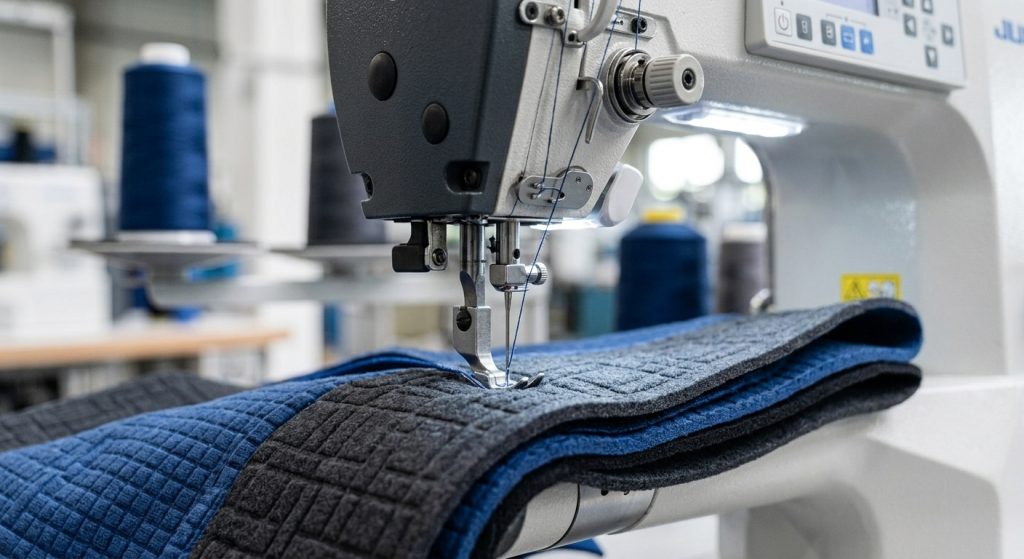
Machine settings prevent needle punching holes by utilizing light presser foot tension alongside perfectly polished ballpoint needle geometries during high-speed sewing. Manufacturing facilities processing sports fleece fabric by the yard must adjust mechanical puller feeds to eliminate fabric dragging along feed dog plates. Excessive downward clamping force fractures brittle polyester fibers, creating micro-tears that rapidly expand into visible seam runs. Calibrating looper timing mechanisms ensures smooth thread loop formation without pulling or snagging delicate synthetic yarn loops. Implementing these precise mechanical adjustments maintains absolute structural strength across highly stressed activewear assembly zones.
Needle Point Selection Parameters
Selecting specific needle point geometries dictates how cleanly the metallic point penetrates dense synthetic fiber matrices without cutting yarn. This is where it gets interesting because switching from universal sharp tips to specialized light ballpoints completely eliminates micro-fractures. Adjusting equipment parameters preserves sports fleece fabric by the yard durability across automated assembly lines.
- Ballpoint tips glide gently between synthetic yarn strands instead of severing them during high-speed operations.
- Slim titanium-coated shanks reduce thermal friction buildup during continuous high-volume activewear manufacturing shifts.
- Larger needle eye configurations accommodate texturized polyester threads without creating unwanted resistance along paths.
Enforcing strict needle replacement schedules every four manufacturing hours guarantees flawless stitch penetration across multi-panel garment runs.
Key Takeaway: Seam Failure Defense
Optimizing machinery parameters eliminates structural micro-tears along high-stress assembly seams, ensuring finished products withstand intense athletic movements.
| Machinery Parameter | Standard Factory Setting | Technical Fleece Adjustment |
| Presser Foot Pressure | 4.0 kg Clamping Force | 2.5 kg Reduced Tension |
| Needle Type Geometry | Universal Sharp Point | Ballpoint / Stretch Tip |
Implementing lower pressure thresholds combined with rounded needle geometries prevents structural fabric damage across automated assembly lines effectively.
5. How Do Cross Linked Fixatives Prevent Hot Laundry Color Bleeding?
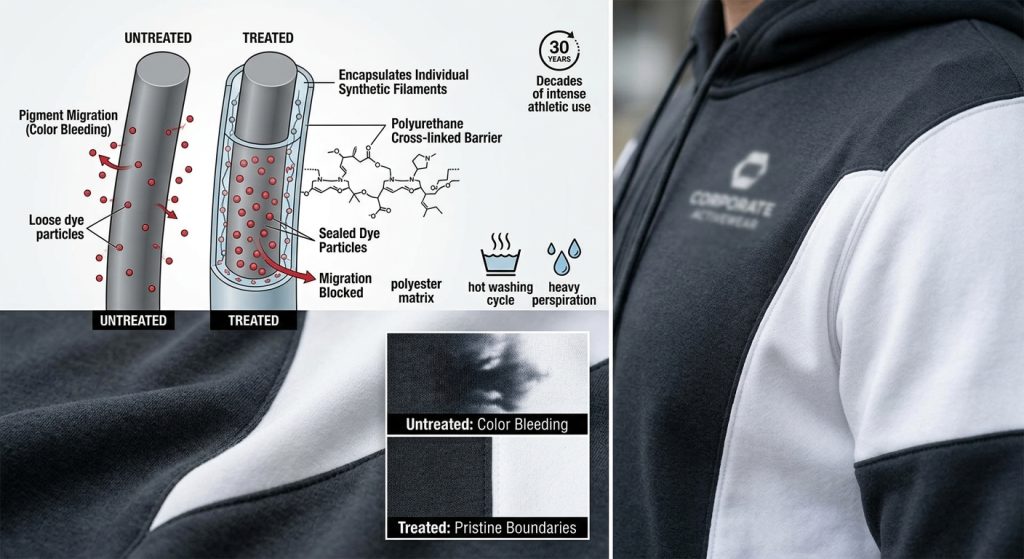
Cross-linked chemical fixatives stop color bleeding by creating a durable polyurethane cross-linked barrier that encapsulates individual synthetic filaments to seal loose dye particles permanently. This protective barrier blocks the migration of pigments out of the polyester matrix during hot washing machine cycles or heavy perspiration. Utilizing high-grade sports fleece fabric by the yard that has undergone this treatment protects white panels from catching adjacent dark dyes. The chemical bond ensures that contrasting color designs retain pristine boundaries over time. Incorporating treated materials keeps corporate activewear colors exceptionally bright throughout decades of intense athletic use.
Polyurethane Cross Linking Chemistry Mechanics
High-molecular-weight polymers react directly with surface dye residues during textile finishing phases to form an insoluble protective web layer. But here’s the kicker—untreated synthetic knits release massive amounts of unbonded pigment molecules the moment hot water hits the fibers. Deploying colorfast sports fleece fabric by the yard lot groups ensures uniform shade replication across massive manufacturing batches.
- Polymer networks trap volatile dye particles deep within individual fiber cores under extreme wet conditions.
- Hydrophobic properties resist chemical degradation caused by harsh commercial laundry detergents or enzyme cleaners.
- Stable covalent bonds survive extreme thermal exposure during industrial sublimation printing processes without structural bleeding.
Securing dye lots with advanced polymer technology protects multi-colored team uniforms from disastrous muddy color blending during team wash cycles.
Key Takeaway: Color Fastness Standards
Specifying polymer cross-linked fabric treatments guarantees excellent color separation, ensuring high-contrast athletic garment designs maintain sharp, professional product aesthetics.
| Textile Treatment Lot | Wash Fastness Grade (AATCC 61) | Color Boundary Status |
| Polymer Cross-Linked | Grade 4.5 – 5.0 (Superior) | Retains Sharp Pristine Lines |
| Untreated Base Fabric | Grade 2.0 – 3.0 (Poor) | Bleeds into Lighter Panels |
Sourcing certified colorfast textiles eliminates the commercial risk of customer inventory rejections resulting from unsightly garment color bleeding.
6. Why Should B2B Production Managers Run Pre Assembly Wash Tests?
Pre-assembly wash tests allow production managers to calculate exact fabric shrinkage rates and verify color fastness before launching mass cutting operations. Testing production lot swatches of your sports fleece fabric by the yard reveals how specific synthetic yarn blends react to commercial laundering environments. Failing to identify high shrinkage parameters results in finished garments being sized incorrectly, which destroys wholesale profit margins. Documenting material performance characteristics prior to component cutting ensures that manufacturing patterns match calculated textile shrinkage rates perfectly. Establishing this quality control protocol safeguards your apparel assembly facility from widespread structural sizing defects.
Shrinkage Calibration Workflows For Production
Executing structured wash evaluations requires laundering exact fabric squares under high temperatures and measuring dimensional changes accurately post-drying. You might be wondering if high-end performance synthetics really require dimensional testing before launching automated multi-ply factory cutting sequences. Evaluating your specific sports fleece fabric by the yard shipment lots eliminates pattern layout errors entirely.
- Measure swatches before washing along both lengthwise and crosswise grain directions under relaxed tension states.
- Launder samples using commercial water temperatures matching consumer target use environments for accurate calibration data.
- Calculate shrinkage percentages to adjust computerized marker layouts prior to committing rolls to automated cutters.
Analyzing post-wash dimensional variance protects garment manufacturing plants from producing mismatched panels across multi-size apparel orders.
Key Takeaway: Quality Control Assurance
Running systematic pre-wash calibrations guarantees absolute dimensional accuracy, allowing your factory floor to maintain strict compliance with international garment sizing metrics.
| Evaluation Parameter | Target Test Standard | Maximum Acceptable Variance |
| Lengthwise Shrinkage | AATCC Test Method 135 | Less Than 2.0% Dimensional Change |
| Crosswise Elongation | AATCC Test Method 135 | Less Than 1.5% Dimensional Change |
Reviewing objective pre-wash dimensional data empowers manufacturing teams to adjust cutting parameters proactively, preventing bulk garment assembly errors completely.
7. How Do Pattern Designers Map Vertical Stretch Axes Across Panels?
Pattern designers map vertical stretch axes by orienting layout templates parallel to the highest fabric elongation vector identified during material testing. Utilizing premium sports fleece fabric by the yard demands strategic panel placement to accommodate complex human muscle expansion patterns during intense movement. Orienting stretch vectors incorrectly across major motion zones severely restricts athlete mobility and causes premature seam splits under load. Aligning grainlines accurately ensures that performance garments expand horizontally around limbs while maintaining vertical structural recovery stability. Mastering layout alignment translates directly into superior garment ergonomics that meet professional sportswear industry requirements.
Mapping Stretch Vector Directions Precisely
Evaluating crosswise and lengthwise elongation properties determines how specific activewear panels should align against human muscular anatomy. What’s the catch? Two-way stretch materials expand crosswise from selvage to selvage, demanding careful layout planning compared to multi-directional four-way stretch textiles. Standardizing structural guidelines for sports fleece fabric by the yard layouts optimizes production yield metrics dramatically.
- Place maximum stretch directions horizontally around active limbs to allow easy muscle flexing during training.
- Orient stable vertical warp grainlines down the spine to prevent garment sagging over long use cycles.
- Mark alignment directional arrows directly onto computerized pattern grading files to guide automated cutting operators.
Precise stretch vector mapping maximizes athletic comfort while ensuring compression panels deliver consistent muscle support across all graded sizes.
Key Takeaway: Panel Ergonomics Rules
Aligning fabric stretch vectors with human anatomical movement pathways ensures activewear garments provide unrestricted range of motion during competition.
| Garment Panel Zone | Required Stretch Orientation | Direct Athletic Benefit |
| Active Sleeve Panels | Horizontal Crosswise Stretch | Allows Unrestricted Bicep Elongation |
| Rear Body Backing | Balanced Vertical Recovery | Prevents Upper Garment Riding Up |
Mapping panel orientation based on structural material stretch data guarantees that finished sportswear configurations conform comfortably to moving bodies.
8. What Specialized Anchoring Methods Secure Elastic Outerwear Hems?
Specialized anchoring methods secure elastic outerwear hems by implementing multi-row lockstitches or reinforced bartacks directly into internal garment seam allowances. Factories processing technical sports fleece fabric by the yard deploy automated zigzag perimeter stitching to encapsulate flexible drawcords safely inside wide waistband channels. Loose internal elastic bands twist and flip during intense physical training if left floating unanchored within hem cavities. Applying targeted structural reinforcement anchors components flat, preserving clean exterior lines through heavy product usage cycles. Utilizing robust mechanical retention workflows eliminates consumer complaints regarding twisted internal hardware components completely.
Multi Row Parallel Topstitching Mechanics
Multi-row parallel topstitching involves stretching internal elastic bands completely to maximum length while executing multiple horizontal stitch paths across hem surfaces. Ready for the good part? This industrial assembly method creates an incredibly secure, professional gathered waistband appearance common in premium retail athleisure brands. Processing your sports fleece fabric by the yard inventory using synchronized mechanical pullers ensures clean alignment paths.
- Twin needle configurations inject extra thread volume into seams to sustain high dynamic elongation safely.
- Even feed dog distribution prevents the synthetic fleece layers from bunching under heavy pressure foot force.
- Polyurethane elastic bands maintain uniform tension without degrading from standard high-temperature laundry drying exposure cycles.
Deploying multi-row topstitching pathways guarantees that elastic components remain permanently aligned inside high-use outerwear jackets.
Key Takeaway: Hem Integrity Tips
Securing internal elastic bands with parallel structural stitching maintains uniform garment tension, ensuring outerwear pieces retain clean retail contours permanently.
| Anchoring Technique | Production Labor Cost | Elastic Rolling Defense |
| Parallel Multi-Row Stitch | Moderate Industrial Time | Absolute Rolling Prevention |
| Single Stitch In Ditch | Minimal Assembly Time | Basic Localization Control |
Integrating parallel industrial topstitching paths across flexible perimeter bands optimizes outerwear manufacturing quality and enhances overall garment durability.
9. Can Home Sergers Handle Industrial Heavyweight Synthetic Knits?
Home sergers can process medium-weight performance textiles effectively provided operators reduce differential feed speed ratios and implement texturized polyester looper threads. Assembling thick sports fleece fabric by the yard requires specialized adjustments because multi-ply fleece intersections present substantial physical mass for domestic cutter blades. Light duty knives struggle to trim dense synthetic edges cleanly, leading to jammed upper loopers or broken needle shanks. Upgrading to industrial-grade carbide cutting components allows standard serging machines to clear thick synthetic fiber scrap paths smoothly. Implementing targeted equipment modifications enables small-scale production facilities to manufacture professional-grade sportswear items reliably.
Differential Feed Calibration Systems Operations
Adjusting dual feed dog speed ratios controls how fabric feeds beneath the needle plate, preventing wavy, stretched-out seam finishes. This is where it gets interesting because setting differential feeds above 1.0 compresses stretchy materials slightly during stitch formation to eliminate ripples. Calibrating mechanisms for your specific sports fleece fabric by the yard weight class optimizes handling characteristics during tricky cornering maneuvers.
- High settings compress flexible knit loops to neutralize presser foot stretching forces during long assembly runs.
- Texturized looper threads provide soft internal edge coverage that eliminates skin friction along finished paths.
- Correct blade positioning prevents raw synthetic edges from bunching inside dense overlock stitch configurations.
Calibrating your serger’s differential feed dogs guarantees perfectly flat, retail-ready edge finishes across all flexible synthetic assemblies.
Key Takeaway: Equipment Optimization Strategy
Fine-tuning differential feed dog speeds transforms standard serging equipment into capable technical textile processing units, avoiding expensive specialized machinery investments.
| Serger Configuration | Resulting Seam Quality | Fabric Feeding Output |
| Balanced Differential (1.0) | Wavy Fluted Panel Edges | Fabric Stretches Excessively |
| Adjusted Differential (1.5) | Flat Smooth Uniform Seam | Fabric Feeds Perfectly Even |
Monitoring edge finishing flat metrics ensures that small-scale garment assembly operations match commercial mass production quality guidelines precisely.
10. How Do Anti Friction Seam Configurations Protect Sensitive Skin?
Anti-friction seam configurations protect sensitive skin by utilizing flatlock joining methods that butt raw fabric edges together with zero internal overlap. Working with dense sports fleece fabric by the yard requires flat internal profiles because raised overlock ridges rub aggressively against moving skin. Endurance athletes experience painful chafing and dermal micro-tears when subjected to thick internal seam allowances during intense physical training. Implementing flat four-needle flatlock construction covers raw edges completely with soft, texturized nylon threads to maximize user comfort. Prioritizing smooth interior garment architecture elevates your sportswear product line into the premium high-performance retail market segment.
Flatlock vs Overlock Profiles Analysis
Flatlock stitching utilizes specialized four-needle machinery configurations to interlock fabric edges seamlessly without creating interior structural ridges. But here’s the kicker—standard three-thread overlock seams create raised internal tracks that act like sandpaper against skin during endurance marathons. Incorporating smooth sports fleece fabric by the yard construction layers shields active consumers from unwanted abrasive skin irritation points.
- Flatlock paths lay completely level against skin surfaces to eliminate motion friction during competitive activities.
- Texturized nylon bulk threads provide exceptional stretch recovery along high-tensile activewear assembly lines.
- Encapsulated edge boundaries prevent loose synthetic yarns from fraying inside high-stress sportswear panel selections.
Choosing flatlock construction methods ensures that high-motion garments like compression tights or cold-weather cycling tops deliver superior comfort.
Key Takeaway: Structural Comfort Metrics
Eliminating raised internal seam allowances protects users from painful friction injuries, establishing your apparel line as an elite high-performance activewear brand.
| Seam Construction Style | Internal Ridge Profile | Chafing Injury Risk Factor |
| Industrial Flatlock Seam | 0.0 mm Completely Flat | Zero Friction Chafing Risk |
| Standard Overlock Seam | 1.5 mm Raised Ridge | High Endurance Friction Risk |
Selecting flatlock seam pathways across high-motion panels guarantees that finished sportswear assemblies deliver non-restrictive comfort under extreme physical conditions.
Conclusion
Mastering specific machinery calibrations and technical stabilization workflows allows clothing factories to process complex technical synthetics without facing structural panel distortion. From balancing differential feed dogs to deploying polymer cross-linked fixatives against color bleeding, precise execution remains mandatory for generating retail-ready athletic garments. We specialize in manufacturing high-performance, certified synthetic knits engineered to pass strict global quality compliance metrics effortlessly. If your production facility requires premium bulk materials that resist surface pilling and handle high-speed automated cutting accurately, please contact us today.
Our advanced manufacturing technologies deliver the structural stability and color fastness required for commercial sportswear success.
Frequently Asked Questions
Q1: Can I use standard cotton thread for technical activewear fleece production?
No, cotton thread lacks the required elongation properties and will snap instantly when stretch garments expand under physical loads. Always specify high-tensile polyester or bulk texturized nylon threads to match synthetic material expansion properties perfectly.
Q2: What’s the best machinery configuration to avoid wavy seams on fleece?
Adjusting your differential feed ratio above 1.0 constitutes the most effective method for maintaining flat seams on flexible materials. This setting compresses the fabric slightly during sewing, neutralizing the stretching forces exerted by the presser foot.
Q3: How do I know if a synthetic fleece lot will pill rapidly?
Running standard ASTM D3512 random tumble pilling tests quickly reveals if loose surface fibers will tangle into unsightly fuzz balls. Sourcing materials with certified flat-face spacer knits or advanced anti-pill finishing treatments prevents this defect entirely.
Q4: Can I pass commercial wash fastness standards without chemical fixatives?
No, high-contrast sublimation designs will bleed dark pigments into lighter adjacent panels during hot wash cycles without cross-linked stabilization. Implementing polyurethane cross-linked barriers remains necessary for locking color particles permanently within polyester fiber matrices.
Q5: What’s the best layout orientation for cold weather athletic outerwear panels?
You must orient pattern templates so that the fabric’s primary axis of maximum stretch wraps horizontally around the athlete’s muscle groups. This strategic placement ensures comfortable muscle expansion and unrestricted range of motion during high-intensity training activities.