
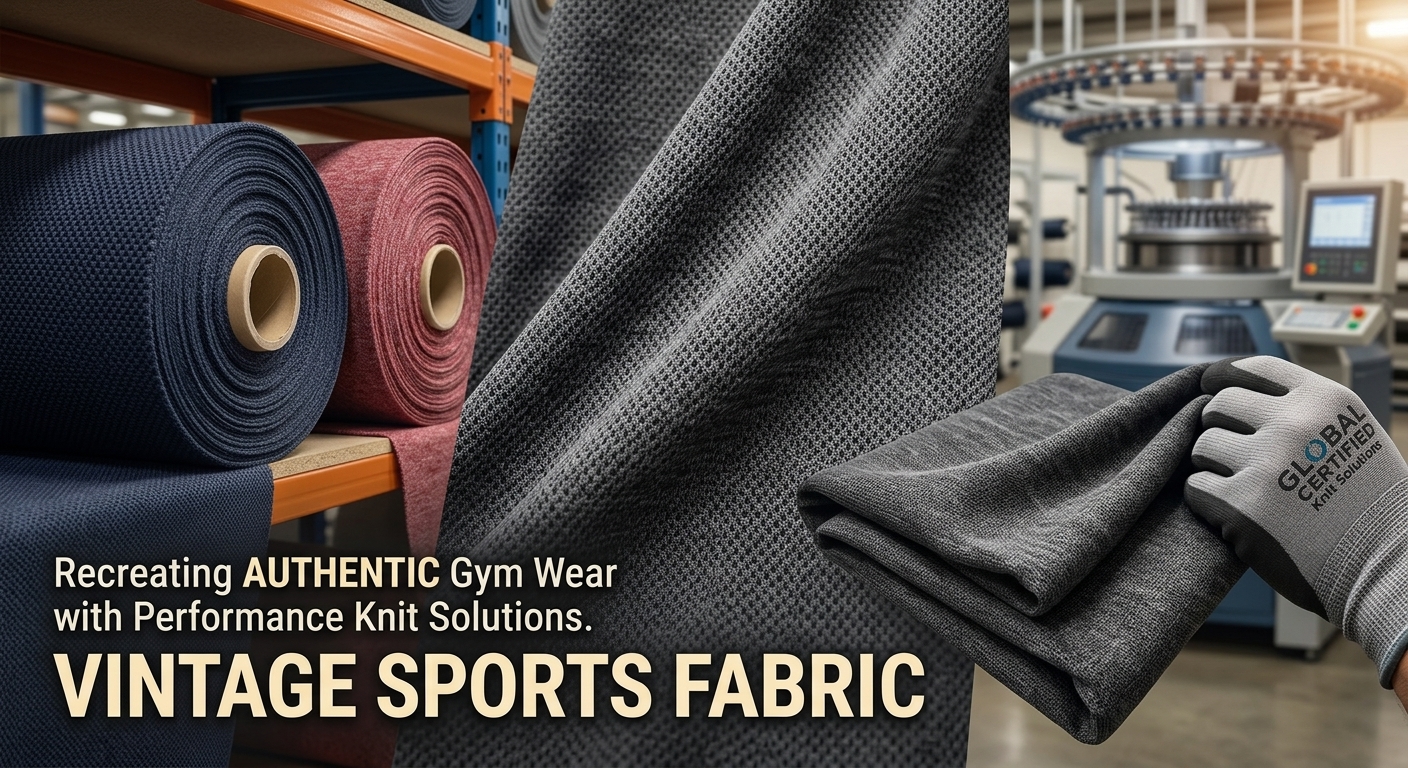
Modern clothing mills often fail when building throwback sportswear because cheap fabrics tear or fade during standard production processing. Your buyers want authentic heavy drape and ventilation, but poor textiles make garments look flimsy and cheap. Selecting a high-performance vintage sports fabric recreates classic gym aesthetics while satisfying tough industrial laundering expectations. Our mill provides globally certified circular knit solutions designed specifically for demanding commercial garment manufacturing plants. Your design teams can confidently execute precise pattern cuts knowing these advanced synthetic materials resist high thermal tension beautifully during commercial garment assembly.
1. Why Is Vintage Sports Fabric Difficult to Stitch?
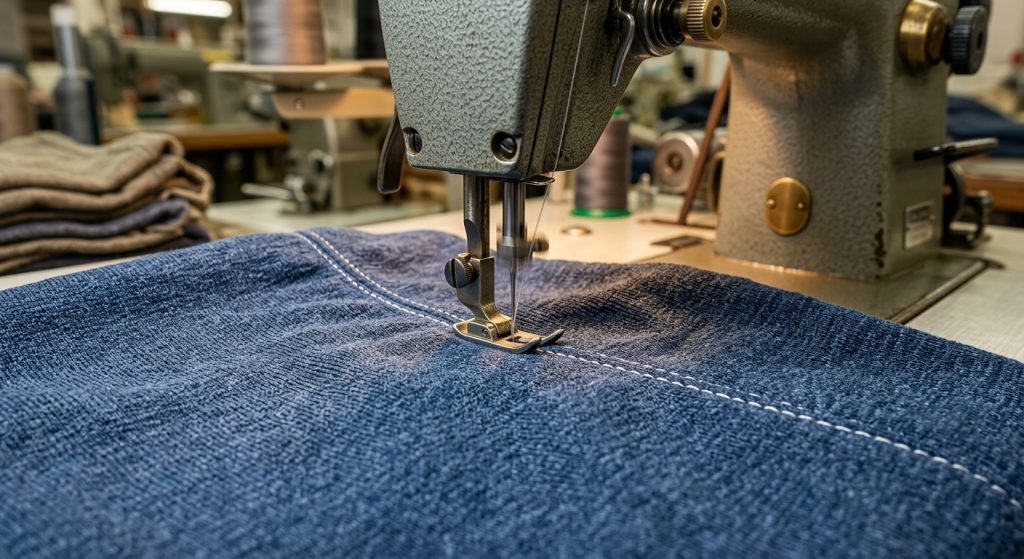
Older knit variants present uneven surface resistance that forces automated sewing assemblies to pull the material unevenly. Sourcing high-grade vintage sports fabric solves this alignment dilemma by delivering uniform loop density across entire manufacturing batches. Fabricators must stabilize these low-stretch yarn webs to bypass standard feed errors. Proper loop balancing prevents standard sewing lines from suffering from skipped stitches during high-speed production loops.
What Technical Sewing Vulnerabilities Exist?
Here is the deal, heavy historical knits generate massive needle friction that snaps standard threads instantly. Production lines suffer when shifting from thin modern materials to thick retro configurations without altering equipment settings.
- Thick yarns alter the mechanical looper timing paths.
- Stiff fiber structures increase structural needle deflection rates.
| Fabric Category | Needle Resistance Rating | Stitch Slippage Risk |
| Modern Synthetic | Low Resistance | Minimal Slippage |
| Heavy Retro Knit | High Resistance | Severe Slippage |
Reviewing resistance data helps supervisors adapt machine speeds before launching bulk assembly orders.
Key Takeaway: Modifying feed dogs stabilizes heavy knits during high-speed operations, protecting activewear lines from structural failures.
2. How Do Knit Matrices Alter Vintage Sports Fabric Weight?
Structural weight relies directly on the diameter of the selected yarn strands and the specific closeness of the knitting needles. High-quality vintage sports fabric features thick, high-gram-weight configurations that provide excellent structural substance to throwback apparel collections. Product teams rely on these dense matrices to mimic the heavy authentic drape of past athletic clothing lines. Sourcing distinct structural profiles guarantees that your production facility meets strict garment weight specifications for corporate sportswear clients.
Why Does Yarn Diameter Impact Garment Drape?
You might be wondering how historical athletic wear achieved such a rigid yet comfortable physical profile. The secret lies in using heavy-gauge cotton-poly blends that retain their silhouette even after severe industrial cleaning procedures.
- Thicker denier counts increase the physical fabric mass significantly.
- Tight loop interlock patterns limit unnecessary multi-directional fabric sag.
| Yarn Denier Count | Resulting Gram Weight | Intended Clothing Silhouette |
| 150 Denier Filament | 140 GSM Light Mesh | Flowing Athletic Jersey |
| 300 Denier Filament | 280 GSM Heavy Knit | Rigid Throwback Outerwear |
Analyzing structural yarn denier options helps mills hit specific weight requirements for corporate sportswear buyers.
Key Takeaway: Specifying heavy denier structures guarantees an authentic retro clothing feel that resists flattening over extended use.
3. Which Vintage Sports Fabric Structure Breathes Best?
Bird’s eye geometric configurations provide superior ventilation compared to traditional pique structures by utilizing micro-perforated structural holes that release heat vapor instantly. Selecting premium vintage sports fabric with an optimized layout keeps athletes dry during intense physical training loops. Pattern makers alternate between these classic configurations to meet varying breathability demands. Balancing fabric density with fiber breathability allows apparel factories to construct high-end training gear that maintains comfortable thermal zones.
How Do Bird’s Eye and Pique Geometries Differ?
What’s the real story behind these two famous throwback athletic knitting patterns? While pique utilizes a raised geometric cord texture that limits skin contact, bird’s eye weaves a continuous pattern of miniature cooling windows.
- Pique structures rely on dimensional tuck stitches for moisture handling.
- Bird’s eye patterns feature open eyelet holes for direct airflow.
| Fabric Geometry | Surface Tactile Profile | Moisture Evaporation Rate |
| Raised Pique Weave | Textured Cord Ridges | Moderate Air Vapor Release |
| Open Bird’s Eye | Smooth Micro Eyelets | Rapid Thermal Dissipation |
Contrasting these knit patterns guides development teams toward selecting the perfect material for high-heat activewear panels.
Key Takeaway: Deploying bird’s eye matrices maximizes ventilation across high-motion panels, reducing overall sweat retention during field sports.
4. How Does Vintage Sports Fabric Resuscitate Retro Drape?
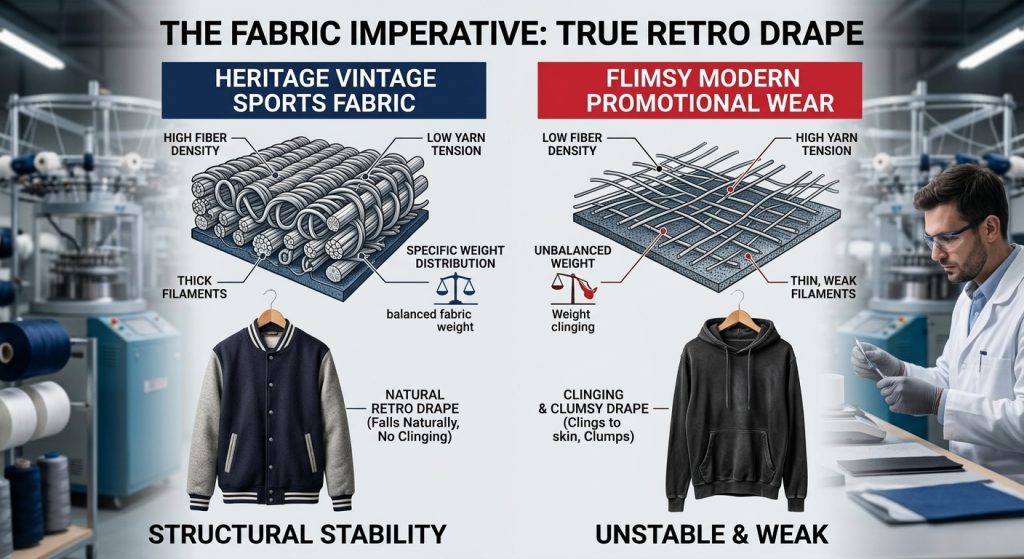
True retro drape demands a balanced blend of high fiber density and low yarn tension to allow garments to fall naturally without clinging to the skin. Utilizing vintage sports fabric allows designers to construct structured varsity jackets and training hoodies that mirror mid-century professional athletic styles perfectly. This specific weight distribution separates high-end heritage gear from modern flimsy promotional wear. Sourcing these thick filaments delivers the structural stability required for commercial sportswear success.
What Factors Define Premium Athletic Fabric Fall?
This is where it gets interesting because achieving that classic boxy look requires a stiffer textile hand-feel than standard contemporary fashion knits provide. Manufacturers must source raw materials with substantial thickness to maintain clear garment contours across production batches.
- High-density interlocking loops reduce limp material collapse.
- Controlled yarn spinning cycles preserve natural textile bone structure.
| Tension Level | Resulting Drape Style | Target Apparel Category |
| Low Yarn Clamping | Loose Boxy Vintage Profile | Classic Gym Track Jackets |
| High Yarn Clamping | Tight Fluid Contour Profile | Modern Compression Uniforms |
Balancing internal spinning tension enables factories to replicate precise historical apparel silhouettes flawlessly.
Key Takeaway: Managing material thickness prevents garments from losing their classic boxy retail look during continuous high-volume assembly shifts.
5. Can Vintage Sports Fabric Maintain Structural Color Fastness?
Advanced polymer cross-linking fixes deep dye pigments into synthetic matrices to secure excellent color performance during hot laundry cycles. Integrating certified vintage sports fabric avoids the classic pitfall of dark dyes bleeding into clean white panel borders. This industrial safety measure preserves high-contrast athletic color patterns throughout decades of hard use. Incorporating treated materials keeps corporate activewear colors exceptionally bright throughout decades of intense athletic use.
How Do Modern Fixatives Protect Throwback Colors?
But here’s the kicker—traditional throwback garments frequently suffered from massive dye bleeding because older manufacturing plants lacked advanced sealant technology. Modern technical processing seals individual fibers to ensure deep reds and navies remain permanently locked in place.
- Covalent bonds prevent pigment migration during extreme perspiration.
- Polyurethane coatings resist degradation from aggressive industrial detergents.
| Finish Formulation | Color Fastness Score (AATCC) | Multi Panel Safety Status |
| Standard Direct Dye | Grade 2.5 Moderate Bleeding | High Risk For White Borders |
| Cross-Linked Sealant | Grade 4.8 Superior Performance | Completely Safe For Contrasts |
Evaluating colorfastness ratings protects manufacturing facilities from costly bulk product rejections by apparel clients.
Key Takeaway: Sourcing polymer-treated textiles eliminates the commercial risk of multi-color panel damage during complex automated sublimation printing phases.
6. What Machine Settings Protect Vintage Sports Fabric Interlooping?
Lowering presser foot tension prevents feeding mechanisms from stretching heavy synthetic yarn structures during high-volume apparel manufacturing runs. Adjusting machinery parameters protects vintage sports fabric from developing permanent needle punch holes or long structural runs down the panel paths. Maintaining light clamping forces preserves the pristine loop matrix of delicate throwback knit replicas. Implementing these precise mechanical adjustments maintains absolute structural strength across highly stressed activewear assembly zones.
Why Must Operators Recalibrate Feed Dog Timing?
Ready for the good part? Synchronizing your puller feed speed with needle stroke movement ensures smooth material flow without puckering the finished seams. Proper mechanical alignment eliminates fabric dragging, allowing automated factory lines to maintain steady assembly output.
- Reduced downforce prevents surface pile bruising on brushed fabrics.
- Calibrated pullers eliminate material bunching behind the needle plate.
| Setting Control | Factory Default Level | Technical Knit Adjustment |
| Clamping Pressure | 4.5 kg Heavy Clamping | 2.5 kg Balanced Feeding |
| Feed Dog Rate | Standard Fixed Ratio | 1.3 Compressed Ratio |
| Needle Penetration | Sharp Point Geometry | Rounded Ballpoint Geometry |
Adjusting feed dogs to compressed ratios prevents synthetic stretching and maintains flat seam parameters across dynamic assembly sections.
Key Takeaway: Reducing mechanical tension prevents structural micro-tears across automated assembly lines, keeping production yields predictable.
7. How Do Pattern Designers Align Vintage Sports Fabric Grainlines?
Aligning cutting templates parallel to the vertical warp axis ensures that finished training apparel maintains correct body orientation during intensive exercise. Mapping out vintage sports fabric templates requires identifying the highest elongation vector to prevent clothing from twisting around moving limbs. Proper grainline placement guarantees that activewear items retain their original tailored shape over extended use cycles. Mastering layout alignment translates directly into superior garment ergonomics that meet professional sportswear industry requirements.
What Methods Identify the True Elongation Vector?
You might be wondering if simple visual inspection is enough to guarantee accurate panel alignment on the cutting floor. Manual pull tests across both grain axes remain necessary to confirm exact fabric stretch behaviors before processing bulk orders.
- Horizontal layout positioning accommodates muscular torso expansion.
- Vertical warp alignment prevents garment sagging during wet weather.
| Axis Vector | Measured Elongation Value | Recommended Panel Assignment |
| Crosswise Weft | 35% High Elongation | Torso Wrap and Sleeve Panels |
| Lengthwise Warp | 5% Stable Recovery | Back Spines and Structural Bands |
Mapping panel placement using precise stretch values prevents seam failure when garments face heavy physical stress during competition.
Key Takeaway: Aligning templates with natural stretch vectors maximizes garment lifespan and athletic mobility across all graded sizes.
8. Why Does Premium Vintage Sports Fabric Resist Surface Pilling?
Superior anti-pill performance results from treating raw synthetic yarns with intensive combing cycles that clear short, loose fiber endings before knitting begins. High-grade vintage sports fabric avoids the cheap fuzzy look of low-cost synthetics by utilizing long-staple filaments that resist friction tangling. This manufacturing precision guarantees a smooth textile face throughout harsh commercial laundry cycles. Investing in long-staple filament yarn configurations upgrades standard athleisure lines into elite performance tier choices.
How Do Long Staple Filaments Prevent Fuzzing?
What’s the catch when comparing budget activewear components to elite historical clothing replicas? Budget alternatives utilize short waste fibers that break loose and ball up after minimal surface friction occurs.
- Long-staple yarns secure fiber ends tightly inside the yarn core.
- Singeing fabric faces burns away stray micro-fibers cleanly.
| Material Composition | Pilling Resistance Grade | Exterior Look After 50 Washes |
| Short Fiber Synthetic | Grade 2.0 Poor Finish | Dense Fuzzy Surface Growth |
| Long Staple Filament | Grade 4.7 Clean Face | Retains Smooth Original Texture |
Sourcing long-staple yarn variants ensures your activewear products look premium on retail shelves over extended lifespans.
Key Takeaway: Combed long-staple structures maintain pristine surface cosmetics under heavy abrasive wear, cutting product return rates dramatically.
9. What Thread Selection Secures Vintage Sports Fabric Construction?
Assembling heavy heritage garments requires high-tensile corespun polyester threads that match the high mass and strength of the underlying panels. Utilizing matching vintage sports fabric components ensures that every single seam sustains sudden stretch loads without suffering from structural thread popping. Selecting low-grade cotton alternatives introduces weak links that fail under typical training stress levels. Enforcing strict thread specification schedules guarantees flawless stitch penetration across multi-panel garment runs.
Why Do Corespun Polyester Options Defeat Seam Failure?
This is where it gets interesting because technical sewing operations require threads that stretch along with the flexible synthetic knit matrix. Corespun threads feature a high-strength filament core wrapped in soft fiber to deliver maximum elasticity and smoothness.
- Polyester cores deliver superior breaking strength values.
- Texturized outer wrappings fill needle holes to block moisture paths.
| Thread Composition | Dynamic Elongation Level | Seam Integrity Outlook |
| 100% Spun Cotton | 3% Minimal Extension | High Failure Under Dynamic Load |
| Corespun Polyester | 22% High Extension | Excellent Durability Under Stress |
Matching thread elongation metrics to knit construction variables stabilizes assembly joints during intense manufacturing workflows.
Key Takeaway: Deploying corespun polyester thread prevents costly seam failures on heavy throwback apparel under extreme athletic load.
10. How Do Flatlock Assemblies Complete Vintage Sports Fabric Items?
Flatlock finishing machinery butts raw panel edges together perfectly to eliminate internal fabric overlap and minimize friction against moving skin. Assembling your vintage sports fabric inventory with four-needle configurations replaces bulky overlock ridges with smooth, level interior pathways. This construction adjustment eliminates athlete skin irritation during endurance sports conditioning loops. Prioritizing smooth interior garment architecture elevates your sportswear product line into the premium high-performance retail market segment.
Why Do Seamless Interior Paths Boost Product Value?
But here’s the kicker—raised inside seams act like rough sandpaper against sensitive skin when athletes engage in repetitive movements. Eliminating these friction tracks elevates your finished sportswear lines into high-end professional fitness markets.
- Butted edge loops create a completely flat interior profile.
- Multi-needle matrices distribute physical seam stress evenly.
| Seam Joining System | Internal Track Height | Athlete Comfort Rating |
| Three Thread Overlock | 1.5 mm Raised Ridge | Poor Comfort (High Chafing Risk) |
| Four Needle Flatlock | 0.0 mm Level Finish | Superior Comfort (Zero Friction Risk) |
Transitioning to flatlock joining methods modernizes classic throwback silhouettes while protecting users from dynamic motion chafing.
Key Takeaway: Flatlock assembly techniques provide premium internal comfort, driving high consumer satisfaction and repeat brand orders.
Conclusion
Recreating authentic retro gym wear requires careful calibration of knit geometries, yarn denier selections, and specialized anti-friction seam configurations. Sourcing stabilized materials ensures that your manufacturing facility bypasses common batch failures like pilling or color bleeding across multi-panel layouts. We remain dedicated to manufacturing premier, globally compliant technical knits designed to withstand heavy industrial processing demands. If your brand wants to secure flawless throwback aesthetics backed by modern material stability, please contact us today.
Frequently Asked Questions
Q1: Can I sew throwback athletic knits with universal sharp sewing needles?
No, universal sharp needles will cut dense synthetic yarn strands and create visible hole runs. Use specialized ballpoint or stretch needle geometries to glide safely between filaments instead.
Q2: What’s the best way to determine fabric weight for varsity jacket projects?
Checking the fabric gram weight metric using a circular sample cutter delivers the most accurate data. Selecting options between 280 and 340 GSM guarantees the heavy, authentic drape required for outerwear.
Q3: How do I know if a fabric lot will bleed during hot laundry processing?
Running an accelerated wash fastness evaluation clarifies if unbonded dye particles will migrate out of matrices. Sourcing materials treated with polymer cross-linked fixatives guarantees sharp panel boundaries.
Q4: Can I use standard cotton threads for high-stretch activewear seams?
No, cotton fibers lack the flexible elongation capabilities required to survive athletic joint expansion. Deploying corespun polyester thread ensures your seams expand safely without snapping under physical stress.
Q5: What’s the best method to eliminate wavy, puckered edges on knit panels?
Adjusting your equipment’s differential feed dogs above a 1.0 ratio stabilizes the fabric paths perfectly. This mechanical correction compresses the stretchy material slightly to counteract presser foot stretching forces.