
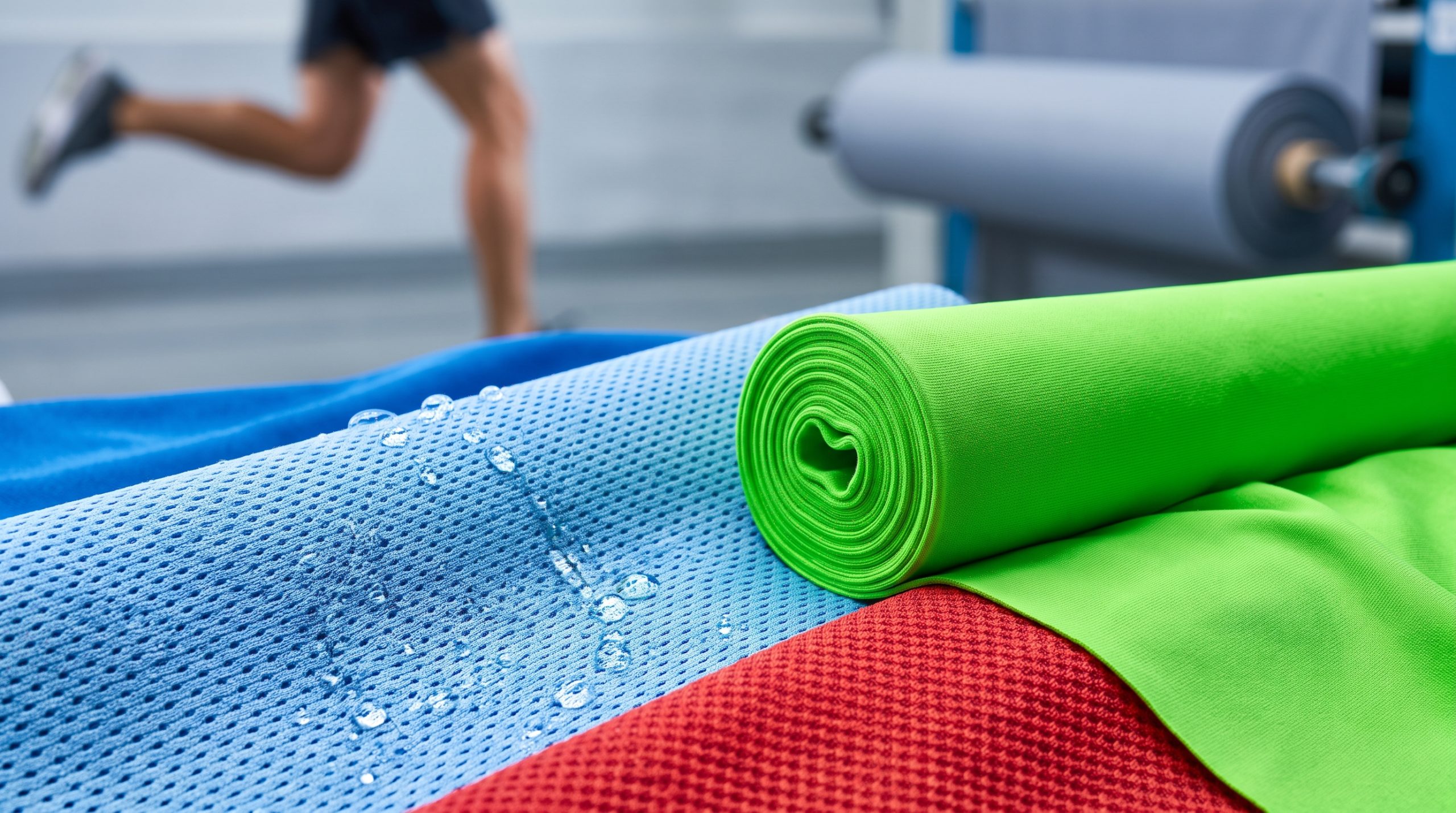
An ideal activewear selection relies on technical textiles engineered to balance breathability, moisture transport, and physical flexibility under high athletic stress. Imagine launching a highly anticipated athletic apparel line, sourcing materials with immense expectations from your commercial clients. You distribute the completed active garments, but within weeks, athletes complain about agonizing skin chafing, heavy sweat retention, and premature seam tearing. Your brand reputation suffers a direct hit because the textile selected failed completely under real-world athletic pressure. Finding a high-performing material that balances breathability, absolute durability, and manufacturing efficiency can feel like a losing battle. Here is the deal: choosing an engineered sports fabric by the yard transforms ordinary activewear into elite apparel that keeps athletes cool, dry, and moving without restriction. Our advanced manufacturing solutions provide premium textiles designed specifically to withstand rigorous training while maintaining maximum structural integrity.
Selecting premium performance materials is the cornerstone of building a commercially successful fitness or athleisure line. You might be wondering how different fiber compositions, knit structures, and technical finishes affect performance in high-intensity gym environments. This comprehensive guide provides a detailed breakdown of top-performing activewear materials to help you make optimized procurement decisions for your brand.
1. What Are the Structural Differences in Sports Fabric by the Yard?
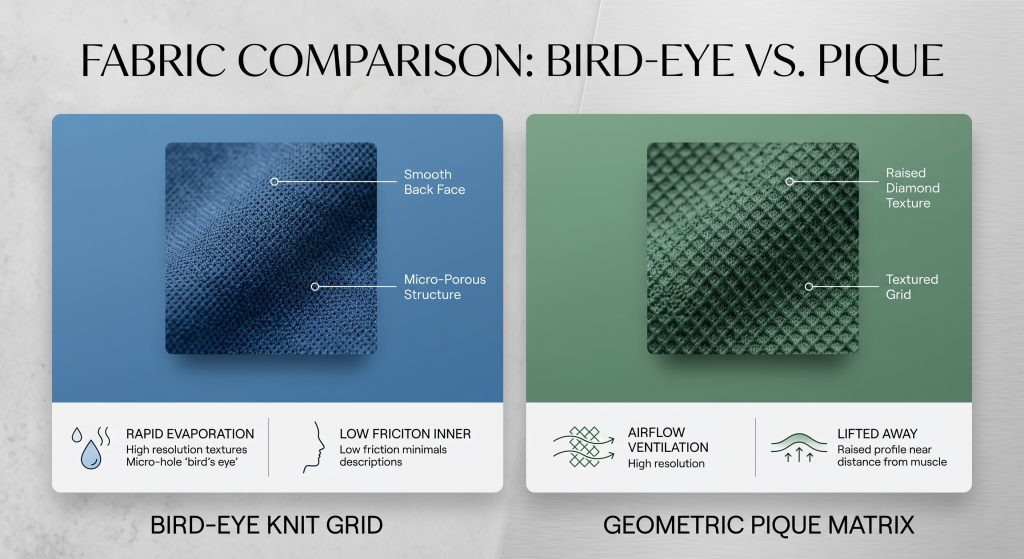
Structural differences in sports fabric by the yard determine how air and moisture flow through a finished athletic garment. Choosing between specialized bird-eye patterns and classic pique knits alters the tactile experience and performance ceiling of activewear lines.
What defines the unique bird-eye fabric architecture?
Bird-eye knit features a distinct micro-hole pattern that resembles the eye of a bird, offering excellent surface area for rapid evaporation. This geometric arrangement provides a completely smooth interior texture that reduces contact friction points against skin during intense movement.
- The tiny tuck stitches create a subtle three-dimensional look that enhances visual depth.
- This structure resists snagging from gym equipment hardware and outdoor trail brush.
- The smooth back face prevents skin irritation without requiring heavy chemical softening.
How does pique fabric organize structural performance?
Pique knit utilizes a geometric geometric grid or diamond pattern created by alternating knit and tuck stitches. This traditional setup produces a slightly raised, textured surface that keeps the fabric lifted away from active muscle groups.
- The pronounced textured face provides a classic, upscale appearance for corporate athletic apparel.
- Increased fabric thickness gives the material excellent body and structural drape characteristics.
- Raised design elements allow heavy airflow to pass underneath the wet garment matrix.
| Structural Parameter | Bird-Eye Knit Grid | Geometric Pique Matrix |
| Surface Texture Face | Smooth / Micro-Porous | Raised Diamond / Textured |
| Skin Friction Level | Minimal | Moderate |
| Aesthetic Impression | Modern Technical Activewear | Classic Professional Corporate |
Analyzing structural variables allows garment production teams to match specific textiles to target market demands.
Key Takeaway: Evaluating structural knit surfaces helps product developers choose between micro-porous bird-eye and textured pique, ensuring garments deliver intended athletic performance.
2. How Does Bird-Eye Sports Fabric by the Yard Maximize Breathability?
Bird-eye sports fabric by the yard maximizes breathability by utilizing thousands of engineered micro-openings across the fabric face. What is the real story? This continuous micro-porous grid acts like a natural venting system, dropping temperatures faster than traditional solid knits.
Why do micro-porous holes accelerate convective cooling?
Body heat traps sweat inside dense garments, leading to early muscle fatigue and severe skin chafing. The open geometric architecture of bird-eye knits allows heavy air currents to pass directly through the yarn matrix.
- High air permeability flushes hot ambient air out of the garment during high-speed running.
- Rapid air circulation drops skin surface temperatures during intense cardiovascular training.
- Constant fresh airflow keeps moisture from condensing inside the internal yarn layers.
How do smooth backing textures improve wearer comfort?
Rough fabrics rub against sensitive skin during repetitive running or cycling motions, causing painful friction burns. The smooth back face of a premium bird-eye performance textile glides easily over moving muscle groups.
- Eliminating rough surface points prevents chafing without adding heavy chemical coatings.
- A flat interior face allows for secure placement of flatlock comfort stitched seams.
- Soft physical attributes keep high-performance compression shirts comfortable during day-long tournaments.
| Breathability Variable | Micro-Porous Bird-Eye | Traditional Flat Interlock |
| Air Exchange Capacity | Ultra-High | Moderate |
| Evaporation Speed | Fast / Continuous | Standard |
| Internal Surface Profile | Completely Flat and Frictionless | Smooth / Non-Porous |
Harnessing advanced air exchange paths helps fitness brands manufacture elite shirts for extreme hot-weather environments.
Key Takeaway: Incorporating open bird-eye matrices into warm-weather gear improves ventilation performance, giving athletes a reliable, glare-free cooling experience.
3. Why Choose Pique Sports Fabric by the Yard for Corporate Apparel?
Pique sports fabric by the yard serves as the ideal foundation for premium corporate athletic wear and golf polos. Ready for the good part? While lightweight micro-fibers fit competitive marathons, the geometric diamond weave of pique offers a structured look that holds its shape.
How does a raised diamond weave enhance garment structure?
Corporate sportswear needs to look clean and professional even after hours of wear in demanding commercial environments. The alternating tuck stitches in a pique knit create a durable, thick matrix that resists wrinkles and wrinkling.
- The heavy-duty weight ensures collars and buttons stand upright without sagging over time.
- Added structural body prevents the completed garment from clinging uncomfortably to body contours.
- High dimensional stability helps shirts maintain sharp lines after dozens of commercial laundry cycles.
What makes pique look so sophisticated?
Simple flat fabrics often look too casual for country clubs and executive team building events. The geometric surface texture of premium pique catches light evenly, creating a rich, upscale depth.
- The raised design hides light perspiration marks during long outdoor business networking events.
- It coordinates perfectly with high-density logo embroidery without causing fabric puckering.
- The classic look bridges the gap between active sports performance and professional boardroom style.
| Aesthetic Feature | Geometric Pique Knit | Basic Circular Jersey |
| Fabric Body and Weight | Substantial / Structured | Light / Fluid |
| Wrinkle Resistance | High | Low |
| Visual Texture Depth | Deep Diamond Patterns | Flat / Uniform Face |
Selecting substantial pique knits helps luxury sportswear brands command top-tier pricing in premium corporate markets.
Key Takeaway: Utilizing thick pique knits gives corporate sportswear collections a crisp structure and professional look, making it excellent for high-end golf apparel.
4. Which Sports Fabric by the Yard Offers Superior Moisture Wicking?
Selecting the right sports fabric by the yard requires measuring how fast a material can pull liquid sweat away from the skin. Both bird-eye and pique knits use capillary channels, but their surface patterns handle moisture transport differently.
How do capillary channels handle liquid sweat?
When athletes train hard, their bodies pump out sweat to prevent dangerous core overheating. An engineered athletic textile uses multi-filament synthetic yarns to draw liquid away from the skin before pools form.
- Specialized fiber shapes increase total surface area for faster water movement.
- Capillary draw forces sweat outward to the outer face within seconds.
- Keeping the inner face dry prevents wet shirts from sticking to tired muscles.
Why does bird-eye design win the speed battle?
While pique fabrics hold moisture inside their thick diamond pockets, bird-eye designs use flat, open paths to move water out. The thin profile of bird-eye allows moisture to spread across the outer face instantly.
- Large micro-pores speed up airflow to dry the outer surface quickly.
- Minimal fabric thickness prevents water weight from trapping heat in the core yarn layers.
- Rapid drying cycles keep gear lightweight during heavy multi-hour endurance training.
| Moisture Metric | Smooth Bird-Eye Mesh | Structured Pique Knit |
| Wicking Velocity | Immediate / Tactical | Progressive / Managed |
| Moisture Storage In Yarn | Under 1% Retention | Moderate Layer Storage |
| Saturated Drying Time | Ultra-Fast | Moderate |
Understanding these drying timelines allows development teams to build specialized apparel tailored for specific perspiration levels.
Key Takeaway: Sourcing fast-drying bird-eye knits gives endurance lines a massive performance boost, keeping competitive runners completely dry and comfortable.
5. How Does Fiber Choice Impact Sports Fabric by the Yard Longevity?
The base polymer used in your sports fabric by the yard dictates the garment’s eventual lifespan and pill resistance. This is where it gets interesting: blending high-tenacity polyester or nylon with elastane yields active garments that retain pristine structure across commercial life.
Why does polyester dominate synthetic fabric durability?
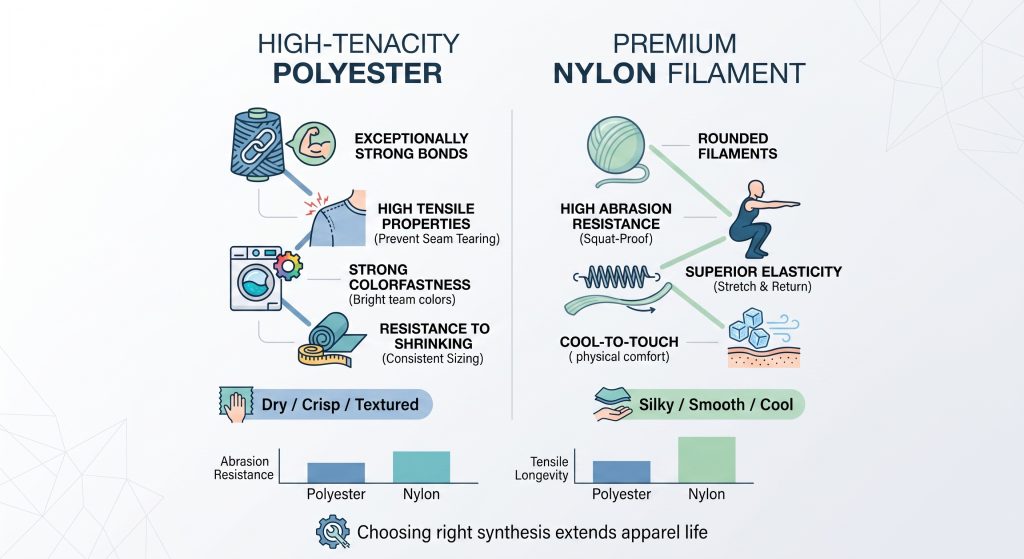
Athletic gear faces constant friction from equipment straps, rough gym mats, and aggressive industrial laundering detergents. Polyester fibers contain exceptionally strong chemical bonds that maintain high performance even under heavy physical stress.
- High tensile properties prevent yarn tearing along highly stressed active shoulder seams.
- Strong colorfastness keeps team colors bright after multiple hot water washings.
- Natural resistance to shrinking keeps sizing consistent across long inventory shelf lifespans.
What performance advantages does nylon provide?
When luxury athleisure brands demand an ultra-soft feel without sacrificing strength, nylon becomes the top choice. Nylon fibers feature high abrasion resistance, allowing for thin, lightweight knits that remain completely squat-proof.
- Rounded filament arrays slide smoothly across skin to eliminate painful friction burns.
- Superior elasticity allows yarn groups to stretch easily and return to shape without bagging.
- The cool-to-the-touch feel provides immediate physical comfort during high-intensity training.
| Fiber Property | High-Tenacity Polyester | Premium Nylon Filament |
| Abrasion Resistance | Very Good | Superior / Industrial Grade |
| Tensile Longevity | High | Extremely High |
| Surface Hand Feel | Dry / Crisp / Textured | Silky / Smooth / Cool |
Choosing the right base synthetic helps procurement managers balance cost and luxury feel.
Key Takeaway: Selecting premium polyester or nylon fibers extends the life of your athletic apparel, protecting your brand from costly customer returns.
6. Can Custom Weight Selection Optimize Gym Clothing Line Function?
Varying the fabric weight of your sports fabric by the yard allows your brand to target precise fitness activities. Check this out: using the wrong fabric weight can make gym clothes feel bulky or leave them see-through during deep squats.
Why are lightweight knits perfect for high-intensity running?
Endurance athletes want to feel weightless when chasing down split-second PR goals on the track. Choosing a lightweight performance material (110–140 GSM) keeps garments light and breathable during hot training days.
- Thin knit structures allow body heat to escape quickly before heat fatigue sets in.
- Reduced material volume allows tops to pack down small for easy travel storage.
- Low weight minimizes fabric friction against skin during repetitive marathon running.
How do heavyweight double knits protect compression wear lines?
High-stress leg exercises like squats and lunges require thick, supportive materials that provide complete coverage. Heavyweight textiles (240–300 GSM) deliver the necessary elastic power to hold shape under extreme tension.
- High density ensures leggings remain completely squat-proof when fully stretched out.
- Heavy compression blends support moving muscle groups to help reduce post-workout soreness.
- Thick structures offer extra warmth for cold-weather outdoor training collections.
| Fabric Weight Range | Material Thickness Style | Target Fitness Apparel |
| 110 – 140 GSM | Ultra-Lightweight / Translucent | Racing Singlets, Ventilated Insets |
| 160 – 200 GSM | Medium-Weight / Substantial | Team Jerseys, Training Polos |
| 240 – 300 GSM | Heavyweight / High Density | Compression Leggings, Sports Bras |
Matching your material weight to the target sport ensures your products perform flawlessly in real-world conditions.
Key Takeaway: Matching material climes to specific athletic movements ensures garments perform beautifully without feeling heavy or becoming see-through under tension.
7. Why Are Antibacterial Treatments Crucial for Synthetic Knits?
Synthetic sports fabric by the yard easily traps body oils, creating the perfect warm, wet home for odor-causing bacteria. Here is the trick: applying silver-ion or organic antimicrobial finishes keeps activewear smelling fresh even after long multi-hour gym workouts.
How do silver ions eliminate stubborn garment odors?
Synthetic textiles like polyester naturally attract body oils, causing standard gym shirts to smell foul over time. Adding a built-in silver-ion treatment breaks down odor-causing microbes the moment they touch the fabric surface.
- Active silver ions stop bacteria from multiplying inside the damp yarn layers.
- Permanent fabric treatments stay effective through dozens of regular home wash cycles.
- Odor protection keeps gear smelling fresh during long multi-day tournaments or travel.
How do freshness treatments extend activewear life?
When gym clothes develop a stubborn, unwashed smell, consumers often throw them out or wash them using harsh hot water cycles. Keeping clothes smelling fresh naturally reduces the need for aggressive commercial laundering.
- Fewer wash cycles mean less physical stress on delicate elastic seams and waistbands.
- Reducing laundry frequency saves valuable water and energy over the life of the clothes.
- Long-lasting freshness builds strong customer trust in your brand’s product quality.
| Protection Category | Built-In Silver Treatment | Topical Chemical Sprays |
| Odor Prevention Longevity | Permanent (50+ Wash Cycles) | Temporary (Washes out fast) |
| Environmental Safety | Safe / Bound to Fiber | High Risk of Chemical Leaching |
| Bacterial Reduction Rate | Over 99.9% Elimination | Variable / Unstable |
Adding high-performance odor control features helps activewear lines stand out in the premium fitness market.
Key Takeaway: Adding permanent silver-ion antibacterial properties to your textiles delivers long-lasting freshness, shielding synthetic gear from odor buildup and frequent hot washing.
8. Why Is Recycled Performance Material Winning Global Markets?
Modern B2B procurement managers and retail consumers are demanding greater environmental responsibility from apparel manufacturers. The trend is clear: choosing a recycled sports fabric by the yard satisfies green corporate mandates while keeping fabric performance metrics incredibly high.
How does recycled polyester protect global ecosystems?
Traditional virgin synthetic textiles rely directly on continuous crude oil extraction and energy-intensive manufacturing. Recycled polyester utilization keeps post-consumer plastic waste out of oceans and landfills.
- Manufacturing recycled yarn consumes significantly less energy than creating virgin polyester.
- It reduces global carbon emissions while conserving valuable water resources during raw material processing.
- Giving waste plastic a second life supports a circular textile economy.
Does eco-friendly sourcing compromise technical strength?
A common misconception is that green eco-friendly materials are weaker or less effective than virgin synthetics. Premium recycled materials undergo strict purification and extrusion processes to ensure top-tier quality.
- The purified recycled polymers match the exact tensile strength and durability of virgin polyester.
- It features identical moisture-wicking and dye-reception capabilities for custom athletic styling.
- Certifications like the Global Recycled Standard (GRS) provide verifiable proof of origin to your buyers.
| Sustainability Impact Metric | Standard Brick/Steel Arena | Sustainable Tension Membrane |
| End-of-Life Recyclability | Prone to Landfill Dumping | 100% Reprocessable Polymers |
| Manufacturing Energy Use | Extremely Intensive | Highly Efficient / Low Energy |
| Site Disruption Rating | High (Disrupts Ecosystems) | Minimal (Low-Impact Assembly) |
Adopting eco-friendly structural solutions demonstrates your brand’s commitment to protecting the planet.
Key Takeaway: Switching to certified recycled synthetics allows your activewear brand to meet modern sustainability demands without losing any technical performance or fabric longevity.
9. How Do Sublimation Processes Customize Your Synthetic Fabrics?
Polyester sports fabric by the yard provides the ultimate surface for high-definition custom sublimation printing. Take note of this: sublimation chemistry embeds ink molecules directly into the synthetic fibers, ensuring team graphics never peel or crack over time.
Why is sublimation ideal for complex team graphics?
Traditional screen-printed graphics place a heavy, rubbery layer of ink over fabrics, blocking the knit’s natural breathability. Sublimation uses heat to convert dye into gas, infusing it directly into the polyester yarn matrix.
- Printed zones remain completely soft, light, and open to natural air movement.
- Sharp details and complex multi-color sponsor logos stay crisp across long seasons.
- Embedded ink molecules resist fading even under intense UV sunlight during field sports.
How do print-ready knits improve production workflows?
Using low-quality fabrics for custom printing can lead to shrinking, uneven color patches, and costly production delays. Sourcing print-ready synthetic textiles helps custom uniform shops speed up their production lines.
- Uniform heat shrinking ensures custom jersey panels match standard sizing cuts perfectly.
- Pure white base yarns absorb dye cleanly to deliver vibrant, accurate team colors.
- High thermal stability prevents fabric yellowing when exposed to high-heat press plates.
| Printing Method Profile | High-Heat Dye Sublimation | Traditional Ink Screen Print |
| Breathability Retention | 100% Open and Breathable | Blocked by Thick Layer |
| Graphic Surface Texture | Soft / Smooth / Zero Feel | Heavy / Rigid / Rubber Touch |
| Long-Term Crack Resistance | Permanent / Fade-Proof | Prone to Cracking and Peeling |
Using stable, sublimation-ready synthetics allows custom print houses to confidently fulfill large team orders.
Key Takeaway: Sourcing sublimation-optimized polyester ensures your custom team uniforms stay soft and breathable, keeping graphics vibrant through heavy game wear.
10. What Sourcing Criteria Ensure Wholesale Buying Success?
Wholesale procurement success depends on verifying fabric certifications and matching roll counts to your assembly line needs. Here is the bottom line: partnering with an established, direct-to-mill manufacturer keeps material quality high and minimizes production errors.
Why should you demand independent quality certificates?
Buying unverified materials can cause sizing shifts and color running, which can lead to high product return rates. Reliable mills always provide independent lab test data to confirm their fabrics meet international standards.
- Confirm safe skin contact parameters by checking for OEKO-TEX Standard 100 certification.
- Check official wash-fastness data to make sure dark accent colors won’t bleed onto white panels.
- Verify true moisture movement metrics using standardized liquid testing reports.
How does mill-direct ordering optimize production budgets?
Buying from retail middlemen cuts into profit margins and creates communication gaps regarding fabric availability. Partnering directly with an elite textile mill streamlines your supply chain and ensures stable production quality.
- Secure lower wholesale prices by eliminating middleman markups on volume orders.
- Get accurate updates on custom color dying timelines directly from the factory floor.
- Keep fabric texture and performance consistent across high-volume production runs.
| Wholesale Sourcing Step | Direct Factory Mill Partner | Independent Retail Middleman |
| Material Cost Base | Direct Volume Wholesale Pricing | Marked-Up Retail Pricing Tier |
| Quality Control Path | Direct Factory Lab Verification | Unverified / Inconsistent Batches |
| Color Matching Setup | Custom Lab Dip Development | Limited In-Stock Variations |
Working with an experienced mill partner helps activewear brands grow rapidly and control production quality.
Key Takeaway: Requiring factory testing data and ordering directly from the mill keeps activewear quality consistent and helps protect your production budgets.
FAQ
Can I use 100% cotton for high-performance activewear production?
No, cotton is not recommended for elite sportswear manufacturing. It absorbs massive amounts of moisture and dries slowly, which causes wet garments to stick to the athlete, inducing severe skin chafing and rapid muscle cooling.
What is the best fabric combination for manufacturing premium yoga pants?
The best combination is a high-density warp-knit blend of 80% nylon and 20% spandex. This specific construction delivers an ultra-soft feel, absolute squat-proof coverage, and enough elastic tension to comfortably support active muscle groups.
How do I know if a synthetic fabric has genuine moisture-wicking properties?
You should request official laboratory test results using the AATCC 195 standard from your supplier. True moisture-wicking materials feature specially shaped fiber cross-sections that move liquid away from the body quickly, which can be verified。
Can recycled polyester match the strength of virgin polyester in team uniforms?
Yes, high-grade recycled polyester delivers identical tensile strength, colorfastness, and stretch properties to virgin polyester. The recycled plastic polymers are completely purified and re-extruded to meet strict athletic performance specifications.
How do I know if a performance knit fabric is squat-proof?
You can confirm this by checking the material’s克重 (GSM) and knit style before ordering. Premium compression garments require high-density double-knit configurations weighing over 240 GSM combined with high elastane percentages to ensure the fabric remains completely opaque under full tension.
Choosing Excellence in Sportswear Manufacturing
Selecting the right textile blend is the single most important decision for ensuring the comfort, performance, and long-term durability of your athletic apparel line. By balancing technical properties like moisture management, abrasion resistance, and flexible stretch, your brand can confidently deliver activewear that stands up to the most grueling workouts. We design and manufacture specialized fabrics that empower athletes and elevate fitness brands worldwide. Ready to upgrade your materials supply chain? Please contact us today to request custom samples and discover how our advanced textile engineering can help your business lead the market.