
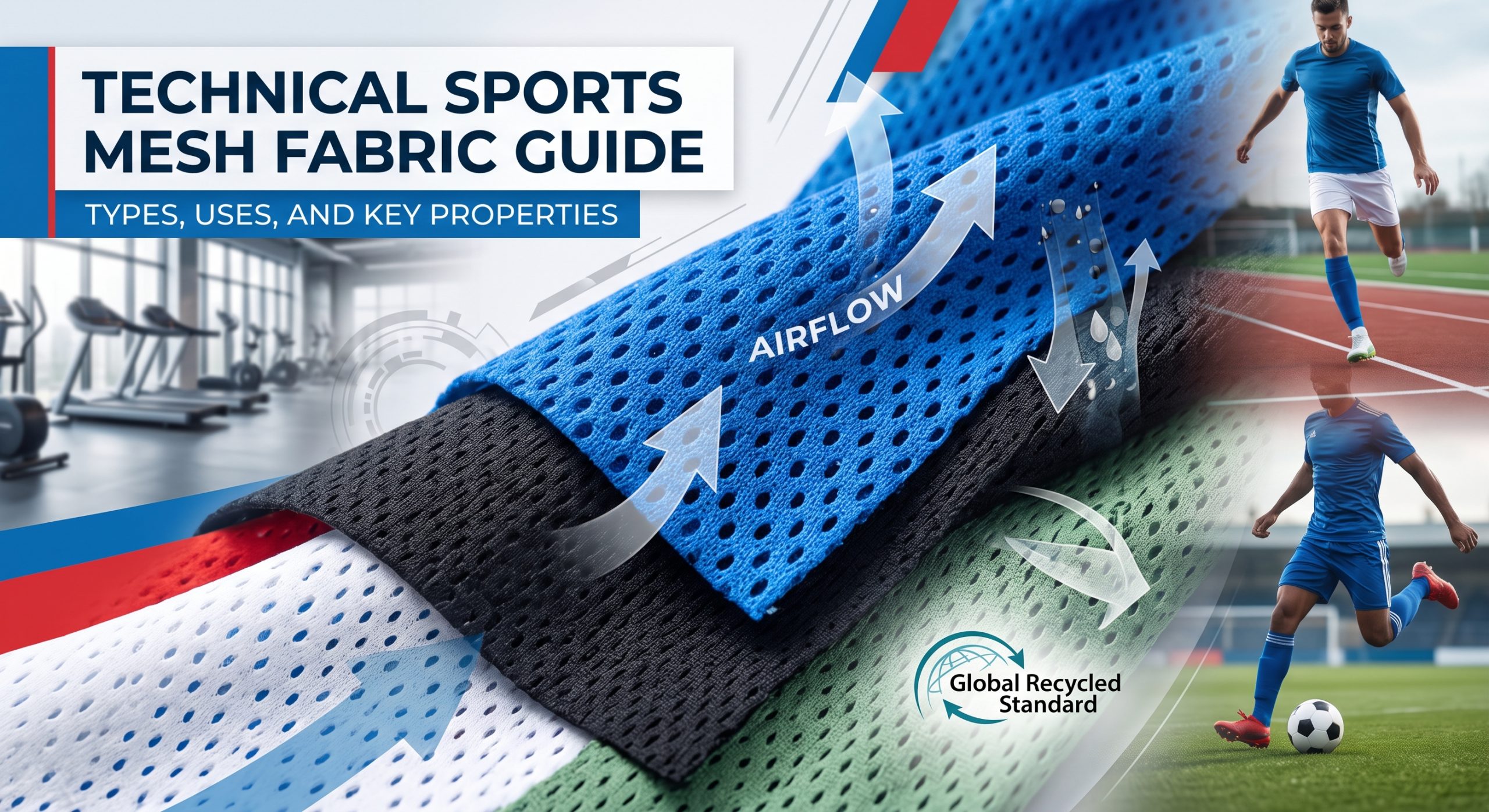
An ideal activewear selection relies on technical textiles engineered to balance breathability, moisture transport, and physical flexibility under high athletic stress. Imagine launching a highly anticipated athletic apparel line, sourcing materials with immense expectations from your commercial clients. You distribute completed garments, but within weeks, athletes complain about agonizing skin chafing, heavy sweat retention, and premature seam tearing. Your brand reputation suffers a direct hit because the selected textile failed completely under real-world athletic pressures. Finding a high-performing material that balances breathability, absolute durability, and manufacturing efficiency can feel like a losing battle. Here is the deal: choosing an engineered sports mesh fabric transforms ordinary activewear into elite apparel that keeps athletes cool, dry, and moving without restriction. Our advanced manufacturing solutions provide premium textiles designed specifically to withstand rigorous training while maintaining maximum structural integrity.
Selecting premium performance materials is the cornerstone of building a commercially successful fitness or athleisure line. You might be wondering how different fiber compositions, knit structures, and technical finishes affect performance in high-intensity gym environments. This comprehensive guide provides a detailed breakdown of top-performing activewear materials to help you make optimized procurement decisions for your brand.
1. What Defines Technical Sports Mesh Fabric for Apparel?
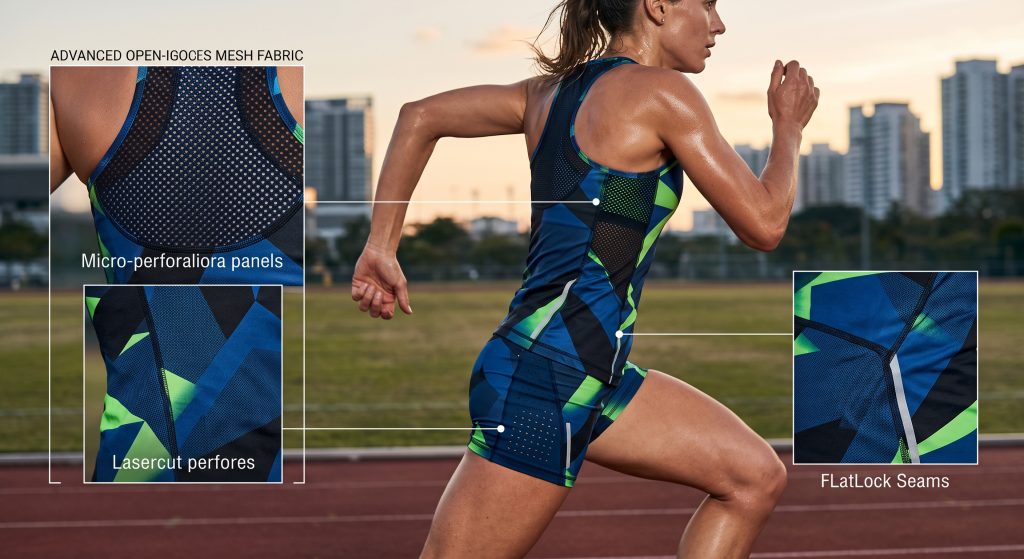
Technical sports mesh fabric establishes the structural foundation for modern high-performance athletic apparel ventilation systems globally. This open-pore synthetic textile utilizes specialized circular or warp knitting configurations to deliver localized heat regulation during extreme physical workouts. Sourcing authentic variant lines helps commercial garment factories build lightweight uniforms that support the natural thermoregulation pathways of human skin.
What is the underlying fiber composition?
Low-tier market alternatives often employ unrefined commodity plastics that retain liquid sweat, causing severe chafing against working muscle groups. Elite fabric mills rely heavily on multi-filament hydrophobic polyester or high-tenacity nylon polymers to weave the open grid matrices.
- Purified polyester yarns resist absorbing water molecules, keeping the material light through long matches.
- Nylon additives introduce premium surface smoothness, significantly lowering raw skin contact abrasion benchmarks.
- Spandex filaments inject multi-directional elastic recovery properties into the high-stress athletic panel.
How does structural air permeability operate?
Traditional solid fabrics block ambient air passage, trapping high convective body heat inside the clothing shell. Technical mesh grids feature thousands of geometric pores that force continuous air exchange across the active filament barrier.
- Open stitch loops allow rising heat energy to pass away from the body instantly.
- Air currents move through front clothing zones to flush sweat vapor out back vents.
- Constant ventilation prevents core thermal spikes, preserving athletic stamina over extended training runs.
| Structural Property | Performance Mesh Specification | Basic Utility Jersey |
| Air Permeability Rate | Ultra-High Continuous Exchange | Restricted / Closed Knit Matrix |
| Moisture Absorption Capacity | Under 1.0% Core Fluid Retention | Exceeds 6.0% (Becomes Heavy) |
| Yarn Configuration Type | Multi-Filament Hydrophobic Synthetic | Coarse Commodity Staple Strands |
Industrial textile parameters demonstrate that technical pore geometry directly dictates convective cooling efficiency across active garment panels.
Key Takeaway: Deploying engineered open-mesh structures ensures your team activewear lines provide continuous heat exchange, which protects high-intensity field players from early heat exhaustion.
2. How Does Polyester Mesh Support Custom Sublimation Printing?
Polyester sports mesh fabric delivers unmatched compatibility with industrial high-temperature dye sublimation transfers for custom teamwear collections. Sourcing this technical material allows sportswear brands to execute complex graphic layouts, sharp club emblems, and vibrant color configurations across volume production lots.
Why do disperse dyes fuse with polyester?
Natural fiber options fail to accept sublimation inks because their molecular structures lack the necessary synthetic receptor zones. Polyester polymers open their internal molecular chains under high-heat press plates, locking disperse dye gases permanently inside the filament core.
- Gaseous pigment transformation preserves the natural open softness of the technical mesh pores.
- Ink integration ensures custom numbers will never crack, peel, or flake off during game friction.
- Rich color tones maintain deep visual saturation across hundreds of industrial commercial laundry cycles.
How does thermal stability shield print quality?
Low-grade novelty textiles frequently warp or shrink unevenly when exposed to commercial heat transfer press temperatures. Performance polyester filaments pass through factory stabilization frames to ensure the material handles decoration processing without losing structural symmetry.
- High heat resistance stops pure white base webs from yellowing during transfer stamping.
- Perfect dimensional stability prevents custom layout elements from skewing along diagonal seams.
- Controlled shrinkage limits pattern distortion, keeping uniform sizes completely true to specifications.
| Printing Variable Metric | Heat-Stabilized Polyester Mesh | Low-Tier Commercial Base |
| Sublimation Ink Fixation | Permanent Core Molecular Fusion | Surface Pigment Layer Coating Only |
| Thermal Distortion Risk | Minimal / Retains Pattern Shapes | High / Prone to Skewing Lines |
| UV Exposure Colorfastness | Grade 4.5+ Standard Longevity | Below Grade 3.0 (Fades Fast) |
Advanced sublimation testing proves that heat-stabilized synthetic grids maintain absolute color sharpness through intense outdoor athletic training environments.
Key Takeaway: Utilizing specialized sublimatable polyester bases guarantees your team uniforms deliver crystal-clear branding elements that withstand rigorous outdoor matches and frequent industrial cleaning.
3. Why Is Nylon Mesh Essential for High-Contact Field Sports?
Nylon sports mesh fabric provides the extreme tensile strength and superior abrasion resistance required for rugged, high-impact athletic competitions. Procurement teams select this premium technical textile when manufacturing uniforms for sports like football, rugby, or lacrosse, where garments face constant pulling.
Why does nylon possess unmatched physical toughness?
Polyester provides excellent color options, but nylon features exceptionally strong amide molecular chains that resist structural tearing under heavy force. This high-tenacity yarn withstands aggressive physical pulling along player seams without experiencing fiber failure.
- High-density nylon loops resist tearing when players scramble on rough field turf.
- Superior puncture resistance safeguards uniform panels from sharp sports gear hardware accessories.
- High tensile breaking strength allows mills to create lightweight, breathable venting panels.
How does surface smoothness reduce skin friction?
Repetitive running motions can cause low-quality, rough meshes to scratch the skin, causing severe physical discomfort. Nylon filaments feature exceptionally round, uniform shapes that slide easily over body contours during hard training.
- Frictionless yarn profiles limit skin redness without relying on temporary chemical finishes.
- The cool-to-the-touch surface provides direct physical relief during intense, hot summer workouts.
- Silk-like drape characteristics help developers craft comfortable, form-fitting premium athletic clothing lines.
| Mechanical Toughness Metric | High-Tenacity Nylon Mesh | Standard Commercial Polyester |
| Martindale Friction Rating | Exceeds 50,000 Continuous Passes | Around 25,000 Standard Passes |
| Tensile Breaking Strength | Superior Industrial Capacity | Moderate Commercial Baseline |
| Tactile Surface Touch | Silky / Cool Skin Feeling | Dry / Warm Performance Profile |
Engineering data confirms that high-tenacity amide polymers deliver excellent structural safety during intense, high-impact athletic competitions.
Key Takeaway: Incorporating rugged nylon mesh weaves into high-wear uniform panels stops garments from tearing on the field, cutting down on costly product returns.
4. Can Spandex Mesh Blends Enhance Targeted Muscle Compression?
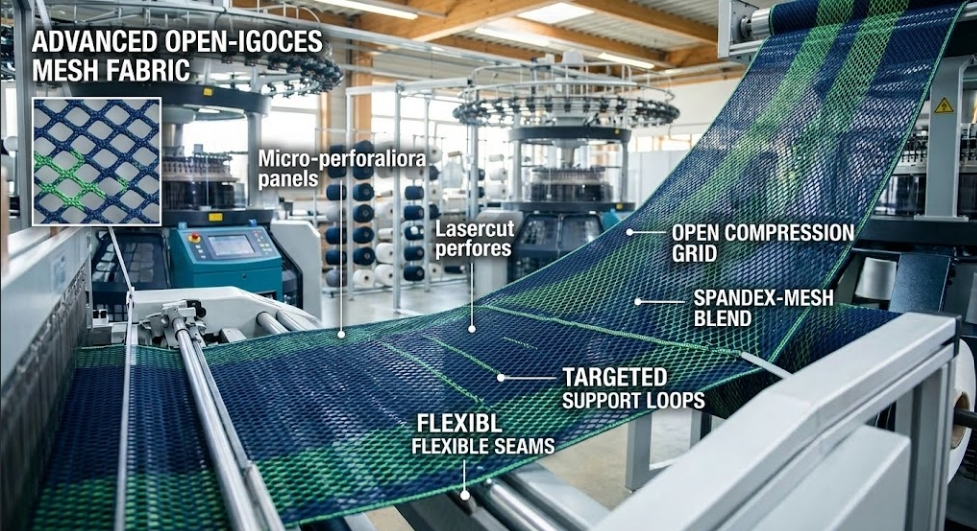
Spandex mesh blends introduce high-stretch flexibility into technical sports mesh fabric layups to improve athletic compression wear configurations. This is where it gets interesting: combining elastic filaments with open ventilation grids allows garment manufacturers to build supportive, form-fitting gear that cools active muscle groups simultaneously.
How does open compression improve athletic recovery?
Traditional compression wear relies on thick, non-porous fabrics that trap sweat, causing rapid overheating during long gym workouts. Breathable compression meshes apply targeted pressure to stabilize major muscle groups while allowing body heat to escape.
- Balanced pressure reduces muscle vibration, minimizing micro-tears during explosive field sprints.
- Enhanced body awareness allows competitive players to maintain better posture during complex exercises.
- Targeted support loops aid natural blood circulation through tired limbs during active rest recovery phases.
What is the optimal elastic blending percentage?
Deploying improper elastane ratios can cause active garments to lose their shape or stretch out prematurely after washing. Product designers must balance spandex content carefully to maintain strong elastic recovery without closing up the ventilation pores.
- Premium athletic bras and performance waistbands utilize 15% to 25% spandex blends for high support.
- Ventilated compression shirt panels deliver excellent flexibility using a balanced 8% to 12% blend.
- Heat-set elastane combinations resist washing wear, keeping your activewear fitting perfectly over time.
| Spandex Blend Target | Elastic Stretch Profile | Primary Activewear Application |
| 8% to 12% Elastic Blend | Moderate / Dynamic Ventilation | Breathable Tops, Running Inserts |
| 15% to 22% Elastic Blend | High / Supportive Compression | Technical Leggings, Shapewear Panels |
Calibrated stretch data guides production teams to design compression items that fit securely without feeling restrictive.
Key Takeaway: Sourcing high-recovery elastane mesh blends lets your brand build supportive, form-fitting garments that keep athletes cool and comfortable during tough training.
5. How Does Diminutive Bird-Eye Architecture Outperform Flat Knits?
Diminutive bird-eye architecture utilizes a smart micro-porous tuck-stitch grid pattern to optimize moisture management across high-quality sports mesh fabric collections. Sourcing this advanced style from direct mills ensures your performance lines move sweat away from the skin much faster than old-fashioned flat knits.
What defines the micro-porous bird-eye grid?
Bird-eye knit features a distinct micro-hole pattern that resembles the eye of a bird, offering excellent surface area for rapid evaporation. This geometric arrangement provides a completely smooth interior texture that reduces contact friction points against skin during intense movement.
- The tiny tuck stitches create a subtle three-dimensional look that enhances visual depth.
- This structure resists snagging from gym equipment hardware and outdoor trail brush.
- The smooth back face prevents skin irritation without requiring heavy chemical softening.
How does pique fabric organize structural performance?
Pique knit utilizes a geometric grid or diamond pattern created by alternating knit and tuck stitches. This traditional setup produces a slightly raised, textured surface that keeps the fabric lifted away from active muscle groups.
- The pronounced textured face provides a classic, upscale appearance for corporate athletic apparel.
- Increased fabric thickness gives the material excellent body and structural drape characteristics.
- Raised design elements allow heavy airflow to pass underneath the wet garment matrix.
| Fabric Architecture Feature | Micro-Porous Bird-Eye Grid | Geometric Pique Matrix |
| Surface Texture Face | Smooth / Micro-Porous | Raised Diamond / Textured |
| Skin Friction Level | Minimal | Moderate |
| Aesthetic Impression | Modern Technical Activewear | Classic Professional Corporate |
Weaving comparisons show that open micro-grid shapes move sweat across fabric layers much faster than basic flat knits.
Key Takeaway: Choosing smooth bird-eye micro-pores over traditional flat weaves gives your activewear line superior moisture control and an incredibly soft feel on the skin.
6. Why Sourcing Fabric Weights (GSM) Accurately Protects Budgets?
Sourcing exact material weights, measured in grams per square meter (GSM), allows activewear brands to choose the perfect mesh thickness for specific sports. Finding this balance with your sports mesh fabric supplier helps optimize raw material costs while ensuring your clothing lines provide excellent coverage.
Why do endurance lines require ultra-lightweight mesh?
Marathon runners and endurance athletes need featherweight, breathable gear to stay cool and comfortable in hot weather. Selecting an ultra-lightweight mesh material (100–130 GSM) maximizes air movement and lowers garment weight.
- Thin knit patterns allow excess body heat to escape quickly before heat fatigue sets in.
- Low-volume fabrics allow custom gear to pack down small for efficient bulk shipping.
- Soft physical features minimize fabric rubbing against the skin during repetitive running motions.
How do medium-weight interlocks secure team apparel lines?
Field team sports like basketball and soccer require durable, medium-weight fabrics that look professional and handle rough game play. Using a mid-weight material (140–180 GSM) ensures team jerseys retain their clean shapes and crisp printed colors.
- Balanced fabric density keeps custom uniforms completely opaque and shadow-proof under bright stadium lights.
- Strong, resilient yarns ensure jerseys resist pulling and tearing during high-intensity games.
- Smooth interlock surfaces provide a flat, stable foundation for high-definition team logo printing.
| Material Weight Tier | Weight Range (GSM) | Recommended Athletic Application |
| Ultra-Lightweight Mesh | 100 – 130 GSM | Racing Singlets, Running Inserts, Vents |
| Medium-Weight Interlock | 140 – 180 GSM | Team Jerseys, Training Shirts, Lacrosse Kits |
| Heavyweight Double-Knit | 200 – 260 GSM | Compression Paneling, Protective Gear Wraps |
Matching fabric weights to your specific product categories ensures your sportswear functions flawlessly under real-world conditions.
Key Takeaway: Sourcing targeted fabric weights keeps your activewear functional and durable, providing excellent breathability for runners and dependable coverage for team uniforms.
7. What Advantage Does Warp Knitting Provide Over Weft Loop Methods?
Warp knitting provides sports mesh fabric with exceptional run-resistance and high structural stability under extreme physical stress. Sourcing warp-knit mesh variants guarantees your athletic apparel lines will not unravel or develop long fabric runs if a thread snags on gym gear.
Why is warp-knit mesh naturally run-resistant?
Weft knitting loops yarn horizontally, meaning a single broken thread can quickly cause a long, unappealing run down the entire garment panel. Warp knitting loops zig-zag vertically along the fabric length, interlocking every stitch securely to stop runs from forming.
- Interlocked stitch columns prevent holes from widening if the fabric snags on sharp gear.
- The secure knit matrix allows apparel factories to cut clean edges without edge curling.
- High structural stability allows for open mesh holes without losing fabric strength.
How does warp knitting maximize dimensional stability?
Activewear undergoes constant washing, high-velocity stretching, and intense physical pulling during competitive matches. Warp-knitted synthetics feature low fabric distortion, ensuring your sports gear retains its original tailored dimensions over time.
- Tightly interlocked loops prevent shirts from stretching out or sagging after heavy workouts.
- Low structural skewing keeps printed team logos aligned perfectly along uniform panels.
- Inherent mechanical resilience minimizes fabric wrinkling, saving time during factory packaging operations.
| Knitting Technology | Vertical Warp Interlocking | Horizontal Weft Loop Matrix |
| Snag Run Resistance | Exceptional / Lock-Stitch Security | Poor / Broken Threads Cause Runs |
| Fabric Edge Profile | Flat / Resists Curling in Production | Variable / Edges Roll Under Tension |
| Structural Shape Hold | Excellent Dimensional Stability | Prone to Sagging and Stretching |
Production metrics show that vertical lock-stitch loops hold up much better than traditional horizontal weft knit methods.
Key Takeaway: Specifying warp-knitted meshes protects your uniform lines from unexpected tearing and snag runs, extending garment lifespans and boosting customer satisfaction.
8. Why Must Sourcing Mills Provide Verifiable GRS Compliance Data?
Sourcing mills must provide verified Global Recycled Standard (GRS) data to help activewear brands pass international environmental audits and satisfy consumer eco-friendly demands. Forward-thinking sports mesh fabric suppliers focus heavily on using recycled polyester (rPET) to help brands tap into the fast-growing sustainable sportswear market.
How does recycled polyester protect global ecosystems?
Traditional virgin polyester manufacturing relies directly on continuous crude oil extraction and energy-intensive chemical processing. Sourcing GRS-certified recycled fibers turns post-consumer plastic waste into high-performance athletic yarn, minimizing environmental impact.
- Manufacturing recycled yarn consumes significantly less energy than creating virgin polyester materials.
- Turning plastic bottles into fabric cuts global carbon emissions and conserves clean water resources.
- Using recycled components supports a clean, circular textile economy.
Does green sourcing compromise fabric tensile strength?
A common misconception is that eco-friendly materials are weaker or less effective than virgin synthetics. Premium recycled materials undergo strict purification and extrusion processes to ensure top-tier quality.
- The purified recycled polymers match the exact tensile strength and durability of virgin polyester.
- It features identical moisture-wicking and dye-reception capabilities for custom athletic styling.
- Certifications like the Global Recycled Standard (GRS) provide verifiable proof of origin to your buyers.
| Sustainability Metric | GRS-Certified Recycled Polyester | Virgin Petroleum Polyester |
| Primary Raw Base Material | Post-Consumer PET Plastic Bottles | Crude Petroleum Derivatives |
| Manufacturing Energy Demand | Reduced by Approx. 30-45% | Extremely High / Energy Intensive |
| Supply Chain Traceability | Certified Transaction Certificates | Standard Shipping Invoice Tracking |
Verifiable transaction certificates prove full carbon reductions across the entire manufacturing journey.
Key Takeaway: Sourcing GRS-certified performance synthetics helps your activewear brand pass strict green import audits while maintaining top-tier fabric durability and color fastness.
9. How Do Anti-Odor Silver Ion Finishes Extend Garment Lifespans?
Anti-odor silver ion finishes extend garment lifespans by stopping odor-causing bacteria from multiplying inside damp, sweaty fabric layers. Sourcing technical sports mesh fabric options with built-in silver treatments ensures your activewear lines stay fresh during intense workouts.
How do silver ions eliminate stubborn garment odors?
Synthetic fabrics like polyester naturally attract body oils, causing standard gym shirts to trap foul smells over time. Adding a built-in silver-ion treatment breaks down odor-causing microbes the moment they touch the fabric surface.
- Active silver ions stop bacteria from multiplying inside damp, sweaty yarn layers.
- Permanent yarn-level treatments stay effective through dozens of intensive home wash cycles.
- Reliable odor protection keeps gear smelling fresh during long travel days or multi-game tournaments.
How do anti-odor treatments extend the life of activewear?
When fitness apparel develops a persistent, unwashed smell, consumers tend to throw it out or wash it using harsh, hot water cycles. Keeping clothes smelling fresh naturally reduces the need for frequent, aggressive washing.
- Fewer wash cycles mean less mechanical stress on delicate elastic seams and waistbands.
- Reducing laundry frequency saves valuable water and energy over the life of the clothing.
- Long-lasting freshness builds strong customer trust in your brand’s product quality.
| Antimicrobial Standard | Yarn-Inherent Silver Treatment | Topical Chemical Coating Spray |
| JIS L 1902 Wash Durability | Retains >99% efficiency after 50 washes | Drops below 50% after 10 washes |
| Environmental Safety Profile | Non-leaching / Securely bound to fibers | High risk of chemical wash runoff |
| Odor Suppression Speed | Immediate / Breaks down microbes fast | Delayed / Inconsistent protection |
Laboratory data shows that yarn-level treatments provide long-lasting anti-odor protection that won’t wash away.
Key Takeaway: Choosing yarn-inherent silver ion finishes keeps your athletic apparel smelling fresh naturally, protecting delicate elastic fibers from frequent hot washing.
10. What Inspection Guidelines Safeguard Mass Procurement Operations?
Strict inspection guidelines safeguard your mass procurement operations by catching material errors before fabric rolls reach your cutting floor. Partnering directly with a factory-level sports mesh fabric manufacturer eliminates trade markups while ensuring consistent yarn quality across bulk orders.
How do you execute an effective fabric mill audit?
Relying solely on beautiful product catalog photos can expose your brand to trading middleman markups and mixed material lots. Sending a professional inspector to review the production floor ensures the mill can handle high-volume technical orders accurately.
- Confirm daily output capacities to ensure the factory can meet your delivery deadlines.
- Check that the mill uses calibrated color light boxes to prevent color variations between batches.
- Review yarn storage areas to confirm raw materials are kept safe from dust and dampness.
Why are independent laboratory test records required?
Verbal promises from fabric suppliers cannot protect your business from costly production defects or custom garment failures. Always require independent laboratory test records for every fabric lot to verify true technical performance parameters.
- Check fluid movement data using the AATCC 195 standard to verify real moisture-wicking capabilities.
- Review ASTM D3512 pilling tests to guarantee the fabric face resists fuzzing and pilling.
- Confirm OEKO-TEX Standard 100 certificates to verify the fabric contains no harmful chemical residues.
| Sourcing Procurement Step | Factory-Direct Mill Integration | Independent Sourcing Middleman |
| Material Unit Costing | Direct Factory Wholesale Pricing | Marked-Up Tier Pricing Matrix |
| Laboratory Verification | Direct Access to Testing Equipment | Third-Party Dependent Checkpaths |
| Color Lab Dip Pipeline | Direct Colorist Batch Matching | Fragmented In-Stock Selections |
Aligning lab-verified specifications directly with the source mill protects your raw procurement budgets.
Key Takeaway: Requiring direct factory lab logs ensures your bulk active fabric yards remain uniform, protecting your operational capital from processing mistakes.
FAQ
Can I use 100% cotton for high-performance activewear production?
No, cotton is not recommended for elite sportswear manufacturing. It absorbs massive amounts of moisture and dries slowly, which causes wet garments to stick to the athlete, inducing severe skin chafing and rapid muscle cooling.
What is the best fabric combination for manufacturing premium yoga pants?
The best combination is a high-density warp-knit blend of 80% nylon and 20% spandex. This specific construction delivers an ultra-soft feel, absolute squat-proof coverage, and enough elastic tension to comfortably support active muscle groups.
How do I know if a synthetic fabric has genuine moisture-wicking properties?
You should request official laboratory test results using the AATCC 195 standard from your supplier. True moisture-wicking materials feature specially shaped fiber cross-sections that move liquid away from the body quickly, which can be verified through these standardized tests.
Can recycled polyester match the strength of virgin polyester in team uniforms?
Yes, high-grade recycled polyester delivers identical tensile strength, colorfastness, and stretch properties to virgin polyester. The recycled plastic polymers are completely purified and re-extruded to meet strict athletic performance specifications.
How do I know if a mesh fabric will scratch skin during high-intensity cardiorespiratory training?
You should verify that the knit structure relies on fine microfiber nylon filaments rather than coarse commodity polyester threads. Nylon microfibers feature exceptionally round, uniform surfaces that glide smoothly across skin to minimize friction chafing without requiring heavy chemical softening coatings.
Sourcing Excellence in Technical Sportswear
Selecting the right textile blend is the single most important decision for ensuring the comfort, performance, and long-term durability of your athletic apparel line. By balancing technical properties like moisture management, abrasion resistance, and flexible stretch, your brand can confidently deliver activewear that stands up to the most grueling workouts. We design and manufacture specialized fabrics that empower athletes and elevate fitness brands worldwide. Ready to upgrade your materials supply chain? Please contact us today to request custom samples and discover how our advanced textile engineering can help your business lead the market.