
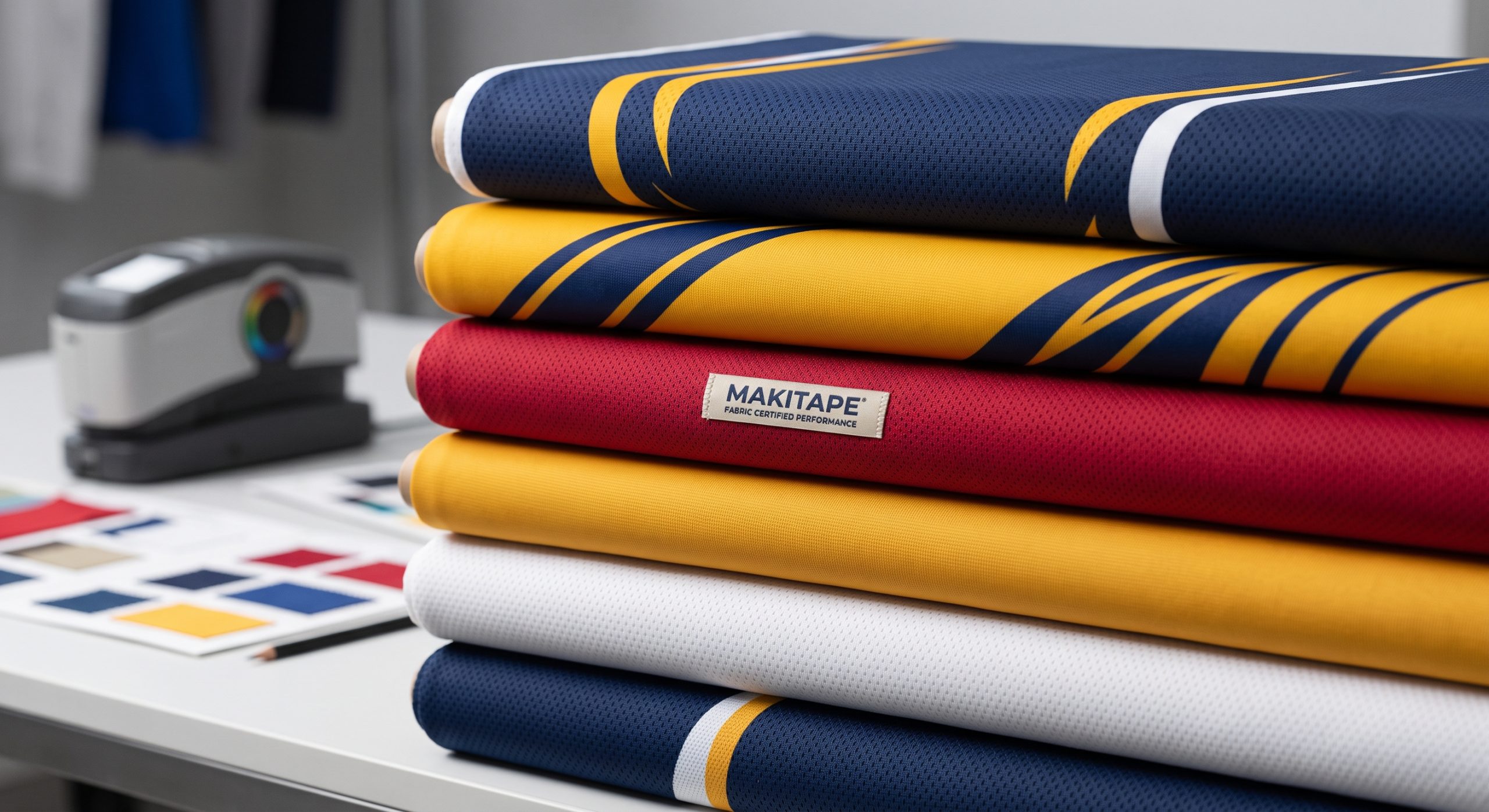
Navigating your sports fabric buying guide from college teams to pro leagues requires an absolute understanding of technical textile specifications and strict certification compliance. Sourcing premium materials for competitive apparel contracts requires an absolute understanding of technical textile specifications and strict certification compliance. Procurement teams frequently face immense pressure when sourcing athletic textiles because low-quality alternatives suffer from premature color bleeding under intense laundering cycles or catastrophic fiber failure during high-intensity athletic movements. This operational vulnerability quickly translates into canceled wholesale apparel orders and severely damages your manufacturing reputation among elite collegiate athletic departments. Fortunately, integrating high-density licensed sports fabric into your activewear production line solves these performance deficiencies by delivering superior tensile integrity and specialized polymer structures engineered specifically for high-definition dye sublimation.
1. What defines premium licensed sports fabric?
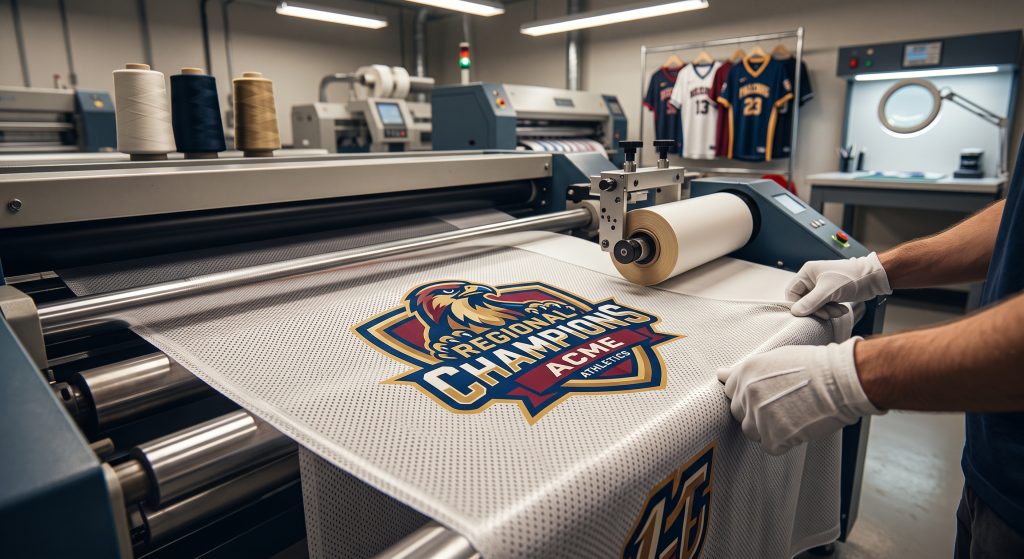
Premium licensed sports fabric represents an elite category of engineered synthetic textiles designed to meet strict structural parameters and aesthetic regulations established by official athletic organizations. This specialized commercial material utilizes specialized high-filament polyester fibers that withstand continuous physical abrasion while providing an ideal foundation for complex team graphics. Manufacturers prioritize this specialized textile category because it maintains strict dimensional stability during high-temperature thermal printing processing. Sourcing these authenticated base fabrics provides your apparel factory with a clear competitive advantage when bidding for lucrative regional tournament merchandise contracts.
What are the main printing parameters?
This is where it gets interesting… Technical printing on modern athletic apparel demands rigorous control over material thermal absorption metrics and polymer density parameters. If your production line uses standard commercial textiles, high temperatures during dye transfer often cause significant fiber distortion and irreversible fabric shrinkage. Maintaining precise fabric thickness guarantees that team colors remain highly vibrant without bleeding into adjacent white panels during long-term field usage, giving your custom garments a highly polished, professional finish that lasts for multiple seasons. By focusing on premium polymers, you eliminate the risk of structural degradation during large-scale production runs.
- High-definition sublimation requires base materials with a minimum melting threshold of 220 degrees Celsius.
- Heavy-duty industrial printing lines select high-density structures to prevent unprinted white spaces when the finished uniform stretches during competitive gameplay.
- Advanced anti-migration treatments prevent darker team pigments from leaching into lighter graphic elements during high-heat curing processes.
Industrial apparel producers must verify these thermodynamic variables prior to executing massive production runs for corporate clients. Selecting base substrates with superior thermal tolerance prevents the unwanted migration of volatile dye molecules across the fabric surface during post-printing storage. This meticulous attention to raw material behavior protects your assembly line from experiencing high reject rates and sudden delays. Key Takeaway: Understanding these complex engineering parameters protects your custom manufacturing operation from expensive textile waste and guarantees that every bulk order satisfies strict color matching expectations.
Comparing structure and hand feel
What’s the real story? The physical touch and structural arrangement of modern team textiles directly influence how elite athletes perform under high-stress conditions. Procurement agents must evaluate the physical texture alongside mechanical stretch capabilities to select comfortable options for professional athletic wear. Selecting double-knit configurations yields a substantial surface weight that conveys an immediate sense of luxurious premium quality to retail buyers, which ultimately helps support higher wholesale pricing margins during competitive contract bidding.
- Double-knit circular machinery generates a smooth interior face that dramatically reduces skin chafing during rapid directional shifts.
- Interlock weaving methodologies provide balanced horizontal elongation without causing the material to warp permanently out of shape.
- Specialized filament processing creates a soft tactile experience that satisfies the highest expectations of corporate apparel buyers.
Managing the physical feedback of the material guarantees that players remain completely focused on their performance rather than adjusting uncomfortable uniforms. Premium synthetic fibers provide a lightweight shield that adapts dynamically to the body contour during rapid, explosive movements. Incorporating these tactile benefits into your product development cycle establishes a solid foundation for long-term customer satisfaction. Key Takeaway: Selecting a balanced double-knit matrix provides your production workshop with highly predictable tailoring characteristics and superior finished garment presentation.
| Structural Metric | Double-Knit Interlock | Single-Jersey Knit |
| Tensile Resistance | Exceptional | Moderate |
| Surface Texture | Ultra-Smooth | Textured |
| Weight Consistency | High | Variable |
The provided structural breakdown clearly highlights why heavy-duty double-knit architectures remain the preferred option for premium corporate uniform contracts.
2. Why does licensed sports fabric resist tearing?
High-grade licensed sports fabric resists sudden tearing because its interlocking multi-filament warp-knit architecture distributes intense localized mechanical stress across a wider structural surface area. This technical protection framework prevents micro-perforations from expanding into major structural tears during violent physical contact on the playing field. Commercial apparel brands depend heavily on this specialized licensed sports fabric formulation to protect their reputations from public uniform malfunctions during high-profile televised collegiate championship games. Incorporating premium continuous-filament yarns into the knitting matrix provides a reliable barrier against rough abrasive contact with synthetic turf surfaces.
How does mechanical tension impact fibers?
But here’s the kicker… Evaluating mechanical strength involves analyzing how individual synthetic fiber groups react when subjected to sudden explosive directional changes. Standard consumer garments often fail at the seams because their low-grade polymer chains lack the necessary molecular alignment to absorb massive physical force. Professional athletic uniforms demand a specialized knitting design that absorbs energy dynamically before passing the strain along to the stitched borders, thereby protecting the structural integrity of the entire garment during intense physical play.
- High-tenacity synthetic yarns deliver over eight grams of breaking force per denier unit to withstand severe defensive tackling maneuvers.
- Advanced polymer alignment processes reduce the occurrence of catastrophic structural failures during intense professional training drills.
- Reinforced double-needle cross-stitching practices work in tandem with the material elastic rebound properties to prolong product lifespan.
Apparel factories must utilize computerized tensile testing machinery to confirm that every incoming textile batch meets these rigid structural specifications. Maintaining a high threshold for burst resistance reduces the likelihood of costly garment replacements and warranty claims from sports club clients. This proactive engineering approach guarantees that your manufactured uniforms consistently withstand the violent physical demands of modern high-impact athletics. Key Takeaway: Sourcing materials engineered with certified high tensile thresholds safeguards your manufacturing brand against costly product recalls and legal liability claims.
Warp-knit versus circular knit engineering
Ready for the good part? Choosing between warp-knit structures and traditional circular knits represents a critical technical decision for commercial activewear production lines. Warp-knit textile configurations introduce loop formations along the vertical axis of the material, creating an incredibly secure matrix that absolutely refuses to run or unweave if punctured. This architectural advantage makes it the prime candidate for high-impact sports like football and rugby where garment integrity cannot be compromised under any circumstances.
- Vertical loop architectures isolate localized damage effectively to prevent long horizontal runs down the sleeves or legs.
- Circular knitting methods offer superior multi-directional stretch properties ideal for loose-fitting warm-up apparel and corporate leisurewear lines.
- Industrial warp-knitting systems allow for the seamless integration of reinforced zone layouts directly into the primary body panels.
Utilizing warp-knit substrates enables your design team to construct highly targeted performance zones without introducing weak stitched seams. This advanced manufacturing capability satisfies the sophisticated procurement criteria established by professional athletic organizations globally. Investing in these specialized knitting formats expands your factory capacity to service high-end corporate clients efficiently. Key Takeaway: Matching the specific knitting technology to the physical demands of the sport guarantees maximum longevity and ultimate client satisfaction.
| Performance Attribute | Warp-Knit Structure | Circular-Knit System |
| Run Resistance | Maximum Protection | Standard Protection |
| Stretch Orientation | Longitudinal Focus | Omnidirectional Focus |
| Machine Throughput | Rapid Output | Moderate Output |
This engineering comparison guides textile buyers toward selecting the correct production methodology for high-stress athletic apparel.
3. How to check licensed sports fabric print holding?
Verifying print retention in licensed sports fabric requires conducting standardized colorfastness evaluations under high-temperature washing conditions and prolonged exposure to ultraviolet radiation. Elite teams require pristine graphic presentation throughout the entire competitive season, meaning that corporate logos must never fade or exhibit color migration. This specialized industrial textile undergoes extensive polymer pretreatment phases to maximize the permanent bonding of specialized sublimation dyes directly into the synthetic fiber core. Utilizing advanced spectroscopic evaluation tools allows your quality assurance inspectors to confirm consistent color distribution across diverse product batches.
Why does deep sublimation ink penetration matter?
Think about it. Complete ink penetration relies heavily on the open cross-sectional structure of your chosen synthetic activewear fibers. When premium dyes are sublimated at high temperatures, they transform into gas and penetrate the receptive polyester matrix before cooling into an unalterable solid state. Lower-quality materials often reject deep gas saturation, leaving the design looking pale and washed out when the finished uniform expands on the body during regular athletic movement.
- High-affinity polyester formulations maximize ink absorption to produce deep black shades and crisp corporate logos.
- Deep-dye technological steps prevent the unprinted white base fibers from showing through when the fabric undergoes extreme stretching.
- Molecular cross-linking treatments lock the pigment molecules inside the fiber structure to combat color bleeding during thermal processing.
Achieving complete gaseous penetration ensures that intricate team patterns maintain their visual depth even under severe structural expansion. This capability is especially critical for custom athletic apparel brands that feature elaborate geometric layouts or high-contrast corporate sponsor emblems. Selecting premium dye-receptive bases shields your manufacturing output from rendering dull or pixelated final graphics. Key Takeaway: Investing in deep-penetration base textiles guarantees that your finished custom sportswear looks immaculate both on the retail shelf and under stadium floodlights.
Colorfastness under intense laundering cycles
Here is the deal. High-performance athletic uniforms encounter incredibly harsh chemical treatments and hot water sanitization protocols week after week in professional laundry facilities. Standard consumer printing methods quickly degrade under these aggressive conditions, causing team insignias to lose their sharpness and blend into surrounding panels. Selecting fabrics that possess top-tier colorfastness ratings preserves the premium aesthetic qualities of your custom activewear for dozens of consecutive washes.
- Grade 5 staining resistance indexes confirm that dark athletic pigments will not transfer onto contrasting white details.
- High-stability synthetic polymers survive concentrated chemical detergents without experiencing significant color degradation or loss of structural gloss.
- Advanced UV-inhibiting additives prevent outdoor sunlight exposure from yellowing the pristine white panels of team kits.
Maintaining high color retention indexes over an extended operational life cycle directly protects the long-term equity of your commercial client branding. Garments that resist fading minimize the need for mid-season uniform replacements, thereby optimizing the procurement budgets of regional sports clubs. Partnering with a mill that prioritizes superior colorfastness safeguards your factory reputation for delivering top-tier athletic wear. Key Takeaway: Sourcing color-locked synthetic substrates protects your industrial client relationships by ensuring long-lasting graphic brilliance across multiple competitive seasons.
| Fastness Metric | Certified Base Fabric | Standard Commodity Fabric |
| Wash Fastness (Rating) | 4.5 – 5.0 | 3.0 – 3.5 |
| UV Resistance (Hours) | 200+ Hours | 50 Hours |
| Bleed Prevention | Complete | Variable |
The empirical data demonstrates why certified base fabrics represent a necessary investment for heavy-duty industrial uniform contract fulfillment.
4. Where is licensed sports fabric applied commercially?
Commercial procurement agents distribute licensed sports fabric across multiple high-value product categories, ranging from elite collegiate player uniforms to lucrative fan merchandise apparel lines. The incredible versatility of this specialized functional material makes it a key asset for factories aiming to satisfy diverse corporate client requirements simultaneously. Using high-performance licensed sports fabric enables production facilities to secure profitable relationships with major international sports brands and institutional buying groups. Adapting the material weight and surface texture allows for seamless manufacturing across various garment configurations.
Elite collegiate team uniform production
This is where it gets interesting… Producing garments for elite collegiate athletics requires adhering to strict material regulations concerning moisture transport, weight limits, and durability. Meeting these rigorous requirements demands specialized textiles that can withstand immense physical force while keeping the student-athletes comfortable during grueling tournament schedules. Procurement executives select heavy-duty variations to construct protective compression gear and high-impact jerseys that perform flawlessly under extreme pressure.
- On-field uniforms require custom double-knit synthetics that accommodate thick protective padding without tearing at the seams.
- High-stretch panels strategically integrated into the underarm zones maximize the overhead throwing mobility of competitive athletes.
- Specialized matte finishes eliminate distracting stadium lighting glare to improve player visibility during nighttime television broadcasts.
Integrating these specialized design elements allows your factory to manufacture premium apparel that directly complies with collegiate equipment mandates. This precision engineering execution establishes your operation as a qualified top-tier contractor for highly lucrative institutional supply networks. Prioritizing performance characteristics minimizes on-field equipment failures and strengthens your brand value among athletic directors. Key Takeaway: Adhering to collegiate uniform standards positions your manufacturing plant as a premier contractor capable of handling elite athletic supply chains.
High-volume branded merchandise manufacturing
What’s the real story? The mass production of licensed fan merchandise requires a delicate balance between cost-efficient processing and premium retail appeal. Fans demand replica gear that mimics the exact look and texture of the apparel worn by their favorite professional players on the field. Fulfilling this market demand requires highly adaptable base fabrics that process smoothly through high-speed automatic cutting and sewing machinery without binding or causing structural fraying.
- Light-weight replica textiles offer excellent breathability for casual everyday wear while retaining official team sublimation graphics perfectly.
- Anti-pilling fabric modifications safeguard retail garments from developing unsightly surface fuzz after repeated contact with velcro closures.
- High-efficiency production yields reduce material wastage rates during large-scale automated fabric cutting operations.
Optimizing automated cutting throughput directly improves your factory profit margins during massive retail product rollouts. Producing fan merchandise that retains its premium soft hand feel over time drives repeat consumer purchasing behavior for your retail clients. Choosing a stable, high-yield base textile guarantees consistent quality across production batches containing thousands of units. Key Takeaway: Balancing manufacturing cost efficiency with premium surface aesthetics allows your brand to secure massive mass-market merchandise rollout orders.
| Sourcing Segment | Performance Variant | Commercial Focus |
| Professional On-Field | Heavyweight Interlock | Extreme Durability |
| Retail Fan Replica | Lightweight Single-Knit | Consumer Comfort |
| Athletic Training Gear | Midweight Bird-Eye | Peak Moisture Control |
This market categorization provides clear guidance for allocating material types based on specific wholesale customer demands.
5. Which licensed sports fabric offers supreme cooling?
Determining which licensed sports fabric provides the highest cooling efficiency requires a meticulous structural comparison between specialized bird-eye and traditional pique knitting architectures. Both materials occupy significant space in the sportswear manufacturing sector, yet their micro-structural configurations alter heat dissipation performance quite dramatically. Selecting the correct weave structure directly determines how comfortably an athlete can regulate their internal temperature during high-intensity training sessions. Your garment company must match these fabric architectures to specific environmental conditions to deliver maximum value to team buyers.
Moisture wicking dynamics explained
But here’s the kicker… True moisture management relies on capillary action to draw liquid sweat away from the skin surface and distribute it across the outer layer for rapid evaporation. Standard non-functional materials absorb moisture into the fiber core, creating a heavy, waterlogged garment that rapidly exhausts the active wearer. Advanced synthetic geometries utilize hydrophobic polymer chains to ensure that liquid moisture travels outward along the fiber exterior instead of soaking the fabric, maintaining a lightweight performance profile.
- Multi-channel synthetic yarns accelerate liquid transportation to maintain a dry micro-climate against the athlete skin.
- High-surface-area fiber shapes maximize the contact zone with ambient air to speed up evaporation times significantly.
- Advanced moisture-wicking topical finishes supplement the inherent mechanical performance of the technical knit structure.
Implementing these multi-channel fiber arrays protects athletes from experiencing drastic post-exercise chilling during inactive rest periods. By keeping the skin dry, you significantly reduce the physical energy required for thermal regulation during extreme climate shifts. This technical advantage translates into superior athletic endurance and enhanced physical comfort throughout long competitive matches. Key Takeaway: Educating your wholesale clients on capillary transport mechanics helps justify the premium acquisition cost of specialized cooling textiles.
How do bird-eye and pique structures compare?
What’s the real story? Analyzing the physical architecture reveals that bird-eye fabric utilizes a tiny, repeating diamond pattern that creates micro-ventilation ports across the entire surface. This design delivers an incredibly soft, smooth hand feel paired with exceptional directional breathability, making it the perfect choice for lightweight running jerseys and hot-weather training shirts. Conversely, pique fabric features a raised geometric honeycomb texture that keeps the material slightly elevated away from the skin, creating natural airflow channels that prevent the garment from clinging during heavy sweating. Pique delivers a firmer, more structured hand feel that corporate buyers prefer for premium team polo shirts and elite golf apparel lines.
- Bird-eye micro-cavities minimize surface friction to provide a completely non-restrictive, feather-light garment experience.
- Honeycomb pique architectures provide excellent structural body, hiding sweat marks completely while maintaining a professional corporate outline.
- High-performance synthetic blends allow both structures to maintain excellent color saturation during custom sublimation processes.
Matching the specific fabric structure to the expected physical activity level guarantees that your activewear line performs perfectly in its intended environment. Lightweight bird-eye captures the high-performance training segment, while structured pique dominates the premium corporate team travel apparel market. Understanding these structural differences empowers your sales team to provide precise material recommendations to wholesale procurement managers. Key Takeaway: Choosing smooth bird-eye for high-intensity movement and structured pique for casual team apparel ensures perfect alignment between comfort and style.
| Structural Property | Bird-Eye Knit | Honeycomb Pique |
| Tactile Hand Feel | Smooth & Silky | Firm & Textured |
| Primary Airflow Route | Direct Micro-Cavities | Raised Airway Channels |
| Anti-Cling Capability | Moderate Performance | Maximum Performance |
This detailed structural comparison assists product development managers in selecting the ideal textile architecture based on specific cooling demands.
6. How does licensed sports fabric maintain weight?
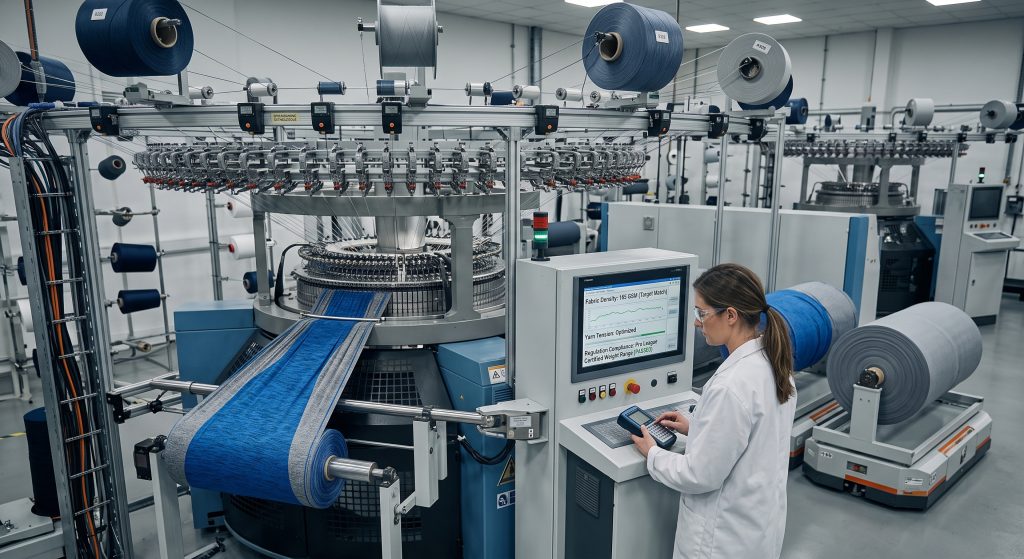
Advanced licensed sports fabric maintains consistent weight specifications by controlling filament density and regulating yarn tension across automated industrial knitting machinery. Meeting these precise weight parameters is required to comply with the rigid regulations enforced by professional athletic governing organizations. Utilizing premium licensed sports fabric guarantees that your factory produces apparel that never bogs down competing players with unnecessary fabric mass. Maintaining accurate material weight profiles ensures predictable draping characteristics and highly consistent sizing consistency across large manufacturing batches.
What are target GSM specs for leagues?
Think about it. Grams per square meter (GSM) represents the foundational metric used by apparel manufacturers to evaluate fabric thickness and structural density. Professional athletic leagues demand specific GSM ranges for different sports to balance protection with competitive agility on the field. Utilizing uncertified textiles often results in weight fluctuations that cause finished uniforms to fail official pre-game equipment inspections, resulting in severe penalties for the team.
- Lightweight racing shirts utilize a tight 130-150 GSM matrix to maximize ventilation and speed.
- Standard team jerseys demand a robust 180-220 GSM configuration to withstand continuous physical contact and pulling.
- Strict quality control testing ensures that weight deviations across huge fabric rolls remain under three percent.
Eliminating unexpected weight deviations protects your manufacturing facility from violating strict wholesale contract delivery terms. Consistent GSM tracking guarantees that large garment shipments maintain uniform insulation properties and identical structural elasticity across all sizes. Partnering with a technically advanced mill provides your cutting room with highly stable, predictable performance textiles. Key Takeaway: Standardizing your procurement around certified GSM targets prevents costly compliance failures and guarantees uniform performance across all teams.
Balancing thread count and breathability
Here is the deal. Maximizing structural durability without suffocating the wearer requires a highly precise balance between thread count density and air permeability. Increasing the thread count too aggressively creates a heavy barrier that traps body heat and accelerates player fatigue during long games. Professional textile engineers solve this problem by combining high-denier structural yarns with open micro-mesh accent patterns in high-heat zones, maintaining top-tier protection while maximizing airflow.
- Micro-porous knit variations allow fresh air to circulate freely while preserving the underlying fabric burst strength.
- Premium high-filament yarns pack more individual fibers into a thinner thread to decrease weight while maintaining strength.
- Targeted ventilation zones woven directly into the main panels maximize cooling without introducing weak structural seams.
Implementing these engineered airflow grids allows your production facility to manufacture specialized multi-sport jerseys that excel in hot conditions. This advanced construction methodology directly fulfills the multi-faceted comfort demands of professional athletic procurement teams. Selecting balanced substrates provides your garment line with an immediate competitive advantage in terms of raw comfort. Key Takeaway: Selecting fabrics that optimize the density-to-breathability ratio ensures that your manufacturing output delivers peak comfort under extreme operational stress.
| Garment Category | Target GSM Range | Primary Performance Benefit |
| Elite Marathon Singlet | 120 – 140 GSM | Minimal Weight Burden |
| Professional Soccer Kit | 160 – 180 GSM | Balanced Aerodynamics |
| Heavy-Duty Rugby Shirt | 240 – 260 GSM | Maximum Structural Strength |
The empirical weight distribution table highlights how specialized textile weights are precisely tailored to meet specific athletic movement demands.
7. Can licensed sports fabric improve athlete comfort?
High-performance licensed sports fabric improves athlete comfort by actively reducing mechanical skin friction and eliminating excess body heat during prolonged physical exertion. Eliminating these physical distractions allows competitive players to maintain focus on their tactical execution rather than dealing with garment discomfort. Product design teams leverage these advanced synthetic fibers to build comfortable apparel options that protect against painful skin chafing. Implementing smooth flat-lock stitching methods alongside adaptive textiles maximizes overall player mobility across diverse sports.
Friction reduction during high-intensity motion
But here’s the kicker… Repetitive athletic movements cause standard rough textiles to rub painfully against wet skin, creating severe blisters and deep chafing wounds. This painful skin irritation rapidly reduces player running efficiency and decreases overall focus during critical moments in the game. Integrating ultra-smooth micro-polyester filaments creates a slippery internal face that glides effortlessly across the body during intense movements, minimizing epidermal stress.
- Hydrophobic polymer coatings lower the surface friction coefficient of the material even when completely saturated with sweat.
- Soft low-denier fiber configurations prevent the material from stiffening up after exposure to salty perspiration.
- Circular interlock knitting methods smooth out the inner fabric face to protect sensitive skin zones from abrasion.
Minimizing skin abrasion directly safeguards the physical well-being of the players throughout grueling tournament schedules. This mechanical protection framework is paramount for high-motion sports that demand continuous running or repetitive swinging actions. Specifying low-friction substrates highlights your commitment to engineering high-end, worker-friendly team uniforms. Key Takeaway: Prioritizing low-friction textile solutions enhances user comfort and establishes your product line as a premium choice for professional buyers.
Thermo-regulation properties of synthetic blends
Ready for the good part? Maintaining a stable core body temperature prevents premature muscle fatigue and guards against dangerous overheating during intense outdoor summer games. Advanced synthetic fabric blends utilize custom cross-sectional fiber shapes that create an efficient thermal barrier while accelerating evaporative cooling. This specialized engineering ensures that athletes remain perfectly cool in scorching heat and stay appropriately warm during cold stadium bench periods.
- Specialized cross-shaped fibers maximize heat dissipation by expanding the available evaporation surface area.
- Dynamic thermal insulation layers trap a thin protective cushion of warm air when ambient temperatures drop suddenly.
- Smart synthetic configurations reject external environmental moisture while allowing body heat vapor to escape freely.
Maintaining internal thermal balance allows sports teams to perform consistently regardless of volatile outdoor weather shifts. This multi-seasonal adaptability makes your custom apparel line highly attractive to corporate distributors seeking year-round market viability. Investing in thermo-regulated fibers expands your commercial footprint into both elite winter sportswear and summer activewear sectors. Key Takeaway: Offering multi-seasonal thermo-regulation capabilities helps your garment factory capture lucrative year-round team apparel supply contracts.
| Performance Metric | Advanced Synthetic Blend | Standard Cotton Textile |
| Core Temp Regulation | Active Stabilization | Poor Passive Response |
| Moisture Retention | Less than 1% Weight | Up to 8% Weight |
| Friction Coefficient | Ultra-Low | High Abrasive Risk |
This performance matrix details why advanced synthetic fabric configurations outclass traditional organic fibers in professional athletic environments.
8. How to wash licensed sports fabric without shrinking?
Washing licensed sports fabric without causing shrinkage requires utilizing specialized low-temperature laundering protocols combined with high-grade synthetic structural pre-stabilization during the initial manufacturing process. Preserving the exact dimensions of team apparel is critical because tight uniform tolerances leave absolutely no room for post-wash distortion. Commercial laundries rely heavily on pre-shrunk licensed sports fabric variants to guarantee that professional garments maintain their original tailored fit throughout a long season. Educating your commercial clients on correct laundering guidelines prevents premature garment aging and avoids costly customer complaints.
Thermal stabilization during textile finishing
This is where it gets interesting… Industrial textile finishing plants pass premium synthetic materials through high-temperature heat-setting ovens to lock the polymer fibers into a permanent matrix. This critical manufacturing step eliminates internal molecular stresses created during the intensive knitting process, ensuring that the fabric will not contract when exposed to warm water later on. Budget fabric suppliers frequently skip this step to accelerate output, leading to severe dimensional warping when the customer launders the final product.
- Industrial heat-setting at 190 degrees Celsius establishes excellent long-term dimensional memory within the polyester fibers.
- Tensionless drying systems eliminate structural stretching during manufacturing to avoid subsequent post-wash shrinkage.
- Molecular cross-linking steps stabilize the structural length and width of the fabric against hot water distortion.
Securing structural dimensional memory protects your custom tailoring workshop from experiencing erratic fabric distortion during automated assembly. Finished garments maintain their precise design lines, protecting your brand from negative customer reviews regarding fit inconsistency. Incorporating pre-stabilized substrates represents a vital operational safeguard for high-volume custom garment manufacturing facilities. Key Takeaway: Sourcing pre-stabilized textiles protects your garment manufacturing workshop from unexpected size changes during customer washing cycles.
What are the core washing protocols?
What’s the real story? Maintaining the integrity of custom sublimated uniforms requires strict avoidance of aggressive chemical fabric softeners and high-heat commercial drying cycles. Fabric softeners coat the technical synthetic fibers with a slick chemical layer that plugs up the micro-ventilation ports and completely destroys the moisture-wicking mechanism. Implementing mild liquid detergents combined with gentle low-temperature air drying preserves the elastic rebound properties of the activewear for dozens of consecutive wash cycles.
- Cool water washing cycles below 30 degrees Celsius protect the structural longevity of custom elastane elastic blends.
- Neutral pH liquid detergents clean away heavy grass and dirt stains without degrading the polymer fiber strength.
- Line drying or low-heat mechanical tumbling prevents thermal degradation of the heat-transferred sponsor logos.
Adhering to these mild maintenance standards preserves the structural integrity and aesthetic clarity of high-contrast team uniforms over multiple years. Providing comprehensive laundering guides alongside bulk uniform deliveries builds deep customer confidence and significantly reduces post-sale product complaints. This proactive service approach establishes your business as a dedicated expert in the high-performance team uniform landscape. Key Takeaway: Providing clear washing instruction labels with every bulk delivery reduces return rates and builds immense trust with corporate buyers.
| Laundry Parameter | Recommended Protocol | Forbidden Practice |
| Water Temperature | Cool (Under 30°C) | Hot (Over 60°C) |
| Detergent Choice | Neutral Liquid Type | Harsh Bleach Compounds |
| Drying Methodology | Air Dry / Low Heat | High-Heat Commercial Dry |
Following these explicit laundering parameters guarantees that professional athletic uniforms look brand new for multiple consecutive competitive seasons.
9. What makes licensed sports fabric sustainable?
Modern licensed sports fabric achieves exceptional environmental sustainability by replacing virgin petroleum-based raw materials with certified recycled polyester fibers sourced from post-consumer plastic bottles. This eco-friendly manufacturing transition reduces carbon emissions significantly while matching the exact tensile strength and color absorption performance of traditional synthetics. International apparel brands actively seek out sustainable options to satisfy strict corporate environmental mandates and appeal to eco-conscious consumers globally. Partnering with certified eco-friendly texturizing plants elevates your manufacturing profile in competitive global apparel bidding processes.
Recycled polyester options for green sourcing
Think about it. Utilizing recycled polyethylene terephthalate (rPET) fibers allows your factory to divert massive quantities of plastic waste away from global ocean ecosystems and landfills. These post-consumer plastic bottles are collected, sanitized, and melted down into high-purity polymer chips before being extruded into premium spinning filaments. The resulting high-performance recycled yarn performs identically to virgin polyester on automated high-speed circular knitting machinery, yielding excellent commercial results.
- Sourcing certified rPET yarns reduces factory energy consumption metrics by nearly forty percent during production.
- Advanced refining systems eliminate chemical impurities to ensure that recycled yarns match virgin fibers in tensile strength.
- Eco-friendly dye systems minimize industrial wastewater contamination during the custom color matching phase.
Deploying rPET filaments within your core activewear product lines provides an authentic answer to the growing global demand for circular manufacturing processes. This progressive manufacturing approach helps corporate apparel brands attract younger demographics who prioritize ecological transparency when selecting custom team merchandise. Transitioning to green sourcing protects your business from shifting regulatory supply chain environments. Key Takeaway: Transitioning your core inventory toward recycled synthetics positions your business as a forward-thinking partner for global sports brands.
Compliance standards for global textile supply
Here is the deal. Authenticating your environmental sustainability claims requires obtaining globally recognized textile certifications that track the raw material chain of custody from origin to finished product. Without these verifiable third-party audits, international corporate buyers will reject your bids out of fear of public greenwashing scandals. Securing official environmental certifications confirms that your production processes respect strict ecological and chemical safety limitations.
- The Global Recycled Standard (GRS) verifies the precise percentage of recycled content present within each fabric batch.
- OEKO-TEX Standard 100 certifications guarantee that your technical textiles contain zero dangerous chemical residues.
- Traceable supply chain documentation provides corporate compliance officers with complete transparency during procurement reviews.
Accumulating these highly respected regulatory seals simplifies the validation process during intensive corporate vendor evaluation cycles. Providing verifiable eco-certifications instills complete confidence in international apparel distributors looking to protect their public market positioning. This administrative rigor strengthens your position as a trusted, high-tier supplier within the international textile trade. Key Takeaway: Accumulating official textile certifications removes major friction points during corporate procurement audits and justifies premium wholesale pricing tiers.
| Sustainability Standard | Verification Focus | Value to Commercial Buyers |
| Global Recycled Standard | Recycled Material Content | Verifiable Green Marketing Claims |
| OEKO-TEX Standard 100 | Chemical Safety Testing | Consumer Skin Protection Guarantee |
| Bluesign System | Total Environmental Impact | Clean Production Compliance Assurance |
The provided compliance overview highlights the essential certifications required to satisfy the strict procurement mandates of international corporate sportswear brands.
10. Who supplies certified licensed sports fabric wholesale?
Sourcing premium certified licensed sports fabric wholesale requires partnering directly with established industrial textile mills that maintain advanced manufacturing technologies and hold verified global quality management credentials. Working directly with the primary manufacturer eliminates expensive middleman markups and grants your design team direct access to custom fabric engineering services. Establishing a direct supply relationship with a reputable manufacturer like licensed sports fabric supplier guarantees highly consistent material quality across massive multi-year rollout schedules. Conducting thorough vendor evaluations protects your operational workflow from unexpected supply chain disruptions and volatile pricing shifts.
Verifying manufacturing plant credentials
But here’s the kicker… A glossy marketing brochure can easily conceal an outdated production workshop that struggles with severe color variation and unpredictable delivery delays. Savory procurement managers must demand official documentation proving that the textile mill operates under strict quality management protocols before placing a down payment. Requesting physical fabric swatches and conducting independent laboratory tests reveals the true performance capabilities of the supplier products before you sign any contracts.
- ISO 9001 certifications confirm that the manufacturing plant follows rigorous, repeatable quality control procedures.
- On-site factory inspections verify that the mill possesses the necessary machinery to maintain uniform fabric density.
- Independent laboratory reports confirm the material performance metrics match the data sheets provided by the sales team.
Thoroughly reviewing these plant credentials protects your manufacturing enterprise from unexpected production halts due to substandard raw materials. Partnering with an authenticated facility guarantees that every shipment exhibits identical tensile limits and color saturation behaviors. This proactive verification process minimizes structural surprises and solidifies your manufacturing workflow. Key Takeaway: Verifying supplier credentials thoroughly protects your operation against late delivery penalties and costly material defects.
Evaluating production capacity for bulk orders
What’s the real story? Securing a massive uniform contract with a national sports league is an incredible milestone, but it quickly becomes a nightmare if your textile supplier cannot produce enough volume to match your production schedule. Your manufacturing partner must possess massive automated knitting banks and highly efficient dye houses capable of processing thousands of meters daily without sacrificing detail. Partnering with a financially stable mill ensures they can scale up operations rapidly when your business enters a major growth phase.
- High-capacity circular knitting installations guarantee a reliable supply of raw fabric during seasonal demand spikes.
- Automated dye dispensing machinery ensures flawless color matching precision across distinct manufacturing shifts.
- Strategic logistical partnerships facilitate rapid international customs clearance and dependable bulk shipping timelines.
Confirming bulk throughput capacity ensures that your assembly line remains fully operational during peak custom uniform manufacturing seasons. This scaling safety margin allows your enterprise to pursue massive international apparel distribution contracts with absolute peace of mind. Aligning with a high-volume textile leader underpins your operational expansion strategy. Key Takeaway: Aligning with a high-capacity textile producer gives your company the necessary scaling capability to dominate the wholesale team apparel market.
| Evaluation Parameter | Ideal Manufacturer Profile | High-Risk Broker Profile |
| Quality Control System | Certified ISO 9001 Facility | Unverified Loose Protocols |
| Machine Ownership | Direct Factory Asset Control | Third-Party Outsourced Lines |
| Sourcing Transparency | Complete Chain Documentation | Obscured Origin Records |
This vendor assessment grid serves as a practical blueprint for selecting a dependable wholesale manufacturing partner for long-term corporate growth.
Navigating the complex technical landscape of professional athletic uniform sourcing requires an absolute commitment to material longevity, precise weight regulation, and certified manufacturing compliance. By selecting advanced double-knit synthetic substrates that seamlessly hide mechanical elongation and absorb vibrant sublimation dyes, your apparel company can confidently secure highly profitable long-term supply contracts with elite sports teams. This comprehensive buying guide equips your procurement department with the necessary insights to evaluate fabric structural differences and build relationships with high-capacity wholesale suppliers.
We stand prepared to empower your apparel production line with premier technical textiles engineered specifically for the highest levels of competitive sport. Our dedicated manufacturing facility specializes in fabricating cutting-edge warp-knit and circular-knit synthetics that deliver exceptional field durability and pristine graphic presentation under extreme stress. Partnering with a reliable producer allows your business to scale operations efficiently and satisfy the most demanding corporate apparel requirements. To elevate your activewear product lines and secure your next major team uniform contract, contact us today to receive specialized material swatches and custom engineering consultations tailored precisely to your operational needs.
Frequently Asked Questions
Q1: Can I use licensed sports fabric for tight-fitting compression apparel?
Yes, you can confidently implement this technical textile for compression garments because its high-elastane synthetic matrix delivers exceptional multi-directional rebound performance. This heavy-duty recovery capability prevents permanent fabric bagging while supporting muscle groups during explosive athletic movements.
Q2: What’s the best printing method to apply team logos on this material?
Dye sublimation printing represents the ultimate choice for applying vibrant graphics because the high-temperature process permanently bonds the pigment molecules inside the polyester fiber core. This advanced molecular integration guarantees that your logos will never crack, peel, or fade under industrial laundering cycles.
Q3: How do I know if the fabric weight matches league requirements?
You can easily verify the material suitability by measuring a sample circular swatch using a calibrated digital scale to calculate the precise grams per square meter (GSM). Matching this empirical measurement against official league equipment guidelines ensures complete compliance before beginning full-scale production.
Q4: Can I source this technical athletic textile with eco-friendly certifications?
Yes, premier global manufacturers supply this high-performance fabric constructed from certified recycled polyester fibers derived from post-consumer plastic bottles. Sourcing these certified options allows your apparel brand to satisfy strict green procurement mandates without sacrificing tensile strength.
Q5: How do I prevent color bleeding when washing high-contrast team jerseys?
You must utilize cool water washing cycles below 30 degrees Celsius combined with neutral pH liquid detergents to completely eliminate the risk of dark pigment migration. Selecting base fabrics that have undergone industrial thermal stabilization prevents colors from leaching into adjacent white panels.