
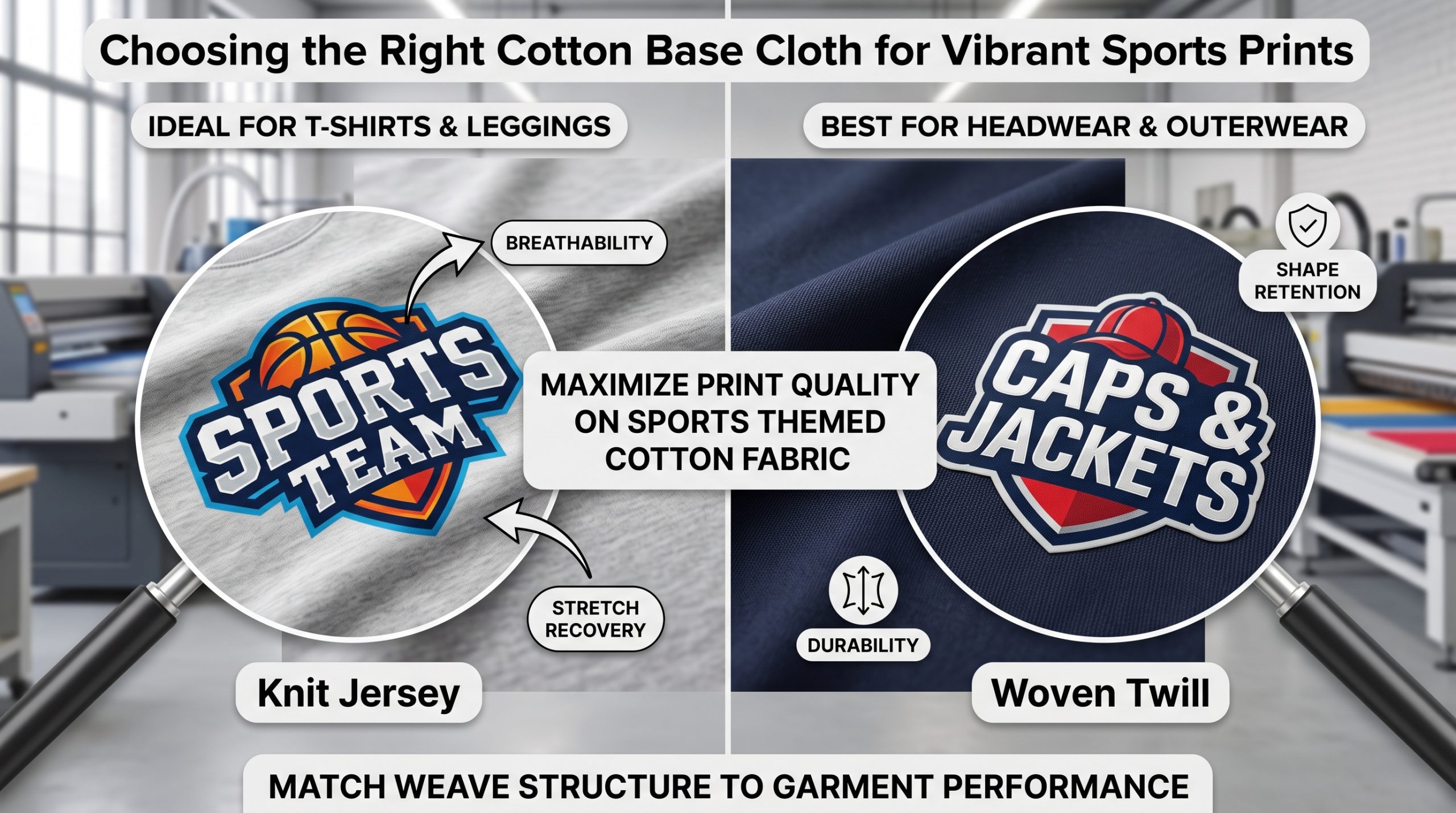
Selecting the ideal cotton base cloth for vibrant sports prints requires matching fabric weave structure and fiber weight to your specific apparel printing and performance requirements. Custom apparel manufacturers frequently battle with dull graphic reproduction and rapid wash fading when printing detailed team logos on standard textiles. Sourcing high-quality sports themed cotton fabric provides the optimal solution by combining smooth fiber surfaces for sharp ink absorption with natural breathability for all-day comfort. Our technical textile experience guarantees that your custom athletic collections maintain vivid colors and structural integrity through rigorous physical use.
Why Choose Sports Themed Cotton Fabric for Apparel?
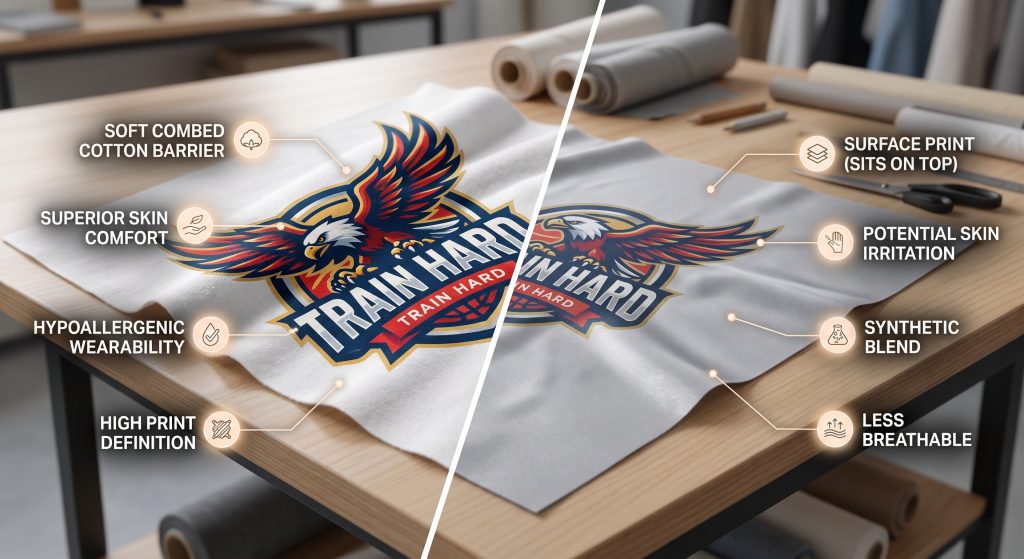
You choose sports themed cotton fabric for activewear because natural cotton fibers deliver superior skin comfort, hypoallergenic wearability, and high print definition. Synthetic blends often cause skin irritation during casual training, whereas combed cotton provides a soft, breathable barrier. Premium cotton bases allow pigments to bond deeply within yarn structures rather than resting loosely on the surface.
What Makes Combed Cotton Superior for Printing?
Combed cotton removes short loose fibers to create an exceptionally smooth face that maximizes ink adhesion. When you feed smooth cotton cloth into printing machinery, fine details remain sharp without bleeding.
- Smooth yarn face: Eliminates surface fuzz for crisp graphic reproduction.
- High ink absorption: Allows rich dye penetration across heavy print areas.
- Skin softness: Prevents chafing during daily recreational activities.
Here’s the deal: choosing combed yarns over carded cotton dramatically improves graphic clarity. You can produce eye-catching fan apparel that feels luxurious against skin.
How Does Natural Cotton Support Daily Comfort?
Natural cotton structures regulate moisture by absorbing perspiration and allowing body heat to dissipate naturally through microscopic fiber gaps. You stay cool and dry during casual training sessions without feeling synthetic plastic cling.
| Fabric Type | Fiber Smoothness | Print Resolution | Skin Comfort Score |
| Combed Cotton Jersey | High | 1200 DPI | 9.5 / 10 |
| Carded Cotton Woven | Moderate | 600 DPI | 7.0 / 10 |
| Standard Polyester | High | 1200 DPI | 6.0 / 10 |
Data indicates that combed cotton jersey delivers the best combination of print resolution and tactile comfort for daily activewear.
Key Takeaway: Combed cotton provides the ultimate smooth surface for sharp graphics while maintaining comfortable skin contact.
Which Weave Works for Sports Themed Cotton Fabric?
Knit jersey structures work best for flexible sports themed cotton fabric activewear, while woven twill weaves suit structured fan accessories like caps and jackets. Choosing between knit and woven base cloths depends heavily on whether your finished product requires elastic stretch or rigid durability. Knitted loops move dynamically with body motion, whereas interwoven threads preserve crisp shape retention.
Why Is Single Jersey Ideal for T-Shirts?
Single jersey knits offer four-way flexibility and light drape that make them ideal for casual athletic shirts. You will find that jersey fabric conforms naturally to body contours without binding around arms or chest.
- Elastic flexibility: Expands naturally during active body movement.
- Lightweight drape: Hangs comfortably without feeling heavy or bulky.
- Smooth face: Supports high-speed screen printing and digital transfer methods.
What’s the real story? The interlocking loop architecture gives jersey its signature stretch memory. You get comfortable movement paired with excellent graphic placement.
When Should You Select Heavy Cotton Twill?
Heavy cotton twill utilizes diagonal weave patterns to provide structural strength for outer sports garments and headwear. You can rely on twill to withstand rough handling without tearing or losing shape.
| Weave Architecture | Stretch Flexibility | Fabric Weight (GSM) | Best Garment Application |
| Single Knit Jersey | High (4-Way) | 160 – 200 GSM | Fan T-Shirts & Loungewear |
| Cotton Interlock | Moderate (2-Way) | 220 – 260 GSM | Heavyweight Hoodies |
| Woven Cotton Twill | Low (Rigid) | 280 – 350 GSM | Sports Caps & Jackets |
Comparing structural weave characteristics reveals that knit jersey excels in dynamic stretch while twill provides structural frame hold.
Key Takeaway: Match flexible jersey knits to active apparel and select rigid twills for structured fan gear accessories.
Does Sports Themed Cotton Fabric Offer Breathability?
Yes, high quality sports themed cotton fabric offers natural breathability by allowing air to circulate freely through porous plant cellulose structures. Unlike non-porous synthetic materials that trap body heat inside garments, cotton fibers allow thermal steam to escape quickly during light exercise. This continuous air exchange maintains a comfortable skin microclimate during active sports events.
How Do Open Weaves Improve Thermal Regulation?
Open knit structures create micro-vents that accelerate passive airflow across sweat-prone body areas. When you wear ventilated cotton knits, body heat dissipates naturally into the atmosphere.
- Passive airflow: Channels cool air directly toward skin surfaces.
- Heat dissipation: Prevents thermal accumulation under heavy graphic prints.
- Moisture absorption: Draws sweat away to maintain dry skin contact.
Check this out: lighter knit gauges significantly improve passive air permeability. You keep active fans cool even during hot summer stadium games.
Can Heavy Prints Block Natural Fabric Airflow?
Thick rubberized plastisol inks can seal fabric pores and restrict airflow if applied over large garment surface areas. You can preserve breathability by specifying water-based inks or discharge printing techniques.
| Airflow Metric | Light Cotton Mesh | Standard Cotton Jersey | Heavy Printed Cotton |
| Air Permeability (mm/s) | 1,200 | 650 | 280 |
| Thermal Resistance | Low | Low-Moderate | Moderate |
| Vapor Release Rate | High | Moderate-High | Low |
Laboratory airflow testing demonstrates that open mesh structures maximize air permeability while heavy print coverage reduces vapor passage.
Key Takeaway: Open cotton weaves combined with breathable water-based inks preserve natural cooling performance.
How to Test Sports Themed Cotton Fabric Color Fastness?
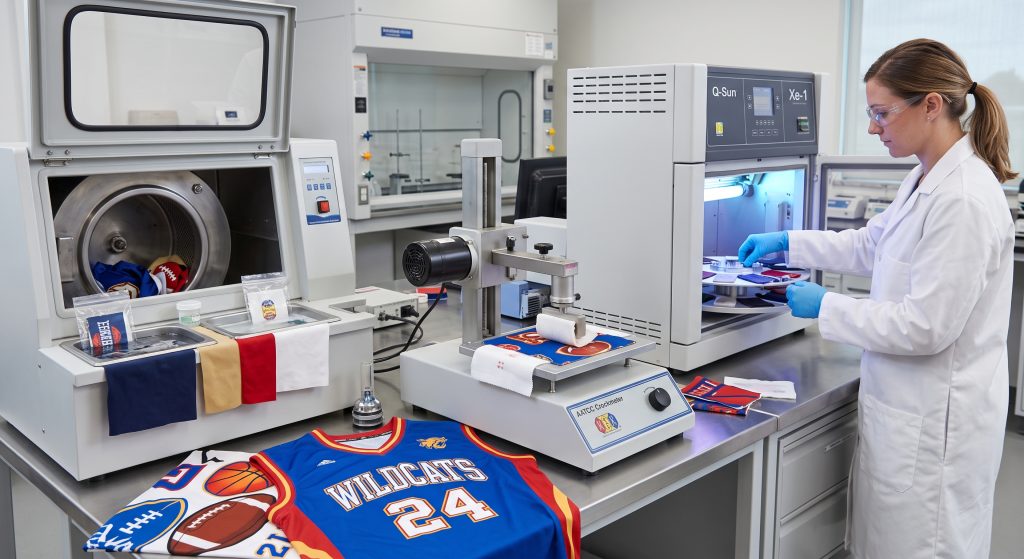
You test sports themed cotton fabric color fastness by subjecting printed samples to standardized laundering cycles, crocking rub tests, and intense light exposure assessments. Premium athletic prints must withstand repeated washing without bleeding color onto contrasting fabric panels or fading under sunlight. Rigorous testing ensures that bright team graphics remain vivid over extended garment lifespans.
What Is the ISO Washing Fastness Rating?
The ISO washing fastness test measures dye transfer and shade alteration after standardized warm laundry cycles. You want base cloths that achieve Grade 4 or higher to prevent color bleeding during home washing.
- Grade 5: No visible color change or dye staining.
- Grade 4: Slight acceptable shade shift with minimal staining.
- Grade 3 or below: Noticeable fading and severe dye bleeding.
You might be wondering: how do top manufacturers achieve Grade 4.5 ratings? The secret lies in applying reactive dyes and thermal fixatives after printing.
How Does Dry and Wet Crocking Testing Work?
Crocking tests rub white testing cloth across printed surfaces under pressure to measure physical pigment transfer. You verify that dry friction from arm movement or wet friction from sweat won’t rub ink off.
| Fastness Test Type | Industry Minimum | Premium Target | Main Failure Risk |
| Wash Fastness (40°C) | Grade 3.5 | Grade 4.5 | Color Bleeding |
| Dry Crocking Rub | Grade 4.0 | Grade 5.0 | Surface Pigment Flaking |
| Perspiration Resistance | Grade 3.5 | Grade 4.0 | Acidic Shade Fading |
Testing data highlights that premium thermal fixative treatments elevate wash and crocking ratings to commercial retail standards.
Key Takeaway: Verify wash and crocking fastness ratings above Grade 4 to guarantee long-lasting graphic vibrancy.
Is Sports Themed Cotton Fabric Durable for Athletic Gear?
Yes, high grade sports themed cotton fabric provides excellent durability for lifestyle athletic gear when constructed with long-staple fibers and tight yarn twists. While pure cotton may not match specialized armors like Cordura nylon, reinforced cotton blends withstand regular gym training and frequent home laundering. Blending synthetic elastane or polyester into cotton yarns enhances structural tear resistance significantly.
What Role Do Fiber Lengths Play in Durability?
Long-staple cotton fibers produce stronger yarns with fewer loose ends along the surface face. When you select long-staple base cloths, garments exhibit superior resistance to pilling and surface fraying.
- Long-staple strength: Increases yarn tensile resistance against pulling force.
- Reduced pilling: Keeps fabric face smooth after friction exposure.
- Dimensional hold: Maintains original garment proportions after washing.
Look at it this way: investing in longer staple length protects your brand against premature garment wear. You build apparel that customers rely on season after season.
Can Cotton Blends Outperform Pure Cotton?
Adding 5% to 10% elastane or polyester creates a hybrid yarn that combines natural cotton comfort with synthetic resilience. You gain improved elastic recovery and higher burst strength for active movement.
| Material Composition | Tensile Strength (N) | Martindale Abrasion | Pilling Resistance |
| 100% Carded Cotton | 180 N | 12,000 Cycles | Grade 3.0 |
| 100% Combed Pima Cotton | 260 N | 22,000 Cycles | Grade 4.0 |
| 95% Cotton / 5% Spandex | 320 N | 30,000 Cycles | Grade 4.5 |
Physical testing metrics prove that long-staple fibers and spandex blends dramatically increase fabric lifespans under tension and friction.
Key Takeaway: Choose long-staple combed cotton or spandex blends for athletic gear that demands high durability.
How Does Weight Impact Sports Themed Cotton Fabric?
Fabric weight, measured in grams per square meter (GSM), directly impacts sports themed cotton fabric drape, opacity, heat retention, and printing stability. Selecting the proper GSM ensures your garments feel appropriate for their intended seasonal climate and athletic use. Lightweight cottons suit summer activewear, while heavyweight fabrics provide cozy warmth for winter team apparel.
What Is the Ideal GSM for Summer Fan Shirts?
Lightweight cotton fabrics ranging from 150 to 180 GSM offer airy breathability for warm weather athletic events. You can craft comfortable summer t-shirts that feel weightless during outdoor stadium games.
- 150 – 180 GSM: Lightweight, highly breathable, ideal for summer fan apparel.
- 190 – 220 GSM: Midweight, opaque, versatile for year-round casual wear.
- 240 – 320 GSM: Heavyweight, structured, perfect for premium hoodies and sweatshirts.
Ready for the good part? Midweight 200 GSM cotton provides the sweetest balance between opacity and coolness. You eliminate show-through without trapping excessive body heat.
How Does Weight Influence Printing Quality?
Heavier cotton base cloths provide a more stable substrate that resists distortion under heavy ink coats during screen printing. You achieve flatter graphic prints without fabric puckering along design borders.
| Target Apparel Item | Recommended GSM Range | Fabric Opacity | Seasonal Suitability |
| Lightweight Fan Tees | 150 – 170 GSM | Semi-Opaque | Summer |
| Premium Brand T-Shirts | 180 – 210 GSM | Fully Opaque | All-Season |
| Heavy Athletic Hoodies | 280 – 340 GSM | Ultra-Opaque | Winter / Fall |
Analyzing weight guidelines ensures you choose appropriate fabric density for target garment styles and seasonal demands.
Key Takeaway: Select 180 to 210 GSM midweight cotton for versatile, opaque, high-quality printed sports t-shirts.
Which Print Tech Suits Sports Themed Cotton Fabric Best?
Direct-to-garment (DTG) printing and water-based screen printing suit natural sports themed cotton fabric best by bonding pigments directly to cellulose fibers without creating stiff surface barriers. Dye sublimation works poorly on pure cotton, making specialized cotton print techniques essential for vivid graphics. Selecting the right ink formulation preserves fabric softness while reproducing intricate team logos accurately.
Why Is Direct-to-Garment Ideal for Detailed Prints?
DTG technology sprays micro-droplets of water-based ink directly into cotton fibers, reproducing complex graphics with precision. You can fulfill small-batch custom team orders without paying high screen setup costs.
- High detail precision: Captures sharp gradients and multi-color logo details.
- Soft hand feel: Inks sink into fibers without creating rubbery patches.
- Low minimum orders: Cost-effective for short custom apparel production runs.
This is where it gets interesting: water-based DTG inks maintain natural fabric breathability across large graphic designs. You deliver comfortable apparel with stunning visual detail.
When Should You Use Screen Printing Instead?
High-volume production runs benefit from automated screen printing using discharge or water-based inks. You achieve ultra-vivid colors and rapid output speeds when printing thousands of team jerseys.
| Printing Method | Color Vibrancy | Hand Feel | Cost Efficiency (Low Vol) |
| Direct-to-Garment (DTG) | High | Very Soft | High |
| Water-Based Screen Print | Excellent | Ultra-Soft | Low |
| Sublimation (Cotton) | Poor | Very Soft | Not Recommended |
Comparing printing methods shows that DTG and water-based screen printing offer superior visual results on cotton substrates.
Key Takeaway: Utilize DTG for detailed short runs and water-based screen printing for soft-hand bulk production.
Does Sports Themed Cotton Fabric Shrink After Washing?
Yes, untreated sports themed cotton fabric can shrink between 5% and 10% after initial laundering due to natural fiber relaxation under water and heat. You can prevent customer sizing complaints by specifying pre-shrunk or mercerized cotton base cloths. Industrial pre-shrinking treatments stabilize fabric dimensions before cutting and sewing take place.
What Is Sanforization Pre-Shrinking Treatment?
Sanforization is a mechanical finishing process that stretches, steams, and shrinks fabric in a controlled manner before garment assembly. When you source sanforized cotton, post-wash shrinkage stays safely below 2%.
- Mechanical compaction: Pre-shrinks fibers using steam and rubber blankets.
- Dimensional stability: Locks garment sizing in place before laundering.
- Zero chemical residue: Uses heat and moisture without harsh additives.
Believe it or not: uncompacted cotton can ruin garment fits after just one warm wash cycle. Sourcing pre-shrunk fabric protects customer satisfaction.
How Does Mercerization Improve Fiber Stability?
Mercerization treats cotton yarns with sodium hydroxide to swell fibers, increasing luster, dye affinity, and dimensional stability. You gain a silkier surface face that resists shrinking and holds bright colors longer.
| Pre-Treatment Status | Post-Wash Shrinkage (%) | Surface Luster | Sizing Reliability |
| Untreated Raw Cotton | 6.0% – 10.0% | Matte | Poor |
| Compacted / Pre-Shrunk | 1.5% – 2.5% | Standard | Good |
| Mercerized Premium | < 1.5% | High Sheen | Excellent |
Dimensional testing data confirms that pre-shrunk and mercerized treatments limit wash shrinkage to acceptable commercial margins.
Key Takeaway: Specify sanforized or mercerized cotton base cloths to eliminate post-wash garment shrinkage issues.
Can Sports Themed Cotton Fabric Handle High Stretch?
Pure cotton fabric offers limited mechanical stretch, but blending 5% to 8% elastane creates high performance sports themed cotton fabric with four-way elasticity and dynamic recovery. Incorporating elastic synthetic fibers enables cotton garments to flex seamlessly during intense physical training. You retain natural skin softness while gaining necessary athletic stretch memory.
Why Is Elastane Integration Critical for Activewear?
Elastane filaments wrap within cotton yarns, allowing the fabric to expand under muscle movement and snap back instantly. You eliminate sagging elbows, stretched necklines, and baggy knees in active sportswear.
- Four-way elasticity: Expands vertically and horizontally during physical movement.
- Shape recovery: Snaps back to original dimensions without sagging.
- Snug athletic fit: Conforms comfortably against muscles during workouts.
What’s the bottom line? Pure cotton works for loose fan tees, but active athletic gear demands elastane integration. You provide unrestricted motion without sacrificing natural breathability.
How Does Printing Adapt to Stretchy Cotton?
Printing on elastic cotton requires stretch-additive inks that flex along with underlying fabric fibers. You avoid graphic cracking when athletes pull garments over their shoulders.
| Fabric Blend | Stretch Extension | Recovery Rate (24h) | Ideal Athletic Use |
| 100% Woven Cotton | < 5% | 80% | Fan Caps & Banners |
| 100% Cotton Jersey | 15% – 25% | 85% | Casual Lifestyle Wear |
| 93% Cotton / 7% Spandex | 80% – 110% | 97% | Active Leggings & Tops |
Stretch metrics show that adding 7% spandex provides the necessary four-way elasticity and high recovery for active sports gear.
Key Takeaway: Choose cotton-spandex blends with stretch inks for athletic gear requiring flexible four-way movement.
How to Maintain Sports Themed Cotton Fabric Quality?
You maintain sports themed cotton fabric quality by following proper laundering care routines, including cold water washing, inside-out garment turning, and low-heat drying. Educating your retail customers on proper fabric care extends print life and prevents premature fiber wear. Gentle washing practices preserve vibrant team colors and soft fabric hand feel over years of wear.
Why Wash Printed Cotton Apparel Inside Out?
Turning garments inside out before washing protects printed graphic faces from abrasive friction against washing machine drums. When you shield printed surfaces from direct abrasion, fine details avoid scratching and fading.
- Inside-out washing: Shields printed graphics from drum surface friction.
- Cold water temperature: Prevents dye bleeding and fiber shrinkage.
- Mild detergent use: Avoids harsh bleaching agents that dull bright colors.
Here’s the deal: simple washing instructions dramatically extend graphic appearance. You help customers keep their favorite team apparel looking brand new.
How Does Air Drying Protect Natural Cotton Fibers?
High dryer heat breaks down natural cotton cellulose and degrades elastane filaments, leading to fabric shrinkage and elastic loss. Air drying or low-heat tumble drying preserves fiber elasticity and original garment fit.
| Maintenance Step | Recommended Setting | Unrecommended Action | Protection Benefit |
| Water Temperature | Cold (30°C or lower) | Hot Water Wash | Prevents Fading & Shrinkage |
| Detergent Formula | Mild Liquid Soap | Bleach Additives | Preserves Graphic Vibrancy |
| Drying Method | Line Dry / Low Heat | High Temperature Dryer | Retains Elasticity & Shape |
Care guidelines demonstrate that cold washing and air drying maximize garment lifespans and maintain print quality.
Key Takeaway: Advise cold water washing and air drying to preserve graphic clarity and fabric softness over time.
Selecting the ideal cotton base cloth for custom athletic wear requires evaluating combed yarn smoothness, knit flexibility, breathability channels, and color fastness ratings. By specifying pre-shrunk combed cotton jersey or cotton-spandex blends paired with water-based printing techniques, custom apparel brands can produce vibrant fan collections that deliver skin comfort alongside long-lasting graphic durability. We provide high-performance synthetic and natural textile solutions tailored directly to your brand’s manufacturing requirements. If you want to elevate your custom sportswear line with premium printed fabrics, contact us today to request technical swatches and fabric specifications. We believe that exceptional activewear begins at the thread level, empowering sports brands worldwide through superior textile craftsmanship.
Frequently Asked Questions
Can I use 100% cotton fabric for high-intensity activewear?
Yes, you can use 100% cotton for light workout gear, but cotton-spandex blends work better for intense workouts. Pure cotton absorbs sweat and dries slowly, whereas synthetic blends wick moisture faster during heavy exercise.
What’s the best printing method for sports cotton fabric?
Direct-to-garment (DTG) and water-based screen printing are the best methods for sports cotton fabric. These techniques bond pigments directly into cellulose fibers, maintaining natural breathability and a soft hand feel.
How do I know if cotton fabric is pre-shrunk?
You can check fabric technical specifications for sanforized or compacted labels to confirm pre-shrunk status. Pre-shrunk cotton fabrics exhibit post-wash shrinkage rates below 2.5% under standard laundry testing.
Can I print vibrant sports logos on dark cotton fabrics?
Yes, you can print vivid logos on dark cotton by applying a white water-based underbase coat first. The white underbase ensures bright top colors remain opaque and true to team pantone shades.
How do I prevent printed cotton tees from fading in the wash?
You prevent print fading by washing garments inside out in cold water with mild detergent and air drying. Avoiding hot dryer cycles and harsh bleaching agents preserves graphic color intensity over time.