
The perfect fabric for sports clothes consists of engineered synthetic polyester knits designed to optimize athletic ventilation and design durability during intense matches. Imagine your manufacturing workshop dispatching a massive custom uniform order only for competitive players to experience severe sweating and sudden garment tears during their opening match. This frustrating gear failure immediately ruins team confidence on the field and severely damages your factory’s hard-earned market reputation among elite athletic clothing distributors. Fortunately, utilizing high-performance technical textiles provides the ultimate solution by delivering advanced moisture-wicking capabilities that safeguard player on-field performance over long competitive play seasons.
1. Why Choose Synthetic Fabric for Sports Clothes?
Selecting premium synthetic fabric for sports clothes provides unmatched material durability and outstanding dye sublimation compatibility needed for high-volume activewear manufacturing workshops globally. Polyester filaments maintain their structural shape during aggressive on-field gameplay and they accept complex printed geometric patterns without experiencing any fading or bleeding issues. Purchasing high-purity synthetic rolls safeguards that your custom apparel workshop constructs highly reliable team garments that easily withstand intense physical stretch during play. Sportswear distribution brands favor these robust synthetic bases because they deliver highly consistent product quality across large-scale commercial athletic apparel manufacturing contracts.
How do polyester filaments optimize garment prints?
Here’s the deal… because synthetic polyester filaments feature high thermal stability that allows sublimation inks to fuse directly inside their molecular cores. This advanced chemical bonding process guarantees that your custom team graphics remain exceptionally sharp and vibrant over hundreds of hard athletic laundry cycles. Using high-purity synthetic polymers protects your custom prints from cracking or peeling under harsh direct summer sun heat during long games. You can supply beautiful, high-contrast sportswear by relying on these sublimation-ready bases:
- Dyes fuse deeply to prevent surface peeling[cite: 4].
- Pores stay open for continuous cooling[cite: 4].
- Colors resist fading from UV sunlight[cite: 4].
Your activewear garment factory will secure highly profitable custom uniform manufacturing contracts by offering these exceptionally durable sublimated products to regional school leagues. Providing premium printed team gear successfully protects your workshop from expensive product returns and builds immense commercial trust with major corporate sportswear distributors. You can confidently expand your entire wholesale active apparel catalog by utilizing these highly reliable synthetic substrates as your primary custom clothing construction material baseline. Investing in top-grade print-compatible synthetic bases ensures that your finished custom clothing line commands a highly profitable premium price point in competitive markets.
| Print Metric | Sublimation Fusing | Traditional Screen Print |
| Color Durability | Permanent molecular lock | Surface layer prone to peeling |
| Fabric Hand-feel | Stays completely soft | Leaves rough, rigid sections |
Analyzing this printing data chart helps activewear factories choose the best synthetic bases for their custom product catalogs.
2. How Does Fabric for Sports Clothes Manage Body Heat?
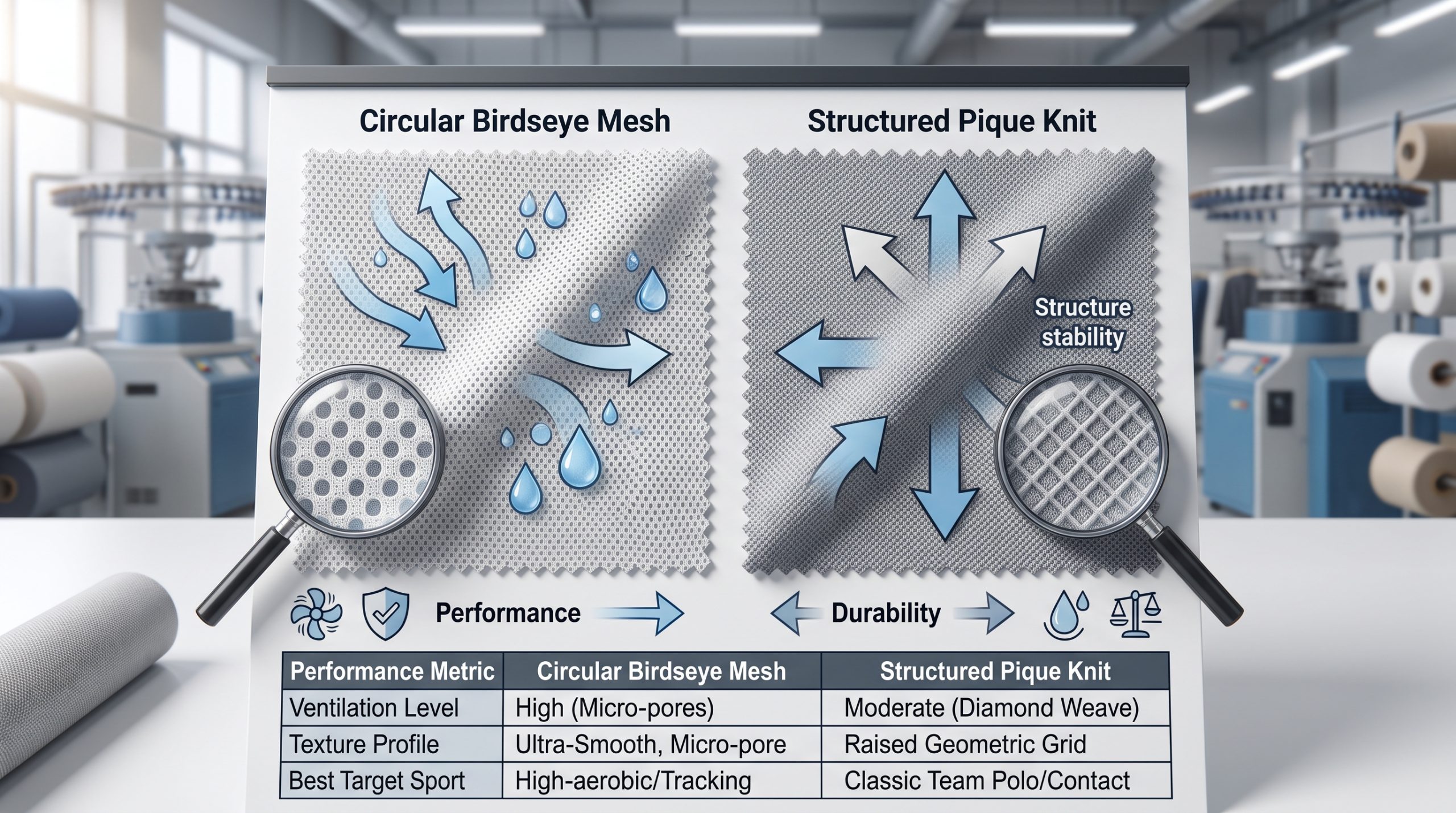
High-airflow fabric for sports clothes manages heat by creating continuous mechanical ventilation pathways that sweep warm vapor away from the skin surface during intense play. This active air circulation prevents rapid body temperature spikes that cause early player fatigue during demanding outdoor matches. Choosing specialized birdseye mesh guarantees that your finished team jerseys do not trap humid sweat during long summer tournament games. Sportswear manufacturing workshops prefer these open-cell structures because they keep athletes cool and comfortable under direct sun exposure.
Why do open knit cells prevent rapid overheating?
You might be wondering… how lightweight polyester knits can actively regulate body temperature without relying on expensive chemical treatments. The secret lies in the micro-pores that function as miniature ventilation chimneys to exhaust hot air and sweat vapor constantly. Delivering these high-ventilation jerseys allows your custom apparel company to attract elite school athletic programs that demand superior on-field utility. You can construct high-performance garments by selecting specialized knits:
- Microscopic circular holes facilitate constant convective cooling.
- Structured surface designs prevent heavy wet-clinging issues.
- Advanced knit shapes accelerate natural evaporation speeds.
Offering highly breathable circular mesh jerseys guarantees your sportswear brand delivers maximum thermal relief to active field players during hot matches. Helping school teams avoid heat exhaustion makes your custom clothing line highly competitive among regional sports league managers. You will build stronger customer relationships and secure consistent bulk reorders by prioritizing these advanced ventilation structures on your factory production lines. Sourcing these premium materials guarantees your finished activewear delivers elite performance that matches professional athletic expectations.
| Vent Metric | Circular Birdseye Mesh | Tight Interlock Knit |
| Airflow Rate | High convective circulation | Low conductive heat transfer |
| Heat Dissipation | Immediate thermal release | Delayed moisture retention |
Reviewing this ventilation chart helps sportswear developers match the proper knit style to hot climate play requirements.
3. Can Fabric for Sports Clothes Prevent Chafing?
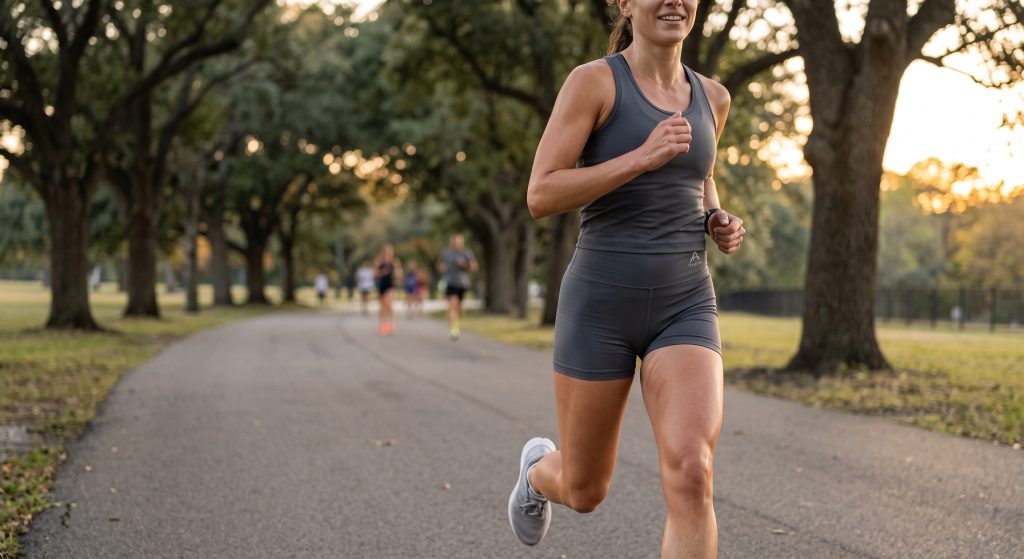
Premium smooth fabric for sports clothes prevents painful athletic chafing by minimizing surface friction against moving body joints during intensive physical play. Sourcing high-quality synthetic yarns guarantees that your production lines construct comfortable sportswear that feels soft against highly sensitive skin zones. Sportswear designers specify low-friction interior finishes to eliminate annoying skin rashes during long-distance running games. Utilizing these skin-friendly materials allows your factory to manufacture elite team uniforms that keep competitive players focused on winning.
How do flat inner seams protect active players?
What’s the real story behind reducing friction during aggressive multidirectional physical movements across court or soccer field play zones? Combining flat flatlock stitching with premium textured polyester yarns establishes an ultra-smooth interior shield that moves seamlessly along with the athlete. Your clothing factory will construct superior athletic uniforms by following these comfortable material assembly guidelines:
- Flatlock seams lie completely flat against skin.
- Textured polyester yarns mimic soft natural cotton.
- Frictionless inner surfaces eliminate active joint chafing.
Sourcing smooth technical synthetics guarantees your manufacturing plant produces high-comfort garments that protect active players from painful skin friction. Eliminating chafing complaints allows your custom clothing brand to win lucrative supply contracts with elite regional sports academies. You will secure long-term client trust and boost wholesale profit margins by delivering jerseys that remain soft during tough matches. Sourcing these premium comfort fabrics establishes your manufacturing workshop as a leading supplier of player-first athletic uniforms.
| Comfort Metric | Smooth Synthetic Knit | Rough Standard Weave |
| Friction Drag | Extremely low surface friction | High abrasive rubbing contact |
| Joint Protection | Continuous frictionless shield | Intermittent localized skin irritation |
Analyzing these tactile comfort ratings guides garment factories in choosing the softest interior structures for activewear.
4. Is Fabric for Sports Clothes Durable Under Tension?
Technical fabric for sports clothes delivers exceptional structural durability because it utilizes high-tenacity synthetic yarns that withstand severe physical pulling forces. Contact sports require robust team wear that can endure aggressive game play without tearing or experiencing severe shape distortion. Sourcing premium pique knit guarantees that your custom garments resist early pilling during demanding athletic competitions on outdoor fields. Utilizing these tough materials allows your sportswear factory to manufacture highly reliable gear that lasts multiple competitive seasons.
Why do double knits resist field snagging?
But here’s the kicker… because the interlocking loop matrix of a double-knit pique actively stops minor snags from turning into massive tears. Tightly packed synthetic fibers successfully prevent rough Velcro straps or turf pieces from catching and pulling the individual filament yarns. Your garment assembly lines will construct indestructible team uniforms by utilizing these rugged material options:
- Interlocking loops distribute sudden physical tension forces.
- Durable synthetic filaments resist fiber pilling damage.
- Stable thread structures maintain uniform shape after plays.
Sourcing high-tenacity pique textiles guarantees your finished team uniforms survive rough contact sports without showing premature physical wear. Offering robust, snag-resistant garments protects your clients’ branding and eliminates expensive mid-season product replacement claims. You will expand your market share and build strong relationships with school athletic departments by delivering indestructible play gear. Sourcing these high-strength materials secures your factory’s reputation as a top-tier manufacturer of durable athletic uniforms.
| Durability Metric | Double-Knit Pique | Basic Interlock Weave |
| Tensile Strength | Superior under heavy pulling | Moderate threshold before tearing |
| Snag Resistance | Maximum fiber defense | Low resistance to sharp friction |
Reviewing this durability data chart allows B2B procurement managers to select the most rugged knits for contact sports.
5. How Fast Does Fabric for Sports Clothes Dry After Exercise?
High-performance fabric for sports clothes dries incredibly fast by utilizing non-absorbent synthetic fibers that spread moisture across a large surface area. This swift capillary action prevents heavy, sweat-soaked uniforms from clinging to the body and slowing down active players during matches. Choosing fast-drying materials guarantees that custom garments remain light and agile even during sudden outdoor summer downpours. Sourcing these quick-drying synthetics allows your manufacturing factory to deliver elite activewear that satisfies strict athletic performance requirements.
Can star shaped filaments speed up evaporation?
Ready for the good part? Engineered synthetic fibers utilize specialized non-round cross-sections to mechanically pump moisture away from the skin in seconds. This advanced wicking system distributes liquid across the outer layer of the garment to accelerate natural air drying. You can manufacture superior sweat-wicking team jerseys by integrating these fast-drying materials:
- Hydrophobic filaments push liquid water away from skin.
- Star-shaped channels maximize moisture transport speed.
- Large surface distribution areas accelerate evaporation.
Integrating rapid-drying synthetic polymers prevents heavy sweat accumulation and keeps competitive athletes dry and focused during long games. Providing fast-drying activewear gives your custom clothing brand a massive technical advantage over traditional clothing brands in your target market. You will earn loyal wholesale buyers and secure repeat bulk orders by delivering jerseys that dry in minutes. Sourcing these quick-drying polyesters guarantees your factory builds high-performance sportswear that dominates the competitive team market.
| Drying Metric | Technical Synthetic Mesh | Standard Cotton Cloth |
| Wicking Velocity | Immediate capillary transport | Slow localized fluid absorption |
| Weight When Wet | Minimal physical mass gain | Doubles total uniform weight |
Analyzing these drying performance metrics helps clothing designers select the most efficient wicking polyesters for activewear.
6. Which Weight of Fabric for Sports Clothes Fits Your Game?
Selecting the correct weight of fabric for sports clothes requires matching seasonal playing temperatures to specific material grams per square meter (GSM). Lightweight meshes ranging from 130 to 150 GSM provide the maximum cooling speed needed for high-aerobic summer tracking games. Sourcing a versatile sports pattern fabric allows your garment company to customize uniform thickness based on specific playing environments. Aligning material weight with athletic needs guarantees that your finished garments offer both physical protection and optimal player speed.
When is midweight structured pique more appropriate?
This is where it gets interesting… because cooler autumn games or corporate team polo events demand a more substantial, structured material thickness. Midweight pique options between 175 and 200 GSM supply excellent thermal insulation while maintaining a highly professional uniform shape. Sourcing these diverse fabric weights allows your factory to satisfy varied school athletic programs:
- Lightweight 140 GSM mesh maximizes summer game cooling.
- Midweight 165 GSM interlock balances all-season utility.
- Structured 190 GSM pique provides professional polo insulation.
Offering a complete range of GSM options guarantees your custom apparel business satisfies seasonal training needs all year round. Guiding your clients toward the proper material thickness prevents player overheating or freezing during outdoor drills. You will build deep client trust and secure high-volume uniform orders by displaying precise textile expertise during procurement bids. Sourcing these versatile material weights allows your activewear brand to manufacture highly functional garments for any sport.
| Fabric GSM | Weight Category | Best Team Sport Application |
| 130 – 145 GSM | Ultra-light performance | High-velocity running and track |
| 150 – 170 GSM | Balanced team weight | Soccer and competitive hockey |
| 175 – 200 GSM | Structured midweight | Corporate presentation golf wear |
Reviewing this weight application chart simplifies the selection of correct textile thicknesses for seasonal uniform programs.
7. Does Fabric for Sports Clothes Protect Against Sun Damage?
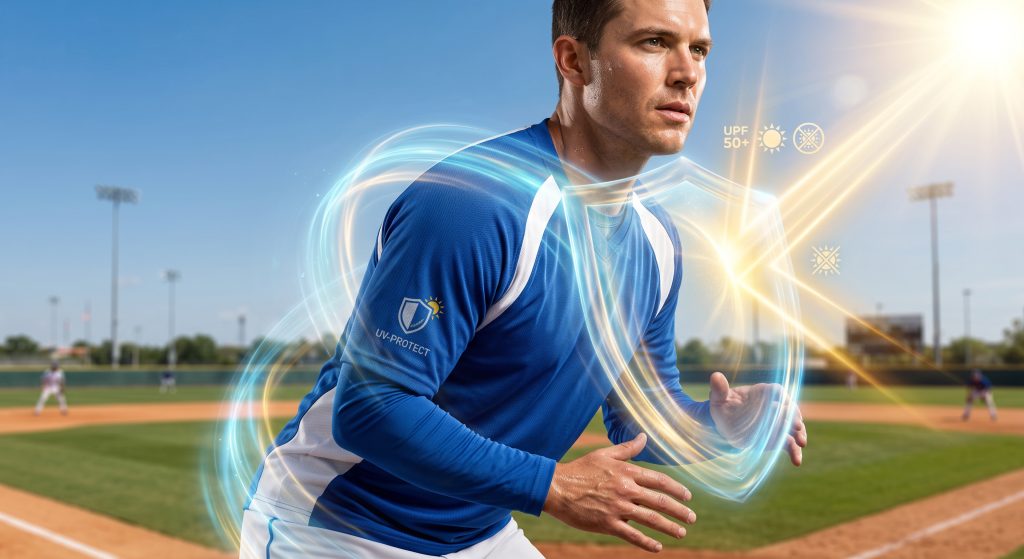
Premium UV-resistant fabric for sports clothes protects active athletes from harmful solar radiation during long-duration outdoor games and training sessions. Sourcing high-purity polyester knits guarantees that your custom garments block dangerous ultraviolet rays before they reach player skin. Sports team managers demand UV-stable activewear to safeguard players during bright summer doubleheaders on open baseball fields. Sourcing these protective textiles allows your manufacturing factory to deliver high-performance sportswear that combines safety with elite athletic performance.
How do high density polymers absorb solar rays?
What’s the real story about synthetic fibers providing built-in sun protection without needing heavy chemical spray additives that wash off? Tightly woven polymer filaments physically scatter and absorb ultraviolet radiation, keeping players safe under direct sun exposure over long seasons. Sourcing these UV-shielding materials helps your custom apparel workshop deliver highly reliable protective clothing:
- High-density knitting patterns block direct solar rays.
- UV-treated polyester fibers reflect ultraviolet energy.
- Built-in sun protection remains permanent after washes.
Sourcing built-in UV protection guarantees your custom uniforms keep players safe from direct sun exposure during outdoor sports. Delivering these protective activewear collections allows your garment brand to win major supply contracts with safety-conscious school districts. You will build long-term customer relationships and increase your market share by offering clothing that combines performance with health defense. Choosing these UV-stable polyesters guarantees your factory supplies top-grade sportswear that dominates the outdoor market.
| Sun Metric | High-Density Synthetic | Standard Organic Weave |
| UPF Protection | High block rating (UPF 50+) | Minimal defense against UV rays |
| Treatment Life | Permanent molecular shield | Short lifespan after laundering |
Analyzing these ultraviolet protection values guides activewear manufacturers in selecting the safest outdoor apparel materials.
8. Is Fabric for Sports Clothes Easy to Sew in Large Batches?
High-performance fabric for sports clothes is highly manageable on automated garment assembly lines when factory operators utilize correct needle calibrations. Dimensionally stable technical knits allow your production workshop to execute clean flatlock seams without experiencing sewing puckering errors. Keeping your assembly lines running smoothly minimizes fabric waste and helps your company hit tight wholesale shipping dates. Sourcing these process-friendly textiles guarantees that your manufacturing factory maintains high output speeds during busy peak production seasons.
Why do ballpoint needles prevent stitch runs?
Here’s the deal… because traditional sharp sewing needles pierce and break synthetic fibers, which creates microscopic holes that quickly run. Ballpoint needles utilize rounded tips to glide safely between the knit loops without cutting the high-tenacity polyester filaments. Sourcing stable technical polyesters helps your sewing operators maintain excellent efficiency during bulk runs:
- Rounded tips slip between loops smoothly.
- Chrome needle coatings lower processing friction.
- Flexible threads stretch with the fabric panel.
Standardizing on ballpoint needles and flexible threads guarantees your factory produces flawless athletic garments with perfectly flat seams. Keeping sewing errors low maximizes your workshop’s profit margins and speeds up delivery times for custom uniform orders. You will build strong B2B buyer relationships by delivering beautifully constructed sportswear that resists structural seam blowouts on field. Sourcing these production-friendly textiles is a smart way to boost overall manufacturing efficiency.
| Sewing Parameter | Optimal Factory Setup | Common Processing Pitfall |
| Needle Selection | Chrome ballpoint needles | Sharp cutting needles (causes runs) |
| Seam Connection | Flat flatlock seams | Raised interior ridge overlock seams |
Following these factory sewing specifications helps assembly plants optimize production speed while maintaining top quality.
9. How Should You Wash Fabric for Sports Clothes to Clear Pores?
Laundering high-performance fabric for sports clothes safely requires cool wash cycles and mild liquid detergents to keep wicking channels completely clear. Uniforms accumulate grass stains and sweat during play, meaning the cleaning routine must be highly effective without using harsh bleaching chemicals. Avoiding fabric softeners preserves the microscopic pores that allow technical polyesters to breathe and wick sweat away during games. Providing clear care instructions guarantees that custom jerseys stay vibrant and highly functional over hundreds of washes.
Can waxy softener residues ruin wicking paths?
But here’s the kicker… because commercial softeners apply an invisible silicone coating that clogs the open wicking channels of performance mesh. This waxy layer traps body heat inside the jersey, causing competitive players to overheat rapidly during intense summer matches. Teaching your clients to use simple liquid soap ensures that their technical uniforms perform perfectly over time:
- Mild liquid detergents wash away completely without leaving residue.
- Avoiding silicone softeners preserves the fabric’s wicking power.
- Cool washing water cycles protect sublimation ink depth.
Recommending liquid soap and cool wash cycles preserves the technical sweat-wicking features of custom team wear for years. Helping school team managers wash jerseys correctly reduces product complaints and directly boosts customer satisfaction with your clothing brand. You will secure long-term buyer trust and build strong customer loyalty by offering proactive washing care guidelines. Sourcing these durable, wash-stable polyesters guarantees your factory builds high-quality sportswear that retains its retail value.
| Laundering Factor | Safe Performance Wash | Clogging Maintenance |
| Detergent Type | Pure mild liquid detergents | Heavy powders with softeners |
| Wash Temperature | Cool water below 30°C | Scalding hot commercial cycles |
Comparing these washing routines highlights how proper maintenance preserves the technical ventilation pores of activewear.
10. Where Can You Sourcing Quality Fabric for Sports Clothes?
Sportswear brands can sourcing premium sublimation-ready fabric for sports clothes directly from established Chinese mills that operate advanced circular knitting machinery. Sourcing directly from an experienced factory guarantees that your custom apparel business secures consistent material weights and perfect color matches. Eliminating third-party trading middlemen helps your garment enterprise expand commercial profit margins on large corporate custom team contracts. Sourcing from a reliable factory allows you to request customized GSM weights and unique finishes.
Can physical swatches lower bulk purchase risks?
Ready for the good part? Testing actual textile swatches before ordering allows your procurement division to verify fabric wicking performance and dye stability. Having direct factory communication helps your design team create specialized sportswear lines tailored to specific athletic needs and playing climates. You can secure a stable supply chain by partnering directly with an automated knitting plant:
- Direct mill sourcing minimizes unit costs for bulk orders.
- Custom textile weights fit specific seasonal playing needs.
- Purity-tested polyesters guarantee exceptional graphic sublimation prints.
Sourcing technical polyesters directly from specialized circular knitting plants gives your activewear business a massive advantage in quality and cost control. Controlling your raw material supply chain helps your factory deliver consistent, professional uniforms that school team athletic managers love. You will expand your business margins and win major custom uniform contracts by securing reliable, mill-direct synthetic textiles. Direct factory partnerships provide the structural foundation needed to scale your custom activewear brand successfully.
| Sourcing Channel | Direct Knitting Mill | Middleman Trading Firm |
| Sourcing Price | Low direct factory pricing | High added commission fees |
| Custom Options | Customized GSM and finishes | Limited pre-made stock choices |
Reviewing this sourcing comparison matrix demonstrates why ordering direct from mills protects your activewear brand’s profits.
Selecting premium technical synthetic polyesters represents the absolute best method for manufacturing high-quality sportswear that delivers exceptional on-field breathability and long-lasting print vibrancy over busy play seasons. Sourcing high-strength birdseye mesh or structured double pique structures from specialized circular knitting mills protects your custom activewear brand from premature wear and costly client product returns. Our mill is dedicated to advancing custom teamwear standards globally by providing professional-grade, print-ready technical textiles engineered specifically for maximum athletic ventilation and durability during high-intensity tournament play. We invite custom apparel manufacturers and factory procurement directors to contact us today to explore our versatile performance sample swatches and secure highly competitive direct-factory pricing for your upcoming uniform production contracts.
Q1: Can I sublimate multi-colored patterns onto these textiles?
Yes, you absolutely can because high-purity polyester filaments bond permanently with sublimation inks at high temperatures. This advanced chemical bonding process guarantees that intricate camouflage patterns and custom school emblems stay exceptionally sharp and never peel, crack, or fade over long playing seasons. Unlike traditional surface screen printing that deposits heavy plastic layers over the fabric, sublimation fuses the dye directly inside the fiber matrix, guaranteeing that the technical mesh preserves its original lightweight drape, soft hand-feel, and continuous cooling breathability during active on-field use. Your custom apparel workshop can safely manufacture highly vibrant, professional-grade uniforms that retain their retail value through hundreds of commercial laundry washings.
Q2: What’s the best fabric weight for competitive soccer jerseys?
We highly recommend a lightweight 140 GSM birdseye mesh knit. This lightweight performance fabric balances outstanding structural durability with rapid sweat wicking to keep field players cool and fast during intense matches. The micro-pore geometry facilitates constant convective cooling by creating continuous mechanical ventilation pathways that release body heat instantly. Selecting this specific weight prevents uniforms from gaining heavy water weight during sudden summer downpours, ensuring soccer athletes maintain their peak sprinting speeds. Sportswear distribution brands favor this versatile knit thickness because it matches the high-aerobic endurance needs of outdoor playing environments.
Q3: How do I know if fabric softeners have clogged my uniform’s wicking pores?
You can easily check this by placing a small water drop onto the inner fabric surface. Safe, technical garments absorb liquid sweat instantly, whereas contaminated polyesters cause water droplets to bead up and roll off the technical fabric surface completely unabsorbed. This physical wicking failure happens because commercial fabric conditioning chemical agents leave a thin, invisible silicone layer over the micro-pore ventilation knit channels during laundry cycles. Clogged mesh pores trap body heat inside the jersey, causing competitive players to suffer from rapid thermal exhaustion on the field. Laundering your custom sportswear with pure liquid soap safely rinses away these problematic waxy deposits completely.
Q4: Can I order custom GSM weights for specific seasonal training needs?
Yes, custom weights are fully available when purchasing directly from our circular knitting facility. Sourcing directly from our specialized textile mill allows commercial garment buyers and factory procurement managers to adjust material thickness to perfectly match seasonal playing requirements. Your custom apparel workshop can specify lightweight 140 GSM panels for hot summer track camps to maximize active air cooling. Alternatively, you can order structured 190 GSM double-knits for cool autumn matches to provide appropriate environmental thermal insulation. This manufacturing flexibility helps sportswear brands satisfy diverse school athletic uniforms contracts successfully throughout the competitive sports calendar year.
Q5: How do I prevent thread runs during high-speed garment sewing?
Always run specialized chrome ballpoint needles on your production lines to prevent running stitches. These rounded needles slide smoothly between knit loops instead of cutting and breaking the high-tenacity polyester filaments during high-speed sewing operations. Sharp cutting needles pierce the synthetic yarns, creating microscopic holes that quickly run and ruin the entire printed fabric panel during intense gameplay tension. Standardizing on ballpoint configurations minimizes manufacturing material waste and speeds up garment assembly times. Pairing these rounded needles with flexible synthetic threads guarantees your flatlock seams stretch naturally along with the active player’s movements.