
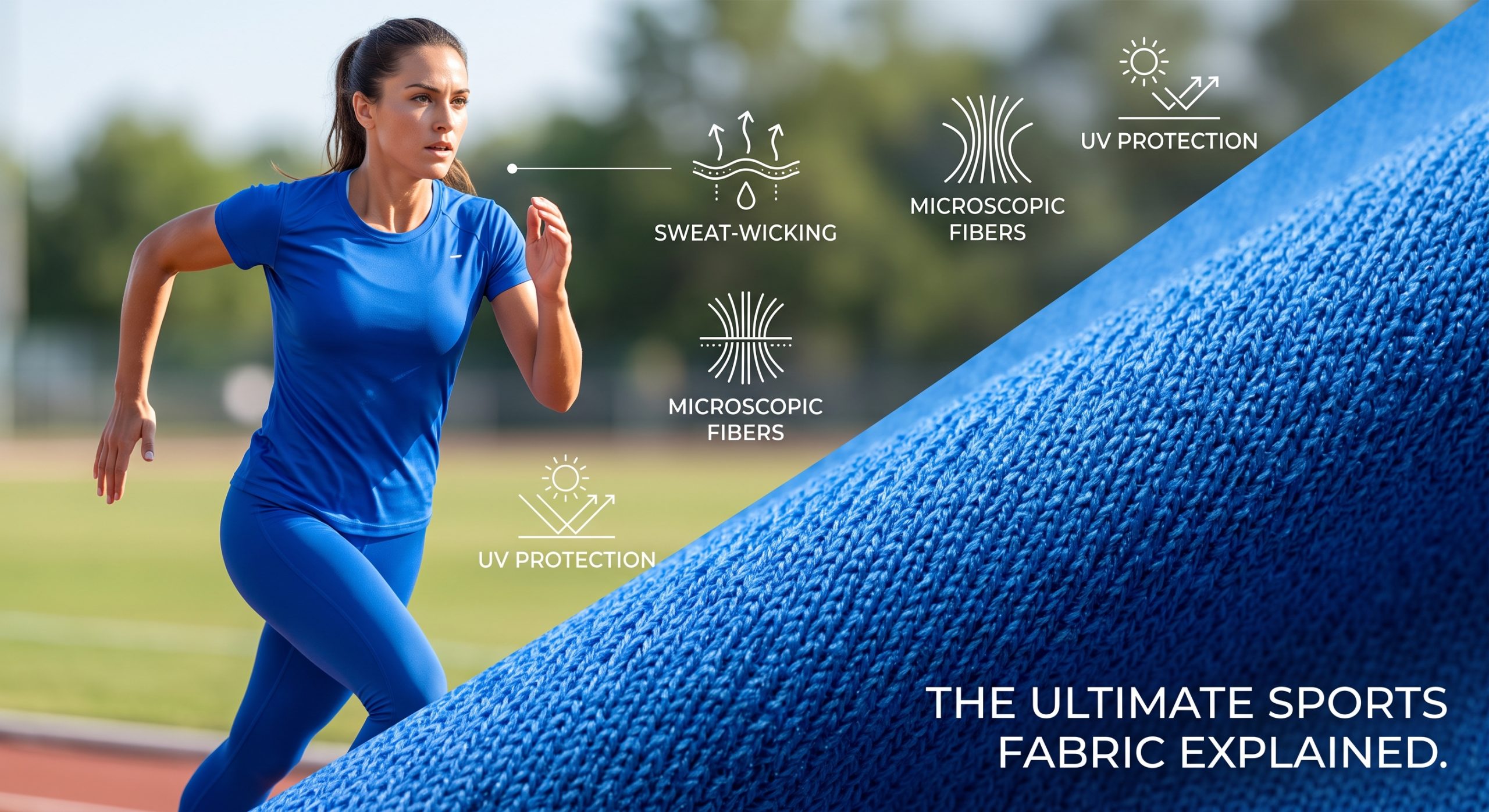
Choosing the best microfiber fabric for sports requires understanding its high-tech synthetic structure, superior sweat-wicking capabilities, and versatile activewear applications. Sweat-soaked athletic clothing often causes painful chafing and slows down athletes during intensive physical play. You might be wondering how to avoid this. A single production run with low-quality materials can destroy your activewear brand’s reputation and result in massive product returns. Fortunately, utilizing high-quality technical textiles guarantees that your factory constructs elite, irritation-free garments. Backed by over ten years of dedicated fabric manufacturing expertise, we provide the ultimate solutions for your garment lines.
1. What is microfiber fabric for sports?
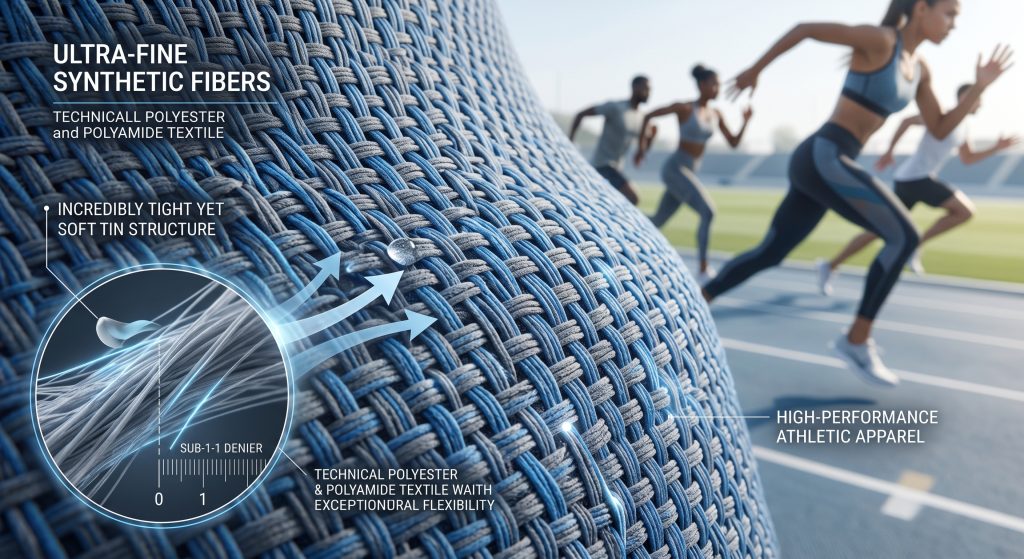
This specialized textile consists of ultra-fine synthetic fibers measuring less than one denier per filament engineered specifically for high-performance athletic apparel. Sourcing premium microfiber fabric for sports allows garment factories to manufacture highly flexible clothing. These microscopic threads usually made from polyester or polyamide create a dense but incredibly lightweight weave. Here is the deal: this unique composition yields exceptional softness that ordinary fibers simply cannot match.
How does the fine structure benefit activewear?
Manufacturers select these thin fibers because they create a vastly larger surface area than traditional threads. Ready for the good part? This physical structure enables superior air circulation and moisture transfer.
- Denier measurements below 1.0
- Split-fiber capillary networks
- Premium synthetic polymers
By using these advanced yarns, you can manufacture apparel that remains exceptionally lightweight even when wet. This guarantees active clients experience zero heavy drag during intense training.
Key Takeaway: Choosing a low-denier construction guarantees your sports apparel remains incredibly light and dry during heavy workouts.
| Fiber Characteristic | Technical Benefit |
| Microscopic Denier | Featherlight feel on skin |
| Split-Yarn Design | Rapid liquid absorption |
| Polyester Blend | Superior shape retention |
Analyzing these fiber characteristics reveals why modern apparel lines prioritize microscopic denier structures.
2. Why choose microfiber fabric for sports?
Garment brands select this performance material because it offers an unrivaled combination of thermal regulation, durability, and skin comfort. Integrating high-performance microfiber fabric for sports into your product catalog immediately improves your brand’s market value. Competitors using basic fabrics cannot match the sophisticated feel and long-lasting quality of these synthetic weaves. You might be wondering if the investment is worth it for your factory.
What are the core market advantages?
Sourcing this synthetic solution gives your factory a strong edge in the competitive B2B apparel sector. This is where it gets interesting: professional buyers actively seek out suppliers who offer certified high-performance options.
- Superior moisture management
- Highly breathable knits
- Extended product lifespan
When selecting the right knit structure, comparing bird’s eye fabric and pique fabric is key to matching user needs. Bird’s eye fabric features tiny, circular knit gaps resembling a bird’s eye, offering a smooth hand-feel and superior, rapid moisture-wicking properties. In contrast, pique fabric features a raised, textured honeycomb weave that feels slightly coarser but offers excellent structural durability and airy breathability. Choosing between them depends on whether your clients prioritize silky skin comfort or a classic textured athletic look.
Key Takeaway: Utilizing specialized high-performance textiles positions your factory as a premium supplier for top-tier athletic brands.
| Market Standard | Traditional Fabric | Microfiber Fabric |
| Durability | Low resistance | High wear resistance |
| Weight | Heavy when wet | Extremely lightweight |
| Softness | Stiff textures | Cashmere-like touch |
This comparison clearly illustrates why premium microfibers outperform standard synthetic materials.
3. How does microfiber fabric for sports dry fast?
This high-tech material dries rapidly through a physical process called capillary action which draws liquid away from the body and spreads it across a wide outer surface. Sourcing our premium microfiber fabric for sports guarantees your activewear lines maintain exceptional quick-drying speeds. Ordinary textiles absorb moisture directly into their core threads, trapping sweat against the athlete’s skin. But here’s the kicker: these specialized synthetic microstructures repel liquid, allowing it to evaporate almost instantly.
How does capillary action work here?
The secret lies in the microscopic gaps created between the tightly woven polyester and nylon strands. What’s the real story? These narrow spaces act like tiny straws that pull moisture upward and outward.
- Capillary channel networks
- Increased surface-to-volume ratio
- Hydrophobic polymer backbones
Your customers will appreciate activewear that remains dry even during the most intense workouts. This rapid dry-cycle prevents clothes from clinging uncomfortably to the skin.
Key Takeaway: Fast-drying performance guarantees that athletes remain comfortable and focused throughout intensive outdoor games.
| Fabric Class | Drying Time (Minutes) | Moisture Retention |
| Cotton Blend | 45 – 60 | High retention |
| Standard Polyester | 20 – 30 | Moderate retention |
| Microfiber Blend | 5 – 10 | Minimal retention |
Evaluating these dry times proves that microfiber structures provide unmatched moisture dispersion speeds for active players.
4. Is microfiber fabric for sports durable?
Yes, this fabric is exceptionally durable because its tight weave and high-purity synthetic polymers prevent tearing, pilling, and stretching under extreme physical stress. Sourcing premium microfiber fabric for sports guarantees that your manufactured apparel survives hundreds of rigorous wash cycles without losing its original shape. Standard cotton athletic wear quickly loses elasticity and degrades after intense physical training sessions. Ready for the good part: these resilient synthetic fibers offer superb tensile strength while remaining incredibly soft.
Why do these fibers resist wear?
The manufacturing process uses continuous filament yarns that do not break or fray easily like short natural fibers. This is where it gets interesting: the dense knitting pattern protects the material against abrasive surfaces like velcro or turf.
- Continuous filament yarns
- High abrasion resistance
- Exceptional seam strength
You can confidently offer these materials to professional teams who require uniforms that survive heavy tackling. This structural integrity guarantees that your factory builds a reputation for producing long-lasting sportswear.
Key Takeaway: High tensile strength guarantees that your finished sportswear maintains its structure and looks new after repeated heavy use.
| Durability Metric | Standard Knit | Microfiber Knit |
| Tensile Strength | Moderate | Exceptionally High |
| Pilling Resistance | Grade 2-3 | Grade 4-5 (Excellent) |
| Color Fastness | Fades quickly | Retains vibrant colors |
The testing data highlights how high-density micro-filament knits significantly outlast standard fabrics under mechanical friction.
5. Can microfiber fabric for sports stop chafing?
Yes, this fabric prevents painful chafing by minimizing skin friction during repetitive athletic movements like running or cycling. Sourcing high-quality microfiber fabric for sports guarantees that your sportswear lines protect sensitive skin zones from annoying rashes. Traditional rough textiles rub against moving body joints, creating uncomfortable friction during long outdoor matches. But here’s the kicker: the incredibly smooth surface finish of these advanced fibers eliminates skin irritation entirely.
How does the smooth texture protect skin?
The flat, uniform surface of synthetic micro-strands feels incredibly soft and frictionless against the human body. What’s the real story? By combining flatlock seams with this silk-like material, you create irritation-free sportswear.
- Smooth synthetic surfaces
- Reduced mechanical friction
- Highly elastic knit patterns
Your clients will enjoy a comfortable, second-skin fit that remains soft even when saturated with sweat. This friction-free performance keeps competitive athletes focused on winning their games.
Key Takeaway: Choosing a low-friction fabric allows your factory to manufacture elite team uniforms that prevent athletic skin irritation.
| Skin Comfort Factor | Rough Poly-Cotton | Smooth Microfiber |
| Surface Friction | High friction | Low friction |
| Tactile Feeling | Coarse and stiff | Silky and pliable |
| Skin Protection | High risk of rash | Maximum rash prevention |
These physical properties explain why professional running brands specify low-friction interior finishes for long-distance athletic play.
6. Does microfiber fabric for sports block UV rays?
Yes, premium varieties of this material provide excellent sun protection by blocking harmful ultraviolet radiation before it reaches the athlete’s skin. Sourcing protective microfiber fabric for sports with built-in UV-stability safeguards players during bright summer doubleheaders. Ordinary loose-knit textiles let dangerous solar rays pass directly through the gaps in the weave. You might be wondering how a lightweight fabric can offer such powerful sun protection.
How do dense knits deflect UV light?
The incredibly tight weave of microfiber yarns creates an effective physical barrier against incoming solar radiation. Ready for the good part? Many of these fabrics are treated with harmless UV-absorbing compounds during the dyeing phase.
- Tight micro-knit physical barrier
- Harmless UV-absorbing finishes
- High UPF 50+ protection ratings
You can supply custom jerseys to outdoor sports teams that require maximum safety under intense sunlight. This premium feature adds a major selling point to your activewear product catalog.
Key Takeaway: High-UPF textiles combine sun safety with elite athletic performance to protect players during long outdoor games.
| Protection Level | Ultraviolet Protection Factor | UV Ray Blockage % |
| Standard Cotton | UPF 5 – 15 | ~85% blocked |
| Regular Polyester | UPF 20 – 30 | ~95% blocked |
| Premium Microfiber | UPF 50+ | Over 98% blocked |
The UPF ratings confirm that high-purity micro-weaves block nearly all dangerous radiation, securing athlete skin health outdoors.
7. Is microfiber fabric for sports eco-friendly?
Yes, modern varieties of this material are highly eco-friendly when produced from recycled synthetic polymers like post-consumer plastic bottles. Sourcing recycled microfiber fabric for sports allows your brand to meet the rising global demand for sustainable sportswear. Traditional synthetic manufacturing processes consume high amounts of fossil fuels and generate excessive carbon emissions. This is where it gets interesting: choosing certified recycled textiles dramatically reduces environmental waste while maintaining premium athletic performance.
How does recycled polyester save resources?
Using recycled plastic waste reduces reliance on crude oil extraction and saves significant energy during manufacturing. What’s the real story? Brands using these green materials appeal to environmentally conscious consumers who demand clean production standards.
- Verified GRS standard
- Low energy production footprint
- Reduction of landfill plastic waste
You can market your finished activewear as environmentally responsible, boosting your brand image in major international markets. This green shift helps protect the planet while satisfying modern B2B buyer requirements.
Key Takeaway: Sourcing certified GRS textiles guarantees your sportswear lines align with modern environmental compliance standards.
| Resource Metric | Virgin Polyester | Recycled Microfiber |
| Energy Consumption | 100% (High) | ~30% to 50% Lower |
| Carbon Emissions | High footprint | Significantly reduced |
| Plastic Waste Offset | Zero | Over 5-10 bottles per shirt |
This resource assessment illustrates why global athletic brands are rapidly transitioning toward recycled synthetic textiles.
8. How to dye microfiber fabric for sports?
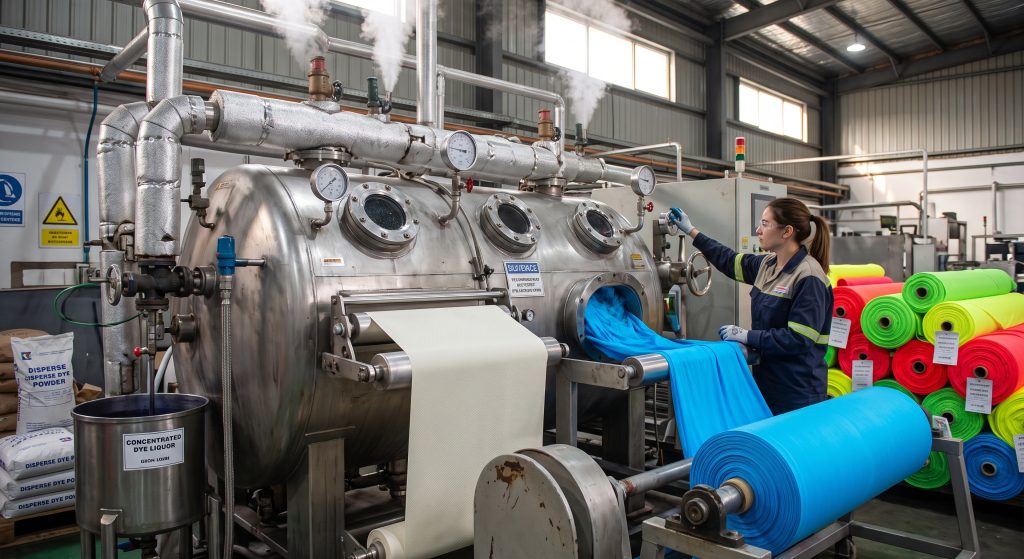
This synthetic material is dyed using specialized disperse dyes under high pressure and temperature to guarantee deep, long-lasting color saturation. Applying these advanced dyeing techniques to your microfiber fabric for sports guarantees that your team uniforms resist fading from sweat or washing. Traditional natural dyes cannot bond effectively with the dense, hydrophobic synthetic fibers used in athletic wear. Ready for the good part: disperse dyeing produces incredibly vibrant colors that remain bright through countless intense games.
Why do disperse dyes work so well?
Disperse dye molecules are highly soluble in synthetic polymers at elevated temperatures, allowing them to penetrate deep into the fibers. But here’s the kicker: once the fabric cools, the dye becomes locked inside the synthetic structure, preventing color bleeding.
- Excellent colorfastness to washing
- High resistance to sweat fading
- Vibrant neon and team shades
You can design eye-catching team uniforms with complex patterns that will not run or bleed during heavy rain matches. This exceptional color durability keeps your activewear looking professional and sharp.
Key Takeaway: Disperse dyeing processes guarantee your activewear maintains vibrant, bleed-resistant colors throughout its entire lifecycle.
| Dyeing Performance | Natural Dyes | Disperse Dyes on Poly |
| Color Saturation | Moderate | Extremely Vibrant |
| Bleed Resistance | Poor when wet | Grade 4-5 (Excellent) |
| Chlorine Resistance | Fades rapidly | Retains color depth |
The technical dyeing data shows why disperse methods are the gold standard for high-performance teamwear coloration.
9. What is microfiber fabric for sports GSM?
The GSM (Grams per Square Meter) refers to the physical weight and density of this synthetic fabric, determining its suitability for different sportswear types. Selecting the appropriate weight of microfiber fabric for sports is a critical factor when designing breathable athletic clothing. Lighter weaves are ideal for running singlets, while heavier options provide the necessary compression for leggings and winter gear. What’s the real story behind picking the perfect weight for your garment line?
How do you match GSM with sport activities?
Choosing the right weight guarantees that your activewear provides the perfect balance of breathability, coverage, and support. This is where it gets interesting: a light spandex breathable sports fabric works best for hot summer workouts, while mid-weight options are perfect for everyday gym wear.
- Lightweight (80 – 140 GSM) for running
- Mid-weight (150 – 220 GSM) for T-shirts
- Heavyweight (230 – 300 GSM) for compression
You can avoid translucent, low-quality garments by selecting the exact density needed for your specific athletic designs. This precise selection process guarantees customer satisfaction and reduces bulkiness in your final products.
Key Takeaway: Matching the exact GSM to your garment’s specific use guarantees ideal comfort and performance for the athlete.
| Sportswear Application | Recommended GSM | Fabric Characteristics |
| Running Singlets | 80 – 130 GSM | Ultra-light, highly breathable |
| Athletic Tees | 140 – 180 GSM | Balanced drape and durability |
| Compression Pants | 220 – 300 GSM | High support, opaque stretch |
Analyzing this density distribution guides garment factories in selecting the ideal weights for targeted sports lines.
10. Where to buy microfiber fabric for sports?
You can buy this premium textile directly from professional B2B manufacturers who specialize in high-performance sports fabrics and custom knitting services. Sourcing your bulk microfiber fabric for sports from an established industry supplier guarantees the lowest pricing and highest quality control. Working directly with factory mills bypasses expensive Middleman markups and allows for custom fabric development. But here’s the kicker: finding a reliable manufacturing partner is the real key to scaling your apparel brand.
Why buy directly from a certified factory?
Direct sourcing gives you full control over material specifications, eco-friendly certifications, and bulk production timelines. What’s the real story? Leading factories provide verified testing reports to back up their performance claims.
- Custom dye and weight options
- Direct wholesale pricing
- Strict quality control testing
Your business can request custom physical samples before placing large container orders, minimizing purchasing risks. This direct communication channel guarantees your production runs smoothly from start to finish.
Key Takeaway: Partnering with a reliable, direct factory partner secures your supply chain and guarantees consistent sportswear quality.
| Supplier Channel | Wholesale Pricing | Customization Options |
| Retail Fabric Store | High markup | Very limited stock |
| Trading Company | Moderate markup | Limited custom options |
| Direct B2B Mill | Lowest direct pricing | Fully customized orders |
This channel comparison clarifies why elite activewear brands prioritize direct relationships with professional textile manufacturers.
Final Thoughts on Selecting Sports Fabrics
Selecting the perfect technical textile is the foundation of any successful high-performance activewear line. This article explained how advanced synthetic micro-weaves prevent painful chafing, deflect solar radiation, and dry incredibly fast through advanced physical capillary action. By matching the right weight and density to your garments, you guarantee that competitive players remain comfortable and fully focused on winning. Ready to upgrade your manufacturing material standards?
We are here to support your production lines with certified, durable, and sustainable technical textiles that combine safety with elite performance. Let us help you eliminate production headaches, reduce return rates, and build a highly respected sportswear brand. To secure premium custom samples or discuss your bulk sports fabric requirements, contact us today to partner with a trusted manufacturing expert. Our mission is to knit the future of sports performance, one high-quality fiber at a time.
Frequently Asked Questions
Q1: Can I wash microfiber sports clothing in hot water?
No, hot water can damage the delicate synthetic micro-strands and reduce elasticity. It is best to wash these garments in cold or warm water to preserve their technical properties.
Q2: What is the best GSM for high-performance running shirts?
A lightweight density between 80 and 130 GSM is ideal. This lightweight knit provides maximum air permeability and keeps runners light during intensive workouts.
Q3: How do I know if a fabric has UV protection?
Look for a verified UPF (Ultraviolet Protection Factor) rating on the material specification sheet. A rating of UPF 50+ guarantees that the fabric blocks over 98% of harmful solar rays.
Q4: Can microfiber fabrics cause skin irritation?
No, they actually prevent irritation because their ultra-fine synthetic fibers create an incredibly smooth, friction-free surface against the skin. This silky touch eliminates painful athletic chafing during long games.
Q5: How do I order custom fabric colors for my brand?
You can order custom colors by providing a Pantone color code directly to our manufacturing team. We use high-pressure disperse dyeing to guarantee exact color matching and superior bleed resistance.