
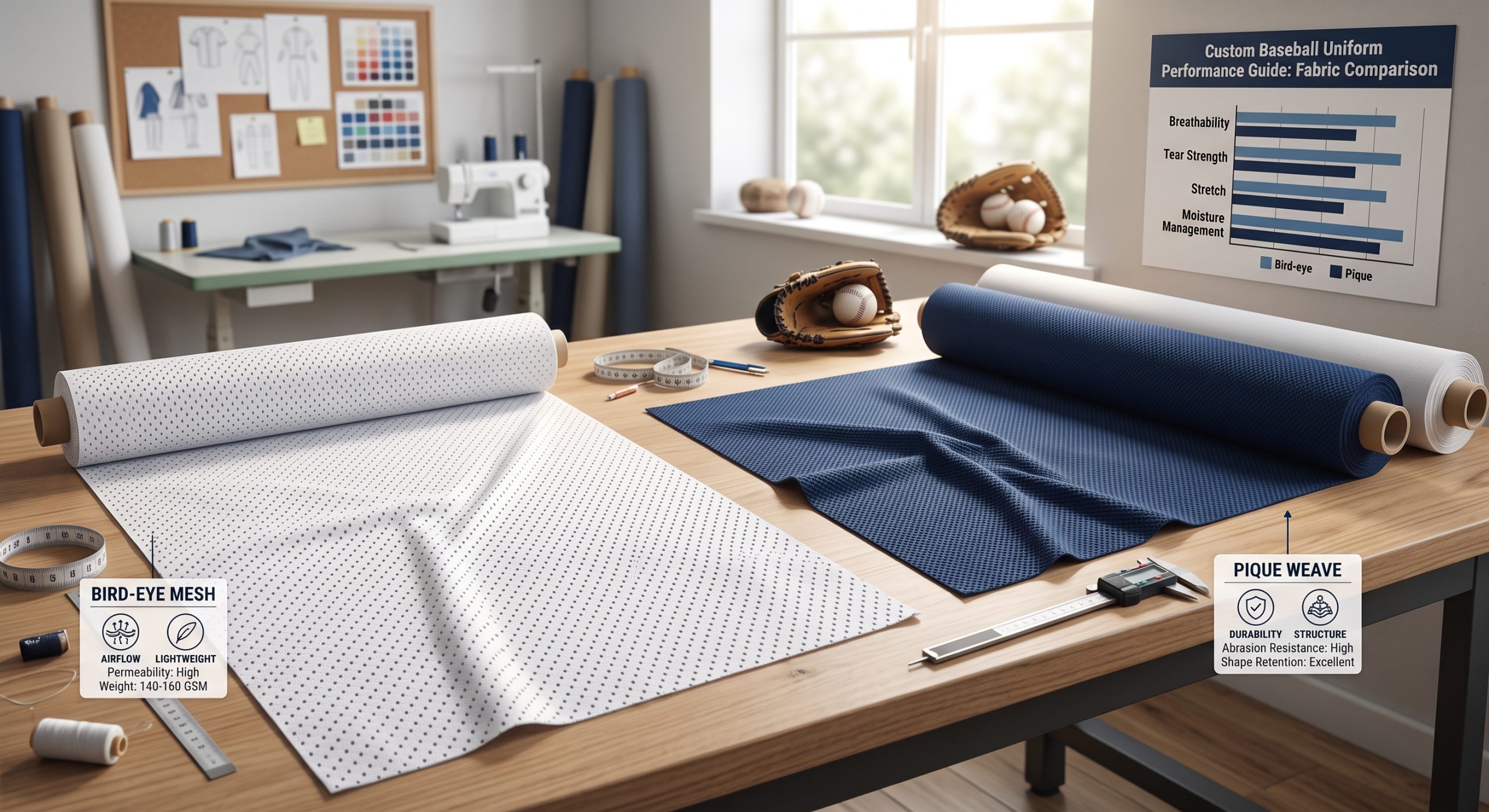
Selecting high-performance athletic textiles requires balancing breathability, tensile strength, and player comfort across demanding seasons. High school athletic directors constantly deal with torn jerseys and overheating players during humid summer doubleheaders. Garments made from cheap materials degrade rapidly after several wash cycles, draining equipment budgets and frustrating student athletes. Purchasing premium baseball fabric by the yard solves these persistent athletic apparel challenges by providing field-tested durability and superior moisture management.
Which baseball fabric by the yard Offers Superior Performance?
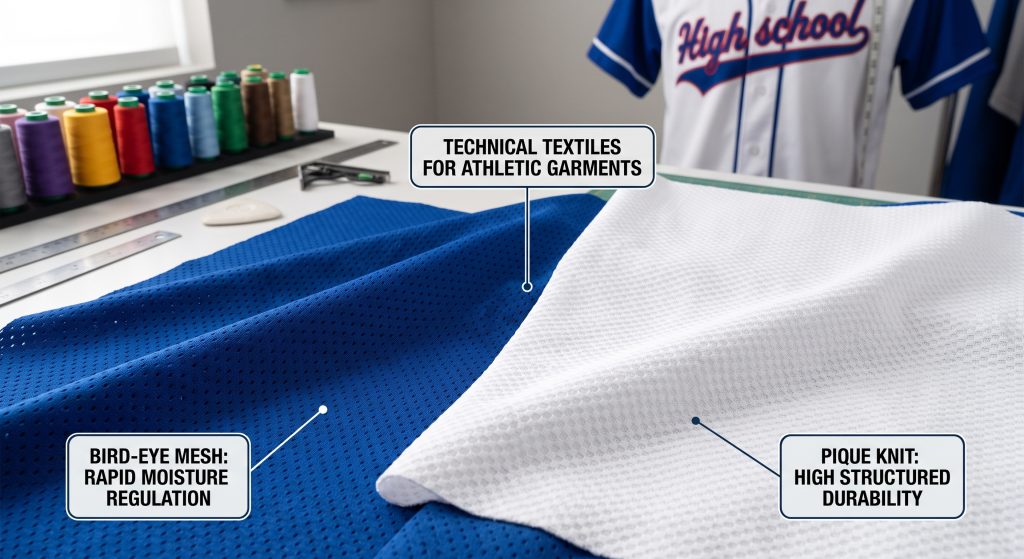
Bird-eye mesh fabric delivers rapid moisture regulation while pique knit provides high structured durability for high school athletic garments. Buying high quality baseball fabric by the yard allows apparel makers to customize team jerseys based on positional field requirements. Here’s the deal: synthetic fibers woven into specialized patterns alter field performance dramatically.
Athletic garments require technical textiles that resist friction during aggressive base sliding. Choosing between distinct knit architectures dictates how long garments remain presentable across multi-year playing schedules.
What makes bird-eye mesh distinct?
Bird-eye mesh features microscopic perforations shaped like small eyes. These tiny openings permit continuous airflow across active muscle zones during play.
- Rapid surface evaporation keeps athletes dry.
- Soft texture prevents skin chafing during long games.
- Lightweight construction eliminates unnecessary apparel weight.
How does pique weave perform under friction?
Pique knit utilizes a raised geometric pattern that increases textile density. Think about it: heavy contact sports demand materials that withstand turf abrasion.
- Raised surface structure resists snagging on fence hooks.
- Stiffer texture maintains crisp uniform appearance.
- Strong construction handles frequent industrial laundering.
Key Takeaway: Choosing bird-eye mesh provides maximum cooling during hot afternoon games, while pique knit offers robust wear resistance for rugged field positions.
| Feature | Bird-Eye Mesh Fabric | Pique Knit Fabric |
| Weave Architecture | Perforated Open Surface | Raised Geometric Pattern |
| Primary Strength | Air Ventilation | Abrasion Resistance |
| Ideal Application | High-Heat Outfield Jerseys | Infield Slide Pants |
This structural comparison demonstrates how manufacturing variations dictate garment longevity during intense competitive seasons.
How Does Bird-Eye Compare With Pique baseball fabric by the yard?
Bird-eye mesh offers higher air permeability than pique knit due to its open hole layout. Selecting quality baseball fabric by the yard requires evaluating heat dissipation efficiency before ordering team uniforms. What’s the real story? Temperature control directly influences athlete endurance in late innings.
Airflow dynamics depend entirely on how individual synthetic yarns interconnect within the textile matrix. Open hole designs facilitate fast heat ventilation across skin surfaces.
Why does hole geometry drive ventilation?
Perforated channels in bird-eye material create physical pathways for trapped body heat. Continuous cross ventilation accelerates sweat evaporation without weighting down apparel.
- Open knit channels guide breeze inward.
- Sweat evaporates quickly from synthetic surfaces.
Can pique fabric manage severe heat?
Pique structures trap tiny air pockets within their textured geometric weave. Here is the secret: these air gaps hold warm air near skin rather than venting it instantly.
- Textured ridges retain slight body warmth.
- Denser construction limits immediate cooling airflow.
Key Takeaway: Bird-eye mesh remains superior for high-temperature summer tournaments where continuous airflow cooling keeps players focused.
| Thermal Parameter | Bird-Eye Mesh | Pique Fabric |
| Air Permeability | Very High | Moderate |
| Heat Retention | Minimal | Moderate |
| Evaporation Speed | Fast | Medium |
This thermal analysis reveals that open hole patterns maintain comfortable body temperatures during long sunny afternoon matches.
Why Choose Lightweight baseball fabric by the yard For Long Games?
Fabric weight determines overall freedom of movement and energy expenditure during multi-hour baseball games. Sourcing reliable baseball fabric by the yard helps equipment managers standardize uniform weight across team rosters. Look at it this way: heavy gear wears down players over nine long innings.
Selecting ideal fabric weight balances fluid movement against dynamic protective coverage on dirt fields.
How heavy should high school jersey fabrics be?
Standard athletic knits range between 140 GSM and 220 GSM in production. Lighter fabrics offer speed while heavier options provide high tear strength.
- 140-160 GSM fits agile outfield players.
- 180-220 GSM suits catcher padding areas.
Does lower fabric weight decrease durability?
Modern synthetic filament yarns maintain high tear strength even at lower weights. You might be wondering: can thin cloth survive base sliding? High tenacity polyester fibers ensure strong seam strength regardless of lighter material weight.
- Strong synthetic yarns prevent seam failure.
- Tight technical weaves resist permanent stretching.
Key Takeaway: Selecting medium weight synthetic textiles ensures young athletes stay fast without sacrificing uniform longevity.
| GSM Weight Range | Target Application | Primary Benefit |
| 140 – 160 GSM | Summer Game Jerseys | Maximum Agility |
| 170 – 190 GSM | All-Season Uniforms | Balanced Performance |
| 200 – 230 GSM | Sliding Pants Panels | High Tear Strength |
This weight specification guide clarifies how material density correlates directly with specific tactical positions on the diamond.
How Does baseball fabric by the yard Manage Player Moisture?
Moisture management relies on capillary action created by engineered knits drawing sweat away from skin. Utilizing advanced baseball fabric by the yard prevents wet clothing from clinging during athletic play. Here is why that matters: damp jerseys cause painful skin chafing and body discomfort.
Hydrophobic synthetic yarns combined with textured surface knits convert liquid perspiration into fast-evaporating surface moisture.
How does wicking action work in bird-eye mesh?
Bird-eye mesh channels liquid through inner surface pores to outer fabric layers immediately.
- Capillary action pulls moisture outward.
- Broad surface spreading speeds drying time.
How does pique handle heavy perspiration?
Pique fabric holds sweat within raised waffle ridges before spreading liquid across surface area. The truth is: dense structures take slightly longer drying completely during humid summer games.
- Textured ridges store moisture temporarily.
- Thicker yarn clusters delay full drying.
Key Takeaway: Engineered capillary knits like bird-eye mesh keep players comfortable during high-sweat competitive matches.
| Moisture Metric | Bird-Eye Mesh | Pique Fabric |
| Wicking Velocity | Rapid | Moderate |
| Drying Time | Under 15 Minutes | 25-35 Minutes |
| Skin Cling Tendency | Low | Moderate |
This performance chart highlights how surface channel variations directly dictate moisture evaporation speeds across active games.
Which baseball fabric by the yard Delivers Maximum Stretch?
Spandex-blended pique knit structures offer superior multi-directional stretch and structural shape recovery over basic mesh. Procuring strong baseball fabric by the yard guarantees that team uniforms withstand full seasons without tearing. Think about this: pitching and batting require complete shoulder freedom.
Yarn flexibility combined with interlocked knit patterns prevents garment deformation during dynamic athletic movements.
Why is four-way stretch needed for players?
Four-way stretch textiles expand horizontally and vertically during aggressive athletic actions.
- Unrestricted movement during hard swings.
- Reduced seam strain during throwing motions.
Does pique fabric hold shape longer than mesh?
Structured pique weaves retain garment shape across dozens of wash cycles. That is not all: tightly interlocked yarns resist sagging over time.
- Rapid shape recovery after stretching.
- Strong resistance against fabric distortion.
Key Takeaway: Combining stretch elastane with durable pique knits provides high-stress uniform panels with lasting shape memory.
| Structural Metric | Bird-Eye Mesh | Pique Stretch Fabric |
| Elastic Recovery | Moderate | Exceptional |
| Tensile Durability | Good | Outstanding |
| Seam Stress Rating | Standard | High Load Capacity |
This durability assessment proves that elastane-enhanced weaves handle repetitive mechanical strain without structural breakdown.
How Can Athletic Directors Buy baseball fabric by the yard Smartly?
Athletic directors balance budgets by selecting durable synthetic blends that survive multiple playing seasons without wearing out. Purchasing bulk baseball fabric by the yard lowers per-unit uniform expenses for school athletic departments. Here’s the bottom line: cheap fabrics cost more over time due to constant replacements.
Analyzing long-term fabric durability guarantees high school athletic programs maximize annual budget allocations efficiently.
What causes early athletic apparel failure?
Low-grade synthetic textiles suffer from color fading, pilling, and seam separation after heavy field wear.
- Low quality dye causes faded team colors.
- Short fiber strands cause surface pilling.
How to calculate uniform return on investment?
High-grade sports fabrics last three full seasons without losing vibrant color or structural fit. Make no mistake: investing in premium raw textiles saves school budgets significant funds over multi-year cycles.
- Extended lifespan reduces replacement frequency.
- Consistent visual appearance across roster tiers.
Key Takeaway: Purchasing commercial-grade synthetic fabrics upfront delivers lower total ownership costs for high school athletic programs.
| Material Grade | Average Lifespan | Replacement Cycle | Cost Impact |
| Low-Grade Polyester | 1 Season | Annual | High Long-Term Cost |
| Premium Bird-Eye Mesh | 3 Seasons | Every 3 Years | Moderate Cost |
| Reinforced Pique Blend | 4 Seasons | Every 4 Years | Lowest Total Cost |
This financial breakdown proves that higher quality textiles reduce overall equipment expenditures across school playing years.
How Do You Care For Custom baseball fabric by the yard Gear?
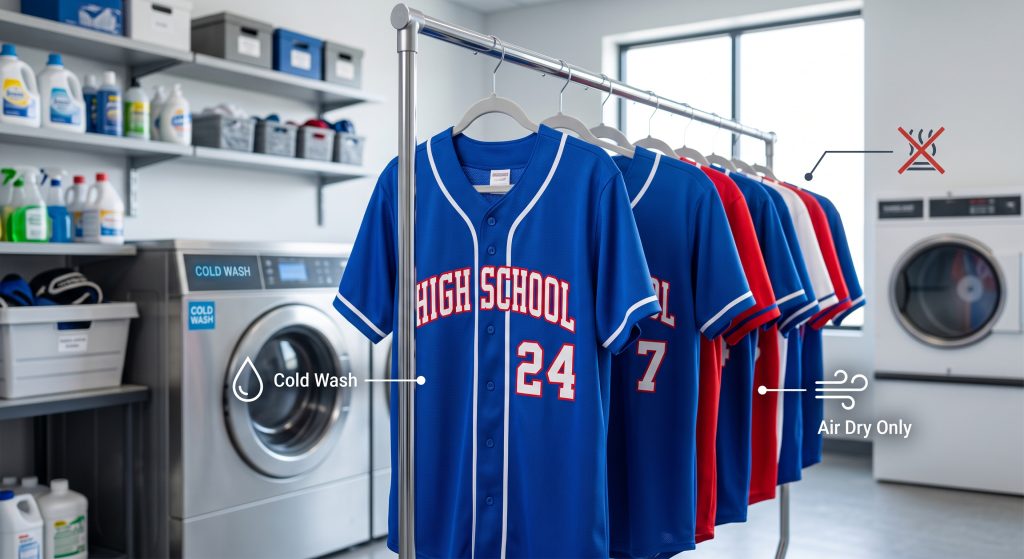
Cold water washing with neutral liquid detergents and air drying preserves synthetic fiber integrity and color sharpness. Laundering custom baseball fabric by the yard requires strict care protocols to prevent heat damage to synthetic knits. What is the secret? High drying heat breaks down elastane fibers rapidly.
Proper maintenance techniques prevent fabric snagging and preserve moisture-wicking surface treatments across all team apparel.
Why avoid fabric softeners on team apparel?
Chemical softeners coat synthetic fiber channels, destroying breathability and moisture-wicking traits immediately.
- Softeners clog mesh airflow pores.
- Chemical residues trap odors inside weaves.
What wash temperatures protect technical knits?
Washing athletic uniforms in cold water protects synthetic polymer structures from thermal degradation. Remember this point: hot water degrades elastic fibers, causing jerseys to lose original shape.
- Cold cycles preserve bright dye colors.
- Gentle cycles reduce surface friction pilling.
Key Takeaway: Adopting correct athletic fabric washing protocols doubles garment service life while preserving peak performance.
| Laundering Step | Recommended Practice | Unfavorable Practice |
| Water Temperature | Cold Wash Cycles | High Temperature Heat |
| Detergent Type | Mild Liquid Detergent | Harsh Bleach / Softeners |
| Drying Method | Air Drying / Low Heat | High Heat Machine Drying |
This laundering guide outlines effective washing procedures that guard against early textile damage.
Why Select Specific Weights Of baseball fabric by the yard?
Selecting proper material weight ensures uniforms offer lightweight flexibility for runners and heavy tear resistance for sliding players. Ordering specialized baseball fabric by the yard allows customizing fabric weights according to player field positions. Here’s why it matters: different field positions demand unique physical characteristics from garments.
Strategic weight variation across uniform panels optimizes athlete comfort while reinforcing heavy contact zones effectively.
Should outfielders wear lighter fabric than infielders?
Outfielders benefit from light 140 GSM mesh that permits maximum sprint speed and unrestricted arm movement.
- Complete movement freedom for long catches.
- Lower heat retention during sunny shifts.
How does heavier fabric protect sliding infielders?
Infielders require dense 200 GSM pique panels to resist dirt friction when diving for ground balls. Picture this: thin materials tear open instantly during hard slides on clay infields.
- Thick fabric layers absorb ground impact.
- Reinforced knits prevent painful skin abrasions.
Key Takeaway: Matching specific fabric weights to positional needs improves player safety and field performance simultaneously.
| Field Position | Recommended Fabric | Target Weight |
| Outfield / Pitchers | Bird-Eye Mesh | 140 – 160 GSM |
| Infielders / Catcher | Heavy Pique Knit | 190 – 220 GSM |
| Sliding Panels | Stretch Pique Blend | 220+ GSM |
This positional allocation table reveals how tailored textile selection improves player safety and field comfort.
How Does Hot Weather Impact baseball fabric by the yard Selection?
High ambient temperatures require open-mesh textiles that maximize evaporative cooling and rapid thermal release. Choosing appropriate baseball fabric by the yard for summer tournaments keeps athletes cool under intense afternoon sun. What is the key factor? Unmanaged solar heat causes early physical fatigue in student athletes.
Selecting climate-appropriate fabric weaves helps athletic directors maintain player safety during extreme heat events.
Which knit keeps athletes coolest in summer heat?
Bird-eye mesh permits direct air exchange, releasing body heat rapidly during hot summer matches.
- Direct ventilation prevents thermal buildup.
- Light yarn weight reduces physical fatigue.
Can tight pique weaves handle humid climates?
Dense pique knits trap humidity near skin, making them less suited for scorching afternoon games. Here is the bottom line: reserve heavy pique apparel for cooler spring morning games.
- Pique works best in cool weather.
- Layered knits suit variable seasonal temperatures.
Key Takeaway: Specifying bird-eye mesh for summer uniforms guarantees heat relief and prevents player overheating.
| Weather Condition | Ideal Textile Choice | Performance Effect |
| Hot Summer Heat | Bird-Eye Mesh | Maximum Air Cooling |
| Cool Spring Weather | Textured Pique Knit | Moderate Warmth Retention |
| Humid Match Play | Quick-Dry Synthetic | Fast Moisture Release |
This environmental guide demonstrates how climate variables dictate proper athletic fabric selection.
Which baseball fabric by the yard Best Suits High School Teams?
Combining bird-eye mesh tops with pique knit pants provides the ideal balance of breathability and durability for high school rosters. Selecting versatile baseball fabric by the yard gives athletic directors complete control over uniform construction. Ready for the best strategy? Hybrid garment design delivers optimal performance for every player position.
Positioning distinct technical textiles across uniform sections solves cooling and wear resistance demands at the same time.
Why is hybrid garment design ideal for team rosters?
Using mesh jerseys alongside reinforced pique pants optimizes athlete comfort across all diamond positions.
- Upper torso stays cool and dry.
- Legs receive maximum ground abrasion protection.
How does bulk sourcing streamline team purchasing?
Sourcing specialized fabrics directly from established mills simplifies annual team ordering processes. Here is the truth: direct fabric procurement ensures exact color consistency across all school sports divisions.
- Uniform color matching across varsity teams.
- Easy reordering for roster additions.
Key Takeaway: Implementing a hybrid fabric strategy gives high school sports programs strong durability, player comfort, and multi-year cost savings.
| Garment Section | Recommended Textile | Practical Advantage |
| Jersey Main Body | Bird-Eye Mesh | Unmatched Air Ventilation |
| Underarm Panels | Breathable Flex Mesh | Focused Cooling In Sweating Zones |
| Sliding Pants | Heavy Pique Blend | Maximum Friction Protection |
This strategic allocation plan illustrates how combining specialized textiles yields superior team gear.
Equipping high school athletic programs with specialized sports fabrics requires matching technical material traits with player field requirements. Combining breathable bird-eye mesh tops with abrasion-resistant pique pants guarantees player comfort, field durability, and long-term budgetary value. Partnering with a dedicated manufacturer ensures your program receives consistent colors, high tensile strength, and multi-season performance. Feel free to contact us today to request custom fabric samples and explore tailored textile solutions for your athletic department.
FAQ
Q1: Can I use bird-eye mesh fabric for high school sliding pants?
No, bird-eye mesh lacks the structural density needed for high-impact base sliding. Open perforations tend to snag on dirt particles, leading to early fabric tearing during sliding plays.
Q2: What’s the best fabric weight for hot summer baseball jerseys?
A 140 to 160 GSM bird-eye mesh fabric offers the best balance of cooling and durability. This lightweight weight range maximizes airflow without becoming see-through when wet with sweat.
Q3: How do I know if pique fabric is better suited for my team?
Choose pique fabric if your primary focus is garment durability and long-term shape retention. Pique knit excels in high-wear application zones and cooler playing environments.
Q4: Can I combine different fabric types within a single uniform design?
Yes, hybrid uniform designs represent the standard industry approach for professional and high school teams. Combining bird-eye mesh jerseys with heavy pique pants optimizes performance across all player positions.
Q5: What’s the best way to prevent color fading on custom sublimated gear?
Wash team apparel in cold water using mild liquid detergent and air dry away from high heat. Avoiding commercial heat dryers preserves synthetic polymer fibers and keeps sublimation dyes bright for years.