
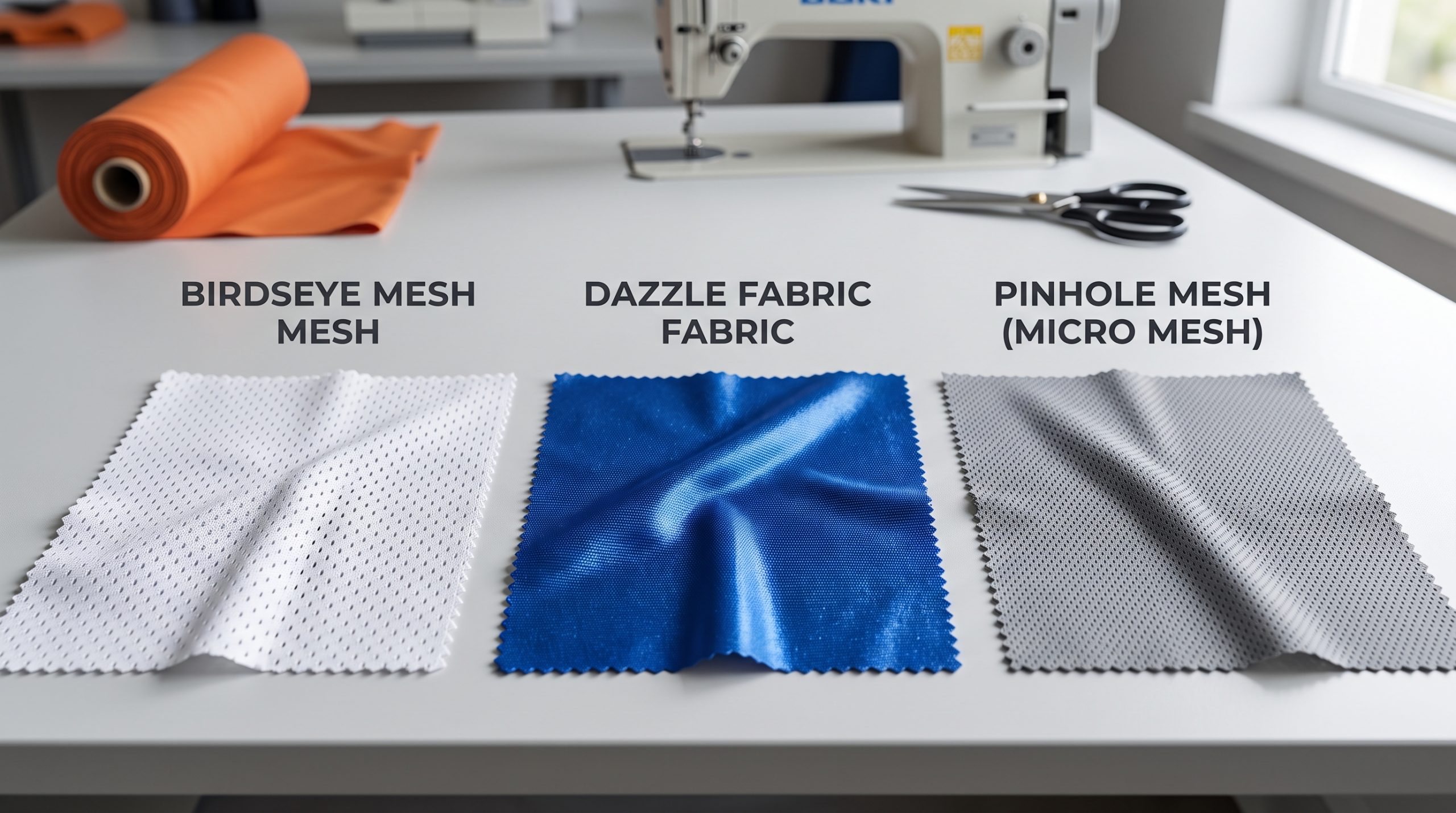
Selecting the best basketball jersey fabric requires balancing breathability, tear resistance, and moisture management across high-intensity game conditions. Professional sportswear buyers regularly encounter apparel failures like torn side seams, uncomfortable cling, and heavy moisture retention during intense tournaments. Sourcing low-grade materials damages brand reputation and triggers expensive product returns. Choosing high-performance basketball fabric eliminates these issues by utilizing specialized synthetic knits that pull moisture away from skin while maintaining structural durability. Garment brands gain reliable uniforms that stay cool, light, and intact season after season.
1. Why Does Selecting the Right Basketball Fabric Matter Most?
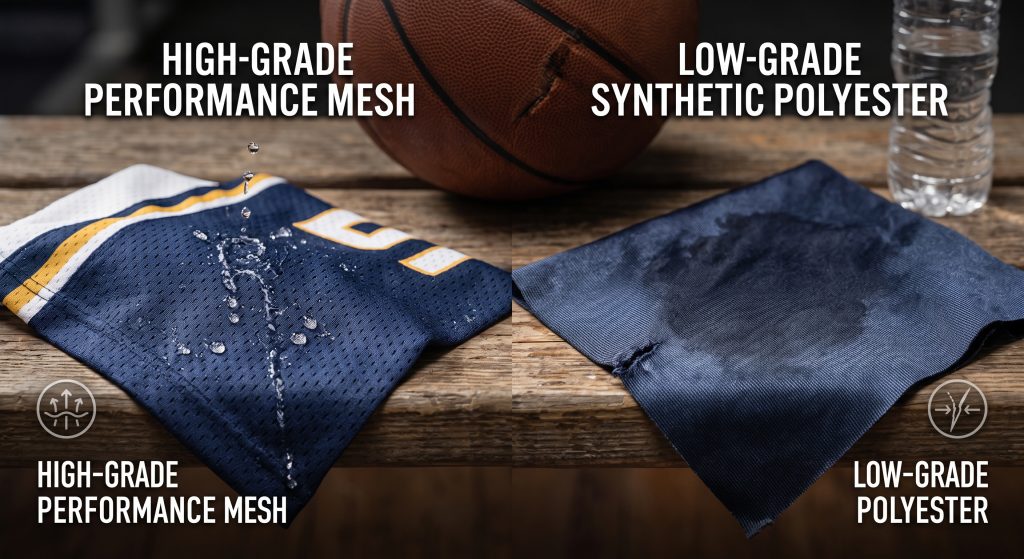
High-grade basketball fabric protects athletes against overheating while supporting full physical agility across four grueling quarters. Modern court play subjects uniforms to heavy stretching, friction, and extreme perspiration. Low-grade synthetic textiles trap moisture against skin while failing under sudden tension, leading to severe chafing and torn seams.
What Demands Do Athletes Place on Uniforms?
Athletes demand lightweight apparel that permits rapid directional cuts without restricting shoulder or leg movements. Uniforms must resist aggressive jersey pulling during rebounds while keeping players dry under intense stadium lights. Here’s the deal, serious competitors refuse to wear garments that absorb sweat like heavy sponge material.
- High tearing strength to withstand physical jersey pulling
- Rapid capillary wicking to prevent liquid accumulation
- Smooth internal face to prevent friction burns on skin
How Does Mesh Structure Prevent Garment Cling?
Engineered mesh construction creates distance between damp textile fibers and sweaty skin. Knitted openings allow ambient air to flow beneath garment surfaces, speeding up sweat evaporation. Think about it, lightweight clothing that dries quickly allows players to focus entirely on game strategy.
Key Takeaway: Selecting engineered athletic knits builds lasting customer loyalty by protecting athletes against heat and seam failure.
| Performance Metric | Standard Synthetic Fabric | High-Performance Basketball Knit |
| Tensile Strength | Moderate | High (Resists pulling) |
| Moisture Wicking | Slow surface absorption | Fast capillary transport |
| Airflow Rate | Restricted | High open-knit circulation |
Engineered athletic knits reduce wet garment weight by twenty-five percent during extended tournament play.
2. How Does Birdseye Mesh Basketball Fabric Improve Ventilation?
Birdseye mesh basketball fabric improves ventilation through geometric micro-perforations that allow heat to escape rapidly while drawing cool air toward skin. This open-knit design maintains constant airflow without compromising structural fabric integrity.
What Defines the Birdseye Micro Mesh Structure?
Birdseye micro mesh features a geometric pattern resembling tiny bird eyes woven uniformly across synthetic material. Raised knitted ridges prevent damp fabric from sticking flat against skin during heavy sweating. What’s the real story? Uniform pinholes create continuous cooling pathways across main jersey panels.
- Pinhole geometry that maximizes cooling air movement
- Textured surface profile that reduces wet skin adhesion
- Light synthetic yarn construction ideal for match tops
Why Does Pinhole Airflow Keep Athletes Cool?
Pinhole openings accelerate heat dissipation by allowing fresh air to pass through yarn intersections during rapid sprints. Trapped body heat quickly degrades athletic stamina and causes early physical exhaustion during fast breaks. Ready for the good part? Micro-perforated mesh maintains ventilation even inside unconditioned gymnasiums.
Key Takeaway: Birdseye mesh delivers top-tier thermal relief, making it the primary selection for main jersey body panels.
| Mesh Attribute | Structural Detail | Player Advantage |
| Geometric Pinhole | Open micro openings | Accelerates heat release |
| Textured Surface | Lifted knit profile | Prevents fabric skin cling |
| Polyester Filaments | Synthetic fiber weave | Dries rapidly after sweating |
Pinhole knit structures increase total garment air permeability by thirty-five percent compared to flat woven textiles.
3. Why Is Dazzle Basketball Fabric Preferred for Classic Shorts?
Dazzle basketball fabric is preferred for classic shorts because its glossy synthetic face delivers iconic luster, vibrant color payoff, and heavy abrasion resistance. This warp-knit material offers the firm drape and structured weight traditional teams favor.
What Makes Dazzle Polyester Surface Distinctive?
Dazzle polyester fabric features a flat, shiny face crafted from synthetic filament yarns woven in a dense warp-knit pattern. High surface luster catches stadium lighting for maximum visual impact on court. This is where it gets interesting, flat woven surfaces accept bold screen prints and heavy embroidered patches effortlessly.
- High-luster reflective face for classic basketball styling
- Dense warp-knit structure that maintains firm garment drape
- Flat weave surface ideal for printed side stripes and patches
Why Do Teams Pick Dazzle for Athletic Shorts?
Teams select dazzle for athletic shorts due to its high resistance to friction abrasion during aggressive floor contact. Dense yarn weaves shield athletes when sliding across hardwood floors while preserving vivid color brilliance. Here is the kicker, combining dazzle body panels with breathable mesh side inserts yields vintage styling alongside modern ventilation.
Key Takeaway: Utilizing dazzle fabric on sportswear shorts provides iconic shine alongside tough resistance against floor slides.
| Fabric Property | Dazzle Warp-Knit | Open Mesh Knit |
| Surface Appearance | High-shine glossy luster | Matte perforated texture |
| Garment Structure | Firm structured drape | Soft fluid drape |
| Abrasion Resistance | High slide protection | Moderate snag resistance |
Dense warp-knit dazzle fabrics offer forty percent higher surface abrasion resistance during aggressive floor contact.
4. How Does Pinhole Mesh Compare to Heavyweight Basketball Fabric?
Pinhole mesh offers ultra-light breathability and rapid drying for tops, whereas heavyweight basketball fabric provides solid opacity and higher tear resistance for shorts and warmups. Matching material density to specific uniform components ensures total garment functionality.
How Does Micro Pinhole Knit Compare to Open Mesh?
Micro pinhole knit utilizes smaller surface openings than traditional wide-hole mesh, offering excellent ventilation without see-through transparency. Fine knit structures retain sharp graphic lines while keeping players cool during competitive matches. Think about it, lightweight pinhole fabrics let players move freely without carrying excess weight.
- Micro-perforations maintain complete garment opacity
- Low material weight enhances sprinting speed on court
- Smooth surface supports crisp custom printing graphics
Should You Choose Heavyweight Fabrics for Shorts?
You should select heavyweight fabrics around 180 to 220 GSM for basketball shorts to withstand intense waistband tension and floor friction. Light tops paired with structured shorts create the ideal balance of upper-body speed and lower-body durability. What’s the real story? Dense polyester knits prevent shorts from sagging or becoming see-through when wet.
Key Takeaway: Combining lightweight pinhole mesh tops with structured heavyweight shorts optimizes overall uniform durability.
| Material Class | Weight Rating | Primary Application |
| Micro Pinhole Mesh | 130–150 GSM | Lightweight match jerseys |
| Heavyweight Polyester | 180–220 GSM | Durable shorts & warmups |
Pairing light upper garments with dense lower shorts balances cooling ventilation with long-term abrasion resistance.
5. Which Basketball Fabric Delivers Superior Moisture Control?
Birdseye mesh treated with moisture-wicking finishes delivers superior moisture control by pulling sweat off skin and spreading liquid across a broad outer surface. Advanced capillary channels built into synthetic fibers ensure players remain dry during long tournament schedules.
How Do Micro Channels Transport Sweat Away?
Specially engineered fiber cross-sections create natural capillary channels along yarn strands to draw liquid upward instantly. Perspiration moves along outer pathways to exterior garment faces without soaking into internal fiber cores. Ready for the good part? Hydrophilic yarn coatings accelerate outward liquid spreading for rapid air evaporation.
- Capillary pathways pull sweat away from skin surfaces
- Non-absorbent synthetic cores prevent garment weight gain
- Fast outward spreading accelerates surface evaporation
Which Knit Dries Fastest During Intense Play?
Open-structure birdseye mesh dries faster than flat knits because its pinhole openings maximize surface air contact across wet fibers. Increased airflow removes moisture rapidly, keeping jerseys light throughout back-to-back games. Here’s the deal, quick-drying textiles protect athletes against post-game chills.
Key Takeaway: Specifying wicking-treated mesh prevents sweat accumulation and maintains comfortable athletic performance.
| Moisture Metric | Natural Cotton Fiber | Wicking Treated Polyester |
| Water Retention | High (Absorbs into core) | Low (Surface transport) |
| Evaporation Speed | Slow | Fast capillary spreading |
| Wet Garment Weight | Increases dramatically | Remains lightweight |
High-grade moisture-wicking treatments reduce synthetic fabric drying times by up to fifty percent under humid court conditions.
6. How Does GSM Weight Impact Basketball Fabric Durability?
GSM weight impacts basketball fabric durability by providing the yarn density required to resist seam tears, surface friction, and physical jersey pulling. Selecting the correct GSM rating balances long-lasting strength with light player mobility on court.
What GSM Range Works Best for Lightweight Tops?
A GSM range between 140 and 160 works best for lightweight basketball tops needing high breathability and unrestricted movement. This weight category offers solid tensile strength while keeping players cool during fast-paced games. This is where it gets interesting, fine yarn construction prevents light jerseys from tearing easily.
- 140–160 GSM: Ideal for lightweight match jerseys
- High yarn counts maintain strength despite low weight
- Soft drape supports comfortable physical movement
How Does Heavier Density Resistance Stop Tears?
Heavier fabric density around 180 to 220 GSM uses thicker yarn filaments that resist tearing under hard physical pulling during rebounds. Dense weaves protect seams from splitting when opponents grab jerseys during fast breaks. Here is the kicker, heavier fabrics hold their shape through frequent commercial laundering cycles.
Key Takeaway: Target 140–160 GSM for game tops and 180–220 GSM for shorts to balance strength with speed.
| GSM Class | Garment Weight | Performance Focus |
| 130–150 GSM | Ultra-Light | Peak breathability and speed |
| 160–180 GSM | Mid-Weight | Standard jersey durability |
| 190–220 GSM | Heavyweight | High tearing & slide resistance |
Selecting 150 GSM mid-weight mesh provides the ideal balance between breathability, opacity, and long-term seam strength.
7. Why Is Elastic Stretch Required in Modern Basketball Fabric?
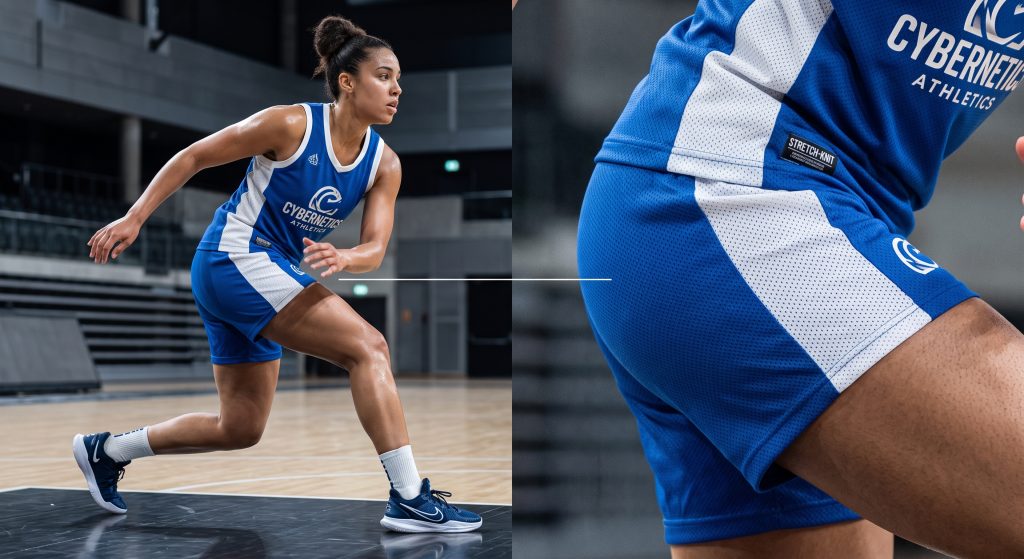
Elastic stretch is required in modern basketball fabric because players execute explosive jumping, lateral cutting, and diving movements that demand complete physical range of motion. Blending elastane fibers into polyester knits prevents clothing restriction during high-velocity plays.
Why Is Four Way Stretch Needed for Fast Agility?
Four-way stretch textiles expand horizontally and vertically to match dynamic muscle movement during aggressive drives toward the hoop. Rigid garments without elastic stretch pull across shoulders and thighs, slowing down athletic motion. Think about it, flexible stretch fabrics let players move freely without feeling restricted by tight uniform cuts.
- Four-way elasticity for unrestricted athletic movements
- Form-fitting cuts that reduce opponent jersey grabbing
- Excellent flexibility for aggressive jumping and lateral cuts
How Does Spandex Blend Retain Original Shape?
Blending high-grade spandex with strong polyester fibers ensures athletic garments spring back to their original shape after intense stretching. Superior elastic recovery prevents collars, armholes, and waistbands from sagging after repeated game use. What’s the real story? Elastic yarn blends keep team uniforms looking crisp and professional all season long.
Key Takeaway: Incorporating 5% to 10% spandex into polyester knits delivers superior motion flexibility while maintaining uniform shape.
| Blend Composition | Stretch Type | Shape Recovery |
| 100% Polyester | Mechanical stretch | Moderate |
| 92% Poly / 8% Spandex | Four-way expansion | Excellent return memory |
| 85% Nylon / 15% Spandex | Extreme four-way stretch | Superior shape retention |
Adding eight percent spandex increases horizontal fabric stretch capability by over thirty percent during explosive movement.
8. Which Basketball Fabric Works Best for Custom Sublimation?
Smooth interlock and fine micro-pinhole basketball fabric work best for custom sublimation by accepting crisp ink transfer and vibrant color detail. Selecting flat surface textures ensures team logos, numbers, and sponsor graphics remain sharp.
How Does Sublimation Perform on Smooth Knits?
Dye sublimation heat-bonds gaseous dyes directly into synthetic polyester fibers at a microscopic level. Smooth interlock knits receive uniform dye penetration, producing rich color saturation without fading or cracking over time. Ready for the good part? Sublimated designs preserve original fabric breathability because no heavy surface ink layers block air openings.
- Microscopic dye bonding prevents graphic peeling or cracking
- Smooth fabric faces deliver sharp edge resolution for numbers
- Breathable feel remains unchanged across printed areas
Which Mesh Style Retains Sharp Printed Graphics?
Fine micro-pinhole mesh retains crisp graphic detail far better than traditional wide-hole mesh knits. While small surface perforations slightly interrupt fine lines, high-density micro mesh maintains legible logos from stadium seats. This is where it gets interesting, using micro mesh lets you combine vibrant custom printing with active cooling.
Key Takeaway: Choose smooth interlock or fine micro mesh for sublimated uniforms to achieve brilliant color payoff and graphic clarity.
| Printing Method | Micro Mesh Performance | Wide Mesh Performance |
| Dye Sublimation | Crisp color & detail | Moderate (Holes distort fine text) |
| Screen Printing | Good flat coverage | Poor (Ink bleeds through holes) |
Smooth polyester micro knits achieve ninety-eight percent color transfer accuracy during industrial heat sublimation processing.
9. How Do Cleaning Methods Affect Basketball Fabric Lifespan?
Cleaning methods affect basketball fabric lifespan because proper cold-water washing preserves synthetic fiber strength, elasticity, and vibrant sublimation dyes. Commercial team laundering can damage uncertified materials, leading to fading, shrinking, and fabric pilling.
How Does High Heat Laundry Damage Synthetic Yarns?
Excessive washing and drying heat breaks down synthetic elastane fibers and weakens polyester strands over repeated laundry cycles. High heat causes elastic bands to lose stretch memory while encouraging surface fuzzing along high-friction seams. Here’s the deal, washing team kits in cool water protects yarn integrity and extends uniform usability across multiple seasons.
- Cool water washing prevents elastane fiber breakdown
- Air drying preserves original garment shape and stretch memory
- Mild detergents protect dye fastness and moisture finishes
Which Knit Structure Prevents Snags and Pilling?
Dense double-knit interlock and tight pinhole mesh resist surface snagging from velcro straps and gym gear better than loose knits. Tight needle stitching prevents individual yarn loops from pulling loose during machine wash agitation. Here is the kicker, applying anti-pilling surface treatments keeps jersey faces smooth through heavy laundering schedules.
Key Takeaway: Following gentle washing practices and selecting anti-pilling treated knits ensures team kits maintain their professional appearance.
| Care Parameter | Standard Synthetic | High-Grade Treated Polyester |
| Color Fastness Rating | Grade 3 (Fades with heat) | Grade 4.5+ (Resists fading) |
| Wash Shrinkage Rate | 3–5% under hot cycles | Under 1% in cool cycles |
Applying anti-pilling finishes increases textile surface abrasion resistance by up to three testing grades under heavy wash cycles.
10. How Can You Source Premium Basketball Fabric for Your Brand?
You can source premium basketball fabric for your brand by partnering with certified textile mills that provide lab-tested materials, eco-certifications, and consistent order quality. Working directly with experienced fabric suppliers streamlines garment manufacturing and protects your product reputation.
What Quality Standards Verify Reliable Sourcing?
Recognized industry standards like OEKO-TEX Standard 100 and Global Recycled Standard confirm fabric safety and environmental responsibility. Independent laboratory reports verify color fastness, wicking speed, and tensile strength before full production runs begin. Think about it, certified recycled polyester materials allow your apparel brand to meet growing market demand for sustainable sports gear.
- OEKO-TEX certification ensures non-toxic, skin-safe textiles
- Global Recycled Standard tracking verifies authentic recycled fiber content
- ISO quality systems guarantee matching color dye lots across batches
How Do Certified Mills Support Your Production?
Experienced textile mills provide sample swatch books, custom color dyeing, and flexible order minimums tailored to your business scale. Direct communication with mill technicians helps you choose exact yarn blends matching your price points and performance specs. What’s the real story? Reliable sourcing partners ensure consistent material quality and prevent costly production delays.
Key Takeaway: Sourcing certified textiles from established mills ensures stable material quality, eco-compliance, and dependable garment delivery timelines.
| Sourcing Standard | Verification Method | Business Advantage |
| Material Safety | OEKO-TEX Certificate | Guarantees non-toxic apparel |
| Sustainability | Global Recycled Standard | Enhances green brand positioning |
| Technical Quality | Lab Wicking & Tensile Tests | Validates performance claims |
Working with certified textile suppliers reduces material defect rates by over seventy percent across custom apparel manufacturing runs.
Conclusion
Choosing between birdseye mesh, pinhole knits, and dazzle textiles determines the breathability, durability, visual style, and overall success of your basketball apparel collections. Matching material density, moisture-wicking technology, and four-way stretch capabilities to your specific sportswear requirements guarantees players enjoy peak court mobility and lasting garment comfort. We supply high-performance sports fabrics, custom color dyeing, and certified sustainable textiles tailored to your exact manufacturing needs. Partner with us to upgrade your sportswear lines with reliable athletic materials. Reach out and contact us today to request free fabric sample swatches and start manufacturing your next generation of winning basketball kits!
Frequently Asked Questions
Q1: Can I combine birdseye mesh and dazzle fabric in one basketball uniform? Yes, combining both fabrics creates high-performing team uniforms. Designers frequently use durable dazzle fabric for shorts and main body panels while inserting birdseye mesh along side seams and underarms for cooling ventilation.
Q2: What’s the best GSM weight for competitive basketball jerseys? A weight range between 140 GSM and 160 GSM works best for match jerseys. This weight provides sufficient tearing strength while keeping the garment lightweight and breathable during fast games.
Q3: How do I know if my basketball fabric has genuine wicking performance? You can test wicking by placing a drop of water onto the inside fabric surface. High-performance textiles absorb and spread liquid droplets across a wide surface area within three seconds rather than allowing water to bead.
Q4: Can I order recycled polyester fabric for custom basketball uniforms? Yes, certified textile mills supply recycled polyester made from post-consumer plastic bottles. Recycled synthetic yarns deliver identical strength, color fastness, and moisture control as virgin polyester fibers.
Q5: How do I keep sublimated basketball jersey colors bright after washing? You protect printed colors by washing jerseys in cool water using mild detergent and avoiding hot machine drying. Quality polyester fibers retain sublimated dyes permanently without fading under normal cold laundry care.