
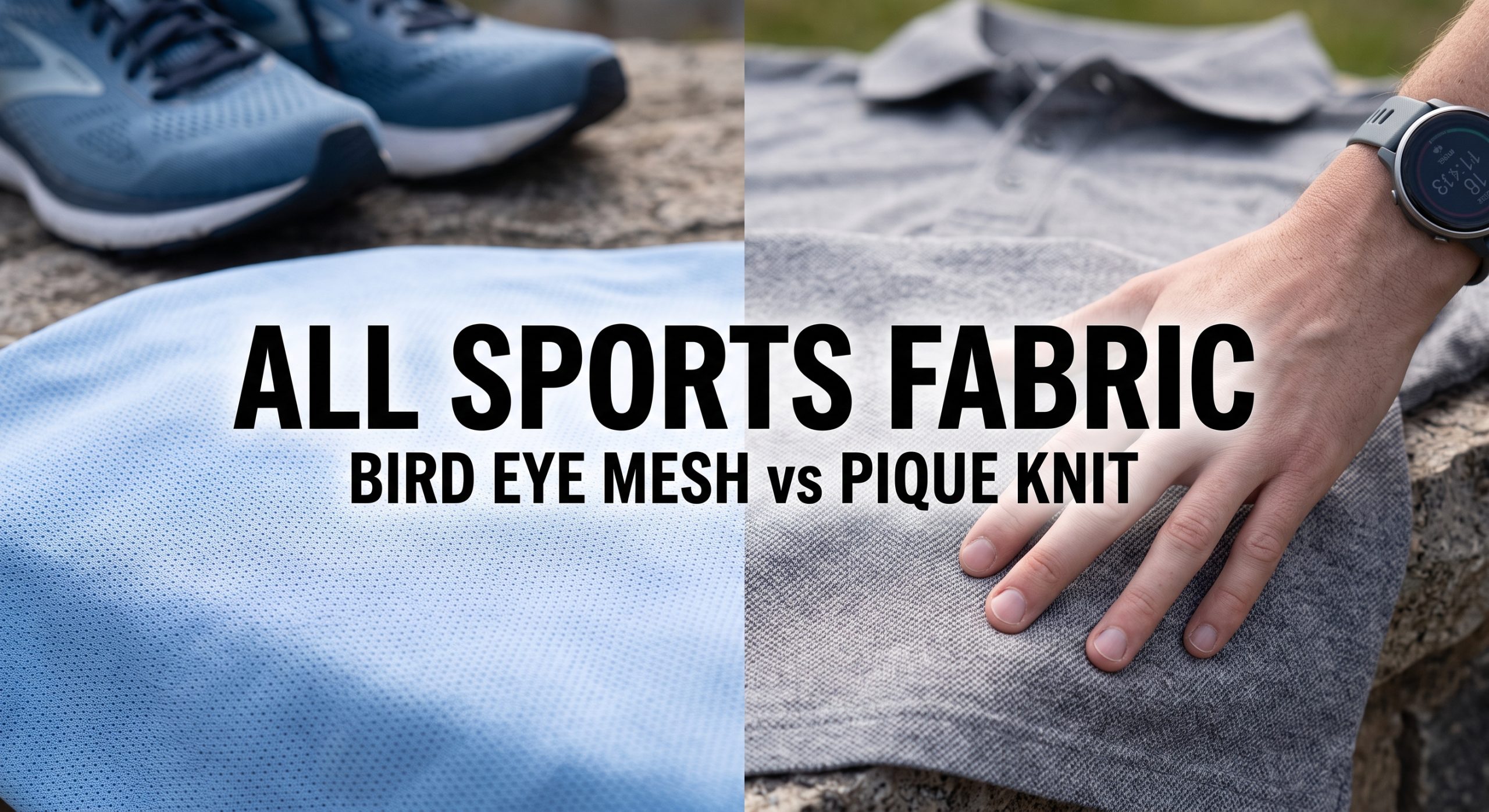
Selecting optimal sportswear fabrics requires evaluating yarn density, knit geometry, and moisture management properties to match specific garment demands. Apparel brands often spend months designing high-performance activewear, only to face customer complaints about uncomfortable sweat retention and poor airflow during intense workouts. When garments fail to manage body heat and moisture, wearers abandon the product line, damaging brand reputation and squeezing factory margins. By comparing structural differences between micro-porous bird eye mesh and classic pique knits, apparel managers can specify the ideal material for every production run. Sourcing the right all sports fabric ensures your garments maintain durability while delivering maximum physical comfort for athletes.
Why does structural knit affect all sports fabric performance?
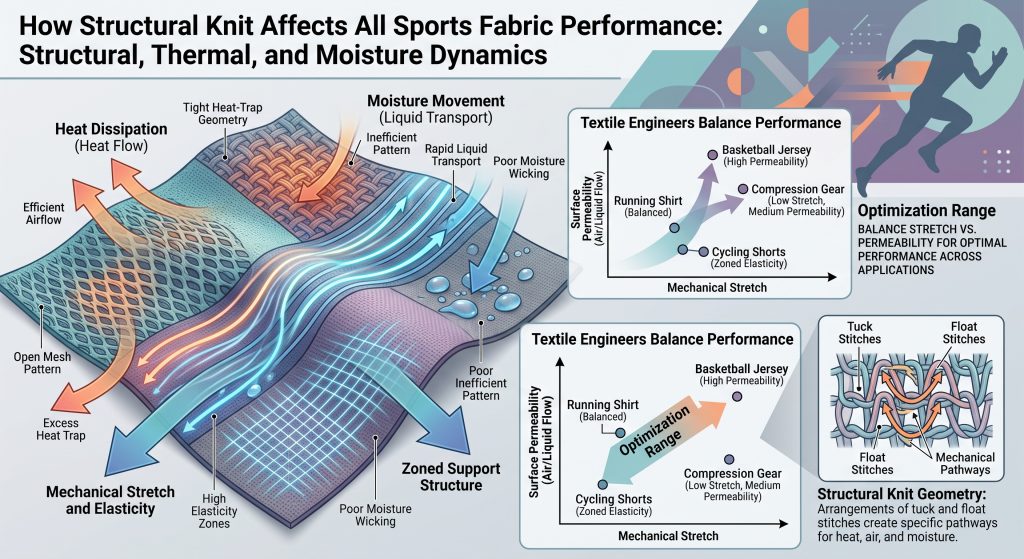
Structural knit patterns directly determine airflow, elasticity, and liquid transport across all sports fabric runs by altering surface area and yarn tension. The arrangement of tuck and float stitches creates distinct mechanical pathways for heat dissipation and moisture movement. Selecting the wrong knit geometry leads to excess heat traps or premature fabric snagging during athlete movement.
Textile engineers balance mechanical stretch and surface permeability to optimize garment performance across various activewear applications.
How does knit pattern influence airflow?
Open-knit patterns lower wind resistance while encouraging rapid evaporation from the skin surface during strenuous exercise. Here is the deal: surface openings alter air movement speed directly across the wearer’s body.
- Micro-eyelet structures create dedicated ventilation channels.
- Tightly looped knits retain heat for thermal insulation layers.
- Balanced gauge densities maximize airflow without sacrificing opacity.
What structural elements drive durability?
Yarn tenacity combined with interlocking stitch construction prevents seam tearing and surface pilling under repeated stress. You need high-tensile filament yarns to keep lightweight knits from degrading during active use.
Key Takeaway: Matching structural stitch patterns to your garment’s movement requirements prevents premature wear while maintaining athletic airflow.
| Structural Element | Airflow Impact | Tensile Strength | Primary Application |
| Open Eyelet Knit | Very High | Moderate | Lightweight Running Shirts |
| Interlock Pique | Moderate | High | Athletic Polos & Uniforms |
Evaluating these core structural properties helps manufacturers balance ventilation against long-term garment durability.
How is bird eye mesh created in all sports fabric sourcing?
Bird eye mesh is created by combining tuck and knit stitches on circular knitting machines to form tiny geometric eyelet openings across all sports fabric production. This micro-hole array resembles small bird eyes, giving the material exceptional breathability and light weight. Synthetic polyester filaments are typically used to enhance moisture transfer speed.
What defines the tuck-stitch eyelet design?
The alternating tuck-stitch configuration holds loops open without compromising structural fabric integrity. What is the secret? Precise machine gauge settings maintain hole symmetry throughout stretching and laundering cycles.
- Regular geometric pattern ensures uniform air distribution.
- Tuck stitches create permanent micro-openings without cutting yarns.
- Low fabric weight reduces garment drag on athletes.
Why choose geometric micro-holes for gear?
Geometric micro-perforations maximize breathability while preserving opacity for professional athletic wear. You can rely on these micro-holes to vent heat rapidly during high-intensity workouts.
Key Takeaway: Bird eye mesh utilizes engineered micro-perforations to deliver lightweight ventilation without sacrificing structural coverage.
| Feature | Technical Specification | Functional Benefit |
| Hole Geometry | Hexagonal / Circular Micro-Eyelets | Enhanced Evaporative Cooling |
| Yarn Type | 100% Filament Polyester | Rapid Moisture Dispersion |
This specific knit construction provides apparel designers with an ideal balance of ventilation and surface smooth feeling.
What makes pique structure unique for all sports fabric items?
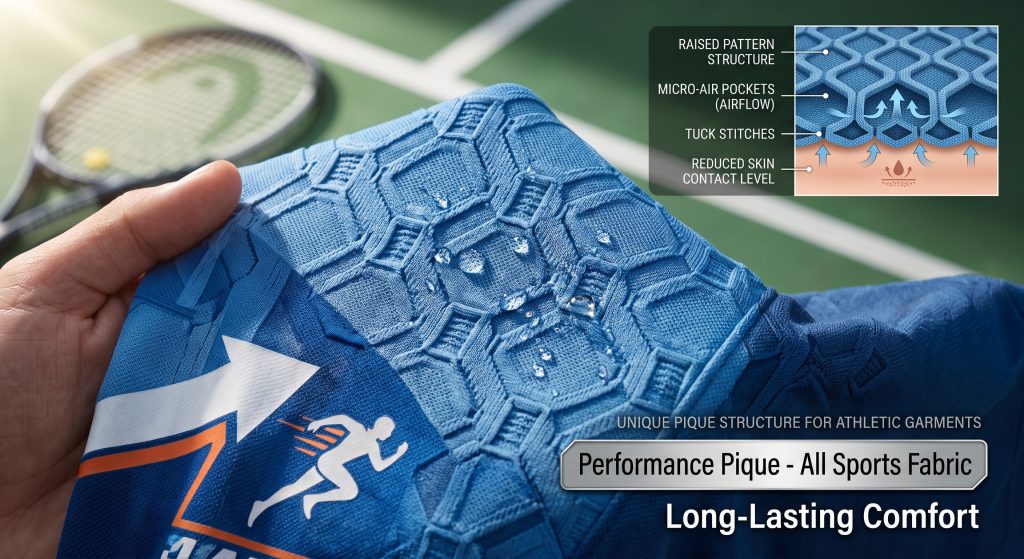
Pique structure is distinguished by its raised geometry and textured surface relief created through specialized tuck-stitch sequences in all sports fabric manufacturing. This raised pattern reduces direct fabric contact with skin, creating micro-air pockets that improve comfort during extended wear. The dimensional stability of pique makes it a favored choice for structured activewear.
How is waffle-like relief texture formed?
Specialized needle arrangements pull specific loops tighter while lifting adjacent stitches to generate 3D geometric textures. Believe it or not, this raised surface creates a thermal cushion that prevents fabric clinging when wet.
- Honeycomb patterns offer classical aesthetic appeal.
- 3D relief reduces skin friction during movement.
- Enhanced body structure keeps collars and cuffs crisp.
Where does pique excel in apparel production?
Pique fabrics excel in golf shirts, team polos, and athletic outerwear where tailored appearance matters alongside moisture management. You get a professional look that withstands rigorous movement and frequent industrial washing.
Key Takeaway: Pique fabrics combine structured dimensional stability with a tactile relief surface for refined activewear lines.
| Pique Variant | Surface Pattern | Common Garment Usage |
| Single Pique | Fine Waffle Texture | Golf Shirts & Casual Activewear |
| Double Pique | Heavy Honeycomb Relief | Team Polos & Outerwear |
Incorporating pique knit into your product matrix ensures structured visual appeal with reliable athletic utility.
Which knit offers top airflow for all sports fabric garments?
Bird eye mesh offers higher overall airflow compared to pique knits across all sports fabric categories due to its open micro-porous structure. Laboratory air permeability tests confirm that eyelet mesh permits significantly greater cubic feet per minute (CFM) air movement through the textile. Pique provides moderate ventilation while offering superior fabric density and opacity.
Can micro-mesh outperform standard knits?
Micro-mesh consistently outpaces standard flat knits by removing heat traps from high-sweat body zones. Look at the facts: continuous airflow accelerates sweat evaporation before liquid accumulates on skin.
- High CFM ratings ensure cool skin contact.
- Reduced fabric density lowers total thermal resistance.
- Ideal for running tops and training jerseys.
How to measure thermal dissipation rates?
Thermal dissipation is measured using guarded hot plate testing to determine fabric insulation and breathability indexes. You can utilize these quantitative metrics to back up cooling performance claims on garment hangtags.
Key Takeaway: Micro-mesh structures deliver superior air permeability metrics, making them the preferred choice for maximum thermal reduction.
| Fabric Type | Air Permeability (CFM) | Thermal Resistance (R-value) |
| Bird Eye Mesh | 180 – 240 | Very Low |
| Pique Knit | 80 – 130 | Moderate |
Analyzing air permeability data enables procurement teams to match fabric breathability directly to garment activity levels.
How do tactile feels compare across all sports fabric options?
Bird eye mesh delivers a smooth, slick hand feel, whereas pique provides a textured, structured grip across all sports fabric selections. The smooth profile of bird eye mesh slides easily against skin, minimizing chafing during rapid repetitive movements. In contrast, pique’s subtle ridge texture offers a premium, tactile sensation valued in luxury casual athletic apparel.
Is bird eye mesh softer on sensitive skin?
The flat surface loop configuration of bird eye mesh creates lower abrasion against sensitive skin during endurance sports. Here is the bottom line: reduced friction prevents chafing on long-distance runners.
- Silky surface finish reduces garment drag.
- Flat knit construction limits skin irritation points.
- Lightweight drape enhances freedom of motion.
How does pique handle weight and stiffness?
Pique incorporates higher yarn counts to achieve structural body and stiffness, giving garments a heavier, more substantial drape. You can leverage this crisp hand feel to create high-end athletic apparel that retains its silhouette.
Key Takeaway: Choose smooth bird eye mesh for skin-adjacent performance wear, or structured pique for durable, high-tactile outerwear.
| Touch Parameter | Bird Eye Mesh | Pique Fabric |
| Surface Friction | Low / Slick | Moderate / Textured |
| Garment Drape | Soft & Fluid | Firm & Structured |
Understanding surface tactile dynamics helps apparel manufacturers select fabrics that match end-user comfort expectations.
How does moisture wicking work in all sports fabric lines?
Moisture wicking relies on capillary force within synthetic yarn channels to pull perspiration away from skin in all sports fabric processing. Engineered polyester and nylon fibers feature cross-sectional channels that actively transport liquid to the fabric exterior. Combined with open knit geometries, this capillary action ensures rapid evaporation and quick drying times.
How does capillary action channel sweat?
Narrow spaces between yarn micro-filaments act like suction tubes, pulling liquid sweat off skin rapidly toward the outer surface. Why does this matter? Fast moisture movement maintains body temperature regulation during intense training.
- Grooved filament fibers increase wicking surface area.
- Hydrophobic chemistry prevents moisture retention in yarns.
- Continuous transport keeps skin dry under heat.
Which structure dries faster under load?
Bird eye mesh dries faster than pique because its lower fabric weight and micro-openings accelerate ambient air exposure. You will notice significant drying speed advantages when testing lightweight mesh jerseys against heavy pique knits.
Key Takeaway: Micro-porous knits with specialized channel fibers maximize capillary transport and rapid drying rates during activity.
| Performance Metric | Bird Eye Mesh | Pique Knit |
| Dry Rate (ml/hr) | Fast (15-20 mins) | Moderate (30-40 mins) |
| Wicking Distance | High Capillary Lift | Moderate Capillary Lift |
Selecting fast-drying wickable structures ensures athletic apparel maintains user comfort during heavy physical exertion.
Which structure suits activewear in all sports fabric runs?
Bird eye mesh suits high-intensity running and training gear, while pique best fits golf, tennis, and casual team wear across all sports fabric collections. Matching the fabric structure to the specific sport ensures athletes receive the correct balance of mobility, breathability, and aesthetic appeal. Garment function should always drive your selection between open mesh and structured knits.
Should you pick mesh for high-intensity gear?
High-intensity sports require maximum thermal release and minimal weight, making bird eye mesh the clear choice for marathon or track apparel. Think about it: lower garment weight directly reduces athlete fatigue over time.
- Ultra-lightweight feel for competitive race days.
- Maximum skin ventilation prevents heat build-up.
- High stretch capability supports natural movement.
Is pique better for athletic polo lines?
Athletic polo lines require structural integrity around collars and button plackets, which pique provides naturally without extra stiffening inserts. You can construct sophisticated lifestyle sportswear that transitions smoothly from court to clubhouse.
Key Takeaway: Aligning mesh fabrics with high-cardio sports and pique fabrics with structured activewear optimizes garment functionality.
| Sport Category | Recommended Fabric | Key Rationale |
| Track & Marathon | Bird Eye Mesh | Maximum Air Flow & Low Weight |
| Golf & Tennis | Pique Knit | Structured Collar & Premium Look |
Tailoring material choices to end-use sports applications increases buyer satisfaction and brand market value.
How do weight and strength match all sports fabric designs?
Fabric weight in grams per square meter (GSM) correlates with durability and opacity across all sports fabric manufacturing lines. Lighter fabrics ranging from 110 to 140 GSM offer agile movement for competitive apparel, while heavier fabrics from 180 to 230 GSM provide structural stability. Balancing GSM against knit geometry determines overall garment lifespan.
How does GSM impact athletic garment wear?
Lower GSM fabrics reduce garment bulk but may require higher yarn tenacity to prevent snagging during contact sports. What is the catch? Dropping weight too low can compromise fabric tear strength under heavy stress.
- 110-140 GSM: Ideal for lightweight racing tees.
- 150-180 GSM: Balanced weight for general training gear.
- 190-230 GSM: Sturdy construction for polos and jackets.
Which pattern resists abrasion better?
Dense pique knits resist surface abrasion and velcro snagging better than open bird eye mesh due to tightly interlocked tuck loops. You should choose higher GSM pique when manufacturing garments exposed to rough equipment contact.
Key Takeaway: Selecting the proper GSM range balances lightweight athletic agility against long-term mechanical abrasion resistance.
| Fabric Weight (GSM) | Tensile Strength Index | Abrasion Resistance |
| 120 GSM (Mesh) | Moderate | Standard |
| 200 GSM (Pique) | High | Excellent |
Carefully specifying target GSM parameters protects garments against premature wear during rugged sports activities.
What cost factors guide choosing all sports fabric materials?
Machine knitting speed, yarn selection, and dyeing complexity dictate overall manufacturing costs across all sports fabric orders. Standard bird eye mesh knits quickly on high-speed circular machines, keeping yield high and unit costs manageable. Specialty pique fabrics with complex relief patterns require slower machine speeds, slightly increasing wholesale fabric pricing.
Does knitting complexity raise mill costs?
Complex needle setups and slower RPM settings reduce total daily factory yield, which raises per-meter fabric costs. Here is the bottom line: simpler mesh geometry lowers raw material expenditure for budget-conscious apparel lines.
- High-speed mesh production keeps margins healthy.
- Intricate pique setups require higher mill minimums.
- Recycled polyester yarns add minor sustainability premiums.
How to balance yield and fabric quality?
Procurement teams must weigh fabric cost against target market retail pricing to maintain healthy profit margins across production runs. You can optimize profit yields by reserving complex knits for premium sportswear collections.
Key Takeaway: Evaluating knitting complexity and machine yields helps apparel managers control unit costs without sacrificing fabric quality.
| Production Factor | Bird Eye Mesh | Pique Fabric |
| Knitting Speed (RPM) | Fast / High Yield | Moderate / Standard Yield |
| Relative Material Cost | Economic | Mid-to-High |
Strategic fabric procurement ensures competitive garment pricing while preserving necessary physical performance features.
How to select optimal materials across all sports fabric choices?
Selecting optimal materials across all sports fabric options requires mapping garment end-use, target GSM, and desired tactile feel against budget parameters. Evaluating physical sample swatches under lab testing conditions guarantees your finished apparel meets strict breathability and durability standards. A systematic selection workflow prevents costly sourcing mistakes during mass manufacturing.
Which fabric meets your product line needs?
Determine whether your primary product requirement centers on high-cardio ventilation or structured aesthetic presentation. Ready for the best part? Testing sample yardage under actual movement conditions reveals true fabric performance quickly.
- Choose bird eye mesh for extreme breathability.
- Select pique knit for executive athletic style.
- Combine both fabrics in body-mapped garments.
How to specify exact mesh requirements?
Provide mills with precise specifications for yarn denier, GSM targets, finish treatments, and color fastness standards before production. You will streamline factory communication and eliminate fabric quality variations across repeat orders.
Key Takeaway: Establishing rigorous lab testing and technical specification sheets ensures consistent quality across all activewear fabric runs.
| Application Target | Recommended Material | Primary Specification |
| Pro Running Shirts | Bird Eye Mesh | 130 GSM / Wicking Finish |
| Corporate Polo Shirts | Single/Double Pique | 190 GSM / Anti-Pilling Finish |
Implementing structured fabric sourcing criteria protects garment quality and reinforces brand authority in competitive markets.
Navigating activewear material sourcing requires balancing physical breathability, tactile comfort, and production economics. By comparing bird eye mesh against pique knits, you can specify exact fabric structures that match your apparel line’s functional demands. We deliver custom mill solutions, reliable lab-tested textiles, and stable production capacity to elevate your sportswear manufacturing runs.
Ready to source high-performance textiles tailored to your exact manufacturing requirements? When you contact us today, our technical specialists will help you analyze swatches, optimize yarn choices, and secure competitive mill pricing for your next athletic collection. We stand committed to driving global activewear innovation through sustainable, high-precision functional textile manufacturing.
Frequently Asked Questions
Q1: Can I use bird eye mesh for athletic polo collars?
No, bird eye mesh lacks the necessary structural density to keep collars crisp and upright. Pique or solid flat knits are far better suited for structured collar construction.
Q2: What is the best fabric for intense running jerseys?
Bird eye mesh is the ideal choice due to its open micro-porous structure and rapid moisture evaporation. It minimizes fabric drag and keeps athletes cool under heavy exertion.
Q3: How do I know if pique fabric will shrink after washing?
Pique knits made from synthetic polyester feature excellent dimensional stability and resist shrinkage. Cotton-blend pique requires heat-setting finishing treatments at the mill to prevent post-wash changes.
Q4: Can I combine mesh and pique in a single garment?
Yes, body-mapping designs frequently incorporate structured pique for the main torso and bird eye mesh under arms or across back panels for target ventilation.
Q5: How do I select the right GSM for activewear?
Select 110-140 GSM for lightweight race gear, 150-180 GSM for standard workout shirts, and 190-220 GSM for structured athletic polos and outerwear.