
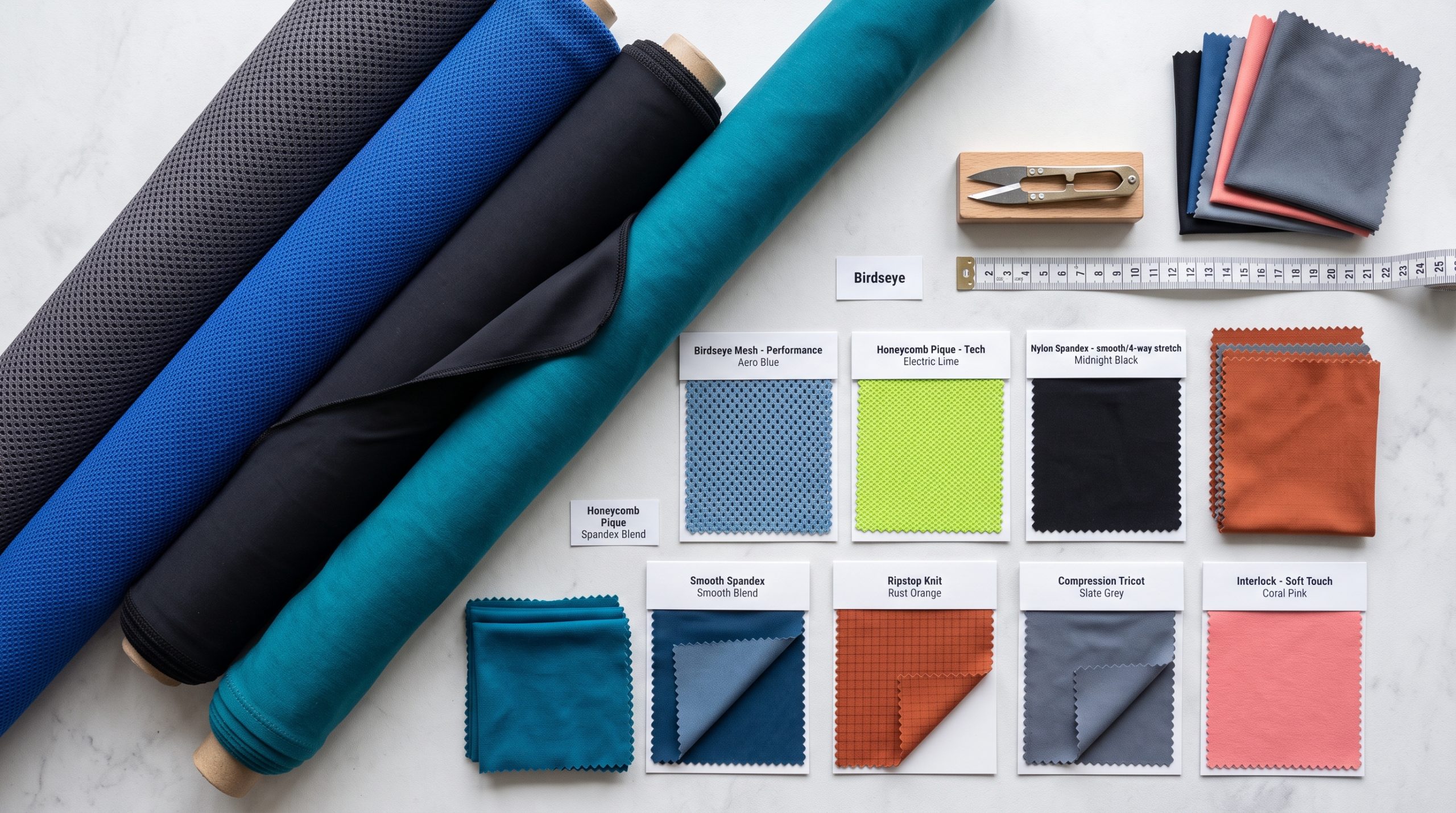
Sustainable activewear knit fabric excels by combining recycled polymer strength with rapid sweat evaporation and flexible four-way stretch. Many sportswear brands suffer when athletic apparel sags during intense workouts or retains uncomfortable body heat. Nothing damages customer loyalty faster than see-through leggings and sweat-soaked running shirts. Partnering with a specialized textile mill gives you certified activewear knit fabric engineered to maintain structural integrity across every training session.
1. What Defines Quality Activewear Knit Fabric for Teams?
High quality activewear knit fabric provides balanced stretch recovery, rapid moisture dispersion, and durable yarn construction. You want athletic textiles that withstand harsh friction during heavy training sessions without pilling.
Modern athletic wear demands synthetic fibers that hold color vibrancy through repeated wash cycles. Textile engineers balance elasticity and tensile strength to build reliable sportswear for demanding sports clubs.
What Core Fibers Build Athletic Knits?
Polyester and polyamide filaments create the base foundation for high-stress athletic apparel. Here is the deal. Synthetic filaments resist abrasive friction better than natural fibers and dry three times faster.
- Recycled polyester for moisture evacuation and structural stiffness
- Micro-denier nylon for soft hand feel and superior friction resistance
- Premium spandex for multi-directional stretch and shape retention
Selecting the correct filament combination gives you long-lasting apparel that holds shape season after season.
Why Do Knitting Structures Dictate Stretch?
Knitting geometry controls how elastic yarns move across the human body under tension. What is the real story? Circular knitting machines produce interlocking loops that give textiles inherent flexibility before spandex is added.
- Interlock knits create opaque two-sided smooth surfaces for leggings
- Single jersey offers featherweight mobility for endurance racing tops
- Warp knits secure non-run mesh panels for zoned ventilation
Key Takeaway: Choosing the right structural knit profile ensures your active garments fit snugly without restricting athlete mobility.
| Knit Profile | Primary Feature | Target Application |
| Double Interlock | Dual-face smooth surface | Compression tights and training leggings |
| Single Jersey | Ultra-light drape | Running singlets and warm-up shirts |
| Warp Tricot | Anti-laddering stability | High-impact sports bras and cycling gear |
Reviewing fabric structural charts enables design teams to match construction types with specific athletic movement demands.
2. Why Choose Recycled Polyester Activewear Knit Fabric?
Recycled polyester activewear knit fabric reduces virgin plastic consumption while delivering rugged abrasion resistance and quick moisture release. Fabric mills process post-consumer plastic bottles into high-tenacity yarn that performs identically to traditional petroleum-based polymers.
Sportswear buyers lower environmental footprints without sacrificing fabric durability or stretch response. Choosing recycled polyester protects ecosystems and satisfies corporate sustainability targets for global apparel programs.
What Makes Post Consumer Polyester Viable?
Mechanical recycling melts clear bottle flakes directly into high-purity textile chips. Think about this. Modern purification removes impurities so thoroughly that recycled filaments match virgin yarn tensile standards.
- Reduced carbon footprint during polymer synthesis
- High melting point suitable for permanent sublimation printing
- Stable yarn structure resisting sweat decomposition
Using post-consumer yarn keeps athletic collections eco-friendly while satisfying demanding performance specs.
Can Circular Yarns Retain High Tensile Strength?
Advanced spinning processes ensure recycled yarns resist snagging and seam stress during explosive movements. Here is the kicker. Continuous filament extrusion prevents yarn breakage during high-speed knitting operations.
- Superior colorfastness under direct sunlight exposure
- High burst strength exceeding standard athletic requirements
- Low water absorption for rapid drying cycles
Key Takeaway: Recycled polyester delivers commercial-grade durability and rich color clarity while reducing virgin plastic dependence.
| Property | Virgin Polyester | Recycled Poly (rPET) |
| Tensile Strength (cN/dtex) | 4.2 – 4.8 | 4.1 – 4.7 |
| Moisture Regain (%) | 0.4 | 0.4 |
| Carbon Emission (kg CO2/kg) | ~5.5 | ~1.8 |
This data confirms that recycled activewear yarns achieve identical performance standards while cutting manufacturing emissions drastically.
3. How Does Nylon Activewear Knit Fabric Improve Durability?
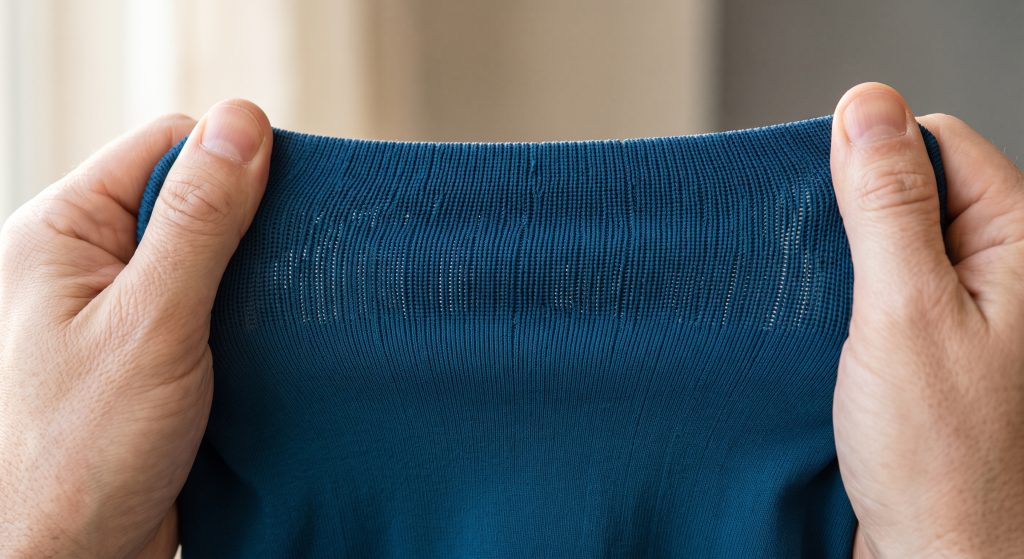
Durable nylon activewear knit fabric resists surface friction and maintains elastic recovery under extreme mechanical stress. Polyamide 6.6 polymer chains provide unmatched resilience against floor abrasion and equipment rubbing.
Athletes prefer nylon garments for their cool hand feel and luxurious next-to-skin touch. Nylon knits deliver premium tactile appeal alongside heavy-duty tear resistance.
How Does Polyamide Enhance Abrasion Resistance?
Polyamide molecular chains absorb surface shear stress without fraying. See for yourself. Nylon fibers withstand twice as many abrasion test cycles as standard polyester fibers.
- High surface smoothness preventing fabric pilling
- Resilient fiber structure resisting barbell friction
- Cool contact sensation for high-heat environments
You gain activewear garments that endure punishing gym routines without showing premature surface fuzzing.
Why Pick Micro Nylon for Compression Leggings?
Micro-denier nylon filaments produce an exceptionally dense knit that eliminates fabric sheer during squats. What does this mean for you? You produce squat-proof yoga wear that stretches comfortably without showing undergarments.
- Premium matte appearance without synthetic shine
- Buttery smooth touch against sensitive skin
- High elastane retention preventing waistband slippage
Key Takeaway: Incorporating micro nylon into activewear ensures squat-proof opacity and silky compression support.
| Parameter | Standard Nylon 6 | Micro-Denier Nylon 6.6 |
| Abrasion Cycles (Martindale) | 35,000+ | 55,000+ |
| Surface Softness Grade | Standard Soft | Ultra-Smooth |
| Recovery Rate After 50% Stretch | 92% | 97% |
These metrics show why micro-denier nylon remains the industry standard for high-end compressive yoga apparel.
4. Is Birdseye Mesh a Superior Activewear Knit Fabric?
Birdseye mesh activewear knit fabric provides superior air permeability through its micro-perforated knit geometry. Tiny eyelet openings across the textile surface allow hot air to vent rapidly away from sweaty skin.
Marathon runners and team athletes rely on birdseye mesh tops to prevent overheating during summer competitions. The engineered eyelet matrix accelerates evaporation without making the garment transparent.
How Does Microporous Birdseye Mesh Expel Sweat?
Continuous air circulation through the mesh openings speeds moisture evaporation from skin pores. Here is the interesting part. Geometric perforations generate a chimney effect that pulls cooler outside air inward.
- Micro eyelet design maximizing heat dispersion
- Ultra-low fabric weight for unrestricted mobility
- Non-cling textured inner face preventing fabric sticking
This structural ventilation keeps distance runners dry and light throughout long workouts.
Which Athletic Garments Benefit from Birdseye?
Endurance sports demand lightweight apparel that sheds moisture immediately. Ready for the good part? Birdseye mesh creates comfortable team jerseys that dry in minutes after intense rain or sweating.
- Soccer and basketball game jerseys
- Running singlets and cycling training tops
- Internal lining panels for performance shorts
Key Takeaway: Birdseye mesh maximizes ventilation and airflow for endurance sports apparel where moisture release is critical.
| Feature Metric | Birdseye Mesh | Solid Jersey |
| Air Permeability (cfm) | 180 – 240 | 45 – 80 |
| Drying Speed (AATCC 195) | Fast (<15 min) | Moderate (25-35 min) |
| Typical GSM | 130 – 160 | 160 – 200 |
Selecting high air permeability mesh structures prevents sweat accumulation during intense cardiovascular training.
5. When Should You Select Pique Activewear Knit Fabric?
You should pick pique activewear knit fabric whenever structured drape, snag resistance, and subtle surface texture are needed. The distinctive waffle or honeycomb texture elevates activewear into polished athletic-casual apparel.
Golfers and tennis players favor pique knits because the fabric holds collar shapes crisp through humid tournament days. Pique knits resist wrinkling and offer superior sun protection on outdoor courts.
What Gives Geometric Pique Knit Rugged Texture?
Double-tuck knitting loops form raised geometric patterns that keep fabric lifted off sweaty skin. What is the secret? The raised waffle texture reduces skin contact points and improves air circulation.
- Elevated honeycomb pattern minimizing skin contact
- Substantial body and structural stability
- High snag resistance against abrasive sports gear
Athletes stay comfortable on sunny golf courses because the knit breathes while maintaining sharp styling.
Why Do Premium Polo Shirts Rely on Pique?
Coaches and country club athletes prefer crisp garments that transition smoothly from sports venues to clubhouses. Here is the bottom line. Pique fabric provides the tailored appearance of woven shirts alongside the stretch comfort of athletic knits.
- Crisp collar retention without curling edges
- Excellent UPF 30+ sun ray block
- Refined textured finish for corporate athletic apparel
Key Takeaway: Pique knit construction provides firm structural drape and refined texture for golf, tennis, and sideline uniforms.
| Attribute | Honeycomb Pique | French Terry |
| Fabric Thickness | Medium-Firm | Bulky-Soft |
| Collar Stability | High Rigidity | Low Rigidity |
| UPF Sun Protection | UPF 35 – 50+ | UPF 20 – 30 |
Understanding pique structural firmness helps buyers specify the right fabric weight for collared athletic apparel.
6. How Do Birdseye and Pique Activewear Knit Fabric Differ?
Birdseye and pique activewear knit fabric differ primarily in surface architecture, yarn density, and airflow mechanics. Birdseye uses perforated open eyelets for fast heat evacuation whereas pique uses raised geometric loops for structured body and snag defense.
Choosing between these two performance textiles depends on your sport type, required garment silhouette, and target sweat rate.
How Do Hand Feel and Breathability Compare?
Birdseye feels smooth and silky against bare skin with immediate airflow sensation. Look at the comparison. Pique delivers a firmer, slightly granulated tactile sensation with substantial fabric weight.
- Birdseye provides higher immediate airflow for peak aerobic workouts
- Pique provides superior shape retention and snag prevention
- Birdseye weighs less per square meter than structured pique
You can select the ideal textile by analyzing athlete perspiration levels and garment design requirements.
Which Texture Fits High Sweat Workouts?
High-intensity interval training and marathon running require immediate sweat evaporation without heavy fabric weight. What is the real story? Birdseye mesh pulls sweat into perforated zones where air movement dries it instantly.
- High-sweat track events benefit from featherweight birdseye mesh
- Low-friction team sports use birdseye for zero drag
- Pique excels in outdoor sports requiring sun protection and structured collars
Key Takeaway: Birdseye suits ultra-light high-sweat aerobic tops while pique suits structured country club and court apparel.
| Selection Metric | Birdseye Mesh Knit | Textured Pique Knit |
| Hand Feel | Silky, ultra-light | Crisp, textured, substantial |
| Air Permeability | Very High (180+ cfm) | Medium (90-130 cfm) |
| Best Application | Running, soccer singlets | Golf polos, tennis tops, uniforms |
Comparing physical specifications ensures apparel brands assign each fabric structure to its best athletic environment.
7. Does Four Way Stretch Activewear Knit Fabric Fit Better?
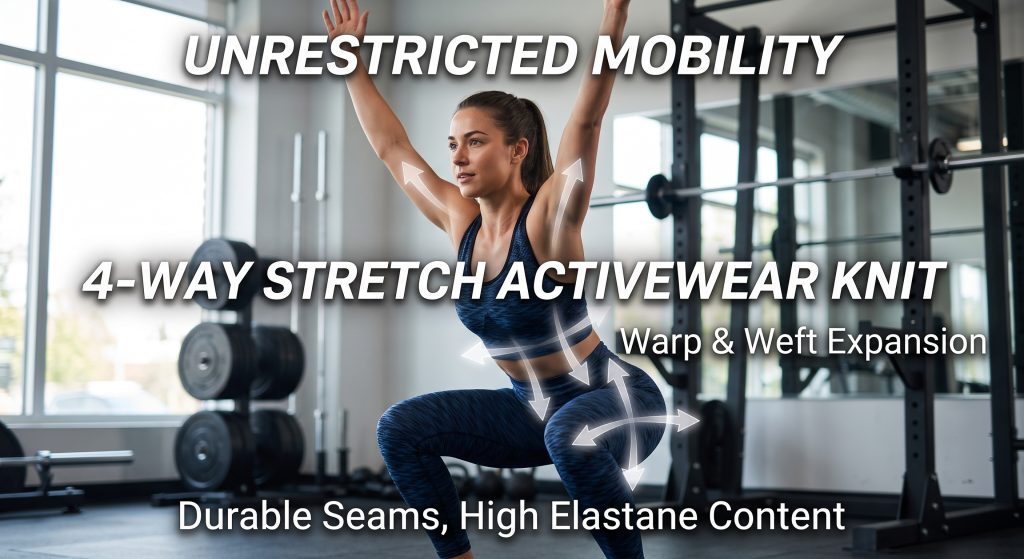
Four-way stretch activewear knit fabric fits better because it expands across warp and weft directions without binding movement. Two-way stretch fabrics move horizontally across the chest but lock up along spinal and knee bending lines.
Athletes wearing true four-way elastic garments experience unrestricted mobility during squats, lunges, and overhead reaches. High elastane content guarantees that seams never snap under rapid muscle contraction.
How Does Elastane Recovery Prevent Bagging?
Premium elastane filaments snap back to their original length once physical strain stops. Here is the trick. Using heat-set elastane prevents saggy knees and loose waistbands after all-day training.
- Rapid elastic snapback under dynamic movement
- Retention of uniform garment compression over time
- Prevention of bagging around knees, elbows, and hips
Apparel manufacturers build form-fitting leggings that stay tight through dozens of wash cycles.
What Testing Verifies Warp and Weft Elasticity?
Standard laboratory tensile testing stretches swatches across horizontal and vertical axes to confirm elastic retention. Think about this. Reliable activewear must deliver at least eighty percent elongation and ninety-five percent instantaneous recovery.
- ASTM D2594 testing for stretch knit elasticity
- Cyclic fatigue testing simulating prolonged gym wear
- Seam elongation tests preventing thread rupture
Key Takeaway: High-recovery four-way stretch textiles eliminate garment sagging and preserve muscle compression.
| Directional Metric | 2-Way Stretch Knit | 4-Way Stretch Knit |
| Crosswise Elongation | 40% – 60% | 80% – 120% |
| Lengthwise Elongation | <10% (Rigid) | 60% – 90% |
| Recovery Rate (%) | 85% | 96% |
Choosing four-way stretch ensures activewear garments adjust naturally to intense multi-axis athletic movements.
8. Which GSM Weight Suits Your Activewear Knit Fabric Best?
The right GSM weight for activewear knit fabric aligns directly with garment end-use, ranging from featherweight tops to compressive leggings. GSM measures grams per square meter, determining fabric thickness, warmth, and stretch resistance.
Using the incorrect fabric weight leads to see-through yoga tights or sweltering running tops. Precise GSM control ensures your garment hits the exact balance between opacity and breathability.
How Does Fabric Weight Alter Garment Drape?
Lightweight fabrics flow fluidly around the torso without clinging while heavyweight textiles compress muscle groups. Here is the deal. Increasing yarn density adds structural firmness and eliminates fabric sheer.
- Under 150 GSM creates breathable running shirts
- 180 to 220 GSM builds balanced training tees and lightweight shorts
- 240 to 300 GSM produces squat-proof compression tights
Selecting appropriate weight profiles guarantees garments perform their intended athletic function flawlessly.
Which GSM Ranges Fit Tops Versus Bottoms?
Upper body garments prioritize thermal ventilation while lower body garments require muscular support and opacity. Ready for the good part? Matching yarn density to body zones prevents garment failure during workouts.
- Running singlets: 120 – 140 GSM for maximum ventilation
- Gym t-shirts: 160 – 190 GSM for sweat balance and modesty
- Yoga tights and biker shorts: 250 – 290 GSM for full opacity
Key Takeaway: Correct GSM selection guarantees tops stay light and breathable while compression leggings remain totally squat-proof.
| Activewear Category | Recommended GSM | Target Yarn Blend |
| Running Tops | 130 – 150 GSM | 100% Recycled Polyester Mesh |
| Athletic T-Shirts | 170 – 200 GSM | 90% Poly / 10% Spandex Interlock |
| Compressive Leggings | 260 – 300 GSM | 75% Nylon / 25% Spandex Double-Knit |
Carefully auditing GSM specs during sampling avoids costly manufacturing errors in bulk sportswear production.
9. How Does Moisture Wicking Activewear Knit Fabric Work?
Moisture-wicking activewear knit fabric pulls perspiration away from skin through micro-channel capillary yarn profiles. Specially engineered grooves along filament surfaces pull liquid sweat upward across wider surface areas.
Rapid spreading accelerates natural air evaporation and prevents cold sweat chills during training rest periods. Permanent capillary wicking outperforms temporary chemical coatings that wash out after ten laundry cycles.
How Does Capillary Action Pull Perspiration Away?
Cross-shaped and grooved fiber cross-sections create capillary pressure that moves sweat drops automatically. What is the real story? Liquid moves naturally from damp inner surfaces toward dry outer faces.
- Micro-channel fiber shapes pulling sweat outward
- Dual-layer knit pushing sweat away from the body
- High surface area dispersion speeding dry times
Athletes remain dry and focused because moisture evaporates before dampness accumulates against skin.
Why Combine Hydrophilic Yarns with Fast Drying?
Hydrophilic internal yarn layers grab sweat quickly while hydrophobic outer filaments disperse moisture into ambient air. Here is where it gets interesting. This dual-action yarn system keeps the inner fabric face dry against skin.
- Inner layer absorbs sweat drops instantly
- Outer face expands moisture footprint for fast evaporation
- Prevents sweat saturation during heavy workouts
Key Takeaway: Capillary-engineered filament profiles provide lifetime moisture management that will not degrade during washings.
| Wicking Technology | Evaporation Rate | Wash Durability |
| Chemical Topical Coating | Moderate | Degrades in 15-20 washes |
| Cross-Section Filament Channels | Very High | Permanent Lifetime Performance |
| Dual-Layer Hydrophobic/Hydrophilic | Maximum | Permanent Lifetime Performance |
Investing in yarn-level wicking technology ensures your sportswear line maintains high performance over years of use.
10. Can Eco Certifications Verify Activewear Knit Fabric?
Verified eco certifications confirm activewear knit fabric authenticity by auditing recycled chemical inputs and ethical manufacturing standards. Global auditing bodies test fabric rolls to ensure textiles contain genuine post-consumer materials without harmful residue.
Retail buyers demand third-party validation before approving eco-friendly sportswear collections for commercial retail shelves. Certifications prove that athletic lines meet international environmental regulations.
What Standards Validate Recycled Sportswear Textiles?
Independent organizations track polymer sources from collection centers to final knit warehouses. Think about this. Stringent chain-of-custody documentation prevents greenwashing and verifies material purity.
- Global Recycled Standard (GRS) tracking recycled content
- OEKO-TEX Standard 100 checking for harmful chemical residues
- Bluesign approval verifying clean water and air manufacturing
Displaying verified certification tags builds immediate trust with environmentally conscious fitness shoppers.
How Do Traceable Supply Chains Build Buyer Trust?
Transaction certificates confirm exact recycled material percentages across every manufacturing batch. Here is the kicker. Transparent supply chains allow apparel brands to market sustainable athletic lines with absolute confidence.
- Verified recycled percentage documentation on every order
- Clean chemical audit trails protecting sensitive athlete skin
- Traceable yarn sources satisfying international customs laws
Key Takeaway: Independent certifications validate sustainable material claims and protect apparel brands from regulatory non-compliance.
| Certification Standard | Scope of Audit | Brand Benefit |
| GRS (Global Recycled Standard) | Recycled material input & social compliance | Legitimate recycled claims |
| OEKO-TEX Standard 100 | Harmful chemical and heavy metal screening | Skin safety guarantee |
| Bluesign | Resource management and wastewater safety | Full environmental verification |
Partnering with certified textile manufacturers protects your brand reputation and guarantees compliance in global markets.
Final Thoughts on Selecting Performance Textiles
Sourcing high-performance athletic textiles requires balancing stretch recovery, moisture management, hand feel, and ecological responsibility. By analyzing the structural differences between birdseye mesh and pique knit, selecting appropriate fiber blends, and verifying certifications, you protect your activewear collection from poor fitting and premature wear. We supply premium performance knits engineered to withstand intense workouts while meeting global sustainability standards. If you want to sample our certified athletic textiles or build custom activewear lines, contact us today to start developing durable, high-performance sportswear that athletes trust.
Frequently Asked Questions
Q1: What is the best fabric blend for high-compression yoga leggings?
Micro-denier nylon blended with twenty to twenty-five percent spandex is the top choice. This combination provides four-way stretch, smooth muscle compression, and complete opacity during squats.
Q2: Can I use birdseye mesh for winter athletic apparel?
No, because birdseye mesh has open perforations designed specifically to vent body heat. Winter sports require brushed-back fleece or thermal interlock knits that trap body warmth.
Q3: How do I know if my activewear fabric is squat-proof?
Check that the fabric weight exceeds 240 GSM and uses a dense double-knit interlock structure. Stretching the swatch firmly over your hand will confirm whether light passes through the yarn grid.
Q4: What is the main structural difference between pique and jersey knits?
Pique knits feature raised honeycomb geometric textures while jersey knits display a flat, smooth surface. Pique provides stiffer collar support while jersey drapes loosely for casual workout tees.
Q5: Can recycled polyester activewear match virgin polyester performance?
Yes, recycled polyester provides identical tensile strength, abrasion resistance, and moisture wicking properties. Advanced extrusion purification processes ensure recycled yarn performs to international athletic standards.