
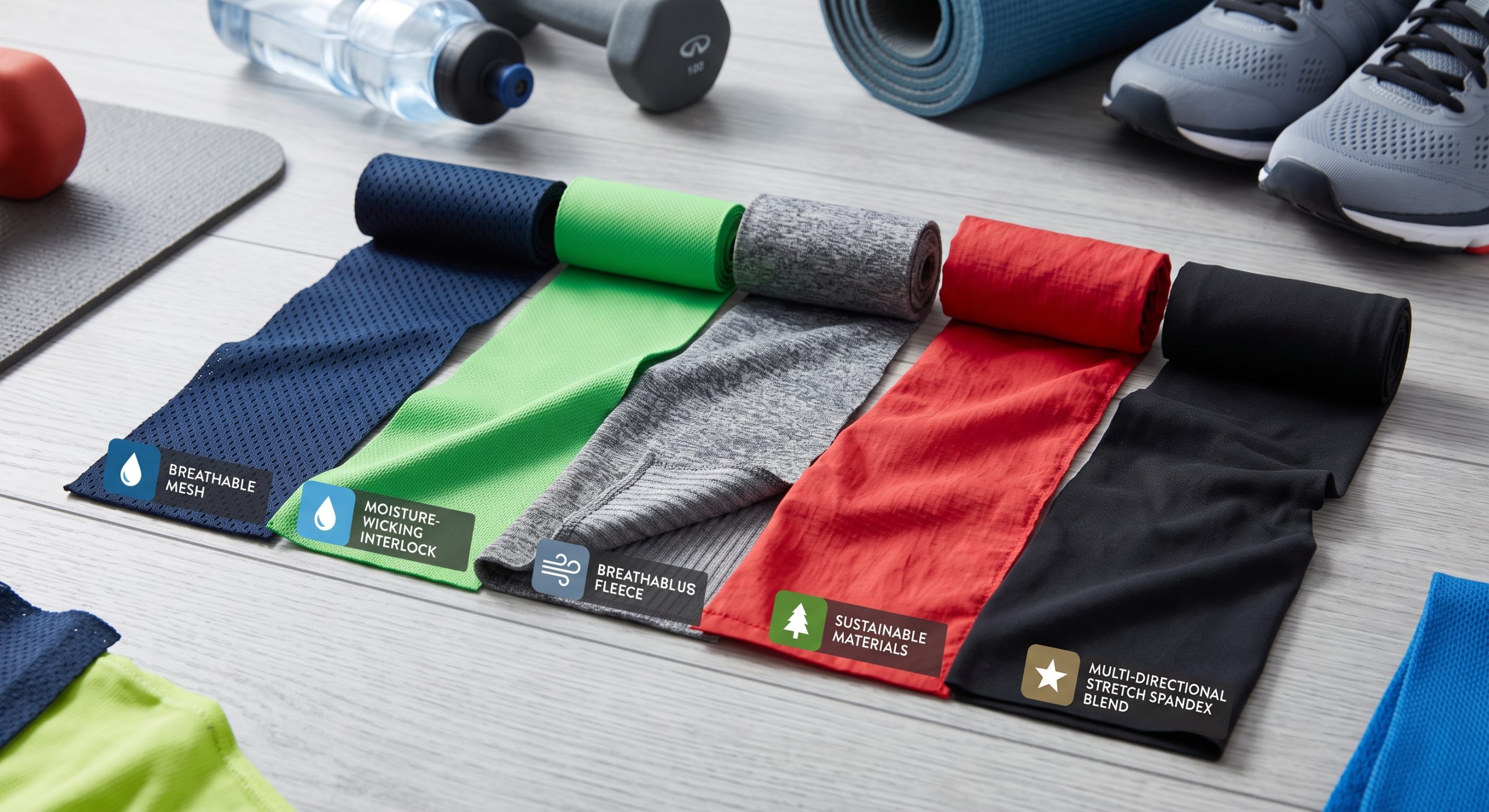
Selecting superior athletic fabric types secures peak performance and absolute comfort during intense physical training sessions. Here is the deal, manufacturers frequently struggle with textile selection when scaling activewear production lines for rigorous commercial applications. What is the real story behind material failure under high-sweat conditions that frustrates consumers globally? Ready for the good part, sourcing premium textile options eliminates moisture retention issues while providing stellar elasticity for every user. This is where it gets interesting, our professional material engineering expertise offers unmatched guidance to resolve your manufacturing bottlenecks immediately.
1. What are the best athletic fabric types for moisture control?
How do moisture-wicking fibers work?
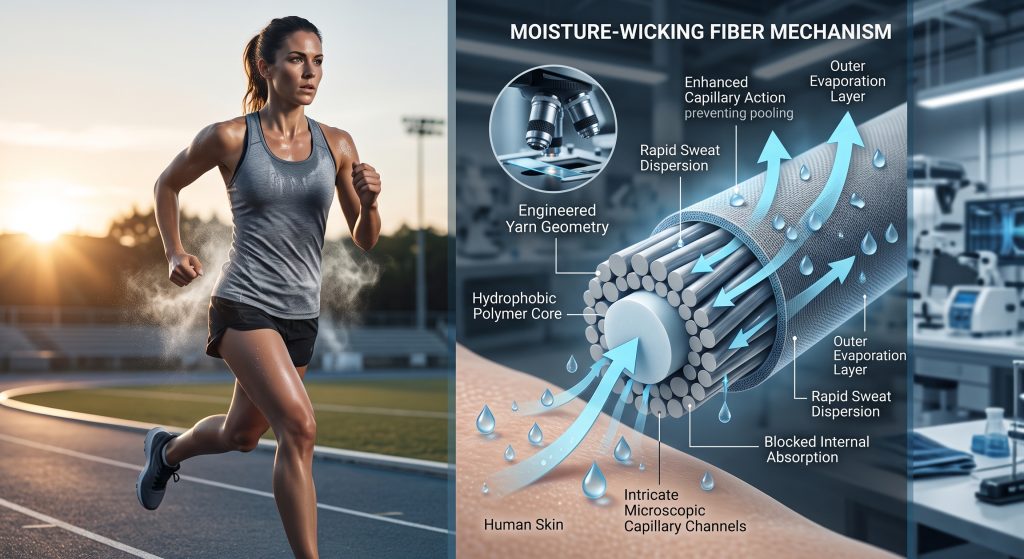
Moisture management starts with specialized synthetic filaments actively pulling perspiration away from the human skin toward outer garment layers while utilizing advanced athletic fabric types to maintain rigorous breathability standards. You might be wondering, exactly how do advanced polyester blends achieve rapid evaporation rates under heavy physical exertion without sacrificing structural integrity during repetitive industrial washing cycles? This is where it gets interesting, intricately engineered yarn geometry creates microscopic capillary channels that accelerate liquid dispersion across textile surfaces for maximum drying efficiency in commercial applications. What comes next, apparel manufacturers gain massive operational advantages by integrating these superior weaves into high-performance athletic collections designed specifically for demanding professional fitness competitors.
Textile engineers evaluate multiple material variants before selecting optimal yarn configurations for moisture-heavy environments where performance degradation causes severe customer dissatisfaction in competitive global markets. Here is the deal, specialized synthetic knit structures outperform traditional natural fibers exponentially when subjected to continuous perspiration loads during grueling endurance training sessions. What is the real story, microscopic laboratory testing reveals that advanced hydrophobic polymer treatments prevent moisture absorption directly within the core fiber matrix structure. Ready for the good part, adopting these rigorous scientific principles empowers your brand to deliver superior garments that keep active end-users completely dry and comfortable throughout exceptionally long daily workouts.
- Key fiber benefits include rapid sweat dispersion
- Enhanced capillary action prevents liquid pooling
- Superior polymer matrix blocks internal absorption
Why do manufacturers prefer synthetic knits?
Commercial apparel producers prioritize synthetic knits because industrial sewing machines handle these resilient polymer filaments with exceptional precision and minimal mechanical downtime across factory floors. You might be asking, how do continuous filament yarns reduce operational friction on high-speed automated textile manufacturing equipment production lines? This is where it gets compelling, uniform molecular structures prevent yarn breakage while permitting high-tension stitching operations required for durable activewear garments. What comes next, factory supervisors achieve higher daily output targets without compromising the structural quality of finished consumer goods.
Bulk purchasing economics favor synthetic textile rolls due to lower raw material acquisition expenses and superior supply chain stability across complex international shipping channels. Here is the bottom line, warehouse managers appreciate consistent bolt dimensions that minimize fabric waste during automated pattern cutting procedures in large facilities. What matters most, predictable shrinkage rates guarantee that finished apparel pieces maintain accurate sizing specifications after rigorous industrial laundering tests. Ready to see results, incorporating these reliable materials safeguards your profit margins against unexpected production variances.
- Consistent bolt dimensions reduce cutting waste
- High tensile strength prevents machine breakage
- Predictable shrinkage ensures accurate sizing standards
Key Takeaway: Understanding synthetic knit mechanics allows your production team to optimize factory output while reducing overall material waste.
| Fiber Type | Moisture Control | Durability Score | Cost Efficiency |
| Polyester | Excellent | High | Superior |
| Nylon | Moderate | Very High | Moderate |
| Spandex Blend | High | Moderate | Low |
| Polypropylene | Maximum | High | High |
This comparative data demonstrates why polyester remains the baseline standard for moisture-heavy athletic collections.
2. How do breathable athletic fabric types improve comfort?
What makes mesh structures superior?
Engineered mesh constructions facilitate continuous airflow across the human torso while wearing athletic fabric types during intense cardiovascular exercise routines. You might be wondering, exactly how do geometric knit holes dissipate accumulated body heat without compromising overall garment tensile strength standards? This is where it gets interesting, open-loop patterns allow warm air to escape instantly while drawing cool ambient air inward continuously. What happens next, active wearers experience significantly reduced thermal fatigue during prolonged outdoor training sessions in warm weather environments.
Textile designers utilize specialized jacquard knitting machinery to embed ventilation zones directly into garment panels without requiring extra cut-and-sew assembly steps. Here is the deal, seamless ventilation mapping reduces chafing points while elevating overall aesthetic appeal for premium retail apparel collections. What is the secret, computerized yarn feed systems adjust tension dynamically to create variable porosity across different body mapping zones. Ready for the good part, your production line saves valuable labor hours while delivering superior comfort features to discerning consumers.
- Open-loop patterns maximize ambient air intake
- Seamless ventilation mapping eliminates skin chafing
- Computerized feed systems ensure precise porosity
How does airflow affect performance?
Optimal thermoregulation prevents dangerous core body temperature spikes that normally force athletes to curtail their workout intensity prematurely. You could ask, exactly how does continuous cooling impact cumulative muscular output during long-distance endurance running events? This is the main point, stable skin temperatures reduce cardiovascular strain by allowing the heart to pump blood efficiently toward working muscles. What is the result, active athletes achieve personal best records while remaining comfortable throughout grueling daily physical fitness tests.
Sweat accumulation inside poorly ventilated garments creates a heavy, restrictive microclimate that severely chafes sensitive human skin and ruins professional athletic focus during competitions. Here is the answer, breathable technical textiles evaporate liquid sweat instantly before heavy pooling adds unwanted dead weight to the apparel item. Why does this matter, lightweight engineered clothing allows completely uninhibited range of motion for agile sports movements across competitive playing fields. Ready to upgrade, supplying high-airflow apparel positions your business enterprise as a recognized industry leader in functional consumer comfort solutions.
- Thermoregulation prevents dangerous core body spikes
- Lightweight garments eliminate unwanted microclimate weight
- Advanced ventilation sustains long-term athletic focus
Key Takeaway: Integrating targeted mesh panels secures superior thermoregulation, keeping active users focused and comfortable under high exertion.
| Ventilation Type | Porosity Level | Chafing Risk | Airflow Efficiency |
| Single Knit Mesh | High | Low | Maximum |
| Jacquard Vent | Variable | Very Low | Superior |
| Pinpoint Perforation | Moderate | Moderate | High |
| Solid Interlock | None | High | Poor |
This breakdown highlights why custom mesh panels remain indispensable for elite sportswear ventilation.
3. Which athletic fabric types offer maximum durability?
How do high-tenacity yarns resist wear?
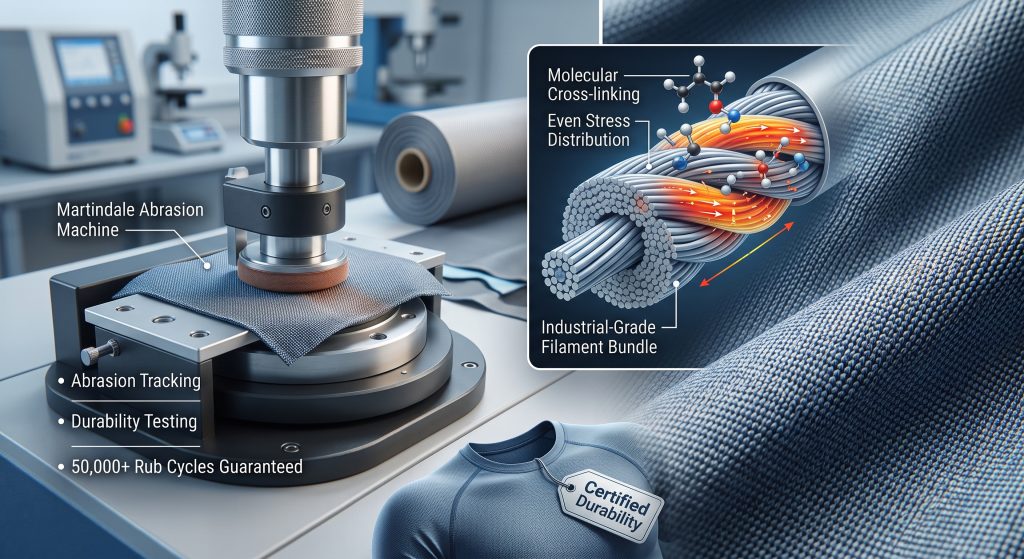
Industrial textile mills utilize high-tenacity filament bundles that endure extreme mechanical friction without fraying during rugged outdoor activities and sports. You might wonder, exactly how do twisted nylon fibers prevent catastrophic seam failure under heavy load conditions during heavy workouts? This is where science helps, molecular cross-linking distributes stress evenly across every single strand rather than concentrating tension on vulnerable stitch points. What happens next, garments survive abrasive contact against rough surfaces without compromising structural integrity over time.
Durability testing relies on advanced Martindale abrasion machines to simulate years of heavy wear within a matter of hours in certified testing laboratories. Here is the deal, premium fabrics withstand upwards of fifty thousand rub cycles before showing any visible signs of thread degradation or pilling. Why should you care, purchasing robust textiles drastically reduces costly product return rates caused by premature tearing or seam splitting. Ready for success, resilient materials build lasting brand loyalty among professional fitness consumers.
- High-tenacity filaments withstand extreme friction loads
- Molecular cross-linking distributes mechanical stress evenly
- Certified abrasion testing guarantees long-term resilience
Why do reinforced weaves matter?
Ripstop grid patterns incorporate thicker reinforcing threads at regular intervals to stop small punctures from expanding into large tears during use. You might ask, exactly how do grid intersections arrest the propagation of fabric damage under high mechanical stress? This is the core principle, the grid acts as a physical barrier that traps tearing forces within a single microscopic square. What is the outcome, outdoor apparel survives harsh environmental conditions without requiring frequent replacement by end users.
Reinforced construction methods protect high-wear zones such as knees and elbows where standard single-knit fabrics fail quickly during heavy use. Here is the truth, investing in woven reinforcement adds minimal weight while multiplying the operational lifespan of activewear garments. What is the impact, commercial buyers secure higher profit margins through reduced warranty claims and superior product longevity. Ready to capitalize, offer reinforced gear to capture lucrative institutional supply contracts globally.
- Ripstop grid structures stop punctures instantly
- Woven reinforcement protects high-wear joint zones
- Industrial durability minimizes costly product warranty claims
Key Takeaway: Utilizing high-tenacity reinforced yarns multiplies garment lifespan and protects commercial profit margins from warranty claims.
| Fabric Weave | Abrasion Resistance | Tear Strength | Weight Penalty |
| Standard Plain | Low | Low | Minimal |
| Ripstop Grid | Maximum | Superior | Very Low |
| Cordura Nylon | Extreme | Extreme | Moderate |
| Double Knit | High | High | Low |
This matrix confirms that ripstop weaves provide the optimal balance between durability and lightweight comfort.
4. Are eco-friendly athletic fabric types effective for gear?
How do recycled polymers perform?
Recycled polyester derived from post-consumer plastic bottles matches the mechanical performance of virgin petroleum polymers when processed correctly into athletic fabric types for apparel. You might be wondering, exactly how do recycled polymer chains maintain tensile strength during high-temperature extrusion processes in factories? This is where technology shines, advanced sorting and purification methods remove impurities before repolymerization takes place in industrial vats. What happens next, textile mills produce eco-conscious yarns that deliver identical elasticity and moisture management.
Sustainable material adoption satisfies stringent corporate social responsibility mandates while appealing directly to environmentally conscious fitness consumers worldwide. Here is the deal, green certifications validate supply chain claims and prevent misleading marketing allegations in competitive retail markets. Why does this matter, brand reputation relies heavily on verifiable ecological transparency across all product categories. Ready for growth, sustainable activewear lines unlock new demographic segments for your growing business.
- Recycled PET matches virgin polymer tensile strength
- Advanced sorting removes impurities before extrusion
- Green certifications validate corporate sustainability claims
Are plant-based alternatives viable?
Bio-based polymers sourced from corn starch or castor oil offer renewable substitutes for petroleum-based synthetics in activewear lines. You could ask, exactly do organic polymer structures withstand heavy sweat exposure without degrading prematurely during intense physical exercise? This is the key insight, chemical modifications stabilize plant polymer backbones against moisture-induced hydrolytic degradation over time. What is the result, brands offer biodegradable garments without sacrificing mechanical performance during tough daily workouts and training sessions.
Natural fiber integration requires careful blending with synthetic filaments to prevent excessive moisture retention and odor buildup during training. Here is the strategy, pairing organic cotton or hemp with technical polyester creates a balanced fabric that breathes naturally. What is the benefit, end-users enjoy soft hand-feel characteristics alongside rapid drying capabilities in all weather conditions. Ready to innovate, experiment with hybrid yarn blends to differentiate your brand from competing sportswear manufacturers.
- Bio-based polymers offer renewable synthetic substitutes
- Chemical modifications prevent moisture degradation
- Hybrid yarn blends combine natural softness with durability
Key Takeaway: Adopting recycled and bio-based polymers satisfies eco-conscious consumer demand without sacrificing technical garment performance.
| Material Source | Eco-Score | Tensile Strength | Cost Premium |
| Virgin Polyester | Low | High | Baseline |
| Recycled PET | High | High | Low |
| Bio-based Polymer | High | Moderate | Moderate |
| Organic Blend | Moderate | Low | High |
This comparison shows that recycled PET offers the best compromise between environmental sustainability and mechanical strength.
5. How do stretchy athletic fabric types enhance mobility?
What role do elastane fibers play?
Elastane filaments provide exceptional elongation properties that allow garments to stretch five times their original length before snapping back instantly. You might wonder, exactly how do polyurethane block copolymers achieve such remarkable elastic recovery under repetitive tension cycles? This is the mechanism, soft segments allow stretching while hard segments anchor the molecular structure against permanent deformation over time. What happens next, activewear pieces maintain form-fitting silhouettes throughout rigorous athletic movements and stretches.
Blending minimal percentages of elastane into base yarns transforms rigid textiles into flexible fabrics that follow body contours seamlessly during motion. Here is the deal, clothing designers eliminate restrictive pinch points without sacrificing compression support required for muscle stabilization. Why is this essential, unrestrained joint motion prevents muscle fatigue during endurance sports competitions. Ready to impress, deliver high-stretch garments to satisfy demanding athletes in professional sports leagues.
- Elastane provides five times original length elongation
- Polyurethane block copolymers ensure rapid elastic recovery
- Minimal elastane blends maintain essential muscle compression
How does four-way stretch work?
Four-way stretch construction permits fabric expansion in both longitudinal and transverse directions simultaneously for absolute freedom of movement during rigorous exercise. You could ask, precisely how do advanced circular knitting machines produce bi-directional elasticity in technical performance garments? This is the answer, complex interlooping yarn paths allow the fabric matrix to flex horizontally and vertically under intense physical stress. What is the outcome, garments move organically with every complex twist and bend of the human body seamlessly.
Mechanical stretch alternatives utilize crimped yarn configurations instead of elastane to achieve elasticity without chemical degradation risks during use. Here is the insight, textured polyester springs back naturally when thermal setting locks the crimped yarn memory into place. What is the advantage, garments resist chlorine damage and UV breakdown better than standard elastane blends. Ready to choose, select mechanical stretch for swimwear and outdoor gear exposed to harsh environmental outdoor conditions.
- Bi-directional matrix expands horizontally and vertically
- Mechanical crimp alternatives resist chlorine degradation
- Thermal setting locks permanent yarn memory in place
Key Takeaway: Four-way stretch construction guarantees unrestricted joint mobility, enhancing athlete comfort during complex training movements.
| Stretch Method | Direction | Recovery Rate | Chlorine Resistance |
| Elastane Blend | 4-Way | Excellent | Low |
| Mechanical Crimp | 2-Way | Good | High |
| Rubber Core | 1-Way | Moderate | Poor |
| Knitted Loop | 4-Way | Moderate | Moderate |
This table demonstrates that elastane blends provide superior multi-directional recovery for tight activewear.
6. What thermal athletic fabric types keep you warm outside?
How does brushed fleece insulate?
Brushed fleece athletic fabric types trap microscopic air pockets between looped yarn fibers to create an effective thermal barrier against cold air during winter. You might wonder, exactly how do raised surface fibers prevent body heat from escaping into freezing outdoor environments? This is the thermal principle, stagnant air trapped within the loft acts as a natural insulator against conductive heat loss. What happens next, athletes stay warm and comfortable during winter outdoor training sessions and runs.
Manufacturers brush the inner surface of knitted fabrics using fine metal wires to pull individual filaments loose and create a plush texture. Here is the deal, this mechanical process increases surface area without adding significant garment weight or bulk to the items. Why is this valuable, cold-weather athletes retain full agility while benefiting from superior warmth retention properties. Ready for winter, supply fleece-backed apparel to capture seasonal market demand in cold regions across the globe.
- Looped fibers trap stagnant insulating air pockets
- Mechanical wire brushing creates plush inner lofts
- Superior warmth retention preserves cold-weather agility
Are wool blends effective in cold weather?
Merino wool fibers manage moisture and thermal regulation simultaneously by absorbing vapor into their cellular core while repelling liquid water externally. You could ask, exactly how does wool maintain insulation performance even when completely saturated with sweat? This is the natural wonder, exothermic reactions release heat when wool fibers absorb moisture vapor. What is the result, wearers experience continuous warmth without feeling clammy during high-exertion cold-weather sports and outdoor activities.
Blending merino wool with synthetic nylon creates a hybrid yarn that combines natural thermal properties with high mechanical durability. Here is the strategy, nylon reinforcement prevents wool garments from stretching out or wearing thin at high-friction stress points. What is the benefit, outdoor apparel lasts for seasons of heavy use. Ready to source, offer wool-synthetic blends for premium winter gear designed for serious outdoor adventurers.
- Cellular core absorbs vapor while repelling liquid
- Exothermic reactions release natural warmth when damp
- Nylon hybridization prevents fabric stretching at stress points
Key Takeaway: Thermal fleece and merino wool blends provide exceptional insulation, maintaining body heat during cold-weather endurance routines.
| Insulation Material | Wet Warmth | Weight | Breathability |
| Synthetic Fleece | Moderate | Low | High |
| Merino Wool | Maximum | Moderate | High |
| Wool-Nylon Blend | High | Low | High |
| Cotton Sweatshirt | Poor | High | Low |
This matrix demonstrates that merino wool blends offer unmatched warmth-to-weight ratios in cold conditions.
7. Why choose lightweight athletic fabric types for running?
How does reduced weight boost speed?
Ultra-lightweight textiles minimize aerodynamic drag and eliminate unnecessary mass that slows runners down over long competitive distances. You might wonder, exactly how do featherweight fabrics affect runner energy expenditure during a marathon event? This is the biomechanical fact, lighter clothing reduces muscular effort required to swing limbs forward with every single stride. What happens next, runners conserve valuable metabolic energy for the final sprint to the finish line of the race.
Micro-filament construction enables fabric weights under seventy grams per square meter without sacrificing tear strength or opacity standards. Here is the deal, weaving tight twisted yarns creates a fabric shield that blocks wind while weighing virtually nothing. Why should you care, runners demand weightless garments that feel like a second skin. Ready to produce, lightweight running gear drives high volume retail sales across running specialty shops.
- Featherweight construction minimizes aerodynamic drag
- Sub-70 GSM density reduces lower limb muscular effort
- Tight micro-filament weaves block wind effectively
Why is anti-chafing critical for runners?
Repetitive limb motion during long runs causes skin friction that leads to painful chafing unless smooth fabrics minimize surface drag. You could ask, exactly how do ultra-smooth yarn finishes prevent skin irritation during marathon training blocks? This is the answer, low friction coefficients allow fabric to glide smoothly across skin rather than rubbing abrasively. What is the outcome, runners complete training blocks free from painful skin abrasions and discomfort during workouts.
Flatlock stitching techniques eliminate raised interior seams that commonly cause friction hot spots on sensitive runner skin during workouts. Here is the truth, smooth seam construction protects athletes from irritation during high-speed training sessions. What is the benefit, apparel comfort translates into repeat customer purchases. Ready to upgrade, adopt advanced sewing techniques for your running apparel lines to capture market share.
- Ultra-smooth finishes minimize skin friction drag
- Flatlock seams eliminate interior friction hot spots
- Comfortable construction drives repeat retail purchases
Key Takeaway: Featherweight fabrics and anti-chafing seams eliminate runner discomfort, supporting faster times over long-distance routes.
| Fabric Weight | Wind Resistance | Chafing Risk | Speed Impact |
| 50 GSM Micro | Moderate | Very Low | Maximum |
| 100 GSM Standard | High | Low | Moderate |
| 150 GSM Heavy | Maximum | Moderate | Negative |
| 200 GSM Fleece | Extreme | High | Poor |
This data illustrates that fabrics under seventy grams per square meter deliver optimal running performance.
8. How do odor-resistant athletic fabric types perform?
How do antimicrobial treatments work?
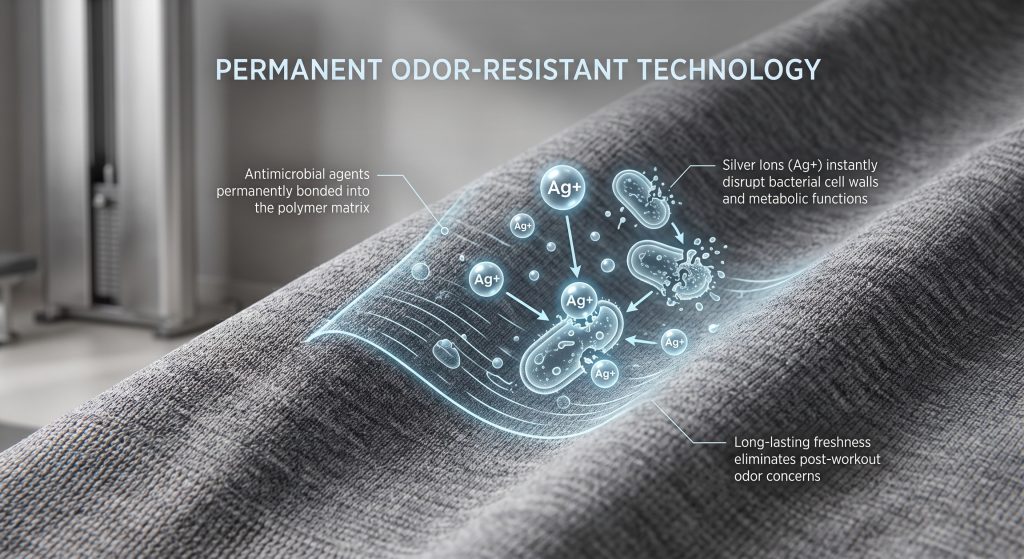
Antimicrobial treatments embedded within athletic fabric types neutralize odor-causing bacteria before unpleasant smells can multiply in damp sweat. You might wonder, exactly how do silver ions or zinc treatments stop bacterial growth on technical fibers? This is the biochemical mechanism, active ions disrupt cell walls and metabolic functions of microbes instantly. What happens next, garments remain fresh through multiple intense workouts between routine laundry wash cycles.
Permanent infusion methods bond antimicrobial agents directly into polymer matrices so treatments do not wash out over time. Here is the deal, permanent treatments outlast topical chemical coatings that degrade after a few trips through the laundry. Why is this valuable, consumers value long-lasting odor control that maintains freshness for the entire garment lifespan. Ready to sell, market odor-free activewear to active professionals who demand high performance.
- Silver ions disrupt bacterial cell walls instantly
- Permanent polymer infusion prevents treatment washout
- Long-lasting freshness eliminates post-workout odor concerns
Why do synthetic fibers trap smells?
Synthetic hydrophobic polymers attract body oils that trap bacteria inside yarn crevices and generate stubborn lingering odors. You could ask, precisely why do natural fibers resist odor buildup better than untreated polyester? This is the scientific explanation, hydrophilic natural fibers absorb sweat vapor and release it completely during washing rather than trapping oils. What is the outcome, treated synthetics level the playing field by repelling odor-causing compounds during everyday athletic use.
Fabric finishing mills apply specialized hydrophilic softeners that help synthetic garments release trapped body oils during normal laundering. Here is the strategy, washing effectiveness improves dramatically when oils rinse away cleanly from yarn surfaces. What is the benefit, end-users never experience permanent odor retention in their gym clothes. Ready to improve, upgrade your fabric finishing processes right now to boost customer satisfaction ratings.
- Hydrophobic polymers attract stubborn body oils
- Hydrophilic softeners aid oil removal during laundry
- Chemical treatments level synthetic odor performance
Key Takeaway: Permanent antimicrobial infusions prevent bacteria accumulation, keeping activewear fresh across numerous intense training cycles.
| Odor Control Method | Longevity | Effectiveness | Fabric Hand-Feel |
| Topical Spray | Low | Moderate | Soft |
| Silver Ion Infusion | Permanent | Maximum | Neutral |
| Zinc Additive | High | High | Smooth |
| Untreated Synthetic | None | Poor | Slick |
This table shows that permanent silver ion infusion provides the most reliable long-term odor protection.
9. Which athletic fabric types dry fastest after washing?
How does rapid evaporation work?
Quick-dry fabrics spread moisture across a broad surface area to maximize contact with ambient air for rapid liquid evaporation. You might wonder, exactly how do cross-section yarn shapes accelerate drying speeds compared to round fibers? This is the physics principle, channeled fibers create larger surface areas that pull moisture outward instantly. What happens next, garments dry within minutes of coming out of the washing machine spin cycle in the laundry room.
Apparel care labels highlight quick-dry features because modern consumers prioritize low-maintenance clothing that requires no tumble drying. Here is the deal, energy savings from line-drying quick-dry garments appeal to eco-minded buyers. Why should you care, low-maintenance features drive repeat purchases in retail markets. Ready to benefit, market quick-dry capabilities prominently on hangtags attached to your activewear merchandise lines.
- Channeled cross-sections maximize surface evaporation area
- Rapid drying eliminates need for machine tumbling
- Eco-friendly energy savings appeal to modern buyers
Why do hydrophobic yarns dry faster?
Hydrophobic yarn filaments absorb virtually zero water weight, allowing liquid to sit on the surface where air currents evaporate it instantly. You could ask, precisely how do non-porous fibers prevent water retention inside the core yarn structure? This is the answer, water molecules cannot penetrate the polymer chain, remaining strictly on the outer perimeter. What is the outcome, wet garments shed water weight within seconds of being wrung out by hand or machine.
Combining hydrophobic exterior yarns with hydrophilic interior yarns creates a push-pull moisture management effect that speeds up total drying time. Here is the strategy, moisture moves unidirectionally away from skin toward the fast-evaporating outer surface. What is the benefit, wearers stay bone dry during wet weather sports. Ready to build, source push-pull dual-layer knits for your upcoming retail seasonal apparel collections worldwide.
- Non-porous filaments absorb zero internal water weight
- Push-pull dual layers accelerate unidirectional evaporation
- Instant water shedding reduces post-wash drying times
Key Takeaway: Hydrophobic channeled yarns deliver rapid drying times, offering consumers low-maintenance convenience after every wash cycle.
| Fiber Composition | Absorption Rate | Drying Time | Tumble Dry Need |
| Cotton | Maximum | Slow | High |
| Polyester Channeled | Minimum | Fast | None |
| Nylon Blend | Low | Moderate | Low |
| Bamboo Rayon | High | Slow | Moderate |
This matrix demonstrates that channeled polyester dries significantly faster than natural fiber alternatives.
10. How to select ideal athletic fabric types for your brand?
What specifications should you evaluate?
Evaluating technical fabric specifications requires analyzing weight, stretch recovery, colorfastness, and moisture management test reports from certified laboratories. You might wonder, exactly how do procurement managers compare disparate lab reports across different textile mills? This is the standard procedure, establish a strict testing matrix that ranks fabric samples against predetermined performance benchmarks. What happens next, brand managers select flawless materials that meet exact commercial standards for retail apparel production.
Requesting physical fabric sample yardage allows your design team to test sewability, drape, and hand-feel before placing bulk manufacturing orders. Here is the deal, hands-on prototyping prevents costly production mistakes that arise from relying solely on digital swatch catalogs. Why is this vital, physical testing uncovers hidden stitching issues before mass production begins. Ready to proceed, order sample bolts to validate your upcoming activewear line with absolute confidence.
- Certified lab reports verify technical specifications
- Strict performance matrix benchmarks sample quality
- Physical prototyping uncovers hidden sewing defects
How do you partner with reliable mills?
Partnering with established textile manufacturers guarantees consistent quality control and reliable delivery schedules for growing apparel brands. You could ask, precisely how do you vet overseas textile suppliers for ethical labor and quality standards? This is the strategy, require third-party audit certificates and conduct on-site factory inspections prior to signing contracts. What is the outcome, stable supply chain partnerships protect your brand from unexpected production delays during peak retail seasons.
Establishing clear minimum order quantities and quality acceptance thresholds protects both your business and the supplier from commercial disputes. Here is the truth, transparent communication prevents misunderstandings regarding shade matching, shrinkage tolerances, and fabric weights. What is the benefit, long-term supplier relationships yield preferential pricing and priority production slots. Ready for superior success, build strong strategic partnerships with trusted textile mills across the global manufacturing landscape.
- Third-party audits verify ethical mill standards
- Clear minimum thresholds prevent commercial disputes
- Long-term partnerships secure priority production slots
Key Takeaway: Systematic specification evaluation and reliable mill partnerships guarantee top-tier manufacturing quality for your apparel brand.
| Evaluation Step | Purpose | Risk Mitigated | Timeline |
| Lab Test Review | Check Specs | Substandard Quality | 1 Week |
| Physical Sampling | Test Hand-Feel | Poor Garment Fit | 2 Weeks |
| Mill Auditing | Verify Ethics | Supply Disruption | 3 Weeks |
| MOQ Negotiation | Set Pricing | Margin Compression | 1 Week |
This checklist ensures that procurement teams secure high-grade textiles without risking manufacturing delays.
Selecting superior athletic fabrics guarantees peak workout performance and customer satisfaction. This guide addressed major textile selection challenges by explaining moisture control, durability, breathability, stretch mechanics, and thermal insulation. By sourcing professional-grade technical textiles, your business can deliver exceptional activewear collections that surpass consumer expectations. To take the next step in elevating your manufacturing standards, contact us today for expert textile consultation. True apparel excellence stems from uncompromising material standards and visionary manufacturing leadership.
- Q1: What is the best athletic fabric for heavy sweating?
Polyester blends serve as the optimal choice because engineered synthetic filaments wick perspiration away from skin rapidly to maintain dryness. - Q2: How do I know if a fabric has good four-way stretch?
Testing elongation in both vertical and horizontal directions verifies whether the textile recovers its original shape instantly without sagging. - Q3: Can I use recycled materials for premium activewear?
Recycled polyester matches virgin polymer performance standards while meeting corporate sustainability mandates in competitive retail markets. - Q4: What’s the best way to prevent odor in synthetic gym clothes?
Permanent silver ion infusion neutralizes odor-causing bacteria directly within the fiber matrix before unpleasant smells can multiply. - Q5: How do I choose between merino wool and synthetic fleece?
Merino wool offers superior natural thermal regulation and wet warmth, whereas synthetic fleece provides lightweight durability at a lower cost.