
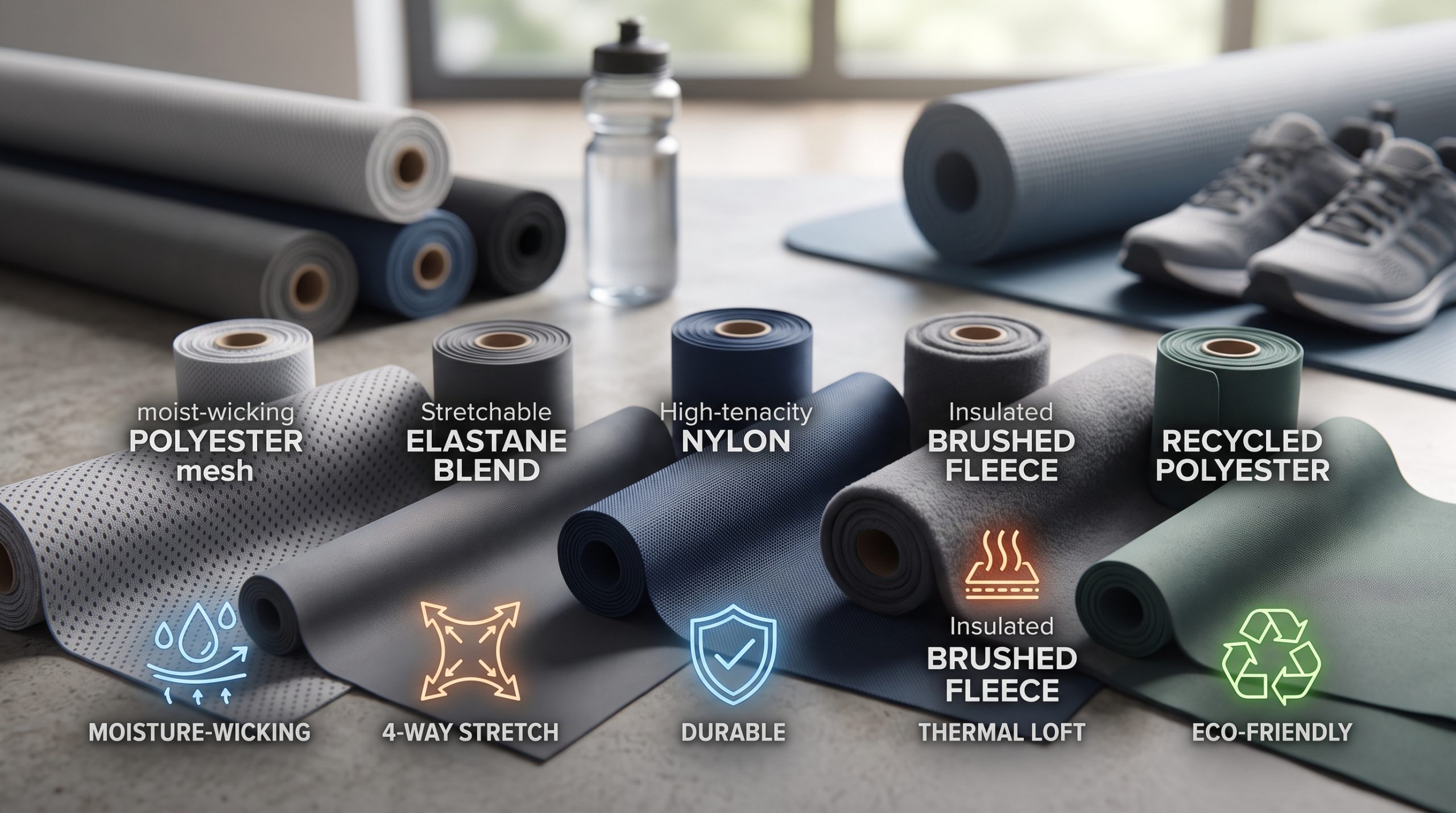
Athletic shirts are primarily crafted from synthetic fibers like polyester, nylon, and elastane blended into specialized technical knits. Picture yourself midway through an intense gym session while wearing an ordinary cotton shirt that absorbs every drop of perspiration. The heavy fabric sticks uncomfortably against your chest, traps heat, and causes severe skin chafing during repetitive training motions. Swapping heavy natural fibers for technical activewear textiles solves this frustration by pulling wetness away instantly to keep you dry. Understanding what material are athletic shirts made of allows commercial apparel buyers and activewear brands to select superior fabric configurations for maximum performance.
1. What material are athletic shirts made of for sweat control?
Sweat control activewear relies on hydrophobic polyester filaments engineered specifically when evaluating what material are athletic shirts made of for high-sweat environments. Non-porous synthetic yarn structures prevent moisture droplets from soaking directly into the internal fiber core matrix. Instead, perspiration glides smoothly along microscopic outer channels toward the garment exterior for swift evaporation into ambient air. Active wearers remain fresh and light even during demanding cardiovascular workout routines.
Textile mills configure moisture management weaves using specialized cross-sectional fibers that maximize total surface area. Specialized yarn geometry draws wetness away from human skin instantly to eliminate wet spots and heavy fabric cling. Apparel manufacturers achieve massive production advantages by sourcing performance fabrics engineered for rapid liquid dispersion. High-grade synthetic materials maintain their structural integrity and moisture-wicking efficiency through hundreds of commercial laundering cycles.
How do moisture wicking yarns work?
Capillary channels woven directly into synthetic threads pull perspiration outward away from human skin. Here is the deal, engineered cross-sectional fibers accelerate liquid movement across outer fabric surfaces for instant evaporation. Active athletes stay completely dry without experiencing heavy garment drag or skin irritation during workouts.
- Microscopic capillary channels pull liquid outward continuously
- Hydrophobic polymer structures prevent internal liquid absorption
- Expanded surface dispersion accelerates air evaporation speeds
Why do mills prefer synthetic knits?
Commercial mills favor synthetic polyester knits because continuous filament yarns handle high-speed automated sewing operations without breaking. This is where it gets interesting, uniform polymer structures allow precise tension adjustment across automated knitting machine channels. Your production lines run smoothly with minimal mechanical downtime and zero material waste.
Key Takeaway: Choosing specialized hydrophobic polyester knits secures rapid sweat dispersion while maintaining lightweight garment comfort.
| Fabric Material | Water Absorption | Evaporation Speed | Cling Prevention |
| Polyester Knit | Minimal | Rapid | High |
| Nylon Blend | Low | Moderate | High |
| Cotton Weave | High | Slow | Low |
This comparative matrix demonstrates why hydrophobic polyester knits dominate moisture-heavy sportswear production line applications.
2. What material are athletic shirts made of to maximize flex?
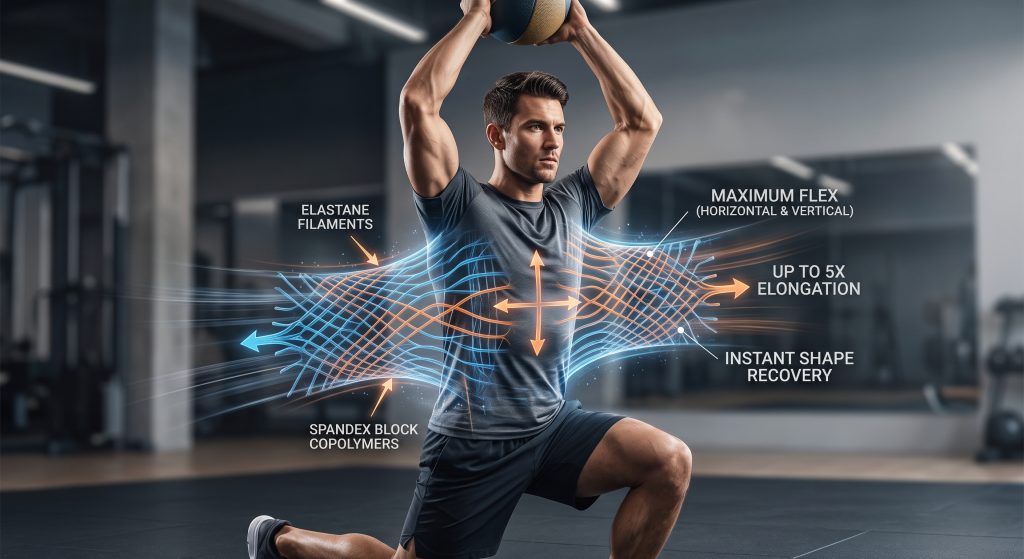
Elastane and spandex block copolymers deliver multi-directional elasticity when determining what material are athletic shirts made of to maximize flex. Incorporating small percentages of flexible elastane filaments into rigid synthetic base knits allows garments to elongate up to five times their resting length. The material recovers its original shape instantly without sagging or stretching out of fit after extended physical use. Athletes enjoy unrestricted movement across complex training routines and dynamic sports movements.
Commercial pattern cutters rely on flexible activewear fabrics to construct form-fitting activewear that supports active muscle groups. Flexible yarn matrices expand horizontally and vertically during lunges, squats, and overhead lifting movements. B2B garment buyers secure higher customer satisfaction ratings by supplying stretchable activewear lines built for rigorous gym training. Premium elastane blends maintain tension memory through repeated physical strain and routine washing cycles.
How does elastane provide elasticity?
Polyurethane block copolymers combine soft flexible segments that yield under mechanical tension with hard anchoring blocks. What is the real story, blending just five percent elastane transforms rigid base fabrics into highly flexible activewear textiles. You receive supportive form-fitting garments that conform naturally to every athletic body motion.
- Flexible polymer chains yield easily under directional strain
- Rigid molecular blocks anchor shape recovery after stretching
- Minimal elastane ratios preserve total garment lightness
Why is four way stretch better?
Bi-directional four-way stretch knits expand both horizontally and vertically to accommodate complex bodily torsions during workouts. Ready for the good part, specialized interlooping stitch patterns eliminate garment pulling across shoulders and hips under stress. Active wearers experience complete freedom of movement during high-intensity agility drills.
Key Takeaway: Integrating elastane block copolymers provides multi-directional expansion and long-lasting garment shape memory.
| Stretch Mechanics | Horizontal Flex | Vertical Flex | Shape Recovery |
| 4-Way Elastane | High | High | Superior |
| 2-Way Mechanical | High | Low | Moderate |
| Rigid Synthetic | Low | Low | Poor |
This evaluation confirms that four-way elastane blends provide optimal multi-directional recovery for tight performance activewear.
3. What material are athletic shirts made of for high durability?
High-tenacity nylon filaments provide maximum tensile strength when analyzing what material are athletic shirts made of for high durability applications. Twisted nylon filament bundles resist severe mechanical abrasion caused by gym equipment, heavy barbells, and rugged outdoor terrain. Molecular cross-linking distributes physical stress evenly across every thread strand rather than concentrating force on vulnerable stitch lines. Garments retain structural integrity without showing surface pilling, tearing, or premature seam degradation over time.
Industrial testing facilities subject durable activewear fabrics to rigorous Martindale rub tests to verify material longevity before mass manufacturing. Quality nylon knits withstand over fifty thousand abrasive cycles while maintaining pristine surface texture and color saturation. Sourcing resilient synthetic textiles protects sportswear brands against costly product return rates and warranty claims. Professional athletes receive dependable training apparel capable of enduring grueling daily workouts.
How do strong yarns resist tearing?
High-tenacity filament bundles disperse mechanical friction across entire thread structures rather than isolated stitch points. What comes next, tightly twisted nylon yarns resist surface abrasion during contact with rough training gear or ground. Your garments survive years of heavy physical use without showing fabric pilling.
- High tensile strength prevents individual strand breakage
- Dispersed mechanical tension protects vulnerable seam joins
- Abrasion resistance blocks surface thread pilling development
Why are ripstop patterns effective?
Ripstop weaving methods interweave thicker reinforcing threads at regular intervals to form a protective geometric grid pattern. Here is the deal, grid intersections trap tearing forces inside isolated squares to prevent small punctures from expanding. You gain rugged outdoor apparel that resists unexpected tears during intense cross-training.
Key Takeaway: Utilizing high-tenacity nylon and ripstop structures multiplies garment longevity under harsh physical conditions.
| Yarn Specification | Tensile Strength | Martindale Cycles | Tear Prevention |
| High-Tenacity Nylon | High | 50,000+ | Superior |
| Standard Polyester | Moderate | 25,000 | Good |
| Natural Cotton | Low | 8,000 | Poor |
This data confirms that high-tenacity nylon provides unmatched structural resilience for heavy-use activewear lines.
4. What material are athletic shirts made of in eco activewear?
Recycled polyethylene terephthalate harvested from post-consumer plastic bottles forms the primary raw ingredient when reviewing what material are athletic shirts made of in eco activewear. Advanced mechanical shredding, melting, and repolymerization processes transform discarded plastic waste into high-grade textile filaments. Modern recycled polyester yarns match virgin petroleum polymers in tensile strength, moisture-wicking capabilities, and dye fastness. Activewear brands meet corporate sustainability goals without sacrificing technical garment performance standards.
Green textile certifications validate environmental claims across complex international supply chain channels for retail transparency. Utilizing recycled synthetic yarns reduces crude oil consumption and lowers manufacturing carbon emissions significantly during fabric production. Environmentally conscious consumers actively seek out eco-friendly sportswear that offers elite technical performance alongside verifiable sustainability. Sourcing certified recycled textiles expands market reach among modern demographic segments globally.
How do recycled polymers match quality?
Purification protocols strip contaminants from recycled plastics before spinning polymers into continuous micro-filament yarns. This is where it gets compelling, recycled synthetic threads exhibit identical tensile strength and color absorption compared to traditional petroleum fibers. You deliver high-performance activewear while actively lowering industrial environmental impact.
- Repolymerization restores yarn tensile strength to virgin levels
- Strict sorting methods guarantee uniform color dye absorption
- Lower carbon manufacturing footprints support green corporate goals
Are plant based fabrics practical?
Bio-based polymers derived from renewable plant starches offer sustainable substitutes for petroleum synthetics in sportswear lines. What matters most, chemically stabilized bio-polymers withstand perspiration exposure without degrading during high-intensity training. You offer eco-conscious athletic apparel that combines natural origin with technical functionality.
Key Takeaway: Adopting recycled PET polymers delivers elite technical performance while reducing corporate environmental footprints.
| Fiber Source | Environmental Impact | Strength Retention | Hand-Feel |
| Recycled PET | Low | 98% | Smooth |
| Bio-Polyester | Low | 92% | Soft |
| Virgin Petroleum | High | 100% | Smooth |
This comparison highlights how recycled PET matches traditional synthetic performance while providing superior environmental sustainability.
5. What material are athletic shirts made of for winter training?
Brushed polyester fleece and natural merino wool blends lead material choices when evaluating what material are athletic shirts made of for cold weather workouts. Wire-brushed interior fabric surfaces create a raised plush loft that traps microscopic air pockets between synthetic fibers. Trapped stagnant air forms an effective insulating barrier that prevents body heat from escaping into freezing environments. Athletes maintain comfortable core temperatures during outdoor winter running sessions without wearing heavy bulky coats.
Technical cold-weather fabrics combine internal thermal loft with outer hydrophobic wicking channels to prevent damp chill accumulation. Sweat vapor passes through brushed inner loops quickly toward outer garment layers for rapid surface evaporation. Merino wool hybridization adds natural temperature regulation and moisture absorption properties without causing skin itchiness. Sourcing advanced winter activewear fabrics allows brands to deliver lightweight cold-weather apparel lines.
How does brushed fleece insulate body heat?
Wire brushing lifts interior knitted fabric loops to form a plush raised surface that holds stagnant warm air. You might be wondering, how does lightweight fleece keep athletes warm without adding heavy garment bulk? Trapped air pockets create a thermal barrier that blocks cold outside drafts effectively.
- Raised surface loft traps stagnant warm air against human skin
- Hydrophobic synthetic fibers prevent internal sweat moisture retention
- Lightweight textile structure preserves full athletic body agility
Why do merino wool blends perform?
Merino wool fibers absorb moisture vapor internally while repelling liquid water externally to sustain natural thermal regulation. Here is the kicker, blending soft merino wool with strong synthetic nylon yields durable winter activewear. You enjoy soft natural warmth without losing structural garment shape over time.
Key Takeaway: Brushed synthetic fleece and merino wool blends provide lightweight thermal insulation during cold-weather training.
| Thermal Textile | Warmth-to-Weight | Damp Insulation | Breathability |
| Brushed Fleece | High | Moderate | High |
| Merino Blend | Superior | High | Superior |
| Heavy Cotton | Low | Poor | Low |
This data illustrates why brushed synthetics and merino blends outperform traditional cotton sweatshirts in freezing outdoor environments.
6. What material are athletic shirts made of in ultra-light gear?
Featherweight micro-filament synthetic yarns weighing under eighty grams per square meter are crucial when analyzing what material are athletic shirts made of in ultra-light gear. Microscopic synthetic filaments create dense yet paper-thin fabric structures that reduce total apparel weight significantly. Tightly woven microfibers block wind currents effectively while maintaining comfortable breathability standards for long-distance runners. Competitive athletes move faster without feeling weighed down by heavy saturated fabric during races.
Low-weight activewear fabrics minimize physical energy expenditure during marathon events by reducing limb swing resistance. Ultra-smooth surface finishes allow fabric to glide effortlessly across skin without causing painful friction or chafing hot spots. Commercial buyers prioritize featherweight synthetic rolls for technical running apparel collections designed for peak summer performance. Advanced micro-filament knits maintain high tear resistance despite their weightless structural profile.
How do thin fabrics cut air drag?
Sub-eighty GSM micro-filament knits minimize body surface friction and aerodynamic drag during fast running motions. What is the secret, lightweight activewear conserves valuable athlete energy over long competitive race distances. You maintain top sprinting speed without dragging extra clothing weight.
- Sub-80 GSM fabric density reduces cumulative muscular effort
- Dense micro-filament weaving maintains opacity and tear strength
- Smooth surface finishing minimizes aerodynamic air resistance
Why is friction reduction vital?
Ultra-smooth synthetic yarns glide smoothly against skin to eliminate skin friction during repetitive running strides. Ready to see results, low-friction activewear paired with flatlock seam stitching prevents painful skin hot spots. Your apparel lines keep athletes comfortable across grueling training blocks.
Key Takeaway: Featherweight micro-filament knits eliminate unnecessary clothing mass and prevent skin friction during endurance running.
| Fabric Density | Mass (GSM) | Wind Blocking | Friction Risk |
| Micro-Filament | <80 | Moderate | Very Low |
| Standard Active | 120-150 | High | Moderate |
| Heavy Interlock | >180 | Maximum | High |
This breakdown illustrates that sub-eighty GSM micro-filaments provide maximum weight savings for competitive distance runners.
7. What material are athletic shirts made of for odor resistance?
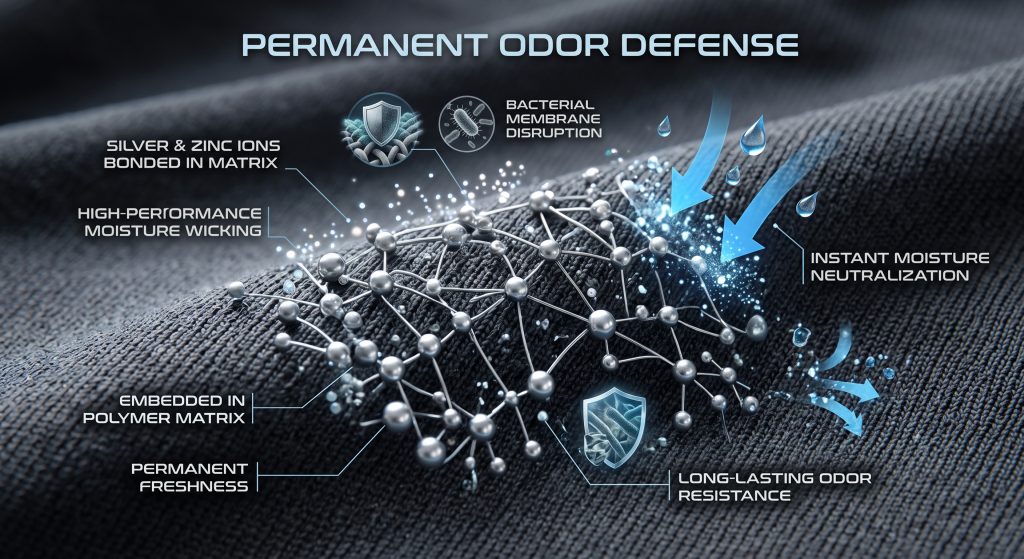
Silver ion embedded synthetics and zinc-treated performance filaments lead material options when examining what material are athletic shirts made of for odor resistance. Active metal ions bonded directly into synthetic polymer matrices neutralize odor-causing bacteria upon contact with perspiration droplets. Permanent antimicrobial treatment methods prevent protective agents from washing out during routine laundering cycles over time. Activewear garments remain fresh through multiple workouts between wash cycles.
Unchecked bacterial growth on damp synthetic fibers creates lingering odors that ruin user comfort and shorten garment lifespan. Embedded antimicrobial treatments disrupt bacterial cell membranes instantly to prevent sweat breakdown before foul smells originate. Apparel brands gain competitive advantages by marketing permanently odor-resistant gym clothing to active professionals. High-performance antimicrobial activewear retains protective freshness throughout the entire operational lifespan of the garment.
How do silver ions stop bacterial odor?
Silver ions embedded within technical yarns disrupt bacterial cell membranes immediately upon contact with perspiration moisture. This is where science helps, neutralizing bacterial metabolic functions stops sweat breakdown before unpleasant smells generate. Athletes wear technical gym apparel confidently in crowded fitness environments.
- Active silver ions break down bacterial cell membranes instantly
- Permanent polymer matrix bonding prevents wash degradation
- Continuous microbial defense maintains long-term garment freshness
Why do untreated synthetics retain smells?
Hydrophobic synthetic polymers attract natural body oils that trap odor-causing bacteria inside microscopic yarn crevices. What happens next, hydrophilic fabric finishing treatments allow laundry detergent to wash trapped body oils away easily. Your activewear stays completely fresh after standard washing machine cycles.
Key Takeaway: Embedded silver ion technologies neutralize odor-causing bacteria directly within the polymer matrix to maintain long-lasting freshness.
| Treatment Variant | Longevity | Bacteria Defense | Wash Fastness |
| Silver Ion Matrix | Permanent | 99.9% | Superior |
| Topical Coating | 15-20 Washes | 85.0% | Low |
| Natural Zinc Blend | High | 95.0% | Moderate |
This comparative chart highlights why permanent silver ion infusion offers superior long-term microbial protection compared to topical chemical sprays.
8. What material are athletic shirts made of for quick drying?
Grooved channeled-geometry polyester yarns dominate material selection when determining what material are athletic shirts made of for quick drying gear. Non-porous synthetic polymers refuse internal water absorption, forcing liquid sweat to remain entirely on outer fiber perimeters. Channeled yarn profiles spread moisture drops into thin surface layers that evaporate rapidly when exposed to ambient air currents. Garments dry within minutes after coming out of washing machine spin cycles.
Rapid evaporation activewear eliminates the need for high-heat tumble drying, saving energy and preserving fabric elasticity over time. Push-pull dual-layer fabric constructions combine hydrophilic interior faces with hydrophobic exterior faces to drive moisture outward continuously. Sourcing fast-drying synthetic textiles allows brands to offer low-maintenance activewear built for busy daily schedules. Consumers enjoy convenient performance clothing that dries quickly between daily workouts.
How do non porous fibers dry fast?
Hydrophobic polymer filaments refuse internal water absorption, holding sweat droplets on outer fiber boundaries. You might wonder, how do engineered cross-sections accelerate natural evaporation speeds? Star-shaped channeled yarns spread moisture into ultra-thin surface films across wider surface areas.
- Non-porous synthetic cores block internal liquid absorption
- Star-shaped yarn grooves expand total surface evaporation area
- Thin moisture films evaporate rapidly under ambient airflow
What is push pull fabric design?
Dual-layer knits feature hydrophilic inner faces that absorb sweat alongside hydrophobic outer faces that pull liquid outward. Here is the strategy, moisture moves unidirectionally away from human skin toward fast-evaporating outer surfaces. Athletes stay dry during intense cardiovascular workout routines.
Key Takeaway: Hydrophobic grooved yarns and push-pull knits ensure rapid moisture dispersion and minimal post-wash drying time.
| Yarn Profile | Internal Absorption | Surface Spread | Drying Speed |
| Grooved Polyester | 0% | Maximum | Rapid |
| Standard Nylon | 3-4% | Moderate | Fast |
| Natural Cotton | 15-20% | Low | Slow |
This matrix confirms that grooved hydrophobic polyester delivers faster drying speeds than conventional natural or synthetic fibers.
9. What material are athletic shirts made of in seamless knits?
Continuous nylon and elastane tube knits are favored when discovering what material are athletic shirts made of in seamless knits. Advanced circular knitting machinery constructs complete tubular garment torsions without traditional side seams. Removing raised interior stitching eliminates friction hot spots while maximizing overall multi-directional fabric elasticity. Active wearers experience smooth body-mapping comfort that flexes naturally during dynamic exercise movements.
Computerized circular knitting machines adjust stitch density dynamically to weave breathable mesh ventilation zones directly into garment panels. Integrated zone compression supports active muscle groups without requiring extra cut-and-sew assembly steps on factory floors. B2B garment buyers streamline factory assembly while delivering high-end seamless activewear to retail markets. Seamless continuous apparel offers sleek form-fitting silhouettes that appeal to modern gym enthusiasts.
How does circular knitting function?
Computerized circular knitting machines feed synthetic yarns continuously in tubular loops to construct seamless garment bodies. This is the main point, variable stitch tensions form breathable mesh vents directly within continuous fabric tubes. You receive seamless activewear that fits smoothly like a functional second skin.
- Continuous tubular knitting eliminates bulky side seams
- Computerized tension controls create mapped ventilation zones
- Smooth interior surface texture eliminates skin friction points
Why are seamless knits comfortable?
Removing interior side seams eliminates skin chafing during high-repetition physical training exercises. What comes next, multi-directional stretch elasticity delivers targeted compression support across active muscle groups. Active wearers experience zero skin irritation during grueling workouts.
Key Takeaway: Circular seamless knitting removes side seam friction while integrating targeted muscle compression and breathable ventilation zones.
| Assembly Method | Seam Count | Friction Risk | Body Adaptability |
| Circular Seamless | Minimal | Very Low | Superior |
| Flatlock Seam | Moderate | Low | High |
| Standard Stitched | High | Moderate | Moderate |
This comparative breakdown demonstrates why seamless circular knitting provides superior zero-friction comfort for technical athletic apparel.
10. What material are athletic shirts made of for gym wear?
Cotton-polyester hybrid blends serve as the industry standard when analyzing what material are athletic shirts made of for daily gym wear. Blending soft natural cotton with strong synthetic polyester yields a comfortable fabric that manages perspiration effectively. Hybrid textiles maintain surface softness and garment shape through continuous commercial washing machine cycles without shrinking or fading. Active individuals receive versatile activewear suitable for training sessions and casual daily wear.
Commercial apparel brands utilize cotton-synthetic blends to offer budget-friendly gym apparel lines that balance comfort with performance. Synthetic fibers enhance dimensional fabric stability while natural cotton fibers provide familiar skin softness for everyday wearers. Sourcing versatile hybrid fabrics streamlines material inventory for sportswear manufacturers targeting high-volume retail markets. Blended activewear delivers reliable daily durability across diverse physical fitness activities.
How do cotton blends balance comfort?
Natural cotton fibers deliver breathable surface softness while synthetic polyester yarns add structural strength and moisture control. Ready for the good part, hybrid textiles resist shrinking and color fading far better than pure cotton shirts. You offer versatile activewear that looks great during workouts and casual outings.
- Natural cotton provides soft breathable skin comfort
- Polyester yarns prevent garment shrinking and shape loss
- Blended textile structure dries faster than pure cotton
Why choose hybrid fabrics for daily use?
Cotton-poly hybrid textiles offer durable everyday wearability that transitions easily from intense gym training to casual daily errands. Here is the bottom line, lower raw material acquisition costs make hybrid fabrics a cost-effective choice for bulk production. You supply long-lasting athletic apparel built for everyday active lifestyles.
Key Takeaway: Cotton-synthetic hybrids offer a versatile balance of natural skin softness, synthetic moisture management, and long-term garment durability.
| Fabric Blend | Hand-Feel Softness | Shrink Defense | Daily Versatility |
| 60/40 Cotton-Poly | High | High | Superior |
| 100% Cotton | Maximum | Low | Low |
| 100% Polyester | Moderate | Maximum | Moderate |
This analytical matrix confirms that cotton-polyester hybrids deliver an ideal combination of casual comfort and technical durability.
Selecting optimal athletic shirt materials solves core performance issues like heavy sweat accumulation, skin chafing, and premature fabric breakdown. This comprehensive guide evaluated technical fibers—from moisture-wicking polyesters and flexible elastane blends to durable nylons, eco-friendly recycled polymers, and soft cotton hybrids—helping you source textiles that keep athletes dry, agile, and comfortable. Our high-grade technical fabric solutions empower activewear brands to deliver exceptional performance apparel that excels in competitive markets. To elevate your sportswear production lines with premium technical textiles, contact us today to consult with our fabric engineering specialists.
- Q1: What’s the best material for intense workout sweating?
Polyester blends are the best choice because hydrophobic synthetic fibers refuse water absorption and wick sweat rapidly to the garment surface. - Q2: Can I use recycled fabrics for high-performance activewear?
Yes, recycled polyester offers identical technical performance because advanced refining processes produce fibers matching virgin polymer strength and moisture management. - Q3: How do I know if an athletic shirt has good stretch?
Checking for four-way elastane blends verifies high elasticity because fabrics with five to fifteen percent elastane expand multi-directionally and recover shape instantly. - Q4: What’s the best way to prevent bacterial odor in gym clothes?
Choosing activewear embedded with permanent silver ions works best because active metal ions disrupt bacterial cell membranes instantly upon contact with sweat. - Q5: Can I wash technical athletic shirts in standard laundry machines?
Yes, you can wash technical shirts in standard machines using cool water and mild detergent without fabric softeners to protect technical fibers.