
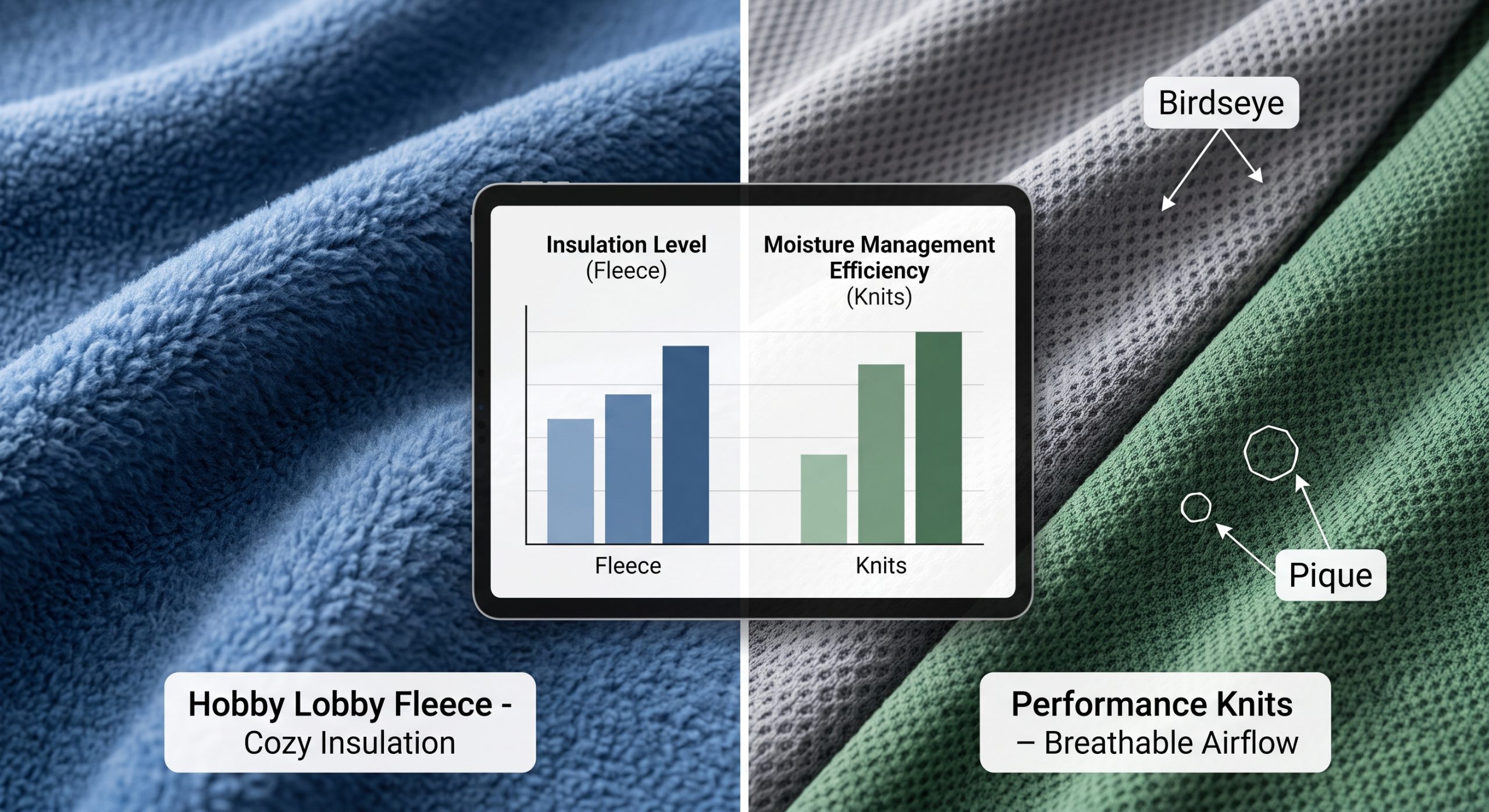
Selecting between plush brushed insulating materials and engineered athletic knits requires matching specific weave geometries to garment functionality. You design custom apparel lines, but your customers complain about overheating during active training sessions or feeling chilled while resting on outdoor sidelines. Sweat builds up inside dense fabric layers, creating discomfort and heavy apparel weight that ruins athletic performance. Sourcing targeted technical textiles resolves climate control issues while keeping garments comfortable. When evaluating hobby lobby fleece against performance Birdseye and Pique knits, analyzing hand feel and ventilation structure ensures smart fabric procurement.
1. What Makes Hobby Lobby Fleece Different From Birdseye Knit?
Brushed plush insulation relies on thick raised surface fibers to trap body heat, whereas Birdseye knit uses tiny synthetic eyelet openings to maximize airflow. Evaluating hobby lobby fleece alongside technical birdseye structures reveals contrasting thermal behaviors during physical wear. Athletic apparel developers select birdseye knits for high-sweat training gear and thick fleeces for cozy cold-weather outerwear.
What Defines Birdseye Micro-Hole Structure?
Birdseye fabric features a distinct tuck-stitch pattern creating subtle geometric pinholes across the textile surface. Think about it: those microscopic openings act like mini ventilation windows during heavy cardio routines.
- Micro-hole pattern enhances continuous skin airflow
- Smooth synthetic filament construction minimizes skin friction
- Lightweight drape reduces total garment burden
How Does Fleece Surface Pile Retain Heat?
Brushed fiber surfaces create millions of tiny static air pockets that lock body warmth against your skin. Synthetic fleece fibers absorb very little water, keeping garments warm even in humid conditions.
Key Takeaway: Birdseye knits excel at cooling active bodies, while brushed fleece provides superior thermal retention for cold environments.
| Fabric Type | Structural Feature | Primary Performance Benefit |
| Brushed Fleece | Raised Surface Pile | Thermal Insulation |
| Birdseye Mesh | Micro-Tuck Eyelets | High Air Permeability |
Comparing structural features helps developers specify fabrics based on environmental demands.
2. Why Compare Hobby Lobby Fleece With Breathable Pique Fabric?
Pique knits feature raised honeycomb geometric textures designed for structured breathability, making them structurally opposite to dense fuzzy fleeces. Working with hobby lobby fleece gives craft garments plush softness, whereas pique knits lend crisp tailor-made drape to polo shirts. Apparel buyers evaluate both textiles to balance structural elegance against raw cold-weather protection.
How Does Pique Honeycomb Texture Function?
Special waffle weaving techniques form alternating raised and recessed geometric squares across pique material. Here is the deal: that raised pattern reduces fabric surface contact with sweaty skin during hot afternoon games.
- Geometric waffle weave lifts fabric off moist skin
- Stiff knit construction holds collar and placket shapes
- Balanced yarn density offers moderate wind resistance
What Thermal Differences Shift Buyer Choices?
Pique allows excess heat to escape through woven gaps, while fleeces trap heat within dense brushed backing layers. You select pique fabrics for professional sportswear that requires neat structure and reliable cooling.
Key Takeaway: Pique fabrics deliver structured ventilation for casual athletic tops, contrasting with fleece’s heavy heat retention.
| Feature | Pique Knit | Brushed Fleece |
| Surface Texture | Waffle Honeycomb | Soft Brushed Napping |
| Garment Drape | Structured & Firm | Relaxed & Heavy |
Evaluating surface geometry allows clothing lines to achieve the right balance between comfort and style.
3. How Does Structural Weave in Hobby Lobby Fleece Impact Airflow?
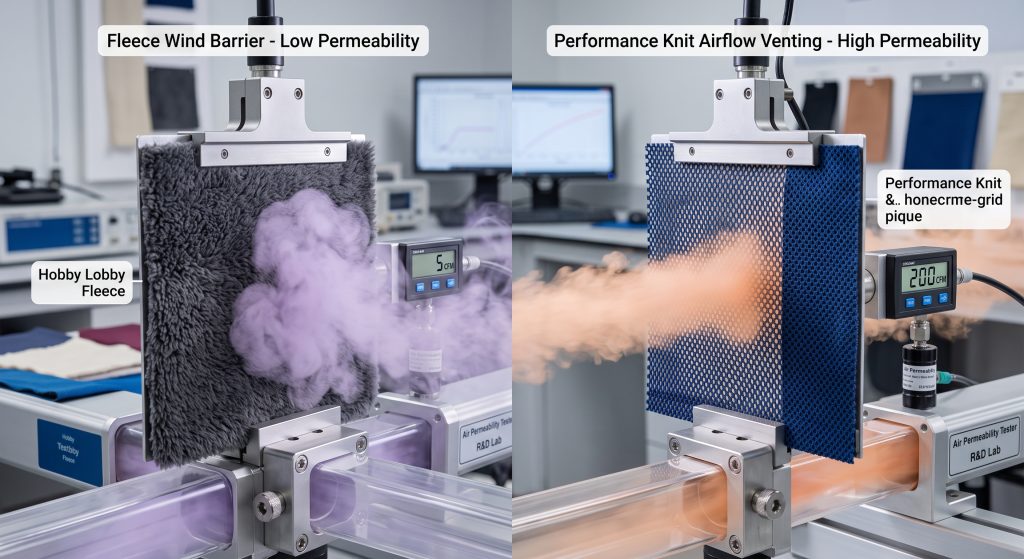
Dense brushed fiber loops restrict air currents, whereas open mesh and pique knits allow fresh breeze movement straight through textile yarns. Testing hobby lobby fleece in airflow chambers demonstrates lower wind permeability compared to open-work performance fabrics. Understanding airflow specs helps apparel designers build effective layered clothing systems for unpredictable weather.
Why Do Open Knit Structures Vent Sweat Fast?
Unobstructed spaces between synthetic yarns allow moisture vapor to escape into surrounding air instantly. Ready for the good part? high airflow speeds up perspiration evaporation, keeping athletes dry under pressure.
- Open yarn spacing boosts moisture vapor diffusion
- Continuous ventilation prevents sticky fabric cling
- Rapid air circulation cools body core temperature
How Does Dense Fleece Trap Air Pockets?
Brushed napped fibers interlock tightly, obstructing air movement and locking warm air close to human skin. You gain reliable protection against cold gym drafts by choosing thick fleece constructions.
Key Takeaway: Open knit constructions prioritize rapid cooling, whereas dense fleece weaves focus on blocking cold breezes.
| Textile Type | Air Permeability Rating | Ideal Weather Condition |
| Open Birdseye | High (250+ CFM) | Hot & Humid |
| Dense Fleece | Low (<50 CFM) | Chilly & Drafty |
Measuring cubic feet per minute airflow ratings guides correct fabric selection for regional climates.
4. Which Hand Feel Distinguishes Hobby Lobby Fleece From Pique?
Plush fleece offers a velvety soft cushion touch, while pique fabric presents a textured, slightly crisp hand feel against skin. Touch testing hobby lobby fleece highlights its ultra-soft fuzzy nap, ideal for cozy leisure garments. Pique knits provide a drier, more tactile grip favored in traditional athletic shirts.
What Causes Soft Tactile Differences In Knits?
Mechanical brushing rasps synthetic fibers, creating a fuzzy cloud-like surface layer over plain knitted base fabric. What is the real story? brushed fibers feel softer because filament ends yield instantly under finger pressure.
- Mechanical napping creates plush surface softness
- Micro-denier yarns eliminate harsh scratchy contact
- Deep pile depth adds cozy physical substance
How Do Honeycomb Grid Structures Feel On Skin?
Raised waffle grids give pique fabric a firmer, drier texture that keeps damp material from sticking to skin. You feel a distinct geometric pattern that feels durable and supportive during daily wear.
Key Takeaway: Fleece delivers plush velvety comfort, while pique offers a textured, dry touch for active wear.
| Fabric | Tactile Experience | Skin Surface Friction |
| Plush Fleece | Soft, Warm, Cushioned | Low Friction / High Drag |
| Pique Knit | Crisp, Textured, Dry | Minimal Damp Cling |
Analyzing tactile characteristics ensures finished garments match consumer expectations for comfort.
5. Can Hobby Lobby Fleece Match Birdseye Moisture Management?
Birdseye mesh transports sweat away from skin surface significantly faster than thick fleece owing to targeted capillary action. Comparing hobby lobby fleece with engineered micro-mesh highlights why technical knits dominate high-intensity workout collections. Wicking finishes allow birdseye fabrics to spread moisture broadly across outer fibers for lightning-fast drying.
Can Capillary Action In Birdseye Beat Fleece?
Fine synthetic channels pull liquid droplets along fiber walls using natural capillary pressure differential. This is where it gets interesting: thin birdseye channels move water far faster than thick fleece pile.
- Channelized synthetic fibers draw sweat outward
- Broad surface spreading accelerates evaporation speed
- Lightweight construction prevents water weight absorption
What Wicking Finishes Boost Fiber Evaporation?
Hydrophilic yarn treatments force liquid spread across wide surface areas, shortening drying times during hard drills. You keep active wearers dry and light by selecting moisture-engineered birdseye knits.
Key Takeaway: Birdseye knits outpace fleece in moisture wicking speed, making them superior for intense athletic training.
| Moisture Metric | Birdseye Knit | Standard Fleece |
| Absorption Speed | Under 2 Seconds | 10+ Seconds |
| Drying Time | Rapid (<15 Mins) | Moderate (45+ Mins) |
Reviewing lab moisture data guarantees your technical apparel performs under heavy perspiration.
6. How Does Weight Density in Hobby Lobby Fleece Affect Comfort?
Fleece materials typically weigh between 240 and 380 GSM, whereas lightweight birdseye knits range from 120 to 180 GSM. Selecting hobby lobby fleece adds comforting weight to winter hoodies, but light birdseye knits keep running tees featherlight. Balancing fabric weight against movement needs prevents premature athlete fatigue.
How Does GSM Impact Activewear Weight Standards?
Grams per square meter measure overall textile density, directly influencing garment weight on an athlete’s shoulders. You might be wondering: why does lower GSM matter so much during long games?
- Lower fabric weight reduces athlete energy expenditure
- Light materials pack tightly into team travel bags
- Balanced GSM maintains structural garment shape
Why Does Fleece Feel Heavier During Movement?
Thick yarn bundles required for plush pile build higher mass per square inch, adding bulk across joints. You choose heavier fleece weights when warm static insulation matters more than agile speed.
Key Takeaway: Low GSM fabrics enhance athletic agility, while high GSM fleeces maximize thermal warmth and structure.
| Fabric Class | Typical GSM Range | Movement Suitability |
| Birdseye Mesh | 120 – 160 GSM | High Agility / Running |
| Heavy Fleece | 300 – 380 GSM | Low Activity / Sideline |
Comparing fabric weight specs guides targeted material choices across team product lines.
7. What Durability Factors Define Hobby Lobby Fleece Performance?
Tight synthetic knits like pique resist surface pilling better than raised brushed fleece fabrics subjected to friction. Testing hobby lobby fleece under repeated rubbing tests reveals how fiber length influences long-term fabric appearance. High-tenacity filament yarns preserve garment freshness through dozens of industrial wash cycles.
Which Knit Resists Surface Pilling Best?
Continuous filament yarns locked into tight pique loops resist fuzzy ball formation under arms and along thighs. Make no mistake: smooth knits maintain clean surface appearances far longer than loosely napped fleeces.
- Interlocked loops prevent fiber ends from fraying
- Anti-pilling chemical treatments extend surface smoothness
- Tight weave tension stops yarn snagging
How Does Tensile Fiber Strength Protect Apparel?
High tensile synthetic fibers resist tearing forces when garments experience sharp pulls during contact sports. You protect clothing line reputations by selecting tear-resistant knit constructions.
Key Takeaway: Pique and birdseye knits offer superior surface durability and pilling resistance under friction.
| Durability Test | Pique Knit | Brushed Fleece |
| Pilling Resistance | Grade 4.5 (High) | Grade 3.0 (Moderate) |
| Snagging Tolerance | Excellent | Fair |
Checking lab durability ratings helps brands avoid customer complaints regarding surface wear.
8. When Should Apparel Designers Choose Hobby Lobby Fleece?
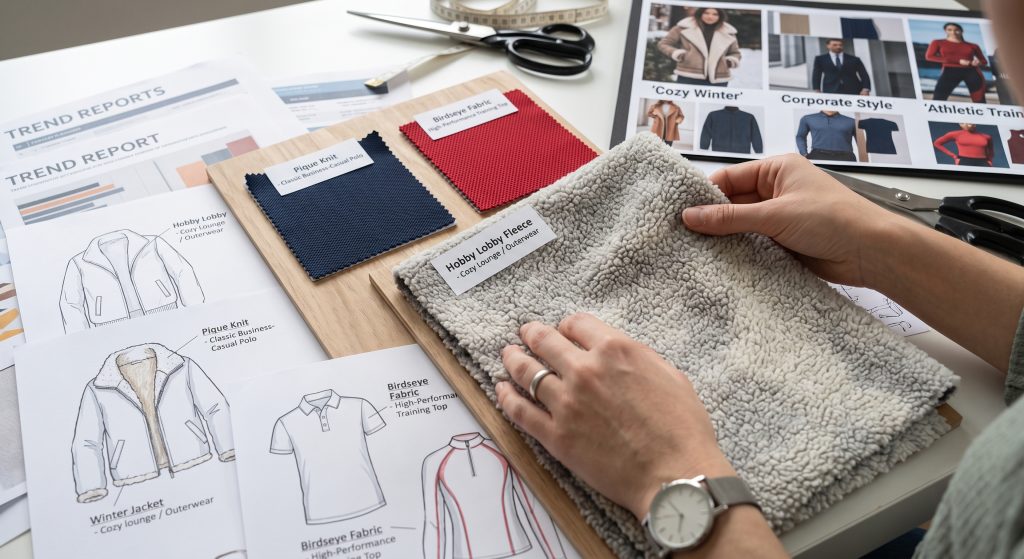
Designers select fleece for cold-weather outerwear, pique for classic business-casual polos, and birdseye for high-performance training tops. Incorporating hobby lobby fleece into lounge collections delivers soft cozy comfort that retail consumers love. Matching fabric weave properties to end-use application optimizes product customer satisfaction.
Is Birdseye Mesh Ideal For Intense Workouts?
Featherlight weight and rapid drying make birdseye fabric perfect for marathon jerseys and soccer kits. Ready for the good part? athletes stay cooler and focused when wearing ventilated micro-mesh tops.
- Maximum airflow keeps runners cool during hot races
- Soft synthetic touch prevents chest chafing
- Easy dye sublimation allows vibrant team graphics
When Does Pique Suit Corporate Polo Shirts?
Structured waffle knits hold crisp collar folds, giving corporate staff and golf athletes a polished appearance. You create professional apparel lines by choosing crisp pique fabrics.
Key Takeaway: Choose fleece for warm outerwear, pique for crisp polos, and birdseye for high-sweat activewear.
| Application | Recommended Fabric | Key Selection Reason |
| Winter Travel Gear | Heavy Fleece | Maximum Heat Retention |
| Team Shooting Shirts | Birdseye Mesh | Rapid Sweat Evaporation |
| Staff Uniform Polos | Pique Knit | Professional Structured Fit |
Aligning fabric selection with garment purpose ensures end users get optimal functional performance.
9. How Does Elastic Stretch in Hobby Lobby Fleece Compare?
Adding elastane fibers to synthetic knits creates four-way stretch flexibility that traditional 100% polyester fleeces cannot match. Blending spandex into hobby lobby fleece improves stretch recovery, preventing baggy elbows and sagging hems. Athletic garments demand high elastic recovery to accommodate explosive joint movements.
Why Add Spandex To Technical Knits?
Elastane yarns stretch up to five hundred percent without breaking, pulling fabric back to its original shape instantly. Here is the deal: elastane blends allow tight athletic cuts without restricting shoulder rotation.
- Four-way elasticity supports unhindered movement
- Shape memory prevents fabric sagging over time
- Form-fitting cuts reduce excess material bulk
How Does Elastic Recovery Prevent Seam Strain?
High elastic recovery absorbs sudden tensile stress during rapid stretches, protecting stitched seams from popping open. You build durable activewear by specifying minimum ten percent spandex blend ratios.
Key Takeaway: Spandex-blended knits provide vital four-way flexibility and recovery for dynamic sports activities.
| Fiber Blend | Stretch Capability | Shape Recovery |
| 100% Poly Fleece | 2-Way Mechanical | Moderate |
| Poly/Spandex Knit | 4-Way Elastic | Excellent |
Selecting high-spandex fabric blends guarantees unrestricted movement for athletic gear lines.
10. Where Do Sourcing Teams Buy Quality Hobby Lobby Fleece?
Sourcing teams buy volume textiles directly from certified B2B fabric manufacturers that offer custom knitting and lab testing. Purchasing hobby lobby fleece through wholesale mills guarantees color consistency and reliable roll quantities for mass garment production. Factory-direct partnerships reduce procurement costs while providing technical customization options.
What Sourcing Channels Supply Bulk Knits?
Direct textile mills supply continuous fabric rolls with verified GSM specifications and custom dye lot matching. What is the real story? working directly with factories eliminates distributor markups and stock shortages.
- Direct mill contact lowers wholesale yardage costs
- Custom color dyeing matches brand color palettes
- Certified lab specs ensure uniform production batches
How Can Factories Verify Fabric Specs?
Factory quality control teams issue specification sheets detailing yarn counts, shrinkage rates, and color fastness grades. You safeguard garment quality by requesting certified test reports before placing bulk orders.
Key Takeaway: Direct factory sourcing guarantees volume supply, consistent quality, and competitive wholesale pricing.
| Sourcing Partner | Supply Capacity | Custom Options |
| Retail Craft Store | Small Individual Bolts | None |
| Direct B2B Mill | Large Continuous Rolls | Full Custom Specs |
Establishing direct B2B mill relationships provides supply security and custom textile development support.
Mastering Fabric Selection for Your Apparel Lines
Choosing between soft insulating fleece, structured pique, and ventilated birdseye knits resolves climate control and durability challenges across your product lines. By matching specific weave structures, fiber blends, and fabric weights to player movement needs, you deliver garments that perform exceptionally in any environment. As a dedicated B2B textile manufacturer, we produce high-performance synthetic knits, breathable mesh fabrics, and custom fleece engineered for activewear brands. If you are ready to upgrade your garment collections with certified performance fabrics, contact us today to partner with our expert textile team.
Frequently Asked Questions
Q1: Can I use birdseye mesh for winter outdoor jackets?
No, birdseye mesh is too breathable for cold winter outerwear. Open eyelet structures allow cold wind to penetrate easily, making dense brushed fleeces a far better choice for cold weather insulation.
Q2: What’s the best fabric choice for custom team polo shirts?
Pique knit is the ideal choice for polo shirts. Its structured honeycomb texture maintains crisp collar shapes while providing a comfortable, breathable fit for daily wear.
Q3: How do I know if my fleece fabric will pill after washing?
Checking lab pilling test ratings reveals how fabric handles friction. Selecting anti-pilling treated fleece or tight filament yarn construction prevents unsightly surface fuzz balls.
Q4: Can I add spandex to birdseye mesh for active sportswear?
Yes, blending spandex into birdseye mesh enhances four-way stretch flexibility. This combination delivers exceptional breathability alongside unrestricted range of motion for intense athletic workouts.
Q5: How do I choose between 200 GSM and 350 GSM fleece weights?
Choose 200 GSM fleece for lightweight warm-up pullovers and 350 GSM fleece for heavy winter travel hoodies. Matching fabric weight to environmental temperatures keeps wearers comfortable.