
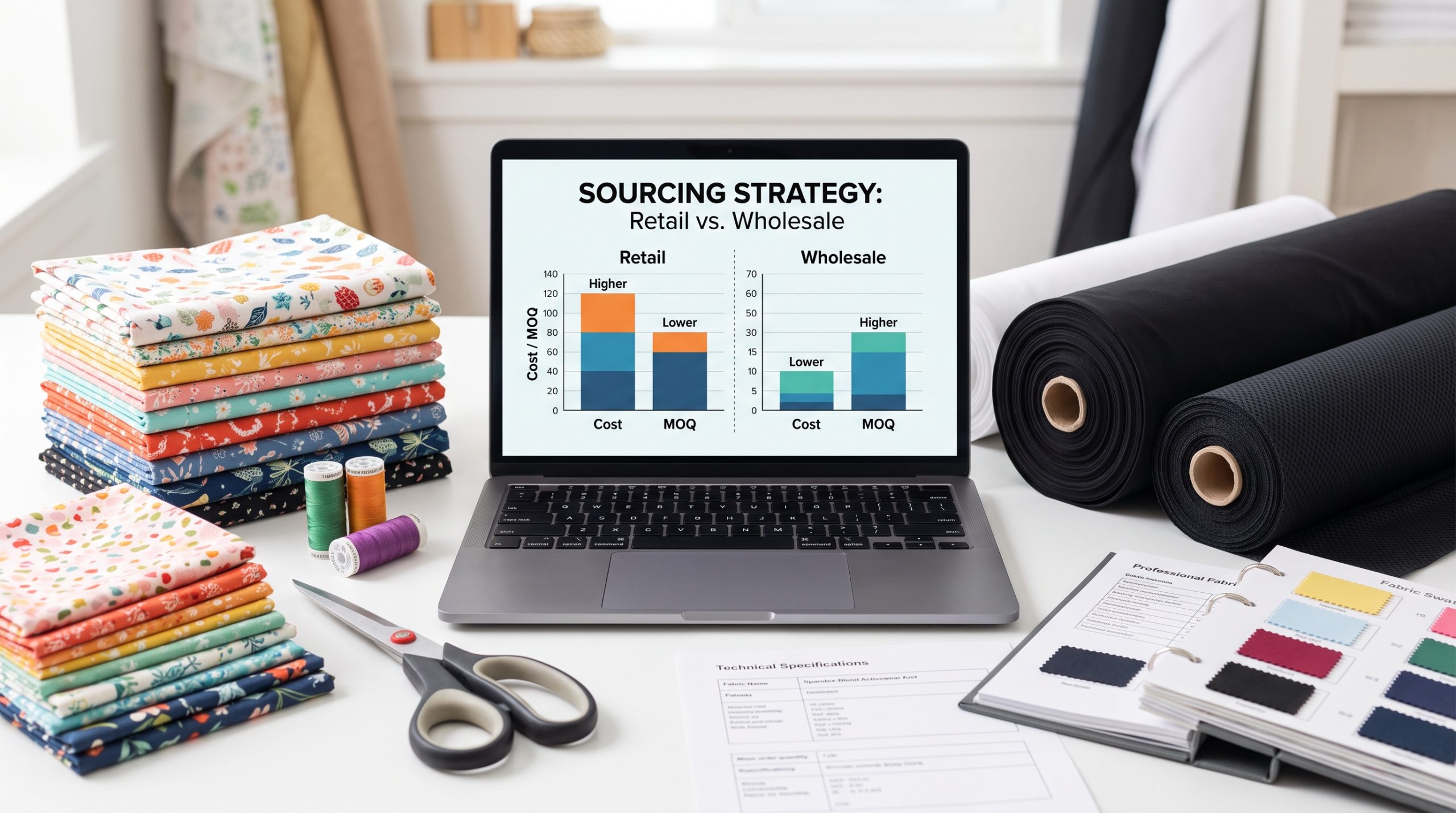
Sourcing quality fabric requires comparing retail craft chains with direct wholesale textile suppliers depending on your production scale. You design garments or manage apparel supply, but local retail stores run out of consistent bolt inventory during large production runs. Delays mount quickly when missing yards stall garment assembly, leaving your business stranded without reliable material supplies. Sourcing directly from specialized textile manufacturers eliminates supply bottlenecks while delivering superior performance specs. When sourcing hobby lobby fabrics for commercial production, understanding fabric weight and fiber performance helps you secure better wholesale pricing.
1. Where Are Buyers Sourcing Hobby Lobby Fabrics Today?
Buyers source materials across retail storefronts and specialized direct supply channels depending on needed project volume. When ordering hobby lobby fabrics for production, craft store inventory works well for small prototype testing. Bulk garment manufacturers shift toward direct factory orders to lower cost per yard.
Where Do Designers Find Overseas Textile Options?
Designers connect directly with overseas textile mills through trade platforms and factory agents. Here is the deal: buying straight from manufacturing facilities cuts distributor markups significantly.
- Direct factory contact reduces unit pricing
- Custom dye lots meet exact color specs
- Mill sourcing yields certified technical specs
Why Are Direct Factory Orders Gaining Traction?
Direct factory orders give apparel brands consistent material quality across large orders. You avoid stock shortages by booking dedicated mill production runs.
- Dedicated production slots prevent delays
- Bulk shipping lowers freight expenses
- Quality assurance teams inspect every batch
Key Takeaway: Direct factory sourcing offers reliable material supply and reduced cost per yard for volume apparel production.
| Sourcing Channel | Minimum Order Quantity | Average Lead Time | Price per Yard |
| Retail Craft Chains | 1 Yard | Immediate | High Retail |
| Wholesale Mills | 500 Yards | 2 – 3 Weeks | Factory Wholesale |
Buying direct from manufacturing mills provides significant savings for long garment runs.
2. Why Do Crafters Choose Hobby Lobby Fabrics for Sewing?
Crafters select retail options because convenient store locations provide instant access to single-yard purchases. Home sewers buying hobby lobby fabrics enjoy browsing printed cotton designs on physical store display shelves. Convenient store pickup helps hobbyists complete weekend home decor projects quickly.
What Makes Retail Cotton Prints Popular for Quilting?
Pre-cut cotton quarters offer hobbyists easy matching for patchwork quilt layouts. What is the real story? soft woven cotton handles cleanly under standard sewing machine needles.
- Pre-cut quarters save cutting prep time
- Woven cotton maintains stable thread tension
- Wide pattern varieties inspire seasonal crafting
How Do Seasonal Discounts Impact Craft Purchasing?
Seasonal sales encourage retail shoppers to stock up on holiday printed fabrics. You save money by timing craft purchases around major retail holiday sales events.
- Store discount events lower unit costs
- Seasonal prints drive holiday project ideas
- Clearance bins provide budget fabric options
Key Takeaway: Retail craft stores suit hobbyists who need small yardage quantities and immediate project materials.
| Buyer Type | Typical Purchase Volume | Key Sourcing Metric |
| Hobby Quilter | 1 – 5 Yards | Print Variety |
| Garment Maker | 100+ Yards | Price Stability |
Matching your purchase volume to appropriate suppliers keeps material budgets manageable.
3. How Does Quality Compare in Hobby Lobby Fabrics?
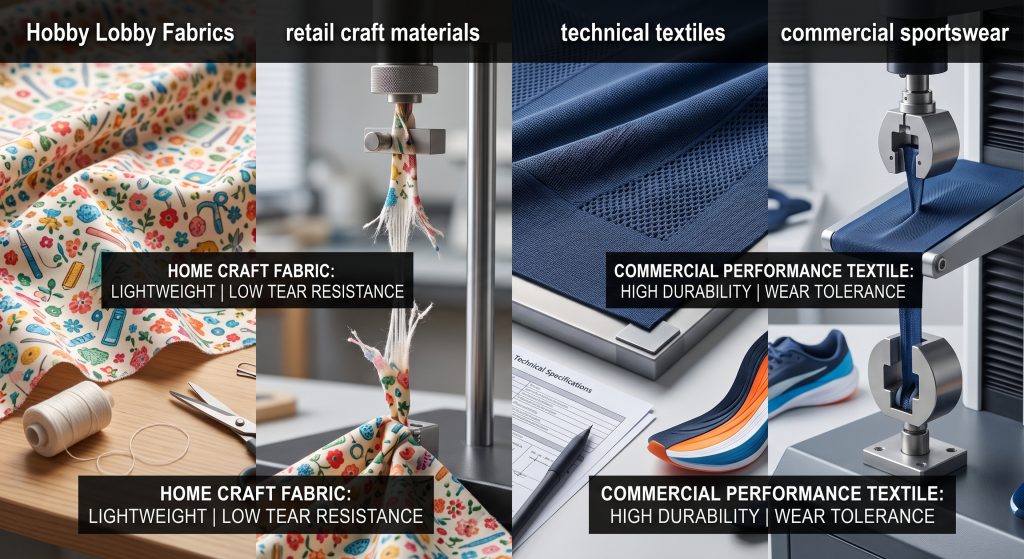
Retail craft materials offer lightweight construction suitable for basic crafts, whereas technical textiles provide higher durability. Comparing hobby lobby fabrics against commercial fabrics reveals noticeable differences in weight density and wear tolerance. Commercial sportswear demands higher tear resistance than standard retail cotton crafts provide.
Are Retail Craft Textiles Durable for Long Use?
Retail cotton fabrics suit indoor decor but show surface pilling after repeated laundry cycles. Think about it: high-friction apparel requires synthetic fiber blends for long wear.
- Woven cotton offers soft tactile comfort
- Lightweight knits stretch during heavy washing
- Technical synthetics resist surface abrasion
How Does GSM Weight Affect Fabric Performance?
Fabric weight measured in grams per square meter dictates warmth and structural strength. You select heavier GSM materials when building garments that require structural stiffness.
- Higher GSM increases tear resistance
- Density affects breathability and warmth
- Lab GSM testing ensures uniform batches
Key Takeaway: Checking fabric weight specifications prevents premature garment wear and tear.
| Material Class | Fabric Weight (GSM) | Abrasion Resistance |
| Craft Woven Cotton | 120 – 150 GSM | Low to Moderate |
| Technical Sportswear | 220 – 320 GSM | High Performance |
Selecting appropriate fabric weight ratings ensures your finished apparel meets daily wear demands.
4. Are Price Discounts Real for Hobby Lobby Fabrics?
Retail coupons reduce individual yard costs, but base retail prices remain higher than factory wholesale rates. Shoppers purchasing hobby lobby fabrics often use promotional codes to offset retail markup prices. Commercial apparel brands find that volume mill discounts beat retail coupon savings.
Do Weekly Coupons Yield True Fabric Savings?
Retail discount coupons lower single-yard prices for small home projects. Ready for the good part? combining coupons with clearance sales yields good retail bargains.
- Single-item coupons cut retail costs
- Store reward points accumulate on purchases
- Clearance bins offer low yardage prices
How Do Clearance Bulk Sales Affect Quality?
Clearance bolts often feature discontinued print runs or remnant yardage ends. You must inspect remnant bolts carefully for weave flaws or dye variations before buying.
- Remnants offer low unit prices
- Flaws require visual fabric inspection
- Discontinued runs limit re-ordering options
Key Takeaway: Coupons lower retail prices for home crafters, but wholesale contracts offer lower long-term costs.
| Purchase Strategy | Discount Percentage | Commercial Viability |
| Retail Coupon | 20% – 40% Off Retail | Low for Bulk Runs |
| Factory Contract | 50% – 70% Off Retail | High for Mass Production |
Analyzing true landed costs helps apparel businesses choose profitable sourcing models.
5. Which Materials Benchmark Against Hobby Lobby Fabrics?
Performance fabrics like spandex blends and breathable mesh offer technical advantages that standard retail cotton cannot match. When comparing hobby lobby fabrics to athletic textiles, synthetic fibers provide superior stretch recovery and moisture transport. Activewear manufacturing relies on advanced synthetic blends for athletic garments.
What Performance Fabrics Outperform Cotton Knits?
Polyester spandex knits outperform traditional cotton by pulling sweat away from active skin. This is where it gets interesting: synthetic fibers dry four times faster than natural cotton threads.
- Four-way elasticity supports rapid movement
- Hydrophobic yarns speed sweat evaporation
- High fiber tenacity prevents seam tearing
Why Are Synthetic Blends Superior for Sportswear?
Synthetic fiber blends maintain shape memory even after strenuous physical movement. You keep athletes comfortable during workouts by choosing technical stretch fabrics.
- Shape retention maintains garment fit
- Fiber resilience resists pulling stress
- Micro-fibers improve ventilation flow
Key Takeaway: Performance synthetic fabrics deliver the stretch and moisture management required for sportswear.
| Performance Metric | Standard Craft Cotton | Synthetic Athletic Blend |
| Moisture Wicking | Slow Absorption | Rapid Evaporation |
| Stretch Recovery | Limited 2-Way | Dynamic 4-Way |
Upgrading to technical synthetic blends upgrades basic apparel into high-performance activewear.
6. How Do Online Stores Compete with Hobby Lobby Fabrics?
Online fabric suppliers compete by providing massive digital catalogs and direct shipping right to your workshop door. Buyers evaluating hobby lobby fabrics can browse hundreds of online textile varieties without leaving their offices. E-commerce fabric platforms streamline ordering for busy apparel designers.
Can Digital Retailers Offer Better Fabric Selection?
Online fabric stores display thousands of niche prints and technical material options. Make no mistake: digital catalogs offer far broader selections than physical retail stores.
- Virtual catalogs display thousands of SKUs
- Digital swatches simplify color matching
- Direct delivery saves store travel time
How Do Direct Mills Deliver Faster Shipping Times?
Direct mill logistics partners ship bulk fabric rolls straight to garment assembly lines. You reduce production downtime by scheduling automated fabric deliveries.
- Direct freight speeds up delivery
- Tracking systems monitor roll shipments
- Scheduled drops maintain assembly flow
Key Takeaway: Online fabric ordering gives apparel creators wider selection and convenient doorstep shipment.
| Shopping Channel | Catalog Variety | Order Convenience |
| Local Retail Store | Limited Shelf Space | In-Person Pickup |
| Online Mill Portal | Vast Digital Catalog | Direct Shipping |
Leveraging online textile ordering speeds up material procurement for growing apparel lines.
7. Can Wholesale Outlets Beat Hobby Lobby Fabrics Pricing?
Wholesale textile outlets consistently beat retail store pricing when orders exceed fifty yards per colorway. Sourcing alternatives to hobby lobby fabrics through wholesale distributors yields significant price reductions per yard. Commercial garment factories depend on wholesale pricing structures to maintain profit margins.
How Do Bulk Mill Prices Compare to Craft Chains?
Factory wholesale rates eliminate middleman markup fees present in retail craft pricing. What is the real story? bulk fabric purchases save garment makers thousands of dollars annually.
- Volume tiers lower price per yard
- Dedicated account managers assist orders
- Factory certification guarantees specs
What Volume Limits Apply to Commercial Orders?
Wholesale suppliers establish minimum order quantities to maintain efficient mill production runs. You secure lower price points by consolidating material requirements into larger orders.
- Minimum yardages optimize loom setup
- Consolidated shipments lower freight fees
- Tiered pricing rewards high volumes
Key Takeaway: Wholesale outlets provide superior pricing structures for commercial clothing production runs.
| Order Quantity | Retail Price Level | Wholesale Price Level |
| 1 – 10 Yards | Standard Retail | Not Applicable |
| 100+ Yards | Minimal Discount | Deep Wholesale Discount |
Scaling your fabric purchasing to wholesale volumes drastically improves garment profit margins.
8. What Fiber Blends Excel Beyond Hobby Lobby Fabrics?
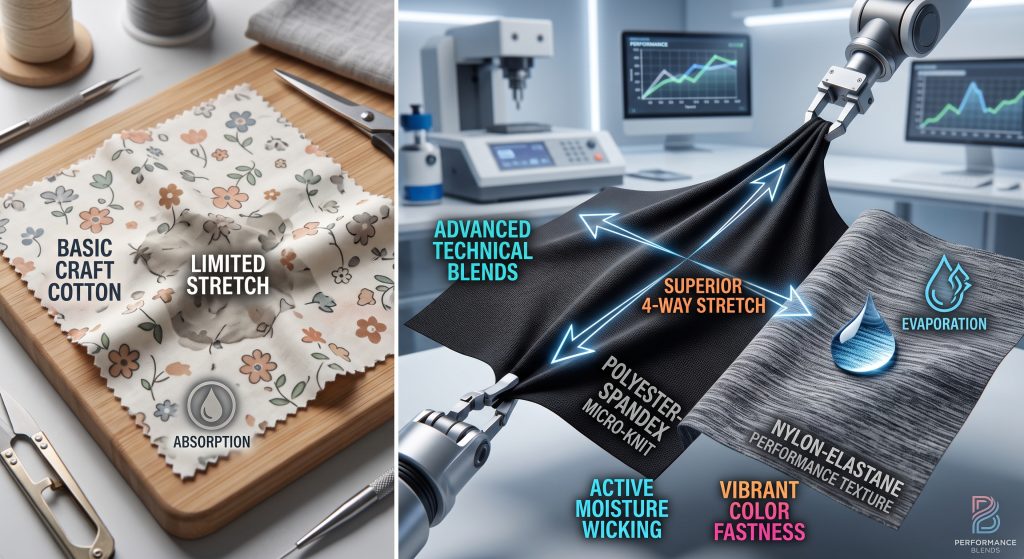
Polyester spandex and nylon elastane blends outperform basic craft cotton in elasticity, durability, and color fastness. Modern apparel designs going beyond traditional hobby lobby fabrics require specialized fiber compositions for stretch performance. High-activity garments demand technical blends engineered for active body movement.
Why Does Spandex Fabric Outshine Craft Cotton?
Spandex fibers stretch up to five hundred percent without losing original shape memory. Here is the deal: elastane blends prevent bagging at knee and elbow garment stress points.
- Superior elasticity allows free movement
- Shape retention prevents sagging seams
- Blended fibers resist fabric tearing
How Does Polyester Breathability Improve Wear?
Micro-polyester knits allow cool air circulation while carrying moisture away from body surfaces. You keep athletes cool during intense physical activities with breathable synthetic knits.
- Breathable weaves channel excess heat
- Lightweight fibers reduce garment load
- Moisture wicking prevents damp cling
Key Takeaway: Advanced synthetic blends offer superior flexibility and moisture management for functional clothing.
| Fiber Blend | Primary Performance Advantage | Best Application |
| 100% Woven Cotton | Soft Natural Touch | Casual Craft Wear |
| 88% Poly / 12% Spandex | 4-Way Stretch Flexibility | Active Sportswear |
Selecting technical fiber blends elevates garment functionality far beyond standard craft cotton.
9. How to Verify Tech Standards in Hobby Lobby Fabrics?
Verifying technical standards requires conducting laboratory tests for tensile strength, color fastness, and shrinkage rates. When evaluating hobby lobby fabrics for functional apparel, checking lab test reports ensures consistent quality. Professional textile testing protects apparel brands from costly product returns.
How Do Tensile Strength Tests Measure Fabric Value?
Tensile strength testing measures the exact pulling force a fabric withstands before tearing apart. You might be wondering: why do lab strength reports matter for clothing makers?
- Tensile testing prevents seam failure
- Shrinkage testing ensures sizing accuracy
- Pilling tests evaluate long-term wear
Why Does Color Fastness Matter in Mass Apparel?
Color fastness testing verifies that fabric dyes resist fading under sunlight and heavy washing. You protect brand reputation by specifying certified colorfast fabrics for garment lines.
- Lab wash tests verify color stability
- UV exposure testing measures fading rate
- Certified dyes prevent bleed issues
Key Takeaway: Technical lab verification ensures your fabrics meet durability and color retention standards.
| Quality Test | Standard Test Method | Target Metric |
| Tensile Strength | ASTM D5034 | High Force Tolerance |
| Color Fastness | AATCC 61 | Grade 4 – 5 Fastness |
Insisting on lab-certified technical metrics guarantees long-lasting apparel performance for end users.
10. Where Should Commercial Brands Buy Hobby Lobby Fabrics?
Commercial brands should purchase materials from specialized B2B fabric manufacturers that offer custom knitting and bulk rolls. While hobby lobby fabrics serve individual crafters well, scaling garment businesses need factory direct partnerships. Sourcing directly from textile mills guarantees continuous fabric supply and custom options.
What Sourcing Channels Offer Scalable Fabric Supply?
B2B fabric manufacturers provide reliable volume supply and dedicated customer service for growing brands. Ready for the good part? working directly with mills unlocks custom dyeing options.
- Scalable mill capacity supports brand growth
- Custom fabric knits match technical specs
- Consistent dye lots ensure color matching
How Can Apparel Makers Secure Custom Textiles?
Apparel makers secure custom textiles by providing technical specification sheets directly to factory engineers. You gain competitive advantages by developing proprietary fabric blends for your brand.
- Specification sheets direct factory looms
- Sample iterations refine hand feel
- Exclusive mill contracts protect designs
Key Takeaway: Partnering with direct B2B fabric mills secures consistent supply and custom textile development.
| Sourcing Partner | Supply Scale | Custom Specification Support |
| Craft Retailer | Small Individual Bolts | None |
| Direct B2B Mill | Large Continuous Rolls | Full Custom Engineering |
Establishing direct B2B mill partnerships powers successful long-term apparel production scalability.
Final Sourcing Recommendations for Fabric Buyers
Sourcing the right material requires matching your purchase volume and performance specs with appropriate textile suppliers. While retail craft options satisfy quick home sewing projects, commercial clothing production demands direct B2B manufacturing partnerships. By choosing direct mill sourcing, you eliminate supply chain delays, lower yardage costs, and access high-performance stretch textiles engineered for modern activewear. As a specialized B2B textile manufacturer, we produce high-performance elastic knits, breathable mesh, and custom sports fabrics tailored to your exact specifications. If you need reliable fabric supply or custom textile development, contact us today to partner with our expert production team.
Frequently Asked Questions
Q1: Can I buy bulk fabric rolls directly from retail craft stores?
No, retail craft stores primarily stock individual yardage bolts for home crafters rather than bulk commercial rolls. Commercial apparel production requires ordering directly from B2B textile mills to secure volume pricing.
Q2: What is the best fabric choice for active sportswear garments?
Polyester spandex synthetic blends are the best choice for sportswear. These fabrics offer four-way stretch flexibility and rapid moisture-wicking properties that natural cotton cannot match.
Q3: How do I know if my fabric choice meets technical quality standards?
Requesting laboratory test reports for GSM weight, tensile strength, and color fastness confirms technical quality. Professional B2B textile suppliers provide certified specification sheets before bulk production starts.
Q4: Can I customize dye colors when ordering from direct fabric mills?
Yes, direct B2B textile mills offer custom color dyeing to match Pantone standards. Ordering custom dye lots ensures consistent color representation across all your finished apparel lines.
Q5: How do I calculate total material costs for bulk clothing production?
Calculating total cost requires adding base wholesale yardage price, freight shipping fees, and potential import tariffs. Partnering directly with B2B fabric manufacturers helps lower base yardage rates significantly.