
Selecting the ideal fleece fabric weight for basketball hoodies and warm-ups requires matching specific GSM ranges—typically 200 to 400 GSM—to player activity levels and environmental conditions. You design team apparel, but athletes complain their hoodies feel too heavy during pre-game shooting drills or too thin during outdoor travel. Sweat accumulates quickly, turning cold on bench seats and causing athlete discomfort. By choosing targeted material weights, you deliver apparel that balances heat retention with athletic mobility. Here is the deal: selecting quality basketball fleece fabric transforms performance apparel from basic outerwear into functional team gear.
1. Why Does Fabric Weight Matter for Basketball Warm-Ups?
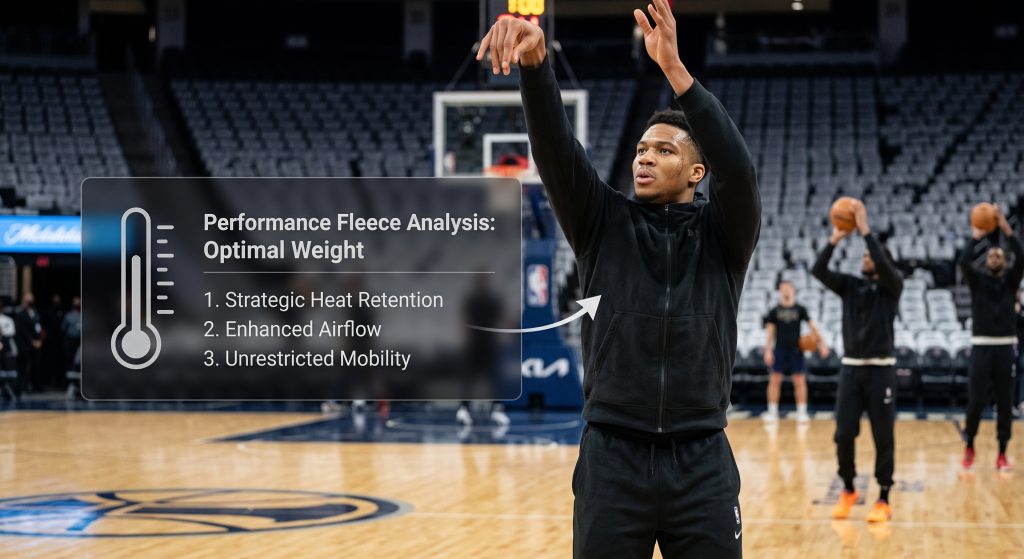
Fabric weight directly determines thermal retention, airflow, and garment weight during intense pre-game shooting sessions. Choosing appropriate basketball fleece fabric keeps athletes warm without restricting rapid arm extension.
Can Weight Affect Player Range of Motion?
Excess textile weight creates dragging forces across shoulders during jumper motions. You need lightweight fleece materials for high-movement garments.
- Reduced arm drag during shooting routines
- Improved thermal comfort on bench sidelines
- Faster moisture transport during practice
Think about it: heavy garments slow down warm-up drills fast.
What Makes Warm-Up Weight Selection Strategic?
Strategic weight choices prevent overheating while keeping muscles prepared for intense gameplay. You save production costs while improving athlete mobility.
Key Takeaway: Matching weight to athletic movement optimizes player performance on court.
| Warm-Up Type | GSM Range | Key Performance Benefit |
| Shooting Shirts | 180 – 220 GSM | Maximum mobility and high breathability |
| Sideline Hoodies | 300 – 380 GSM | Superior heat retention for cold gyms |
Evaluating these specs ensures targeted choices for team lines.
2. What Is GSM and How Is It Calculated for Athletic Fleece?
GSM stands for grams per square meter, measuring exact textile density across one square meter area. Standard basketball fleece fabric ranges from light 200 GSM options to heavy 400 GSM structures.
How Do Manufacturers Measure Fleece GSM?
Factory technicians cut precise circular swatches and weigh them on calibrated digital scales. You receive verified GSM figures that ensure accurate garment sizing across production runs.
- Swatch cutting using precision steel dies
- Digital scale weighing in controlled humidity
- Scale calculations converted directly to square meters
What is the real story? accurate GSM tracking guarantees batch uniformity.
Does Higher GSM Always Mean Warmer Fabric?
Density increases thermal warmth, but knit construction also dictates wind defense and air circulation. You gain control over apparel heat levels by analyzing both metrics.
Key Takeaway: Understanding GSM metrics allows accurate material specification for apparel orders.
| GSM Level | Material Density | Primary Application |
| Low (200 GSM) | Lightweight / Thin | Training pullovers |
| High (350 GSM) | Heavyweight / Dense | Travel team hoodies |
Reviewing density metrics helps buyers avoid costly fabric selection errors.
3. How Does Lightweight Fleece Perform During Active Training?
Lightweight fleece offers rapid heat dissipation and effortless movement during high-intensity court drills. Selecting lightweight basketball fleece fabric prevents heat buildup during active practice routines.
Why Choose 200 to 240 GSM for Training Tops?
This specific weight class moves moisture away from skin surface extremely fast. You keep players comfortable without adding heavy material bulk.
- Rapid sweat evaporation rate
- Minimal garment weight on shoulders
- Easy packability for travel bags
Here is the kicker: light fleece dries twice as fast after tough drills.
Are Lightweight Fleeces Durable Enough for Teams?
Synthetic fiber blends protect lightweight knits against friction abrasion during intense practice sessions. You build long-lasting apparel lines that withstand frequent industrial washing.
Key Takeaway: Lightweight fleece delivers high ventilation for indoor workouts.
| Attribute | 220 GSM Fleece | Standard Cotton Fleece |
| Drying Speed | Fast | Slow |
| Weight Feel | Featherlight | Moderate |
High drying speed makes low GSM options superior for intense practices.
4. When Should Brands Select Midweight Fleece for Hoodies?
Midweight fleece offers the ideal balance of warmth, structure, and year-round usability for custom basketball hoodies. Quality basketball fleece fabric in the 280 to 320 GSM range serves as the universal choice for team gear.
Why Is 280-320 GSM Considered the Sweet Spot?
Midweight textiles retain clean tailored shapes while offering moderate cold protection in indoor gyms. You supply athletic lines suitable for both warming up and casual wear.
- Balanced thermal insulation
- Crisp drape for screen printing designs
- All-season utility for indoor sports
Ready for the good part? midweight fleece satisfies nearly all team requirements.
How Does Midweight Fleece Support Custom Decoration?
Firm surface construction prevents thick embroidery stitches from puckering or pulling yarn threads. You produce crisp team logos and sharp custom prints reliably.
Key Takeaway: Midweight options maximize commercial versatility across sports apparel lines.
| Property | Performance Value |
| Weight Standard | 280 – 320 GSM |
| Decoration Suitability | Excellent for Embroidery & Screen Printing |
Choosing midweight specs provides solid commercial appeal for team catalog lines.
5. Why Pick Heavyweight Fleece for Outdoor Sideline Wear?
Heavyweight fleece provides maximum thermal barrier protection against cold winds during outdoor team transit and sideline bench rests. Premium heavyweight basketball fleece fabric keeps athlete core temperatures stable in cold arenas.
Is 350+ GSM Necessary for Basketball Players?
Cold temperatures stiffen muscles quickly, increasing injury risks when players re-enter the game. You protect athlete recovery by supplying heavy insulating garments for bench periods.
- Maximum heat retention during inactive bench time
- Sturdy outer layer blocks gym drafts
- Premium heavy hand feel for high-end merchandise
This is where it gets interesting: dense fleece retains heat even in drafty arenas.
Does Heavyweight Fleece Cause Excessive Sweating?
Brushed inner linings wick residual skin moisture outward while outer faces block cold ambient air. You maintain athlete thermal balance without trapping excess internal perspiration.
Key Takeaway: Heavyweight fleece protects athlete muscle warmth during chilly sideline bench stays.
| Fleece Grade | Ideal Temperature | Garment Type |
| Heavy (350+ GSM) | Below 50°F (10°C) | Travel Jackets & Winter Hoodies |
| Light (200 GSM) | Above 68°F (20°C) | Warm-Up Long Sleeves |
Heavyweight options remain essential for cold climate travel and winter athletics.
6. How Does Fleece Structure Impact Thermal Breathability?
Fleece structure dictates air permeability by forming insulating air pockets between brushed inner fibers. Specifying basketball fleece fabric with grid or micro-fleece backings alters thermal airflow drastically.
What Is Grid Fleece vs Brushed Fleece Structure?
Grid fleece utilizes channels to vent body heat while brushed fleece creates static warm air chambers. You select grid structures for active movement and brushed types for static warmth.
- Grid channels speed up air circulation
- Brushed backings trap maximum warm air
- Micro-fleeces reduce overall garment bulk
You might be wondering: which structure offers better air ventilation?
How Does Air Permeability Affect Sweat Removal?
Open structure knits allow air currents to carry moisture away before liquid saturates textile fibers. You avoid damp fabric cling during rapid pre-game shootarounds.
Key Takeaway: Selecting the right fleece backing optimizes heat release and moisture movement.
| Structural Type | Air Permeability | Thermal Retention |
| Grid Fleece | High | Moderate |
| Standard Brushed | Moderate | High |
Matching backing style to play conditions guarantees superior climate control.
7. Which Fleece Composition Delivers Optimal Flexibility?
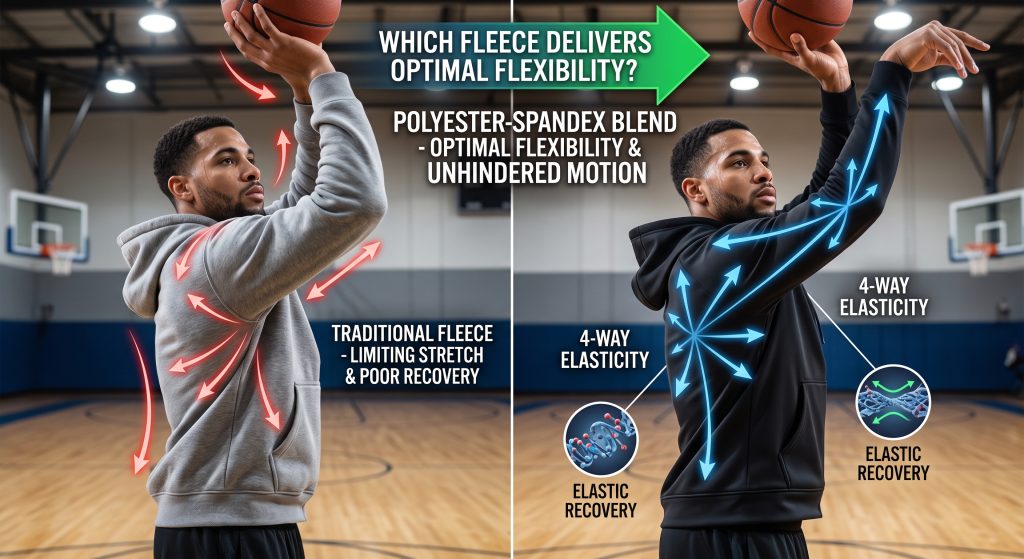
Polyester-spandex synthetic blends deliver four-way elasticity required for unhindered shooting form and defensive stances. Blending elastane into basketball fleece fabric gives basketball warm-ups elastic recovery.
Why Add Spandex to Polyester Basketball Fleece?
Pure polyester offers durability but lacks rapid elastomeric recovery under extreme shoulder tension. You add 5% to 8% spandex to ensure garments snap back to shape after stretches.
- Enhanced four-way stretch dynamic movement
- Shape retention prevents sagging elbows
- Smooth elastic fit over jerseys
Here is the deal: elastane blends keep garments form-fitting year after year.
How Does Cotton Blend Fleece Compare to Synthetics?
Cotton offers soft skin touch but absorbs water weight, whereas synthetic blends dry rapidly during workouts. You balance market demand for soft hand feel with technical performance needs.
Key Takeaway: Spandex blends supply necessary elastic stretch for dynamic athletic motions.
| Blend Ratio | Stretch Factor | Moisture Performance |
| 95% Poly / 5% Spandex | High 4-Way | Excellent |
| 80% Cotton / 20% Poly | Low 2-Way | Moderate |
High spandex percentage remains crucial for modern athletic stretch performance.
8. How Does Moisture Management Differ Across GSM Ratings?
Lower GSM fabrics evaporate sweat faster because thin textile layers shorten moisture migration distances to outer air. High GSM basketball fleece fabric requires specialized wicking finishes to move perspiration efficiently.
Can Heavy Fleece Still Dry Quickly During Games?
Hydrophilic topical treatments push liquid away from inner face yarns despite overall fabric thickness. You keep athletes dry even when specifying heavy 320+ GSM winter hoodies.
- Chemical wicking finishes speed drying
- Hydrophobic yarns prevent moisture absorption
- Micro-denier fibers pull sweat outward
What is the catch? untreated heavy fleece retains wet moisture far longer.
How Do Chemical Finishes Enhance Sweat Transport?
Functional chemical coatings spread liquid droplets across wider surface areas to accelerate air evaporation rates. You deliver performance gear that keeps players dry during intense drills.
Key Takeaway: Wicking treatments allow heavy fleece to dry quickly during active sport sessions.
| GSM Tier | Natural Wicking Rate | Treated Wicking Rate |
| 200 GSM | Fast | Ultra-Fast |
| 350 GSM | Slow | Moderate-Fast |
Chemical wicking treatments equalize drying performance across heavier textile weights.
9. What Cost Factors Depend on Choosing Specific GSM Fleece?
Raw yarn consumption and shipping weight scale directly with higher GSM selections, driving overall unit cost up. Sourcing heavier basketball fleece fabric increases both material purchasing expense and air freight charges.
How Does Weight Impact Bulk Freight Costs?
Container shipments hit weight limits faster when carrying heavy 350 GSM fleece garments. You manage landed logistics costs by optimizing textile weight against garment needs.
- Higher raw material costs per yard
- Greater volumetric weight charges during freight
- Larger storage volume requirements in warehouses
Make no mistake: heavier fabrics raise shipping budgets rapidly.
What Is the Profit Margin Potential Across GSM Grades?
Premium heavyweight hoodies command significantly higher retail price points that offset increased yarn costs. You maximize profit margins by aligning GSM specifications with market positioning.
Key Takeaway: Balancing GSM requirements with freight logistics optimizes apparel profit margins.
| GSM Selection | Relative Yarn Cost | Freight Impact |
| 220 GSM | Base Rate | Low Impact |
| 360 GSM | +35% Base | High Impact |
Calculating freight logistics alongside yarn costs establishes true landed profit margins.
10. How Do You Select GSM Based on Regional Climates?
Target market climate determines whether your collection should emphasize high breathability or heavy thermal insulation. Specifying basketball fleece fabric tailored to local weather patterns boosts customer product satisfaction.
Which GSM Works Best for Tropical and Indoor Arenas?
Lightweight 200 to 240 GSM fleeces suit air-conditioned indoor facilities and warmer coastal geographical zones. You prevent player overheating in warm indoor training facilities.
- 200-240 GSM for warm southern regions
- 280-300 GSM for temperate central zones
- 340-400 GSM for northern winter climates
Want to know the best part? tailored regional weights increase buyer sales velocity.
How Should Global Brands Structure Their GSM Offerings?
Offering tiered weight options allows global distributors to supply both warm outdoor leagues and cold winter tours. You capture wider market share by catering to varied climate demands.
Key Takeaway: Structuring product lines around regional weather maximizes global apparel sales.
| Regional Climate | Recommended GSM | Product Focus |
| Warm / Humid | 200 – 240 GSM | Lightweight Pullovers |
| Cold / Northern | 340 – 400 GSM | Heavyweight Sideline Parkas |
Geographic climate segmentation guarantees optimal garment functionality for end users.
Conclusion
Choosing the right fabric weight resolves athlete comfort issues while optimizing production cost and durability across warm-up lines. By matching GSM density to specific court conditions and regional climates, you supply athletic gear that performs under pressure. As a dedicated sports fabric manufacturer, we supply technical textiles engineered for modern athletic performance. If you are ready to engineer high-performance team wear, contact us to discuss your custom textile requirements.
FAQ
Q1: What’s the best GSM for indoor basketball warm-up hoodies?
Midweight fleece between 280 and 320 GSM is ideal. This weight provides sufficient warmth in air-conditioned gyms while maintaining flexibility for athletic drills.
Q2: Can I use 200 GSM fleece for winter basketball travel gear?
No, 200 GSM fleece is too thin for severe winter travel. Lightweight fleeces lack the thermal air retention needed for cold outdoor transit between games.
Q3: How do I know if my fleece fabric requires additional wicking treatment?
Water droplet testing easily determines your fabric’s wicking efficiency. If liquid beads on the surface rather than absorbing immediately, a hydrophilic finish is required.
Q4: Can I screen print effectively on heavyweight fleece above 350 GSM?
Yes, heavyweight fleece provides a flat, stable surface for high-density screen printing. Smooth outer face construction prevents ink bleeding and maintains sharp graphic edges.
Q5: What’s the best synthetic blend ratio for basketball warm-ups?
A 92% polyester and 8% spandex blend yields optimal athletic results. This combination offers high durability, fast drying speed, and necessary four-way flexibility.