
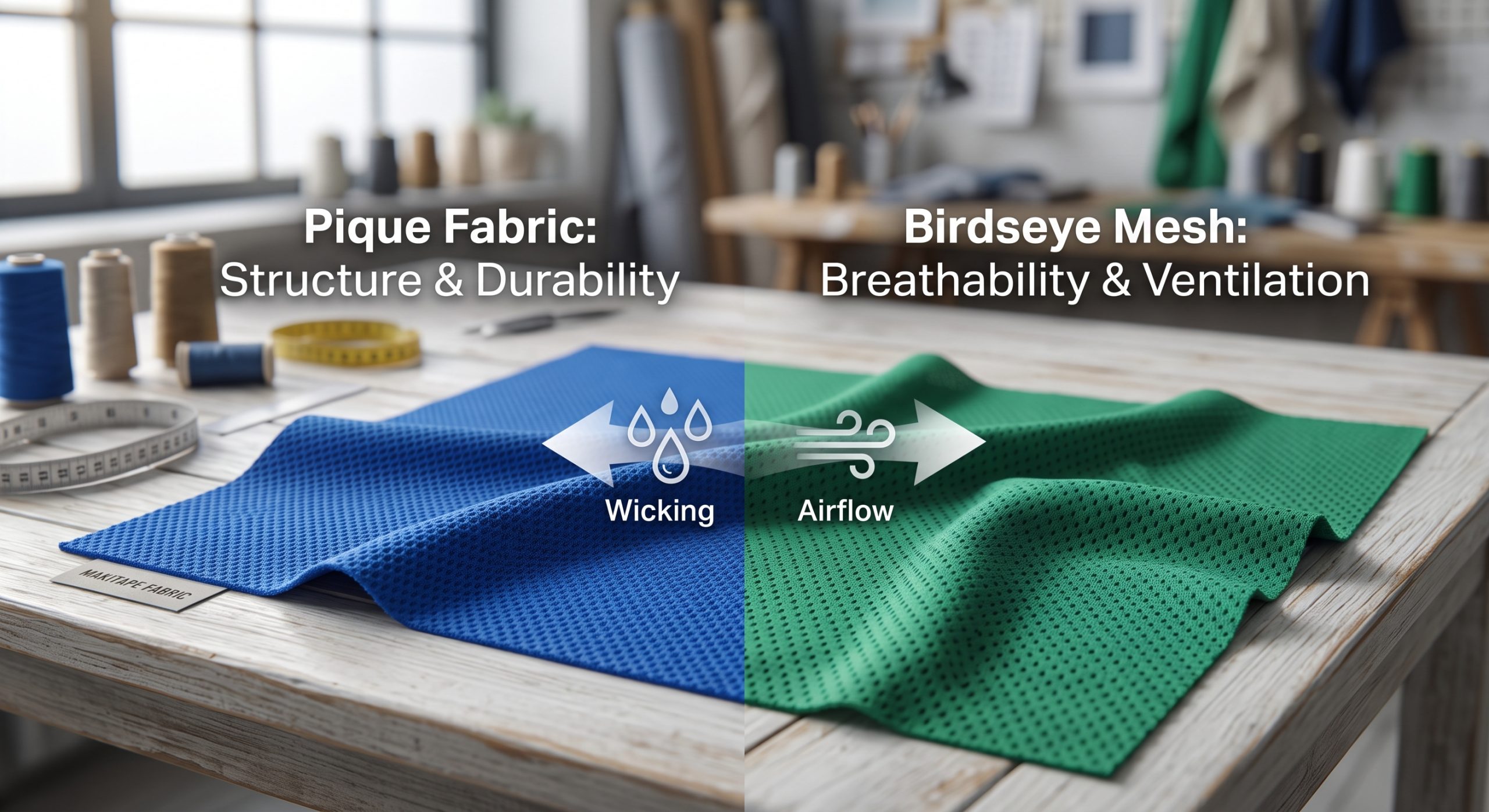
Polyester-spandex birdseye mesh and high-performance cotton-poly pique knits stand out as premier choices for athletic apparel due to their exceptional liquid management and structural durability. Apparel manufacturers frequently face costly returns when activewear retains sweat or loses structural shape after minimal wears. Sticky fabrics cause discomfort during intense workouts, while poorly constructed knits stretch out of shape. Choosing engineered technical knits resolves these production challenges by maximizing airflow and structural longevity. Sourcing the best fabric for sportswear directly from established mills equips your brand with professional material quality.
1. Is Birdseye Mesh the Best Fabric for Sportswear?
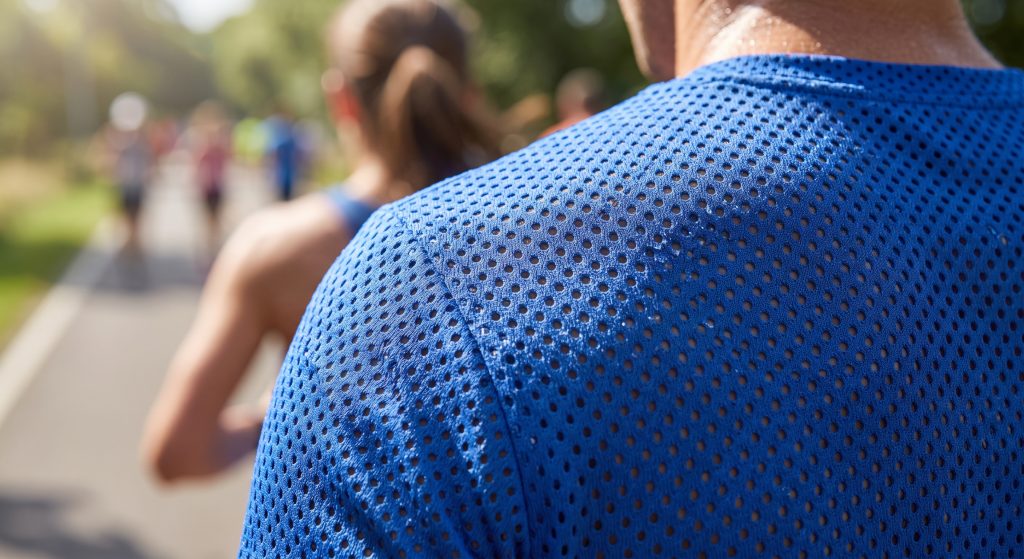
Birdseye mesh functions exceptionally well for high-intensity athletic garments because its geometric micro-hole structure accelerates airflow and moisture evaporation. The knitted pattern creates tiny eyelet openings across the surface to channel heat outward rapidly. Here is why this matters: active apparel constructed with this mesh remains light and dry during heavy perspiration. Sourcing the best fabric for sportswear requires matching knit density with specific athletic performance requirements.
Garment designers favor this fabric for marathon running shirts and athletic training jerseys. The raised knit texture prevents the cloth from clinging tightly to damp skin. Reduced surface contact keeps athletes comfortable during prolonged endurance activities.
What Makes the Birdseye Structural Knit Special?
The signature weave features small circular tuck stitches resembling a bird’s eye across the fabric face. Think about it: these tiny perforations boost air circulation without compromising total fabric opacity.
- Micro-eyelet pattern engineered for continuous air ventilation
- Tightly interlocked synthetic yarns preventing tear expansion
- Smooth interior face reducing friction during movement
This balanced knit layout guarantees mechanical stability under heavy dynamic strain. Sportswear brands rely on this stable geometry to manufacture active training wear.
How Does Micro-Hole Ventilation Improve Performance?
Micro-hole ventilation accelerates body heat dissipation by allowing trapped warm air to escape instantly. Here is the deal: rapid thermal regulation maintains comfortable body temperatures during intense exercise sessions.
- Direct air exchange across high-sweat body zones
- Reduced thermal resistance compared to flat solid knits
- Quick moisture dispersion over wider surface areas
Athletes experience less physical fatigue when garment heat buildup drops. Proper ventilation transforms standard activewear into technical gear.
Key Takeaway: Birdseye mesh offers non-stick comfort and thermal dissipation needed for high-sweat endurance sportswear.
| Technical Parameter | Specification Standard | Athletic Benefit |
| Knit Structure | Geometric Micro-Eyelet | Maximizes continuous air exchange |
| Weight Range | 120 – 160 GSM | Reduces garment drag during motion |
| Fiber Blend | 100% Poly or Poly-Spandex | Delivers rapid moisture evaporation |
Analyzing these structural specifications demonstrates why birdseye mesh excels in high-heat athletic environments.
[Image Description: A photorealistic, high-resolution macro photograph of synthetic bird’s eye mesh fabric under bright lighting, showing the geometric micro-hole knit pattern and soft matte finish.]
2. Why Is Pique Fabric Often Called the Best Fabric for Sportswear?
Pique fabric earns strong recognition for athletic wear due to its durable waffle texture and superior shape retention. The double-knit technique produces a dimensional surface that resists sagging and creasing. What is the real story? This sturdy construction enables sportswear brands to manufacture sharp athletic polo shirts and golf apparel. Sourcing the best fabric for sportswear involves balancing physical structure with ventilation performance.
Textile buyers choose pique when garments demand formal visual presentation alongside athletic functionality. The raised geometric pattern lifts material off the skin to prevent fluid accumulation.
How Does Honeycomb Texture Enhance Activewear?
The geometric honeycomb texture creates micro-channels that foster airflow while preserving garment structure. Ready for the good part? This spatial construction gives collared sportswear a clean, structured appearance.
- Dimensional weave protecting against fabric collapse
- Structural stiffness for clean collars and plackets
- Refined visual texture for athletic clothing lines
Apparel produced with this weave retains its tailored silhouette after multiple laundry cycles.
Can Pique Handle Sweat Absorption Efficiently?
Pique absorbs moisture effectively due to its multi-layered yarn construction. This is where it gets interesting: blended poly-cotton pique draws sweat away from skin to maintain dry comfort during moderate exercise.
- Strong fluid absorption capacity per square meter
- Balanced liquid distribution across outer knit layers
- Tough fiber build resisting heavy wash cycles
These properties make pique ideal for tennis apparel and casual team activewear.
Key Takeaway: Pique fabric combines structured aesthetic appeal with practical fluid absorption for collared sportswear.
| Performance Attribute | Pique Specification | Garment Advantage |
| Fabric Texture | Waffle Honeycomb | Holds crisp garment shape |
| Standard Weight | 180 – 240 GSM | Provides substantial body |
| Fiber Makeup | Cotton-Poly Blend | Balances soft comfort and strength |
Examining pique performance metrics highlights its balance of structural integrity and comfort for collared athletic wear.
[Image Description: A photorealistic high-resolution photograph of a poly-cotton pique fabric surface displaying the distinct waffle honeycomb weave pattern under soft side lighting.]
3. Which Is the Best Fabric for Sportswear: Birdseye or Pique?
Birdseye mesh provides fast drying speeds and light weight, whereas pique fabric delivers structural substance and neat presentation. Selecting between these textiles depends on whether your target garment targets high-sweat training or refined sportswear styling. Here is the deal: running tops require birdseye mesh, while golf polos require pique knit. Selecting the best fabric for sportswear requires matching fabric weight to your target sport.
Evaluating total fabric weight helps buyers pick the ideal material option. Heavier pique fabrics offer durability, while lighter birdseye mesh reduces runner drag.
How Do Their Breathability Levels Compare Side by Side?
Birdseye mesh delivers higher airflow rates than standard pique knits due to its open perforation layout. Think about it: open micro-holes grant direct passage to air currents while solid pique structures filter air through woven yarns.
- Birdseye mesh provides up to 30% greater airflow volume
- Pique offers moderate ventilation suited for lower-sweat activities
- Birdseye speeds up sweat evaporation during running
High-aerobic activities demand the immediate cooling effect that open mesh structures supply.
What Are the Key Weight and Drape Differences?
Birdseye mesh typically ranges between 120 and 160 GSM, offering fluid drape for running gear. Check this out: pique fabric generally ranges from 180 to 240 GSM for a structured silhouette.
- Birdseye knit: ultra-lightweight build with fluid drape
- Pique knit: mid-to-heavy weight build with firm structure
Selecting the correct GSM ensures your activewear line meets specific consumer expectations.
Key Takeaway: Birdseye mesh wins for high-intensity ventilation, while pique leads in weight, structure, and smart-casual activewear.
| Comparison Feature | Birdseye Mesh | Pique Fabric |
| Air Permeability | Very High (Open Eyelets) | Moderate (Structured Weave) |
| Average Weight | Light (120–160 GSM) | Mid-Weight (180–240 GSM) |
| Primary Application | Running & Training Shirts | Golf & Tennis Polo Shirts |
Comparing these physical parameters reveals distinct functional advantages tailored to specific athletic disciplines.
[Image Description: A clean, photorealistic infographic chart displaying comparative bar graphs for breathability, weight, and drying speed between birdseye mesh and pique sportswear fabrics.]
4. How Does Mesh Density Impact the Best Fabric for Sportswear?
Mesh density controls air movement and fabric transparency in technical athletic clothing. Fine gauge knits protect against sun exposure while maintaining necessary airflow for outdoor sports. What is the bottom line? Higher density knits deliver transparency protection without trapping heat against the skin. Sourcing the best fabric for sportswear involves balancing hole size against mechanical durability.
Adjusting needle counts during knitting modifies the density profile. Precision density selection prevents fabric snagging while preserving smooth tactile comfort.
What Do Air Permeability Test Metrics Reveal?
Laboratory air permeability testing measures how many cubic feet of air pass through a square foot of fabric every minute. Here is why this matters: higher permeability ratings correspond directly to cooler body temperatures during intense workouts.
- ASTM D737 standard testing protocols for sportswear textiles
- Dense technical meshes score between 150 and 250 CFM
- Open density meshes reach up to 400 CFM air flow
Test results give product developers verifiable data for precise fabric selection.
How Does Fiber Density Affect Skin Comfort?
Denser yarn layouts create a smoother internal face against athlete skin during athletic movement. Ready for the good part? Reduced surface friction eliminates skin chafing during repetitive movement cycles.
- Smooth interior surface reduces motion friction
- Lower friction coefficient under wet sweat conditions
- Decreased pilling potential after extended abrasive wear
Prioritizing internal softness ensures user satisfaction across technical activewear garments.
Key Takeaway: Optimizing mesh density secures the balance between breathability, opacity, and skin comfort.
| Density Class | CFM Permeability | Opacity Level | Target Application |
| High Density | 150 – 250 CFM | High Opacity | Sun-protective outdoor tops |
| Medium Density | 250 – 350 CFM | Moderate Opacity | General gym & training tops |
| Low Density | 350+ CFM | Semi-Sheer | Ultra-light marathon jerseys |
Evaluating air permeability metrics alongside density ratings allows mills to engineer targeted comfort levels.
[Image Description: A photorealistic laboratory photograph of industrial testing equipment measuring air permeability across a micro-mesh textile sample.]
5. Can Pique Be the Best Fabric for Sportswear Polo Shirts?
Pique knit remains the leading choice for athletic polo shirts because it holds collar shape and maintains a neat appearance. The double-knit structure resists curling along garment edges during wear and laundering. Here is the story: activewear brands select pique to merge professional styling with athletic function. Finding the best fabric for sportswear polos requires specifying proper yarn blends and finishing treatments.
Adding synthetic fibers to traditional cotton pique enhances shape memory and liquid management. This hybrid approach delivers both natural comfort and crisp visual presentation.
How Does Pique Maintain Collar Stability?
Pique fabrics offer strong dimensional stability, preventing limp or curling polo collars. Think about it: structured knits maintain crisp collar edges without requiring stiff inner linings.
- Double-knit geometry resists edge curling
- Vertical knit stability keeps collars upright
- Low fabric distortion after frequent washing
Durable collar construction elevates the market value of corporate team apparel.
Why Is Pique Preferred for Corporate Activewear?
Corporate sports programs favor pique garments because they project a polished appearance on golf courses and in office settings. What is the catch? Plain flat knits can look overly casual, while pique offers textured sophistication.
- Textured face conceals minor packing wrinkles
- Soft matte appearance presents professional styling
- Ideal density for embroidery of corporate logos
Embroidered logos sit flat on pique without causing surrounding fabric puckering.
Key Takeaway: Pique fabric provides collar stability and professional aesthetics required for premium athletic polos.
| Polo Attribute | Pique Knit | Flat Jersey Knit |
| Collar Firmness | High Structural Hold | Prone to Edge Curl |
| Surface Appearance | Textured Honeycomb | Smooth Plain Face |
| Logo Embroidery | Excellent Stability | Occasional Puckering |
Reviewing structural stability factors confirms pique as the industry standard for collared activewear garments.
[Image Description: A photorealistic close-up photo of an athletic polo shirt crafted from navy blue pique fabric, showcasing crisp collar detail and subtle texture.]
6. What Makes Quick-Dry Mesh the Best Fabric for Sportswear?
Quick-dry mesh accelerates evaporation by spreading liquid sweat across synthetic microfiber surfaces. Engineered cross-section yarns pull moisture outward away from human skin within seconds. Here is why this matters: rapid drying prevents post-exercise chills and heavy garment weight accumulation. Selecting the best fabric for sportswear involves verifying fluid spread rates and drying times.
Fast evaporation keeps activewear light during demanding workouts. B2B apparel buyers prioritize quick-dry performance for modern training wear.
How Do Moisture Wicking Channels Work?
Synthetic microfibers utilize capillary action to channel sweat along microscopic surface grooves. This is where it gets interesting: moisture moves outward rapidly without saturating inner fiber cores.
- Capillary channels transport sweat outward
- Hydrophobic synthetic yarns resist fluid absorption inside fibers
- Extended surface area accelerates air drying
Continuous moisture movement keeps the interior fabric face dry against athlete skin.
What Are the Real Evaporation Rates Under Sweat?
High-grade synthetic quick-dry meshes dry three times faster than natural cotton under identical airflow conditions. Check this out: fast evaporation maintains comfortable body temperatures during training.
- Drying times complete under 20 minutes in lab tests
- Minimal water retention within synthetic filaments
- Steady liquid transport under heavy perspiration
Documented drying speed provides a clear technical selling feature for activewear brands.
Key Takeaway: Quick-dry mesh utilizes capillary action to keep athletes dry, light, and thermally balanced during workouts.
| Fabric Material | Drying Time (Lab Test) | Liquid Retention |
| Quick-Dry Synthetic Mesh | 15 – 20 Minutes | Under 5% |
| Standard Poly-Cotton | 35 – 45 Minutes | 15% – 25% |
| Pure Cotton Jersey | 60+ Minutes | Over 40% |
Analyzing evaporation rates demonstrates how synthetic mesh formulations outperform traditional fibers in liquid management.
[Image Description: A photorealistic macro shot of water droplets rapidly wicking and spreading outward across a teal synthetic birdseye mesh fabric sample.]
7. How Do You Select the Best Fabric for Sportswear Durability?
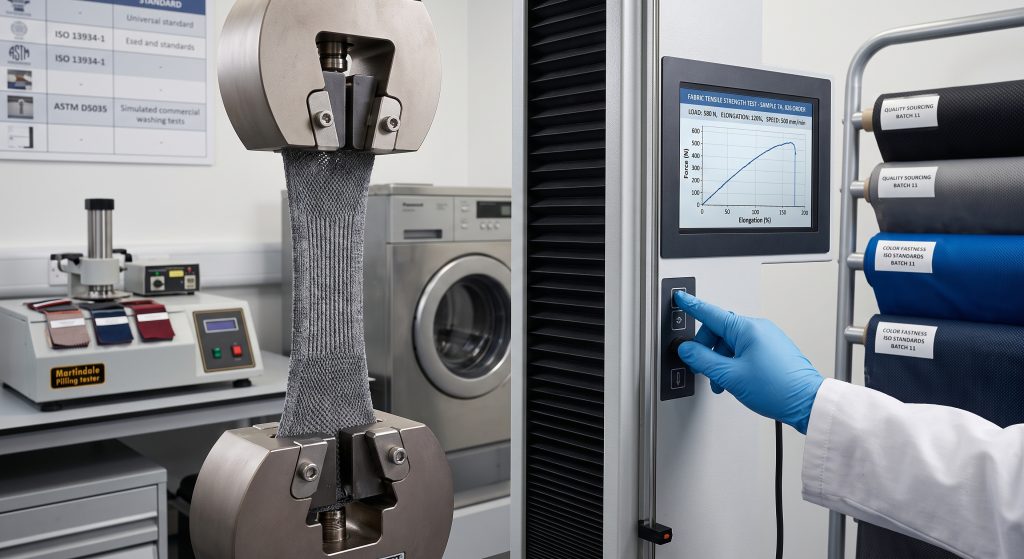
Selecting durable sportswear fabrics requires checking tensile strength, pilling resistance, and color fastness. High-tenacity synthetic yarns resist tearing when subjected to aggressive physical contact during sports matches. Ready for the good part? Tough fabrics reduce garment replacements and safeguard brand reputation. Sourcing the best fabric for sportswear depends on matching fiber strength to sport-specific wear levels.
Rigorous laboratory testing ensures fabrics endure frequent commercial washing without losing elasticity. Quality fabric sourcing guarantees consistent long-term garment integrity.
What Are Standard Abrasion Resistance Benchmarks?
Martindale abrasion tests determine how many friction cycles a fabric withstands before thread damage occurs. Here is the deal: top sportswear fabrics endure over 30,000 continuous rubs without surface breakdown.
- Martindale score exceeding 30,000 cycles for contact sports
- High tear strength along sewn seam construction
- Colorfastness score of Grade 4+ under perspiration tests
High abrasion resistance scores ensure activewear withstands contact with equipment and turf.
How Do You Prevent Snagging in Mesh Fabrics?
Tightly interlocking knit loops prevent sharp objects from catching loose surface threads. Think about it: high filament count yarns produce smooth surfaces that resist mechanical snagging.
- Fine gauge interlock knitting minimizes open thread loops
- Anti-snagging chemical finishes add protective surface coatings
- Compact yarn bundling strengthens individual threads
Selecting anti-snag mesh extends garment lifespan for outdoor training apparel.
Key Takeaway: High tensile strength and anti-snagging knits ensure activewear withstands aggressive use and laundering.
| Durability Test | Industry Benchmark | Performance Impact |
| Martindale Abrasion | 30,000+ Friction Rubs | Resists surface breakdown |
| Colorfastness to Sweat | Grade 4.0 Minimum | Prevents color bleeding |
| Pilling Resistance | Class 4.0 Standard | Maintains smooth tactile face |
Sourcing materials based on standardized abrasion data prevents returns caused by fabric surface failure.
[Image Description: A photorealistic industrial laboratory shot showing a textile abrasion tester evaluating friction durability on a dark grey knitted sportswear fabric.]
8. Is Recycled Polyester the Best Fabric for Sportswear Brands?
Recycled polyester delivers moisture management and tensile strength matching virgin synthetic fibers while reducing environmental impact. Modern recycling processes transform post-consumer plastic bottles into high-tenacity filament yarns. What is the real story? Sustainable textiles allow sportswear brands to satisfy eco-conscious consumers without sacrificing technical performance. Sourcing the best fabric for sportswear now includes evaluating verified recycled fiber choices.
Eco-friendly activewear lines gain a competitive edge in global retail markets. Certified recycled yarns ensure full material traceability across supply chains.
How Do Recycled Yarns Compare to Virgin Fibers?
Recycled polyester yarns match virgin fibers in break strength, dye uptake, and moisture management performance. Here is why this matters: functional activewear reaches high technical quality alongside environmental responsibility.
- Matching capillary wicking speeds compared to virgin polyester
- Identical tensile break strength under stress testing
- Equal color vibrancy and colorfastness scores
Garment designers transition to recycled yarns without re-engineering garment patterns.
What Environmental Standards Apply to Sportswear?
Global Recycled Standard certification verifies recycled content and responsible chemical usage across production mills. Ready for the good part? Clear environmental certifications offer transparent proof for brand marketing campaigns.
- GRS certification tracking raw material origins
- OEKO-TEX Standard 100 confirming chemical safety
- Reduced carbon emissions during yarn processing
Meeting international environmental standards secures access to eco-conscious retail channels.
Key Takeaway: Recycled polyester provides sustainability while preserving 100% of virgin synthetic performance.
| Fiber Metric | Recycled Polyester | Virgin Polyester |
| Tensile Strength | 4.2 – 4.8 g/d | 4.2 – 4.8 g/d |
| Moisture Wicking Speed | Under 3 Seconds | Under 3 Seconds |
| Environmental Impact | 30% Lower Carbon Output | Baseline Footprint |
Comparing recycled and virgin yarns confirms that eco-friendly options preserve structural integrity without compromise.
[Image Description: A photorealistic studio shot displaying eco-friendly recycled polyester yarn spools alongside clear plastic recycled PET flakes.]
9. How Does Hand Feel Determine the Best Fabric for Sportswear?
Hand feel dictates immediate consumer tactile comfort and influences purchasing decisions during retail evaluation. Soft surface finishes and micro-brushed textures reduce skin irritation during high-friction athletic movements. This is where it gets interesting: soft tactile feel must coexist with high-strength moisture management yarns. Choosing the best fabric for sportswear involves evaluating tactile softness alongside durability ratings.
Silicone softeners and mechanical brushing treatments improve tactile comfort on synthetic knits. Premium activewear lines prioritize gentle touch points to elevate garment satisfaction.
What Protocols Measure Fabric Tactile Softness?
Objective tactile testing systems evaluate bending rigidity, surface roughness, and compression recovery in textiles. Check this out: measurable softness parameters help manufacturers maintain consistent batch-to-batch tactile quality.
- Kawabata Evaluation System measuring bending and surface friction
- Softness index scoring for athlete skin contact zones
- Drape coefficient testing for fluid garment movement
Standardized tactile testing guarantees uniform softness across production batches.
Can Friction Reduction Prevent Athlete Chafing?
Smooth yarn coatings dramatically lower surface friction between damp fabric and athlete skin during repetitive motion. Here is the deal: lower friction levels protect runners and cyclists from uncomfortable skin abrasion.
- Surface finishes reducing wet skin friction
- Ultra-fine denier microfibers smoothing yarn surfaces
- Flat lock seam compatibility for irritation-free wear
Eliminating chafing boosts athletic endurance and user satisfaction.
Key Takeaway: Superior hand feel and low surface friction prevent skin chafing, boosting comfort over long training sessions.
| Tactile Finishing | Friction Reduction | Hand Feel Profile |
| Micro-Brushing | High Surface Softness | Plush and velvety touch |
| Silicone Softener | Smooth Motion Gliding | Silky and low friction |
| Hydrophilic Finish | Rapid Moisture Spreading | Cool and slick touch |
Analyzing tactile measurement metrics confirms that controlled surface processing enhances skin comfort under sweat conditions.
[Image Description: A photorealistic close-up photograph of hands feeling an ultra-soft, smooth stretch activewear fabric sample under warm lighting.]
10. Where Can Brands Source the Best Fabric for Sportswear Needs?
Sourcing sportswear textiles directly from established mills ensures consistent technical quality, factory pricing, and custom options. Direct factory partnerships provide access to advanced knitting machinery and custom dye facilities. What is the bottom line? Sourcing directly from verified mills removes intermediary markups and speeds up production schedules. Sourcing the best fabric for sportswear requires vetting factory certifications and minimum order terms.
Reliable manufacturers supply physical color swatches to streamline fabric approval processes. Partnering with experienced mills secures stable long-term supply chain operations.
What Quality Standards Should Textile Mills Meet?
Professional fabric mills hold ISO certifications, environmental compliance seals, and internal lab testing setups. Think about it: certified factories guarantee batch consistency and adherence to global garment safety regulations.
- ISO 9001 certification for quality control systems
- Internal lab testing for colorfastness and shrinkage
- Flexible minimum orders for growing sportswear brands
Verifying mill credentials protects your business against production delays and material defects.
Why Are Wholesale Color Cards Valuable for Buyers?
Physical color swatches allow buyers to verify exact pantone shades, stretch recovery, and tactile hand feel in person. Here is the story: physical sampling eliminates color mismatch errors before commercial knitting begins.
- Accurate Pantone color matching across custom dye lots
- Direct evaluation of stretch recovery and fabric feel
- Reliable sample garment creation prior to bulk orders
Requesting physical swatches ensures full confidence before placing bulk commercial orders.
Key Takeaway: Direct mill partnerships guarantee quality control, custom dyeing, and reliable wholesale delivery schedules.
| Sourcing Factor | Direct Textile Mill | Intermediary Trading House |
| Pricing Efficiency | Direct Factory Rates | Intermediary Price Markup |
| Custom Color Matching | Direct Dye Lab Access | Third-Party Dye Delay |
| Batch Quality Control | In-House Lab Testing | Outsourced QC Checks |
Reviewing factory capabilities demonstrates that direct manufacturer sourcing delivers superior quality control and price efficiency.
[Image Description: A photorealistic photograph of colorful physical fabric color swatches arranged on a design table inside a textile manufacturing facility.]
Ready to Source Premium Sportswear Fabrics?
Selecting between birdseye mesh and pique fabric depends on balancing ventilation needs, fabric weight, and desired garment structure. Birdseye mesh provides lightweight, micro-hole ventilation ideal for high-intensity running and gym apparel, whereas pique fabric delivers structural body, shape retention, and polished presentation for collared activewear. Sourcing high-performance textiles directly from an experienced manufacturer resolves quality variations and optimizes garment production schedules. We supply custom engineered knits, quick-dry activewear textiles, and tailored functional fabrics to help activewear brands excel. Contact us today to request physical color swatches, sample yards, and factory-direct wholesale pricing for your upcoming sportswear collection. Driven by technical innovation and strict quality standards, our mill equips apparel manufacturers with high-performance fabrics that perform under pressure.
Frequently Asked Questions
Q1: Can I use birdseye mesh for high-intensity workout clothing?
Yes, birdseye mesh is an excellent choice for high-intensity training gear because its micro-perforated knit structure allows rapid heat dissipation and accelerates sweat evaporation.
Q2: What’s the best fabric choice for collared athletic polo shirts?
Pique knit fabric is widely regarded as the top choice for collared activewear due to its structured dimensional weave, which prevents collar curling and maintains a crisp appearance.
Q3: How do I know if a fabric has effective quick-dry performance?
You can identify genuine quick-dry performance by checking capillary wicking test ratings and verifying that synthetic microfiber blends disperse liquid droplets across the surface rapidly.
Q4: Can I order custom dyed color swatches for my apparel brand?
Yes, professional fabric mills offer physical color cards and custom Pantone-matched swatches to help brands verify hand feel, stretch, and color accuracy prior to bulk production.
Q5: What’s the best option between recycled and virgin polyester fabrics?
Recycled polyester is the preferred choice for modern activewear brands because it delivers identical tensile strength, moisture management, and durability while significantly reducing environmental footprint.