
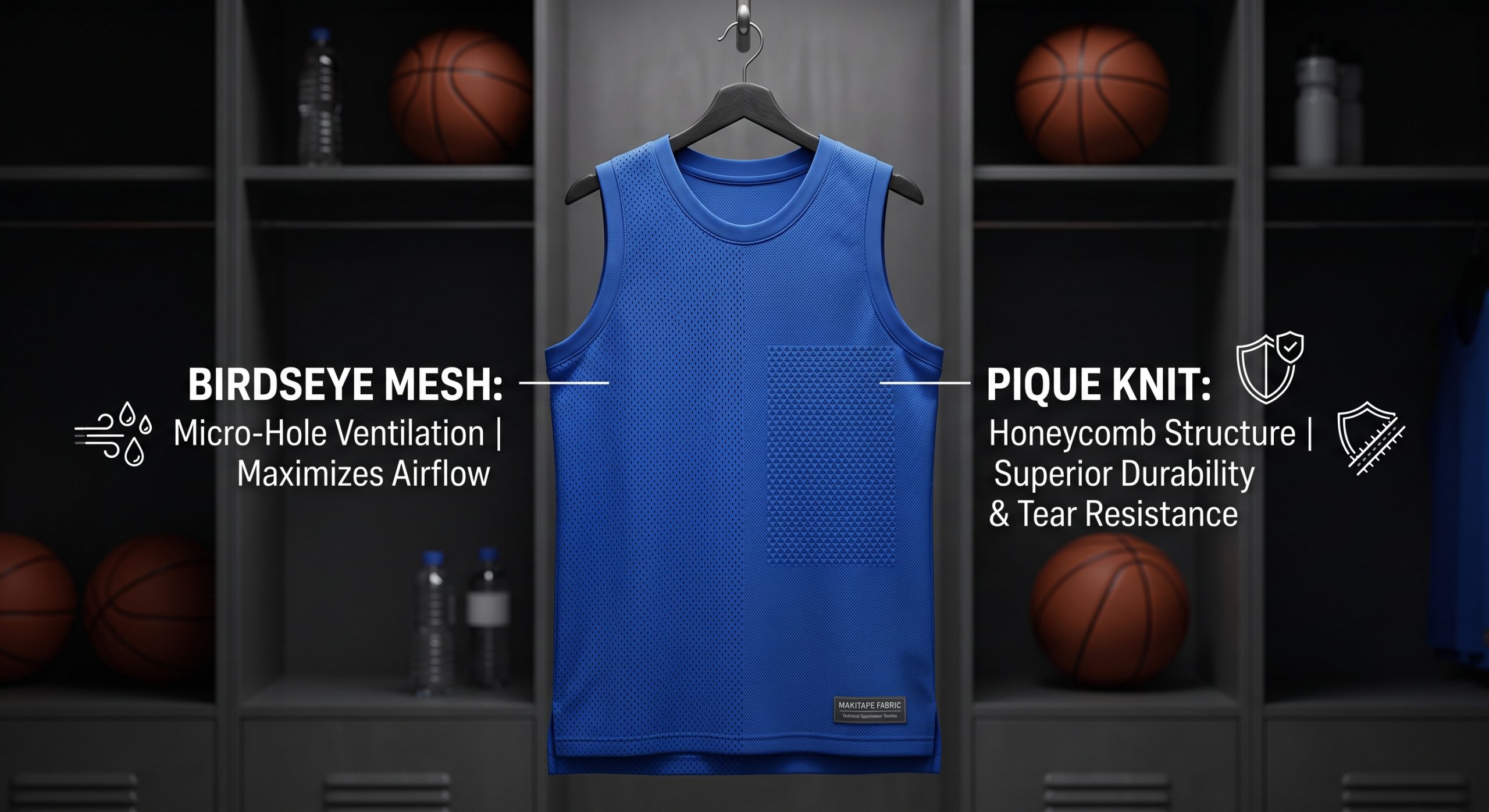
Selecting ideal basketball jersey materials requires balancing moisture evaporation, knit density, tear resistance, and fabric weight to maintain player mobility during high-intensity games. Picture a basketball team stepping onto the court during championship minutes, only to be dragged down by heavy, sweat-soaked uniforms that cling to their skin and restrict explosive movement. Sticky, poorly ventilated garments trap body heat, accelerating player fatigue and causing garment seams to rip under aggressive defensive tugs. Choosing technical synthetic textiles solves these athletic friction issues while delivering long-lasting structural resilience. Partnering with specialized suppliers for high-grade basketball jersey fabric arms your athletic brand with proven performance materials.
1. Is Birdseye Mesh the Best Basketball Jersey Fabric?
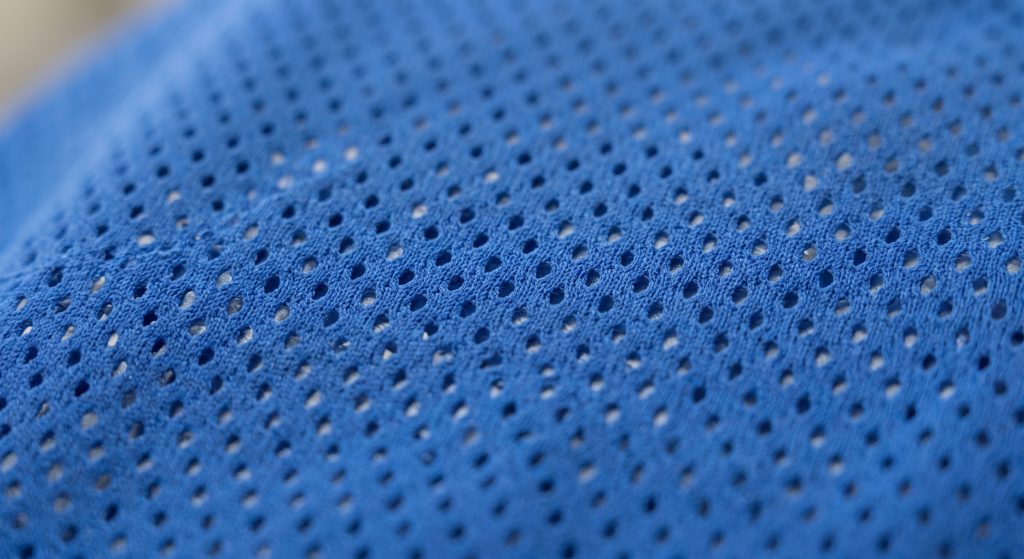
Birdseye mesh is an exceptional choice for basketball uniforms because its micro-perforated knit pattern maximizes airflow and speeds up sweat evaporation during intense court action. The engineered geometric openings channel body heat outward while allowing fresh air to cool the athlete continuously. Sourcing the right basketball jersey fabric ensures your athletic apparel remains lightweight during full-court sprints.
Garment manufacturers choose this specialized textile for competitive team jerseys and practice pinnies. The textured outer weave prevents damp cloth from sticking to skin, maintaining player comfort throughout four demanding quarters.
What Makes the Birdseye Pattern So Breathable?
The signature knit features circular tuck stitches creating micro-eyelet openings across the fabric surface. Here is the deal: these open channels facilitate constant air exchange without making the jersey see-through.
- Micro-eyelet perforations engineered for rapid ventilation
- High-tenacity synthetic yarns resisting tear propagation
- Smooth internal face reducing skin abrasion during play
This structural layout guarantees ventilation during aggressive dynamic movements. Athletic apparel lines depend on this weave geometry to maintain player cooling.
How Does Micro-Hole Knitting Cool Players?
Micro-hole knitting accelerates body heat dissipation by allowing hot air to escape immediately through tiny ventilation points. Think about it: quick thermal management prevents overheating during high-intensity game moments.
- Direct air permeability across intense sweat areas
- Minimal moisture retention within synthetic fibers
- Extended surface area for rapid evaporation
Athletes experience greater movement freedom when heat buildup drops. Proper airflow engineering transforms simple jerseys into technical apparel.
Key Takeaway: Birdseye mesh offers ventilation and non-stick comfort needed for endurance in basketball gameplay.
| Technical Parameter | Specification Standard | Athletic Benefit |
| Knit Pattern | Geometric Micro-Eyelet | Maximizes continuous air exchange |
| Average Weight | 130 – 160 GSM | Minimizes uniform weight and drag |
| Composition | 100% Polyester | Drives rapid liquid evaporation |
Evaluating these knit properties demonstrates why birdseye mesh excels in high-heat indoor court conditions.
2. Why Is Pique Knit Used for Basketball Jersey Fabric?
Pique knit is selected for basketball apparel because its geometric double-knit structure delivers dimensional stability and superior tear resistance under heavy physical contact. The raised waffle pattern gives jerseys physical substance while standing up to pulling during intense defensive plays. Incorporating durable basketball jersey fabric into team uniforms prevents fabric distortion and stretching around collars and armholes.
Textile buyers choose pique when uniforms demand a structured visual presentation combined with athletic functionality. The dimensional surface lifts material slightly off the skin to assist fluid dispersion.
How Does Honeycomb Weave Increase Durability?
The geometric honeycomb weave creates a two-sided structural barrier that protects against tearing during physical games. What is the real story? Double-knit construction keeps jersey collar lines and arm openings crisp over multiple seasons.
- Dimensional weave protecting against structural sagging
- High tensile strength preventing seam ruptures
- Refined visual texture for varsity team uniforms
Jerseys built with this double-knit technique retain shape after repeated commercial wash cycles.
Can Pique Handle Heavy On-Court Sweat?
Pique manages moisture effectively by absorbing sweat into its textured surface layers and spreading it across broad outer zones. Ready for the good part? Blended synthetic pique construction keeps players dry without sacrificing garment strength.
- High liquid absorption capacity per square meter
- Even fluid distribution across textured outer loops
- Rugged fiber build enduring aggressive physical play
These functional traits make pique a solid candidate for durable basketball jerseys.
Key Takeaway: Pique fabric combines structural strength and liquid management for tough basketball uniforms.
| Performance Attribute | Pique Specification | Garment Advantage |
| Weave Texture | Waffle Honeycomb | Holds crisp garment shape |
| Standard Weight | 170 – 210 GSM | Delivers rugged material feel |
| Fiber Blend | Poly or Poly-Spandex | Combines flexibility with strength |
Reviewing pique performance factors highlights its balance of structural strength and player comfort.
3. Which Basketball Jersey Fabric Wins: Birdseye or Pique?
Birdseye mesh wins for high-aerobic indoor gameplay due to rapid drying, while pique knit excels for outdoor tournaments that require heavier fabric structure. Selecting between these materials comes down to matching jersey weight against specific athletic environments. Comparing performance features helps buyers identify the optimal basketball jersey fabric for specific team requirements.
Analyzing garment mass helps apparel designers pick the ideal material option. Lighter birdseye mesh minimizes player drag, while heavier pique knit offers extra tear protection.
How Do Airflow Rates Compare Side by Side?
Birdseye mesh delivers significantly higher air permeability than structured pique knit because of its micro-perforated open layout. This is where it gets interesting: open eyelets allow direct passage for air currents while pique filters air through dense woven threads.
- Birdseye mesh provides up to 35% higher airflow volume
- Pique offers moderate ventilation suited for outdoor games
- Birdseye accelerates sweat evaporation during fast breaks
High-speed indoor games benefit from the instant cooling effect that open mesh structures deliver.
Which Option Offers Better Weight and Drape?
Birdseye mesh ranges between 130 and 160 GSM, offering fluid drape for unrestricted jumping and shooting. Check this out: pique fabric generally ranges from 170 to 210 GSM for a firmer silhouette.
- Birdseye knit: ultra-lightweight build with smooth drape
- Pique knit: mid-weight build with structured body
Selecting the correct GSM ensures your teamwear line meets athletic expectations.
Key Takeaway: Birdseye mesh leads in ventilation, whereas pique leads in structural durability and weight.
| Comparison Feature | Birdseye Mesh | Pique Fabric |
| Air Permeability | Very High (Open Holes) | Moderate (Dense Weave) |
| Weight Range | Light (130–160 GSM) | Mid-Weight (170–210 GSM) |
| Primary Setting | Indoor League Play | Outdoor & Streetball |
Comparing physical parameters reveals distinct functional advantages tailored to different playing styles.
4. How Does GSM Weight Affect Basketball Jersey Fabric?
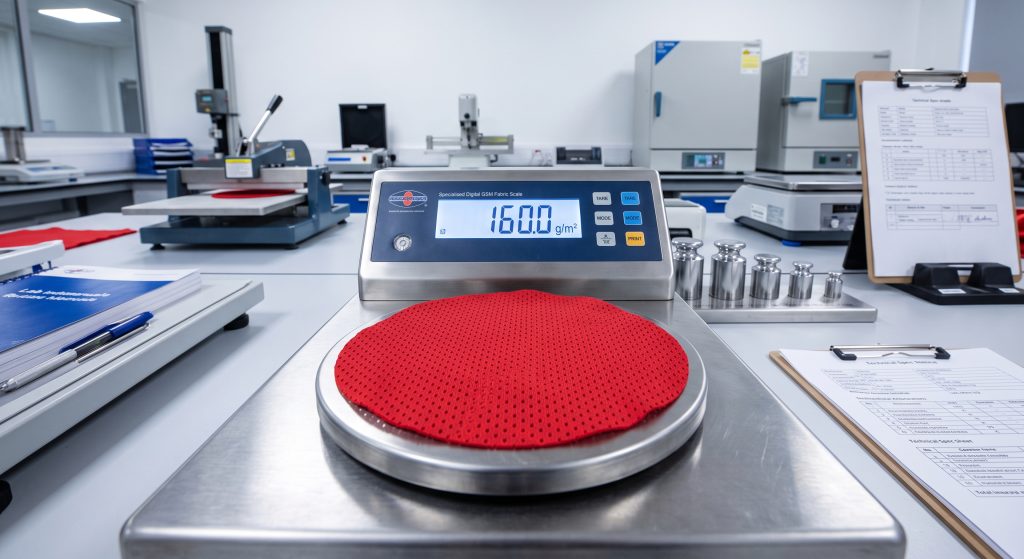
GSM weight determines the balance between player agility and garment structural longevity on the court. Fabrics that are too light risk tearing during physical defense, whereas excessively heavy textiles hold sweat and slow players down. Selecting a balanced basketball jersey fabric weight between 140 and 180 GSM prevents uniforms from feeling heavy or ripping easily.
Adjusting yarn density during knitting customizes the garment weight profile. Target GSM selection keeps uniforms light while maintaining durability.
Why Is 140 to 180 GSM the Sweetsport Range?
The 140 to 180 GSM range delivers ideal tear resistance while keeping uniform weight low for quick court movements. Here is why this matters: players maintain speed without worrying about uniform damage.
- Optimal balance between weight and material strength
- Resists seam tearing under aggressive jersey pulling
- Maintains drape without feeling bulky on players
Specifying this target range gives team outfitters reliable performance parameters.
How Does Fabric Mass Influence Player Comfort?
Lower material mass decreases physical drag and helps regulate body temperature during long playing minutes. Think about it: lighter uniforms reduce fatigue toward the end of close games.
- Reduced garment drag during full-court sprints
- Less liquid weight accumulation from heavy sweat
- Improved skin feel during sudden movements
Prioritizing balanced weight ensures player satisfaction across competitive leagues.
Key Takeaway: Choosing a 140 to 180 GSM weight balances light agility with physical tear resistance.
| GSM Category | Weight Range | Ideal Application |
| Ultra-Light | 120 – 140 GSM | Lightweight practice pinnies |
| Standard Match | 140 – 180 GSM | Competitive official team jerseys |
| Heavy-Duty | 180 – 220 GSM | Reversible outdoor league wear |
Evaluating GSM metrics alongside application goals allows mills to produce targeted fabric weights.
5. Can Sublimation Printing Wear on Basketball Jersey Fabric?
Dye sublimation printing bonds permanently with synthetic polyester fibers without clogging knit pores or fading over time. High-heat transfer converts inks directly into gas, fusing color into individual yarn centers. Premium synthetic basketball jersey fabric acts as an ideal canvas for vivid team logos and player numbers.
Sublimated graphics do not peel, crack, or wash out like traditional screen printing inks. This dye process maintains complete fabric breathability across printed areas.
How Does Heat Transfer Bonding Work on Polyester?
Heat transfer bonding opens synthetic polymer chains to lock dye molecules directly inside individual yarn centers. What is the catch? Standard natural cotton fibers cannot bond with sublimation dyes, making synthetic polyester mandatory.
- Molecular bonding preventing graphic peeling
- Sharp image definition for team logos and numbers
- Complete color retention through frequent washing
Molecular dye integration guarantees long-lasting visual appeal for custom uniforms.
Does Sublimation Printing Block Airflow Pores?
Sublimation dye colors individual fibers without filling open space between knit threads. Ready for the good part? Printed areas retain 100% of their original air permeability and wicking speed.
- Zero ink layer buildup on fabric surfaces
- Uncompromised ventilation across printed sponsor logos
- Soft surface feel across full custom graphics
Preserving air passage ensures player cooling remains consistent across the whole jersey.
Key Takeaway: Dye sublimation locks color directly inside polyester fibers while keeping ventilation pores clear.
| Printing Method | Breathability Retained | Graphic Durability |
| Dye Sublimation | 100% (No Pore Clogging) | Permanent (No Peeling) |
| Screen Printing | 30% – 50% (Ink Covers Pores) | Moderate (Cracks Over Time) |
| Heat Transfer Vinyl | 0% (Blocks Air Flow) | Low to Medium (Peels Off) |
Comparing print technologies confirms dye sublimation as the professional standard for customized team jerseys.
6. What Makes Micro-Mesh the Best Basketball Jersey Fabric?
Micro-mesh provides ultra-lightweight breathability with fine-gauge knit loops that prevent skin transparency during active play. Tiny, closely spaced ventilation holes deliver airflow while concealing underwear and skin beneath. Choosing micro-mesh basketball jersey fabric keeps athletes cool without sacrificing visual fabric opacity.
Fine gauge knitting loops generate a silky texture against skin during movement. Basketball brands choose micro-mesh to blend ventilation with a smooth feel.
How Do Fine Gauge Loops Prevent Chafing?
Fine gauge knitting loops create a smooth internal surface that glides across skin without causing friction. Here is the deal: smooth contact points prevent painful skin chafing during intense athletic movements.
- Micro-fine filament yarns smoothing fabric surface
- Lower friction coefficient under wet sweat conditions
- Reduced skin irritation during full-court motion
Prioritizing internal smoothness protects players from skin discomfort over long games.
Why Do Modern Teams Favor Light Micro-Mesh?
Modern athletic teams select micro-mesh because it delivers high air exchange in a lightweight construction. This is where it gets interesting: players get maximum airflow without feeling like they are wearing delicate material.
- High air circulation keeping skin dry
- Soft drape allowing unrestricted shooting motion
- Clean surface background for custom numbers
Combining light weight with coverage makes micro-mesh popular across professional leagues.
Key Takeaway: Micro-mesh combines high air ventilation, skin smoothness, and transparency protection for active players.
| Mesh Type | Hole Size | Opacity Level | Chafing Risk |
| Micro-Mesh | 0.5 – 1.0 mm | High Opacity | Very Low |
| Standard Mesh | 1.5 – 2.5 mm | Medium Opacity | Low |
| Open Pin-Hole | 3.0+ mm | Low (Semi-Sheer) | Moderate |
Reviewing mesh specifications helps manufacturers balance ventilation against visual opacity requirements.
7. How Do You Test Basketball Jersey Fabric Durability?
Testing jersey fabric durability involves measuring burst strength, pilling resistance, and seam pull tension in accredited textile laboratories. Pneumatic pressure devices stretch fabrics until rupture to establish mechanical strength limits. Standardized laboratory evaluations confirm whether a chosen bas
ketball jersey fabric can withstand aggressive physical defense.
Rigorous laboratory testing ensures textiles withstand frequent commercial washing without losing stretch recovery. Verifying material strength protects brands against product returns.
What Do Bursting Strength Tests Reveal?
Bursting strength tests measure how many kilopascals of pressure a knit withstands before tearing apart. Check this out: top-tier jersey materials resist over 700 kPa of multidirectional pressure.
- ASTM D3786 testing standards for athletic knits
- Multidirectional force simulation matching player tugs
- Verification of seam integrity under extreme tension
High burst strength scores guarantee jerseys hold together during aggressive physical play.
How Can You Prevent Surface Pilling?
Using high-tenacity filament yarns and anti-pilling chemical finishes prevents loose fibers from forming surface balls. Here is why this matters: jerseys retain a smooth, new visual finish across an entire season.
- Martindale pilling resistance score reaching Class 4+
- Singed yarn surfaces eliminating loose fiber ends
- Compact filament bundling resisting friction wear
Preventing fabric pilling maintains brand reputation and team appearance.
Key Takeaway: Lab-verified burst strength and pilling resistance protect uniforms from game damage and wash wear.
| Durability Test | Industry Benchmark | Performance Impact |
| Bursting Strength | 700+ kPa Pressure | Prevents tearing under pulling |
| Pilling Resistance | Class 4.0 Standard | Maintains clean surface appearance |
| Colorfastness | Grade 4.0 Minimum | Prevents dye bleeding in wash |
Sourcing fabrics based on standardized test data prevents quality failures in bulk jersey production.
8. Is Recycled Poly the Future of Basketball Jersey Fabric?
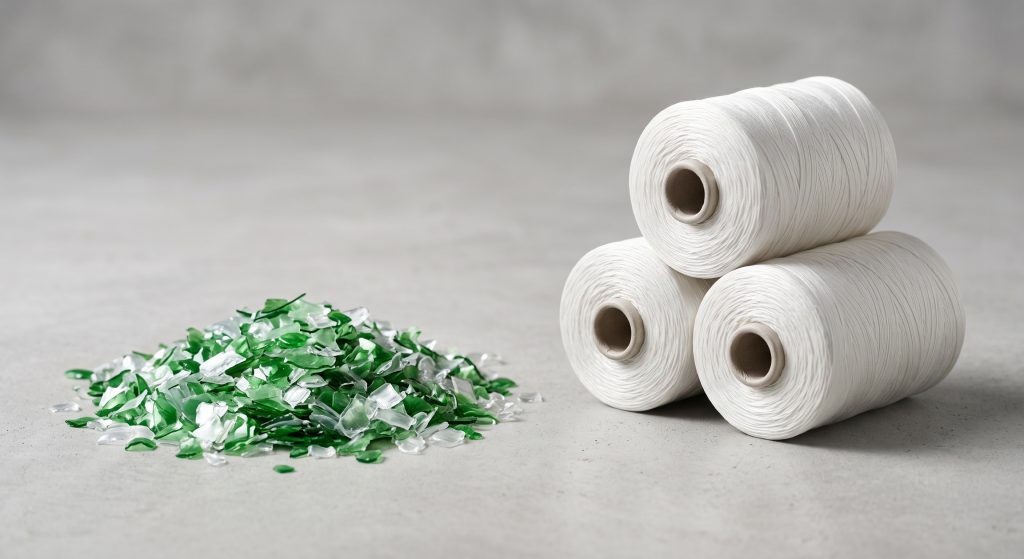
Recycled polyester delivers identical tensile strength and moisture-wicking capabilities as virgin polyester while reducing environmental footprint. Post-consumer plastic bottles are collected, melted, and spun into high-grade synthetic fibers. Modern sportswear brands adopt eco-friendly basketball jersey fabric to meet global sustainability standards.
Sustainable teamwear allows sports organizations to meet eco-friendly goals without sacrificing performance. Certified recycled yarns ensure full traceability throughout production.
How Do Recycled Yarns Compare in Performance?
Recycled polyester yarns match virgin synthetic fibers in break strength, dye uptake, and moisture management performance. What is the real story? Technical sportswear achieves eco-friendly goals with zero loss in material quality.
- Identical capillary wicking speed compared to virgin poly
- Matching tensile break strength under load testing
- Vibrant color retention during dye sublimation
Garment designers adopt recycled yarns without altering existing pattern designs.
Which Eco-Certifications Should Buyers Track?
Global Recycled Standard certification tracks recycled material content through every production stage. Think about it: recognized environmental labels provide clear proof for sustainable marketing claims.
- GRS certification verifying recycled yarn origin
- OEKO-TEX Standard 100 confirming chemical safety
- Reduced carbon emissions during fiber spinning
Verifying certifications builds buyer trust and opens eco-conscious retail channels.
Key Takeaway: Recycled polyester provides eco-friendly benefits while delivering 100% of virgin synthetic performance.
| Fiber Metric | Recycled Polyester | Virgin Polyester |
| Tensile Strength | 4.3 – 4.7 g/d | 4.3 – 4.7 g/d |
| Wicking Speed | Under 3 Seconds | Under 3 Seconds |
| Footprint | 32% Lower Carbon Output | Baseline Footprint |
Comparing recycled and virgin yarns confirms that eco-friendly options maintain technical performance.
9. How Does Hand Feel Impact Basketball Jersey Fabric Choice?
Hand feel determines player skin comfort during movement and directly influences purchasing decisions for sports teams. Soft surface finishes and micro-brushed finishes reduce friction against athlete skin during dynamic play. Evaluating touch softness in basketball jersey fabric ensures uniforms do not irritate sensitive skin during long matches.
Applying specialized softening treatments improves touch quality on synthetic knits. Quality activewear lines prioritize comfortable touch points to increase satisfaction.
How Do Finishes Soften Synthetic Fibers?
Hydrophilic silicone softeners coat synthetic fiber surfaces to create a silky, smooth tactile finish. Ready for the good part? Smooth fiber finishes lower surface friction without blocking moisture absorption.
- Silicone coatings delivering a silky touch
- Micro-brushing treatments generating soft surface feel
- Lower surface friction against damp athlete skin
Soft surface treatments elevate entry-level synthetics into premium team fabrics.
Can Soft Finishes Resist Frequent Washing?
Durable cross-linking softeners bond with polyester filaments to endure repeated commercial laundering. Here is the deal: advanced chemical bonding keeps jerseys soft across multiple playing seasons.
- Soft touch retention through 30+ commercial washes
- Maintained moisture wicking after repeated laundering
- Reduced static electricity generation during play
Durable finishing treatments protect garment quality throughout long tournament schedules.
Key Takeaway: Advanced tactile finishes lower friction and prevent skin irritation during aggressive game play.
| Finishing Type | Tactile Profile | Wash Durability |
| Hydrophilic Softener | Silky and cool touch | High (30+ Wash Cycles) |
| Micro-Brushing | Plush and soft feel | Medium to High |
| Standard Calendering | Smooth and flat touch | High |
Evaluating softness finishing options helps suppliers deliver comfortable basketball uniforms.
10. Where Can Brands Source Quality Basketball Jersey Fabric?
Sourcing directly from specialized textile mills grants access to factory-direct pricing, custom color matching, and consistent quality controls. Direct factory partnerships eliminate middleman markups and streamline custom sample development. Partnering with verified mills guarantees reliable supply chains for your basketball jersey fabric requirements.
Reliable manufacturers provide physical color swatches to streamline fabric approval workflows. Working with experienced mills secures reliable production schedules for sports brands.
Why Are Direct Factory Swatches Helpful?
Physical swatch books allow apparel buyers to evaluate true Pantone colors, stretch recovery, and hand feel in person. What is the catch? Ordering digital samples alone risks color mismatches and touch disappointments in final bulk production.
- Accurate Pantone color matching across dye lots
- Direct testing of fabric stretch and recovery
- Reliable sample garment creation before bulk orders
Evaluating physical swatches builds confidence before placing bulk commercial orders.
What Mill Certifications Guarantee Quality?
Certified fabric mills maintain ISO quality controls, environmental standards, and in-house testing labs. This is where it gets interesting: working with certified factories guarantees batch consistency and on-time shipment schedules.
- ISO 9001 certification for quality management systems
- Internal lab testing for bursting strength and colorfastness
- Reasonable minimum order quantities for growing brands
Verifying factory credentials protects your business against supply chain delays and material defects.
Key Takeaway: Direct mill sourcing guarantees quality control, custom dye options, and wholesale price savings.
| Sourcing Channel | Direct Textile Mill | Trading Company |
| Pricing Structure | Direct Factory Rates | Added Markup Margins |
| Custom Color Matching | Direct Dye Lab Access | Delayed Third-Party Testing |
| Quality Verification | In-House Testing Labs | Outsourced QC Checks |
Evaluating supply options confirms that direct factory partnerships yield superior quality control and price value.
Gear Up Your Athletic Brand Today
Navigating the choice between birdseye mesh and pique knit comes down to balancing breathability, fabric weight, and structural durability. Birdseye mesh provides micro-hole ventilation suited for fast-paced indoor basketball games, whereas pique knit delivers double-knit strength and shape retention for rugged outdoor play. Partnering directly with a technical textile mill eliminates quality inconsistency and optimizes your custom manufacturing timeline. We engineer high-tenacity mesh textiles, moisture-wicking fabrics, and custom dye-sublimation materials to help sports brands succeed. If you are ready to produce top-tier basketball uniforms, contact us today to request physical color swatches, sample yards, and factory-direct wholesale quotes. Committed to textile innovation and strict quality control, our mill equips athletic manufacturers with high-performance fabrics built for game-day success.
Frequently Asked Questions
Q1: Can I use birdseye mesh for professional basketball jerseys?
Yes, birdseye mesh is widely used in professional basketball jerseys because its micro-perforated structure provides exceptional ventilation and accelerated sweat evaporation during high-intensity games.
Q2: What’s the best GSM weight for lightweight basketball uniforms?
The optimal weight range for basketball jerseys is between 140 and 180 GSM, which offers a balance of lightweight agility and tear resistance.
Q3: How do I know if a fabric is suitable for dye sublimation?
You can confirm sublimation suitability by verifying that the fabric is made of 100% synthetic polyester or high-polyester blends that can withstand high-heat dye transfer processes.
Q4: Can I order physical color swatches before placing bulk orders?
Yes, direct textile mills supply physical color cards and custom Pantone-matched swatches so you can verify hand feel, stretch, and color accuracy prior to bulk production.
Q5: What’s the best option between recycled and virgin polyester?
Recycled polyester is the preferred choice for modern athletic brands because it provides identical tensile strength, wicking speed, and dye performance while significantly reducing carbon footprint.