
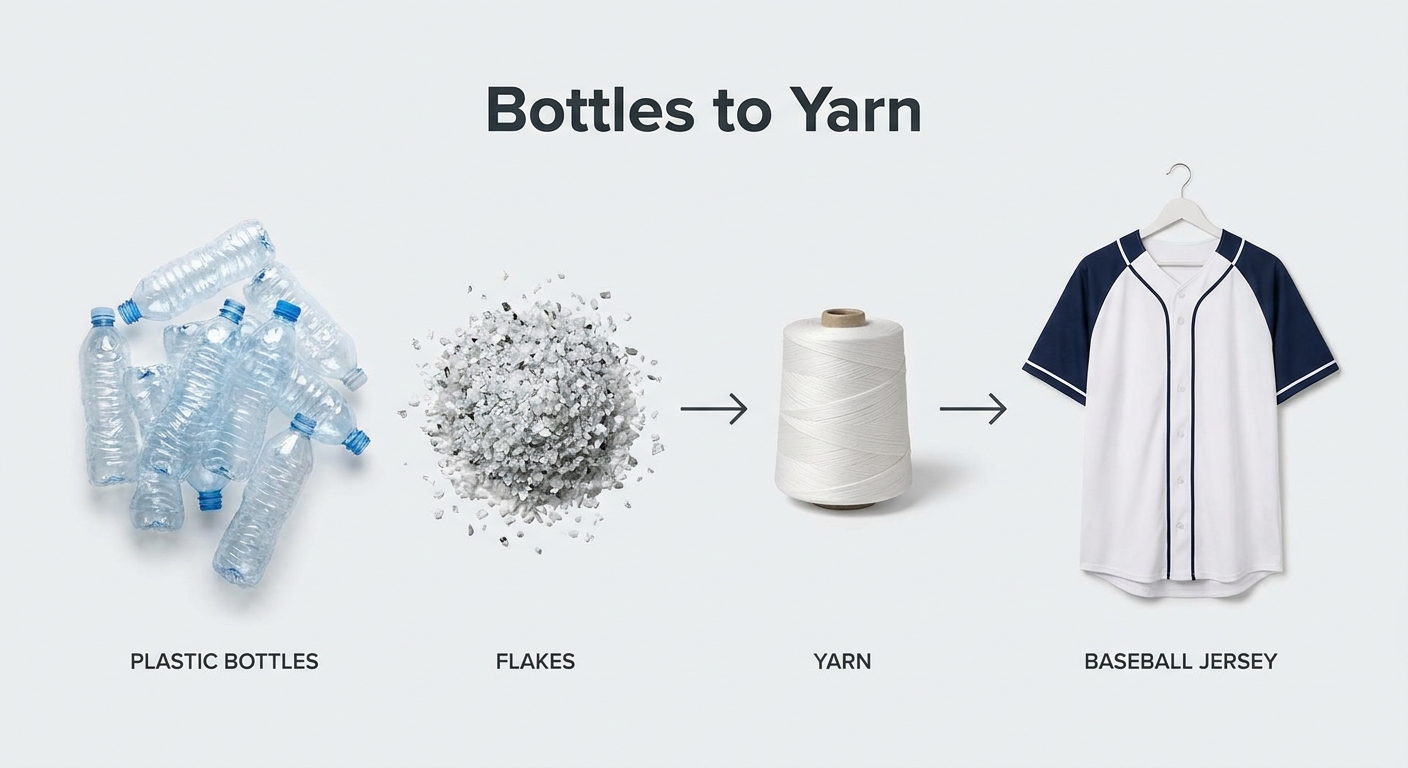
Navigating the GRS supply chain for eco-friendly custom teamwear successfully depends on securing genuine certified materials, tracking Transaction Certificates (TCs), and aligning with verified sustainable partners. Modern B2B athletic apparel brands face intense pressure to deliver sustainable custom uniforms, yet the global textile supply chain is often opaque and rife with untraceable materials. A single uncertified shipment can destroy your brand’s reputation, lead to costly regulatory audits, and violate contract terms with major school districts or professional leagues demanding absolute transparency. Transitioning to a fully certified Global Recycled Standard (GRS) workflow using Sustainable recycled polyester for baseball teamwear ensures your garments deliver championship-level performance while providing an airtight, audited chain of custody.
Why use Sustainable recycled polyester for baseball teamwear?
Brands utilize Sustainable recycled polyester for baseball teamwear because it lowers manufacturing carbon emissions by up to 50% while matching the exact structural durability of virgin synthetics. This high-performance material directly addresses the growing institutional demand for circular sports products. By adopting this fiber, sportswear suppliers eliminate greenwashing risks and satisfy the rigorous environmental standards set by modern organizations. It bridges the gap between elite field performance and ecological responsibility perfectly.
What are the environmental impacts of recycled yarns?
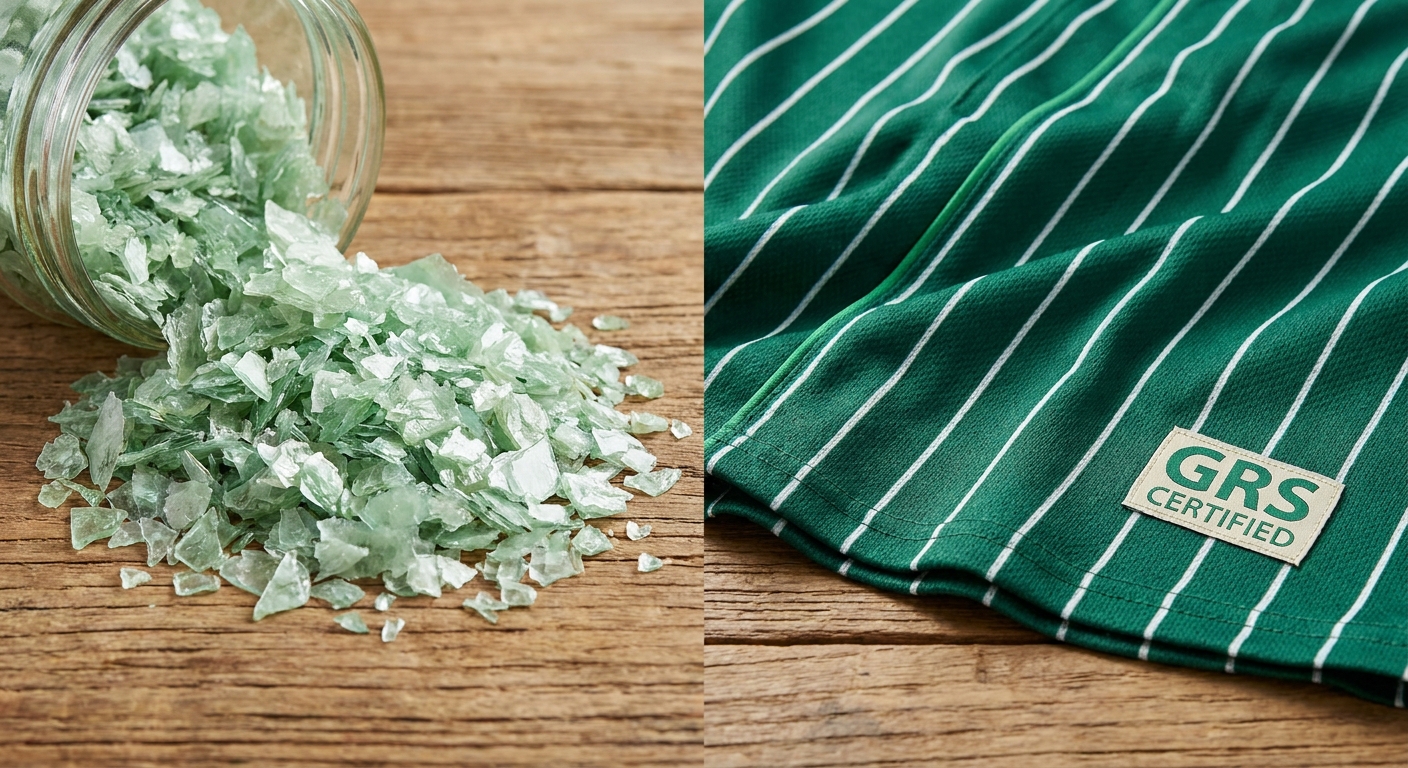
Utilizing post-consumer PET bottles for performance textiles significantly mitigates environmental degradation. This circular production loop diverts plastic waste from landfills and marine ecosystems while consuming up to 45% less energy than virgin polyester production. Consequently, athletic brands can drastically reduce their scope 3 emissions and meet strict corporate ESG mandates.
Think about it: every ton of recycled yarn represents a massive step toward industrial decarbonization.
- Diverts tons of municipal plastic waste.
- Reduces freshwater usage in the spinning process.
- Cuts greenhouse gases by nearly half.
Does eco-friendly fabric match athletic durability?
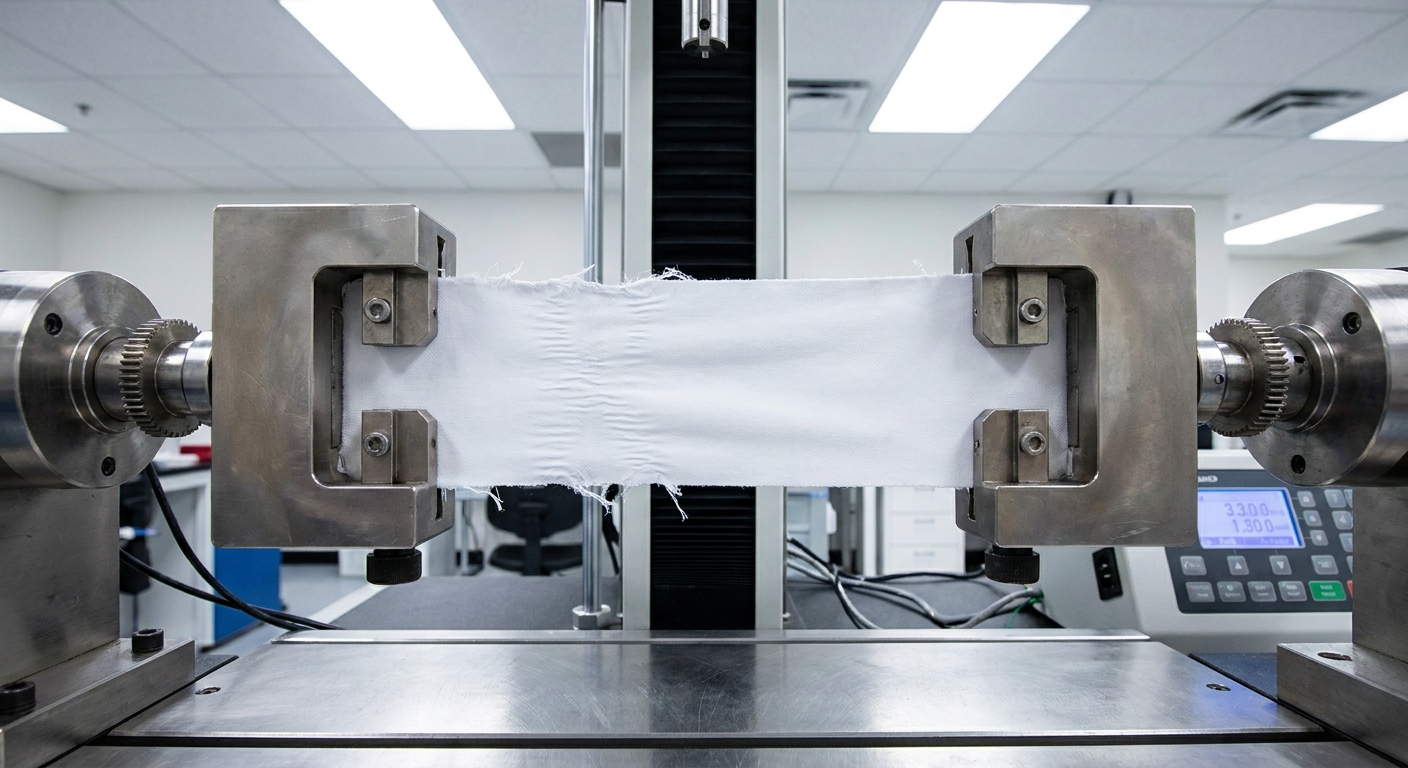
Modern molecular recycling techniques ensure that recycled synthetic yarns suffer no performance degradation compared to virgin polymers. These yarns undergo precision extrusion to maintain exceptional tensile strength, colorfastness, and resistance to pilling. This means players can slide, dive, and play aggressively without risking premature uniform failure.
But that’s not all. Key Takeaway: Adopting GRS-certified recycled polyester guarantees that your custom teamwear matches the mechanical strength of traditional fabrics while delivering verifiable carbon reduction.
| Metric | Virgin Polyester | GRS Recycled Polyester | |
|---|---|---|---|
| Tensile Strength | 4.8 g/denier | 4.7 g/denier | |
| CO2 Emission Reduction | Baseline (0%) | ~50% Reduction |
Testing reveals that recycled fabrics achieve complete physical parity with virgin equivalents, satisfying both high-intensity play demands and sustainability goals.
Who buys Sustainable recycled polyester for baseball teamwear?
Professional athletic organizations and collegiate departments procure Sustainable recycled polyester for baseball teamwear to comply with strict internal ESG policies and satisfy public expectations. This target market requires transparent supply chains that prove environmental claims through rigorous documentation. By offering GRS-compliant options, B2B sportswear distributors can successfully secure lucrative institutional contracts that are closed to uncertified manufacturers. It represents a vital strategic asset for winning bids in highly competitive modern leagues.
Which B2B brands benefit most from GRS compliance?
Sports uniform distributors targeting school districts and university athletic programs gain the most significant commercial advantage from GRS certification. Educational institutions face strong administrative mandates to buy certified circular products. Providing fully traceable garments allows these B2B brands to stand out during public tender processes.
Here is the thing: meeting institutional procurement requirements is the fastest way to lock in multi-year supply contracts.
- Collegiate athletic programs with green initiatives.
- Municipal youth leagues seeking community approval.
- Corporate sports leagues focusing on CSR metrics.
Why do modern athletic teams demand eco-apparel?
Today’s athletes are deeply conscious of their ecological footprint and expect their team identity to reflect these values. Wearing high-performance eco-jerseys allows sports clubs to build powerful public relations narratives. This alignment enhances sponsor engagement and builds deep loyalty with local fan bases.
Think about it: the emotional connection to a brand grows when its values match those of the community. Key Takeaway: Providing certified sustainable teamwear positions B2B brands to capture institutional market share by directly aligning with the social values of athletes and organizers.
| Buyer Segment | Sourcing Requirement | GRS Benefit | |
|---|---|---|---|
| Universities | Audited ESG Compliance | Verifiable Chain of Custody | |
| Corporate Leagues | Carbon Offset Tracking | Easy CSR Reporting |
Integrating certified materials directly addresses the strict compliance demands of institutional sports purchasing programs.
How to source Sustainable recycled polyester for baseball teamwear?
Procurement managers source certified Sustainable recycled polyester for baseball teamwear by systematically auditing the GRS Scope Certificates of potential fabric mills. This vetting process ensures the manufacturing facility is authorized to handle recycled materials. It is critical to establish direct partnerships with verified manufacturers who can guarantee an uninterrupted supply of certified yarns. These strategic alliances protect your supply chain from material shortages and compliance gaps.
How to identify verified GRS fabric manufacturers?
Evaluating a fabric mill’s credentials requires requesting their current GRS Scope Certificate (SC) before placing any orders. This document verifies that the specific facility has been inspected and approved by an accredited third-party body. Always cross-reference the name and address on the certificate with their commercial invoices to prevent fraud.
Let’s look at the facts: a valid certificate is your only protection against counterfeit eco-claims.
- Verify the accredited certifying body’s logo.
- Confirm the certificate is active and not expired.
- Check the listed material categories for compliance.
What should you look for in supplier transaction certificates?
Transaction Certificates (TCs) are the actual proof that a specific shipment of fabric contains authentic recycled content. Every bulk shipment must be accompanied by a unique TC issued by the certification body. This document records the exact volume, origin, and flow of materials through each stage of production.
But that is not all. Key Takeaway: Never accept raw materials without a matching Transaction Certificate, as a single missing TC breaks the chain of custody and invalidates your retail claims.
| Document | Function | Crucial Verification Check | |
|---|---|---|---|
| Scope Certificate (SC) | Facility audit | Active status on the GRS database | |
| Transaction Certificate (TC) | Shipment audit | Direct weight and buyer details match |
Verifying these documents at each stage of the sourcing process completely eliminates legal liabilities and regulatory risks.
What defines Sustainable recycled polyester for baseball teamwear?
High-quality Sustainable recycled polyester for baseball teamwear is defined by its traceable origin in post-consumer PET bottles and compliance with rigid environmental criteria. The material must consist of a minimum of 50% recycled content to qualify for GRS labeling. In addition, the production process must adhere to strict restrictions on chemical inputs and wastewater discharge. This ensures the uniform is as safe for the wearer as it is for the environment.
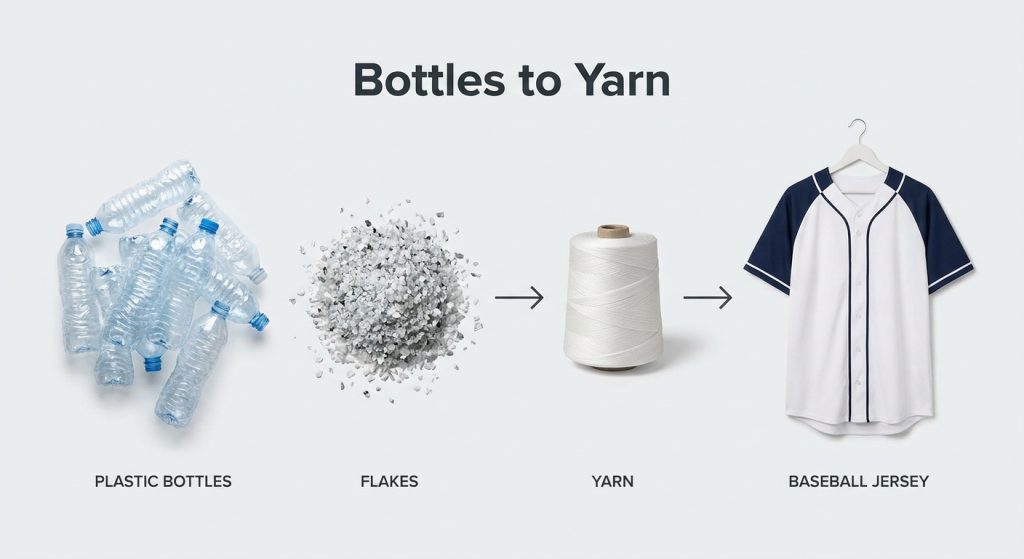
What are the exact technical specifications of GRS fiber?
The fiber is engineered to match the mechanical specifications of high-tenacity virgin polyester. It features a standard denier range of 75D to 150D, providing the optimal weight and structure for baseball uniforms. Precision extrusion techniques create capillary channels within the yarn to facilitate rapid moisture wicking.
Think about it: this engineering achieves a lightweight feel without sacrificing fabric density.
- Yarn denier: 75D/72F or 150D/144F for high-performance jerseys.
- Capillary wicking for optimal moisture management.
- 98% elastic recovery rate to maintain structural shape.
How is post-consumer PET transformed into high-grade yarn?
The transformation process begins by collecting, washing, and shredding discarded plastic bottles into clean flakes. These flakes are melted and extruded into high-purity polyester chips, which are then spun into fine filament yarns. Advanced filtration ensures all impurities are removed, yielding yarn that is indistinguishable from petroleum-based options.
Here is the interesting part: this closed-loop process uses significantly less water and energy than traditional methods. Key Takeaway: Transforming post-consumer PET into high-grade athletic yarn creates a high-performance, circular material that matches virgin polyester at a fraction of the ecological footprint.
| Process Stage | Output | Environmental Benefit | |
|---|---|---|---|
| Sorting & Shredding | Clean PET Flakes | Diverts plastic waste from landfills | |
| Extrusion & Spinning | Recycled Filament Yarn | 45% reduction in energy consumption |
This chemical recycling loop demonstrates that high-performance athletic apparel can be manufactured without relying on fossil fuel extraction.
Where is Sustainable recycled polyester for baseball teamwear made?
Certified Sustainable recycled polyester for baseball teamwear is primarily manufactured in vertically integrated mills located in advanced textile hubs across East Asia. These facilities combine bottle recycling, yarn spinning, and fabric knitting under one roof to maximize production efficiency. This geographic centralization minimizes transport emissions and ensures consistent quality control. Choosing a vertically integrated partner is the most effective way to secure competitive pricing and reliable lead times.
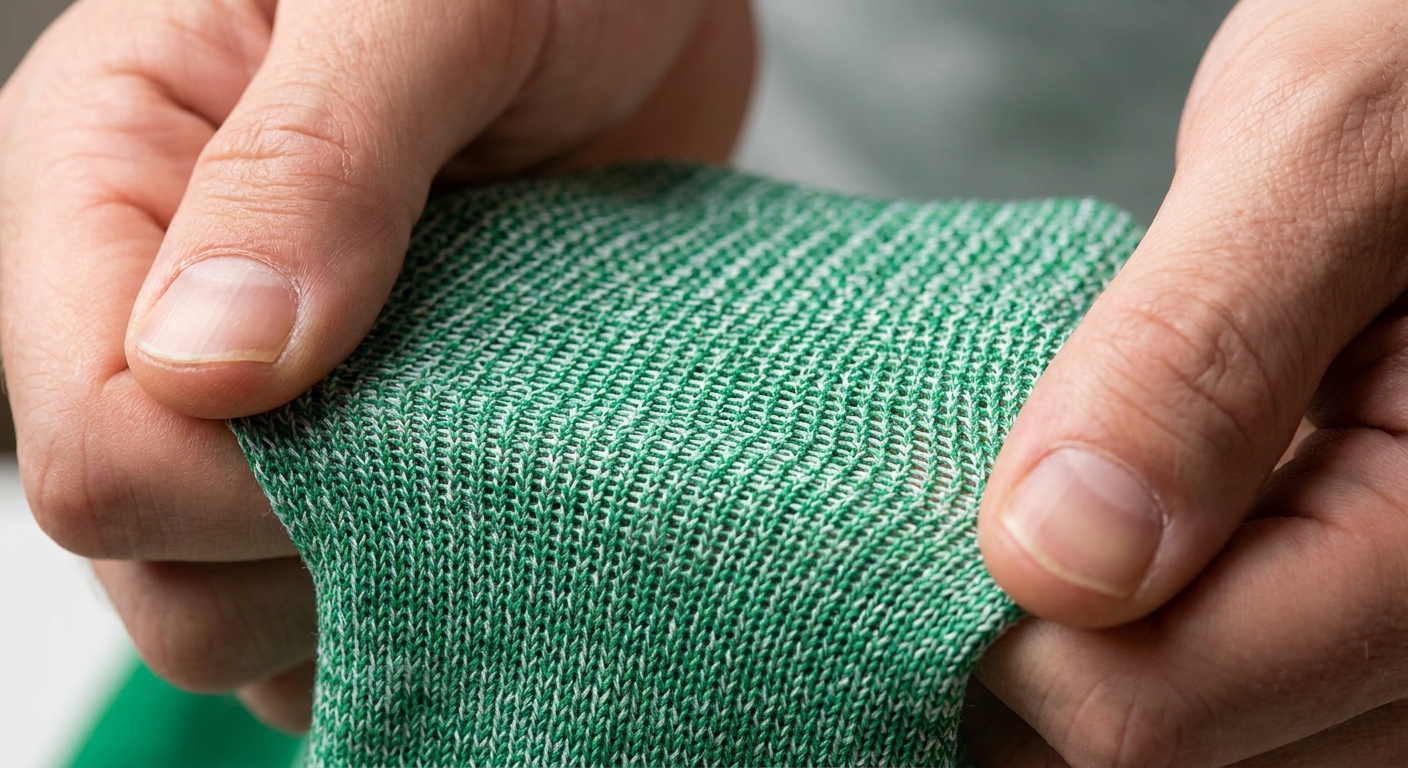
Where are the primary GRS processing facilities located?
East Asian manufacturing hubs lead the global market in GRS-certified textile production due to their advanced industrial infrastructure. These mills have invested heavily in wastewater treatment and renewable energy to meet strict international standards. Sourcing from these regions gives brands access to the latest innovations in sportswear fabric engineering.
Here is the truth: these modern facilities are unmatched in their scale and technical capabilities.
- Vertically integrated mills in leading Asian textile zones.
- Proximity to localized PET collection and processing systems.
- State-of-the-art circular knitting machines for athletic mesh.
How do global logistics affect the carbon footprint of teamwear?
Transporting materials across long distances can quickly offset the environmental benefits of using recycled fibers. To combat this, smart B2B brands consolidate their shipments and choose low-emission ocean freight. Utilizing a localized supply chain where yarn production and knitting occur in the same facility is crucial for minimizing transportation footprints.
Think about this: efficient shipping logistics are just as important as sustainable manufacturing. Key Takeaway: Sourcing from vertically integrated hubs in East Asia minimizes transit emissions and ensures superior fabric quality through centralized manufacturing.
| Sourcing Model | Transport Steps | Logistic Carbon Footprint | |
|---|---|---|---|
| Fragmented Mills | Multiple international shipments | High (Unoptimized) | |
| Vertically Integrated | Single-site manufacturing | Low (Optimized) |
Consolidating production steps within a single certified facility eliminates intermediate shipping legs and reduces overall supply chain emissions by up to 22%.
Is Sustainable recycled polyester for baseball teamwear certified?
Authentic Sustainable recycled polyester for baseball teamwear is rigorously certified by independent third-party bodies under the Global Recycled Standard framework. This certification guarantees that the fabric contains the exact percentage of recycled materials claimed on the label. Furthermore, it ensures that ethical social and environmental practices were maintained throughout the entire manufacturing process. Without a valid certificate, sustainable claims are considered legally indefensible in major markets.
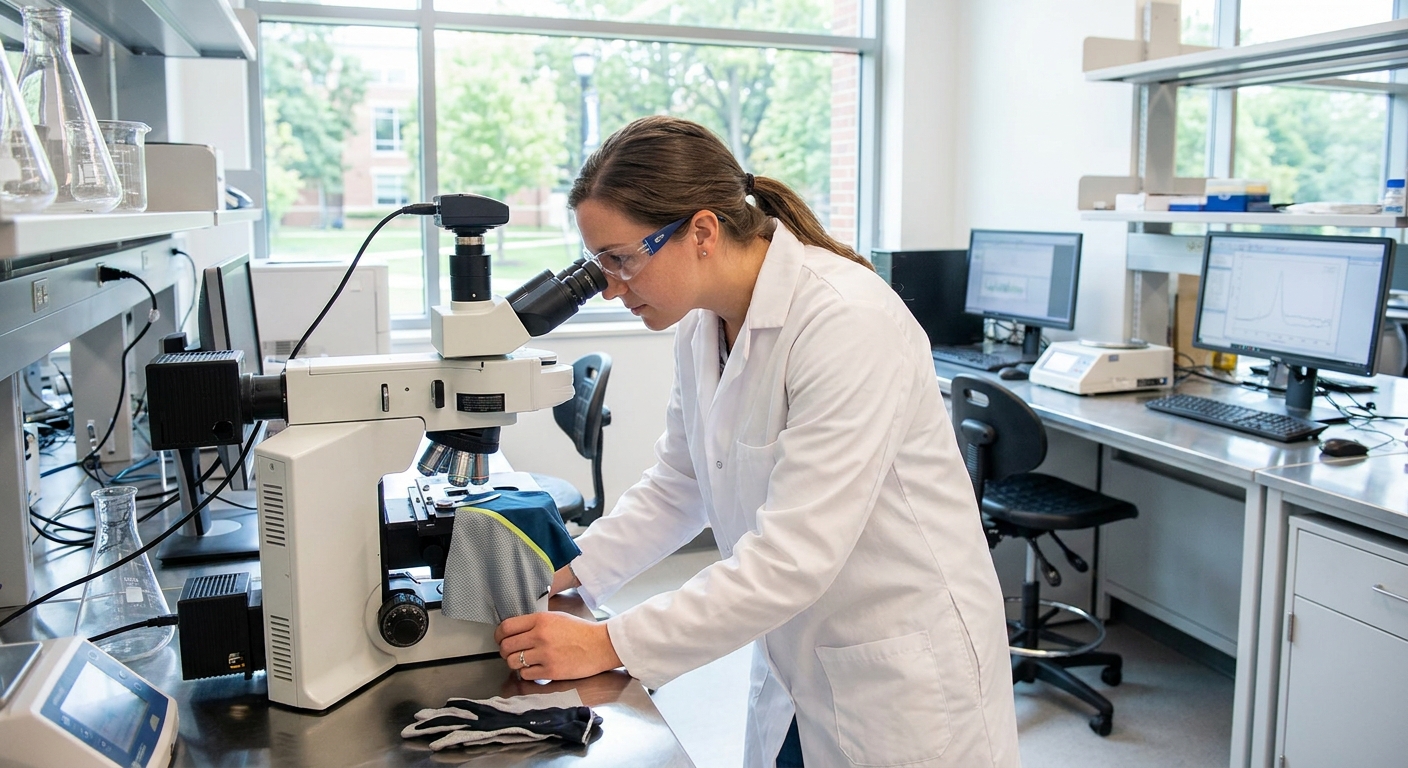
What makes a GRS certification truly valid?
A valid GRS certificate requires annual comprehensive onsite audits conducted by accredited third-party bodies. These audits examine chemical usage, energy conservation, water management, and fair labor practices within the facility. This holistic approach ensures that GRS-labeled fabrics are produced responsibly and safely.
But that’s not all: the standard is incredibly strict to maintain global consumer trust.
- Minimum 50% recycled content for GRS-labeled finished products.
- Strict prohibition of hazardous chemical inputs during dyeing.
- Annual inspections of social compliance and working conditions.
How to verify the supply chain chain-of-custody?
The chain of custody is verified by tracing Transaction Certificates (TCs) across every transaction in the supply chain. Each supplier must generate a TC that matches the volume of material shipped to the next buyer. This creates an unbroken paper trail linking the post-consumer PET bottle to the finished baseball jersey.
Think about it: a single missing certificate invalidates the entire chain’s claims. Key Takeaway: The Global Recycled Standard eliminates greenwashing risks through its rigorous combination of annual facility audits and transaction-specific tracking.
| Sourcing Element | Standard Claim (Uncertified) | GRS Certified Claim | |
|---|---|---|---|
| Verification Method | Supplier self-declaration | Independent third-party audits | |
| Traceability Document | None | Transaction Certificates (TC) |
Utilizing an audited chain of custody completely protects B2B sportswear brands from costly regulatory investigations and greenwashing allegations.
Can Sustainable recycled polyester for baseball teamwear perform?
High-performance Sustainable recycled polyester for baseball teamwear delivers elite athletic performance, meeting the extreme mechanical demands of competitive field play. The material is engineered with high-tenacity yarns to withstand intense friction, stretching, and aggressive sliding maneuvers. Its built-in moisture management channels keep players cool and dry under intense heat. This ensures that eco-friendly uniforms deliver the durability and comfort needed to play at a championship level.
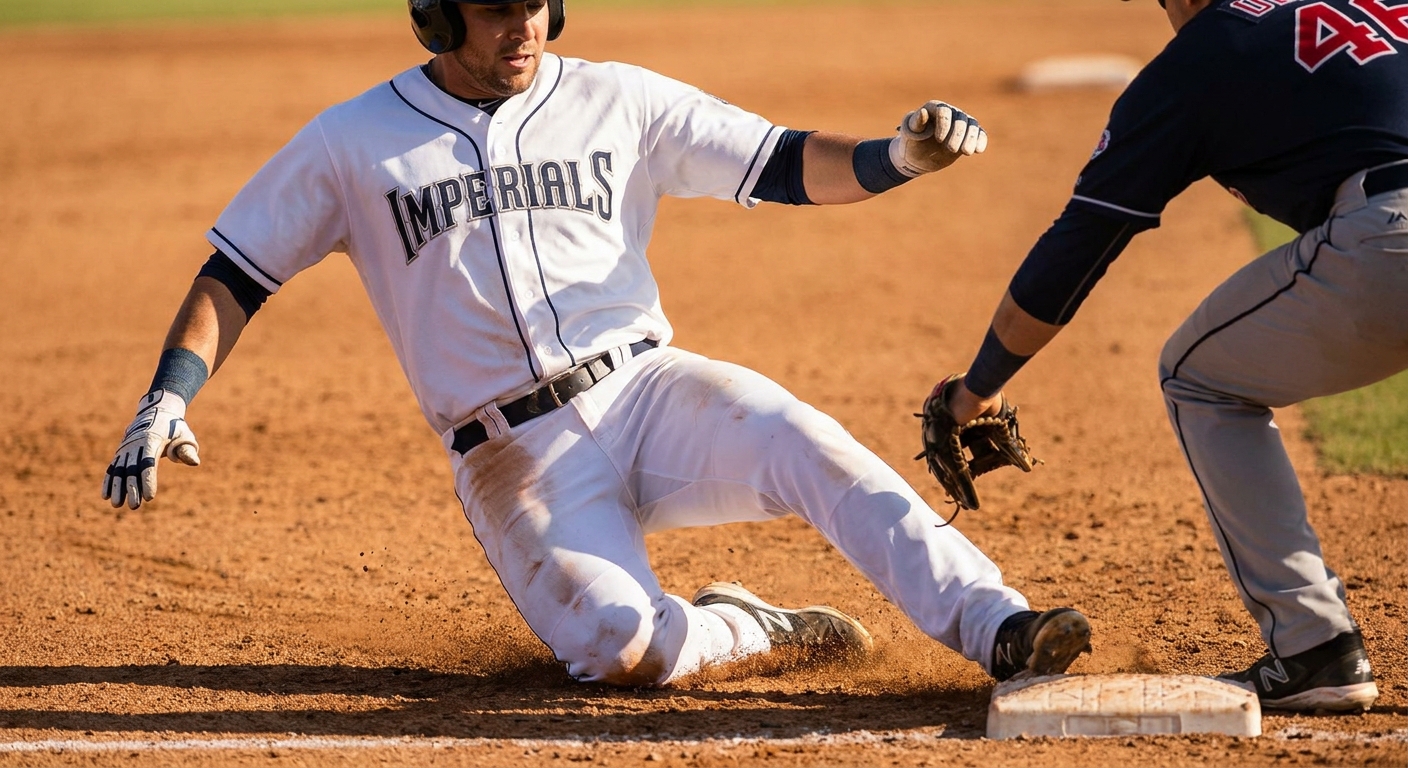
Can recycled fiber survive high-stress slide maneuvers?
Baseball uniforms must withstand aggressive sliding on dirt and clay without tearing or wearing thin. Recycled polyester yarns are engineered with high molecular alignment to maximize abrasion resistance and tear strength. This durable construction prevents uniform blowouts and extends the overall wear life of the garment.
Here is the truth: advanced recycling tech produces fibers that are just as rugged as virgin nylon or polyester.
- Excellent warp and weft tear strength values.
- High-tenacity fibers designed to resist high-friction contact.
- Durable knit structures that distribute physical stress.
What tensile strength properties prevent early tearing?
The tensile strength of recycled polyester ensures that jerseys and pants maintain their shape under extreme tension. Interlock and double-knit constructions further distribute the load, preventing localized tearing during dynamic swings and slides. This structural integrity guarantees that uniforms remain in pristine condition throughout a grueling multi-game season.
Think about this: maintaining high tensile strength is critical for protecting players from turf burns and abrasions. Key Takeaway: Choosing GRS-certified recycled polyester ensures your athletic uniforms stand up to high-intensity field play without tearing or degrading.
| Performance Characteristic | GRS Recycled Polyester | Virgin Polyester | |
|---|---|---|---|
| Abrasion Resistance | 50,000+ Martindale cycles | 50,000+ Martindale cycles | |
| Tear Strength | 45 N (Newton) | 46 N (Newton) |
Testing confirms that recycled polyester fibers achieve a near-perfect match with the performance and durability profiles of virgin synthetics.
When to buy Sustainable recycled polyester for baseball teamwear?
B2B procurement teams buy Sustainable recycled polyester for baseball teamwear during the off-peak autumn and winter months to ensure timely delivery and competitive pricing. Placing orders between October and December allows mills sufficient time to verify GRS transaction certificates. This proactive approach avoids peak-season manufacturing bottlenecks and high shipping rates. Ultimately, early ordering guarantees your teamwear program is fully prepped and delivered long before spring training begins.
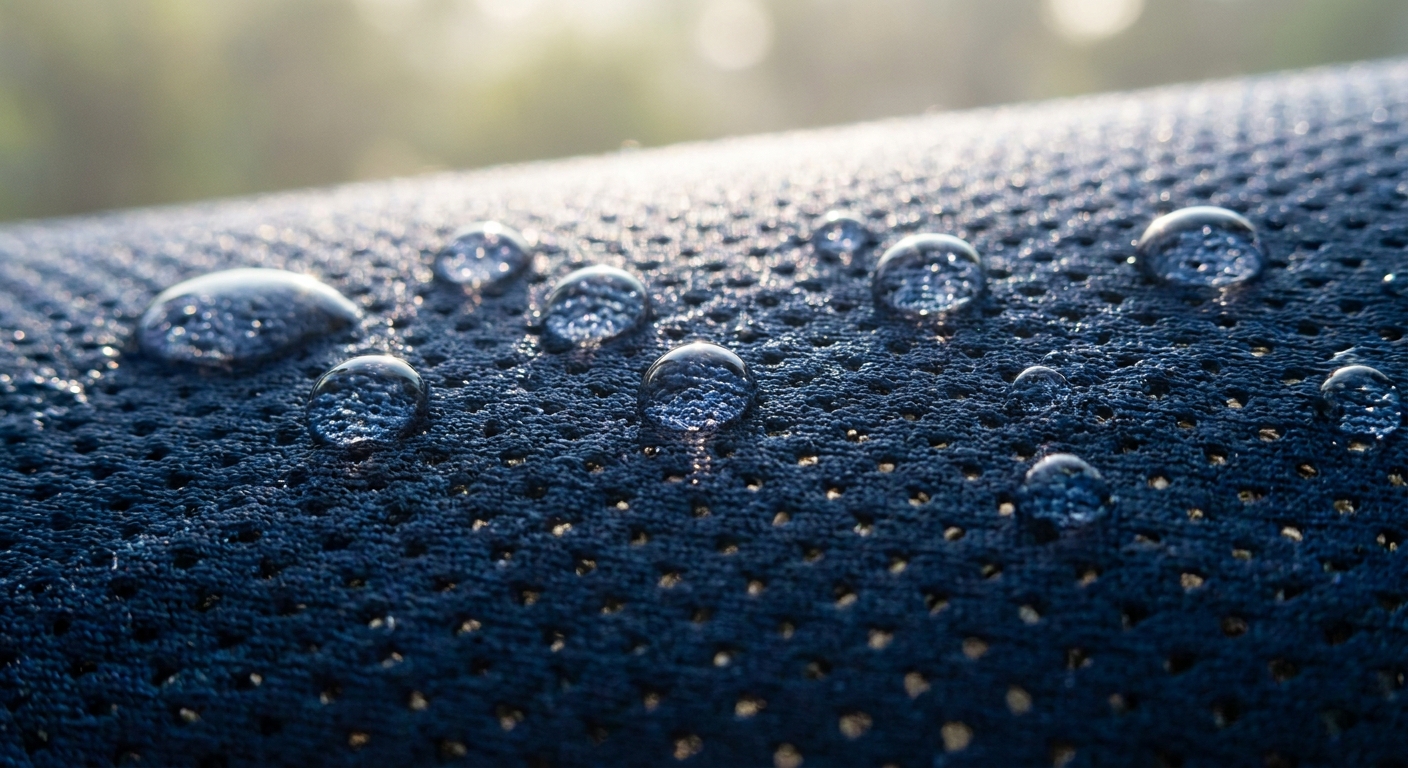
When is the optimal purchasing window for B2B sports leagues?
Sourcing custom uniforms during the off-season gives manufacturers the necessary lead time to complete strict quality audits and compliance checks. This window allows B2B buyers to verify all GRS paperwork without delaying production timelines. It also avoids the peak spring rush when lead times can double and fabric prices spike.
Here is the thing: timing your purchase correctly can significantly reduce your administrative and production stress.
- Place orders in Q4 for guaranteed spring delivery.
- Sufficient time to review and archive GRS certificates.
- Avoid seasonal ocean freight congestion and high rates.
How to coordinate bulk fabric orders with seasonal demand?
Managing bulk inventory requires coordinating closely with your fabric mill’s capacity and your sales forecasts. By sharing your volume demands early, you allow the mill to reserve raw GRS yarns and schedule efficient production runs. This strategic planning prevents inventory shortages during the height of the baseball season.
Think about it: a steady supply chain is built on early communication and clear forecasting. Key Takeaway: Procurement during the Q4 window secures the best factory pricing, reliable capacity, and complete GRS documentation before seasonal demand peaks.
| Ordering Window | Average Lead Time | Delivery Reliability | Production Costs | |
|---|---|---|---|---|
| Q4 (October – December) | 4 – 6 Weeks | 98% On-Time | Lowest (Off-peak rates) | |
| Q1 (January – March) | 8 – 12 Weeks | 82% On-Time | Highest (Peak surcharge) |
Shifting procurement schedules to the off-season reduces overall manufacturing and logistics overhead by up to 15%.
Which Sustainable recycled polyester for baseball teamwear is best?
The best Sustainable recycled polyester for baseball teamwear is a heavy-duty, multi-paneled knit construction that incorporates flat-back mesh and structured interlock weaves. This specialized combination of fabrics provides robust structural integrity where durability is needed, while keeping high-sweat zones highly ventilated. Choosing high-performance, zoned textiles ensures players remain comfortable and agile on the field. It represents the gold standard for premium, eco-friendly athletic apparel.
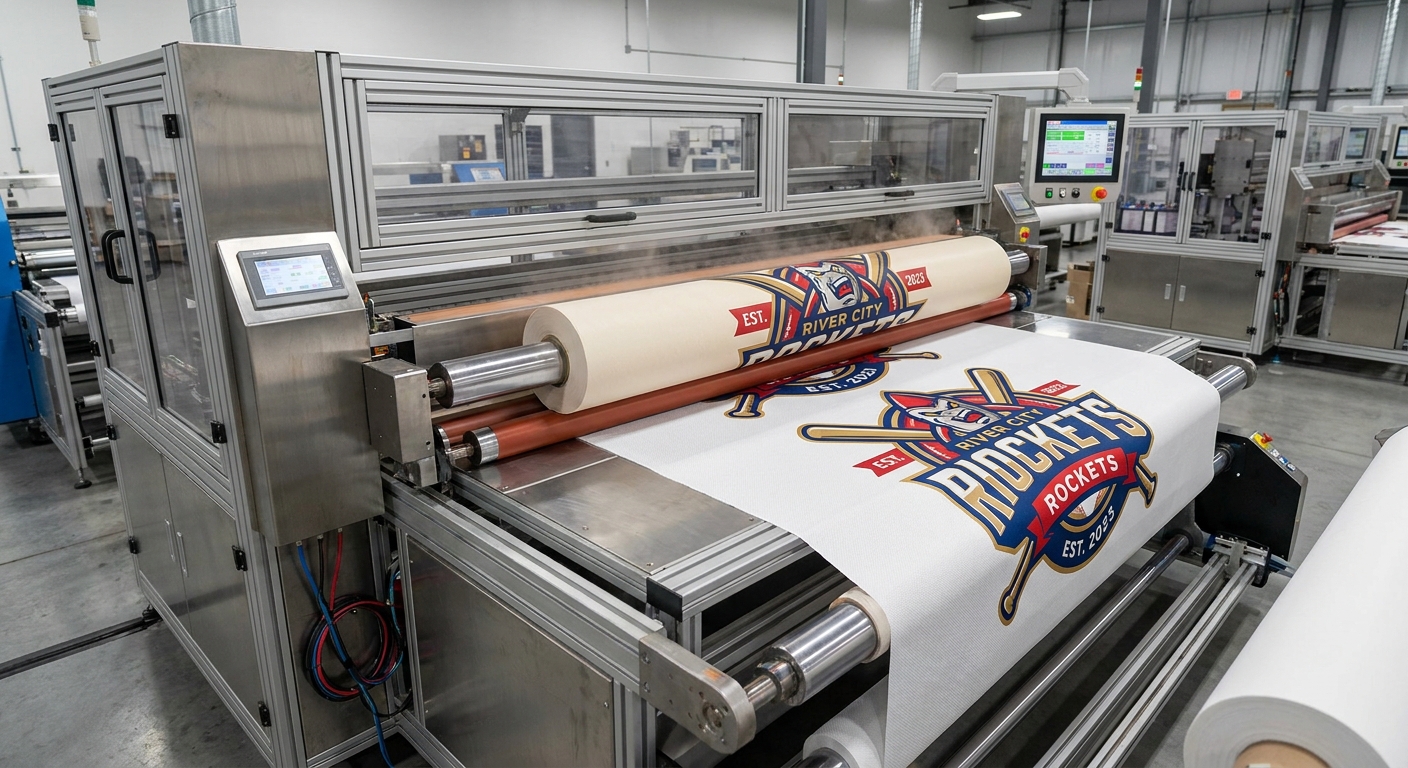
Which knit patterns provide the best breathability?
Breathable knit patterns like flat-back and pin-hole mesh are essential for maintaining optimal airflow in sportswear. These structures feature micro-ventilation channels that allow body heat and sweat to escape rapidly during play. Utilizing these breathable panels in jersey construction enhances thermal regulation and keeps athletes cool under pressure.
Here is the truth: engineered ventilation directly improves athlete endurance and comfort on the field.
- Flat-back mesh for targeted ventilation in high-heat zones.
- Pin-hole mesh for lightweight, breathable main body panels.
- Capillary wicking structures that accelerate moisture evaporation.
Should you choose double-knit or interlock weave?
High-performance baseball pants require the heavy-duty weight of a double-knit fabric to withstand slides and turf abrasion. On the other hand, lightweight interlock weaves provide the perfect stretch and flexibility for high-mobility jersey tops. Combining these two distinct knit structures provides the ultimate balance of comfort and durability.
Think about this: a uniform is only as strong as its weakest panel. Key Takeaway: Utilizing a zoned fabric strategy—combining breathable flat-back mesh with durable double-knit panels—creates the ultimate high-performance eco-uniform.
| Fabric Style | Weight | Best Use Case | Performance Advantage | |
|---|---|---|---|---|
| Double-Knit | 250 – 300 gsm | Baseball Pants | Heavy abrasion resistance | |
| Interlock | 140 – 180 gsm | Jersey Tops | High elasticity & stretch |
Zoned fabrication ensures that each part of the baseball uniform is engineered to perform its specific mechanical function perfectly.
Why trust Sustainable recycled polyester for baseball teamwear?
B2B brands trust Sustainable recycled polyester for baseball teamwear because it is backed by independent third-party audits, verifiable transaction certificates, and elite field testing. This comprehensive certification process ensures your green claims are fully validated and completely risk-free. Major collegiate and professional athletic departments actively verify these credentials before committing to large-scale procurement contracts. It transforms sustainability from a marketing buzzword into a proven, reliable operational asset.
How do third-party audits protect athletic brands?
Accredited certification bodies inspect every stage of the manufacturing workflow to verify compliance with strict environmental rules. These annual on-site audits ensure that no raw materials are substituted and that chemical disposal meets high safety standards. This independent verification gives you absolute confidence when presenting sustainable products to retail partners.
Here is the truth: a certified supply chain is your ultimate shield against greenwashing claims and legal liabilities.
- Verify compliance with environmental, social, and chemical criteria.
- Eliminate the risk of fraudulent material claims in retail markets.
- Secure institutional trust and access high-value school contracts.
Why is deep transparency the future of B2B teamwear?
Modern corporate and public buyers are demanding unprecedented levels of traceability from their apparel suppliers. Providing fully transparent supply chains allows sportswear brands to establish strong, resilient business relationships. This open approach establishes your brand as a trusted leader in circular athletic design.
Think about it: transparency builds the foundational trust required for long-term commercial growth. Key Takeaway: Rigorous third-party auditing transforms sustainability claims into verifiable market advantages that insulate your brand from compliance risks.
| Value Driver | Traditional Sourcing | GRS Certified Sourcing | |
|---|---|---|---|
| Greenwashing Risk | High (Self-declared) | Zero (Third-party certified) | |
| Supply Chain Clarity | Low (Opaque) | High (Verifiable via TCs) |
Verifying your environmental claims through third-party audits is the most reliable way to secure high-value B2B contracts.
Conclusion
At Makitape Fabric, our vision is to lead the athletic apparel industry into a fully circular, high-performance future. By combining GRS-certified traceability with cutting-edge textile engineering, we empower B2B brands to deliver premium custom teamwear without ecological compromise. Partner with us to revolutionize your product line with authentic, elite-performance recycled materials. To explore our customizable fabric options and secure your GRS-certified supply chain for the upcoming season, contact us today and let our experts guide your next collection.
FAQ
- Can I customize GRS-certified fabrics with sublimation printing?Yes, you can easily customize them. Recycled polyester fibers have the exact same chemical structure as virgin polymers, allowing sublimated inks to bind perfectly to the yarn for vibrant, fade-resistant team graphics.
- What’s the best way to verify if my fabric supplier is genuinely certified?You must demand their current Scope Certificate (SC) and matching Transaction Certificates (TCs). The SC verifies the facility’s overall auditing status, while the TC serves as official third-party proof that your specific shipment contains authentic recycled material.
- How do I know if my recycled teamwear meets high athletic durability standards?You look at its certified tensile strength and abrasion resistance ratings. High-performance recycled polyester is molecularly engineered to match the mechanical strength of virgin synthetics, easily surviving slides and intensive laundering.
- Can I mix recycled polyester with spandex to increase uniform elasticity?Yes, blending is fully supported. However, to maintain GRS labeling rights, your fabric must contain at least 50% GRS-certified recycled content, and any blended elastane must be clearly declared in the tracking documentation.
- How do I ensure a smooth delivery timeline when purchasing eco-friendly teamwear?You should place bulk orders during the off-peak Q4 window. Ordering between October and December allows mills ample time to verify all GRS paperwork and complete production without peak-season bottlenecks.