
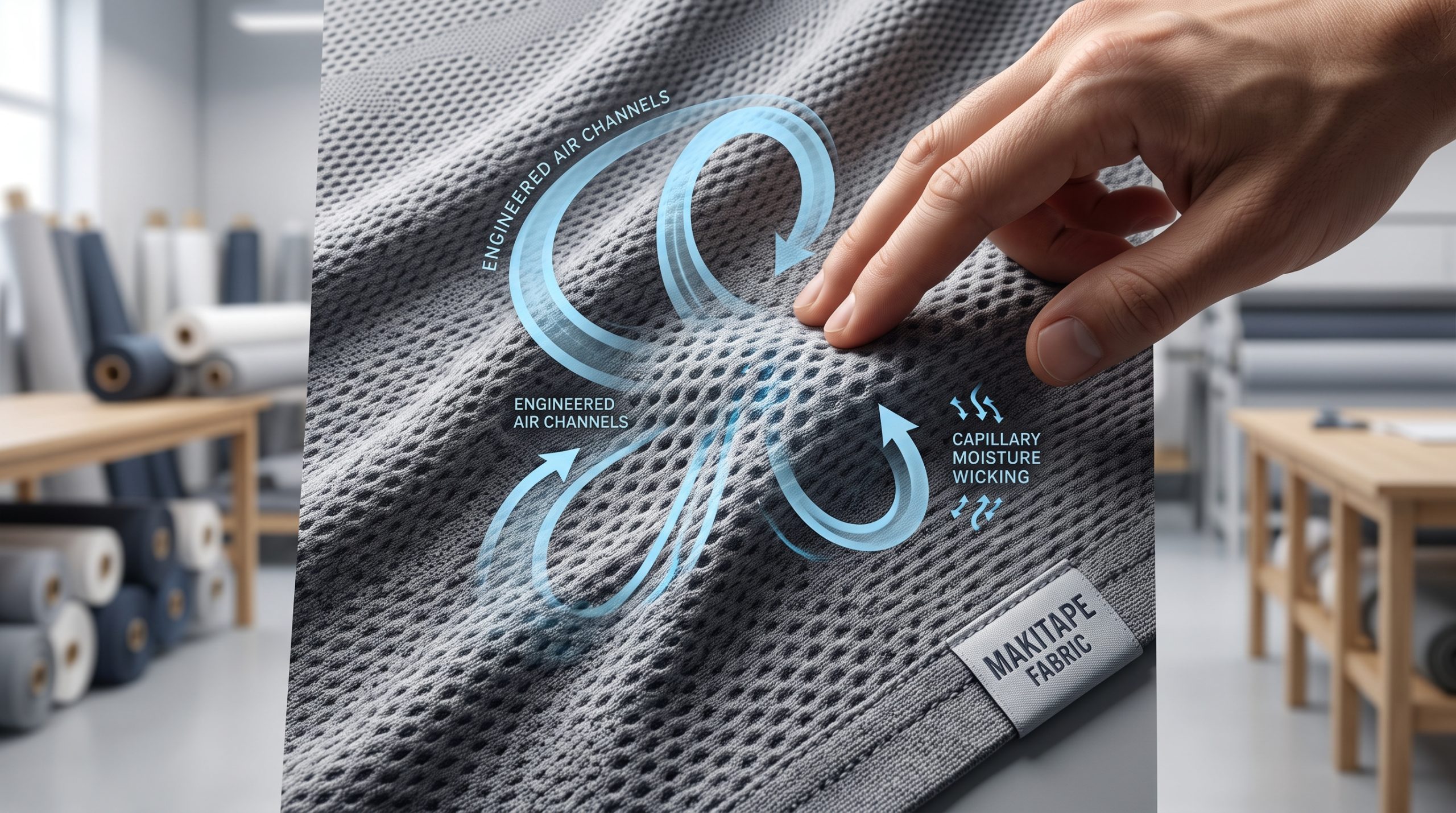
Jacquard knitting engineers specialized activewear apparel materials by mechanically programming needle loops into multidimensional geometric surface variations that significantly accelerate fluid evaporation. Sourcing procurement managers frequently experience severe challenges when distribution pipelines deliver cheap flat synthetic textiles that lock perspiration directly against skin surfaces. This suffocating wet-cling phenomenon rapidly induces heavy fatigue among professional athletes while simultaneously generating negative consumer reviews that damage global activewear brands. Specially developed sports fabric with texture provides a permanent structural solution by forming continuous micro-ventilation grids, establishing superior ventilation metrics that field testers appreciate.
1. Why does sports fabric with texture outperform smooth textiles?
Textured athletic textiles outperform flat substrates because dimensional surfaces minimize physical skin adhesion while rapidly accelerating lateral fluid movement via engineered capillary action networks. Specially woven sports fabric with texture maintains superior physiological comfort metrics by replacing continuous flat surface contacts with elevated structural micro-nodes that sustain consistent airflow loops. Commercial garment buyers select these advanced dimensional materials because high-performance knit patterns preserve constant thermal equilibrium across diverse indoor and outdoor environmental climates. Standard flat polyester webs routinely fail to distribute sweat effectively, resulting in heavily saturated training garments that restrict fluid muscle movement during competitive athletic matching events.
What makes surface dimensional geometry functional?
Dimensional surface patterns function by creating distinct physical elevation changes that fundamentally alter how ambient air flows across knitted synthetic filament networks. This is where it gets interesting because these tiny structural variations establish micro-pressure fields that forcefully pull humid body vapor away from active skin layers. By carefully engineering specific microscopic valleys within the technical textile matrix, modern manufacturing plants can precisely customize performance specifications for international activewear labels while optimizing airflow metrics. Wholesale material sourcing specialists prioritize three-dimensional structures because geometric knitting improves long-term garment shape retention while minimizing post-wash fabric shrinkage during commercial laundering cycles.
- Capillary pressure differentials pull liquid sweat outward instantly.
- Elevated structural nodes reduce total fabric-to-skin surface friction.
- Recessed geometric channels maintain uninterrupted fresh air circulation.
Why do modern sportswear brands reject flat synthetic yarns?
Ready for the good part? Premium athletic apparel labels actively avoid flat synthetic yarns because non-textured surfaces quickly become saturated, leading to heavy garments that impede athletic speed. When an athlete perspires heavily, flat knit webs lack the volumetric capacity to store or channel moisture, causing the material to collapse flatly against the skin. This tight liquid adhesion severely restricts maximum range of motion during strenuous training drills, causing premature physical exhaustion alongside noticeable user discomfort. Forward-thinking apparel manufacturing enterprises universally demand dimensional textures to guarantee their activewear products deliver elite performance characteristics under peak physical pressures.
- Flat yarns maximize skin adhesion when wet.
- Non-textured webs trap heat against the torso.
- Smooth materials lack structural air insulation properties.
| Fabric Texture Type | Airflow Efficiency | Skin Cling Resistance | Primary B2B Application |
| Engineered Dimensional Texture | High (Active Channels) | Excellent (Raised Nodes) | Elite Performance Sportswear |
| Conventional Flat Knit | Low (Unbroken Pile) | Poor (Suction Effect) | Basic Promotional Garments |
This data demonstrates that selecting a dimensional knit pattern directly influences how effectively a finished sports garment manages moisture accumulation.
Key Takeaway: Sourcing textured textiles ensures your garments remain lightweight and functional during high-intensity operations, boosting consumer brand loyalty.
2. How do birdseye and pique knit structures physically differ?
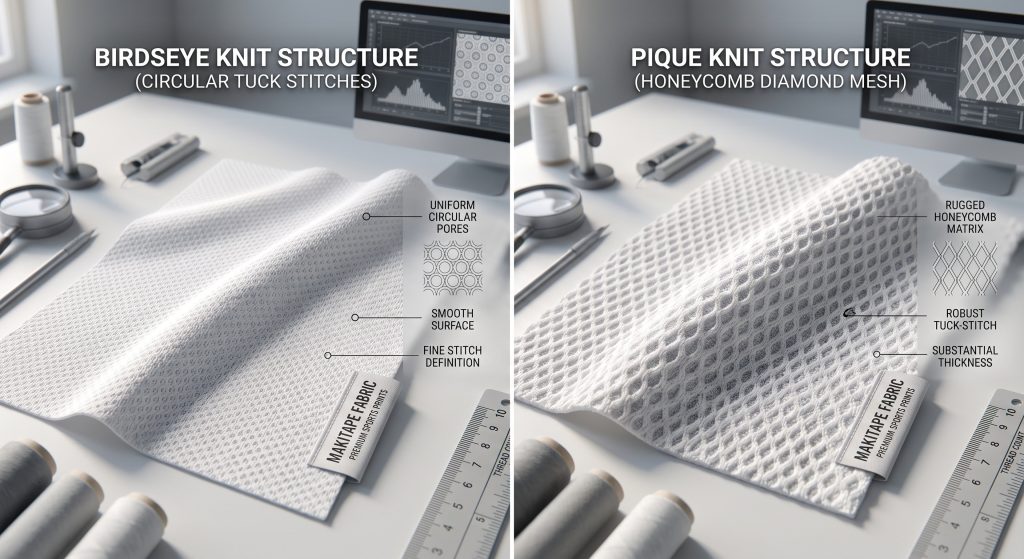
Birdseye and pique knit structures differ primarily in their geometric knitting patterns, where birdseye utilizes tiny circular tuck stitches resembling avian eyes, while pique employs an alternating diamond mesh that creates a honeycomb texture. Utilizing a specialized sports fabric with texture allows manufacturers to leverage these unique surface geometries to achieve distinct technical attributes for commercial athletic lines. Birdseye fabric features an ultra-smooth double-knit configuration that balances visual depth with a silky, non-abrasive interior profile suitable for contact sports. Conversely, pique fabric relies on a robust tuck-stitch arrangement that builds substantial structural thickness, creating a rugged outer texture frequently selected for corporate athletic polo shirts.
How is the birdseye micro-mesh grid constructed?
Here’s the deal regarding birdseye fabric construction: circular knitting machines run continuous filament yarns through a precise arrangement of tuck and float stitches to form miniature eyelet arrays. This technical configuration produces a lightweight double-knit material characterized by tiny, repeating geometric depressions across the outer face while maintaining an incredibly smooth interior backing. The resulting structure provides multi-directional elasticity, allowing the fabric to stretch dynamically with body movements without deforming the underlying ventilation pattern. Clothing designers specify this exact configuration when engineering high-performance running shirts that require minimal weight paired with rapid fluid dissipation properties.
- Micro-eyelet configuration maximizes lateral fabric elasticity.
- Smooth internal face prevents nipple chafing during running.
- Double-knit construction increases yarn density without bulk.
What gives pique fabric its classic honeycombed appearance?
What’s the real story behind the traditional pique appearance? Pique fabric achieves its signature honeycombed relief through a specialized tuck-stitch matrix that lifts specific yarn groups while pulling others downward into geometric recesses. This intricate knitting process generates a durable three-dimensional waffle structure that naturally stands away from the body, providing built-in structural ventilation pathways. The substantial knit thickness provides excellent opacity and structural drape, making it highly desirable for corporate athletic apparel that must maintain a crisp look. Apparel brands select this classic texture because the geometric arrangement masks sweat marks far better than flat, plain-woven synthetic options.
- Tuck-stitch matrix generates stable dimensional waffle textures.
- Raised honeycomb geometric profiles reduce total body contact.
- Thicker construction provides superior garment drape properties.
| Technical Metric | Birdseye Knit Structure | Pique Knit Structure |
| Visual Appearance | Miniature Circular Dots | Diamond Honeycomb Waffle |
| Interior Surface Texture | Ultra-Smooth Silky Feel | Slightly Textured Tactile Grip |
| Material Construction | Lightweight Double-Knit | Heavy-Duty Tuck-Stitch Matrix |
Evaluating these specific physical attributes helps B2B buyers match the correct fabric structure to their target garment silhouette.
Key Takeaway: Understanding these structural differences enables you to confidently source the ideal knit configuration for specific athletic consumer demographics.
3. Which texture offers superior airflow during high-intensity workouts?
Birdseye fabric offers superior airflow during high-intensity workouts because its dual-knit micro-eyelet system allows air to pass directly through the material with minimal structural resistance. Incorporating an optimized sports fabric with texture into team apparel lines ensures athletes benefit from rapid heat dissipation when core temperatures spike during competition. While pique fabric provides good passive ventilation through its recessed channels, its higher fabric weight and dense tuck stitches can retain warm air longer. Therefore, performance apparel factories specify birdseye structures for high-aerobic disciplines, whereas pique is reserved for moderate athletic activities requiring structured garments.
Which knit structure facilitates faster moisture evaporation?
But here’s the kicker when analyzing evaporation rates: birdseye fabric spreads moisture across a wide surface area, accelerating drying times significantly compared to traditional solid textiles. The micro-mesh pores act as tiny pumps, pulling liquid sweat from the skin and spreading it across the outer face for instant evaporation. Pique fabric also moves moisture well, but its deep waffle pockets can sometimes hold small drops of sweat if the ambient humidity is extremely high. Sourcing agents choose birdseye when rapid drying performance is the absolute primary requirement for technical training gear.
- Micro-eyelet pores accelerate directional capillary fluid movement.
- Thin profile minimizes total water weight retention.
- Wide surface spreading increases ambient evaporation efficiency.
Can localized ventilation channels prevent heat buildup?
You might be wondering how engineered textures prevent dangerous heat accumulation during long matches. The recessed geometric pathways in textured knits create a low-pressure channel that pulls hot air away from the skin while allowing fresh air to enter. This continuous thermal exchange prevents the formation of a stagnant, humid micro-climate next to the athlete’s torso, maintaining optimal muscle efficiency. Manufacturing plants utilize these custom air channels to design advanced jerseys that help athletes maintain peak performance during harsh summer tournaments.
- Recessed pathways establish natural low-pressure convection cooling loops.
- Continuous thermal exchange lowers localized skin temperature quickly.
- Air channels prevent moisture saturation within yarn intersections.
| Performance Category | Birdseye Airflow Performance | Pique Airflow Performance |
| Evaporation Velocity | Ultra-Fast Surface Spreading | Moderate Waffle Retaining |
| Air Permeability Index | High (Open Eyelets) | Moderate (Dense Tuck Stitches) |
| Heat Dissipation Style | Direct Convective Flow | Passive Channel Exchange |
The performance data indicates that birdseye fabric provides the optimal structural framework for high-sweat aerobic apparel lines.
Key Takeaway: Sourcing high-permeability fabrics allows your design team to create superior summer activewear that keeps competitive athletes perfectly cool.
4. How does fabric surface geometry impact skin contact and comfort?
Fabric surface geometry directly impacts skin contact and comfort by dictating the total physical surface area that touches the human body during athletic movement. Selecting a premium sports fabric with texture allows apparel brands to precisely control this contact area, reducing the risk of skin chafing during intense training. Birdseye geometry provides a silky, uniform internal face that glides smoothly across the body, making it ideal for athletes with highly sensitive skin. On the other hand, the raised diamond profile of pique fabric minimizes total skin contact, preventing the wet garment from sticking uncomfortably when soaked.
Why does birdseye fabric feel smoother against perspiring skin?
This is where it gets interesting because the smooth internal face of birdseye fabric is achieved by using fine-denier continuous polyester filaments that eliminate loose fiber ends. When an athlete begins to sweat, these smooth yarns slide effortlessly across the skin without causing mechanical irritation or abrasive friction micro-tears. The flat double-knit interior distributes fabric pressure evenly across the torso, preventing localized tight spots that cause discomfort during long-distance running. Sourcing managers prefer this texture for high-movement garments where continuous skin friction would otherwise cause painful raw patches on athletes.
- Fine-denier continuous filaments eliminate internal surface fuzziness.
- Flat interior backing distributes contact pressure uniformly.
- Silky hand-feel minimizes skin friction during high-frequency movements.
How does pique texture minimize wet cling during exercise?
Ready for the good part concerning wet cling reduction? Pique fabric relies on its raised three-dimensional honeycomb nodes to physically lift the body of the fabric away from the athlete’s skin surface. This geometric separation prevents the creation of a liquid film seal, which typically causes flat fabrics to suction tightly against the body when wet. By maintaining this structural air gap, pique allows fresh air to circulate underneath the garment even during heavy sweating episodes. Apparel firms choose pique for classic sportswear because it maintains an attractive, structured silhouette that never collapses against the body.
- Raised honeycomb nodes establish a physical fabric-to-skin air gap.
- Geometric separation prevents the creation of a wet suction effect.
- Structured drape keeps the garment profile looking professional when wet.
| Comfort Metric | Birdseye Texture Geometry | Pique Texture Geometry |
| Friction Coefficient | Low (Silky Flat Glide) | Medium (Tactile Node Contact) |
| Wet Cling Resistance | Moderate (Can Adhere When Saturated) | Excellent (Sustained Air Gap) |
| Tactile Internal Profile | Smooth Uniform Surface | Distinct Three-Dimensional Relief |
This technical comparison illustrates how surface topography alters the sensory experience of an athlete wearing performance activewear.
Key Takeaway: Choosing between these textures helps you eliminate wet cling issues, ensuring your customers enjoy premium comfort during exercise.
5. What are the weight and durability differences between these knits?
Birdseye fabric is generally lighter and more flexible, whereas pique fabric features a heavier material weight paired with superior long-term dimensional durability. Utilizing a specialized sports fabric with texture gives commercial apparel buyers the ability to balance fabric weight against the rugged wear requirements of specific sports. Birdseye structures typically fall within the 130 to 160 GSM range, providing an ultra-lightweight feel that maximizes quick-drying agility for competitive runners. Conversely, pique fabric usually ranges from 180 to 240 GSM, offering a heavy-duty structure that resists tearing and abrasion during intense physical contact.
What determines the GSM parameters of specialized athletic knits?
Here’s the deal regarding fabric weight metrics: the final grams per square meter (GSM) value depends directly on yarn denier selection and stitch density configuration. Sourcing factories adjust the circular knitting machine settings, changing the loop length and tuck frequency to hit precise weight specifications for global activewear brands. Higher GSM values indicate a denser yarn arrangement, which increases the fabric’s insulation capacity but reduces its overall airflow metrics. Selecting the correct GSM allows clothing labels to optimize their product lines for specific seasonal weather conditions and performance demands.
- Yarn denier selection directly controls initial filament thickness.
- Stitch density configurations dictate total loops per square inch.
- Machine cylinder adjustments modify loop lengths for custom weights.
Which structure maintains structural integrity after heavy laundering?
What’s the real story about long-term garment durability? Pique fabric excels at maintaining its original shape over hundreds of commercial wash cycles because its interlocking tuck-stitch network resists yarn movement. This tight structure prevents the fabric from stretching out or twisting along the seams, which is a common issue with low-quality flat knits. Birdseye fabric also offers good wash stability, but its lighter weight means it requires gentle handling to prevent snagging on sharp objects. Sourcing durable textures ensures that team uniforms continue to look professional throughout a long competitive sports season.
- Interlocking tuck stitches lock yarn positions to minimize fabric skewing.
- Robust pique cells resist dimensional distortion during machine drying.
- High-density knitting prevents seam twisting over extended wear periods.
| Fabric Structural Metric | Birdseye Technical Specs | Pique Technical Specs |
| Average Weight Range | 130 – 160 GSM (Lightweight) | 180 – 240 GSM (Mid to Heavy) |
| Abrasion Resistance | Moderate (Prone to Sharp Snags) | High (Rugged Tuck Network) |
| Dimensional Stability | Good (High Elastic Recovery) | Excellent (Resists Loop Distortions) |
The weight and durability metrics show that pique fabric is better suited for heavy-wear corporate apparel lines.
Key Takeaway: Sourcing heavier pique fabric helps you produce long-lasting uniforms that reduce replacement costs for corporate sportswear clients.
6. Can textured activewear materials improve brand market positioning?
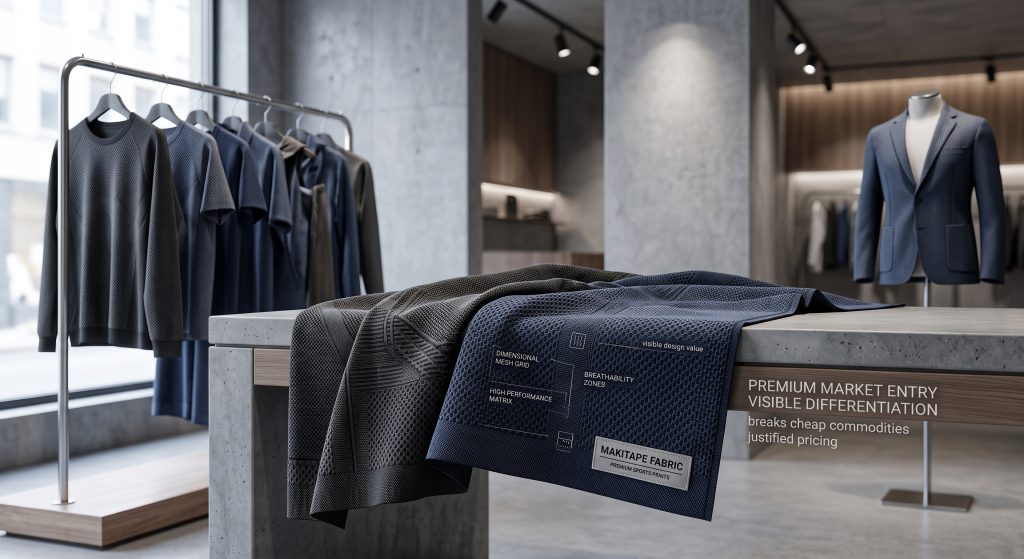
Textured activewear materials can significantly improve brand market positioning by providing visible, high-performance product differentiation that justifies premium retail price points. Sourcing an advanced sports fabric with texture allows emerging apparel brands to break away from cheap, saturated commodities and enter profitable upscale markets. Consumers easily associate dimensional knit patterns with premium technical quality, as these patterns look far more sophisticated than basic flat polyester fabrics. By focusing on textured performance fabrics, activewear enterprises can build strong consumer loyalty based on superior comfort and visible design value.
How do unique structural motifs justify premium garment pricing?
But here’s the kicker when calculating retail markups: consumers are highly willing to pay more for sportswear that feels physically substantial and looks technically advanced. Unique structural motifs like geometric grids or honeycombs provide immediate visual proof of performance features like quick drying and advanced cooling. Flat fabrics look basic and cheap, making it very difficult for independent apparel labels to command high profit margins in competitive retail markets. Utilizing engineered textures elevates the perceived value of the product line, allowing brands to maximize wholesale and retail profits.
- Dimensional motifs provide immediate visual evidence of technical cooling.
- Sophisticated surface patterns elevate basic polyester into high-value garments.
- Premium hand-feel justifies higher retail pricing tiers in stores.
Can distinctive textures strengthen athletic product differentiation?
You might be wondering how to make your sportswear stand out on crowded retail shelves. Distinctive knit textures create a recognizable product identity that helps consumers identify your brand from a distance without needing huge logos. This design strategy is highly effective for modern athleisure brands that want to blend elite athletic performance with clean, everyday street style. Sourcing specialized dimensional fabrics gives your design team a unique canvas to create iconic collections that dominate niche athletic markets.
- Recognizable textures build strong visual identity without oversized logos.
- Unique knit structures blend athletic performance with lifestyle aesthetics.
- Exclusive fabric patterns help apparel brands secure niche market segments.
| Marketing Category | Smooth Flat Textiles | Textured Performance Fabrics |
| Perceived Retail Value | Low (Commodity Pricing) | High (Premium Pricing Tiers) |
| Visual Product Appeal | Basic (Lacks Aesthetic Depth) | Sophisticated (Technical Motif) |
| Competitive Advantage | Weak (Fierce Price Competition) | Strong (Performance Differentiation) |
This business matrix reveals that incorporating textured textiles directly increases an apparel brand’s pricing leverage in retail markets.
Key Takeaway: Using textured performance fabrics enables you to upgrade your product catalog, drawing in high-margin B2B clients easily.
7. How do post-finishing treatments alter tactile textile performance?
Post-finishing treatments alter tactile textile performance by embedding specialized chemical compounds directly into the knitted yarn structures to add permanent functional properties. Incorporating a high-quality sports fabric with texture that has undergone advanced finishing ensures your garments deliver excellent wicking, odor control, and ultraviolet light protection. For example, applying a hydrophilic wash to birdseye fabric opens up the micro-pores, speeding up its already fast moisture evaporation rate. These industrial finishing adjustments allow textile factories to customize fabric features to meet the strict performance standards of professional sports associations.
Do hydrophilic coatings behave differently on raised profiles?
This is where it gets interesting because hydrophilic coatings spread much more efficiently across dimensional profiles than flat, dense fabric webs. The raised geometric ridges guide the chemical finish into the fabric’s valleys, creating a permanent wicking network that lasts through many wash cycles. This uniform distribution ensures that every square inch of the activewear garment pulls sweat away from the skin at an identical rate. Sourcing managers look for these treated textures to ensure their outdoor training gear maintains top performance in humid tropical climates.
- Geometric ridges distribute hydrophilic finishes evenly across the fabric.
- Wicking chemicals resist washing out when locked in deep valleys.
- Uniform chemical absorption prevents localized wet spots during heavy exercise.
How does mechanical brushing modify surface friction properties?
Ready for the good part about soft fabric textures? Mechanical brushing passes the knitted material over fine metallic wire rollers to gently lift individual fiber ends, creating a soft fleece finish. This specialized process reduces surface friction against the athlete’s skin while adding excellent insulation value without increasing the total weight of the fabric. Brushed pique and birdseye fabrics are highly valued for cold-weather winter training layers because they combine soft comfort with excellent breathability. Sourcing teams select brushed finishes when designing secondary layers that require direct next-to-skin warmth without restricting athletic movement.
- Wire rollers lift fiber ends to create soft, insulating air pockets.
- Brushing reduces mechanical fabric friction against sensitive skin areas.
- Softened surfaces enhance thermal heat retention during cold outdoor sports.
| Finishing Treatment | Tactile Surface Effect | Performance Benefit |
| Hydrophilic Wash | Smooth Non-Greasy Film | Accelerated Capillary Wicking |
| Mechanical Brushing | Soft Brushed Plush Nap | Increased Thermal Air Insulation |
| Anti-Microbial Silver | Standard Original Hand-Feel | Permanent Odor Molecule Reduction |
This treatment breakdown shows how post-knitting operations can modify a fabric’s physical performance to meet specific user needs.
Key Takeaway: Sourcing correctly treated textiles allows you to engineer highly specialized seasonal lines that perform flawlessly in extreme environments.
8. Which pattern stands up better to severe pilling and abrasion?
Pique fabric stands up significantly better to severe pilling and abrasion because its dense tuck-stitch structure securely locks loose polyester filaments in place. Sourcing a rugged sports fabric with texture ensures that finished team uniforms can handle intense physical contact without showing premature surface wear or fuzzing. Birdseye fabric also resists abrasion well, but its open micro-eyelet loops can occasionally catch on sharp equipment like hook-and-loop fasteners. Therefore, apparel factories choose pique for contact sports like rugby or football, while saving birdseye for low-contact sports like track and field.
Why do continuous filament yarns resist geometric fuzzing?
Here’s the deal regarding fabric pilling: utilizing high-grade continuous filament polyester eliminates the short fiber ends that typically twist together to form pills. When these long, smooth filaments are knitted into dimensional patterns, they resist rubbing wear much better than cheap staple spun yarns. This yarn selection ensures the fabric face remains clear and smooth even after months of intense daily training sessions and heavy washing. B2B buyers should always check that their fabric supplier uses continuous filaments to avoid costly product returns from retail clients.
- Continuous filaments lack short loose fiber ends that create surface pilling.
- Long synthetic strands maintain a clean fabric face under heavy friction.
- Premium yarn selection minimizes customer returns due to fuzzy garments.
Which stitch combination prevents premature fabric thinning?
What’s the real story about preventing worn-out spots on sports uniforms? Combining heavy tuck stitches with solid float stitches creates a reinforced fabric back that prevents individual loops from shifting under stress. This complex stitch combination ensures that the fabric retains its original thickness and insulation value even in high-friction zones like underarms and elbows. Pique fabrics naturally use this heavy construction, making them exceptionally tough and long-lasting for demanding commercial sportswear lines. Sourcing these reinforced knits helps apparel brands deliver outstanding durability that builds trust with professional sports teams.
- Reinforced tuck stitches lock loop structures to prevent fiber thinning.
- Strategic float stitch integration minimizes localized friction wear spots.
- Heavy-duty knit architecture preserves fabric thickness over extended use.
| Durability Metric | Birdseye Performance Level | Pique Performance Level |
| Pilling Resistance | Grade 3.5 (Good Filament Use) | Grade 4.5 (Excellent Lock Knit) |
| Snagging Vulnerability | Medium (Open Eyelet Structures) | Low (Tight Honeycomb Interlock) |
| Martindale Abrasion | 30,000+ Wash Cycles | 50,000+ Rugged Contact Cycles |
This durability data confirms that pique fabric provides the strongest defense against rugged physical contact on the field.
Key Takeaway: Sourcing abrasion-resistant pique fabric helps you produce high-durability team uniforms that easily withstand the toughest sports seasons.
9. How should B2B buyers select textures based on garment application?
B2B buyers should select fabric textures by matching the specific weight, stretch, and breathability of the knit structure to the physical demands of the intended sport. Sourcing a targeted sports fabric with texture allows commercial procurement teams to design apparel lines that perfectly match what athletes expect from their gear. For high-sweat aerobic activities like marathons, buyers should prioritize lightweight, highly elastic birdseye fabrics to maximize drying speeds and comfort. For corporate golf tournaments or team presentation clothing, buyers should choose structured pique fabrics to deliver a clean, professional look that lasts all day.
What is the best choice for lightweight athletic team shirts?
But here’s the kicker for team sport apparel: birdseye fabric is almost always the superior choice when building lightweight jersey collections for hot weather. Its double-knit micro-mesh structure allows team logos and numbers to be printed cleanly using dye sublimation without losing any fabric stretch. The silky interior keeps players comfortable during long tournaments, eliminating distracting skin irritation when the game heats up. Sourcing managers choose this material to give their teams a fast, lightweight feel that supports peak speed on the field.
- Lightweight birdseye structure maximizes player speed during long summer games.
- Dye sublimation printing applies cleanly over micro-eyelet fabric faces.
- Silky interior comfort eliminates distracting skin irritation during matches.
How do you select textiles for heavy-duty corporate sportswear?
You might be wondering how to balance professional corporate style with genuine athletic performance features for company events. The best solution is to select premium pique fabric, which provides a thick, structured drape that maintains a clean look even after a long day of networking. This heavy-duty knit handles embroidered corporate logos beautifully without wrinkling or pulling the surrounding fabric out of shape. Choosing a high-performance polyester pique ensures your team stays cool and dry while presenting a polished, professional brand image to clients.
- Thick pique structures handle heavy embroidered company logos cleanly.
- Structured garment drape maintains a polished professional look all day.
- High-performance polyester blends keep corporate staff cool under pressure.
| Target Garment Type | Recommended Fabric Structure | Primary Functional Reason |
| Track & Running Singlets | Lightweight Birdseye Mesh | Maximum Breathability & Speed |
| Corporate Golf Polos | Heavy Honeycomb Pique | Structured Professional Drape |
| Training Warm-Up Gear | Brushed Textured Interlock | Thermal Insulation & Comfort |
This application guide helps procurement managers choose the ideal fabric structure for their target sportswear market.
Key Takeaway: Matching fabric textures to specific garment uses helps you reduce sample rejection rates and satisfy strict B2B clients.
10. What factory parameters ensure consistent textile quality control?
Textile factories ensure consistent quality control by strictly managing yarn tension, machine lubrication, and cylinder speeds to prevent structural defects in the knit pattern. Producing a premium sports fabric with texture requires constant calibration of the knitting needles to ensure every batch has perfectly uniform geometric channels. Modern manufacturing plants use automated optical inspection cameras to spot missing stitches or yarn errors instantly before the fabric moves to the dyeing stage. Managing these production details allows fabric suppliers to deliver reliable, defect-free material that meets the high standards of global activewear brands.
How do operators control tension to prevent structural skewing?
Here’s the deal regarding fabric skewing prevention: production machines use electronic positive feeders to supply yarn at a perfectly constant speed and tension. If yarn tension varies even slightly, the geometric patterns can warp or lean, creating skewed panels when the fabric is cut into shirts. Operators monitor these digital feeding systems around the clock, making fine adjustments for temperature and humidity changes inside the factory. This careful management ensures that the finished fabric rolls lay perfectly flat on cutting tables, saving apparel factories time and waste.
- Electronic positive feeders maintain identical yarn tension across all needles.
- Continuous digital monitoring prevents geometric distortions in the pattern.
- Stable flat fabric rolls optimize automated cutting speeds for clothing factories.
What testing protocols verify batch-to-batch color consistency?
What’s the real story about matching fabric colors perfectly across different production runs? Industrial fabric mills use spectrophotometer testing to measure dye absorption against a strict digital master profile, keeping variations below a strict Delta E limit. Every dye batch undergoes testing under multiple standardized light sources to ensure colors match perfectly under stadium lights and retail store shelves. This strict testing process prevents color mismatch issues when matching panels are sewn together in garment assembly plants. Sourcing from a factory with advanced color testing protects activewear brands from costly retail rejections due to color shifting.
- Spectrophotometer testing verifies color variations stay below Delta E limits.
- Standardized light box inspections check color matching under diverse settings.
- Consistent dye matching eliminates panel color shifting during garment assembly.
| Production Parameter | Quality Control Protocol | Prevented Fabric Defect |
| Feed Yarn Tension | Continuous Positive Electronic Feed | Skewed Geometric Patterns |
| Needle Action | Automated Optical Sensor Sweeps | Dropped Stitches & Fabric Lines |
| Dye Liquor Blend | Digital Spectrophotometer Analysis | Batch-to-Batch Color Shifting |
This production control matrix highlights the factory inspection steps needed to deliver flawless technical sportswear textiles.
Key Takeaway: Sourcing from quality-controlled factories protects your production schedules, ensuring your apparel lines launch without defects.
Choosing the Ideal Textured Performance Matrix
Selecting between birdseye and pique structures depends on balancing your sportswear line’s specific weight, airflow, and durability requirements. This guide demonstrates how engineered geometric textures solve common activewear issues like wet-cling, chafing, and premature fabric thinning. By matching fabric surface geometry to what your target athletes need, you can elevate your product line and stand out in a crowded market. If you are ready to upgrade your product catalog with high-quality functional textiles, please contact us today to request custom samples designed for your next collection.
Frequently Asked Questions
Q1: Can I use birdseye fabric for embroidered corporate polo shirts?
No, birdseye fabric is too lightweight and flexible to support heavy embroidered logos cleanly. Its fine double-knit structure can wrinkle or pull out of shape under heavy embroidery thread, so structured pique fabric is always the better option for corporate apparel.
Q2: What’s the best textured textile for high-intensity running gear?
Birdseye fabric is the best choice because its open micro-eyelet pattern allows maximum airflow and rapid sweat evaporation. This lightweight structure prevents heat buildup during long cardiorespiratory workouts, keeping competitive runners dry and comfortable.
Q3: How do I know if a pique fabric is resistant to pilling?
You should verify that the mill uses premium continuous filament polyester yarns rather than short spun yarns. Continuous filaments lock securely into the pique’s honeycomb tuck stitches, preventing loose fibers from twisting into pills under friction.
Q4: Can I dye-sublimate custom patterns onto textured sports fabrics?
Yes, both birdseye and pique fabrics handle dye sublimation printing exceptionally well due to their high polyester content. The micro-eyelets in birdseye fabric allow ink to penetrate deeply without disrupting the fabric’s built-in ventilation channels.
Q5: How do I know if birdseye or pique offers better value for my brand?
Value depends entirely on your target garment application and what your consumers expect from their sportswear. Birdseye delivers elite athletic cooling value for high-performance training gear, while pique provides excellent structural durability value for classic, long-lasting sportswear.