
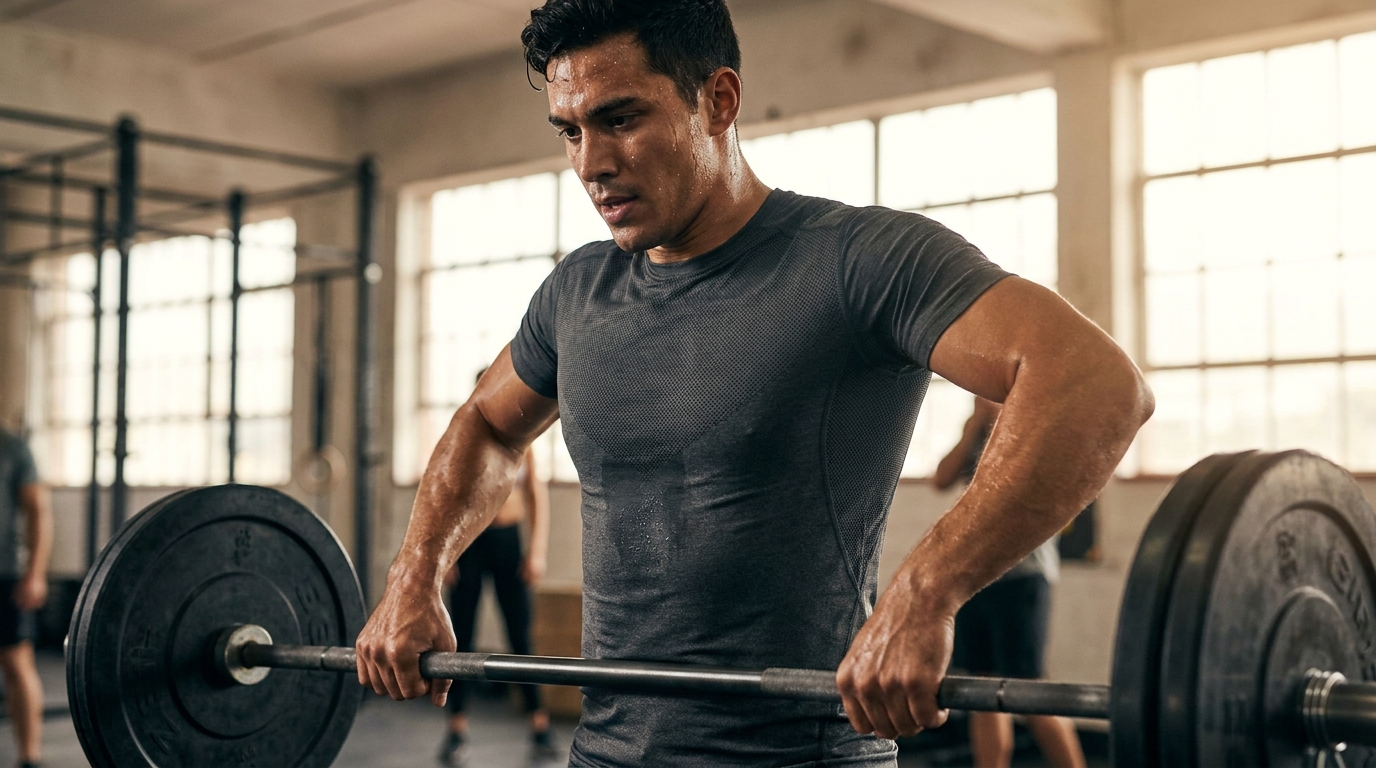
In-house dyeing controls quick dry performance by allowing for the precise calibration of hydrophilic agents and thermal gradients that outsourced facilities often neglect. Many sports brands face a recurring nightmare where high-tech synthetic fibers fail moisture-wicking tests during bulk production because the critical bridge between raw fiber and performance finish is left to chance. This inconsistency leads to garments that feel heavy and damp against the skin, destroying athlete trust and resulting in costly returns. By integrating the dyeing process into the manufacturing core, we transform textile production from a game of chance into a high-precision engineering outcome for Quick dry fabric for sports .
Why choose quick dry fabric for sports?
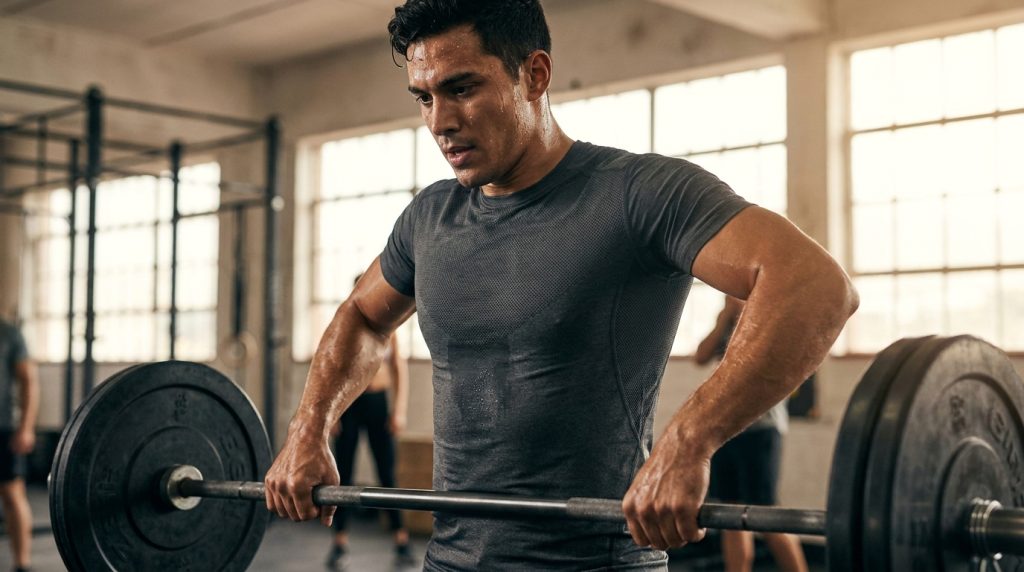
Choosing Quick dry fabric for sports is essential for maintaining athlete thermal regulation and preventing energy-sapping moisture buildup during high-intensity training. These textiles act as a secondary skin that actively manages the micro-climate between the body and the environment.
Superior moisture management
The primary benefit is the ability to pull sweat away from the skin surface instantly. High-quality synthetics utilize capillary action to transport moisture to the outer layer for rapid evaporation.
Enhancing athlete endurance
Staying dry prevents the added weight of water in the fibers from slowing down the wearer. Lightweight materials ensure that team uniforms do not become heavy or restrictive during long-distance matches.
- Reduced garment weight during activity.
- Prevention of skin chafing and irritation.
- Consistent performance in humid conditions.
But wait, there is more.
Preventing post-exercise chills
Rapid evaporation ensures that as soon as you stop moving, the fabric dries quickly. This prevents the dangerous drop in body core temperature that often occurs when wearing wet cotton garments after a workout.
Key Takeaway: Performance fabrics provide a measurable competitive advantage by keeping athletes dry and lightweight throughout the duration of their sport.
| Feature | Quick Dry Synthetic | Traditional Cotton | |
|---|---|---|---|
| Drying Speed | < 30 Minutes | > 120 Minutes | |
| Moisture Retention | < 1% | 10% – 25% | |
| Fiber Type | Hydrophobic Polyester | Hydrophilic Cellulose |
This data confirms that synthetic quick-dry structures are mathematically superior for moisture transport compared to natural fibers.
What defines quality in quick dry fabric for sports?
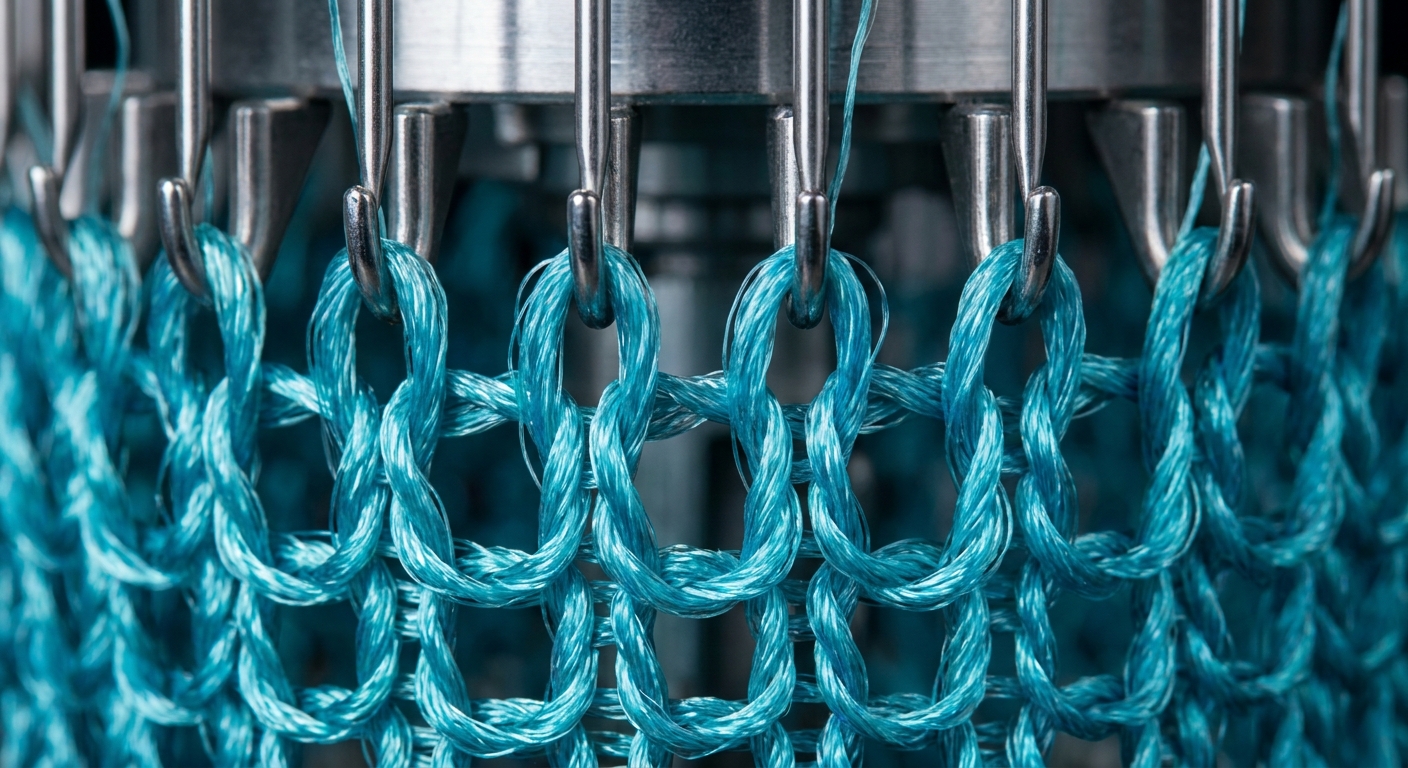
Quality in Quick dry fabric for sports is defined by the synergy between high-grade yarn selection, precision knitting, and permanent chemical finishes. Without this triple-threat approach, the moisture-wicking performance will degrade after just a few wash cycles.
High-grade yarn selection
Quality begins with hydrophobic fibers like polyester or nylon that resist water absorption at the molecular level. These fibers facilitate much faster drying times than any natural alternative by refusing to hold onto water.
Precision knitting structures
The way fibers are interlocked determines the ultimate airflow and moisture passage. Advanced knitting techniques create physical channels that encourage air to move through the material, speeding up the moisture release process.
- Multi-filament yarn density.
- Computerized loop uniformity.
- Strategic ventilation zones.
Here is the kicker:
Chemical finishing treatments
Specialized hydrophilic finishes are often applied to the surface to improve the “spreadability” of water droplets. These treatments increase the surface area for evaporation to occur, significantly boosting technical performance.
Key Takeaway: Technical quality is a result of meticulous engineering at every stage, from the raw polymer to the final topical treatment.
| Metric | Premium Grade | Entry Level | |
|---|---|---|---|
| Wicking Height | > 100mm / 30min | < 60mm / 30min | |
| Evaporation Rate | > 0.4g / h | < 0.2g / h | |
| Finish Longevity | 50+ Washes | 5-10 Washes |
The variance in wicking height highlights how precision finishing directly impacts the speed of moisture movement across the textile.
How does quick dry fabric for sports move moisture?
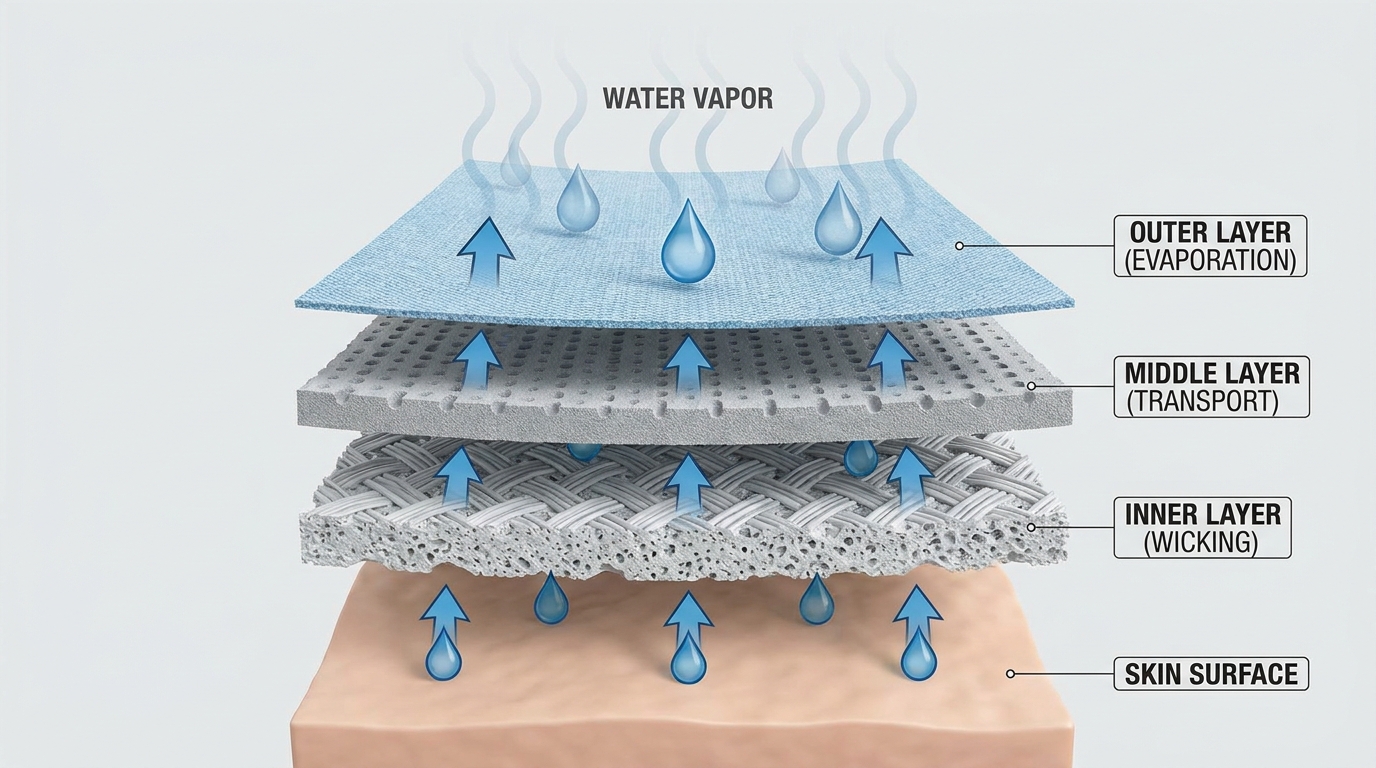
The movement of moisture in Quick dry fabric for sports relies on the physical principle of capillary action where liquid is drawn through narrow spaces. This ensures that perspiration is moved away from the skin and dispersed across a wide outer surface area for evaporation.
Understanding capillary action
The internal structure of the knit relies on tiny spaces between individual fibers that act like microscopic straws. These “straws” draw sweat from the skin surface through to the exterior of the garment using surface tension.
One-way moisture transport
Elite textiles are engineered to ensure moisture moves in only one direction. This prevents external humidity from penetrating inward while ensuring internal sweat is expelled effectively from the body.
- High-tension fiber core.
- Asymmetrical knit construction.
- Hydrophobic inner / Hydrophilic outer layers.
The best part?
Surface area and evaporation
Once moisture reaches the outer surface, the fabric forces the droplet to spread out thinly. This maximize exposure to the air, allowing the environment to naturally wick away the moisture in record time.
Key Takeaway: Efficient moisture transport is a mechanical process driven by the physical architecture of the fabric’s internal and external layers.
| Transport Phase | Mechanism | Technical Goal | |
|---|---|---|---|
| Intake | Capillary Action | Surface removal | |
| Transfer | Fiber Diffusion | Core-to-surface transit | |
| Discharge | Surface Spreading | Evaporative cooling |
Understanding these phases allows manufacturers to optimize specific layers of the fabric for different athletic environments.
Is quick dry fabric for sports durable for teams?
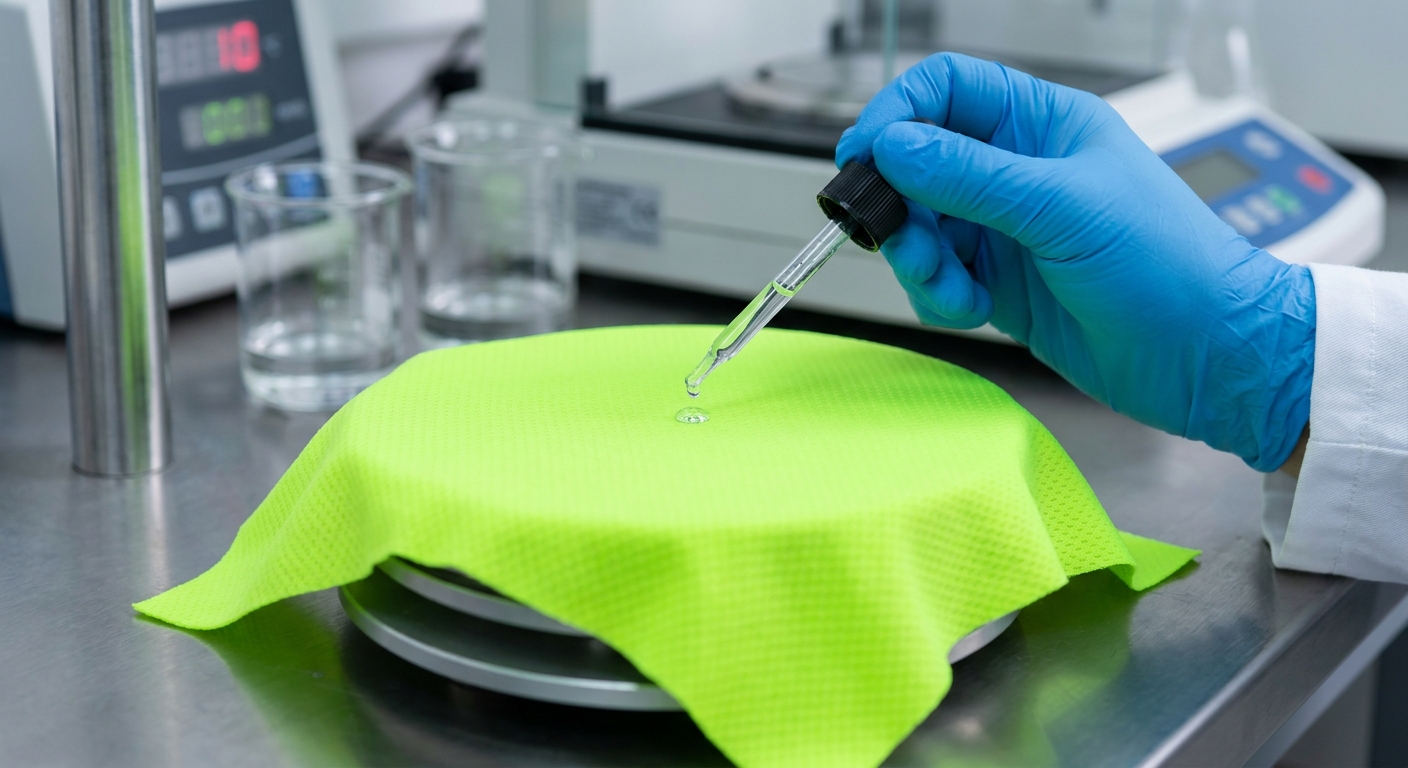
Durability in Quick dry fabric for sports is achieved through high-tenacity synthetic blends that resist pilling, abrasion, and repeated industrial laundering. Team uniforms must maintain their structural integrity and color vibrancy through entire seasons of physical contact.
Resistance to pilling and abrasion
Team sports involve significant physical contact and friction that can easily damage lower-quality knits. Durable synthetic blends are engineered to resist surface wear, ensuring the fabric looks new even after high-intensity matches.
Elasticity and shape retention
Frequent stretching during movement can deform lower-quality garments over time. Premium materials maintain their original dimensions and compression levels over hundreds of wash cycles without bagging or sagging.
- High Spandex/Elastane content.
- Heat-set stabilization.
- Recovery rate > 95%.
Believe it or not:
Excellent color fastness
Using specialized in-house dyeing processes ensures that vibrant team colors do not fade. Achieving a color fastness grade of 3.5 or higher is essential for professional-grade uniforms that undergo frequent washing.
Key Takeaway: Longevity is as important as performance; a fabric that fails after five washes is a liability for any sportswear brand.
| Durability Test | Performance Standard | Resulting Benefit | |
|---|---|---|---|
| Martindale Abrasion | > 30,000 Rubs | Surface Longevity | |
| Pilling Resistance | Grade 4.0+ | Visual Quality | |
| Color Fastness | Grade 3.5 – 4.5 | Brand Consistency |
Maintaining these standards ensures that the “Quick-Dry” label remains a functional promise throughout the entire life of the garment.
How should you clean quick dry fabric for sports?
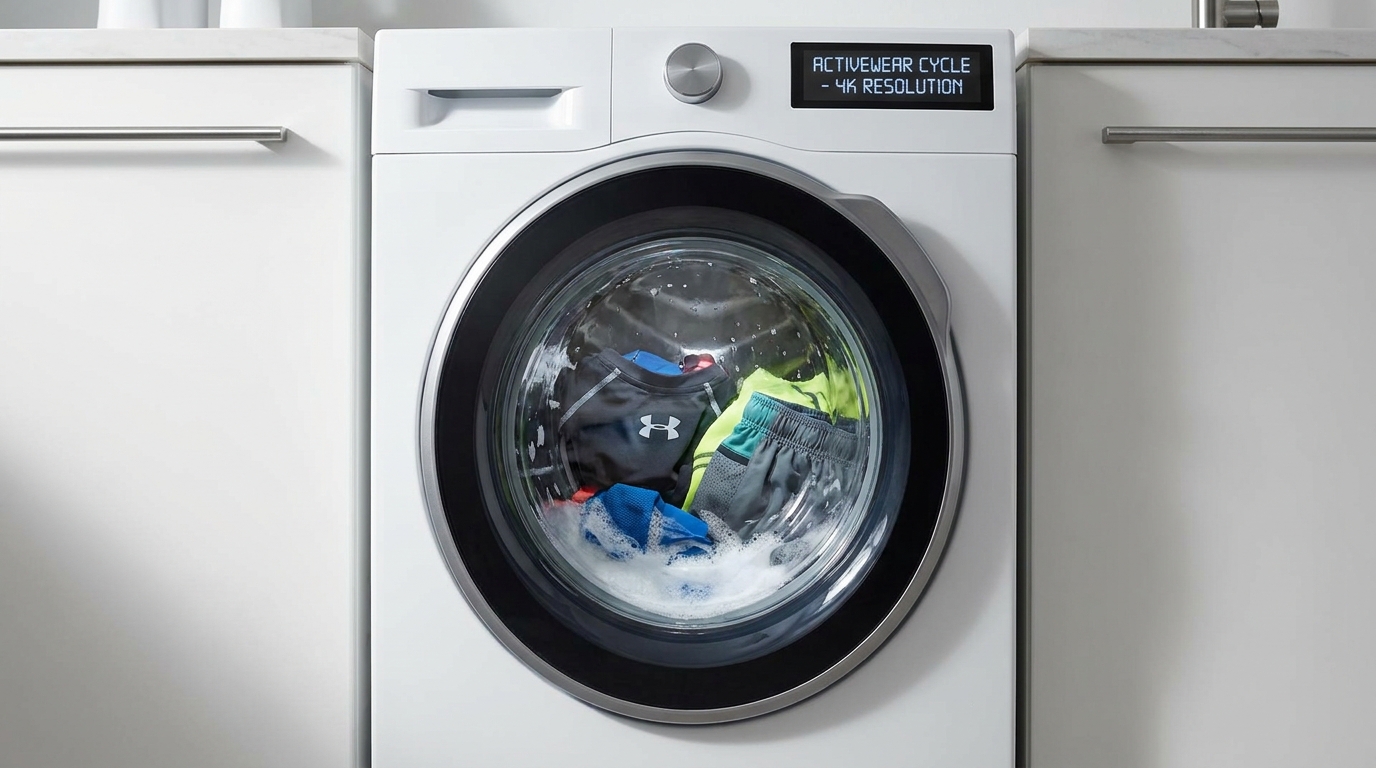
Properly cleaning Quick dry fabric for sports requires low-temperature washing and the avoidance of chemical additives like fabric softeners. Incorrect laundering can clog the microscopic pores of the fabric, permanently destroying its wicking capabilities.
Washing at low temperatures
High heat can damage synthetic fibers and break down the technical finishes applied during the dyeing stage. Washing in cool or lukewarm water preserves the integrity of the moisture-management system and prevents shrinkage.
Avoiding fabric softeners
Fabric softeners leave a waxy coating on the fibers that acts as a water repellent. This coating clogs the microscopic pores, significantly reducing the fabric’s ability to wick away moisture effectively.
- Use mild detergents only.
- Avoid bleach and strong oxidizers.
- Rinse thoroughly to remove soap residue.
It gets even better:
Air drying vs machine drying
While these materials dry very quickly in the air, low-heat tumble drying is usually safe for most blends. However, air drying is the preferred method to extend the lifespan of the elastane fibers and maintain shape.
Key Takeaway: Simple care protocols are necessary to protect the sophisticated technical engineering embedded within performance textiles.
| Care Instruction | Recommended | Reason | |
|---|---|---|---|
| Water Temp | 30°C – 40°C | Fiber Integrity | |
| Detergent Type | Liquid / Neutral | Residue Prevention | |
| Drying Method | Line Dry / Low Tumble | Elasticity Protection |
Following these guidelines ensures the fabric continues to perform at peak efficiency for several years rather than months.
Does quick dry fabric for sports offer UV protection?
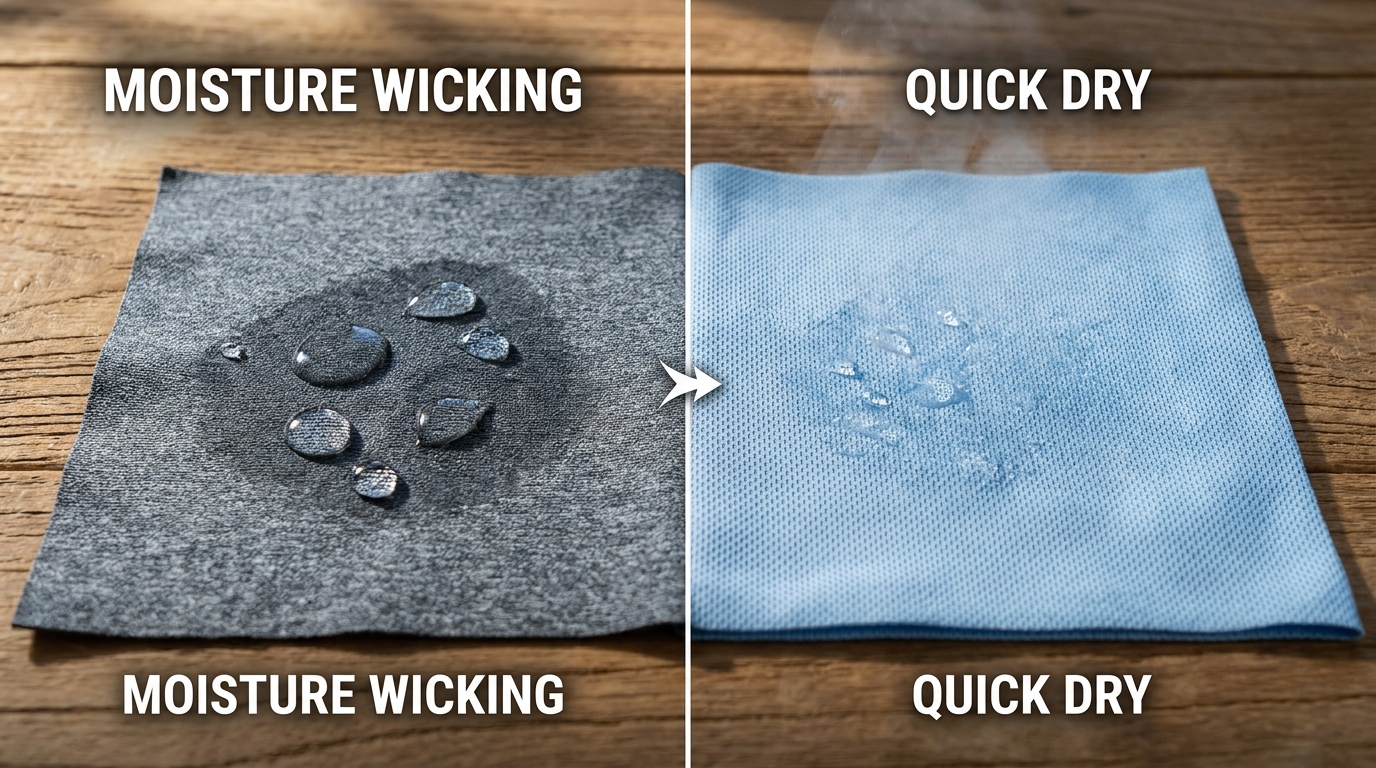
High-performance Quick dry fabric for sports often features a dense knit structure that naturally provides a high UPF rating for outdoor athletes. This dual-functionality protects the wearer from harmful solar radiation while simultaneously managing intense perspiration.
Dense knit sun blocking
The tight construction of many performance knits naturally blocks harmful rays without needing heavy chemical coatings. This provides a physical barrier that protects the skin during long outdoor matches or training sessions.
Protection during water sports
Unlike traditional clothing, technical materials maintain their protective properties even when they are damp or fully saturated. This makes them ideal for aquatic environments where water reflection increases overall UV exposure.
- Wet-state UV stability.
- Salt-water resistance.
- Chlorine-resistant finishes.
You won’t believe this:
UPF 50+ rating standards
Many technical textiles are treated to achieve a UPF 50+ rating, blocking 98% of UVA and UVB rays. This ensures that only 1/50th of the sun’s radiation can pass through the material to the athlete’s skin.
Key Takeaway: UV protection is an essential safety feature for outdoor sportswear that integrates seamlessly with quick-dry performance.
| UPF Rating | Protection Level | % UV Blocked | |
|---|---|---|---|
| UPF 15 – 24 | Good | 93.3% – 95.9% | |
| UPF 25 – 39 | Very Good | 96.0% – 97.4% | |
| UPF 40 – 50+ | Excellent | 97.5% – 98.0%+ |
Higher density knits provide superior sun protection while maintaining the breathability required for temperature regulation.
Why is breathability key in quick dry fabric for sports?
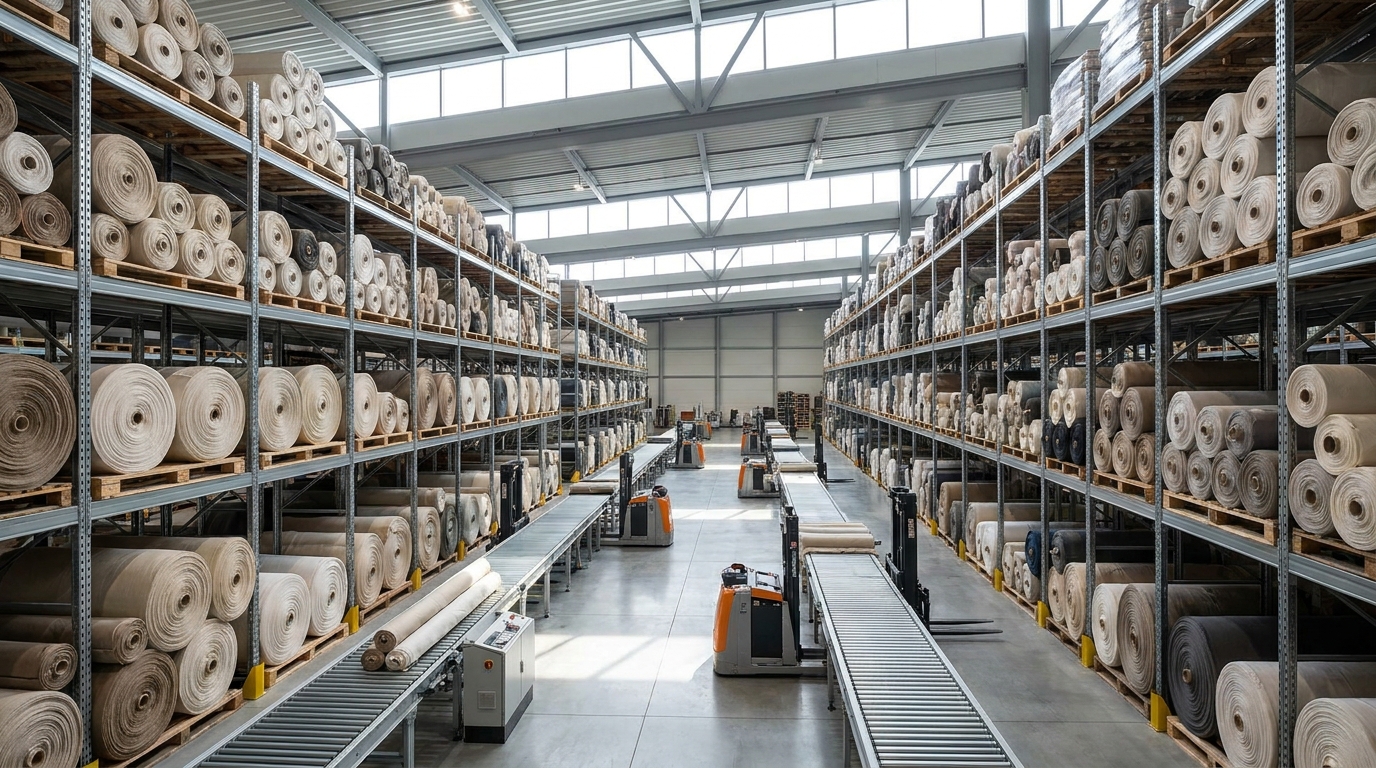
Breathability is the companion of Quick dry fabric for sports, allowing heat to escape the body while moisture is being moved to the surface. Without high air permeability, the wearer would overheat despite the fabric technically being “dry” on the outside.
Regulating core body temperature
Breathable knits allow excess heat generated during exercise to escape through the garment. This prevents overheating during high-intensity intervals and ensures a more consistent performance profile for the athlete.
Airflow through micro-pores
Microscopic openings in the fabric structure facilitate gas exchange between the skin and the environment. This ensures that even in humid conditions, the micro-climate remains comfortable and significantly less “stifling.”
- Ventilation-optimized weaves.
- Enhanced vapor transmission rates.
- Pressure-differential airflow.
Here is a pro tip:
Combining stretch and airflow
Modern 4-way stretch materials incorporate breathability without sacrificing the snug fit required for activewear. This ensures that the garment moves with the body while still providing maximum cooling benefits.
Key Takeaway: A balanced fabric provides both moisture transport and high air permeability to maximize total thermal comfort.
| Technical Metric | Breathable Knit | Standard Fabric | |
|---|---|---|---|
| Air Permeability | > 150 cm³/cm²/s | < 50 cm³/cm²/s | |
| Vapor Resistance | < 3 m²Pa/W | > 10 m²Pa/W | |
| Cooling Effect | High | Low |
High air permeability values indicate that the fabric allows for efficient heat dissipation during metabolic peaks.
Is there eco-friendly quick dry fabric for sports?
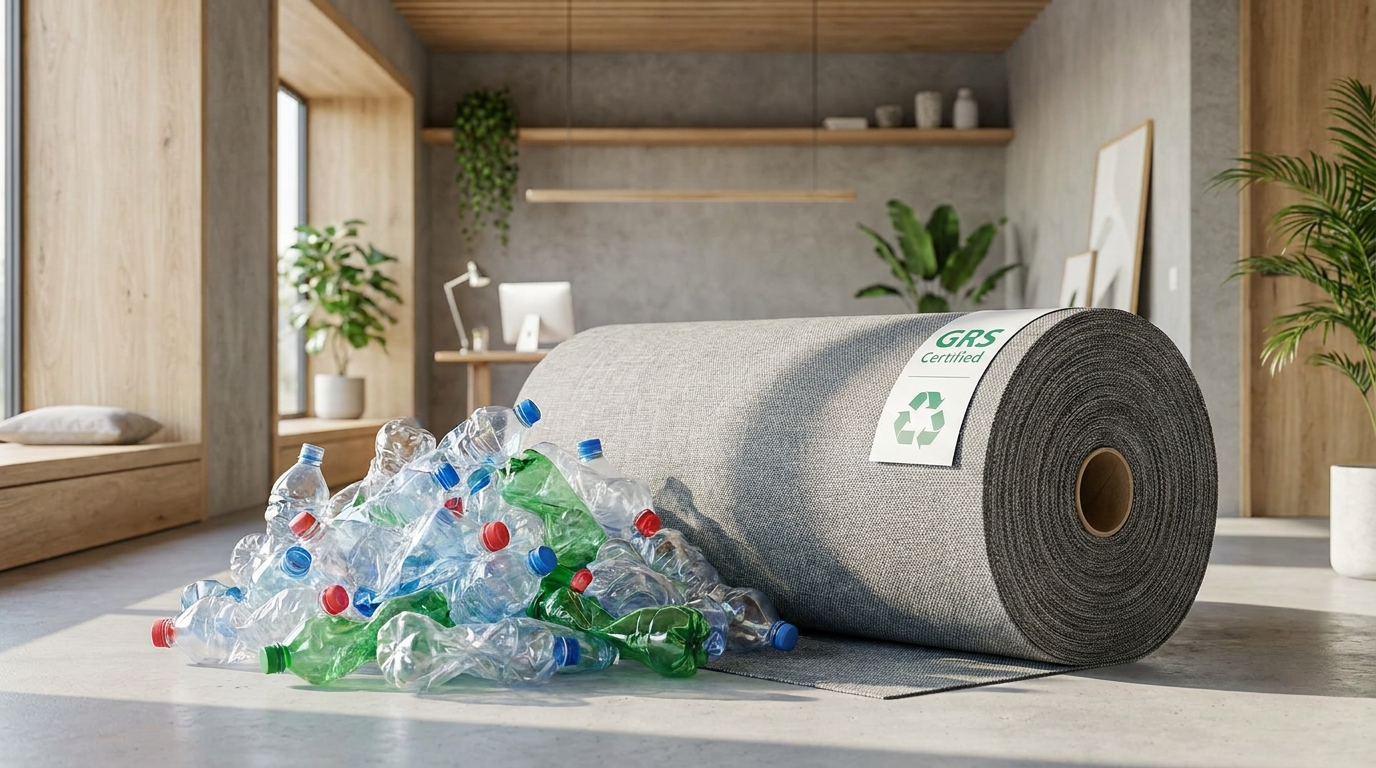
Sustainable versions of Quick dry fabric for sports utilize recycled polyester sourced from post-consumer plastic waste to reduce environmental impact. These eco-friendly yarns maintain the exact same moisture-wicking properties as virgin materials.
Utilizing recycled polyester
Sustainable options often use recycled fibers that perform identically to traditional petroleum-based synthetics. By repurposing plastic bottles into high-performance yarn, manufacturers significantly reduce the carbon footprint of the garment.
Reducing environmental impact
Eco-friendly manufacturing uses less energy and water during the fiber creation process than virgin production. This allows brands to produce high-performance gear that aligns with modern environmental sustainability goals.
- Reduced CO2 emissions.
- Diverted landfill waste.
- Lower water consumption.
Keep this in mind:
GRS certified production
Global Recycled Standard (GRS) certification ensures that the entire supply chain is tracked and verified. This gives brands and consumers total confidence in the environmental and social claims of the textile.
Key Takeaway: Performance and sustainability are no longer mutually exclusive; recycled yarns deliver elite moisture management.
| Material Source | Recycled Polyester | Virgin Polyester | |
|---|---|---|---|
| Energy Saving | ~30% – 50% | 0% | |
| Water Saving | ~20% | 0% | |
| Wicking Performance | Identical | Baseline |
The performance parity between recycled and virgin fibers makes sustainable sourcing the logical choice for modern brands.
Which weaves work for quick dry fabric for sports?
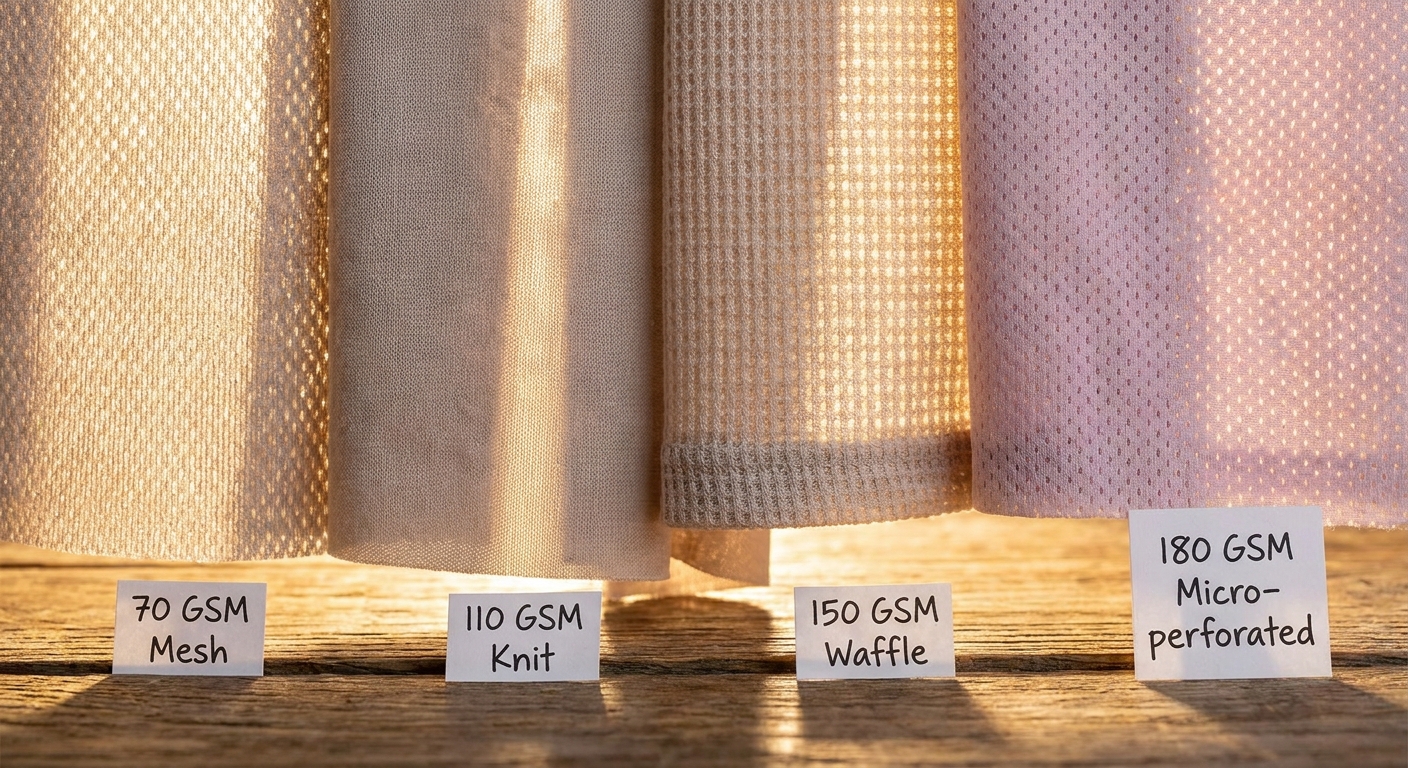
The specific weave or knit structure used in Quick dry fabric for sports determines how effectively it interacts with both sweat and air. Different patterns like bird-eye mesh, interlock, or pique are selected based on the specific intensity of the activity.
Bird-eye mesh structures
Commonly used in jerseys, the bird-eye pattern creates a textured surface that maximizes surface area. This increased area improves ventilation and speeds up the drying process for maximum cooling during team sports.
Honeycomb and pique knits
These specialized 3D structures create a textured effect on the fabric surface that prevents it from sticking to the skin. The raised patterns ensure there is always a layer of air between the skin and the cloth.
- Anti-cling geometry.
- Enhanced 3D ventilation.
- Tactile moisture release.
This is the secret sauce:
High-density interlock jersey
Interlock knits offer a smooth surface on both sides, providing a soft hand-feel and excellent opacity. This makes it the perfect choice for leggings and compression shirts that require both support and moisture management.
Key Takeaway: Choosing the right knit structure is a strategic decision that aligns the fabric’s physics with the athlete’s movement.
| Weave Type | Best Use Case | Primary Advantage | |
|---|---|---|---|
| Bird-Eye Mesh | Soccer / Running | Max Ventilation | |
| Interlock | Yoga / Compression | Opacity & Stretch | |
| Pique | Golf / Polo | Anti-Cling Texture |
Structure selection directly dictates how the fabric feels when fully saturated, impacting athlete focus and comfort.
How to test the quick dry fabric for sports quality?
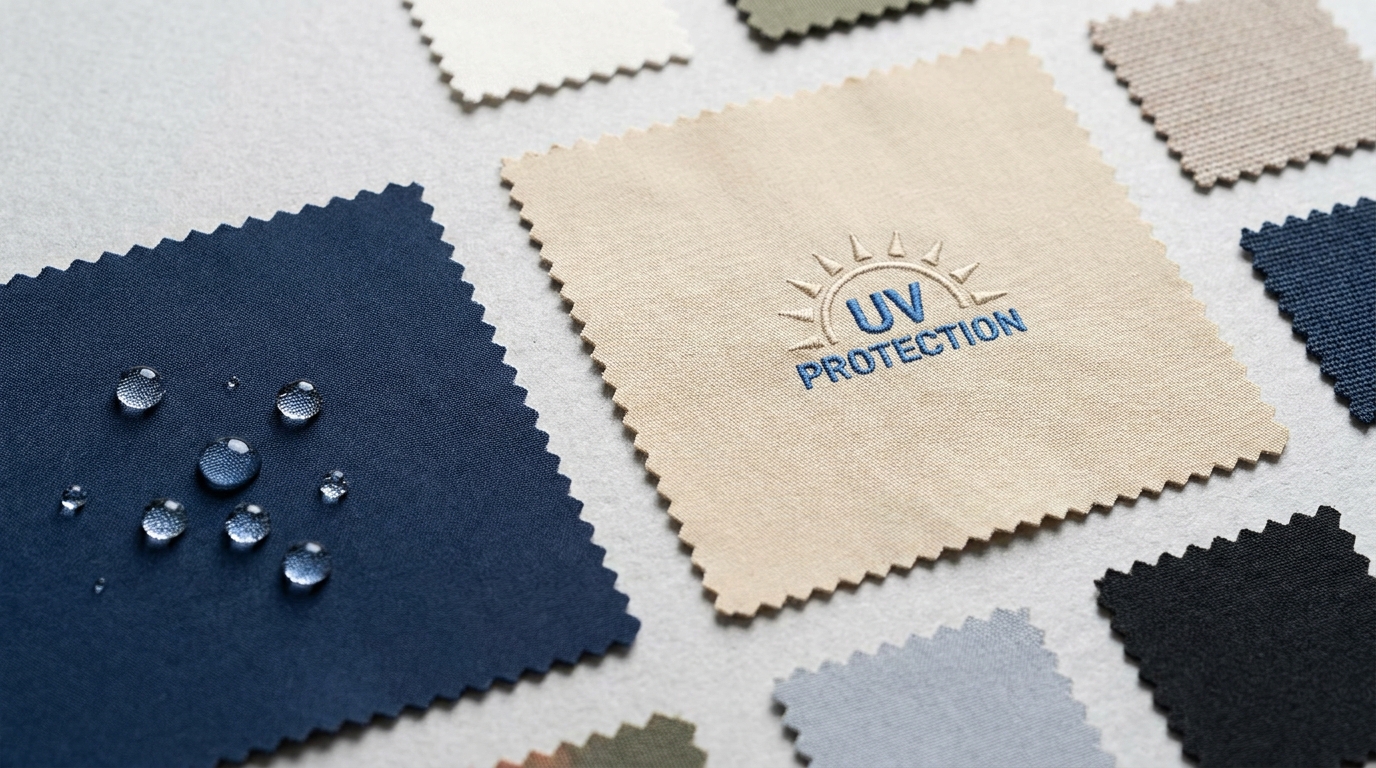
Rigorous testing of Quick dry fabric for sports involves measuring vertical wicking speed, evaporation rates, and stretch recovery under lab conditions. These metrics provide objective data that separates professional-grade technical textiles from low-cost imitations.
Measuring wicking speed
Lab tests measure how far moisture travels vertically along the fabric strip within a set time, typically 30 minutes. Premium textiles show rapid vertical travel, indicating a powerful capillary system that can handle heavy sweat.
Stretch recovery testing
Quality is also measured by how well the fabric returns to its original shape after being pulled to its limit. This ensures that the technical fit and compression benefits remain consistent over the entire life of the garment.
- AATCC 197/198 standards.
- Dimensional stability checks.
- Tension-release analysis.
Now, listen closely:
Evaporation rate analysis
This test tracks how much weight the fabric loses over time as moisture evaporates into the air. Top-tier materials will return to their dry weight significantly faster than standard options, ensuring the athlete never feels “weighted down.”
Key Takeaway: Objective lab data is the only way to guarantee that a fabric meets the rigorous performance claims required by elite athletes.
| Test Category | Standard Method | Target Value | |
|---|---|---|---|
| Vertical Wicking | AATCC 197 | > 10cm / 30min | |
| Drying Time | AATCC 199 | < 25 Minutes | |
| Stretch Recovery | ASTM D2594 | > 98% Recovery |
High test scores across these categories ensure that the fabric will not fail when the athlete reaches peak physical exertion.
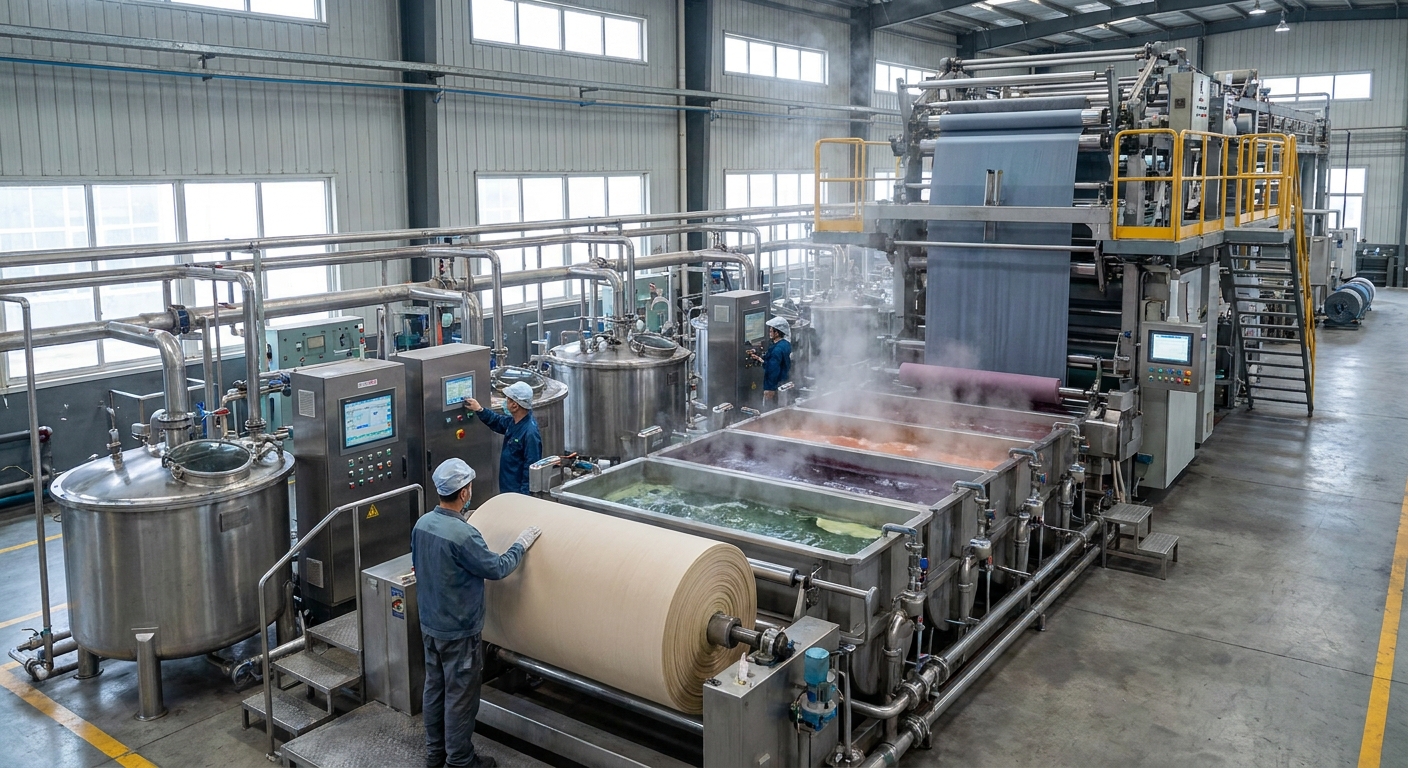
Does in-house dyeing enhance quick dry fabric for sports?
In-house dyeing is the backbone of high-performance Quick dry fabric for sports, providing the precision control needed to bond technical agents to the fiber. By eliminating third-party variables, manufacturers can ensure that every meter of fabric meets exact moisture-management specs.
Precise control of additives
By managing the dyeing process in-house, technicians can perfectly calibrate the concentration of wicking agents and hydrophilic finishes. This ensures that the technical treatments are not just “applied” but deeply bonded to the fiber structure.
Optimizing chemical bonding
In-house facilities allow for better control over temperature and pressure cycles during the dye phase. This strengthens the bond between the color and the fiber, improving overall durability and finish longevity.
- ±0.5°C thermal variance.
- Automated chemical dosing.
- Integrated QC checkpoints.
Here is the transition:
Uniformity across large batches
Vertical integration eliminates the quality gaps and scheduling bottlenecks found in outsourced processing. This results in consistent moisture-wicking speeds and color accuracy across tens of thousands of meters of textile.
Key Takeaway: In-house dyeing moves production from a “best effort” model to a high-precision chemical engineering model.
| Process Variable | In-House Control | Outsourced Risk | |
|---|---|---|---|
| Temperature Delta | Minimal (±0.5°C) | High (±5.0°C) | |
| Chemical Purity | Guaranteed | Variable | |
| Lead Time | Integrated | Queue Dependent |
The precision offered by in-house dyeing acts as the “mold” that ensures the final performance “cast” is flawless every time.
Does Karl Mayer tech boost quick dry fabric for sports?
Utilizing 80+ German Karl Mayer machines ensures that Quick dry fabric for sports features perfectly uniform loop structures. This high-speed computerized precision eliminates technical weak spots and ensures that air and moisture flow consistently across the entire roll.
Computerized loop precision
Advanced machinery allows for perfectly uniform knitting that manual or older machines simply cannot replicate. This precision eliminates variations in fabric density that would otherwise cause “hot spots” where moisture gets trapped.
Increased production efficiency
High-efficiency equipment allows for a massive monthly capacity of 500,000 kg while maintaining strict technical standards. This ensures that even the largest wholesale orders are fulfilled with consistent quality and no production delays.
- 500T monthly output.
- 80+ circular machines.
- 24/7 automated monitoring.
Check this out:
Enhanced structural integrity
Advanced machinery allows for complex knit patterns that offer a better balance between a lightweight feel and heavy-duty strength. These structures are engineered to be durable enough for professional contact sports while remaining ultra-breathable.
Key Takeaway: High-end German technology is the foundation for the massive scale and surgical precision required in modern performance textiles.
| Technology Feature | Karl Mayer Advantage | Standard Machine | |
|---|---|---|---|
| Stitch Uniformity | Computer Controlled | Mechanical Only | |
| Production Speed | Ultra-High | Moderate | |
| Pattern Complexity | High (3D Knits) | Basic |
Investing in top-tier machinery allows for the creation of complex 3D structures that optimize both moisture transport and tactile comfort.
How to source bulk quick dry fabric for sports?

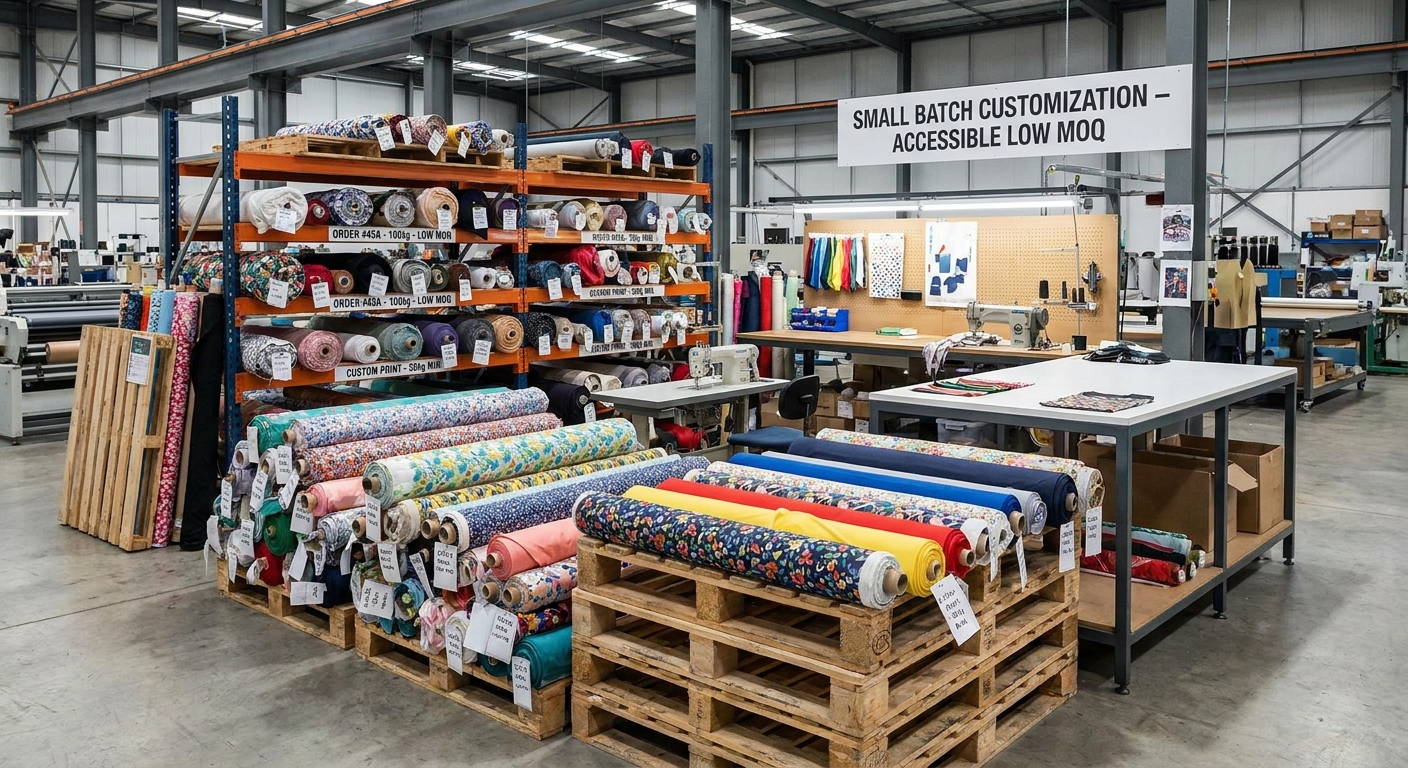
Sourcing bulk Quick dry fabric for sports requires finding a partner that offers both high-volume capacity and low MOQ flexibility. A vertically integrated factory can provide 100kg starting orders while maintaining the scale to produce 500,000 kg monthly for global brands.
Accessible low MOQ options
Starting with just 100 kg (approx. 800 meters) allows emerging brands to test new colorways and fabric types without high inventory risk. This flexibility is vital for rapid prototyping and responding to fast-moving market trends.
Vertical integration benefits
A factory that handles everything from knitting to dyeing in-house offers a streamlined supply chain with zero outsourcing delays. This integration ensures that the technical performance of the fabric is never compromised by third-party errors.
- 10,000 m² facility.
- 30% faster lead times.
- Dual-check QC systems.
The bottom line:
Global logistics and support
A reliable wholesale partner provides comprehensive support from fabric selection to final delivery across three continents. This includes meeting international standards like OEKO-TEX, GRS, and ISO certifications for easy market entry.
Key Takeaway: Success in sportswear begins with a manufacturing partner that combines technical mastery with operational flexibility.
| Sourcing Factor | Integrated Factory | Fabric Broker | |
|---|---|---|---|
| Price Stability | High (Direct) | Low (Markups) | |
| Quality Control | Total Oversight | Limited Visibility | |
| Customization | Full Support | Minimal |
By working directly with the source, brands secure better pricing and a much higher guarantee of performance for their final products.
Engineering the Future of Athletic Performance
At MAKITAPE, we believe that the performance of an athlete should never be limited by the failure of their gear. By integrating 80+ high-precision German Karl Mayer machines with our own in-house dyeing plant, we have eliminated the variables that cause performance gaps in mass-produced textiles. Our vision is to provide every sportswear brand—from agile startups to global leaders—with the same tier of technical precision, backed by a flexible 100kg MOQ and a massive 500T monthly capacity. We don’t just manufacture fabric; we engineer the outcomes that define championships.
Contact us today to request your free technical sample pack and experience the difference that in-house precision makes.
Frequently Asked Questions
Can I order 100kg of custom-colored fabric?Yes, our vertically integrated facility supports low Minimum Order Quantities starting at 100 kg, allowing you to test new colors and fabric types with minimal inventory risk.
What is the best GSM for summer running shirts?For high-heat environments, a GSM between 130 and 150 is ideal. This weight is light enough to feel “barely there” while providing enough structure to manage heavy perspiration.
Can I get GRS certified recycled materials for my line?Absolutely. We offer Global Recycled Standard certified polyester that maintains the same moisture-wicking and durability profiles as our virgin synthetic materials.
Why choose in-house dyeing over outsourced processing?In-house dyeing ensures total control over chemical bonding and thermal stabilization, eliminating the inconsistencies in wicking performance often found in third-party facilities.
How fast can I receive technical samples?Our streamlined sample workflow typically delivers custom fabric swatches within 7 to 10 days, helping you move from design concept to prototype faster than your competitors.