
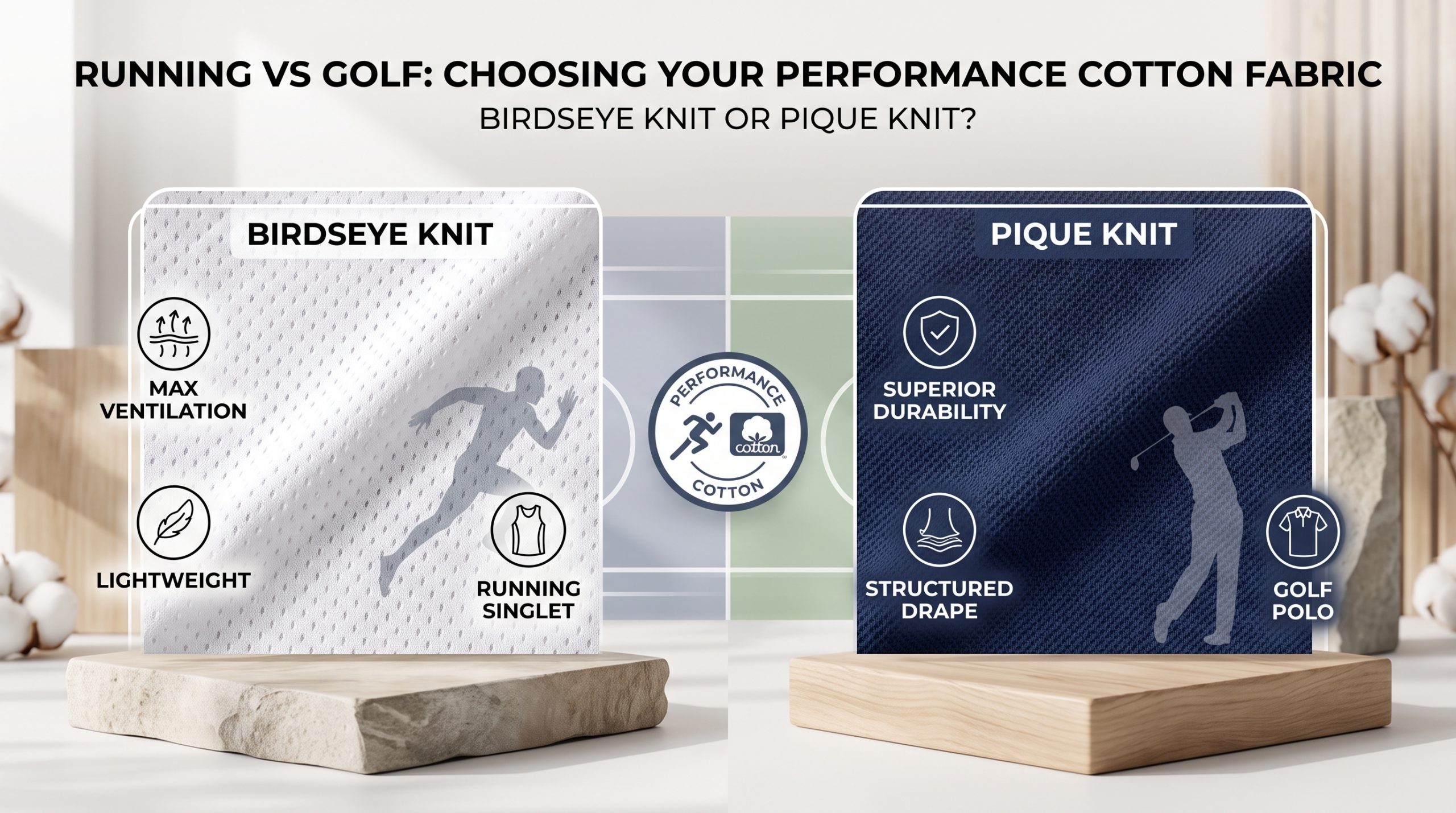
Choosing the best sports theme cotton fabric mixed with performance synthetics provides the perfect balance of skin breathability and durability for activewear. Imagine launching a high-end athleisure clothing line only to receive massive consumer returns because the garments trap body odor or cause skin abrasions during hot training sessions. Your clients will quickly abandon your apparel product lines when cheap synthetic fibers suffocate their skin or fail after consecutive industrial washings. Shifting toward premium cotton-rich blends containing advanced mechanical knit structures offers an immediate remedy that secures structural ventilation and perfect moisture management for your sportswear needs. Our global textile production mill designs specialized sports theme cotton fabric to satisfy rigorous physical testing metrics while maintaining a beautifully soft hand-feel for everyday active lifestyles.
1. Why Pick Sports Theme Cotton Fabric Over Pure Polyester?
Selecting a premium sports theme cotton fabric over pure polyester guarantees unmatched skin comfort because natural plant fibers prevent toxic odor buildup while offering a non-synthetic tactile finish. Many apparel manufacturers mistakenly choose total polyester grids but end up dealing with foul bacterial aromas that refuse to wash out of synthetic gym garments. You can sidestep this product liability by utilizing specialized cotton-rich materials that absorb heavy initial sweat bursts without creating stale damp environments against human skin. Purchasing teams select these smart botanical materials to capture high-end lifestyle consumers who demand lifestyle versatility alongside baseline physical performance properties.
What Controls Odor in Athletic Textiles?
Natural plant structures possess inherent breathability properties that stop staphylococcal bacteria from multiplying rapidly during intense cardiovascular workouts or prolonged sports team practice sessions. Here is the deal because synthetic alternatives lack these organic attributes and lock foul metabolic discharge within plastic yarn channels forever. Our factory knits premium vegetative materials with absolute technical precision to guarantee your clothing lines maintain freshness through extreme active usage cycles. Design teams prefer these soft materials because they lay smoothly against active muscles without causing mechanical friction.
- Organic fibers minimize bacterial reproduction.
- Botanical cellular designs assist with natural heat dissipation.
- Synthetic yarns require chemical coatings to fight sweat odors.
Does Botanical Yarn Resist Tearing?
Advanced spinning methods reinforce natural filaments by twisting long-staple cotton fibers together with durable microfiber polymers to establish exceptional material tensile strength properties. You might be wondering if these hybrid structures lose structural integrity when athletes perform intense physical movements on rough playing fields. Our testing facility subjects every production batch to rigorous burst metrics to verify that the finished activewear garments withstand severe friction without pulling apart at structural seams. Choosing this balanced composite yarn layout satisfies both the strict durability metrics of corporate buyers and the comfort demands of retail fitness consumers.
- Long-staple fibers prevent premature fabric surface fuzzy pilling.
- Twisted hybrid filaments resist extreme vertical pulling forces.
- Structural reinforcement extends the operational lifetime of garments.
Key Takeaway: Allocating high-grade hybrid botanical materials protects your activewear brand from quality complaints regarding smelly fabrics or premature seam failures during intensive athletic training.
| Fabric Characteristic | Premium Hybrid Cotton Blend | Standard Virgin Polyester |
| Odor Control Capability | Excellent Natural Prevention | Poor Synthetic Retention |
| Skin Safety Profile | Non-Irritating and Soft | Prone to Severe Chafing |
Analyzing these fundamental performance vectors demonstrates why hybrid natural textiles deliver superior user experiences compared to basic chemical synthetics.
2. Is Sports Theme Cotton Fabric Ideal For Active Lifestyles?
Yes, premium sports theme cotton fabric serves as the perfect foundation for active lifestyles because it bridges the operational gap between specialized gym training functionality and stylish urban athleisure apparel demands. Modern fitness enthusiasts do not want to change their clothing multiple times a day when transitioning from intense morning cross-training workouts to casual corporate business meetings. Utilizing these versatile textiles allows your product developers to manufacture sleek multi-functional garments that look highly professional while supporting dynamic physical performance characteristics on the field. Production managers select this material to create modern minimalist activewear lines that capture massive consumer market shares across multiple demographic segments.
How Does Flex Impact Daily Movement?
Unrestricted physical movement requires a textile structure that stretches fluidly alongside muscle expansion without pulling backward or creating uncomfortable pressure zones on the human body. What is the real story behind natural movement mechanics when using heavy structural clothing during complex weightlifting or yoga training sessions? Our advanced mill integrates special looping architectures that permit beautiful mechanical flexibility without relying heavily on expensive synthetic elastane additives. Apparel pattern makers love this natural flexibility because it simplifies the garment tailoring process and accommodates diverse consumer body types perfectly.
- Flexible loop geometry enables natural body extension.
- Reduced elastane dependence minimizes raw material production expenses.
- Structural resilience preserves garment shapes during extreme bending.
Does It Maintain Comfort in Heat?
Thermal balance depends on the continuous removal of hot air from the microclimate layer existing between the athlete skin and the inner garment surface during warm weather exercises. Ready for the good part because our hybrid cotton materials create a natural cooling sensation by allowing ambient air to circulate freely through the knitted yarn matrix. This continuous ventilation prevents the heavy suffocating feeling that often occurs when wearing low-quality chemical synthetics during prolonged outdoor training programs. Investing in these ventilated materials elevates your brand image by solving the common problem of heat exhaustion in consumer sportswear lines.
- Ambient air circulation lowers skin surface temperatures.
- Low material retention keeps garments light during summer heat.
- Open textile layouts prevent moisture blockages during workouts.
Key Takeaway: Integrating versatile natural knits into your activewear inventory ensures your brand captures the lucrative lifestyle market by delivering exceptional cooling properties all day long.
| Activity Requirements | Hybrid Cotton Textile | Basic Synthetic Mesh |
| Athleisure Visual Appeal | Premium Matte Appearance | Cheap Plastic Sheen |
| All-Day Wear Comfort | Outstanding Soft Touch | Scratchy Filament Feel |
Reviewing these lifestyle metrics confirms that modern hybrid knits satisfy the contemporary consumer need for adaptable premium sportswear designs.
3. How Does Birdseye Pattern Maximize Textile Breathability?
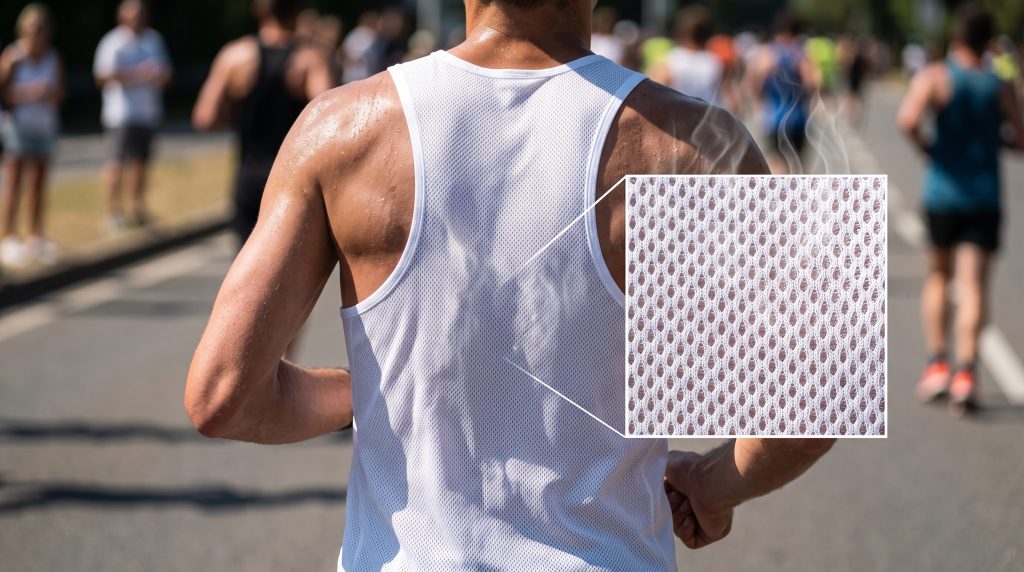
Birdseye patterns maximize breathability by incorporating a continuous grid of miniature diamond-shaped apertures that allow hot body heat to escape instantly during strenuous exercise sessions. This specialized geometry converts traditional sports theme cotton fabric into an active ventilation panel that pumps humid air away from the moving torso with every physical step. Sourcing agents choose this micro-hole arrangement to engineer ultra-lightweight racing singlets and fitness shirts that keep professional athletes dry under extreme environmental conditions. Your design team can leverage this structural feature to market premium activewear lines that outperform generic flat-knit alternatives in thermal regulation tests.
What Controls the Airflow Pathway?
The geometric layout of the micro-mesh diamond holes acts like an array of miniature exhaust valves that clear out stagnant body heat before it liquefies into heavy sweat drops. This is where it gets interesting because these tiny air pathways operate continuously without requiring any chemical cooling additives or synthetic surface finish coatings. Our manufacturing facility regulates the millimeter diameter of these apertures with total digital precision to guarantee uniform air movement across the entire textile sheet. Clothing lines built with this precise ventilation matrix remain exceptionally airy even during high-intensity indoor gym training programs.
- Diamond ports create direct ventilation paths for heat.
- Chemical-free cooling maintains performance throughout garment lifetimes.
- Uniform aperture spacing eliminates localized hot spots on bodies.
Can It Accelerate Sweat Evaporation?
Spreading liquid moisture across a wide surface area allows the surrounding moving air to evaporate wetness twice as fast as standard double-knit interlock materials. Look at the facts regarding drying efficiency metrics since competitive athletes lose concentration when heavy damp clothing clings to their chests during championship matches. The capillary action of our birdseye configuration moves fluid outward to the exterior face where it dissipates into the environment within minutes. Selecting this rapid-drying option protects your brand reputation by delivering professional-grade climate control functionality that serious fitness consumers can physically feel.
- Wide fluid distribution maximizes environmental air contact.
- Ultra-fast dry times eliminate heavy waterlogged garment weights.
- Capillary acceleration protects players from damp fabric friction.
Key Takeaway: Utilizing birdseye knit patterns allows your business to market high-performance training gear that satisfies demanding athletes who require instant cooling during aerobic workouts.
| Ventilation Metrics | Birdseye Micro Pattern | Standard Interlock Knit |
| Air Permeability Level | High Cubic Feet Per Minute | Restricted Heat Trapping |
| Surface Evaporation Rate | Instant Moisture Dispersion | Slow Saturated Wetness |
This data breakdown highlights why open geometric patterns are the superior choice for high-exertion apparel lines facing extreme heat conditions.
4. Why Does Pique Structure Outlast Alternative Knit Fabrics?
Pique structures outlast alternative options because the specialized double-knit manufacturing technique interlocks multiple yarn loops into raised geometric ridges that actively resist abrasive wear and mechanical tearing forces. This robust construction makes it an ideal choice for high-durability sports theme cotton fabric applications like premium golf shirts, country club tennis apparel, and heavy-duty corporate team uniforms. You will notice that these sturdy textiles maintain their crisp structural profiles and refuse to sag even after undergoing hundreds of commercial laundry cycles. Sourcing managers rely on this structural memory to minimize product defect return metrics and secure excellent long-term client satisfaction scores.
What Formulates the Honeycomb Ridge?
A dual-needle bed machine configuration knits parallel yarn systems together to create a distinct three-dimensional waffle face that reduces direct textile contact with human skin. But here is the kicker because this raised waffle architecture establishes a natural protective buffer zone that minimizes fabric friction during repetitive physical movements. The structural thickness provides excellent opacity properties, which completely prevents the embarrassing show-through problems common in low-grade lightweight synthetic textiles. Global apparel buyers select this substantial weave to deliver high-end tailored clothing lines that project an upscale executive aesthetic.
- Dual-needle interlocking builds superior material thickness.
- Raised waffle geometry lifts material off damp skin.
- High textile opacity guarantees total user modesty on courts.
Does It Prevent Fabric Pilling?
The tight geometric compaction of individual botanical fibers within the pique matrix locks loose hair filaments down to prevent them from rubbing together and forming ugly surface pills. What is the real story behind long-term garment wear when your clients put these textured corporate shirts through heavy automatic drying machines? Our specialized finishing process applies a smooth protective singeing pass that removes stray fiber ends before the final wholesale textile rolls are shipped. This manufacturing step guarantees your finished polo shirts look pristine on retail clothing racks and remain smooth over years of constant wear.
- Compacted loop structures secure stray textile filaments.
- Factory singeing processes eliminate fuzzy fiber surface ends.
- High abrasion resistance stops mechanical pilling during washings.
Key Takeaway: Specifying premium pique materials shields your clothing catalog from quality complaints by providing heavy-duty structural resilience that retains its upscale look.
| Durability Metrics | Double Knit Pique | Thin Flat Synthetics |
| Tensile Strength Rating | High Resistance to Tears | Low Threshold for Snags |
| Shape Retention Level | Excellent Crisp Profiling | Prone to Sagging and Distortion |
Reviewing these structural traits explains why pique knit remains the preferred choice for premium corporate athletic wear programs globally.
5. Can Texture Influence Sports Theme Cotton Fabric Comfort?
Yes, material texture directly influences sensory comfort because surface roughness dictates the amount of mechanical friction generated against sensitive human skin during active sports participation. Choosing an engineered sports theme cotton fabric with an ultra-smooth face prevents painful skin chafing and redness when athletes engage in repetitive running or rowing movements. Product design teams must carefully evaluate these tactile differences to match the specific garment texture with the physical exertion demands of the targeted athletic discipline. Our production mill modifies yarn texturing parameters to guarantee that every textile batch delivers an exceptionally soft touch for maximum user comfort.
Why Pick Flat Surface Profiles?
Flat surface configurations minimize the physical contact points between the moving garment and the athlete body, reducing friction risks during intense training sessions. You might be wondering if smooth finishes feel slippery or plastic-like when manufactured from high-performance hybrid cotton and polymer yarn blends. Our specialized combing process refines individual fibers to guarantee the resulting material delivers an incredibly soft velvet-like touch against sensitive skin zones. This smooth profile allows garment factories to build sleek aerodynamic athletic clothing lines that layer beautifully under heavy winter outerwear without binding.
- Combed fiber processing yields smooth textile surfaces.
- Reduced skin contact points eliminate painful training chafing.
- Low-profile designs allow comfortable multi-layer winter garment styling.
Does Raised Waffle Drive Luxury?
The substantial tactile response of a raised waffle pattern communicates premium quality and rigorous manufacturing standards to commercial clothing buyers the moment they touch the product. Here is the deal because international retail consumers instinctively associate distinctive heavy textures with classic heritage sports like golf, yachting, and equestrian events. Utilizing a refined three-dimensional face allows your corporate marketing department to justify higher retail prices and achieve stronger net profit margins. Your brand can confidently exploit these luxury sensory associations to capture profitable corporate uniform contracts and high-end country club retail placements.
- Pronounced tactile weight signals high manufacturing value.
- Classic geometric textures align with premium country clubs.
- Distinctive surface patterns justify increased retail sales margins.
Key Takeaway: Balancing smooth flat surfaces for cardio and rich textures for leisure allows your brand to satisfy diverse consumer expectations across all sports categories.
| Tactile Categories | Flat Birdseye Profiling | Raised Pique Geometric |
| Skin Friction Level | Minimal to Zero Friction | Low to Moderate Friction |
| Perceived Market Value | High Performance Tech | Premium Luxury Heritage |
This tactile comparison guides procurement teams in matching specific textile textures to their appropriate high-performance or luxury lifestyle target markets.
6. Which Knit Geometry Prevents Post Workout Muscle Chills?
Birdseye knit geometry prevents post-workout muscle chills best because its rapid-drying micro-apertures disperse moisture away from the torso before cold winds can lower your body temperature. This light sports theme cotton fabric option dries at double the speed of traditional dense knits by preventing heavy sweat pockets from pooling against the skin after training ends. Keeping the skin surface dry eliminates the rapid evaporation chill that often causes severe muscle tightness and cramping during outdoor resting intervals. Sportswear engineers specify this highly ventilated structure to build technical multi-season training apparel that manages physiological heat profiles during unpredictable weather transitions.
Do Dense Fabrics Hold Moisture?
Heavier double-knit configurations contain tightly packed yarn layers that tend to trap fluid inside their core structures when sweat output is continuous and heavy. What is the real story regarding athletic comfort when players stand on breezy sidelines wearing wet heavy garments after intense game quarters? The moisture retention in pure cotton materials can create an icy layer that drains physical energy and hampers recovery performance. Blending high-quality hydrophobic polyester into the knit matrix solves this common issue, allowing the material to shed water while maintaining its soft touch.
- Double-knit thickness can retain humidity during long rests.
- Trapped moisture creates cold surface layers on windy fields.
- Hydrophobic synthetic blending accelerates overall material fluid release.
Can Airflow Pathways Protect Muscles?
Continuous air movement through open channels regulates skin microclimates and prevents sudden thermal drops that shock warm muscle tissue after heavy workouts. Ready for the good part because our engineered knit pathways balance ventilation during activity with mild insulation during static recovery periods. This balanced thermal performance keeps your athletic clients comfortable whether they are actively running on tracks or relaxing in gym lounges. Implementing these advanced geometric designs establishes your product line as a premier solution for multi-sport training camps globally.
- Open channels provide balanced all-weather microclimate control.
- Steady thermal regulation reduces sudden muscle cooling risks.
- Advanced yarn layouts adapt to active and static states.
Key Takeaway: Selecting rapid-drying geometric patterns guards your athletic users against post-exercise thermal shock, boosting their overall recovery metrics and workout enjoyment.
| Thermal Metrics | Birdseye Open Network | Heavy Traditional Knit |
| Drying Acceleration | Ultra-Fast Capillary Action | Slow Environmental Evaporation |
| Chill Prevention Rating | Outstanding Dry Protection | Poor Saturated Cold Risk |
Reviewing these climate variables reveals why rapid-wicking geometries are indispensable for maintaining player core temperatures during outdoor athletic events.
7. How Does Material Weight Affect Your Gym Performance?
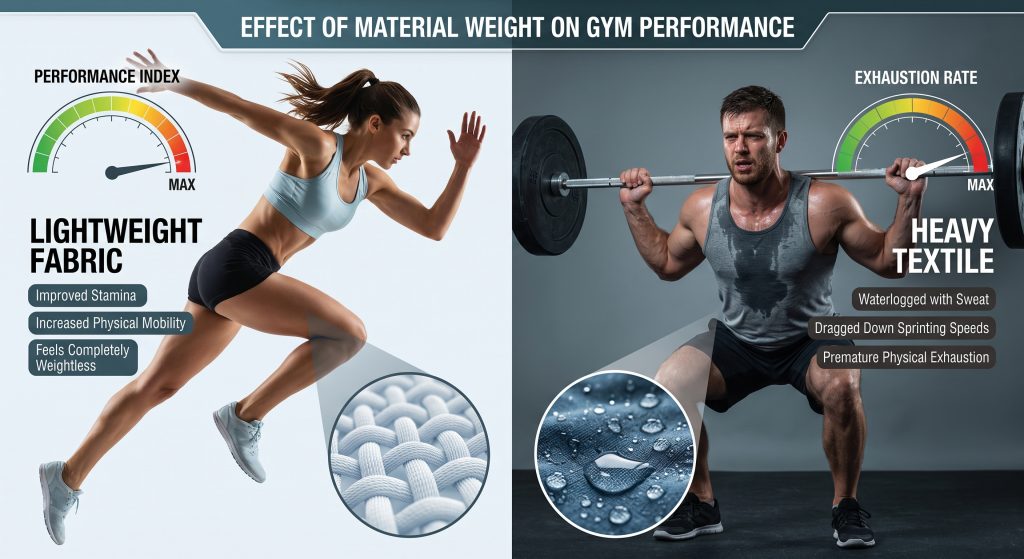
Material weight affects gym performance by directly altering athlete stamina, physical mobility, and the total energetic cost of rapid multi-directional body movements during training. Sourcing a lightweight sports theme cotton fabric allows your manufacturing plant to produce high-performance activewear that feels completely weightless to competitive runners. Heavy textiles become severely waterlogged when saturated with sweat, dragging down sprinting speeds and causing premature physical exhaustion during long tournament matches. Procurement managers must evaluate fabric weight specifications closely to guarantee the selected material aligns with the movement requirements of each sport.
When Are Light Fabrics Indispensable?
Track and field sports require thin featherweight knits that maximize explosive acceleration and prevent excessive heat accumulation during long endurance runs. This is where it gets interesting because our light hybrid cotton fabrics weigh between 130 and 160 grams per square meter while maintaining excellent strength. This thin profile creates a second-skin sensation that allows competitive athletes to focus entirely on breaking records rather than adjusting bulky clothing items. Wholesale apparel brands utilize this airy material weight to design cutting-edge fitness lines that dominate the competitive running market.
- Low mass profiles decrease aerobic energy expenditure during runs.
- Thin yarn configurations minimize bulk inside athlete equipment bags.
- Rapid air contact speeds up moisture removal from fibers.
Why Deploy Medium Weight Knits?
Medium-weight materials deliver the necessary structural substance and graceful drape required to manufacture professional athletic apparel like golf shirts or structured training jackets. Look at the facts regarding commercial presentation since flimsy thin fabrics often reveal undergarment lines and look unprofessional in corporate sports venues. Pique knits weighing between 180 and 220 grams per square meter provide wonderful opacity and build a clean masculine silhouette that flatters diverse body shapes. Sourcing teams deploy these heavier weights to satisfy institutional clients who require durable uniforms that survive daily workplace grinding.
- Substantial weights guarantee total opacity and crisp tailoring lines.
- Premium silhouettes hide body imperfections for corporate clients.
- Increased yarn mass provides mild protection against chilly morning air.
Key Takeaway: Matching precise material weights to specific athletic use cases allows your company to fulfill diverse bulk orders with total engineering accuracy.
| Weight Classes | Typical GSM Density | Primary Garment Match |
| Ultra Light Weight | 130 – 160 GSM | Marathon Singlets and Gym Shirts |
| Medium Weight | 180 – 220 GSM | Country Club Polos and Team Gear |
Analyzing these weight brackets enables clothing brands to allocate the exact material thickness required by their target retail customer demographics.
8. Why Do Modern Brands Blend Spandex Into Cotton Knits?
Modern brands blend spandex into cotton knits to introduce excellent multi-directional elastic stretch and high shape recovery metrics into a traditionally stable botanical fiber network. This smart engineering process creates an incredibly flexible sports theme cotton fabric variant that effortlessly accommodates intense body extensions during gymnastics, soccer matches, or cross-training workouts. You will find that adding even minor percentages of polyurea filaments prevents garments from becoming permanently bagged out or loose around high-stress elbow and knee joints. Clothing designers leverage this composite yarn flexibility to build slim-fitting activewear lines that flatter consumer silhouettes while supporting unhindered athletic movement.
How Does Elastic Recovery Operate?
The synthetic spandex core acts like a miniature internal spring that expands smoothly under physical tension and instantly snaps back to its original length when the force stops. You might be wondering if blending these rubber-like chemical strands ruins the breathability advantages of natural combed cotton yarns. Our factory utilizes a specialized co-axial spinning technique that wraps premium botanical fibers completely around the elastic core to preserve organic softness. This method guarantees that athletes experience total mobility without suffering the synthetic scratchiness common in cheap activewear lines.
- Synthetic internal cores provide continuous structural shape memory.
- Co-axial yarn spinning preserves natural plant softness next to skin.
- Instant fabric retraction eliminates loose saggy waistbands during exercise.
Can Pure Cotton Meet Flex Demands?
Pure cotton fabrics provide wonderful vertical stability but lack the rapid diagonal rebound required to support complex multi-directional athletic maneuvers on competitive playing fields. Here is the deal because relying solely on the natural mechanical stretch of raw yarn loops can lead to permanent garment distortion after heavy workouts. Integrating five to ten percent spandex into a pique or birdseye matrix guarantees the finished athletic wear holds its structure through intense training cycles. Sourcing this elastic hybrid textile protects your product catalog from consumer complaints regarding stretched-out collars or shapeless gym shirts.
- Pure plant materials lack rapid multi-directional stretch memory.
- Hybrid spandex blending prevents permanent distortion from heavy washing.
- Elastic structural reinforcement supports dynamic joint articulation smoothly.
Key Takeaway: Combining natural cotton with elastic polymers enables your brand to supply modern form-fitting activewear that delivers both absolute comfort and performance flexibility.
| Fiber Configuration | Elastic Expansion Range | Dimensional Longevity |
| 100% Pure Organic Cotton | Limited Mechanical Play | Prone to Permanent Stretching |
| Cotton Spandex Composite | Outstanding Four-Way Stretch | Maintains Original Shape Metrics |
This performance matrix highlights why blending elastic filaments is indispensable for engineering modern body-conforming sportswear lines that stand up to active use.
9. Can Sourcing Certified Green Textiles Protect Sales?
Yes, sourcing certified green textiles protects global sales by directly satisfying tightening environmental regulations and meeting the surging consumer demand for sustainable corporate supply chain transparency. Offering a certified eco-friendly sports theme cotton fabric option helps your business capture high-value contracts with premium international apparel brands that prioritize corporate social responsibility. You will find that modern fitness consumers actively look for validated ecological labels like the Global Recycled Standard when selecting their activewear gear. Shifting your production catalog toward green materials future-proofs your distribution network against strict environmental import penalties across North American and European trade zones.
Can Recycled Yarn Match Virgin Fiber Quality?
Advanced polymer purification technologies transform post-consumer plastic bottles into clean high-grade recycled polyester chips that spin into strong uniform synthetic filaments. What is the real story regarding physical durability and moisture-wicking metrics when weaving birdseye or pique patterns from recycled materials? Testing data proves that premium certified recycled filaments match virgin petroleum fibers perfectly in tensile strength and colorfastness ratings. Your quality assurance team can confidently transition to sustainable materials without fearing any drop in overall garment performance or consumer hand-feel satisfaction.
- Purification technologies yield clean high-uniformity polymer building blocks.
- Recycled filaments mirror virgin synthetics in burst strength tests.
- Sustainability upgrades maintain top-tier wicking performance metrics seamlessly.
Do Ecological Certifications Justify Price Premiums?
International retail buyers gladly accept moderate wholesale cost premiums when garments carry verified ecological certifications that prove responsible raw material sourcing practices. Ready for the good part because integrating these eco-certified textiles into your brand catalog allows you to command better retail margins and avoid cheap price wars. This green positioning elevates your activewear products into premium lifestyle brackets, attracting loyal consumers who value ecological stewardship alongside high athletic utility. Capitalizing on these sustainable market movements strengthens your corporate image while driving continuous financial growth in competitive international spaces.
- Third-party verification builds deep consumer trust and loyalty.
- Green product positioning insulates your brand from race-to-the-bottom pricing.
- Sustainable manufacturing alignment secures lucrative corporate athletic supply contracts.
Key Takeaway: Adopting certified green hybrid textiles allows your company to satisfy international compliance mandates while capturing affluent eco-conscious consumer demographics effortlessly.
| Material Origins | Environmental Carbon Load | Procurement Appeal |
| Certified Recycled Blends | Significantly Lower Footprint | High Among Premium Eco Brands |
| Virgin Petroleum Synthetics | High Non-Renewable Resource Drain | Declining in High-End Markets |
This ecological comparison demonstrates how transitioning to sustainable supply chains provides a distinct competitive advantage in the global apparel industry.
10. How Can Buyers Best Inspect Premium Apparel Shipments?
Buyers can best inspect premium apparel shipments by establishing strict physical quality control protocols that evaluate knit loop uniformity, elastic recovery percentages, and colorfastness metrics before mass cutting begins. Reviewing incoming batches of sports theme cotton fabric protects your production capital from hidden yarn flaws, uneven material density, and expensive batch-wide garment rejections. You must verify your factory technicians use professional testing equipment to generate repeatable data records that hold textile suppliers accountable for material deviations. Implementing these systematic inspection steps minimizes manufacturing disruptions and preserves your corporate reputation for delivering flawless athletic apparel to retail markets.
Why Review Knit Hole Uniformity First?
Uneven loop spacing or blocked apertures instantly ruin the continuous air ventilation advantages of technical open-mesh birdseye and textured pique materials. This is where it gets interesting because minor structural drop-stitches can tear open into massive holes during high-speed automated garment sewing procedures. Utilizing a large illuminated backlit inspection table allows your quality assurance staff to catch yarn irregularities and tension variations across bulk rolls immediately. Maintaining a flawless aperture distribution matrix guarantees that every manufactured training shirt delivers uniform cooling performance to the final athlete.
- Backlit visualization spots hidden yarn tension flaws instantly.
- Uniform loop distributions guarantee consistent cross-ventilation performance properties.
- Early defect detection stops workers from wasting time sewing flawed panels.
How to Validate Color Fastness Ratings?
Athletic wear undergoes extreme friction and frequent hot wash cycles, meaning your raw materials must lock dyes deep within their molecular structures to prevent bleeding. Look at the facts regarding retail brand damage since consumers will quickly return garments if vibrant colors fade or stain other clothes after one wash. Quality control labs utilize standardized commercial laundry testing to measure color retention values against international industry gray scales. Verifying these colorfastness metrics before mass production begins ensures your activewear products look bright and attractive throughout multiple athletic seasons.
- Standardized laundry testing delivers precise scientific color retention scores.
- High fastness ratings stop dark dyes from bleeding onto light trim panels.
- Certified color stability preserves brand presentation on retail clothing racks.
Key Takeaway: Enforcing rigorous physical inspection checkpoints shields your business from downstream material failures and secures the structural quality of your activewear collections.
| Quality Metrics | Factory Testing Device | Target Production Outcome |
| Knit Loop Consistency | Illuminated Backlit Table | Zero Structural Drop Stitches |
| Elastic Recovery Power | Mechanical Pull Tester | 95%+ Instant Shape Restoration |
Establishing these clear quality verification steps allows your operational managers to maintain absolute product consistency across all wholesale manufacturing shipments.
Final Summary
Choosing advanced composite knits solves the critical industry challenge of balancing soft natural skin comfort with high-speed moisture-wicking utility in modern sportswear manufacturing. This guide has detailed structural profiles, breathability metrics, and material weight brackets to help your sourcing department secure premium raw materials with complete engineering confidence. Matching open diamond configurations to intense training lines and rich honeycomb patterns to executive leisure collections optimizes your product market fit while minimizing customer returns. Our advanced textile production mill stands ready to supply your business with certified high-performance material solutions tailored to your unique assembly requirements. We eliminate manufacturing uncertainty by providing thorough sourcing transparency, rigorous quality control protocols, and custom fiber blending services to transform your activewear concepts into successful retail realities. To evaluate physical material textures or discuss your upcoming bulk production schedules, please contact us today to establish a lasting commercial partnership. We believe that building superior textiles is the absolute foundation of global athletic achievement and we remain deeply dedicated to weaving the sustainable future of international activewear design.
Frequently Asked Questions
What’s the best material blend for high-performance golf apparel?
A hybrid composition of combed cotton, recycled polyester, and spandex represents the highest quality configuration for active play. Pure cotton options look elegant but absorb sweat heavily and lose their shape after multiple washings, while pure synthetics lack premium matte texture. Combining these fibers guarantees that the finished clothing resists pilling, retains its color, and offers four-way flexibility for swings.
How do I know if birdseye fabric suits my upcoming sportswear line?
You should choose this open-pattern option if your clothing line focuses heavily on high-exertion cardiovascular exercises like running or cross-training. This specific material incorporates a continuous grid of tiny diamond apertures that maximize airflow and speed up sweat evaporation. Selecting this structure guarantees your retail products deliver the exact weightless cooling features that modern high-intensity fitness enthusiasts demand.
Can I request custom color matching for bulk textile orders?
Yes, our production facility provides precise custom color matching services based on standardized corporate Pantone codes to maintain total brand consistency. Our laboratory utilizes digital spectrophotometer testing to guarantee that every bulk dye batch matches your exact design specifications across different production runs. This precise coloration process eliminates shading variations, ensuring your matching athletic sets look perfectly uniform on retail clothing racks.
How do I know if a fabric shipment has subpar elastic recovery?
You can identify inferior material batches when a fabric sample remains loose and visibly distorted after being stretched to its horizontal limit. Premium activewear textiles must instantly snap back to their original dimensions to prevent garments from bagging out around high-stress elbow or knee joints. Running simple mechanical pull tests in your factory laboratory delivers the objective data needed to reject flawed batches before cutting.