
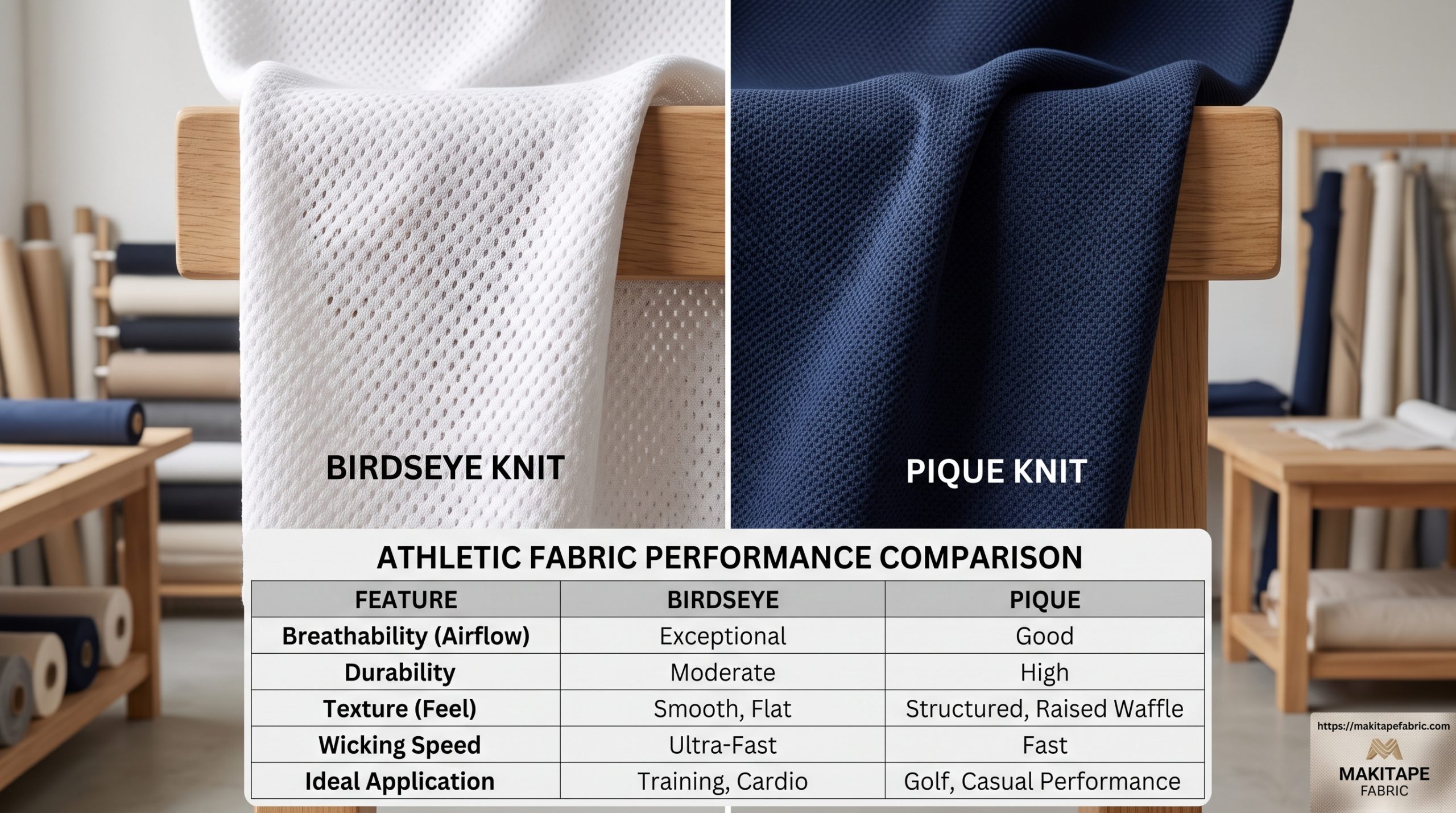
Selecting the incorrect textile for athletic apparel runs the risk of ruining user comfort and causing severe brand dissatisfaction among modern active consumer segments who demand top performance. You face massive merchandise returns and negative client reviews when your activewear collections trap sweat or cause skin chafing during intense training sessions because of poor raw materials. Relying on premium mesh or knit materials offers an immediate remedy that secures structural ventilation and perfect moisture management for your manufacturing needs. Our specialized facility provides premium fabric for sports clothing designed to satisfy rigorous global athletic testing standards while maintaining an incredibly soft touch for daily gym wear.
1. Why Choose Birdseye Fabric for Sports Clothing?
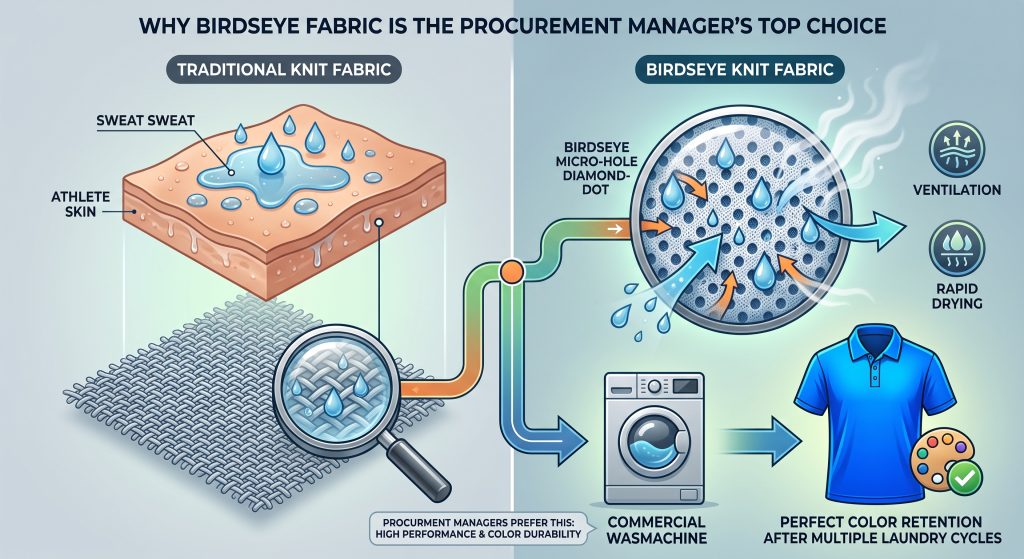
Birdseye knit offers superior ventilation due to its unique micro-hole pattern that draws sweat away from the athlete skin during high-intensity training. This specialized fabric for sports clothing provides garment manufacturers with a highly dependable solution for lightweight training shirts that need to dry rapidly. Here is the deal, choosing this material allows your brand to produce high-performance sportswear that remains comfortable even during prolonged summer outdoor athletic activities. Procurement managers prefer this option because it retains its vibrant color metrics perfectly after undergoing multiple commercial laundry cycles.
What Defines the Geometric Structure?
The distinctive diamond pattern creates small pockets that lift the material away from the human body to prevent uncomfortable fabric clinging during exercise. You might be wondering how this geometric pattern helps your sportswear production line stand out among competitors in the highly aggressive global apparel market. Our manufacturing process knits these micro-apertures with total precision to guarantee consistent air movement throughout the entire lifetime of the finished garment. Garment factories utilize this structure to achieve excellent mechanical stretch without relying heavily on high percentages of expensive spandex components.
- Micro-mesh diamond holes optimize continuous airflow.
- Lightweight synthetic yarn construction reduces total garment weight.
- Hydrophobic material characteristics assist with instant moisture dispersion.
Is Hand-Feel Soft Enough for Athletes?
The fabric face possesses an incredibly smooth texture that minimizes skin friction during repetitive athletic movements like running or heavy lifting. What is the real story behind the texture compared to traditional double-knit interlock materials commonly used by major fitness apparel brands? Our yarn texturing methods smooth out individual synthetic filaments to guarantee the finished knit feels gentle against sensitive areas of human skin. Your design team will find that this material drapes beautifully on the body while providing adequate structure for modern athletic cuts.
- Filament texturing smooths individual synthetic fibers.
- Soft structural face prevents abrasions during long distance runs.
- Supple drape quality enhances the overall aesthetic value.
Key Takeaway: Utilizing birdseye material allows your business to supply lightweight, non-clinging activewear that satisfies consumers who prioritize cool comfort during intense gym workouts. This structural choice provides a distinct selling point for retail buyers who inspect tactile properties before confirming bulk commercial apparel purchases. By selecting this material, your garment brand can confidently market performance training shirts that solve the common problem of heavy sweat accumulation. This product choice ultimately secures your market position as a forward-thinking clothing manufacturer focused on exceptional thermal regulation qualities.
| Feature | Birdseye Fabric Performance |
| Surface Structure | Miniature Diamond Knit Apertures |
| Primary Benefit | Maximum Airflow and Rapid Drying |
| Tactile Texture | Smooth and Friction-Free |
This structural breakdown reveals why birdseye knit outperforms alternative options when maximizing thermal comfort during high-temperature training sessions.
2. Is Pique Fabric for Sports Clothing More Durable?
Pique knits provide exceptional structural durability because the geometric weaving method reinforces individual yarn loops against heavy wear and tearing. This robust fabric for sports clothing withstands frequent commercial washings without losing its shape or developing unsightly pilling on the outer surface. Ready for the good part, this stability means your brand can manufacture premium tennis or golf apparel that maintains a crisp profile for years. Global sourcing agents pick this heavy-duty material to satisfy corporate clients who demand durable clothing for team uniforms.
What Creates the Honeycomb Texture?
A raised geometric pattern defines the pique surface, generating a waffle or honeycomb appearance that gives the material its signature thickness. This is where it gets interesting because this thickness creates a natural buffer zone that keeps the outer layer lifted off your skin. The specialized construction utilizes a double-knit machine setup that interlaces parallel yarns to form stable geometric ridges across the textile face. Clothing factories choose this structure to achieve a professional look that hides sweat stains better than smooth flat knits.
- Honeycomb ridges create an appealing three-dimensional textile surface.
- Double-knit manufacturing increases overall tensile material strength.
- Raised weave patterns reduce direct textile contact with human skin.
Does It Maintain Shape Over Time?
The structural weight prevents the garment from sagging or stretching out after long periods of intense physical movement on the field. Look at the facts, polo shirts made from this robust material look sharp all day long regardless of humidity levels or heat exposure. The tight interlacing of yarns controls mechanical distortion so that collars and cuffs retain their original dimensions after multiple wash cycles. Sourcing teams rely on this structural memory to reduce product defect rates and minimize consumer complaints regarding misshapen garments.
- Tight yarn interlacing prevents horizontal garment distortion.
- Structural memory preserves crisp collar shapes on polo shirts.
- Robust weight limits sagging during prolonged physical activities.
Key Takeaway: Selecting premium pique textiles helps your apparel brand manufacture long-lasting sportswear that projects an upscale, professional corporate identity while resisting severe abrasive wear. This material choice allows your distribution network to target country clubs, corporate athletic events, and high-end tennis academies seeking premium gear. Investing in this sturdy knit format safeguards your manufacturing reputation by preventing premature material degradation under harsh environmental conditions. Your buyers will recognize the inherent value of heavy-duty garments that remain functional and visually appealing throughout consecutive athletic seasons.
| Attribute | Pique Fabric Performance |
| Surface Geometry | Honeycomb Waffle Ridges |
| Structural Integrity | High Tensile Strength and Shape Retention |
| Ideal Application | Premium Golf and Corporate Sportswear |
Reviewing these durability parameters explains why pique construction remains the industry benchmark for corporate sportswear programs requiring long-term structural resilience.
3. Which Fabric for Sports Clothing Breathes Better?
Birdseye knit offers significantly greater breathability due to its continuous micro-aperture matrix that allows hot air to escape without restriction. This breathable fabric for sports clothing outperforms dense pique structures during high-sweat exercises by accelerating evaporative cooling across the body surface. But here is the kicker, choosing the right knit structure determines whether an athlete remains cool or overheats during professional tournament play. Garment engineers select this ventilated structure to build specialized running gear that assists with physiological thermal regulation during marathons.
How Do Airflow Pathways Differ?
Open holes in birdseye panels act like tiny exhaust fans that move humid air away from the skin instantly. What is the real story behind pique airflow since it also features a multi-dimensional raised surface structure? While pique allows air to circulate within its waffle grooves, its double-knit backing creates a thicker barrier against cross-ventilation. Testing data confirms that open-mesh variants allow higher cubic feet per minute of airflow compared to heavy waffle structures.
- Birdseye micro-holes provide direct paths for heat dissipation.
- Pique waffle grooves trap minor air pockets for mild insulation.
- Open knits improve comfort during indoor gym training sessions.
Which Prevents Post-Exercise Chilling?
Rapid moisture evaporation prevents wet materials from sticking to skin and dropping body temperatures too quickly after intense workouts end. Ready for the good part, birdseye textiles dry at double the speed of traditional pique options because of thin yarn layouts. This rapid drying mechanism prevents muscle tightness caused by cold wind blowing through damp garments during outdoor training sessions. Product development teams utilize these drying metrics to build multi-season training apparel that manages body heat during transitional weather.
- Fast drying speeds eliminate the heavy wet garment sensation.
- Efficient thermal regulation prevents post-workout muscle cooling.
- Thin synthetic profiles minimize moisture retention in fibers.
Key Takeaway: Specifying birdseye knit for high-exertion apparel guarantees that athletes experience maximum ventilation and rapid drying, which directly improves their stamina and comfort. This performance advantage gives your sales representatives a compelling technical feature to highlight when pitching to professional sports teams. By addressing the critical need for climate control in athletic wear, you position your brand as a premier performance supplier. This strategic fabric allocation maximizes consumer comfort while strengthening your market authority in the high-performance activewear sector.
| Performance Metric | Birdseye Knit | Pique Knit |
| Air Permeability | Outstanding (Open Holes) | Moderate (Dense Backing) |
| Drying Speed | Ultra-Fast | Moderate |
| Thermal Sensation | Cooling | Neutral to Warm |
Comparing these ventilation vectors highlights why open-structured knits are better suited for intense cardio training than heavier double-knit options.
4. How Does Texture Affect Fabric for Sports Clothing?
Surface texture dictates the amount of friction generated between the moving garment and human skin during active sports participation. Choosing an inappropriate fabric for sports clothing can cause skin irritation or severe chafing when athletes perform repetitive motions over long durations. This is where it gets interesting because tactile smoothness directly influences consumer buying decisions at the retail showroom level. Product designers must balance visual texture with physical skin comfort to create commercially successful apparel lines for modern athletic markets.
Why Avoid Rough Textile Faces?
Coarse fabric faces act like sandpaper against sensitive areas during long distance running or intense rowing workouts. You might be wondering if pique knits cause irritation given their raised honeycomb patterns and thicker yarn profiles. Fortunately, modern softening treatments eliminate scratchiness, but the texture remains more prominent than the ultra-flat finish of birdseye knits. Selecting a smooth yarn profile keeps athletes focused on their physical performance rather than garment discomfort.
- Smooth surfaces minimize chafing risks during intense cardiorespiratory training.
- Soft finishes protect sensitive skin from mechanical fabric abrasion.
- Flat knits layer comfortably under outerwear without binding or bunching.
How Does Texture Drive Brand Perception?
Premium hand-feel communicates luxury and high manufacturing standards to retail customers the moment they touch your sportswear garment. Look at the facts, consumers associate distinct textures like pique with classic heritage sports like tennis, golf, and sailing. Utilizing a refined texture allows your marketing department to justify premium retail price points for casual corporate athletic collections. Your manufacturing facility can leverage these sensory associations to capture niche markets that value traditional athletic styling.
- Distinct textures elevate basic apparel designs into premium collections.
- Refined hand-feel justifies higher retail margins for your brand.
- Traditional patterns build strong consumer associations with heritage athletics.
Key Takeaway: Evaluating textile texture helps you match the garment face to specific athletic use cases, satisfying demands for both soft comfort and upscale styling. This attention to sensory detail ensures your finished products align perfectly with customer expectations across diverse sports disciplines. By matching flat surfaces to intense training and raised patterns to leisure sports, you optimize your catalog structure. This sophisticated product sorting methodology drives higher buyer satisfaction and builds lasting brand loyalty among commercial clients.
| Texture Type | Physical Profile | Brand Association |
| Flat Birdseye | Smooth, Micro-Dotted | Modern, High-Performance |
| Raised Pique | Honeycomb, Textured | Classic, Premium Leisure |
This comparison reveals how tactile characteristics define both the functional utility and market positioning of your athletic apparel line.
5. Can Weight Impact Your Fabric for Sports Clothing?
Material weight directly influences athlete mobility, endurance, and overall comfort during extended training sessions or competitive sports matches. Sourcing an appropriate lightweight fabric for sports clothing allows your production plant to manufacture top-tier athletic garments that feel completely weightless. But here is the kicker, heavy fabrics retain more sweat and drag down physical performance when conditions become damp. Smart procurement teams evaluate grams per square meter closely to guarantee the chosen material fits the specific physical activity requirements.
When Are Lightweight Knits Needed?
Track and field athletes require ultra-lightweight materials that maximize freedom of movement and prevent excessive heat accumulation during sprints. What is the real story regarding weight variations between birdseye structures and standard pique options available from global textile suppliers? Birdseye typically ranges from 130 to 160 grams per square meter, making it far lighter than heavy pique variants. This reduced weight profile allows sportswear brands to design garments that feel like a second skin for competitive runners.
- Low weight profiles minimize aerodynamic drag for competitive sprinters.
- Thin material layers compress easily for compact travel and storage.
- Lightweight materials allow rapid evaporation of moisture from fiber surfaces.
Why Value Mid-Weight Fabric Profiles?
Mid-weight textiles offer the necessary substance and drape required for structured apparel items like corporate polo shirts or outerwear. Ready for the good part, pique fabrics usually weigh between 180 and 220 grams per square meter, providing excellent opacity and durability. This heavier profile creates a premium silhouette that skims the body nicely without clinging to midsections uncomfortably during movement. Sourcing managers specify these heavier weights when designing uniforms that must withstand daily usage and rigorous industrial washing.
- Heavier weights guarantee excellent garment opacity and prevent show-through.
- Substantial structures create a professional silhouette for corporate uniforms.
- Thicker knits offer mild insulation during cool morning outdoor events.
Key Takeaway: Balancing material weight properties allows your business to cater to both high-speed performance markets and premium corporate leisure sectors with tailored solutions. This product diversity helps your brand fill multiple segments of a commercial buyer inventory requirement simultaneously. By offering thin, ventilated options alongside sturdy, structured knits, you satisfy varied purchasing managers across the globe. This approach expands your market share and stabilizes your textile manufacturing revenue streams across different seasons.
| Fabric Category | Typical Weight Range | Best Product Fit |
| Birdseye Knit | 130 – 160 GSM | Racing Singlets, Gym Shirts |
| Pique Knit | 180 – 220 GSM | Golf Polos, Tennis Apparel |
Examining these weight divisions helps sourcing professionals choose the exact fabric thickness required for targeted athletic consumer demographics.
6. Why Does Moisture Control Matter for Sports Clothing?
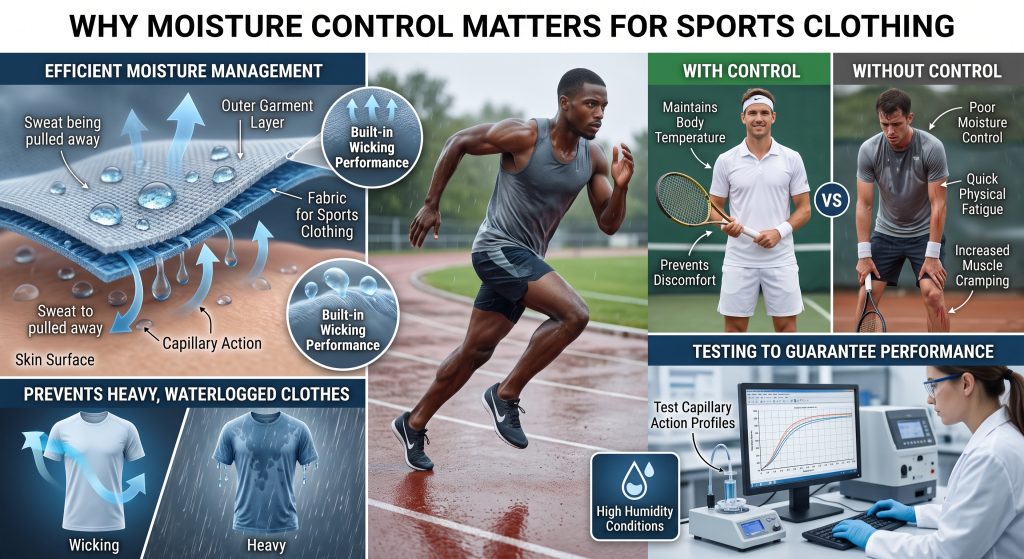
Efficient moisture management keeps athletes dry by pulling sweat away from the skin surface and moving it toward the outer garment layer. Selecting an advanced fabric for sports clothing with built-in wicking performance prevents clothing from becoming heavy and waterlogged during heavy downpours. This is where it gets interesting because poor moisture control causes quick physical fatigue and increases the likelihood of muscle cramping during games. Apparel brands must test capillary action profiles to guarantee their clothing performs flawlessly under high humidity conditions.
How Does Capillary Action Function?
Microscopic channels within synthetic yarns pull liquid sweat upward using natural capillary pressure, distributing moisture across a wider surface area. You might be wondering whether birdseye or pique structures leverage this capillary phenomenon more effectively during intense active sports training. The open diamond cells of birdseye accelerate this fluid transport mechanism, allowing moisture to reach the air almost instantly for drying. This engineering feature prevents sweat from pooling on the skin, reducing the risk of thermal shock during breaks.
- Yarn channels move moisture away from skin via capillary force.
- Wider fluid distribution speeds up the overall evaporation process.
- Hydrophobic treatments prevent fibers from absorbing water internally.
Does Pique Retention Create Discomfort?
The thicker yarn arrangements in pique knit tend to hold onto water longer, which can create a damp sensation during low-intensity intervals. Look at the facts, this makes pure cotton pique less suitable for intense cardio workouts where sweat output is continuous and heavy. However, utilizing polyester or nylon blends solves this issue, allowing pique to dry at acceptable speeds for leisure sports like golf. Choosing the right fiber blend ensures that even heavier textured shirts remain comfortable during warm outdoor matches.
- Thicker double-knit structures can retain humidity during heavy workouts.
- Synthetic fiber blends improve the drying capabilities of textured knits.
- Lower moisture retention prevents fabric from sticking to the torso.
Key Takeaway: Prioritizing swift moisture transport properties ensures your apparel brand delivers high-performance clothing that keeps athletes dry, focused, and physically comfortable. This functional advantage minimizes consumer complaints regarding wet, clinging activewear during grueling summer sports camps. By focusing on moisture management, your company builds a strong reputation for functional textile excellence. This commitment to performance characteristics encourages repeat orders from discerning wholesale distribution networks worldwide.
| Material Property | Birdseye Performance | Pique Performance |
| Capillary Action Speed | Ultra-Fast | Moderate |
| Moisture Retention | Very Low | Moderate to High |
| Surface Dryness Feel | Dry and Cool | Slightly Damp to Warm |
Reviewing these moisture transport variables clearly shows why capillary efficiency is paramount when engineering top-tier sportswear lines.
7. Is Eco-Friendly Fabric for Sports Clothing Better?
Sustainable yarn sourcing minimizes plastic waste and reduces carbon footprints while meeting the high performance expectations of green-minded sports consumers worldwide. Offering recycled fabric for sports clothing helps your business attract premium apparel brands that prioritize corporate social responsibility in their procurement strategies. But here is the kicker, eco-friendly materials must deliver identical strength and moisture-wicking capabilities compared to virgin petroleum-based synthetic alternatives. Smart textile factories utilize certified recycled polyester yarns to maintain top-tier performance while protecting fragile environmental ecosystems.
Can Recycled Polyester Match Virgin Quality?
Advanced recycling methods purify post-consumer plastic bottles into high-quality polymer chips that spin into strong, uniform synthetic textile filaments. What is the real story about tensile strength drops when manufacturing birdseye or pique structures from recycled yarns? Testing proves that certified recycled polyester matches virgin fiber performance metrics, providing excellent stretch resistance and vibrant dye uptake. Your quality control team can confidently switch to green yarns without fearing drops in garment durability or touch.
- Purified polymer chips guarantee consistent fiber extrusion quality.
- Tensile strength matches virgin synthetic fibers perfectly.
- Excellent dye affinity prevents color bleeding during laundering.
Do Consumers Pay More for Sustainability?
Global market research indicates that modern athletic consumers actively seek out apparel brands that transparently disclose sustainable material sourcing practices. Ready for the good part, retail buyers gladly accept moderate price premiums when garments feature verified eco-friendly certifications like Global Recycled Standard. Integrating sustainable materials into your production catalog allows your business to command better margins while fulfilling eco-conscious corporate contracts. This market alignment enhances your corporate profile and satisfies strict environmental compliance mandates across North America and Europe.
- Verified certifications attract high-value retail buyers and eco-brands.
- Transparent sourcing practices build deep consumer trust and brand equity.
- Green product positioning justifies premium retail price points globally.
Key Takeaway: Adopting recycled polyester options allows your activewear business to satisfy modern environmental standards while providing the exact same high-performance features. This sustainable transition opens doors to lucrative corporate contracts with international brands seeking verified green manufacturing partners. By combining functional utility with environmental awareness, you capture a fast-growing market segment that values ecological responsibility. This proactive strategy ultimately future-proofs your apparel brand against tightening global environmental distribution regulations.
| Fiber Source | Environmental Impact | Performance Level | Certification |
| Recycled Polyester | Low Carbon Footprint | High-Performance | GRS Certified |
| Virgin Polyester | High Resource Use | High-Performance | Standard Industry |
This sustainability assessment verifies that eco-friendly yarns provide a profitable commercial edge without sacrificing any technical fabric capabilities.
8. How to Inspect Premium Fabric for Sports Clothing?
Thorough quality inspection practices guarantee that incoming textile batches satisfy strict manufacturing specifications before mass garment cutting operations begin. Evaluating your raw fabric for sports clothing prevents costly production line errors, reduced factory efficiency, and bulk garment rejections by retail clients. This is where it gets interesting because minor defects in knit structures can expand into massive holes during intensive garment sewing procedures. Setting up strict testing protocols protects your production investments and guarantees consistent performance across all activewear collections.
Why Check Hole Consistency First?
Uneven knit patterns or blocked micro-apertures disrupt continuous airflow and ruin the cooling advantages of performance birdseye mesh materials. You might be wondering how inspectors can spot tiny structural variations across thousands of meters of rapidly moving textile rolls. Utilizing a professional backlit inspection table allows quality teams to detect yarn irregularities, drop stitches, and uneven tension instantly. Maintaining perfect hole consistency guarantees that every manufactured shirt delivers uniform breathability to the end user.
- Backlit tables reveal hidden yarn tension variances immediately.
- Uniform hole distribution guarantees balanced garment airflow characteristics.
- Early defect detection prevents cutting flawed textile panels.
How to Test Stretch and Recovery?
Sportswear must stretch with the athlete body and snap back to its original shape without leaving baggy elbows or waistbands behind. Look at the facts, manual stretch testing provides immediate feedback, but precise mechanical pull tests deliver repeatable data for corporate quality records. Fabric batches should undergo standardized pull testing to measure elongation percentages and permanent set values after repeated cycling. Verifying these elastic recovery metrics guarantees your activewear products maintain their shape through intense workouts and washings.
- Mechanical testing delivers precise, repeatable stretch data points.
- High recovery percentages eliminate sagging issues in fitted activewear.
- Consistent testing guarantees compliance with corporate athletic brand standards.
Key Takeaway: Implementing rigorous textile inspection procedures shields your garment assembly plant from expensive raw material defects and damaging customer returns. This preventive strategy guarantees your finished athletic clothing lines consistently meet the highest standards of international apparel distributors. By catching flaws early, you save manufacturing hours and protect your factory operating margins from unexpected losses. This systematic dedication to quality control reinforces your position as a trusted, high-caliber B2B sportswear supplier.
| Inspection Parameter | Testing Method | Target Outcome |
| Knit Pattern Uniformity | Backlit Visual Review | Zero Dropped Stitches |
| Elasticity Recovery | Mechanical Pull Test | 95%+ Shape Restoration |
| Dye Fastness | Commercial Laundering | Zero Color Bleeding |
Establishing these clear testing checkpoints allows your production management team to maintain absolute product consistency across varying manufacturing cycles.
9. Which Fabric for Sports Clothing Offers More Stretch?
Elastic performance determines whether a garment accommodates intense multi-directional human movements smoothly during gymnastics, soccer, or cross-training workouts. Selecting a flexible fabric for sports clothing guarantees that athletes can move without restriction while maintaining a secure, body-hugging garment fit. But here is the kicker, the knit pattern itself can provide natural mechanical stretch even without adding expensive spandex filaments. Garment pattern makers must evaluate these stretch vectors closely to choose the right material for tight-fitting activewear designs.
Does Birdseye Provide Better Flex?
The open diamond cell structure of birdseye allows the knit to expand diagonally, providing excellent comfort for high-speed tracking movements. What is the real story about horizontal flexibility when comparing this light mesh with structured double-knit pique textiles? Birdseye offers superior cross-grain flexibility, making it ideal for shirts that must expand as an athlete inhales deeply during cardio. This lightweight flexibility reduces muscle fatigue by reducing the force required to stretch the garment during movement.
- Diamond cell geometry permits natural multi-directional mechanical stretch.
- Cross-grain expansion accommodates heavy chest movements during breathing.
- Reduced resistance allows unhindered athletic performance during workouts.
Is Pique Flexibility Too Restrictive?
Pique structures feature a tighter, more locked knit pattern that limits diagonal stretch but provides wonderful vertical stability for polo shirts. Ready for the good part, this stability prevents garments from losing their length or sagging downward when heavy items are placed in pockets. To improve flexibility for active play, textile engineers often add five to ten percent spandex into the pique yarn blend. This combination delivers the classic textured look of polo apparel while offering modern flexibility for golf swings.
- Locked patterns provide excellent vertical stability and shape support.
- Spandex additions introduce multi-directional flexibility into textured knits.
- Balanced structures prevent long-term garment elongation after wear.
Key Takeaway: Evaluating the unique stretch capabilities of your textile options helps you allocate the correct material to loose training shirts or structured uniforms. This accurate selection method guarantees that each sports discipline receives the exact degree of mobility required for optimal athlete performance. By matching high-flex textiles to intense activities, you optimize your client product satisfaction metrics significantly. This engineering precision elevates your corporate activewear offerings above generic, non-specialized apparel alternatives on the market.
| Fabric Style | Natural Stretch Profile | Spandex Requirement | Best Use Case |
| Open Birdseye | High Mechanical Flex | Minimal (0% – 3%) | Cardio and Running Shirts |
| Textured Pique | Low Mechanical Flex | Moderate (5% – 10%) | Golf and Corporate Apparel |
Analyzing these flexibility profiles reveals how different knitting configurations directly dictate the physical range of motion allowed in finished sportswear.
10. How Do Costs Vary for Fabric for Sports Clothing?
Wholesale material pricing depends heavily on weight configurations, specialized fiber blends, eco-friendly certifications, and the complexity of the knitting patterns used. Navigating bulk costs for your fabric for sports clothing requires a deep understanding of how production choices affect your bottom-line profitability. This is where it gets interesting because saving money on cheap raw materials often leads to high factory defect rates during manufacturing. Procurement professionals must balance up-front material expenditures with downstream processing efficiencies to maximize long-term corporate profit margins.
Why Is Birdseye Often Cost-Effective?
Simpler single-knit processing requirements and lower average weights mean birdseye structures require less raw material per square meter during production. You might be wondering if these lower production costs translate to cheap performance characteristics when utilized in mass activewear lines. On the contrary, this cost-efficiency allows garment brands to invest more budget into advanced moisture-wicking treatments or custom sublimation printing. This financial flexibility helps startup athletic brands launch high-quality training collections without exhausting their initial working capital.
- Single-knit manufacturing speeds up overall factory production turnaround.
- Lower raw material consumption reduces total base fabric costs.
- Cost savings can be reallocated to advanced performance fabric treatments.
What Drives Up Pique Production Pricing?
Double-knit manufacturing setups require specialized machinery configurations and higher yarn volumes to build those thick, durable honeycomb surface textures. Look at the facts, adding premium long-staple cotton or elastic spandex fibers further escalates the total raw material cost per meter. However, the resulting premium product commands much higher retail price points, easily offsetting the initial manufacturing investment for your business. Smart clothing brands view this higher cost as an investment into an upscale market segment that values luxury.
- Complex double-knit processing limits daily factory output capacity.
- Higher yarn volume requirements increase overall material base weight.
- Premium fiber additions elevate the wholesale cost per production meter.
Key Takeaway: Understanding these pricing dynamics allows your procurement department to maximize manufacturing budgets while selecting the perfect material tier for your market. This financial foresight guarantees your sportswear lines achieve the perfect balance between competitive manufacturing costs and consumer performance expectations. By aligning material selections with target retail price points, you protect your corporate net margins effectively. This strategic budgeting approach fosters long-term financial stability and continuous growth in the competitive international apparel landscape.
| Knit Layout | Production Complexity | Relative Cost Tier | Market Positioning |
| Single Birdseye | Low to Moderate | Budget to Mid-Tier | Mass Performance Wear |
| Double Pique | Moderate to High | Mid to Premium Tier | High-End Leisure Apparel |
Reviewing this financial layout clarifies how production complexity shapes wholesale textile costs and guides downstream retail pricing strategies.
Final Summary
Selecting between birdseye and pique knits resolves the common industry dilemma of balancing maximum athletic ventilation with long-term structural durability. This guide clarified structural differences, weight variations, and performance profiles so your sourcing department can purchase raw materials with absolute confidence. Choosing flat, open structures satisfies athletes focused on intense cardio workouts, while choosing textured double-knits fulfills the needs of premium corporate sportswear lines. Aligning these material characteristics with your specific product design goals minimizes consumer returns and optimizes overall brand satisfaction among your distribution networks.
Our manufacturing facility stands ready to supply your business with certified, high-performance textile solutions tailored to your unique production requirements. We provide thorough sourcing support, reliable quality control protocols, and custom fiber blending to transform your design concepts into successful apparel lines. To discuss your upcoming bulk production needs or request a customized physical sample book, please contact us today to partner with an industry leader. We believe that engineering superior textiles is the foundation of global athletic achievement, and we remain dedicated to weaving the future of sustainable performance activewear.
Frequently Asked Questions
Q1: Can I use birdseye knit for premium golf polo shirts?
Yes, you can absolutely utilize this material for polo shirts if your target market prioritizes maximum cooling performance over a traditional heavy weight. While classic polo shirts traditionally feature thicker honeycomb layouts, modern active golfers increasingly request lightweight, ultra-breathable mesh options for playing in hot climates. Sourcing this single-knit alternative allows your brand to capture the attention of high-performance athletes who find heavy fabrics uncomfortable during summer tournaments. Ultimately, this material switch helps your sportswear brand stand out by offering a highly functional, modern variation of a classic athletic garment.
Q2: What is the best fiber composition for durable pique apparel?
A blend of polyester and spandex represents the highest quality configuration for active use because it combines structural strength with multi-directional flexibility. Pure cotton versions look wonderful but tend to absorb sweat heavily and lose their shape after undergoing multiple commercial laundering cycles in commercial facilities. Combining synthetic filaments guarantees that the finished clothing resists pilling, retains its original color saturation, and dries quickly during humid weather. This corporate material choice secures product longevity, which helps garment brands reduce product defect returns and build deep consumer trust.
Q3: How do I know if birdseye fabric suits my training collection?
You should select this open-mesh option if your upcoming activewear collection focuses heavily on intense cardiovascular activities like long-distance running or indoor gym training. This material features a continuous matrix of tiny diamond holes that maximize airflow, helping athletes stay cool when sweat production is at its peak. If your consumer base demands weightless garments that dry almost instantly, this single-knit structure provides the perfect functional answer for your design requirements. Choosing this material guarantees your retail products deliver the exact performance features that modern high-intensity fitness enthusiasts look for.
Q4: Can I request customized color matching for bulk orders?
Yes, professional textile manufacturers routinely provide custom color matching services based on standardized Pantone color codes to maintain absolute brand consistency across apparel lines. Our production plant utilizes digital spectrophotometer testing to guarantee that every bulk dye batch matches your corporate design specifications with total precision. This advanced coloring process prevents shade variations between different production runs, ensuring your matching shirts and shorts look uniform on retail clothing racks. Providing consistent color metrics protects your brand image and satisfies the strict quality expectations of international athletic clothing distribution networks.
Q5: How do I know if a textile batch has poor recovery properties?
You can easily identify subpar material batches when a fabric sample remains loose and distorted after being manually stretched to its maximum horizontal limit. High-quality activewear materials must instantly snap back to their original dimensions to prevent garments from sagging or bagging out around high-stress joints. Performing simple standardized pull tests in your factory quality laboratory provides the precise data required to reject inferior yarn batches before cutting. Verifying elastic recovery safeguards your final garment construction quality and keeps retail consumers satisfied with the long-term fit of your clothing.