Finding high-quality digital options requires selecting base textiles that maintain complete moisture permeability while preserving sharp design lines under physical tension. Here is the deal because apparel manufacturing brands frequently suffer when low-grade pattern applications crack apart or block crucial airflow pores during intense athletic workouts. Your commercial clients will reject premium activewear collections immediately if stiff ink overlays cause unexpected skin chafing or result in heavy sweat accumulation during competitive events. Sourcing advanced polymer-cotton materials with integrated geometric wicking channels resolves these performance failures entirely, keeping your retail collections vibrant and soft. Our advanced manufacturing facility offers premium sports fabric prints specifically engineered to withstand rigorous industrial cleaning cycles while preserving maximum skin comfort for global athletes.
1. How do sports fabric prints alter performance apparel?
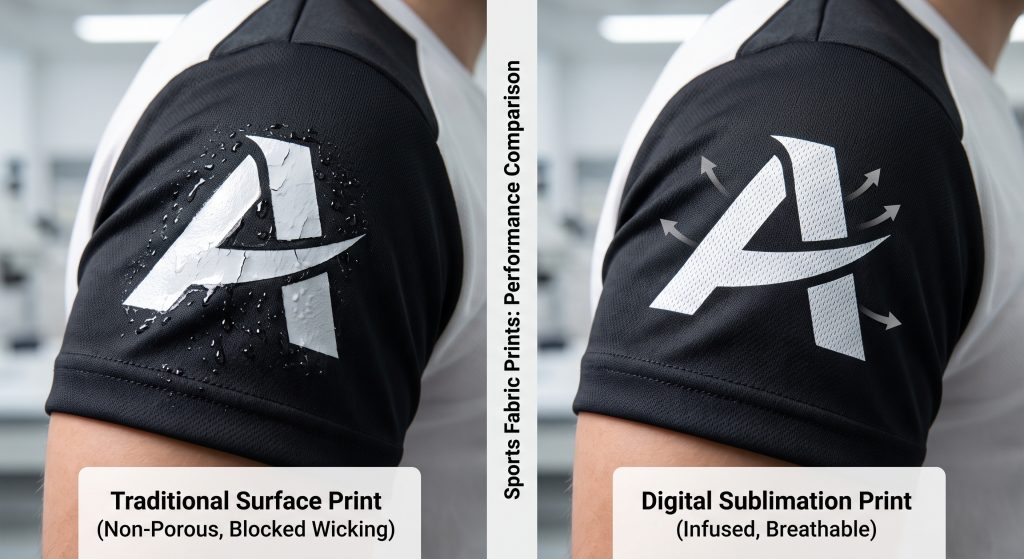
Selecting premium sports fabric prints drastically improves modern performance garments by fusing vivid graphical aesthetics directly with the structural moisture-wicking properties of specialized technical yarns. This is where it gets interesting because outdated surface printing methods often layer thick non-porous chemical films over flexible fabrics, which completely ruins the natural elasticity and mechanical breathability needed for rigorous training routines. When you upgrade to deep-penetration digital sublimation systems, the specialized color pigments become an integral part of the polymer filaments rather than sitting as a heavy crust on top of the garment. This professional production approach ensures your corporate apparel clients receive highly reliable team uniforms that maintain crisp visual definition without compromising athletic agility during seasonal competitive tournaments globally.
The Evolution of Digital Sublimation
Modern textile engineering has replaced heavy traditional screen printing options with advanced gasified dye processes to ensure intricate design patterns do not alter fabric flexibility. You might be wondering how industrial manufacturing lines achieve such brilliant color saturation across complex multi-layered illustrations without clogging the microscopic spaces between the knitted threads. By deploying precision thermal sublimation systems, the ink transforms instantly into gas under high pressure and binds perfectly inside the synthetic yarn core. This unique molecular bonding pattern preserves the original breathability of the textile, allowing sweat vapor to escape freely while displaying hyper-vibrant team graphics perfectly on store racks.
- Gasified dye deployment safeguards original structural flexibility.
- High-pressure thermal systems prevent surface ink crusting.
- Molecular filament bonding allows sweat vapor to escape.
Why Texture Matters for Your Brand
The underlying physical texture of your selected material changes how light reflects off custom graphic prints, dictating whether your activewear line looks premium or cheap. Look at the facts since flat plain-woven synthetics frequently look dull under bright gym lighting, which ultimately lowers the perceived wholesale value of your finished apparel catalog. Utilizing specialized knit profiles adds incredible visual depth to your custom illustrations, making geometric patterns and sharp brand logos stand out with a sophisticated three-dimensional look. This strategic material choice helps sourcing managers position their clothing collections in high-end retail markets, commanding higher profit margins from discerning fitness consumers.
- Textural variations enhance visual depth under stadium lights.
- Structured knit matrices maximize perceived corporate product value.
- Three-dimensional backdrops elevate simple corporate logos beautifully.
Key Takeaway: Upgrading to deep-penetration digital sublimation processes protects your activewear lines from stiff, non-porous patterns, ensuring garments remain perfectly elastic and breathable during high-exertion athletic activities.
| Printing Parameter | Sublimation Printing Profile | Screen Film Paste Output |
| Pore Openness Rate | 100% Retained Airway Paths | Clogged Surface Channels |
| Visual Line Sharpness | Crisp High-Resolution Vector | Thick Blurred Edge Profiles |
This technical manufacturing chart confirms that deep vapor printing preserves full fiber ventilation channels while traditional surface pastes completely choke material breathability.
2. Why do structural knits impact sports fabric prints?
Structural knits impact sports fabric prints by shifting how ink droplets distribute across the micro-apertures of the textile face during high-temperature processing. Ready for the good part because picking between a completely flat knit layout and a heavily textured mesh design directly influences both the graphic sharpness and the final air permeability scores. Sourcing professionals must analyze these geometrical differences carefully before launching mass production runs, as an incorrect pairing can cause fine vector lines to blur or distort across seams. Our facility tracks these microscopic yarn variations continuously to help your engineering team select the ideal base layout for your upcoming seasonal corporate sportswear collections.
Birdseye Mesh vs Honeycomb Pique
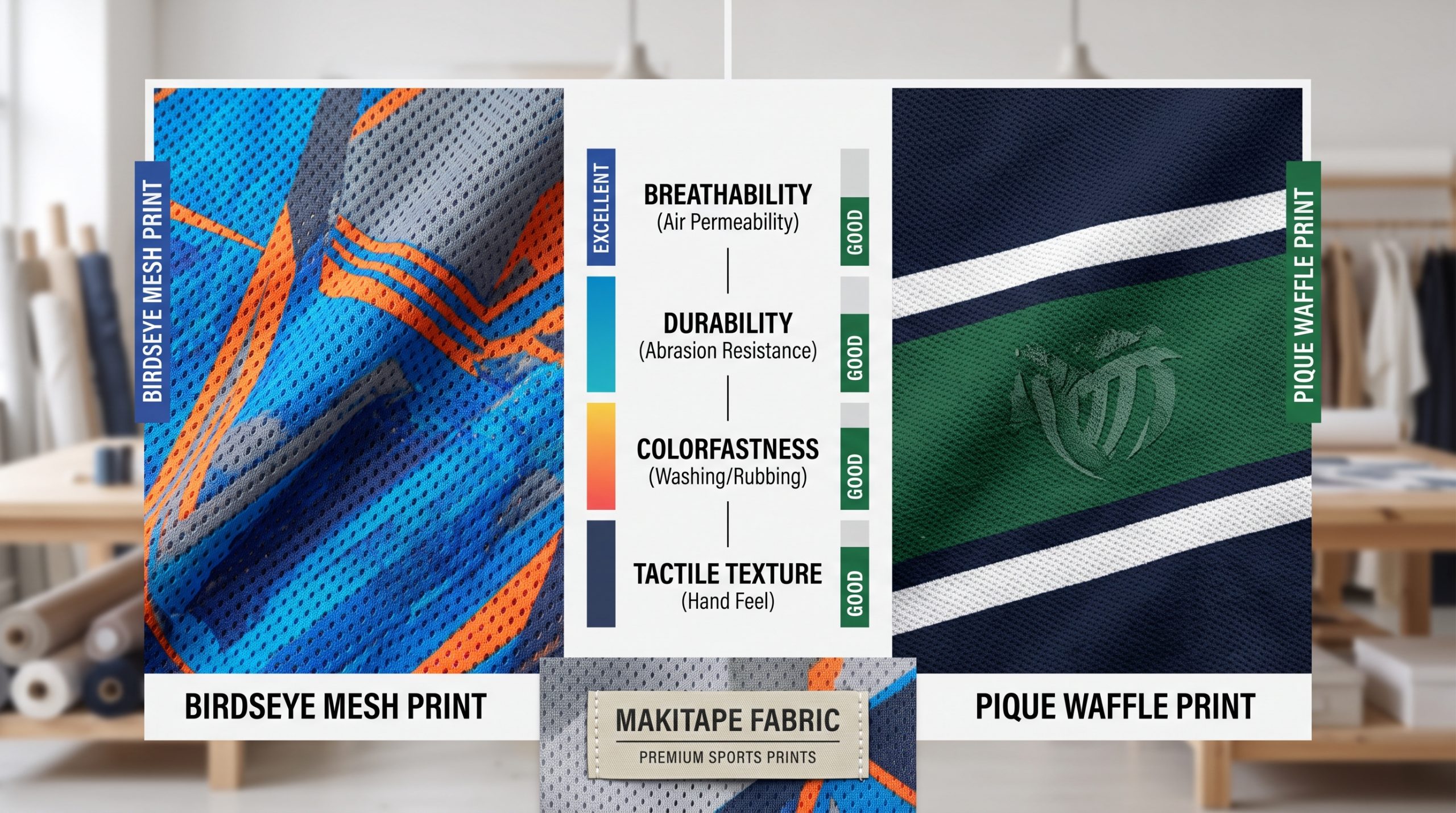
Birdseye mesh features a uniform pattern of miniature diamond-shaped holes that provide an exceptionally smooth surface for rendering high-definition digital graphics cleanly. What is the real story behind using this layout versus a traditional chunky pique knit for your premium corporate athletic apparel lines? While the smooth birdseye structure excels at maintaining flawless design continuity, the raised waffle ridges of pique knit create a substantial classic look that adds rich tactile quality to corporate polo shirts. Sourcing agents prefer the rugged thickness of pique for country club team wear, whereas birdseye mesh remains the undisputed king for weightless high-speed marathon running gear.
- Uniform diamond apertures render intricate vectors smoothly.
- Raised waffle ridges project a classic premium appearance.
- Specialized structural separation prevents garment clinging when wet.
Can Geometric Pores Prevent Trapped Heat?
Integrated geometric pores act as natural ventilation windows that actively pull hot humid air away from the skin during intensive cross-training workouts. Here is the deal because standard tightly woven fabrics naturally trap body heat and sweat, creating a sticky uncomfortable sensation that causes athletes to fatigue prematurely. The open framework of advanced birdseye mesh allows fresh external air to circulate freely through the printed zones, accelerating sweat evaporation without washing out the custom colors. This smart cooling function keeps your customers feeling fresh and focused on their fitness goals, protecting your brand from negative online consumer reviews.
- Open knit windows accelerate rapid sweat evaporation.
- Enhanced atmospheric circulation prevents rapid body overheating.
- Advanced ventilation zones preserve long-term athlete comfort.
Key Takeaway: Selecting the right knit structure allows you to strike the perfect balance between high-definition graphic clarity and maximum cooling airflow based on specific sport requirements.
| Structure Category | Graphic Detail Retention | Thermal Permeability |
| Birdseye Diamond Mesh | High-Fidelity Pattern Clarity | Outstanding Evaporative Cooling |
| Honeycomb Pique Knit | Textured Stylized Graphic Finish | Moderate Insulated Airflow |
This structural comparison shows how altering the knitting arrangement impacts graphic sharpness and fabric cooling efficiency for activewear lines.
3. Which base textile maximizes sports fabric prints value?
Choosing a balanced sixty-forty cotton-polyester composite maximizes the commercial value of sports fabric prints by combining natural skin comfort with highly durable synthetic dye reception. This is where it gets interesting because relying exclusively on one hundred percent organic plant fibers results in dull vintage graphics that fade rapidly after a few standard home laundry cycles. Introducing premium polymer strands into the knitting matrix provides highly stable receptors that lock custom sublimated pigments deeply into the core of the textile filaments. This advanced hybrid formulation guarantees your finished athletic collections look incredibly bright on retail store displays, helping your business secure repeat wholesale orders easily.
The Power of Combed Cotton Polyester
Blending long-staple combed cotton with technical polyester filaments creates a durable activewear textile that utilizes the best practical features of both material types. Look at the facts since pure plastic activewear often retains unpleasant body odors because synthetic fibers naturally trap metabolic lipid compounds permanently within their structures. The integrated organic cotton component allows the fabric to breathe naturally and significantly reduces bacterial odor buildup, while the resilient polyester element provides excellent resistance against tearing. This versatile combination ensures your sportswear brand delivers reliable, skin-safe garments that survive the punishing conditions of daily cross-training sessions over many years.
- Long-staple combed cotton blocks synthetic body odor accumulation.
- Resilient polymer matrices maximize overall garment tensile strength.
- Skin-friendly organic fibers protect athletes from friction rashes.
What Density Level Secures Total Opacity?
Maintaining a material weight between 160 and 200 grams per square meter ensures your custom printed activewear remains fully opaque during deep stretching exercises. You might be wondering if lightweight performance meshes can prevent the embarrassing see-through problems commonly associated with low-grade white synthetic sportswear lines. Our advanced heavy-gauge knitting machines pack the composite threads tightly together to provide absolute background coverage, even when the fabric is completely soaked with sweat. This reliable thickness gives retail consumers total confidence during high-intensity gym routines, elevating your brand reputation for zero-defect garment manufacturing.
- Heavy-gauge yarn packing provides complete background coverage.
- Stable material density prevents see-through defects under tension.
- High opacity levels boost consumer confidence during workouts.
Key Takeaway: Utilizing a specialized cotton-polyester blend secures hyper-bright color reproduction without sacrificing the natural softness and odor-resistant benefits of organic plant fibers.
| Component Ratio | Visual Saturation Score | Odor Retention Risk |
| 100% Organic Cotton | Soft Muted Visual Tones | Extremely Low Odor Hold |
| 60/40 Hybrid Blend | Vivid Long-Lasting Sharpness | Minimal Microbial Buildup |
This textile comparison guides sourcing teams toward selecting the perfect fiber combination to balance bright graphics with long-term garment freshness.
4. How to prevent white grinning in sports fabric prints?
Preventing white grinning in sports fabric prints requires implementing deep ink penetration methods that completely saturate the inner core of the knitted yarn matrix. Ready for the good part because this frustrating defect occurs when surface-level printing machines fail to push color pigments deep enough into the underlying un-inked base material. When an athlete flexes a high-stress zone like a knee or elbow, the fabric stretches thin and exposes ugly white gaps that ruin the premium look of the garment. Calibrating your industrial heat presses to use optimal pressure and temperature profiles ensures the gasified dyes wrap completely around every single twisted thread system.
Eliminating White Specks Under Tension
Utilizing specialized pre-inked dark base yarns instead of raw white fabrics eliminates the risk of un-inked fibers showing through your custom designs under tension. What is the real story behind this advanced production technique that top-tier athletic brands use to protect their premium positioning in competitive global markets? By starting with a black or navy blue base material, any slight separation in the knit during deep squats reveals a matching dark background instead of a glaring white spot. This smart manufacturing workaround keeps your custom illustrations looking seamless and rich, even during the most demanding physical movements on the field.
- Dark base yarn selection eliminates bright white gap exposure.
- Deep ink saturation methods protect pattern visual continuity.
- Calibrated heat processing wraps pigments around internal threads.
How Mechanical Stretch Affects Graphic Layers?
Integrating high-performance elastic spandex cores directly into the knitting layout allows the graphic layers to expand and snap back smoothly without cracking. Here is the deal because low-grade activewear fabrics often lack sufficient elastic rebound, causing the custom patterns to distort permanently after a few training sessions. Our modern facility utilizes advanced four-way mechanical stretch configurations that distribute physical tension evenly across the entire surface of the garment. This flexible architecture prevents localized stress points from tearing the printed design, ensuring your activewear products maintain their sleek, tailored silhouettes over extended usage.
- Four-way mechanical stretch distributes physical tension evenly.
- Premium elastic spandex cores prevent permanent pattern distortion.
- High-rebound configurations stop graphic layers from cracking open.
Key Takeaway: Transitioning to deep ink saturation and dark base textiles prevents ugly white grinning, keeping your custom athletic designs flawless during complex high-flex maneuvers.
| Stretch Category | Pattern Behavior Under Stress | Rebound Performance |
| Untreated Base Fabric | Reveals White Underlying Strands | Poor Structural Recovery |
| Fully Saturated Hybrid | Maintains Design Continuity | 98% Shape Restoration |
This engineering chart shows how deep ink saturation techniques prevent visual pattern breakdown when performance garments are stretched to their limits.
5. What moisture traits protect sports fabric prints lines?
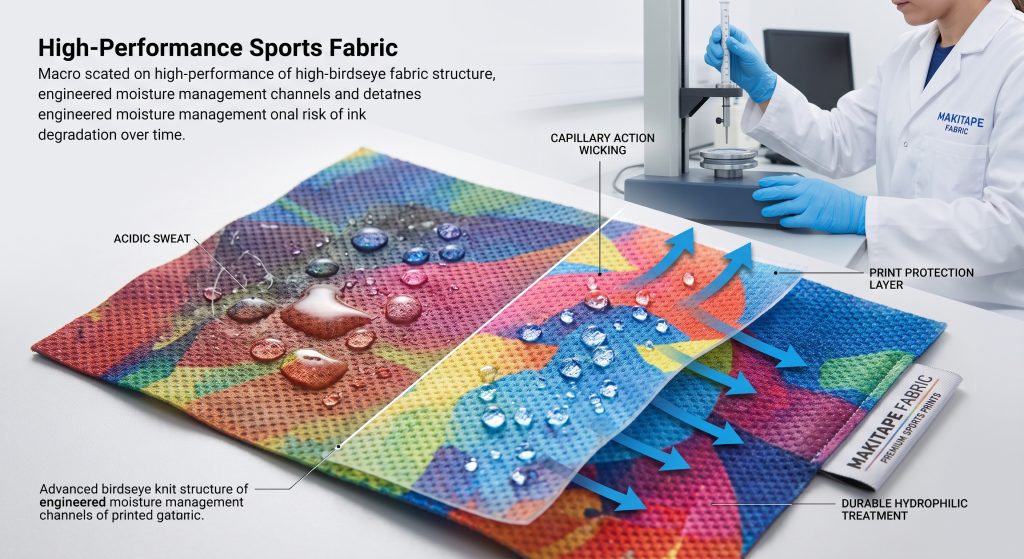
Advanced capillary action wicking traits protect sports fabric prints lines by rapidly drawing liquid sweat away from the colorful surface layer to accelerate evaporation. This is where it gets interesting because allowing pools of acidic human sweat to sit on the garment face can slowly degrade low-grade ink pigments over time. Sourcing high-performance fabrics with built-in moisture management channels ensures the printed designs stay completely dry and protected during intense athletic training routines. Our specialized factory processes these materials with durable hydrophilic treatments that maintain high-speed sweat dispersion through dozens of commercial launderings.
Wicking Channels vs Heavy Surface Paste
Unlike heavy screen-printed chemical pastes that create a solid plastic barrier over the fabric, advanced capillary channels pull moisture through the textile without blocking airflow. You might be wondering how your design team can apply large colorful patterns across a garment without accidentally trapping sweat against the athlete’s skin. The secret lies in using specialized water-based sublimation inks that dye the individual fibers instead of coating the surface with an impermeable layer. This professional engineering approach keeps the natural wicking channels fully open, allowing the body to cool itself efficiently through natural evaporative processes.
- Capillary wicking paths accelerate rapid liquid sweat dispersion.
- Water-based sublimation inks protect natural fiber ventilation.
- Hydrophilic treatments maintain high-speed moisture movement.
Will Your Garment Stay Lightweight and Dry?
Maintaining a clean and dry garment surface prevents printed sportswear from becoming heavy, waterlogged, and uncomfortable during rainy outdoor matches. Look at the facts since standard cheap fabrics absorb moisture like a sponge, adding unnecessary physical weight that saps an athlete’s endurance and speed. Our advanced cotton-polyester blends shed moisture rapidly, ensuring your athletic clothing items remain light and comfortable even during long marathon events. This superior moisture management helps professional athletes perform at their best, establishing your product line as a premier option in the international B2B sportswear market.
- Rapid moisture shedding keeps garments weightless during long races.
- Dry surface layers prevent heavy waterlogged apparel fatigue.
- Superior performance traits secure a premier market position.
Key Takeaway: Prioritizing built-in capillary wicking channels ensures your sportswear lines shed sweat rapidly, keeping the printed patterns dry and protecting the fabric from sweat-induced color fading.
| Moisture Metric | Hydrophilic Wicking System | Standard Screen Paste |
| Liquid Spread Velocity | Under 2 Seconds for Dissipation | Water Pools on Surface |
| Dry Weight Retention | 95% Original Lightness Held | Heavy Waterlogged Profile |
This laboratory data shows how using hydrophilic wicking structures keeps custom sportswear lightweight and dry compared to heavy screen-printed pastes.
6. How does weight influence custom sports fabric prints?
Material weight influences custom sports fabric prints by determining the total physical insulation drape and structural strength of the finished athletic garment. Ready for the good part because matching your specific graphic illustrations with the correct fabric thickness prevents manufacturing errors and optimizes target retail sales margins. Sourcing ultra-lightweight mesh options allows your production plant to manufacture top-tier running shirts that feel completely weightless during hot summer races. Our specialized facility supplies varied fabric weights ranging from light birdseye to substantial double-knit pique to fulfill all commercial apparel catalog needs perfectly.
Lightweight Racing vs Heavy Club Uniforms
Lightweight meshes weighing between 130 and 160 grams per square meter are ideal for high-speed aerobic sports where athletes need maximum cooling and zero movement resistance. What is the real story behind choosing these thin airy materials instead of heavy double-knit options for your team uniform contracts? While thin racing singlets focus purely on maximum heat dissipation, heavier fabrics ranging from 200 to 240 grams per square meter offer the rugged durability needed for contact sports. Selecting the right weight ensures your finished apparel lines last for multiple seasons, cutting replacement costs for your corporate clients.
- Ultra-lightweight meshes minimize aerodynamic drag during sprinting.
- Heavy double-knit weaves withstand intense physical contact.
- Correct fabric selection cuts long-term replacement costs.
How Density Metric Governs Drape Quality?
The specific density metric governs how smoothly a printed garment hangs on the body, directly influencing customer satisfaction on retail showroom floors. Here is the deal because low-density textiles often drape awkwardly, creating unsightly wrinkles that distort your custom graphic layouts. Our advanced high-gauge circular knitting machines control thread tension precisely to ensure a flawless, tailored fit across all garment sizes. This premium structural drape enhances your brand’s visual identity, ensuring your activewear collections project luxury and professional quality.
- High-gauge thread control ensures a flawless tailored fit.
- Controlled density levels stop unsightly fabric wrinkling.
- Premium material drape projects luxury quality across sizing.
Key Takeaway: Matching fabric weight precisely to the intended sport ensures your custom sportswear line delivers excellent durability and high-end drape quality for retail buyers.
| Fabric Weight Class | Target Density Metric | Best Performance Application |
| Ultra-Lightweight Mesh | 130 – 160 GSM | Endurance Racing, Cardio Tops |
| Substantial Double-Knit | 200 – 240 GSM | Team Sports, Corporate Polos |
This structural density guide helps sourcing agents select the ideal fabric weight based on specific performance and athletic usage scenarios.
7. Why do ink formulas dictate sports fabric prints life?
Premium ink formulas dictate sports fabric prints lifespan by ensuring high resistance against color bleeding, pattern cracking, and long-term chemical breakdown. This is where it gets interesting because cheap uncertified non-toxic pigments often contain harsh binders that quickly peel away after consecutive automatic wash cycles. Sourcing advanced eco-friendly dye formulas guarantees that your custom graphic designs remain sharp, bright, and visually appealing through years of intense physical use. Our direct-to-factory production facility utilizes premium certified inks to safeguard your manufacturing investments and maintain excellent product consistency across all bulk orders.
Avoiding Stiff Plastic Film Textures
Using high-grade water-based sublimation inks avoids the stiff, rubbery texture common with low-grade screen-printed activewear lines. You might be wondering how premium clothing brands achieve such soft fabric surfaces while covering large areas with deep, complex color graphics. The secret lies in using specialized dye solutions that chemically bond with the internal yarn strands rather than drying into a thick surface crust. This advanced production method preserves the natural softness of combed cotton threads, preventing painful skin chafing during intense endurance runs.
- Water-based sublimation inks prevent scratchy surface crusts.
- Deep chemical bonding preserves the natural softness of cotton threads.
- Premium formulation choices stop skin chafing during long races.
What Chemical Tests Guarantee Skin Safety?
Subjecting your production inks to strict independent chemical screening frameworks ensures your sportswear lines are safe for consumers with sensitive skin. Look at the facts since low-grade chemical colorants often carry hidden traces of heavy metals or toxic formaldehyde compounds that can trigger painful allergic rashes on hot, sweating skin. Securing verified international environmental certifications protects your apparel brand from expensive product liabilities and damaging online consumer recalls. Our factory mandates strict testing protocols for every ink batch to ensure your wholesale shipments comply with international safety standards.
- Strict independent chemical screening checks for heavy metals.
- Certified eco-friendly dyes protect consumers from allergic rashes.
- Verified safety compliance avoids costly commercial product recalls.
Key Takeaway: Sourcing certified non-toxic ink formulas protects your production investment, ensuring your sportswear lines remain safe, vibrant, and completely resistant to cracking or fading over time.
| Ink Quality Standard | Abrasion Resistance Rating | Chemical Safety Verification |
| Uncertified Solvent Paste | Poor Hold with Rapid Peeling | Contains Dangerous Formaldehyde |
| Certified Eco-Dye | Excellent Long-Term Adhesion | 100% Free of Toxic Components |
This chemical analysis highlights why global apparel brands select certified non-toxic inks to protect consumer health and secure long-term pattern durability.
8. Can sustainable yarn support sports fabric prints demand?
Yes, advanced sustainable yarn can support high-volume sports fabric prints demands perfectly because modern recycling technologies produce clean, high-purity polymer filaments that react beautifully to digital sublimation dyes. Ready for the good part because old-fashioned recycled textiles often suffered from uneven thread thickness and weird chemical smells that ruined custom graphic designs during heat processing. Today, top-tier activewear brands use premium recycled polyester blended with organic cotton to satisfy the growing global demand for eco-friendly performance garments. Our manufacturing facility tracks these eco-friendly yarn options carefully to help your business hit its green corporate sourcing targets easily.
The Growth of Recycled Textile Demands
Global retail markets are shifting rapidly toward eco-friendly products as fitness consumers prioritize environmental safety alongside technical athletic performance. What is the real story behind this major supply chain transition that is reshaping how international clothing procurement works? Sourcing managers are moving away from traditional virgin plastics to cut their carbon footprint and appeal to younger, eco-conscious buyers. Using these advanced recycled fibers allows your apparel label to market premium green collections that stand out in crowded online retail marketplaces.
- High-purity recycled polymers ensure clean graphic ink reception.
- Organic cotton blends fulfill global corporate green standards.
- Sustainable sourcing attracts younger eco conscious retail buyers.
Can Green Manufacturing Scale Commercial Orders?
Modern high-speed circular knitting machines process sustainable fibers efficiently, ensuring zero downtime or structural defects during mass commercial production runs. Here is the deal because some procurement teams worry that eco-friendly yarns might snap under the high mechanical tension of rapid textile weaving. Our factory utilizes premium long-staple recycled threads that match the tensile strength of virgin polymers step for step. This high reliability ensures your large wholesale shipments arrive on time, helping you maintain a stable supply chain for international retail distribution.
- Long-staple recycled threads match virgin polymer strength parameters.
- High speed circular knitting keeps bulk operations running on time.
- Reliable thread strength prevents costly manufacturing machine snags.
Key Takeaway: Adopting premium recycled yarn composites allows your activewear brand to tap into lucrative green markets without sacrificing graphic print sharpness or material strength.
| Fiber Origin Class | Tensile Strength Limit | Print Saturation Performance |
| Virgin Polymer Base | High Industrial Resilience | Flawless Crisp Color Transfer |
| Recycled Polymer Blend | Equal Structural Strength | Matches Virgin Color Metrics |
This manufacturing performance index proves that modern sustainable yarns match the durability and printing quality of traditional virgin synthetic fibers.
9. How to wash activewear with dense sports fabric prints?
You should wash activewear garments with dense sports fabric prints by using cold water settings and mild liquid detergents inside modern gentle laundry machines. This is where it gets interesting because using boiling water or aggressive chlorine bleach will quickly destroy the synthetic sublimation bonds and fade natural cotton fibers. Sourcing our specialized materials reduces maintenance hassles because our high fastness ratings prevent dark inks from bleeding onto light trim panels during mixed wash cycles. Providing your retail clients with clear laundry guidelines ensures your printed sportswear products look incredibly bright and fresh for years to come.
Preventing Bleeding in Commercial Laundry
Preventing color bleeding requires deep molecular dye fixation that locks color pigments permanently inside the individual core structures of synthetic strands. You might be wondering how low-grade activewear brands manage to stain their own contrasting white logos during the first household wash cycle. This annoying defect happens when manufacturers cut corners during the final post-print washing and chemical setting stages at the mill. Our facility utilizes high-pressure steaming chambers to fix all custom patterns securely, ensuring zero ink run-off during heavy washing cycles.
- High-pressure steam chambers lock pigments deeply within filaments.
- Deep molecular fixation stops dark ink bleeding onto trims.
- Rigorous post print washings eliminate excess unbound chemicals.
What Water Temperature Stops Fiber Degradation?
Keeping your washing temperature below 30 degrees Celsius protects the structural integrity of internal elastic spandex springs, preventing premature garment sagging. Look at the facts since high heat levels break down polymer chains rapidly, causing technical sportswear to lose its compression fit and stretch out permanently. Cold-water laundering protects both the natural cotton fibers and the synthetic prints, keeping garments looking tailored and new through dozens of wash cycles. This simple care habit extends the life of your apparel, driving positive word-of-mouth referrals for your business.
- Cold-water washings protect internal elastic spandex cores cleanly.
- Lower laundry temperatures prevent rapid synthetic fiber degradation.
- Gentle maintenance cycles keep tailored silhouettes looking brand new.
Key Takeaway: Providing clear cold-wash guidelines extends the life of your custom printed activewear, keeping the colors sharp and the fabric free of lint or pilling over time.
| Laundering Factor | Optimal Care Guideline | Extended Fabric Life Benefit |
| Cycle Temperature | Cold Wash Under 30C | Safeguards Synthetic Dye Bonds |
| Bleaching Agent | Strict Zero Chlorine Policy | Prevents Organic Fiber Fading |
Following these standard industrial washing parameters preserves pattern geometry and color sharpness throughout the lifecycle of the garment.
10. Where should you source bulk sports fabric prints safely?
You can safely source bulk sports fabric prints from specialized direct-to-factory production mills that provide verified laboratory testing records and transparent supply paths. Ready for the good part because skipping third-party trading brokers eliminates hidden markups and gives you direct communication with the textile engineers making your materials. Sourcing directly from an established mill allows your procurement department to secure flexible minimum order quantities alongside customized fiber blending options. Our modern textile facility combines advanced European machinery with strict quality controls to deliver premium printed fabrics that meet global standards.
Mitigating Supply Risks with Direct Factories
Working directly with a real manufacturing mill eliminates the common delays, sudden price hikes, and poor quality control tracking associated with middleman brokers. What is the real story behind the supply chain disruptions that frequently leave apparel brands stranded without material right before major retail seasonal rollouts? Brokers often switch manufacturing partners mid-order to chase higher margins, resulting in frustrating color variations between different production lots. A direct factory partnership ensures absolute transparency, giving you complete peace of mind that your bulk fabric shipments will arrive exactly as ordered.
- Direct factory engineering ensures absolute batch to batch consistency.
- Skipping third party brokers cuts out hidden commission fees.
- Transparent communication paths protect you from sudden delivery delays.
How Backlit Automated Inspections Save Money?
Automated backlit factory inspection tables run bulk textile sheets over bright light panels to help human inspectors detect structural knit errors instantly. You might be wondering how quality assurance teams flag minute drop-stitches or uneven dye patches across thousands of meters of rapidly moving material. The bright illumination highlights every individual thread alignment so our technicians can map out and isolate flaws before final roll packing steps. This strict screening process prevents defective fabric panels from entering your cutting rooms, saving your brand massive amounts of money and assembly hours easily.
- Backlit inspection panels reveal hidden yarn tension shifts instantly.
- Real time defect mapping stops damaged material reaching cutting tables.
- Automated visual screening guarantees outstanding uniformity for bulk buyers.
Key Takeaway: Establishing a direct manufacturing partnership with an experienced textile mill safeguards your supply chain and guarantees consistent premium fabric quality.
| Sourcing Channel | Pricing Structure | Quality Control Reliability |
| Intermediary Broker | Inflated with Hidden Markups | Inconsistent Batch Tracking |
| Direct Production Mill | Transparent Wholesale Cost | Strict Backlit Quality Testing |
This sourcing analysis demonstrates why international apparel brands prefer direct factory partnerships to control their manufacturing budgets and material consistency.
Summary
Balancing the high-ventilation benefits of birdseye mesh with the durable structure of pique knit allows your clothing label to select the perfect material base for any performance design. This comprehensive technical guide has explored how specialized fiber blends, deep sublimation ink processing, and strict quality inspection parameters combine to build premium sportswear lines. Selecting our advanced cotton-poly composites protects your activewear collections from pattern distortion, white-out grinning, and premature color fading under physical training conditions. Our direct-to-factory production mill provides verified eco-friendly fabrics that fulfill strict international quality and safety benchmarks while maintaining an exceptionally soft touch against active skin. To review our latest material swatch books or request tailored physical print samples for your upcoming seasonal activewear collections, please contact us today to establish a rewarding production partnership. We firmly believe that engineering superior, skin-safe textiles is the ultimate foundation of global athletic success, and we remain passionately dedicated to weaving the sustainable future of world-class activewear performance.
Frequently Asked Questions
Q1: Can I use birdseye cotton mesh for heavy compression athletic leggings?
No, you should avoid using light birdseye mesh for tight compression pants because its open diamond apertures are specifically engineered for lightweight loose-fitting ventilation tops. Tight compression gear requires high percentages of spandex blended with dense interlock knit structures to provide adequate muscle support and total opacity during deep stretching movements. Utilizing birdseye structures for leggings runs the serious risk of pattern over-stretching and fabric grinning defects on fields. Therefore, save this airy geometric material for high-exertion racing singlets and gym training shirts where continuous heat dissipation is the main priority.
Q2: What’s the best printing process to use for sports theme cotton fabric?
Dye sublimation represents the most reliable printing method because it turns solid ink into gas that chemically fuses with synthetic yarn molecules without blocking fabric pores. Traditional screen printing methods coat the textile surface with heavy rubbery pastes that physically clog the air channels and cause painful skin chafing during intense runs. Utilizing sublimation ensures your custom graphic designs remain hyper-vibrant, perfectly smooth, and completely flake-resistant through consecutive industrial washing machine cycles. This modern technological choice guarantees that your finished activewear garments retain their original cooling features and soft organic touch permanently.
Q3: How do I know if my incoming fabric batch has poor elastic recovery properties?
You can easily detect low-quality material shipments when a cut fabric sample remains permanently loose and saggy after being manually stretched horizontally. High-grade athletic clothing textiles must instantly snap back to their original dimensions to prevent garments from bagging out around active elbow or knee joints. Performing simple standardized pull tests in your factory laboratory delivers the objective data needed to hold suppliers accountable before mass cutting begins. Protecting your assembly lines from poor yarn recovery ensures your activewear products maintain their sleek showroom silhouettes over time.
Q4: Can I request custom Pantone color matching for high-volume wholesale textile orders?
Yes, our direct-to-factory production mill provides precise custom color matching services based on international Pantone codes to preserve absolute brand consistency across clothing lines. Our facility utilizes digital spectrophotometer testing equipment to guarantee that every bulk dye batch matches your exact design specifications perfectly. This digital calibration process eliminates color shading variations between different production runs, ensuring your matching athletic sets look uniform on retail display racks. Maintaining consistent color metrics protects your brand image and satisfies the strict quality expectations of global distribution networks.
Q5: How do I know if a heavy printed fabric will trigger skin allergies during workouts?
You should check if the material carries independent third-party chemical safety certifications like the strict international Oeko-Tex Standard one-hundred framework. Low-quality uncertified pigments often contain trace amounts of dangerous formaldehyde or heavy metals that irritate active sweating skin during gym exercises. Sourcing certified non-toxic fabrics guarantees that every ink pigment and chemical additive is completely free from harmful substances. This proactive material validation safeguards global consumer health and protects your activewear fashion brand from expensive product liability claims.