
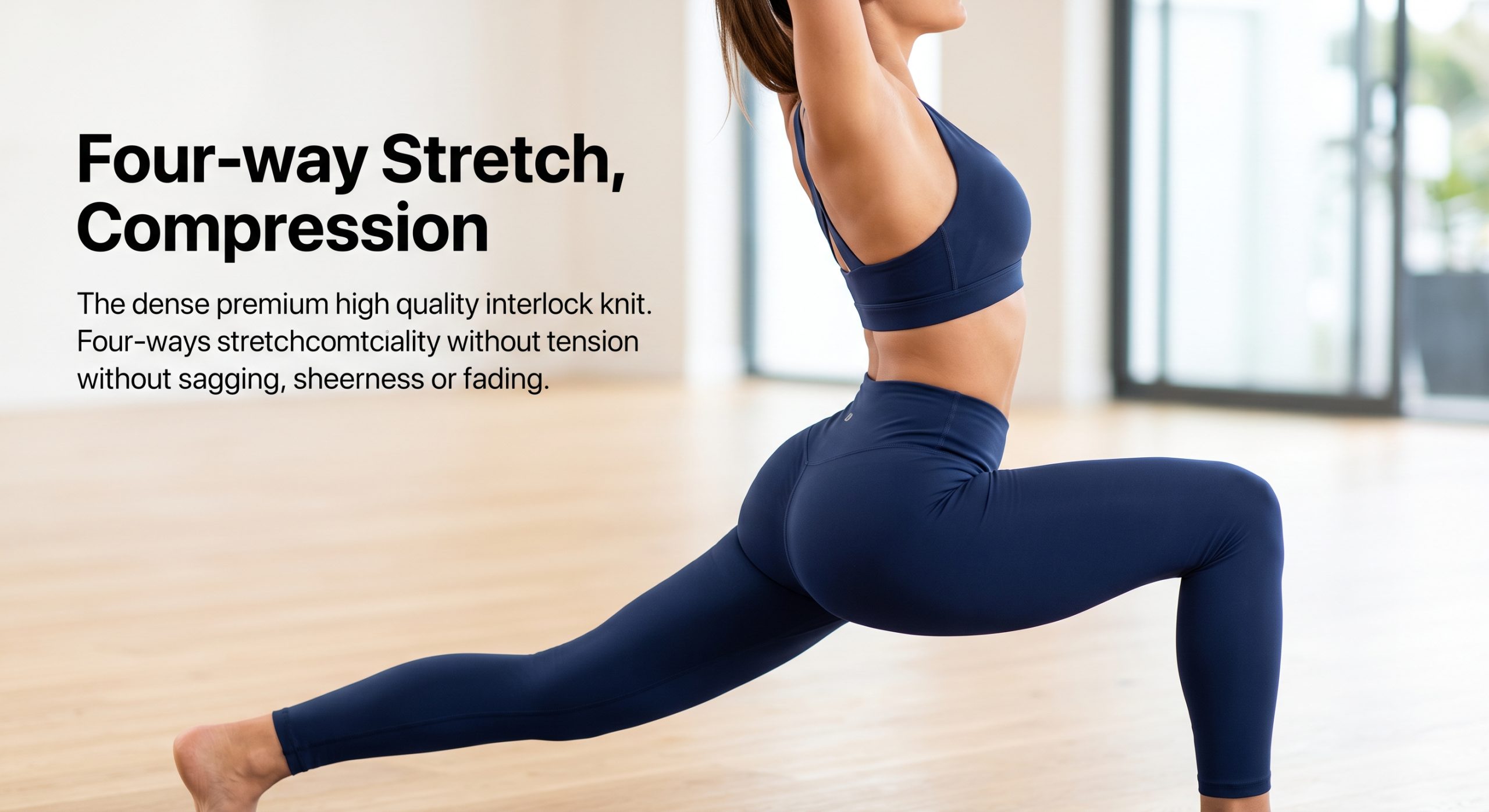
Selecting the best spandex blend for workout clothes requires matching elastomeric fiber percentages with appropriate synthetic base yarns based on your garment’s target stretch and compression demands. Imagine sending a fresh activewear shipment to retail stores, only to receive immediate customer complaints regarding saggy waistband seams and visible sheer fabric during squat routines. Sourcing substandard activewear textiles damages brand reputation while generating expensive product returns from angry retail clients. You can resolve these technical garment failures by sourcing high-performance spandex sports fabric engineered for dimensional recovery and opacity. Our extensive textile manufacturing experience equips apparel brands with reliable raw material specifications necessary for producing long-lasting activewear lines.
1. Why Is Spandex Sports Fabric Essential for Athletic Wear?
Spandex sports fabric provides unrivaled four-way stretch and immediate shape recovery that allows garments to move smoothly alongside muscle expansion during intense physical activity. Apparel designers rely on synthetic elastomeric blends because standard rigid yarns bind against joints during deep movement patterns.
What Role Does Fiber Elasticity Play in Movement?
Flexible elastomeric filaments expand up to five hundred percent of their original length without breaking. When you design athletic apparel, this extreme flexibility eliminates movement resistance across shoulders, knees, and hips.
- Four-way stretch construction accommodates multidirectional athletic movements.
- Low modulus resistance allows smooth yarn elongation across joint bend zones.
- Flexible yarn matrix prevents seam tearing under heavy physical strain.
How Does Fiber Recovery Prevent Garment Sagging?
Here is the deal: stretch without recovery leads directly to baggy knees and stretched-out waistbands. High-quality elastomeric fibers snap back instantly to original dimensions after prolonged tension.
Key Takeaway: Integrating elastomeric fibers protects garment fit, ensuring activewear maintains its original structural silhouette after repeated workout sessions.
| Fiber Characteristic | Standard Polyester | Spandex Sports Fabric Blend |
| Elongation Capacity | 15% – 25% | 150% – 300% |
| Elastic Recovery Rate | 65% | 98% |
| Tensile Flexibility | Rigid | High Four-Way Stretch |
Lab testing confirms elastomeric yarn integration increases fabric recovery rates by more than thirty percent over rigid synthetic knits.
2. How Does Spandex Sports Fabric Blend Ratio Impact Stretch?
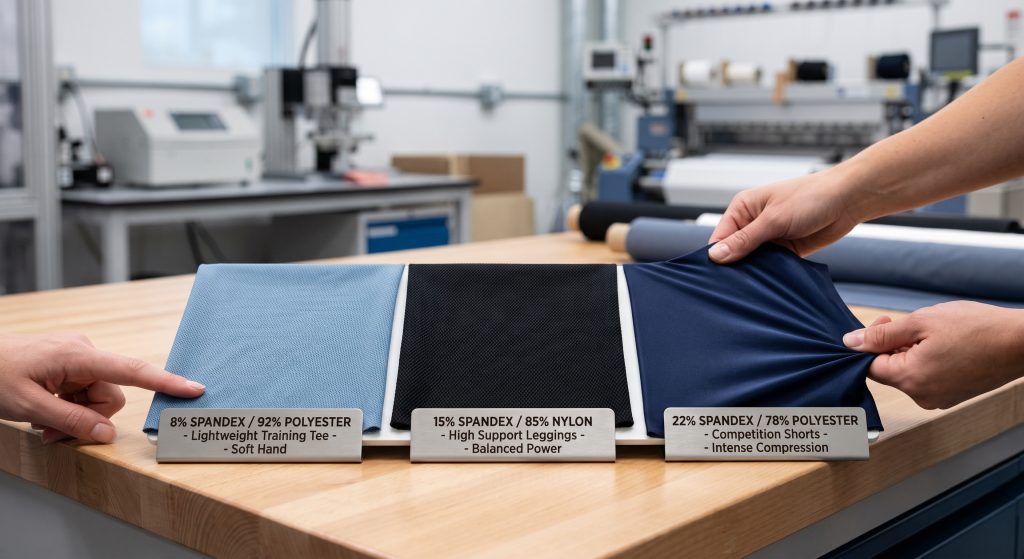
Spandex sports fabric blend ratios dictate the exact balance between structural yarn durability and active garment elasticity across different product categories. Altering the elastomeric percentage directly shifts fabric power, weight, and hand feel.
Why Is 80/20 Nylon Blend Popular for Activewear?
An 80/20 nylon elastomeric composition delivers high tension support combined with a soft surface texture. You will find this specific ratio used widely across premium leggings and athletic support wear.
- 80% nylon matrix ensures high abrasion resistance and silky touch.
- 20% elastomeric core provides firm hold and shape retention.
- High holding force stabilizes major muscle groups during movement.
How Do 90/10 Polyester Blends Lower Batch Cost?
Lowering elastomeric content down to ten percent reduces raw yarn material costs while maintaining lightweight flexibility. Polyester base yarns keep production expenses manageable for promotional activewear lines.
Look at the facts: smaller elastomeric proportions speed up machine knitting rates during high-volume production runs.
Key Takeaway: Select 80/20 blends for performance compression apparel and 90/10 ratios for lightweight training shirts.
| Blend Ratio | Primary Base Fiber | Target Application | Compression Level |
| 80% / 20% | Premium Nylon | Performance Leggings & Sports Bras | High Compression |
| 85% / 15% | Nylon or Polyester | Running Tops & Training Shorts | Moderate Support |
| 90% / 10% | Lightweight Polyester | Loose Fitness Shirts & Liners | Low Compression |
Higher elastomeric percentages increase compressive holding force while adding weight to the finished textile structure.
3. What Makes Spandex Sports Fabric Ideal for Compression Gear?
Spandex sports fabric exerts continuous pressure against active muscle tissue, stabilizing deep muscle fibers and reducing micro-vibrations during high-impact training. Utilizing high-modulus spandex sports fabric improves venous return and reduces post-workout soreness.
How Does Gradient Compression Support Muscle Recovery?
Gradient tension pushes fluid away from extremities back toward core organs. What is the real story? Controlled compression accelerates oxygen delivery to tired leg muscles during endurance running.
- Graduated pressure profiles improve venous blood circulation.
- Reduced muscle oscillation minimizes tissue micro-tears during landing impacts.
- Targeted paneling supports lower back and calf muscle structures.
Why Does Tensile Recovery Prevent Fatigue?
High elastic power holds muscle groups firmly in place, minimizing unnecessary energy expenditure from muscular bounce. Athletes experience delayed fatigue during marathon sessions when wearing supportive compression apparel.
Key Takeaway: Target high elastomeric weight fabrics for compression collections to deliver true physiological recovery benefits.
| Compression Metric | Standard Activewear | Medical-Grade Compression Fabric |
| Compression Pressure (mmHg) | 5 – 10 mmHg | 18 – 25 mmHg |
| Fabric Power Modulus | Light | Ultra High |
| Muscle Oscillation Reduction | Minimal | Up to 40% |
Data highlights that higher power modulus textiles significantly reduce muscle vibration during repetitive landing impact phases.
4. How to Test Spandex Sports Fabric Moisture Wicking Performance?
Testing moisture wicking involves measuring vertical liquid capillary action along yarn surfaces alongside surface evaporation drying speeds under regulated atmospheric conditions. Athletic performance relies on dry skin comfort during high-sweat fitness activities.
How Do Capillary Channels Disperse Sweat Vapor?
Grooved fiber channels draw sweat liquid off skin pores and spread it across a wider surface area. You will notice rapid moisture dissipation when wearing engineered cross-section synthetic knits.
- Micro-grooved filament cross-sections pull water droplets outward.
- Hydrophobic synthetic properties prevent liquid absorption inside fiber cores.
- Broad surface spreading accelerates air drying times.
Why Is Drying Rate Important for Active Athletes?
Think about it: wet clothes stick against skin, causing painful friction chafing during long athletic events. Rapid drying keeps garments light, dry, and soft against sensitive body areas.
Key Takeaway: Verify moisture management lab test ratings to ensure finished sportswear prevents sweat accumulation and body chilling.
| Performance Test Standard | Minimum Acceptable Threshold | Premium Activewear Rating |
| Vertical Wicking (AATCC 195) | 50 mm / 10 mins | 90+ mm / 10 mins |
| Drying Time (AATCC 201) | Under 40 Minutes | Under 20 Minutes |
| Absorbency Rate | Under 5 Seconds | Under 1.5 Seconds |
Advanced capillary grooved yarns double liquid dispersion distance compared to smooth round filament profiles.
5. Which Spandex Sports Fabric Weight Works Best for Leggings?
A fabric weight between 220 GSM and 300 GSM works best for leggings because it provides complete opacity during deep stretching movements without causing thermal overheating. Sourcing high-density spandex sports fabric guarantees squat-proof reliability for activewear brands.
Why Is 220 GSM Preferred for Squat Proof Leggings?
Heavy fabric weights combine dense knitting stitch counts with high elastomeric content. You eliminate fabric sheer transparency completely when athletes execute deep squats under gym lighting.
- 220-260 GSM density provides full rear coverage and opacity.
- Dense interlocking knit structure hides skin imperfections and undergarments.
- Substantial garment feel offers secure belly control waistbands.
How Does Sheerness Affect High Stretch Garments?
When lightweight fabric stretches across hips, yarn density thins out dramatically. Thin materials below 180 GSM reveal skin tones beneath when stretched to maximum capacity.
Ready for the best part? High gauge circular knitting machines interlock fine yarns tightly to preserve opacity under high stretch conditions.
Key Takeaway: Maintain fabric weight above 220 GSM for athletic tights to eliminate transparency complaints and returns.
| Fabric Weight Category | GSM Range | Primary Apparel Use | Squat-Proof Opacity |
| Lightweight | 140 – 180 GSM | Running Tops & Inner Liners | Low (Sheer under stretch) |
| Medium Weight | 190 – 220 GSM | Light Training Tights & Bras | Moderate Opacity |
| Heavyweight | 230 – 280 GSM | Premium Gym Leggings | 100% Squat-Proof |
Laboratory opacity light meters show that textiles exceeding 230 GSM retain full shade density under maximum mechanical strain.
6. How Does Spandex Sports Fabric Resist Wear and Pilling?
Spandex sports fabric resists pilling through high-filament yarn twisting and tight circular knit gauge construction that prevents loose fiber ends from balling up on friction points. High abrasion resistance protects activewear from damage caused by rough fitness equipment.
Why Do Interlocking Knits Stop Surface Pilling?
Interlocking double-knit techniques bury yarn ends inside the internal core of the fabric structure. This is where it gets interesting: smooth filament synthetic yarns resist fuzzing when rubbed against Velcro or foam rollers.
- High filament count yarns keep fiber ends locked in place.
- Smooth synthetic surfaces minimize mechanical friction snagging.
- Compact gauge knits resist thread pulling during workout drills.
How Does Abrasion Resistance Extend Apparel Lifespan?
Athletic tights experience heavy friction between thighs and against gym floor mats during floor routines. Durable synthetic blends preserve pristine surface appearance through hundreds of gym sessions.
Key Takeaway: Specify high Martindale abrasion cycle ratings to protect sportswear from unsightly surface pilling and fuzz.
| Durability Test | Standard Single Jersey | Interlock Spandex Blend |
| Martindale Pilling Grade | Grade 2 – 3 | Grade 4.5 – 5 |
| Abrasion Cycles (ASTM D4966) | 10,000 Cycles | 35,000+ Cycles |
| Snagging Resistance Rating | Fair | Superior |
Interlocking double knits withstand triple the friction cycles compared to basic single jersey fabric constructions.
7. Can Spandex Sports Fabric Hold Vibrant Custom Sublimation Inks?
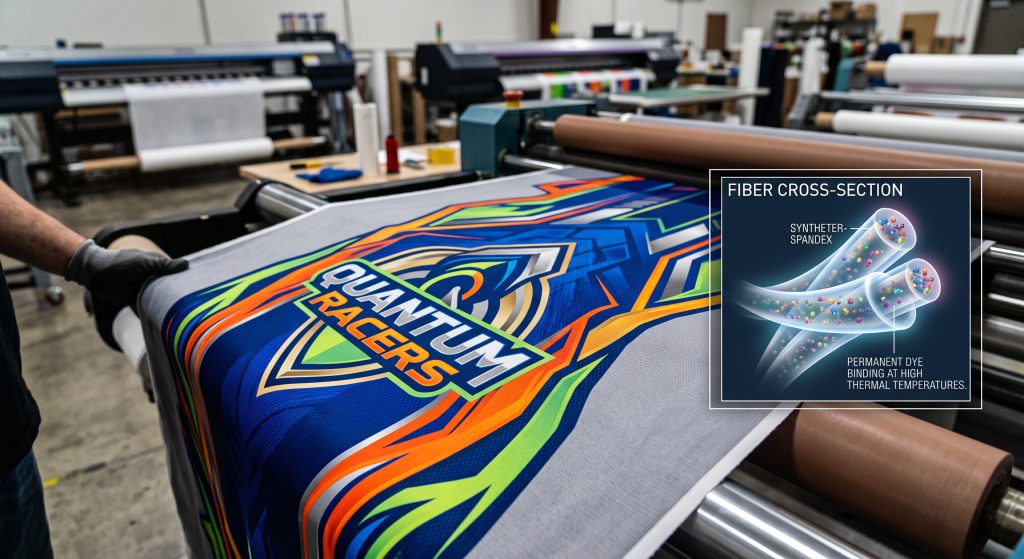
Polyester spandex sports fabric holds vibrant custom sublimation inks exceptionally well because heat-dispersed dyes bind permanently into synthetic fiber cores at high thermal processing temperatures. Utilizing printable spandex sports fabric enables unlimited multi-color team graphic customization.
How Does Heat Transfer Bind Dye to Synthetic Yarns?
Sublimation heat opens synthetic fiber pores, converting liquid dye instantly into gas state. Dyes lock inside individual filaments permanently as the material cools down.
- Dye sublimation creates fade-proof graphic artwork that never cracks.
- Direct fiber bonding preserves smooth textile surface texture.
- Breathable yarn pores remain open for unimpeded moisture transfer.
Why Does Elastic Stretch Cause Print Cracking?
You might be wondering: why do rubber screen print inks peel on athletic leggings? Surface-applied inks crack when elastomeric yarns stretch, whereas sublimated dyes stretch along with fibers seamlessly.
Key Takeaway: Choose polyester elastomeric blends for full-coverage custom sublimation artwork to maintain pristine image clarity during movement.
| Print Method | Stretch Compatibility | Graphic Breathability | Durability After 50 Washes |
| Dye Sublimation | Excellent (10/10) | 100% Breathable | No Fading or Cracking |
| Screen Printing | Poor (Cracks under stretch) | Blocks Air Flow | Prone to Peeling |
| Heat Transfer Film | Moderate (Stiff feeling) | Reduces Stretch | Edge Lifting Risk |
Sublimation inks preserve full fabric stretch elasticity without creating stiff rubberized surface spots across print zones.
8. How Should You Care for Spandex Sports Fabric to Retain Elasticity?
Caring for spandex sports fabric requires cold water washing and low heat drying to avoid melting delicate elastomer cores inside synthetic yarn structures. Proper garment care instructions protect long-term shape retention for activewear customers.
Why Does Excess Heat Degrade Elastic Elastomer Core?
High wash temperatures melt sensitive elastomeric polymer threads inside synthetic yarn bundles. Here is the kicker: thermal exposure breaks down elastic springiness, turning snug athletic apparel loose and saggy.
- Cold water wash settings preserve elastomeric molecular chains.
- Air drying prevents high-heat tumble dryer core damage.
- Gentle wash cycles prevent mechanical fiber tearing.
How Do Chemical Softeners Reduce Fabric Elasticity?
Fabric softeners coat synthetic fibers in waxy residue, clogging micro-porous moisture wicking channels and weakening elastomeric snap-back recovery.
Key Takeaway: Educate consumers to avoid heat and softeners to extend activewear performance life and shape retention.
| Care Parameter | Ideal Maintenance Setting | Damage Risk High Setting |
| Water Temperature | Cold Wash (30°C / 86°F) | Hot Wash (60°C+ / 140°F+) |
| Drying Method | Line Dry / Air Dry | High Heat Tumble Drying |
| Chemical Additives | Mild Liquid Detergent | Fabric Softeners & Bleach |
Exposing elastomeric fibers to hot dryer temperatures reduces elastic snap-back recovery by up to forty percent over time.
9. What Distinguishes Nylon from Polyester Spandex Sports Fabric?
Nylon offers a buttery soft touch with superior tensile strength, whereas polyester provides higher colorfastness and lower raw material procurement costs. Selecting the ideal spandex sports fabric depends on balancing touch preference with budgetary target goals.
Why Does Nylon Offer Superior Softness and Sheen?
Nylon filaments feature smoother surface structures that glide against human skin effortlessly. You deliver a luxurious hand feel when tailoring activewear out of premium nylon elastomeric blends.
- Silky hand feel provides maximum comfort for direct skin contact.
- Superior abrasion strength resists tearing during friction activities.
- Rich luster creates a high-end visual appearance in active wear.
How Does Polyester Deliver Superior Color Fastness?
Polyester fibers resist UV color fading and hold vibrant dye shades through repeated hot washing cycles. Dyes lock tightly into polyester molecules, preventing bleeding between contrasting panels.
Look at the facts: polyester raw materials cost significantly less per kilogram than specialty nylon polymers.
Key Takeaway: Utilize nylon blends for high-end luxury gym lines and polyester blends for vibrant graphic sportswear.
| Material Property | Nylon Spandex Blend | Polyester Spandex Blend |
| Tactile Softness | Luxurious & Silky | Soft & Natural |
| Color Fastness to Light | Good (Grade 4) | Outstanding (Grade 5) |
| Raw Material Cost | Premium Pricing | Budget Friendly |
Polyester textiles resist sun bleaching during outdoor workouts better than untreated nylon fibers.
10. How Do Manufacturing Costs Impact Spandex Sports Fabric Sourcing?
Manufacturing costs are driven primarily by elastomeric percentage weight, knitting gauge complexity, and specialized dye finishing procedures. Managing production budgets effectively helps garment brands maximize wholesale profit margins on activewear lines.
Why Does Elastomer Content Raise Raw Yarn Pricing?
Elastomeric polyurethane fibers cost three to four times more per kilogram than standard base polyester or nylon yarns. What is the real story? Higher elastomeric proportions increase total raw material expenditure directly.
- High elastomeric yarn percentages increase raw fiber input costs.
- Fine gauge knitting machines require slow, careful production speeds.
- Specialized heat-setting processes add finishing steps.
How Does Minimum Order Quantity Shape Unit Cost?
Ordering custom dye batches in high volumes distributes fixed machine setup fees across more total fabric meters, significantly lowering per-meter pricing.
Key Takeaway: Balance elastomeric percentages and batch order quantities to achieve optimal wholesale production costs.
| Production Factor | Cost Impact Level | Operational Efficiency Strategy |
| Elastomeric Fiber Content | High (+20-40% yarn cost) | Optimize blend ratio to garment function |
| Order Volume (MOQ) | Moderate (-15% on bulk runs) | Consolidate colorways into larger dye lots |
| Finishing Treatments | Low to Moderate | Select essential moisture finishes |
Consolidating dye lots into higher meter volumes lowers per-unit fabric costs on commercial manufacturing orders.
Conclusion
Sourcing high-performance activewear textiles requires balancing elastomeric content, GSM weight, and yarn durability to create garments that maintain shape through intensive workouts. We solved the core challenge of balancing garment stretch, opacity, and moisture management by analyzing fiber recovery rates, blend ratios, and fabric care techniques. Our mill supplies technical activewear textiles engineered to solve sagging, sheerness, and pilling problems for apparel brands around the globe. Whether you need heavy squat-proof leggings fabric or high-compression support knits, our factory provides precision-dyed materials that elevate your brand. Establish a competitive market position by sourcing materials engineered for lasting performance. Ready to elevate your activewear collection? Please contact us today to request custom swatch kits and direct factory pricing!
Frequently Asked Questions
Can I wash spandex workout clothing using hot water settings?
No, hot water washes break down delicate elastomeric cores, causing garments to lose shape and elasticity over time.
What’s the best spandex ratio for high-impact sports bras?
The best ratio is an 80/20 nylon elastomeric blend, providing firm hold and strong shape recovery during high-impact exercise routines.
How do I know if my activewear fabric is squat-proof?
You can verify opacity by choosing fabric weights above 220 GSM with high-density interlock knitting that prevents light transfer when stretched.
Can I print custom logos on high-stretch spandex apparel?
Yes, dye sublimation works best for stretch apparel because dyes fuse into synthetic fibers without cracking when stretched.
What’s the best synthetic fiber blend for cold-weather base layers?
The best option is a brushed polyester elastomeric blend, retaining body heat while pulling perspiration away from skin.