
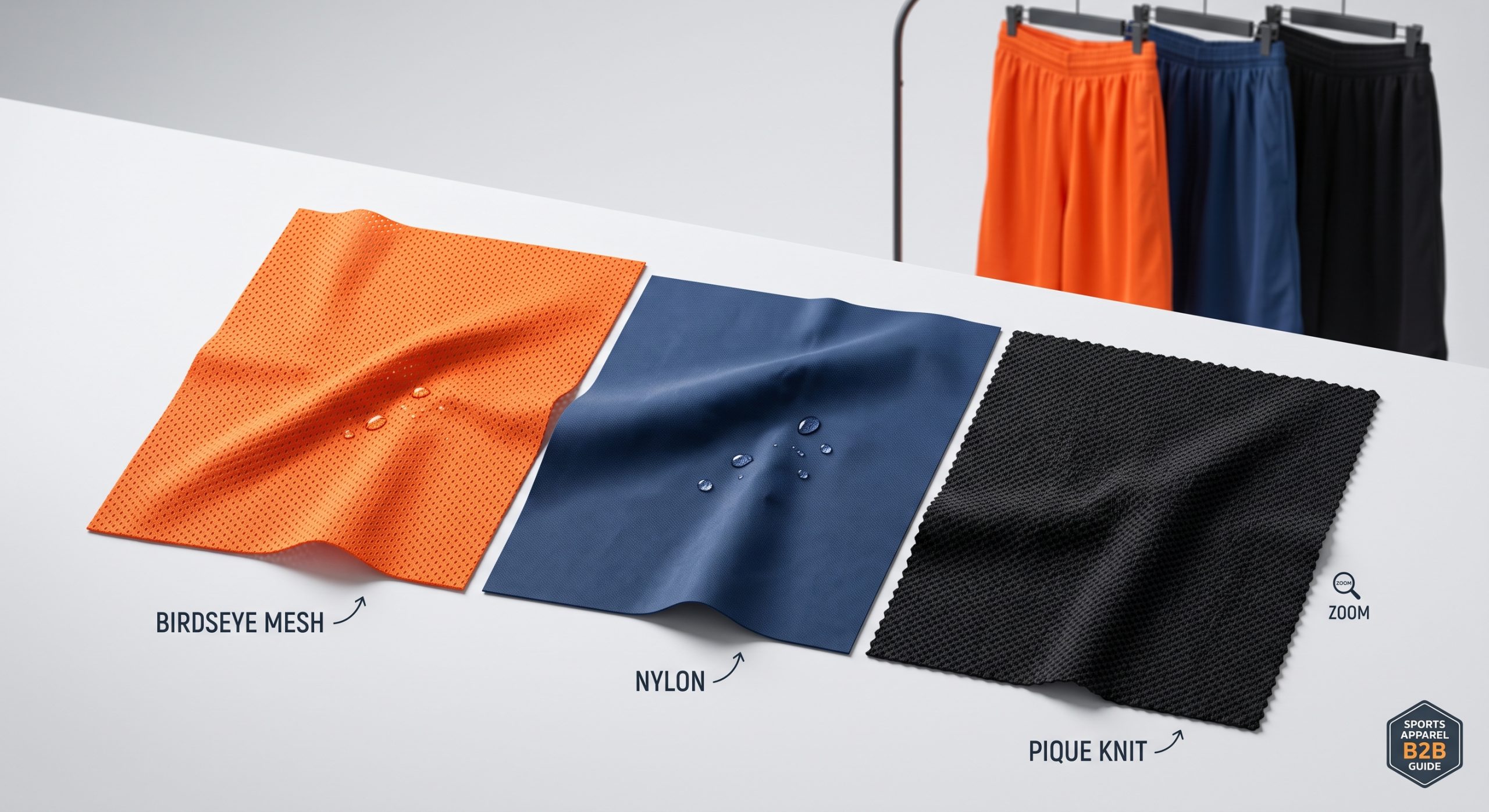
Polyester knitted mesh, high-grade nylon, and French Terry cotton blends represent the standard textile choices for modern basketball shorts. Selecting low-grade athletic fabrics leads to heavy sweat retention, skin chafing, and premature seam tearing during active play. Apparel manufacturers suffer severe brand reputational damage and high return rates when garments fail on the court. Working with expert mill suppliers solves this quality gap by delivering field-tested performance textiles built for extreme agility. When sourcing apparel, knowing what material is basketball shorts determines your athletic gear performance and product longevity.
1. What Material Is Basketball Shorts Made Of Primarily?
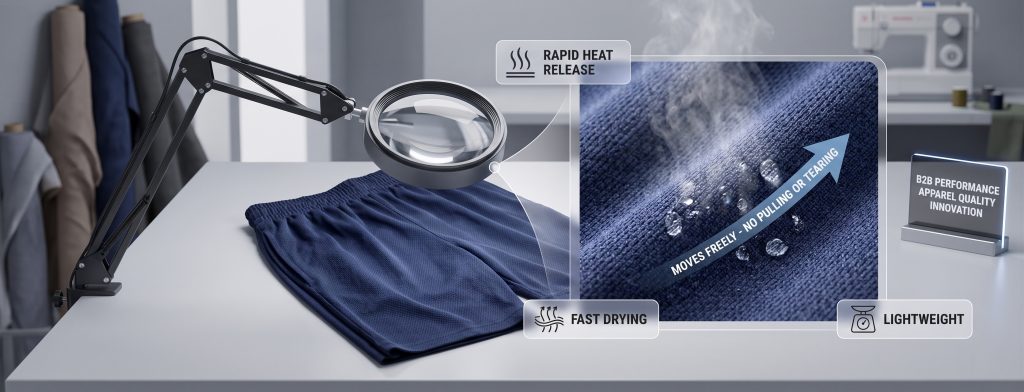
Polyester synthetic fabric serves as the primary composition for modern athletic basketball shorts across professional leagues. Players need lightweight apparel that moves freely without pulling or tearing during intense gameplay maneuvers. Here is the deal. Synthetic knits outperform standard cotton because synthetic yarns release heat rapidly and dry fast. Understanding what material is basketball shorts gives garment brands a direct path to higher product quality.
Is Cotton Still Relevant for Performance Gear?
Cotton fabrics absorb sweat rapidly but lock moisture into the garment weight, causing discomfort. Think about it. Heavy damp apparel causes skin friction and limits quick lateral court motion.
- Cotton absorbs up to twenty times its weight in moisture.
- Synthetic polyester rejects water retention and keeps players dry.
- Modern athletic blends prioritize synthetic yarns for active performance.
Key Takeaway: Choosing 100% synthetic polyester knits prevents heavy moisture buildup and guarantees player agility on court.
| Fabric Type | Primary Fiber | Moisture Retention | Typical Application |
| Performance Mesh | 100% Polyester | Minimal (Fast Dry) | Game Shorts |
| Cotton Fleece | 100% Cotton | High (Slow Dry) | Casual Sweatpants |
This comparison demonstrates why polyester remains the core choice for competitive basketball apparel manufacturers.
2. Why Does Birdseye Mesh Matter for What Material Is Basketball Shorts?
Birdseye mesh fabric features small geometric pinhole openings that create continuous ventilation across active basketball shorts. Athletes generate excessive body heat during full-court games, requiring constant air circulation to stay cool. Look. Knowing what material is basketball shorts helps buyers select fabrics with optimum breathability. Birdseye knits channel heat away from body zones without weakening garment structural integrity.
Does Birdseye Mesh Improve Sweat Evaporation?
Micro-perforated birdseye patterns expand garment surface area to accelerate moisture evaporation speed. What is the kicker? Sweat spreads outward across micro-channels rather than pooling in thick fabric layers.
- Birdseye knit pattern features tiny woven eyelets for passive cooling.
- Smooth interior texture prevents chafing against athlete skin.
- Lightweight 140-160 GSM structure keeps overall garment weight minimal.
Key Takeaway: Birdseye mesh offers maximum airflow and rapid heat dissipation for intense athletic competition.
| Mesh Variety | Pinhole Density | Air Permeability | Ideal Gear |
| Birdseye Mesh | High (Micro-eyelets) | Superior | Basketball Shorts |
| Standard Tricot | Medium | Moderate | Training Vests |
Selecting high-density birdseye mesh ensures players remain cool and dry under intense heat conditions.
3. Is Pique Fabric Good for What Material Is Basketball Shorts?
Pique fabric provides a durable honeycomb textured surface suitable for structured lifestyle basketball shorts. Outdoor street basketball gear demands higher abrasion resistance against concrete courts and frequent physical contact. Truth is. Evaluating what material is basketball shorts leads many lifestyle sportswear brands toward pique constructions. Pique knit offers robust drape while maintaining moderate airflow through raised geometric weaves.
How Does Pique Compare to Birdseye Mesh?
Pique knits are thicker than birdseye mesh, offering a heavier hand feel for casual wear. Ready for the good part? Raised surface structures resist snagging and maintain shape stability after hundreds of wash cycles.
- Pique features a waffle-like texture with strong structural integrity.
- Birdseye mesh is significantly lighter and more porous for game play.
- Pique works exceptionally well for hybrid streetwear basketball shorts.
Key Takeaway: Pique fabric delivers outstanding structural durability and styled aesthetics for casual athletic wear.
| Fabric Characteristic | Pique Knit | Birdseye Knit |
| Texture Surface | Raised Waffle | Micro Pinhole |
| Fabric Weight (GSM) | 180 – 220 GSM | 130 – 160 GSM |
| Primary Use Case | Streetwear Shorts | Game Day Uniforms |
This fabric breakdown helps product managers balance heavy structure against lightweight game performance.
4. How Does Nylon Compare for What Material Is Basketball Shorts?
Nylon delivers superior tensile strength, exceptional silky smoothness, and high tear resistance for premium basketball shorts. High-impact sports create intense pull stress on garment seams during jumps and sudden direction changes. Here is the secret. Selecting what material is basketball shorts requires analyzing fiber strength under extreme tension. Nylon synthetics offer unmatched durability while keeping garment weight light.
Is Nylon Better Than Polyester for Athletic Wear?
Nylon feels noticeably softer against sensitive skin and resists surface abrasion better than standard polyester yarns. You might wonder. Nylon absorbs slightly more moisture than polyester, requiring specialized quick-dry chemical treatments.
- Nylon offers higher tensile strength and elasticity per square inch.
- Polyester dries slightly faster and costs less to manufacture at scale.
- Nylon-spandex blends yield high-comfort basketball compression shorts.
Key Takeaway: Nylon provides exceptional soft touch and supreme tear resistance for high-end sportswear lines.
| Fiber Metric | Nylon Synthetic | Polyester Synthetic |
| Tensile Strength | Very High | High |
| Abrasion Resistance | Excellent | Good |
| Drying Speed | Fast | Fast |
Evaluating nylon against polyester allows apparel designers to align material selection with target pricing tiers.
5. Can French Terry Work for What Material Is Basketball Shorts?
French Terry fabric works well for post-game recovery shorts, gym warmup wear, and leisure lifestyle athletic garments. Basketball culture demands versatile gear that transitions smoothly from off-court leisure to casual outdoor shooting sessions. This is where it gets interesting. Learning what material is basketball shorts reveals that French Terry offers cozy loop-back comfort. Cotton-poly French Terry loops absorb moisture while keeping outer surfaces smooth and clean.
Should Athletes Wear French Terry on the Court?
French Terry garments add extra fabric weight, making them less ideal for fast-paced competitive game play. Believe it or not. Loopback knits trap body heat, which benefits pre-game muscle warmups but slows performance during peak summer heat.
- French Terry features soft un-brushed loops on the garment interior.
- Heavyweight cotton composition provides warm comfort for post-game recovery.
- Polyester-blended French Terry improves shape retention and reduces garment shrinkage.
Key Takeaway: French Terry delivers plush comfort and stylish drape for lifestyle and pre-game basketball apparel.
| Usage Scenario | French Terry | Synthetic Mesh |
| Competitive Game Play | Not Recommended | Highly Recommended |
| Warmup & Lifestyle | Ideal Choice | Moderate Comfort |
Understanding these performance differences ensures brands select French Terry only for appropriate garment categories.
6. How Do Sweat Tech Affect What Material Is Basketball Shorts?
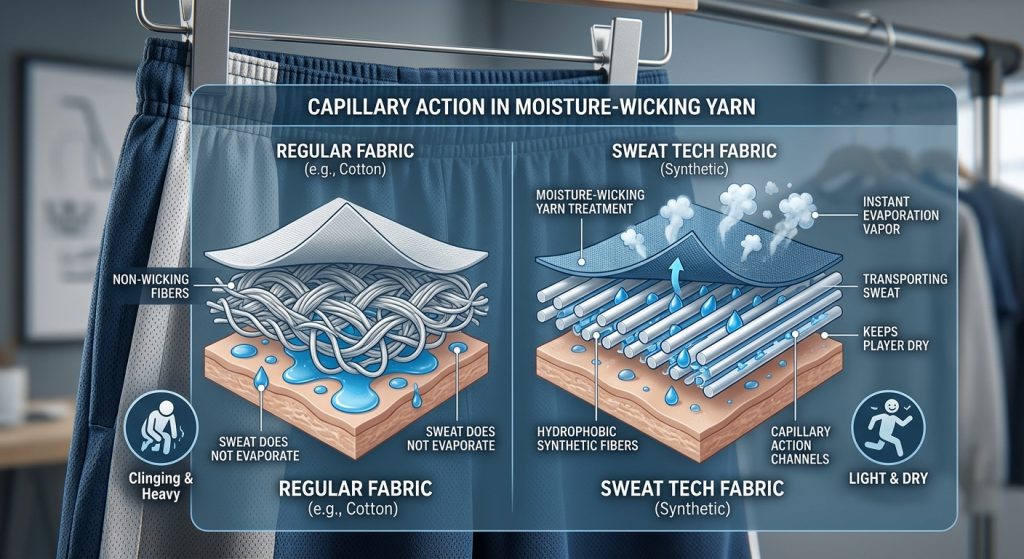
Moisture-wicking yarn treatments transport liquid sweat away from skin toward the outer fabric surface for instant evaporation. Sweat-soaked gear increases garment weight and causes uncomfortable clinging against an athlete’s legs during play. Pay attention. Selecting what material is basketball shorts depends heavily on advanced capillary action technology inside yarns. Hydrophobic synthetic fibers pull moisture along tiny channels to keep the player completely dry.
How Do Moisture-Wicking Finishes Operate?
Chemical topcoats and structural micro-grooves alter synthetic fiber surfaces to push moisture away from skin rapidly. That is not all. Permanent yarn-level moisture management stays active across dozens of industrial wash cycles.
- Capillary action draws sweat outward through micro-denier synthetic fibers.
- Quick-drying coatings keep fabric lightweight throughout intense tournament matches.
- Antimicrobial finishes prevent odor retention in wet fabric.
Key Takeaway: Advanced moisture-wicking technology keeps athletic gear lightweight, odor-free, and dry under pressure.
| Moisture Tech | Mechanism | Longevity |
| Yarn-Level Capillary | Cross-section filament shape | Lifetime of garment |
| Surface Chemical Finish | Topically applied coating | 30-50 Wash cycles |
Selecting yarn-level moisture management guarantees long-lasting performance for athletic garment collections.
7. What Material Is Basketball Shorts Best for Durability?
High-tenacity polyester knits reinforced with spandex elastane offer maximum durability for aggressive basketball play. Players frequently dive for loose balls, suffer friction against opponents, and stretch garment seams during dynamic jumps. Here is the deal. Knowing what material is basketball shorts protects apparel brands from costly fabric tears and garment seam failures. High-denier interlock and double-knit constructions withstand physical stress without losing shape.
Does Spandex Addition Enhance Fabric Longevity?
Adding five to ten percent spandex elastane prevents yarn snapping by allowing fabric to stretch and recover instantly. Think about it. Rigid non-stretch fabrics tear under extreme tension during sudden direction shifts on court.
- High-tenacity polyester yarns resist tearing during physical contact.
- Four-way stretch spandex integration allows complete motion freedom.
- Reinforced flatlock stitching prevents seam blowouts under heavy strain.
Key Takeaway: Combining high-tenacity polyester with spandex ensures maximum tear strength and unrestricted player mobility.
| Fiber Blend | Elasticity (%) | Tear Resistance | Durability Rating |
| 92% Poly / 8% Spandex | 100% 4-Way | Very High | Excellent |
| 100% Rigid Polyester | 15% 2-Way | Moderate | Good |
Investing in spandex-blended synthetics guarantees durable sports apparel capable of handling aggressive game conditions.
8. How Do Fabric Weights Impact What Material Is Basketball Shorts?
Fabric weight measured in grams per square meter (GSM) directly dictates garment breathability, drape, and physical structure. Ultra-lightweight fabrics feel effortless during fast breaks, while heavier fabrics provide structured retro aesthetics popular in streetwear. Look. Evaluating what material is basketball shorts requires selecting the exact GSM density for your intended product line. Modern competitive shorts typically utilize 140 to 180 GSM knits for optimal balance.
What GSM Is Best for Competitive Basketball Apparel?
A weight range between 150 GSM and 170 GSM delivers ideal structural opacity while maintaining superior ventilation. What is the kicker? Fabrics below 130 GSM can become see-through when wet with sweat during games.
- 130-150 GSM: Ultra-lightweight game mesh with rapid cooling.
- 160-180 GSM: Standard performance mesh providing full opacity and durability.
- 200-240 GSM: Heavyweight double-knit or French Terry for streetwear lifestyle lines.
Key Takeaway: Selecting 150-170 GSM fabric provides the perfect balance of lightweight breathability and complete opacity.
| GSM Range | Hand Feel | Transparency Risk | Best Application |
| < 140 GSM | Featherlight | Moderate (When wet) | Speed Shorts |
| 150 – 180 GSM | Balanced | Zero | Pro League Game Shorts |
| > 200 GSM | Heavy / Structured | Zero | Streetwear / Warmups |
Targeting the right GSM ensures your finished basketball shorts meet exact performance and aesthetic requirements.
9. What Material Is Basketball Shorts Best for Eco Gear?
Recycled polyester yarn derived from post-consumer plastic bottles provides an eco-friendly fabric option without sacrificing athletic performance. Global sportswear buyers increasingly demand sustainable fabric solutions to lower carbon footprints and reduce landfill waste. Truth is. Choosing what material is basketball shorts allows brands to align with eco-conscious consumer expectations. Recycled polyester offers identical strength, moisture-wicking ability, and color vibrancy as virgin polyester.
Does Recycled Polyester Perform as Well as Virgin Polyester?
Recycled polyester filaments undergo mechanical purification, yielding technical fibers identical in strength to virgin polymers. Ready for the good part? Using recycled yarns reduces energy consumption during textile production.
- Recycled polyester reduces plastic bottle waste in global oceans.
- Technical performance, moisture wicking, and stretch match virgin fibers completely.
- GRS-certified recycled fabrics enhance green brand credentials in competitive markets.
Key Takeaway: Recycled polyester delivers top-tier game performance while fulfilling critical corporate sustainability targets.
| Environmental Impact | Recycled Polyester | Virgin Polyester |
| Carbon Emissions | 30-50% Lower | Standard Baseline |
| Plastic Waste Reduction | High (Upcycled Bottles) | Zero Impact |
Adopting recycled polyester empowers sportswear brands to lead market trends toward sustainable athletic apparel.
10. How Do You Select What Material Is Basketball Shorts for B2B?
B2B buyers must evaluate fabric suppliers based on color fastness, shrinkage control, batch consistency, and international testing certifications. Sourcing low-quality fabric batches leads to inconsistent color dye lots, rapid fading, and uneven sizing post-washing. Here is the secret. Selecting what material is basketball shorts demands working directly with certified fabric manufacturers. Professional suppliers guarantee strict quality control checks across bulk textile production runs.
What Tests Should You Request From Your Fabric Mill?
Request lab dip approvals, pilling resistance test results, and color fastness reports to light and washing before placing bulk orders. You might wonder. Working with an established manufacturing partner eliminates surprise defect costs during garment assembly.
- Verify ISO and Oeko-Tex certifications for environmental and chemical safety.
- Test fabric stretch recovery to prevent bagginess after repeated athlete wear.
- Demand strict color fastness ratings of Grade 4 or higher for intense sublimation printing.
Key Takeaway: Partnering with certified fabric mills ensures consistent bulk quality, vivid sublimation printing, and zero production defects.
| Quality Parameter | Standard Threshold | Testing Method |
| Washing Color Fastness | Grade 4.0 or higher | ISO 105-C06 |
| Fabric Shrinkage Rate | Under 3.0% | ISO 6330 |
Establishing rigorous mill testing protocols guarantees long-term supply chain reliability for your basketball gear lines.
Finding the Right Fabric Partner for Your Sportswear Line
Selecting between high-density birdseye mesh, structural pique knits, luxury nylon synthetics, and soft French Terry determines your athletic garment line success. We solved your fabric selection dilemma by detailing breathability metrics, GSM weights, tensile durability, and moisture-wicking performance across core sportswear textiles. Our mill delivers custom-engineered technical fabrics built for professional sports brands across global markets. Partner with us to upgrade your sportswear collections with certified high-performance athletic textiles. To order custom fabric swatches or discuss bulk procurement options for your brand, contact us today.
Frequently Asked Questions
Q1: What’s the best material for competitive basketball shorts during hot summer games?
Polyester birdseye mesh is the optimal choice because micro-perforated eyelets maximize airflow and accelerate sweat evaporation.
Q2: Can I use French Terry fabric for official basketball game shorts?
French Terry is not recommended for game play because cotton loops absorb heavy sweat and increase garment weight.
Q3: How do I know if nylon is better than polyester for my sportswear line?
Nylon offers superior tensile strength and softer hand feel, making it ideal for high-end luxury athletic collections.
Q4: Can I get recycled polyester fabric with identical moisture-wicking performance?
Yes, recycled polyester filaments offer identical tensile strength and moisture-wicking capabilities as virgin synthetic yarns.
Q5: What’s the best fabric weight for custom basketball shorts?
A weight between 150 GSM and 170 GSM delivers maximum breathability while maintaining complete fabric opacity on court.