
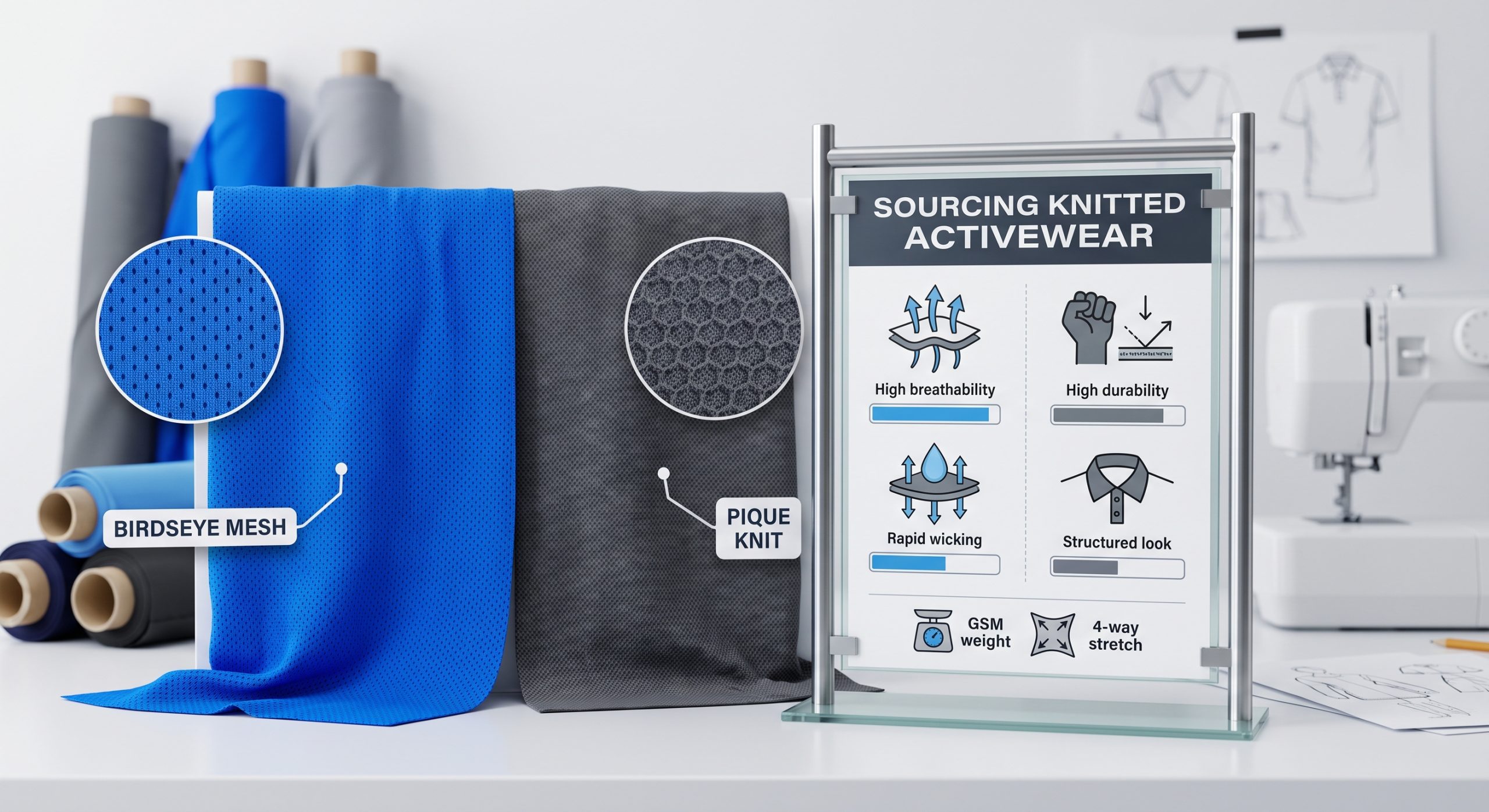
Sourcing knitted activewear requires evaluating fiber composition, fabric structure, GSM weight, and moisture management parameters to match athlete performance needs. Picture an apparel brand launching a new training line, only to receive flood complaints about saggy waistbands, sticky sweat patches, and rough fabric textures after two washes. Nothing damages customer loyalty faster than active garments that lose shape or trap odor during high-intensity training. Partnering with experienced fabric mills resolves these quality defects by securing precision-engineered textiles that balance softness, stretch, and breathability. Sourcing high-performance knitted activewear provides garment buyers a reliable path toward higher garment quality and satisfied repeat clients.
1. How Is Knitted Activewear Manufactured for Sports?
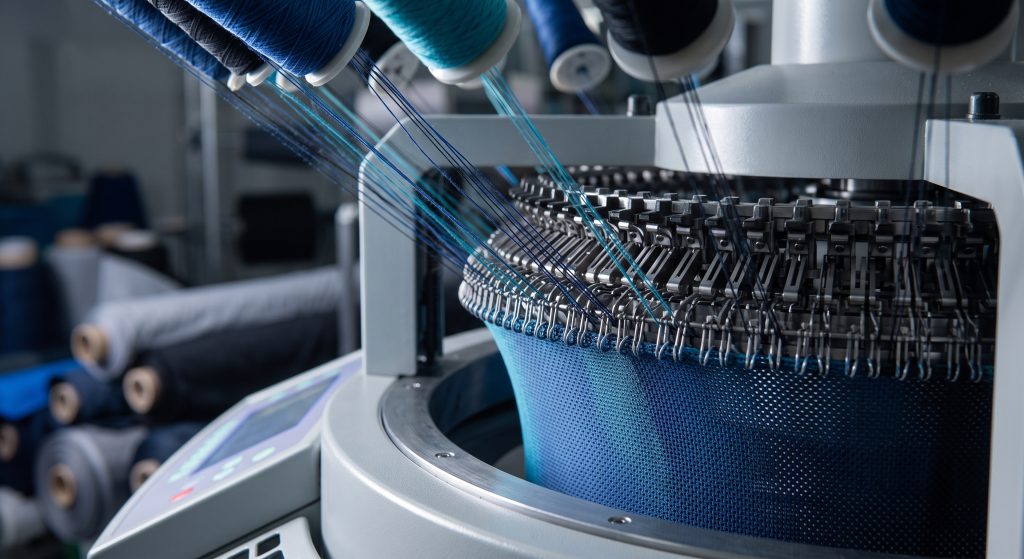
Knitted activewear is manufactured by looping synthetic yarns together on circular knitting machinery to create flexible, breathable fabric structures. Garment buyers need fabrics that expand during body movement without tearing or permanently losing shape. Here is the deal. Synthetic interlock and mesh weaves offer superior recovery compared to woven textiles. Sourcing quality knitted activewear ensures your apparel line meets strict physical performance requirements.
What Fiber Loop Structures Drive Fabric Performance?
Circular looping techniques give sportswear its natural elasticity and soft drape. When you stretch knit fabric, the loops widen to accommodate movement before contracting back to their original position.
- Interlock knits provide a double-faced smooth surface for high opacity.
- Single jersey offers a lightweight single-knit feel for loose training shirts.
- Warp knits deliver high compression force for athletic leggings.
How Do Yarns Shape Elasticity and Garment Recovery?
Combining filament polyester with flexible elastane yarns creates strong four-way stretch fabrics. Think about it. Apparel brands that choose cheap single-ply yarns risk garment sagging after repeated athletic wear.
Key Takeaway: Selecting circular-knit synthetic fabrics with elastane blends guarantees complete movement freedom and long-lasting garment shape retention.
| Knitting Type | Structure Mechanism | Elastic Recovery | Primary Application |
| Interlock Knit | Double-faced looped weave | High (4-Way) | Compression Shorts & Leggings |
| Single Jersey | Single-faced simple loop | Moderate (2-Way) | Lightweight Workout Tees |
This structural breakdown highlights how specific loop constructions determine stretch performance for athletic apparel lines.
2. Why Does Birdseye Knit Excel in Knitted Activewear?
Birdseye knit excels because its unique micro-pinhole geometry allows continuous airflow and rapid heat dissipation during intense workouts. Athletes generate massive amounts of body heat during full-court games or marathon runs, requiring high air permeability. Look. Incorporating birdseye mesh into your knitted activewear collection gives athletes instant thermal relief without sacrificing fabric strength.
How Do Pinhole Geometries Maximize Air Ventilation?
The signature birdseye pattern features thousands of tiny eyelets woven evenly across the fabric face. These micro-perforations act like passive cooling vents, pulling cool air inward while letting body heat escape effortlessly.
- Eyelet geometry expands total surface area for faster air exchange.
- Lightweight 140-160 GSM structure minimizes total garment weight.
- Smooth interior surface prevents friction against sensitive athlete skin.
Does Birdseye Mesh Outperform Traditional Knits?
Birdseye mesh dries twice as fast as solid knits because sweat spreads quickly across its porous surface. What is the kicker? Moisture evaporates before it can gather into heavy, damp spots that pull garments downward.
Key Takeaway: Birdseye mesh is the top choice for high-intensity game shorts and jersey tops where heat dissipation is the main priority.
| Mesh Property | Birdseye Pattern | Standard Plain Knit |
| Air Permeability | High (Pinhole matrix) | Moderate (Solid weave) |
| Drying Velocity | Rapid Evaporation | Medium Evaporation |
| Typical GSM | 130 – 160 GSM | 170 – 200 GSM |
Comparing breathability parameters confirms why birdseye patterns dominate high-performance game apparel markets.
3. Is Pique Fabric Superior for Knitted Activewear?
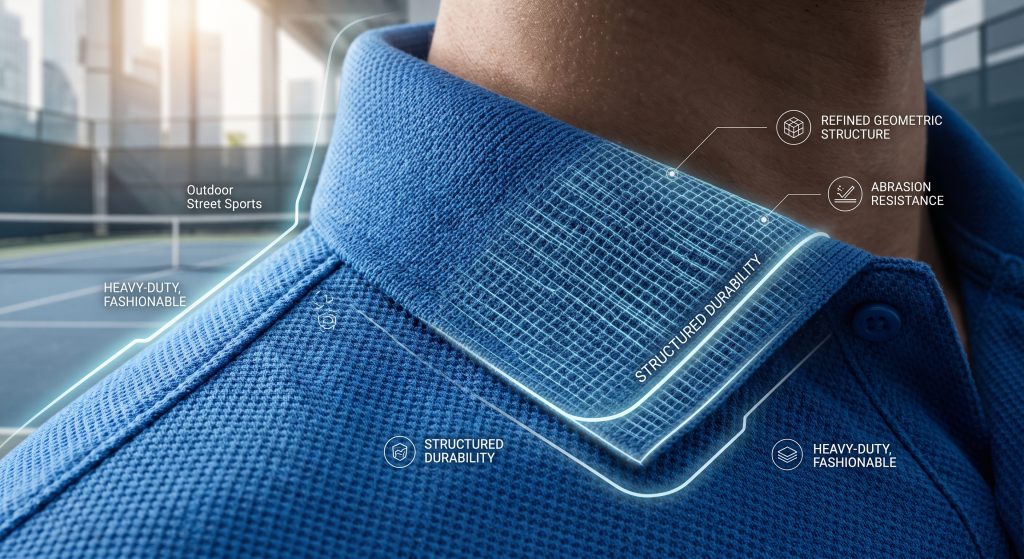
Pique fabric is superior for sportswear that demands structured durability, premium hand-feel, and a refined geometric look. Outdoor street sports and polo apparel need fabrics that withstand abrasion while maintaining clean structural lines. Truth is. Choosing pique-structured knitted activewear allows brands to offer heavy-duty, fashionable athletic garments.
How Does Waffle Texture Impact Garment Hand-Feel?
Pique fabric features a distinct waffle or honeycomb weave that creates a raised texture across the garment surface. This textured finish gives sportswear a firmer hand-feel and substantial weight that feels premium to wear.
- Raised waffle construction resists surface snagging against rough equipment.
- Heavier weight range (180-220 GSM) provides structural opacity.
- Distinctive visual depth elevates basic sport tops into stylish lifestyle pieces.
Can Pique Handle Intense Moisture during Workouts?
Pique knits absorb sweat well, but their thicker structure retains moisture longer than porous birdseye mesh. Ready for the good part? Blending synthetic yarns into pique weaves speeds up drying time while preserving that signature textured touch.
Key Takeaway: Pique fabric delivers structural elegance and abrasion resistance, making it ideal for lifestyle sports apparel and outdoor gear.
| Fabric Metric | Pique Knit | Birdseye Mesh |
| Surface Texture | Raised Waffle / Honeycomb | Flat with Micro-pinholes |
| Hand-Feel | Firm, Substantial, Structured | Soft, Lightweight, Smooth |
| Best Application | Sports Polo Shirts & Street Shorts | Competitive Game Jerseys & Shorts |
Evaluating hand-feel and weight parameters helps product teams match pique fabrics with lifestyle sportswear categories.
4. How Do Knitted Activewear Structures Control Sweat?
Knitted activewear structures control sweat by utilizing capillary action inside synthetic fibers to push liquid away from skin. Accumulated sweat increases garment weight, causes uncomfortable skin sticking, and lowers athletic performance. Here is the secret. Advanced moisture-wicking technology inside knitted activewear channels liquid sweat to the outer fabric layer for instant air drying.
How Does Capillary Action Drive Moisture Away?
Synthetic yarns are engineered with special cross-sectional channels that pull liquid upward through physical tension. As sweat leaves skin pores, hydrophobic fibers rapidly pull water droplets across the garment surface.
- Grooved synthetic filaments transport moisture five times faster than cotton.
- Surface spread accelerates evaporation, keeping garment interiors dry.
- Lightweight dry fabric prevents skin chafing during repetitive movements.
Do Chemical Finishes Outlast Natural Yarns?
Yarn-level moisture management provides permanent wicking power that never washes out during industrial laundering. You might wonder. Topical chemical sprays cost less initially but degrade after twenty wash cycles, leaving garments heavy and clammy.
Key Takeaway: Specifying yarn-level capillary technology guarantees lifelong sweat-wicking protection for high-performance athletic collections.
| Wicking Technology | Mechanism Type | Wash Durability | Performance Level |
| Filament Micro-Grooves | Physical Yarn Structure | Lifetime | High Performance |
| Surface Topcoat Chemical | Spray Coating | 20-30 Washes | Moderate |
This technology comparison demonstrates why yarn-level moisture management is required for long-lasting sports gear.
5. Can Knitted Activewear Handle High Physical Stress?
Knitted activewear handles high physical stress through high-tenacity synthetic yarns reinforced with elastane fibers. Dynamic movements like sprinting, jumping, and physical contact place extreme strain on garment seams and material integrity. This is where it gets interesting. Selecting heavy-duty knitted activewear protects garment brands against sudden tears, seam blowouts, and product returns.
How Does Spandex Integration Prevent Seam Tears?
Integrating eight to twelve percent spandex allows knit fabrics to stretch four ways without snapping individual threads. When an athlete lunges or pivots, flexible elastane yarns absorb structural tension smoothly.
- Four-way elasticity adapts instantly to intense joint movements.
- Reinforced flatlock seams distribute pull force evenly across garment joints.
- High elastic recovery returns fabric to its original fit without bagginess.
What Burst Strength Parameters Protect Garments?
Burst testing measures how much fluid pressure or physical force fabric can endure before rupturing. Believe it or not. High-density interlock knits withstand twice as much burst pressure as standard cotton jersey fabrics.
Key Takeaway: Combining high-tenacity polyester with spandex guarantees tear strength and long-lasting garment durability under physical strain.
| Fiber Blend | Stretch Capability | Burst Strength | Tear Resistance |
| 88% Poly / 12% Spandex | 4-Way High Stretch | High | High Tension Proof |
| 100% Rigid Synthetic | 2-Way Low Stretch | Moderate | Prone to Seam Stress |
Analyzing stretch and strength data proves why elastane blends are necessary for contact sports apparel.
6. Which Knitted Activewear Fabric Offers Softer Touch?
Knitted activewear with micro-denier synthetic yarns or brushed jersey offers the softest touch against athlete skin. Skin irritation and rough fabric friction ruin athlete focus during long training sessions or endurance races. Pay attention. Comparing hand-feel between birdseye mesh and pique knit helps product developers select the right fabric texture for specific athletic activities.
How Does Birdseye Compare to Pique in Hand-Feel?
Birdseye mesh features a silky, smooth interior surface that glides over skin without abrasive friction. Pique knit offers a firmer, textured touch that feels structured and crisp, which works great for collared shirts or casual shorts.
- Birdseye mesh feels ultra-smooth, lightweight, and completely frictionless.
- Pique knit provides a sturdy, tactile honeycomb feel with pleasant weight.
- Brushed single jersey offers a cozy, soft feel ideal for leisure gear.
What Surface Treatments Minimize Skin Friction?
Applying micro-sanding or silicon softening treatments lowers surface friction coefficients. That is not all. Soft-finish knits protect runners and cyclists from uncomfortable chafing across sensitive body areas during long events.
Key Takeaway: Birdseye mesh provides a frictionless, soft interior for active play, whereas pique delivers a structured, crisp touch for lifestyle sportswear.
| Fabric Type | Tactile Sensation | Skin Friction Level | Best Fit Category |
| Birdseye Mesh | Silky & Smooth | Low | Pro Running & Basketball |
| Pique Knit | Structured & Textured | Moderate | Sport Polo & Streetwear |
Matching surface texture with sport intensity guarantees athlete comfort and low friction issues.
7. How Does GSM Weight Affect Knitted Activewear Performance?
GSM weight affects performance by balancing garment breathability, drape, warmth, and fabric opacity. Selecting an incorrect fabric weight causes sports garments to feel paper-thin and sheer or excessively heavy and suffocating. Here is the deal. Specifying exact GSM ranges for your knitted activewear collection guarantees the ideal balance of light weight and complete visual coverage.
What GSM Range Fits Lightweight Game Garments?
Lightweight game gear requires fabric densities between 140 GSM and 160 GSM for maximum ventilation and swift movement. Fabrics in this weight category allow heat to escape rapidly without weighing down athletes during fast play.
- 130-150 GSM: Ultra-lightweight mesh for speed training tops.
- 160-180 GSM: Standard athletic weight providing full coverage and structure.
- 200-240 GSM: Heavyweight knits for compression leggings and winter gear.
How Does Fabric Density Balance Opacity and Airflow?
Higher GSM knits block light completely, preventing garment show-through during deep squats or bends. Think about it. Choosing 180+ GSM double-knit fabrics secures full opacity while keeping garments durable through heavy use.
Key Takeaway: Target 150-170 GSM for lightweight active game gear, and step up to 180-220 GSM for opaque leggings and structured sport tops.
| GSM Range | Transparency Risk | Airflow Capacity | Primary Garment Choice |
| 130 – 150 GSM | Low-Moderate | High Ventilation | Race Singlets & Speed Shorts |
| 160 – 180 GSM | Zero Sheerness | Balanced Airflow | Team Game Jerseys |
| 200 – 240 GSM | Zero Sheerness | Thermal Retentive | Gym Leggings & Hoodies |
Understanding GSM boundaries prevents garment sheerness complaints while maintaining target breathability.
8. What Is the Best Knitted Activewear for Eco Brands?
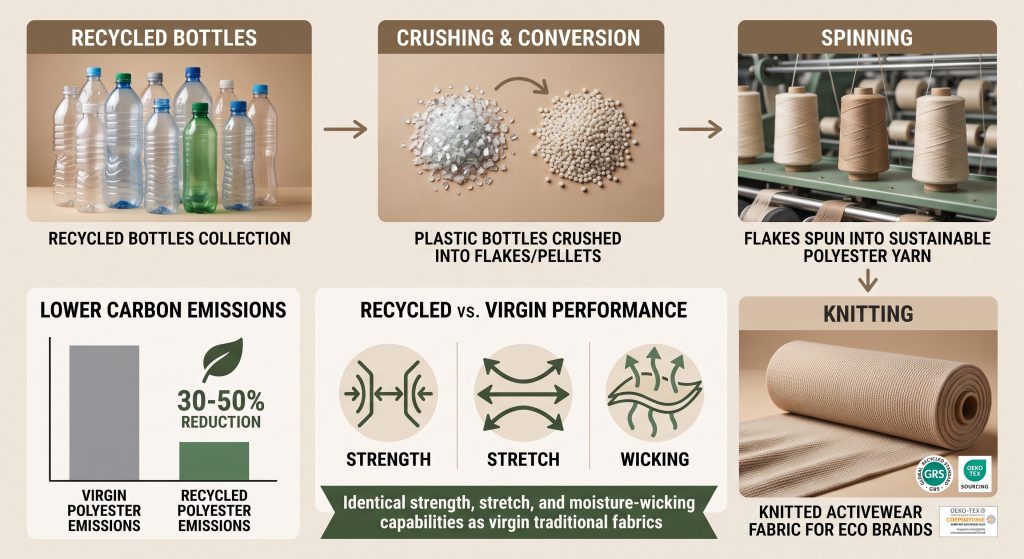
Recycled polyester knitted activewear made from post-consumer plastic bottles is the best choice for eco-conscious sportswear brands. Global apparel buyers want sustainable sourcing options that lower carbon emissions without sacrificing physical garment performance. Look. Eco-friendly knitted activewear delivers identical strength, stretch, and moisture-wicking capabilities as traditional virgin synthetic fabrics.
Can Recycled Polymers Match Virgin Filament Quality?
Modern recycling processes break down recycled plastics into clean polymer chips that spin into high-tenacity yarns. These sustainable filaments match virgin synthetic yarns in tensile strength, color clarity, and moisture management.
- Recycled polyester reduces plastic bottle waste in ocean landfills.
- Manufacturing recycled yarns consumes thirty percent less energy than virgin plastic.
- Certified green fabrics help sportswear brands win eco-minded consumers.
How Does Green Sourcing Build Market Authority?
Displaying recognized sustainability certifications builds trust with modern retail procurement teams. What is the kicker? Sourcing eco-certified knits allows garment brands to command premium wholesale prices in competitive markets.
Key Takeaway: Recycled synthetic knits provide high active performance while helping your apparel brand fulfill environmental sustainability targets.
| Sourcing Metric | Recycled Polyester | Virgin Polyester |
| Environmental Impact | Upcycled Plastic Waste | Fossil Fuel Extraction |
| Performance Strength | High Tenacity | Baseline Standard |
| Energy Consumption | 30-50% Reduction | Baseline Standard |
Adopting recycled synthetic knits strengthens brand market appeal while maintaining high athletic performance standards.
9. How Do You Test Knitted Activewear Before Bulk Purchase?
You test knitted activewear before bulk purchasing by requesting certified lab reports for color fastness, shrinkage rates, and stretch recovery. Unverified fabric batches can fade under sunlight, shrink in industrial wash cycles, or lose elasticity after two workouts. Truth is. Conducting thorough lab tests on knitted activewear samples protects your brand against expensive bulk manufacturing defects.
Which Lab Tests Guarantee Long-Term Fabric Color?
Color fastness testing measures how well dye stays locked into synthetic fibers during washing, perspiration, and sun exposure. Requesting Grade 4.0 or higher guarantees vivid colors that will not bleed or fade over time.
- Wash fastness tests prevent dye bleeding during home laundry cycles.
- Perspiration fastness tests ensure sweat will not discolor bright sport team uniforms.
- Rubbing fastness tests verify color stability against physical friction.
How Do You Verify Shrinkage and Stretch Limits?
Standard wash testing measures fabric dimensional stability to ensure garments maintain exact sizing specs. Ready for the good part? Testing stretch recovery percentages guarantees waistbands and leg cuffs stay snug after repeated wear.
Key Takeaway: Demanding certified lab test results for color fastness and shrinkage prevents costly bulk fabric rejects and returns.
| Test Parameter | Benchmark Standard | Standard Test Code |
| Washing Color Fastness | Grade 4.0 or Higher | ISO 105-C06 |
| Dimensional Shrinkage | Under 3.0% Change | ISO 6330 |
| Pilling Resistance | Grade 4.0 (No Fuzzing) | ISO 12945-2 |
Verifying these lab benchmarks guarantees consistent quality control across all bulk production orders.
10. Which Knitted Activewear Choice Fits Your Apparel Line?
Selecting the right choice depends on matching fabric weight, surface texture, and breathability to your target sport activity. High-intensity competitive sports demand lightweight, micro-porous fabrics like birdseye mesh, while lifestyle athletic collections benefit from structured pique knits. Here is the secret. Aligning your knitted activewear fabric selection with specific user needs creates high-value garments that stand out in retail markets.
How Should You Choose Between Birdseye and Pique?
Choose birdseye mesh when your apparel line focuses on high-speed sports, air ventilation, and ultra-light weight. Choose pique fabric when designing stylish polo tops, structured outdoor gear, or durable lifestyle sportswear pieces.
- Birdseye mesh: Best for intense basketball, running singlets, and summer game shorts.
- Pique knit: Best for sport polo shirts, structured outerwear, and leisure wear.
- Combined collections: Use birdseye mesh for body-ventilation panels inside pique garments.
What Procurement Parameters Guarantee Bulk Quality?
Establishing clear technical specifications with your fabric mill eliminates quality variances between sample yardage and bulk rolls. You might wonder. Direct mill partnerships give you custom dyeing, tailored weight targets, and consistent bulk supply reliability.
Key Takeaway: Matching birdseye mesh with competitive game gear and pique knit with structured lifestyle apparel maximizes product performance and commercial appeal.
| Selection Criteria | Birdseye Mesh Selection | Pique Knit Selection |
| Primary Focus | Airflow & Lightweight Speed | Texture, Structure & Style |
| Hand-Feel Profile | Silky, Smooth & Soft | Raised Honeycomb & Firm |
| Best Apparel Line | Competitive Game Uniforms | Sport Polo & Streetwear Shorts |
This final decision matrix helps garment procurement teams select the right fabric structure for their apparel catalog.
Final Strategic Advice for Activewear Brands
Selecting between high-airflow birdseye mesh, structural pique knits, flexible elastane blends, and eco-friendly recycled yarns determines your sportswear line success. We solved your material selection challenges by detailing knit structures, breathability mechanics, GSM weights, and lab quality standards. Our fabric manufacturing mill delivers custom-engineered technical fabrics built for performance sportswear brands across global markets. Partner with us to upgrade your garment lines with certified high-performance athletic textiles. To request fabric swatch books, test reports, or bulk pricing for your brand, contact us today.
Frequently Asked Questions
Q1: What’s the best knitted activewear fabric for high-intensity summer sports?
Birdseye mesh is the optimal choice because its micro-pinhole geometry maximizes air circulation and accelerates sweat evaporation during extreme heat.
Q2: Can I use pique knit fabric for competitive basketball game shorts?
Pique knit is not recommended for intense game play because its heavier waffle texture retains sweat longer than lightweight mesh.
Q3: How do I know if recycled polyester matches virgin synthetic fabric quality?
Recycled polyester offers identical tensile strength and moisture-wicking capabilities because recycled filaments are refined to match virgin polymer specs.
Q4: Can I customize fabric GSM weight and colors for my wholesale apparel line?
Yes, direct mill sourcing allows you to specify custom GSM weights, custom Pantone color dyeing, and specialized surface finishes.
Q5: What’s the best way to prevent fabric shrinkage in custom activewear lines?
Pre-shrunk synthetic knits with certified lab test results under three percent dimensional change keep garments true to size after washing.