
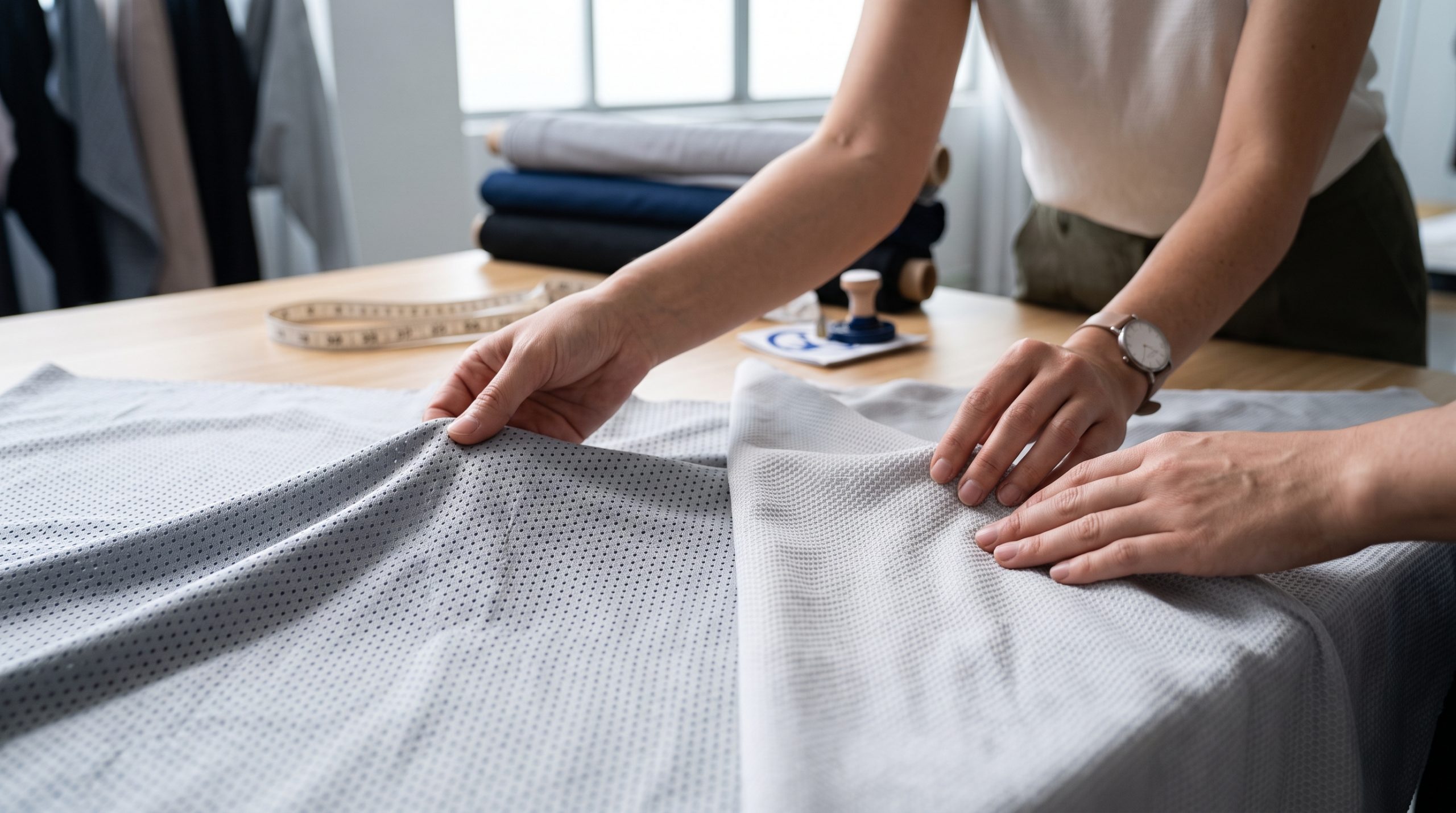
Choosing the right sports fabric wholesale partner requires comparing knit structures like Birdseye mesh and Pique to match your activewear performance goals. You launch a new workout line expecting high performance and repeat orders from sports enthusiasts. However, sales stall because your previous supplier delivered stiff knit fabric that traps sweat and causes severe skin chafing during intense training. Selecting a reliable sports fabric wholesale partner specializing in technical knits guarantees your garments deliver superior moisture management, tactile comfort, and long-lasting durability.
Why does sports fabric wholesale quality drive garment success?
Quality material selection directly determines athlete comfort, garment longevity, and brand reputation in activewear manufacturing. When you partner with a trusted sports fabric wholesale supplier, you gain access to engineered materials designed for high motion. Premium knits maintain shape under extreme stretch conditions. Selecting high grade textiles prevents common garment failures after repeated washing cycles.
How does fabric selection impact activewear branding?
Garment quality establishes immediate trust with your end customer. Here is the deal: poor fabric selection leads to garment shrinkage and customer returns. High performance knits build strong product satisfaction.
- Superior yarn uniformity prevents seam distortion
- Advanced dye stability keeps colors vibrant
- Controlled elasticity guarantees precise fit
Key Takeaway: Premium textiles protect your brand reputation by delivering consistent performance in every production run.
What structural parameters matter in knit selection?
Knitting structures control heat dissipation and tensile strength in activewear. Look at it this way: fiber density determines how your garment performs under physical stress. You need to analyze structural specifications before placing bulk orders.
- Gram weight per square meter impacts garment drape
- Micro-hole spacing regulates air passage
- Elastane percentage balances stretch and recovery
Key Takeaway: Understanding core fabric parameters helps you specify exact requirements for your activewear line.
| Parameter | Birdseye Knit | Pique Knit |
| Structure Type | Micro-mesh tuck stitch | Raised honeycomb pattern |
| Primary Application | Running tops, training shirts | Polo shirts, gym apparel |
| Weight Range | 110 – 160 GSM | 160 – 220 GSM |
Evaluating these fundamental parameters allows activewear developers to match specific fabric knits to precise athletic requirements.
What defines sports fabric wholesale structure in Birdseye knit?
Birdseye knit is defined by its distinctive pattern of small pinhole openings that create a lightweight, breathable surface. Sourcing this knit through sports fabric wholesale channels offers gear makers a reliable mesh alternative. The synthetic yarn configuration forms microscopic eyelets across the cloth. This unique geometry allows body heat to vent rapidly while maintaining structural integrity.
How do micro-mesh patterns function during wear?
Micro-mesh structures create continuous airflow across the athlete’s skin. Think about it: thousands of tiny eyelets function like natural cooling vents. You get rapid evaporation without sacrificing fabric coverage.
- Open hole layout increases ventilation rates
- Low surface density minimizes overall garment weight
- Smooth interior surface reduces friction on skin
Key Takeaway: Micro-mesh architecture creates active air exchange that keeps athletes cooler during intense workout sessions.
What gives eyelet knits superior breathability?
Eyelet knits optimize air circulation through precise hole distribution. What is the real story?: engineered mesh patterns push moisture outward while pulling cool air inward. You can offer lightweight apparel that excels in hot environments.
- High void ratio maximizes air movement
- Synthetic filament yarns prevent moisture retention
- Lightweight construction speeds up drying cycles
Key Takeaway: Eyelet configurations offer maximal breathability for high-sweat training garments.
| Feature | Birdseye Mesh Specification | Performance Advantage |
| Surface Hole Size | 0.5 mm – 1.2 mm micro-holes | Continuous airflow ventilation |
| Knit Construction | Single jersey tuck mesh | Reduced garment weight |
| Drying Speed | Fast drying rate | Rapid moisture evacuation |
These structural properties make Birdseye mesh an ideal option for garments targeting high-sweat activities.
How does sports fabric wholesale structure shape Pique fabric?
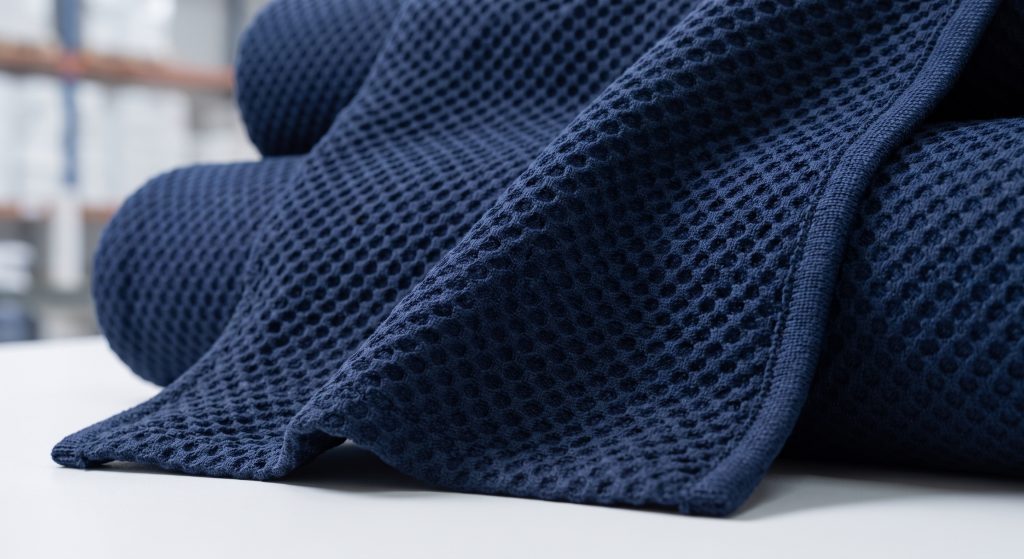
Pique fabric is shaped by a raised geometric texture produced through a double-knit tuck stitch method. Selecting Pique through a sports fabric wholesale partner gives your team a durable material with rich visual texture. The raised waffle pattern creates subtle air pockets between the fabric and skin. This structure adds body and structure to casual athletic apparel.
What makes the waffle texture perform so well?
The raised waffle geometry elevates the fabric surface off the skin. Believe it or not: this dimensional gap prevents the material from clinging when you sweat. You enjoy a clean silhouette that retains its shape throughout the day.
- Raised ribs create elevated skin contact points
- Geometric recesses allow subtle air circulation
- Stiff knit body maintains structured collar designs
Key Takeaway: Waffle textures balance visual elegance with functional distance from the wearer’s skin.
How does knit weight influence Pique durability?
Higher fabric weight gives Pique exceptional strength against surface wear. Here is the bottom line: denser knits resist abrasion and snagging much better than thin jerseys. You deliver durable activewear that handles rugged athletic use.
- Denser yarn packs resist snagging from gear
- Higher tensile strength prevents shape distorting
- Firm structure supports embroidery and logos
Key Takeaway: Heavier Pique textiles provide superior durability for athletic polo shirts and team uniforms.
| Characteristic | Standard Pique | Fine Pique (Baby Pique) |
| Texture Scale | Prominent waffle pattern | Subtle micro-pique pattern |
| Typical Weight | 180 – 220 GSM | 140 – 180 GSM |
| Best Application | Athletic polos, sportswear | Performance t-shirts |
Understanding weight variations in Pique knits helps activewear designers select the right balance of structure and comfort.
Which sports fabric wholesale option gives better breathability?
Birdseye mesh generally delivers higher breathability than standard Pique fabric due to its open eyelet hole structure. Sourcing high performance materials through sports fabric wholesale suppliers allows you to match breathability levels to specific exercise intensities. Birdseye allows direct air passage through its micro-holes. Pique relies on air pockets within its textured knit to move heat away.
How do airflow dynamics compare between knits?
Airflow movement varies greatly between open mesh and textured knits. Ready for the good part?: Birdseye mesh permits direct wind penetration for rapid cooling during outdoor runs. You feel immediate relief as air flows freely across the body.
- Birdseye mesh features open eyelets for air passage
- Pique knits trap tiny air layers for moderate insulation
- Mesh structures cool down body temperature faster
Key Takeaway: Direct airflow through mesh eyelets gives Birdseye superior performance in hot conditions.
Which fabric dissipates heat better during workouts?
Thermal dissipation depends heavily on fabric thickness and hole ventilation. Look at it this way: thinner mesh releases heat faster than thicker textured knits. You keep athletes cool when training under intense heat.
- Thin mesh layers dump body heat quickly
- Pique holds slightly more heat due to yarn volume
- Low thermal resistance keeps activewear comfortable
Key Takeaway: Birdseye mesh excels in heat dissipation for high-intensity training garments.
| Breathability Factor | Birdseye Mesh | Pique Fabric |
| Air Permeability | Very high (open holes) | Moderate (textured weave) |
| Thermal Retention | Minimal heat trapping | Slight heat retention |
| Best Usage Condition | Hot weather, high exertion | Moderate temp, light sport |
Comparing breathability parameters guides activewear brands in choosing the right fabric for targeted climate conditions.
How do sports fabric wholesale choices affect fabric hand feel?
Fabric hand feel depends on fiber composition, knit density, and surface finishing techniques used during manufacturing. Working with a specialized sports fabric wholesale vendor allows you to customize surface softness for ultimate wearer comfort. Birdseye offers a smooth, silky touch against sensitive skin. Pique provides a tactile, textured hand feel that feels crisp and structured.
How does surface smoothness impact skin comfort?
Smooth textile surfaces prevent chafing during continuous physical motion. What is the bottom line?: flat knit structures slide easily over skin without irritation. You give athletes frictionless comfort during marathons or long workouts.
- Micro-denier yarns create ultra-soft hand feel
- Flat surface finish eliminates rough friction points
- Gentle contact protects sensitive skin areas
Key Takeaway: Silky smooth fabrics provide superior skin comfort during high-repetition exercises.
Why choose a textured hand feel for activewear?
Textured fabrics offer a substantial, premium feel preferred in casual sportswear. Here is the deal: raised knits keep the fabric from sticking to wet skin. You achieve a refined appearance without sacrificing athletic utility.
- Textured surface hides minor garment wrinkles
- Crisp hand feel maintains professional athletic look
- Reduced skin cling keeps garment hanging neatly
Key Takeaway: Textured hand feel provides structured styling and prevents fabric clinging during mild sweat accumulation.
| Tactile Property | Birdseye Mesh | Pique Knit |
| Surface Touch | Silky, smooth, soft | Textured, crisp, structured |
| Skin Friction | Extremely low friction | Moderate tactile grip |
| Cling Resistance | Moderate cling resistance | High cling resistance |
Evaluating tactile properties helps apparel product managers select fabrics that align with target consumer preferences.
Why test sports fabric wholesale moisture wicking capabilities?
Moisture wicking testing verifies that activewear textiles can pull sweat away from the body to keep athletes dry. Partnering with sports fabric wholesale experts ensures your synthetic blends receive effective moisture management treatments. Wicking relies on capillary action across synthetic fiber channels. Verifying these traits guarantees high performance under real athletic stress.
How does capillary action transport body sweat?
Capillary action forces liquid along microscopic fiber grooves toward the outer garment surface. Think about it: specialized synthetic filaments pull moisture away from your skin instantly. You stay dry even during vigorous training sessions.
- Micro-grooved fibers pull moisture outward
- Hydrophilic treatments accelerate liquid spread
- Surface evaporation cools down skin temperature
Key Takeaway: Fiber engineering enables rapid moisture movement from skin to the outer fabric environment.
Why is quick drying speed critical for sportswear?
Fast drying speeds prevent garments from becoming heavy and saturated with sweat. What is the real story?: quick-drying knits maintain light garment weight during long workouts. You avoid post-exercise chills caused by damp clothing.
- Rapid evaporation keeps clothing light during exercise
- Reduced moisture retention prevents skin irritation
- Fast dry times simplify post-wash garment care
Key Takeaway: Quick-drying capabilities guarantee athlete comfort and temperature control during extended physical effort.
| Wicking Metric | Birdseye Mesh | Pique Fabric |
| Liquid Spread Rate | Very rapid spreading | Moderate spreading rate |
| Drying Time | Ultra-fast drying | Fast to moderate drying |
| Sweat Management | Excellent for heavy sweat | Good for light to medium sweat |
Standardized moisture testing ensures activewear lines deliver consistent dry comfort under rigorous physical demands.
Which sports fabric wholesale knit suits high intensity gear?
Birdseye mesh knit is typically the superior choice for high intensity athletic gear due to its light weight and rapid drying speed. Choosing a dependable sports fabric wholesale supplier gives you access to elastic, breathable knits designed for intense movement. High intensity gear demands maximum ventilation and minimal fabric weight. Birdseye delivers these properties better than heavier textured knits.
What makes Birdseye ideal for running and cardio?
Running gear requires featherweight construction paired with maximum sweat dispersion. Ready for the good part?: Birdseye mesh barely feels like anything on your body when sprinting. You achieve peak athletic focus without fabric distraction.
- Ultra-light weight reduces athletic fatigue
- High air permeability prevents overheating
- Soft feel eliminates friction during long runs
Key Takeaway: Birdseye mesh offers the ideal combination of weightlessness and breathability for endurance sports.
Can Pique fabric perform well in training gear?
Pique fabric shines in gym training, tennis, and golf where structured apparel is desired. Look at it this way: Pique offers superior durability against equipment wear while maintaining professional styling. You get long-lasting wear for versatile fitness routines.
- Rugged construction resists equipment abrasion
- Structured fit creates flattering athletic silhouettes
- Absorbent weave handles steady gym workouts
Key Takeaway: Pique knits excel in athletic apparel where style, structure, and durability take priority over extreme cooling.
| Sport Category | Preferred Fabric Knit | Primary Advantage |
| Marathon & Track | Birdseye Mesh | Ultra-light, rapid wicking |
| Tennis & Golf | Pique Knit | Structured fit, durable body |
| Gym Cross-Training | Birdseye or Pique Blend | Balanced stretch and comfort |
Matching specific sports disciplines to the appropriate fabric knit maximizes garment performance and customer satisfaction.
How to evaluate sports fabric wholesale durability and stretch?
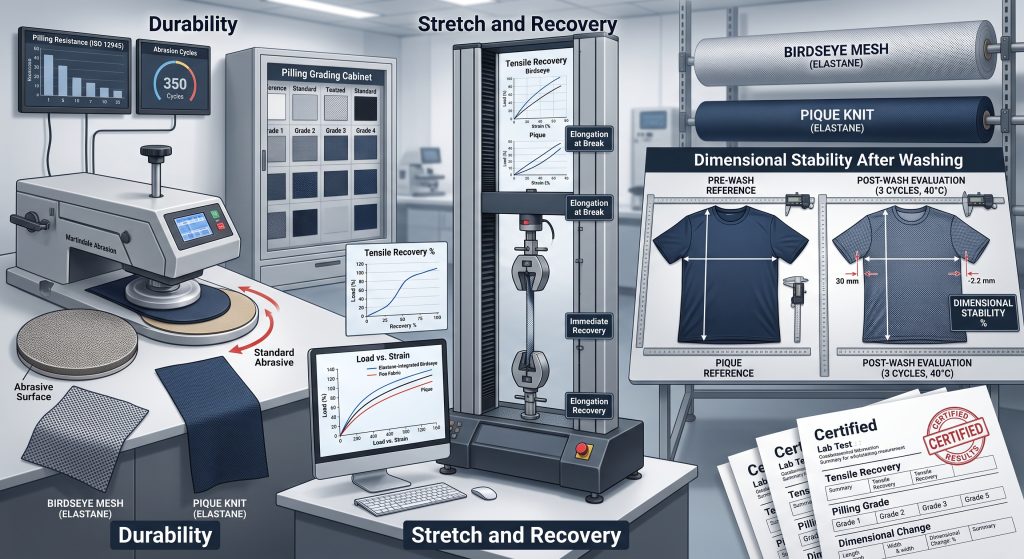
Evaluating durability and stretch requires testing tensile recovery, pilling resistance, and dimensional stability after washing. Sourcing materials through sports fabric wholesale distributors allows you to request certified lab test reports before mass production. Elastane integration enhances stretch recovery in both Birdseye and Pique knits. Verifying these physical traits ensures long product life.
How does elastane addition improve fabric elasticity?
Adding elastane fibers guarantees four-way stretch and superior shape recovery. Here is the bottom line: elastane allows your activewear to expand with full body motion and snap back into shape. You deliver clothing that never sags after repeated use.
- Spandex content enables 4-way stretch movement
- Superior elasticity prevents bagging at elbows and knees
- High shape retention ensures long-lasting apparel fit
Key Takeaway: Integrating elastane fibers yields high-stretch activewear that moves naturally with the body.
What tests confirm fabric pilling and wash durability?
Standardized pilling tests measure surface wear after repeated friction and laundering. Believe it or not: high quality synthetic filaments resist surface pilling through thousands of wash cycles. You assure customers that their gear stays looking new.
- Martindale test checks abrasion resistance
- Wash testing verifies colorfastness and size stability
- Anti-pilling treatments preserve clean fabric appearance
Key Takeaway: Lab testing guarantees your garments withstand repeated washing without losing surface quality.
| Durability Test | Target Metric | High Performance Standard |
| Pilling Resistance | Martindale / ICI Box | Grade 4 – 5 (Minimal pilling) |
| Dimensional Stability | Washing shrinkage rate | Less than 3% dimensional change |
| Elastic Recovery | Stretch recovery rate | Over 90% recovery after extension |
Rigorous testing protocols protect activewear brands from quality failures and warranty claims.
What sports fabric wholesale factors impact production costs?
Production costs are influenced by raw yarn selection, fabric weight, knitting complexity, and functional finishing treatments. Sourcing from a factory-direct sports fabric wholesale partner minimizes middleman markups and stabilizes your unit costs. Synthetic fiber market prices directly drive base textile pricing. Understanding cost drivers helps you optimize your purchasing budget.
How does yarn quality influence base material cost?
Recycled micro-denier yarns cost more than standard polyester filaments but deliver superior performance. Think about it: investing in premium yarns reduces fabric defect rates during garment sewing. You lower overall manufacturing waste by choosing higher grade yarn.
- Micro-denier fibers increase yarn manufacturing cost
- Recycled polyester carries sustainable premium pricing
- High tenacity yarns reduce fabric defect occurrences
Key Takeaway: Premium yarn selection increases initial material cost but delivers superior garment finishing and lower factory waste.
Why does GSM weight affect total fabric yield?
Fabric weight determines how many garment pieces you can cut per kilogram of material. What is the real story?: lighter Birdseye mesh gives higher yield per kilo compared to heavy Pique. You maximize unit output per fabric roll when using lighter GSM.
- Lighter GSM yields more apparel units per kilogram
- Heavy Pique increases fabric weight cost per shirt
- Optimized cutting markers maximize textile efficiency
Key Takeaway: Calculating fabric yield based on GSM allows activewear planners to accurately budget material expenditure.
| Cost Driver | Birdseye Mesh Impact | Pique Fabric Impact |
| Gram Weight (GSM) | Lower weight (110-160 GSM) = Higher yield | Higher weight (160-220 GSM) = Lower yield |
| Knitting Speed | Fast single jersey knitting | Moderate double-knit processing |
| Unit Cost Factor | Cost-effective for mass production | Moderate cost for premium apparel |
Analyzing GSM yield dynamics empowers activewear buyers to balance garment quality with production margin targets.
How to select your ideal sports fabric wholesale partner today?
Selecting the ideal activewear textile supplier requires evaluating manufacturing capacity, quality certifications, sample speed, and order flexibility. Establishing a relationship with an experienced sports fabric wholesale manufacturer guarantees consistent batch-to-batch yarn quality. You should verify vendor credentials before signing supply contracts. Reliable partners support your brand growth through stable delivery timelines.
What certifications prove supplier quality standards?
International textile certifications confirm environmental safety and chemical compliance. Ready for the good part?: certified factories guarantee safe, eco-friendly materials for global export markets. You protect your brand from chemical compliance risks in key sales regions.
- OEKO-TEX Standard 100 verifies non-toxic textiles
- Global Recycled Standard (GRS) certifies eco yarns
- ISO 9001 quality management ensures process control
Key Takeaway: Supplier certifications provide verified proof of textile safety and environmental responsibility.
How to test sample batches before bulk production?
Thorough sample testing prevents expensive mistakes in mass garment production. Look at it this way: requesting yardage samples lets you verify hand feel, stretch, and dye performance firsthand. You lock in quality standards before committing capital.
- Order sample headers to check texture and hand feel
- Test sample yardage through wash and wear trials
- Confirm color lab dips match brand color specs
Key Takeaway: Comprehensive sample approval protocols prevent costly fabric defects during full-scale garment manufacturing.
| Verification Step | Key Action | Primary Benefit |
| Credential Audit | Verify GRS and OEKO-TEX certificates | Regulatory compliance guaranteed |
| Sample Testing | Conduct wash, stretch, and color tests | Prevents bulk quality defects |
| Factory Inspection | Review knitting and dyeing machinery | Ensures reliable bulk capacity |
Implementing structured supplier evaluation steps guarantees long-term activewear manufacturing success.
Final Recommendations for Your Activewear Sourcing
Choosing between Birdseye mesh and Pique fabric directly dictates your garment’s breathability, tactile comfort, and performance appeal. By understanding the structural distinctions between lightweight micro-mesh and structured waffle knits, activewear brands can tailor fabric selections to exact athletic demands. Our team manufactures technical polyester, nylon, and spandex textiles engineered for durability and rapid moisture management. Whether you require high-ventilation mesh for running gear or structured Pique for polo apparel, feel free to contact us today to request custom fabric samples and bulk wholesale quotes. We stand committed to powering global sportswear brands with sustainable, high-precision technical textiles crafted for athletic victory.
Frequently Asked Questions
Q1: Can I use Birdseye mesh for high-intensity activewear tops?
Yes, Birdseye mesh is ideal for high-intensity sportswear because its micro-pinhole layout permits maximum airflow and rapid sweat evaporation. This open knit structure keeps athletes cool and dry under intense physical exertion.
Q2: What’s the best fabric choice between Birdseye and Pique for golf polo shirts?
Pique knit is the best option for athletic polo shirts due to its raised waffle texture and structured drape. The double-knit construction gives polo collars and plackets a crisp, professional appearance while retaining breathability.
Q3: How do I know if a sports fabric has reliable moisture wicking properties?
You can confirm moisture performance by testing the fabric’s liquid spreading rate and drying speed in a certified textile laboratory. Engineered synthetic yarns with hydrophilic finishes pull water across surface fibers rapidly rather than trapping moisture inside the garment.
Q4: Can I add elastane to Pique and Birdseye knits for extra stretch?
Yes, blending spandex or elastane into both Birdseye and Pique knits significantly boosts four-way elasticity and shape recovery. Adding elastane allows garments to flex freely during exercise without losing their original fit after laundering.
Q5: What’s the best way to choose the right GSM weight for summer athletic wear?
Select lightweight textiles between 110 GSM and 150 GSM for summer activewear to maximize cooling comfort. Lighter fabric weights reduce overall garment bulk and permit faster heat dissipation during hot weather workouts.