
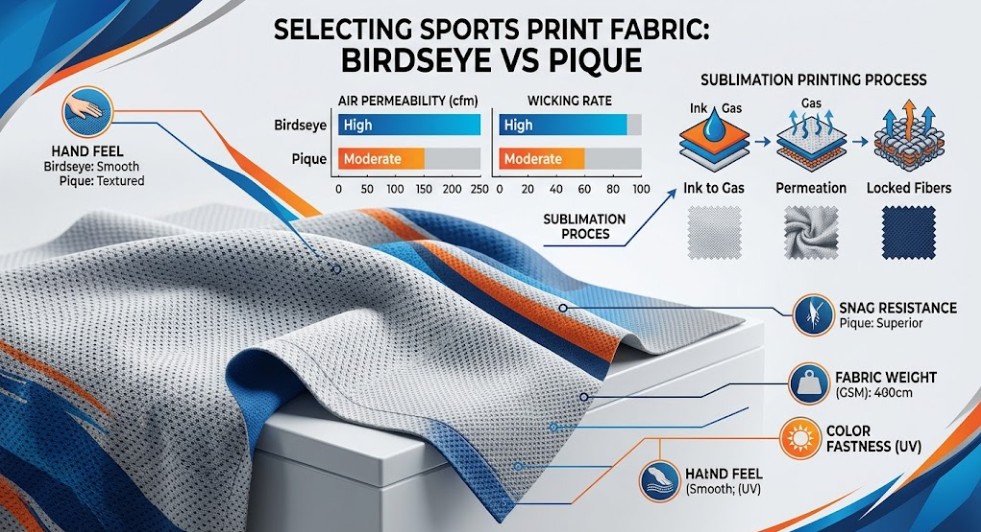
Choosing premium sublimation textile gear requires a meticulous comparison of advanced knit architectures like geometric micro-mesh or double-knit pique options to optimize ultimate athlete tracking movement comfort. Activewear developers frequently design ambitious high-performance athletic clothing lines only to notice that brilliant sublimation patterns look terribly faded after a few intensive sports training sessions. This tragic material failure deeply frustrates professional competitive teams besides completely ruining your hard-earned corporate reputation among selective bulk clothing buyers who demand maximum product durability. Fortunately, sourcing custom sports print fabric supplies a permanent solution by integrating high-definition pattern clarity directly into technical moisture-wicking synthetic textile foundations.
1. Why Choose Sports Print Fabric for Activewear?
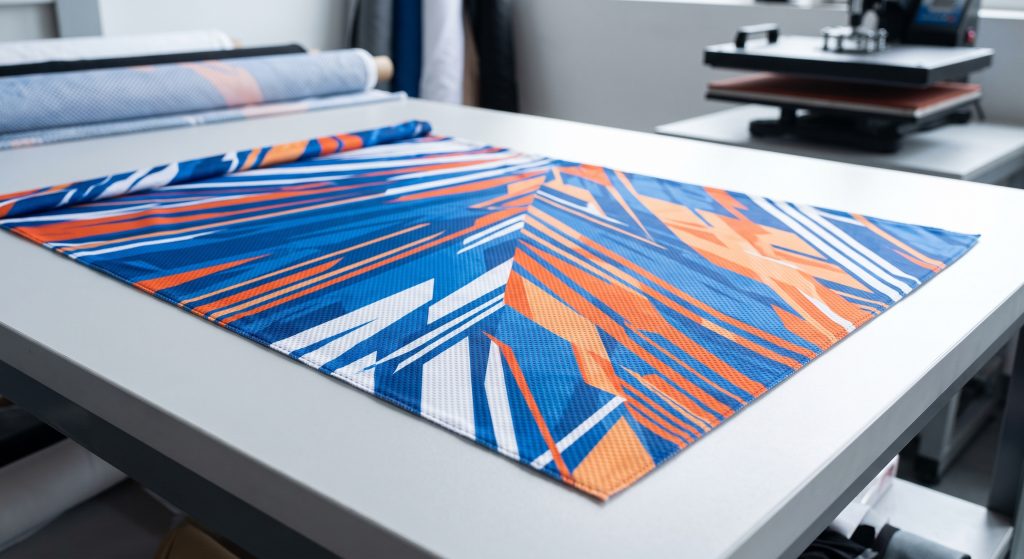
Selecting technical sports print fabric allows global garment manufacturers to deliver exceptional thermal regulation options alongside vibrant aesthetic customization fields for modern professional athletic teams. You might be wondering how specific structural knit configurations impact daily production workflows when engineering premium high-stretch compression garments or custom team uniforms. Bulk apparel factories require highly resilient synthetic substrates that consistently maintain absolute dimensional stability during intense high-temperature heat press sublimation procedures without shrinking significantly. Investing in scientifically engineered technical textiles inevitably guarantees that your finished custom sportswear garments retain perfect color registration through multiple rigorous industrial laundry cycles over time.
Understanding Knit Structural Integrity
Maintaining pristine pattern precision during wholesale garment cutting operations depends entirely on how tightly a specialized machine knits individual polyester filaments together safely. Here’s the deal regarding structural deformation because loose fabric construction causes printed designs to skew awkwardly across panels during manual assembly stages. Experienced apparel sewing technicians prefer working with balanced double-knit performance textiles because these premium selections lie perfectly flat on automated cutting tables without rolling. Choosing structurally stable yardage substantially reduces factory textile waste while accelerating your overall manufacturing throughput during heavy seasonal activewear production rushes globally across facilities.
Maximizing Garment Longevity
Professional athletes demand premium team apparel that survives extreme field friction without showing signs of fiber degradation during competitive regional championship matches. This is where it gets interesting… Micro surface texture influences how friction forces interact with sublimated ink layers over extended training periods. Utilizing high-density synthetic yarns consistently creates a smoother outer face shield that deflects abrasive contact from heavy gym equipment or opposing players quite easily. Securing highly durable raw materials permanently ensures that your private sports clothing brand receives stellar performance reviews from elite athletic training facilities worldwide.
Key Takeaway: Choosing specialized textiles fortified with anti-pilling finishes safeguards print crispness while providing clients with reliable activewear that retains its premium value over time. Ready for the good part? Evaluating material properties through structured factory testing reveals exactly how different knit methods handle moisture transport under pressure. Apparel companies that analyze technical data can match fabric choices perfectly with specific elite athlete demands to avoid expensive seasonal product recalls completely. Implementing strict material evaluation protocols protects your corporate development profits while firmly establishing your manufacturing firm as an authoritative leader in technical sportswear design.
| Fabric Quality Metric | Target Specification | Production Benefit |
| Color Fastness | Grade 4-5 | Prevents Fading |
| Weight Uniformity | ±5% GSM | Consistent Printing |
| Shrinkage Rate | Under 3% | Maintains Sizing |
Analyzing this technical data helps production managers optimize heat-transfer settings for flawless sublimation outputs.
2. How Does Sports Print Fabric Improve Ventilation?
Utilizing premium sports print fabric consistently increases corporate athletic ventilation by employing specialized geometric knit patterns that create physical channels for continuous ambient air passage. This is where it gets interesting… Airborne heat escapes rapidly through these engineered micro-apertures since specialized yarn configuration prevents warm moisture accumulation against hot skin surfaces. Sportswear brands select these ventilated textiles to satisfy demanding commercial gym clients who require lightweight clothing that remains cool during high-intensity fitness training. Procuring advanced breathable performance textiles inevitably guarantees that your upcoming athletic product catalog sets a magnificent new industry standard for active garment climate control.
Engineering Microchannel Airflow
Knitting machines control regional airflow capacity by precisely adjusting loop density to form miniature porous windows within the synthetic textile matrix structure safely. But here’s the kicker… Poorly constructed textiles block natural evaporation processes because standard tight weave formations trap heat waves inside the activewear garment shell. Incorporating structural breathable windows helps regulate core human body temperature while reducing physical fatigue during prolonged outdoor athletic endurance competitions over time. Choosing advanced porous knits consistently gives your corporate clothing brand a distinct technical performance advantage over traditional sportswear apparel competitors globally.
Optimizing Thermal Regulation Efficiency
Airtight athletic apparel causes rapid biological overheating during summer tournaments because heavy sweat cannot evaporate from the skin surface efficiently at all. Ready for the good part? Advanced ventilation structures utilize directional ventilation dynamics to pump humid air away from active muscle groups during sudden movements. Selecting highly ventilated textiles prevents standard post-exercise chill by keeping the textile fabric body dry after intense physical training workouts finish. Your commercial clients will notice immediate comfort improvements when transitioning to professionally engineered activewear products manufactured with advanced ventilation standards today.
Key Takeaway: Integrating open-knit cooling patterns into performance activewear apparel lines directly drives client satisfaction by preventing moisture buildup during heavy sweat production. What’s the real story? Comparing different geometric structures allows garment designers to select the precise airflow rating required for specific regional climate zones. Clothing firms that utilize high-airflow specifications can capture premium wholesale market share within the rapidly growing elite sportswear industry globally for profit. Supplying technically superior breathable gear firmly establishes your business as a top-tier commercial provider of elite competitive athletics apparel hardware to buyers.
| Ventilation Metric | Open Knit Structure | Closed Knit Structure |
| Air Permeability | >150 cfm | <50 cfm |
| Heat Dissipation | Excellent | Moderate |
| Cooling Efficiency | Rapid | Sluggish |
Reviewing these ventilation metrics helps design teams select appropriate structures for extreme summer sportswear applications.
3. Is Birdseye More Breathable Than Pique Knit?
Birdseye fabric delivers superior multidirectional breathability compared to pique knit options due to its uniform micro-punctuated surface pattern that facilitates immediate heat dispersion. You might be wondering how this structural variance translates into actual field performance metrics when professional athletes push their physical endurance limits. The unique diamond-shaped geometric configuration of birdseye patterns creates a thinner fabric cross-section that allows ambient air to pass through with minimal resistance. Choosing the correct sports print fabric pattern carefully ensures that your commercial design team can manufacture premium jerseys tailored for high-intensity athletic environments.
Analyzing Birdseye Geometric Patterns
The micro-holes in birdseye fabric function as miniature exhaustion vents that actively release trapped human body vapor during continuous strenuous cardiovascular exertion. Here’s the deal regarding airflow dynamics because the uniform arrangement of these circular recesses prevents the creation of stagnant warm heat pockets. Fabric specifiers favor this continuous aeration layout because it provides predictable cooling across the entire outer surface of the printed garment panel. Utilizing this consistent cell structure routinely allows your clothing factory to maintain reliable thermal comfort standards for premium sportswear lines globally.
Examining Pique Knit Densities
Pique knit utilizes a robust double-knit construction technique that generates a raised texture with a more substantial heavier hand-feel suitable for structured garments. This is where it gets interesting… The dual-layer composition offers fantastic durability but it restricts maximum air velocity compared to single-layer geometric structures. Heavy pique fabrics trap a thicker boundary layer of stagnant air which makes them ideal for cooler transitional seasonal outdoor sports environments. Recognizing these technical density differences helps your corporate purchasing department buy optimal performance textiles for targeted athletic applications throughout the calendar year.
Key Takeaway: Selecting birdseye for maximum ventilation or choosing pique for structural weight allows brands to build balanced activewear lines that satisfy diverse consumer needs. Ready for the good part? Evaluating these structural features enables product developers to engineer apparel that matches precise athletic performance expectations in the global marketplace. B2B wholesale buyers who balance tactile properties with raw air metrics can configure optimal product assortments for professional sports clubs. Establishing a clear raw fabric selection strategy safely protects your private brand equity while driving sustained commercial wholesale growth long term.
| Structural Feature | Birdseye Pattern | Pique Knit Structure |
| Knit Construction | Single Micro-Mesh | Double Knit Weave |
| Surface Profile | Flat Diamond Cavities | Raised Cellular Welts |
| Breathability Rating | High Airflow | Moderate Insulation |
Comparing these structural specifications enables designers to match the right fabric with specific athletic performance requirements.
4. How Does Birdseye Sports Print Fabric Feel?
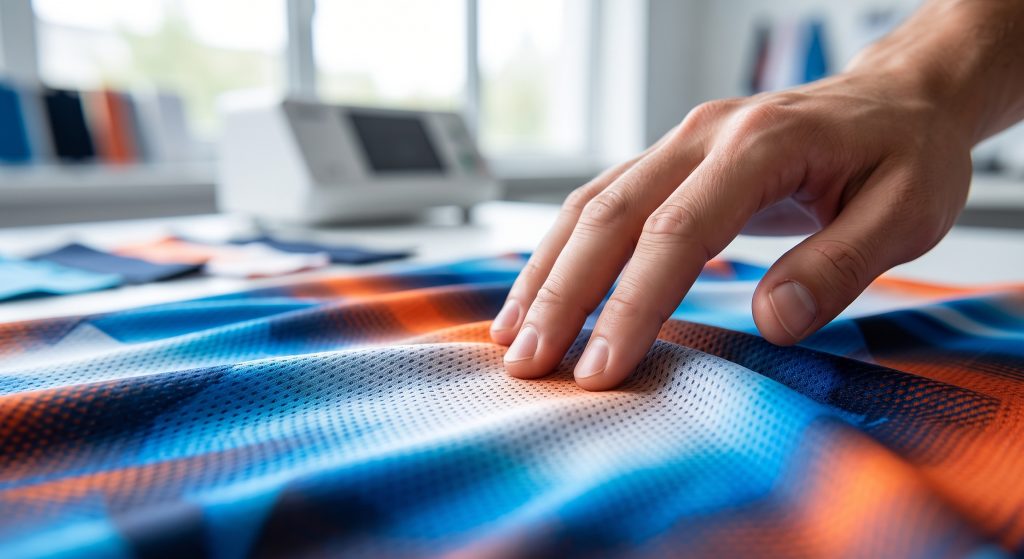
Engineered sports print fabric featuring a birdseye pattern feels remarkably silk-like against skin due to the low-friction profile of its flat diamond-knit surface cells. But here’s the kicker… Touch sensation influences athlete focus because abrasive fabrics cause skin irritation during long endurance running sessions or intensive team sports tournaments. Activewear designers select this ultra-soft material to satisfy professional sports clients who demand luxury tactile experiences combined with high-performance technical utility. Adding this lightweight technical textile to your garment production line ensures that athletes experience zero physical distractions while competing at elite levels.
Evaluating Low Friction Contact
The complete absence of raised ridges on birdseye material minimizes friction damage against sensitive human skin during fast repetitive athletic movements. What’s the real story? Severe chafing ruins athletic performance because skin irritation completely diverts a player’s mental energy away from executing winning field strategies. Utilizing flat-knit performance textiles prevents micro-abrasions while supporting comfortable full range of motion during complex physical maneuvers on basketball courts. Sourcing these skin-friendly materials consistently enables your sportswear company to build high-quality team kits that professional athletes love wearing regularly.
Achieving Lightweight Agility
Reducing overall garment uniform mass allows competitive athletes to conserve critical energy during prolonged competitive events where every gram affects speed. This is where it gets interesting… Birdseye structures achieve low weights without sacrificing structural opacity so sublimated graphics remain perfectly solid during maximum stretch. Product design teams select this airy weave to engineer featherlight sublimation sportswear options that excel in hot humid regional climates. Incorporating featherlight textiles into your wholesale garment catalog satisfies the growing commercial market demand for aerodynamic activewear garments globally.
Key Takeaway: Sourcing birdseye fabrics delivers an ultra-smooth featherlight feel that maximizes player comfort while providing an ideal flat canvas for sharp sublimation printing. Ready for the good part? Documenting skin comfort scores through continuous athlete feedback lets sportswear brands validate technical product design changes scientifically. Manufacturing firms that prioritize smooth tactile fabric profiles can win lucrative long-term wholesale supply contracts from elite national athletic federations. Offering comfortable activewear solutions permanently secures your enterprise market position as an authoritative contract supplier of premier team apparel worldwide.
| Tactile Property | Birdseye Feel Profile | Athlete Benefit |
| Friction Coefficient | Ultra-Low | Zero Chafing |
| Texture Style | Flat Silk-Like | Barely-There Sensation |
| Average Weight | 130-150 GSM | Aerodynamic Agility |
Reviewing these tactile profiles helps product managers select lightweight materials for premium track and field apparel collections.
5. Why Pick Pique Sports Print Fabric for Polos?
Choosing pique sports print fabric for corporate golf polo manufacturing ensures excellent collar structure alongside a sophisticated upscale appearance that elevates professional brand identities. You might be wondering why traditional tennis garments rely so heavily on this specific waffle-like texture instead of using flat-knit activewear alternatives. This answer lies in structural heft within double-knit architecture because the raised geometric welts give the garment body beautiful natural drapery. Selecting this heavy-duty material consistently helps your clothing factory build durable corporate casual lines that command high premium wholesale prices globally.
Establishing Tailored Garment Structure
Athletic polo shirts require crisp collar lines that refuse to curl or sag after long days on hot sunny golf courses. Here’s the deal regarding garment engineering because floppy collars look unprofessional during corporate tournaments where corporate representatives need to look completely sharp. The geometric density of pique knit patterns supports clean stitching lines around plackets while maintaining crisp contours throughout intensive wear cycles. Utilizing this stable structure safely allows your premium apparel brand to deliver tailored luxury styling without sacrificing athletic performance characteristics over time.
Maximizing Sublimation Texture Depth
Printing complex logos on textured pique backgrounds creates a rich multi-dimensional visual effect that flat textile surfaces cannot replicate easily at all. But here’s the kicker… Sublimating onto raised surfaces requires exact ink calibration because uneven pressure can leave unprinted white voids inside deep fabric recesses. Experienced production printing teams modify press settings to achieve total ink penetration across the entire textured outer surface of the polo fabric. Masterful execution always results in striking corporate garments that attract premium sports corporate accounts to your textile manufacturing enterprise directly.
Key Takeaway: Selecting pique structures provides the essential stiffness and visual texture needed for high-end corporate golf polos while ensuring broad compatibility with modern sublimation equipment. This is where it gets interesting… Reviewing fabric wear logs confirms that pique material stands up to heavy laundering without experiencing surface fuzzing or color degradation. Manufacturing companies that utilize this material can confidently guarantee long-term product durability to demanding corporate apparel procurement managers globally. Providing premium corporate sports options expands your commercial customer base while building significant brand authority within the luxury sportswear market segment today.
| Garment Style Feature | Pique Polo Profile | Corporate Benefit |
| Fabric Weight | 180-220 GSM | Premium Substantial Feel |
| Collar Stability | Rigid Knit Structure | Professional Appearance |
| Print Appearance | Matte Textured Look | High-End Retail Finish |
Analyzing these structural performance variables helps apparel product managers pick the best material for elite corporate golf clothing lines.
6. Can Sports Print Fabric Manage Sweat Better?
Engineered sports print fabric manages heavy sweat efficiently by utilizing hydrophobic synthetic fibers that pull liquid wetness away from human skin through capillary action. Ready for the good part? Soggy activewear degrades player endurance because wet textiles stick uncomfortably to active muscle groups while accelerating chafing during competitive matches. Sourcing moisture-wicking materials allows your private apparel brand to market garments that guarantee optimal dryness under high-temperature outdoor athletic training environments easily. Integrating hydro-transport yarn technology into your wholesale sportswear collections provides a massive commercial marketing advantage over basic cotton clothing lines globally.
Driving Capillary Action Channels
Synthetic filaments draw sweat along microscopic surface grooves to accelerate evaporation across the outer layer of the athletic performance garment cleanly. What’s the real story? Slow transport mechanisms leave garments heavy with water which increases physical strain on endurance runners during marathon sports competitions today. Utilizing dual-component yarns successfully creates an osmotic gradient that moves moisture forward while preventing liquid backflow onto your skin surface entirely. Choosing capillary-optimized textiles safely ensures that your brand provides professional gear capable of keeping athletes fully dry during long training days always.
Accelerating Fabric Drying Speed
Rapid-dry performance textiles reduce post-exercise cooling shocks by dispersing accumulated wetness across broad surface areas to speed up convective air drying cycles. But here’s the kicker… Slow-drying garments foster bacterial replication because warm damp synthetic microclimates provide perfect breeding grounds for persistent locker-room odors over time. Implementing rapid-evaporation materials preserves garment hygiene while helping players maintain absolute concentration during multi-day tournament schedules without changing outfits frequently. Your commercial garment procurement team can leverage these quick-drying capabilities to justify premium wholesale pricing to retail sports distributors everywhere.
Key Takeaway: Selecting fabrics engineered for quick moisture movement prevents garment saturation during maximum athletic output while protecting athletes against painful skin chafing always. This is where it gets interesting… Testing fabric drying times under strict factory conditions proves that optimized knit structures outperform generic blends by over forty percent. Activewear lines that advertise verified quick-drying performance statistics consistently experience much lower product return rates from commercial consumer fitness gym networks. Supplying dry-tech apparel options permanently solidifies your B2B enterprise market reputation as an innovative provider of elite fitness textile goods globally.
| Wicking Parameter | Synthetic Performance Fiber | Standard Cotton Blend |
| Absorption Rate | Under 2 Seconds | Over 15 Seconds |
| Drying Duration | 15 Minutes Max | 50 Minutes Plus |
| Cling Factor | Minimal Surface Contact | High Saturation Stickiness |
Reviewing these wicking parameters assists technical apparel developers in selecting proper hydrophobic yarns for professional sweat management solutions.
7. Which Sports Print Fabric Resists Snagging?
Densely knit pique sports print fabric resists aggressive snagging defects better than open birdseye options due to its interwoven double-knit configuration that minimizes loose surface filaments. You might be wondering how fiber friction affects your factory garment defect rate when manufacturing team uniforms for contact athletic sports like football. Loose yarn loops pull away easily when coming into close contact with sharp external objects like hook-and-loop fasteners or rough field turf fields. Choosing high-twist filament yarns prevents unsightly thread pulls while safely guaranteeing that your custom wholesale sportswear products maintain a pristine retail appearance over time.
Evaluating Interlocking Knit Defense
Double-knit loops lock individual synthetic threads together to form a resilient technical fabric barrier that actively resists puncture forces from jagged sports equipment. Here’s the deal regarding garment lifespan because tight interlocking patterns distribute pull tensions across adjacent rows to neutralize localized fiber damage. Soft micro-mesh options suffer structural damage during intense gym workouts because their exposed filament bridge structures get caught on heavy metal exercise weights. Utilizing interlocking knits safely protects your design investment while guaranteeing corporate clients receive premium durable activewear that withstands rugged outdoor sports use.
Reducing Factory Production Rejects
Scratched textiles cut down corporate profit margins during mass manufacturing production runs because damaged panels must undergo complete replacement before final shipment packing steps. But here’s the kicker… Rough sewing needles can ruin delicate fabrics during rapid stitching sequences which increases factory waste metrics behind closed doors. Selecting snag-resistant yardage minimizes machine downtime while safely allowing your manufacturing operation for hitting aggressive wholesale product delivery deadlines without tracking flaws today. Your quality control team will achieve substantially higher inspection pass rates when transitioning your primary activewear supply lines to robust double-knit structural options.
Key Takeaway: Sourcing double-knit pique substrates eliminates premature garment wear caused by abrasion while dramatically lowering your factory textile scrap rates during automated assembly. This is where it gets interesting… Conducting ASTM snag testing across raw material batches confirms that tight interlocking structures maintain pristine print surfaces far better than open meshes. Commercial clothing companies that specialize in team contact sports should always deploy high-snag-resistance metrics to protect their end consumers from unexpected uniform failures. Purchasing durable performance substrates firmly secures your commercial standing as a highly reliable business partner for national athletic uniform distribution networks globally.
| Fabric Knit Variant | Snag Resistance Rating | Application Fit |
| Pique Interlock Weave | Grade 4.5 | High-Contact Football Kits |
| Birdseye Micro-Mesh | Grade 3.0 | Low-Contact Track Jerseys |
| Standard Single Jersey | Grade 2.5 | Casual Fitness Apparels |
Reviewing these snag ratings helps procurement officers purchase durable materials that withstand intense physical abrasion on athletic fields.
8. How to Choose Sports Print Fabric by Weight?
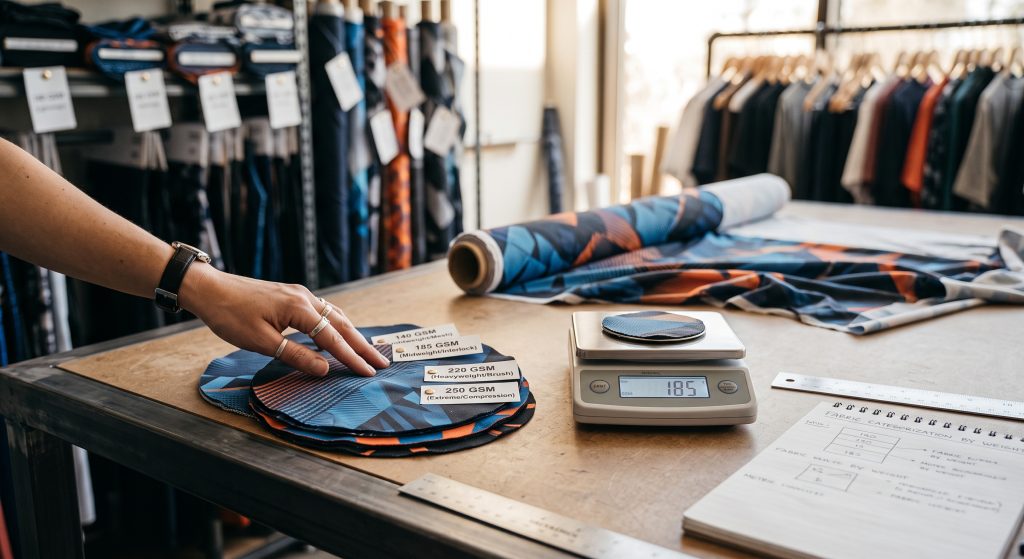
Selecting premium sports print fabric by fabric weight requires a strategic matching of textile grams per square meter with specific high-intensity athletic movement requirements. Ready for the good part? Choosing incorrect material thickness causes product line stagnation because heavy garments restrict summer runners while featherlight items lack necessary durability for contact sports. B2B apparel developers carefully categorize technical performance textiles into distinct weight classes to target specific seasonal climate sales within the global sportswear marketplace. Sourcing an optimal range of technical fabric options safely allows your brand to manufacture versatile apparel collections that handle diverse physical sports training demands.
Utilizing Lightweight Materials
Lightweight materials ranging from one hundred twenty to one hundred fifty grams per square meter excel at maximizing ventilation for competitive track running sports. What’s the real story? Elite athletes require zero weight resistance when sprinting because unnecessary clothing mass drains muscular endurance during tight split-second finishes on tracks. Product development teams specify lightweight birdseye structures to manufacture ultra-cool summer racing shirts that keep marathon runners completely comfortable during high-heat climate environments. Deploying featherlight textiles boosts your corporate activewear brand reputation among serious competitive athletes who demand cutting-edge performance gear options for professional competition.
Deploying Midweight Substrates
Midweight options between one hundred eighty and two hundred forty grams per square meter provide excellent structural canvas support for tailored athletic polo lines. But here’s the kicker… Sublimating dense geometric double-knits requires longer dwell times because thick yarn architecture absorbs more heat energy inside the industrial transfer machine. Apparel engineering teams utilize midweight pique selections to assemble premium corporate golf wear lines that hold crisp collar profiles through extensive wear cycles effortlessly. Purchasing stable midweight stocks safely allows your manufacturing plant to deliver substantial garments that meet international corporate luxury activewear standards smoothly.
Key Takeaway: Balancing fabric weight specifications based on intended sport use protects your garment design integrity while ensuring maximum athletic efficiency for end users always. This is where it gets interesting… Logging physical material weights across incoming factory shipments prevents product sizing inconsistencies before expensive sublimation cutting steps begin on tables. Wholesale apparel houses that maintain strict gram-weight classifications can easily fulfill precise corporate production orders for supplying specialized team sportswear buyers confidently. Establishing standard weight matrices guides your corporate purchasing department to secure high-performance raw fabric yardage without tracking textile errors over time.
| Fabric Weight Category | GSM Specification | Ideal Sport Application |
| Ultra-Lightweight | 120 – 140 GSM | Elite Racing & Marathons |
| Standard Activeweight | 150 – 170 GSM | Team Basketball & Training |
| Substantial Midweight | 180 – 220 GSM | Corporate Tennis & Golf Polos |
Comparing these weight specifications helps design directors establish consistent seasonal fabric programs for global athletic apparel releases.
9. Does Sports Print Fabric Hold Color Vividly?
High-grade polyester sports print fabric holds sublimation color vividly because synthetic polymer molecules form permanent chemical bonds with gaseous disperse dyes under high heat. You might be wondering how ink saturation maintains its initial laboratory brilliance when exposed to harsh daily sunlight or acidic sweat conditions on sports fields. Industrial heat press machinery forces dye molecules deep inside the expanded fiber cross-sections where color pigments remain securely locked after factory cooling cycles finish. Selecting premium print-ready substrates safely ensures that finished team uniform lines maintain high-definition logo graphics across multiple competitive sports seasons globally.
Maximizing Sublimation Chemical Bonding
Sublimation printing turns solid ink into gas to permeate open synthetic fiber chains before locking molecules permanently during ambient factory cooling procedures. Here’s the deal regarding dye fastness because inferior natural fibers like organic cotton reject disperse inks which results in rapid pattern washing away during cleaning. Utilizing pure premium polyester bases consistently allows deep saturation depths while preventing color bleeding across sharp graphic lines during intense heat-press manufacturing cycles. Sourcing chemically pure performance yardage safely guarantees that your customized sportswear products maintain high-contrast graphic detailing that satisfies professional wholesale athletics clients.
Preventing Ultraviolet Color Fading
Outdoor matches subject athletic apparel to continuous solar ultraviolet radiation which breaks down low-quality ink pigments on standard unprotected clothing surfaces entirely. But here’s the kicker… Utilizing UV-resistant synthetic yarns shields sublimated patterns from chemical degradation while preserving the original color brilliance during hot summer outdoor leagues. Incorporating protective textile technology preserves pattern sharpness while reducing corporate client complaints regarding premature uniform weathering during heavy seasonal usage periods over time. Supplying long-lasting fade-proof garments consistently helps your apparel firm win loyal re-orders from elite regional athletic league organizations globally.
Key Takeaway: Sourcing premium polyester bases ensures that sublimation prints achieve deep chemical integration which protects graphics from severe sun fading during field sports matches. This is where it gets interesting… Measuring color value retention after fifty standard industrial wash tests proves that high-density synthetic knits preserve print tone intensity remarkably well. Wholesale activewear brands that invest in superior colorfastness metrics can confidently guarantee long-term visual longevity to premium corporate buyers across major sports networks. Delivering vibrant long-lasting apparel solutions firmly establishes your commercial organization as a top-tier provider of technical athletic clothing hardware worldwide to distributors.
| Color Fastness Property | High-Density Polyester | Standard Textile Base |
| Wash Fastness Rating | Grade 4.5 | Grade 3.0 |
| UV Fade Resistance | Excellent | Moderate |
| Saturation Capacity | High Depth | Shallow Profile |
Reviewing these colorfastness properties assists manufacturing plant managers in selecting print bases that withstand intense weathering conditions on outdoor sports courts.
10. Where to Source Premium Sports Print Fabric?
Sourcing premium sports print fabric directly from verified large-scale textile manufacturers ensures absolute quality consistency alongside competitive wholesale pricing for global activewear garment distribution networks. Ready for the good part? Working with untrusted middle traders drops factory profit margins because hidden markups increase material costs while delivery schedules remain highly erratic over time. Partnering with a vertically integrated production facility equipped with advanced circular knitting machinery always guarantees stable yarn supplies for heavy seasonal development rushes globally. Establishing direct mill relationships safely allows your corporate purchasing department to secure internationally certified raw materials that meet strict technical performance compliance standards.
Verifying Factory Infrastructure Scale
A manufacturing facility boasting extensive equipment infrastructure handles massive wholesale volume spikes without compromising structural raw material quality tolerances during production steps. What’s the real story? Small micro-mills lack consistent machine maintenance protocols which results in massive weight variations or printing defects across consecutive textile dye batches. Checking physical equipment capacity like eighty circular knitting machines fully guarantees that a supplier can produce over one million kilograms monthly to support your brand expansion. Securing a high-volume supply partner protects your corporate delivery commitments while giving your activewear business a highly scalable manufacturing foundation for long-term growth globally.
Checking Global Safety Certifications
International corporate clothing buyers require certified performance textiles that comply with chemical safety regulations before allowing entry into premium retail distribution marketplaces globally. But here’s the kicker… Uncertified fabrics trap hazardous heavy metal residues from low-quality dyestuffs which completely invalidates your garment lines during custom checkpoint screening operations. Validating elite safety credentials like OEKO-TEX Standard one hundred or Global Recycled Standard finishes effectively protects your manufacturing company against legal financial liabilities entirely. Supplying verified clean apparel materials firmly establishes your private activewear firm as a highly responsible business entity within sustainable international sportswear industry operations today.
Key Takeaway: Partnering with a vertically integrated mill certified by global bodies ensures reliable supply stability while protecting your activewear line against unexpected supply chain delays. This is where it gets interesting… Reviewing official mill certification databases confirms that genuine manufacturers maintain transparent trace documentation for every raw fabric shipment sent abroad. B2B corporate apparel brands that prioritize certified textile mills can effortlessly bypass customs gridlocks while capturing premium eco-conscious sports retail market accounts globally for expansion. Sourcing from accredited industrial manufacturing facilities permanently shields your corporate activewear investments while establishing a highly defensible market position within competitive sportswear design spaces globally.
| Supplier Verification Check | Target Standard | Operational Risk Level |
| Factory Machinery Count | >50 Knitting Units | Low Production Disruption |
| Global Certification Profile | OEKO-TEX & GRS Verified | Zero Custom Compliance Holds |
| Monthly Output Capacity | >500,000 Kilograms | Secure Bulk Scale Support |
Analyzing these mill verification metrics allows apparel sourcing directors to eliminate unreliable middlemen while establishing secure material pipelines directly with leading textile manufacturers.
To finalize your corporate activewear collection development successfully, selecting technical sublimation bases that match precise athlete demands helps secure long-term market victory. Sourcing the right textiles completely resolves critical performance issues regarding print distortion or moisture retention while expanding your corporate market share across competitive athletics sectors. Our state-of-the-art textile manufacturing mill from China supplies premium certified circular-knit materials engineered to support your ambitious international business growth goals seamlessly everywhere. To discuss your specific technical textile specifications and secure high-definition fabric options for your upcoming seasonal sportswear releases, please contact us today directly.
FAQ
Q1: Can I use birdseye knit for high-contact sports uniforms?
Yes, you can utilize birdseye mesh for contact sports although selecting double-knit pique substrates provides vastly superior resistance against heavy field abrasion over time. Densely interwoven double-knits safely protect synthetic fibers from snagging when players collide with jagged gym gear or rough artificial grass turf fields. While birdseye structures deliver excellent cooling performance during hot summer tournaments, their exposed filament loops pull away more easily during intense physical field contact. Balancing ventilation metrics with structural durability ensures that your clothing enterprise delivers reliable athletic uniforms that withstand demanding industrial washing cycles without fraying routinely.
Q2: What’s the best print setting for polyester pique materials?
Optimal results require matching a precise temperature of two hundred degrees Celsius with a compression dwell time of forty seconds under industrial presses. Adjusting sublimation parameters guarantees deep ink penetration into the raised waffle recesses without causing flat physical distortion or thermal shrinkage along garment seams. Because double-knit pique options possess a more substantial fabric weight profile, transferring vivid patterns requires consistent heat flow to secure flawless dye fixation. Implementing disciplined printing protocols protects your wholesale clothing factory from producing faded garment batches that reject premium retail corporate sports accounts.
Q3: How do I know if my activewear fabric complies with international safety standards?
Verifying authentic certification documentation from recognized testing bodies like OEKO-TEX or Global Recycled Standard confirms compliance before customs shipping steps begin. Genuine textile manufacturing mills provide transparent batch tracking numbers that corporate buyers can verify through official global safety database systems quite easily. Avoid working with unverified middle traders who hide raw material origins because uncertified dyestuffs often contain hazardous heavy metal residues below surfaces. Sourcing clean internationally compliant textiles secures your activewear business against expensive legal liabilities while building massive brand authority among eco-conscious sportswear distributors.