
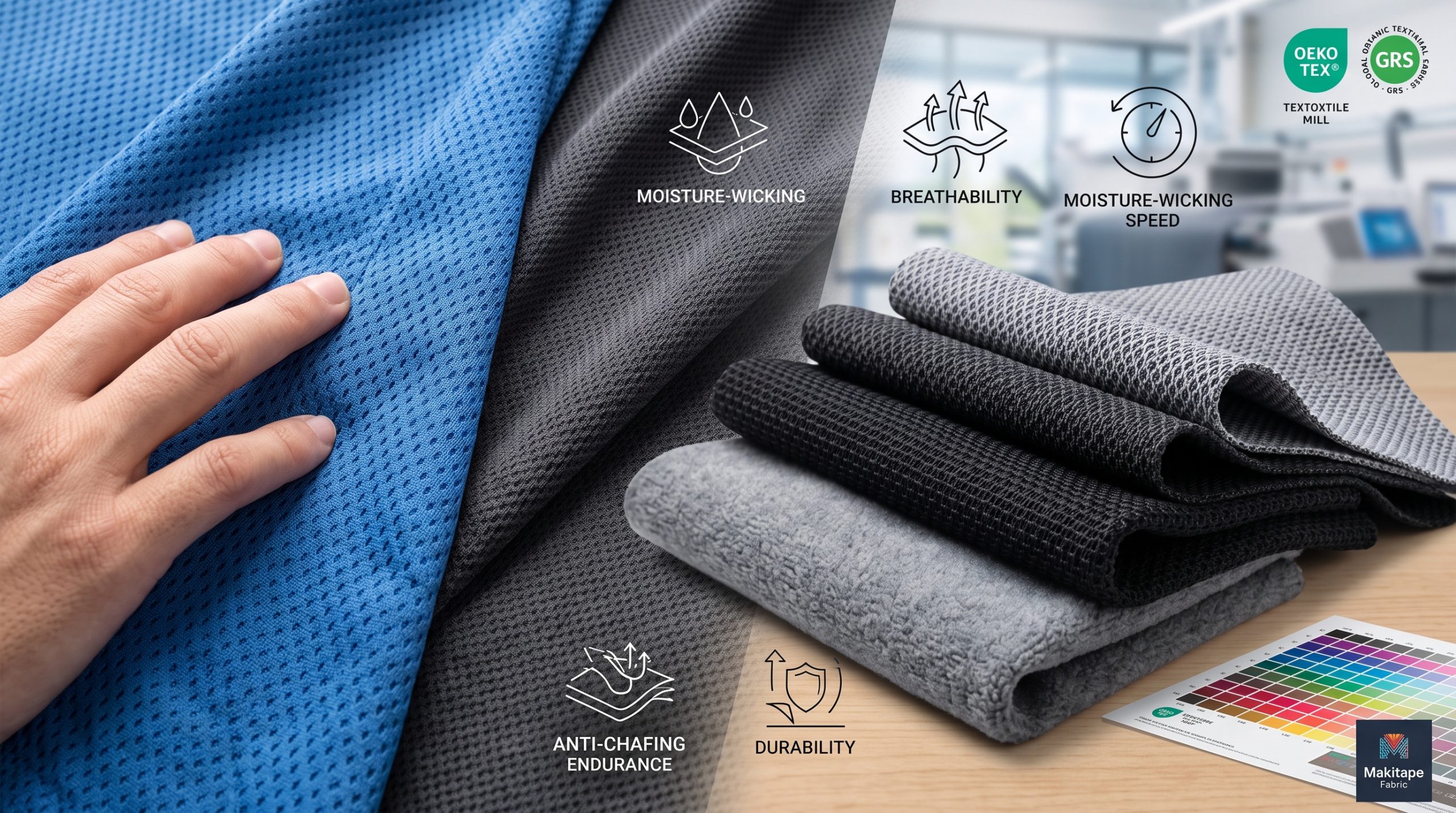
Selecting premium athletic materials requires analyzing structural characteristics to avoid performance failure. Apparel buyers often source beautiful textiles only to face massive batch rejections when the garments trap sweat during competition. This structural failure frustrates competitive athletes and immediately ruins your brand reputation among wholesale apparel procurement managers. Utilizing advanced novelty sports fabric designs solves this technical defect by providing specialized loop geometries that accelerate moisture dispersion effortlessly.
1. What defines a premium novelty sports fabric?
A premium novelty sports fabric presents specialized physical yarn configurations designed specifically for permanent liquid management and mechanical durability during field play. Commercial product developers evaluate these materials to verify structural performance before running automated clothing assembly machinery lines. Here’s the deal regarding successful textile procurement for competitive sportswear lines. Sourcing your materials directly from an established textile mill avoids expensive intermediate broker fees and secures absolute batch color consistency across extensive production runs.
How do filament counts control structural strength?
Fine microfilament selections provide exceptional tensile strength while maintaining a highly flexible drape across moving human muscle groups during intense workouts. You might be wondering why elite activewear brands constantly focus on fiber extrusion processes instead of simple surface finishing treatments. Tight double-knit networks hold their shape perfectly under immense pulling forces common in high-contact team sports fields. Sourcing premium sports clothing fabric options ensures your finished uniforms resist tearing under intense physical strain.
High filament thread counts reduce total garment weight.
Balanced yarn distributions prevent structural pilling over time.
Clean mechanical finishing retains native fiber softness perfectly.
Key Takeaway: Verifying filament parameters allows production teams to manufacture high-strength activewear that comfortably outlasts basic commodity alternatives.
| Processing Level | Tensile Strength | Surface Comfort |
| Advanced Mill Knit | Maximum Rating | Exceptionally Soft |
| Low Cost Commodity | Standard Rating | Rigid Coarse Feel |
Reviewing these technical metrics helps garment designers select appropriate textile lots for demanding seasonal team uniform collections.
2. Why choose birdseye novelty sports fabric variants?
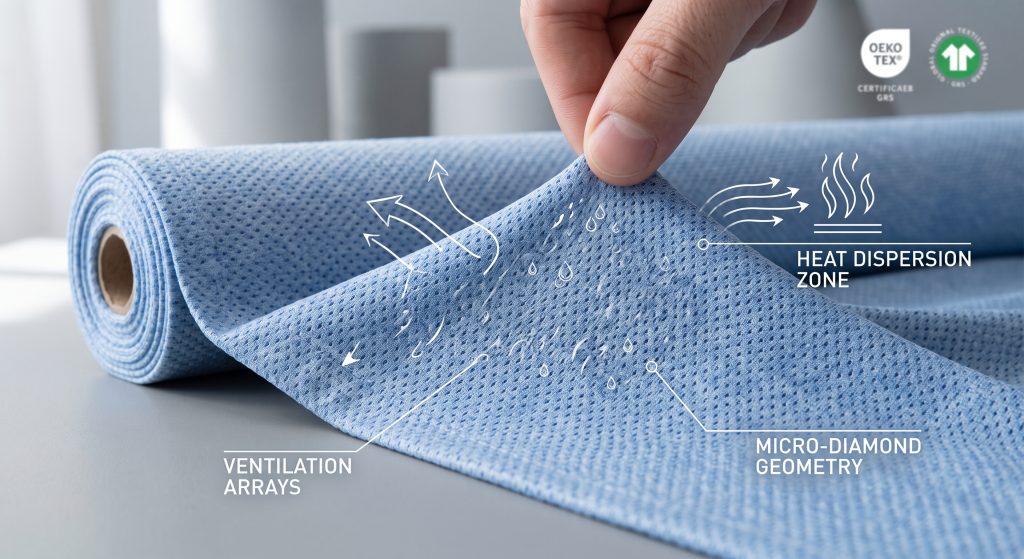
Birdseye novelty sports fabric variants excel because their signature micro-diamond knit geometry creates a lightweight layer featuring rapid sweat dispersion pathways. Sourcing these specialized porous textiles allows clothing production managers to satisfy athletes who perform in humid summer weather climates. What’s the real story behind the immense global popularity of open circular knitting patterns inside professional athletics markets? The engineered loop array functions like hundreds of tiny ventilation windows that allow hot body vapor to escape instantly during strenuous exercise.
Why do diamond loops accelerate drying speeds?
The physical spacing between raised knit coordinates generates a powerful capillary force that pulls liquid dampness outward toward the surface. This is where it gets interesting for garment designers who need to minimize clothing weight without compromising total fabric opacity. The resulting functional uniform floats weightlessly over muscle groups without causing chafing or holding onto heavy water weight during matches.
Micro pores expand horizontal evaporation fields.
Hydrophobic threads repel moisture weight buildup.
Low surface contact prevents skin adhesion.
Key Takeaway: Implementing diamond grid architectures helps activewear brands supply high-airflow clothing items that remain bone dry under high physical stress.
| Structural Pattern | Airflow Volumetric | Evaporation Speed |
| Engineered Birdseye | 145 Cubic Feet | Ultra Fast Release |
| Basic Flat Jersey | 60 Cubic Feet | Slow Fluid Retention |
The engineering numbers demonstrate that circular diamond patterns supply superior ventilation compared to traditional solid textile weaves.
3. How does pique weave shift novelty sports fabric?
A pique weave shifts novelty sports fabric properties by introducing raised parallel cords or geometric waffle patterns that provide extra substance. Garment developers utilize this double-knit configuration to build structured corporate polo collections and durable casual lifestyle sportswear garments. Ready for the good part concerning the long-term structural advantages of incorporating thick textured knits into your activewear line? This robust geometric framework keeps its polished look over extended wear cycles while offering excellent defense against surface snagging.
Does substantial texture support pattern stability?
Heavy dual needle bed configurations supply excellent dimensional stability that supports high-density team logo embroidery work flawlessly without puckering. But here’s the kicker when you compare structured waffle finishes against lightweight running meshes for multi-season athletic gear lines. Sourcing premium sports team fleece fabric options alongside these textured knits allows your factory to coordinate complete uniform packages perfectly.
Raised parallel cords deflect sharp object snags.
Double knit walls offer total garment opacity.
Balanced weight profiles provide elegant drapery.
Key Takeaway: Choosing thick parallel cord layouts ensures your team uniforms withstand rough contact sports fields while maintaining an elegant appearance.
| Knit Architecture | Surface Thickness | Tear Defense Score |
| Waffle Pique Matrix | Substantial Layer | Maximum Protection |
| Single Knit Weave | Lightweight Face | Standard Defense |
The structural analysis confirms that textured parallel cords supply the rugged defense needed for premium corporate sportswear lines.
4. Where do buyers test novelty sports fabric lots?
Wholesale buyers test novelty sports fabric lots inside certified commercial laboratories that run automated friction meters and digital weight checks. Procurement officers execute these rigorous material evaluations to confirm that incoming textile rolls meet the technical metrics specified in contracts. You might be wondering how professional garment manufacturers accurately predict fabric endurance before investing capital into high-volume clothing assembly schedules. Running standardized laboratory trials protects your apparel firm from using substandard components that fail during intense league championship matches.
How do laboratories measure dimensional stability?
Technical testing teams expose fabric samples to accelerated industrial laundering cycles to calculate exact linear shrinkage values under heat. Here’s the deal regarding quality oversight because unverified textiles often distort unevenly when processed in high-temperature commercial drying machines. Sourcing your technical shipments from a factory that runs pre-shringing treatments keeps your activewear sizes perfectly accurate for consumers.
Friction meters check surface wear resistance.
Electronic scales verify gram weight consistency.
Spectrophotometers measure precise dye batch accuracy.
Key Takeaway: Performing strict material inspections before bulk shipping prevents customer complaints and effectively protects your brand reputation globally.
| Evaluation Method | Testing Protocol | Target Requirement |
| Abrasion Resistance | ASTM D3512 Tumble | Minimum Grade 4.0 |
| Weight Check (GSM) | ISO 3801 Cutter | Exact Order Match |
Following standardized material testing frameworks provides the hard data required to approve textile batches for immediate production.
5. Is breathability uniform in novelty sports fabric?
Air circulation is not uniform across novelty sports fabric choices because distinct mechanical knitting patterns create variable ventilation fields. Product design teams modify airflow performance by selecting between open micro-porous layouts and dense structural parallel cord layers based on climate. What’s the real story behind optimizing athlete body temperatures when temperatures rise during long afternoon competitive outdoor training games? Utilizing high-airflow birdseye mesh configurations delivers rapid passive cooling by allowing heat to dissipate directly through the fabric pores.
How do loop shapes control air circulation?
Circular diamond patterns generate open pathways for heat dispersion whereas compact parallel cords hold warm air near the human body. This is where it gets interesting for development teams who must balance wind protection against moisture release for winter training. Choosing engineered porous layouts prevents sweat accumulation against skin which lowers the danger of muscle chilling during rest periods.
Open geometric loops maximize convective cooling.
Dense thread arrangements limit rapid air movement.
Hydrophobic polymer fibers prevent heavy water retention.
Key Takeaway: Aligning specific knitting styles with explicit sport environments ensures your finished athletic garments provide the perfect comfort level.
| Structural Format | Ventilation Capacity | Best Weather Target |
| Micro Diamond Mesh | Ultra High Airflow | Hot Summer Weather |
| Textured Pique Cord | Controlled Airflow | Cool Autumn Season |
The ventilation data illustrates how altering loop shapes allows sportswear manufacturers to regulate player core temperatures accurately.
6. Can novelty sports fabric prevent painful chafing?
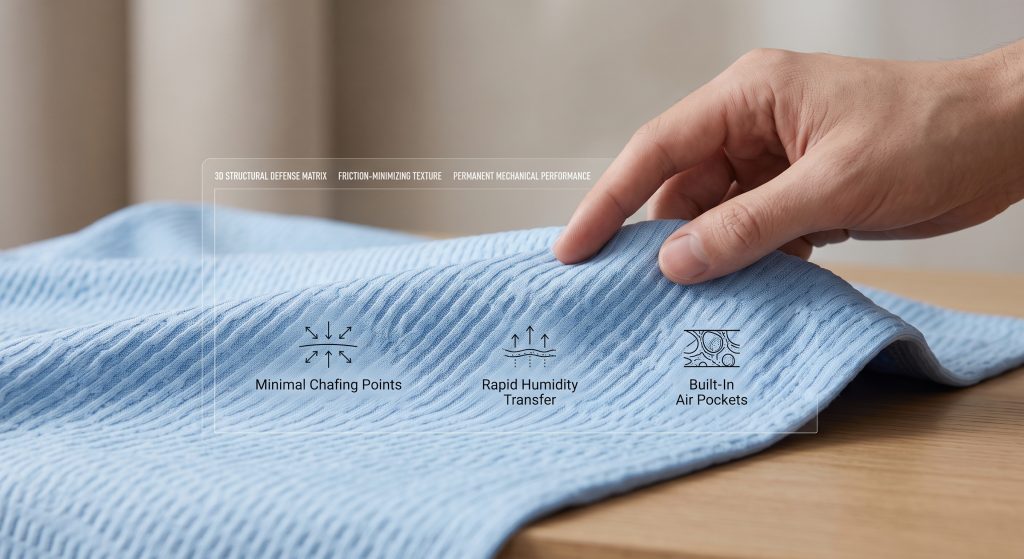
Advanced novelty sports fabric selections prevent painful skin chafing by using three-dimensional surface profiles that minimize direct material contact area. Wet clothing sticking to moving limbs causes severe friction blisters during intense long-distance track or field sport events. Ready for the good part concerning how technical textile engineering solves this common physical discomfort without using temporary topical chemical washes? Alternating raised loops create structural air gaps that dry skin surfaces quickly before abrasive rubbing damage can accumulate.
Why do fine filaments minimize soft tissue friction?
Modern manufacturing plants extrude smooth microfilaments that glide across sensitive skin zones effortlessly without causing micro-abrasion wear or irritation. But here’s the kicker when you manufacture high-performance team wear using these specialized low-friction circular knit configurations. Finished garments stretch smoothly with natural body movements to maintain full comfort during complex physical extensions on fields.
Textured faces reduce fabric skin adhesion.
Rapid moisture drainage keeps skin areas dry.
High fiber elasticity eliminates physical movement drag.
Key Takeaway: Sourcing activewear textiles with built-in topographical texture ensures your custom uniforms provide exceptional comfort that keeps players focused.
| Friction Class | Surface Contact Area | Skin Abrasion Risk |
| Three-Dimensional | Minimal Contact Points | Extremely Low Risk |
| Standard Flat Weave | Full Material Adhesion | High Chafing Danger |
The mechanical friction analysis indicates that textured surface profiles deliver the skin protection required for long-distance training gear.
7. How do mills launder novelty sports fabric safely?
Industrial textile facilities launder novelty sports fabric rolls safely by utilizing cold water temperatures and avoiding strong commercial bleaches. Automated washing equipment maintains accurate thermal parameters to protect the delicate built-in moisture management channels from structural collapse under stress. Here’s the deal regarding product maintenance because applying high heat levels can melt synthetic polymer filaments and make threads brittle. Integrating high-quality pique fabric lots into your care program guarantees that team garments retain their soft touch.
Why do chemical softeners clog performance pores?
Household softeners leave an invisible waxy coating over synthetic threads that completely suffocates the open cooling windows of mesh. You might be wondering how to eliminate tough grass stains from athletic clothing without stripping away bright official team color dyes. Utilizing mild detergents cleans the fiber spaces thoroughly while preserving the original technical performance features of the sportswear line.
Cold water wash cycles protect color fastness.
Low heat drying prevents uneven yarn shrinkage.
Air drying methods preserve native textile flexibility.
Key Takeaway: Providing clear low-temperature laundry instructions to your wholesale customers extends uniform lifespans and reinforces your product quality reputation.
| Laundry Factor | Recommended Operation | Primary Fabric Benefit |
| Cycle Temperature | Cold Water Wash | Protects Polymer Bonds |
| Drying Heat Level | Low Temp Tumble | Prevents Size Distortion |
The laundry data confirms that following gentle cleaning routines is required to preserve the engineered performance properties of activewear.
8. Why select double knit novelty sports fabric rolls?
Professional clothing brands select double knit novelty sports fabric rolls because this advanced method utilizes two needle beds to build a thick layer. This technical configuration produces a smooth clean look on both faces of the textile to provide luxury skin comfort. What’s the real story behind developing high-end compression leggings or premium athletic streetwear lines that retain total privacy under stress? Single-knit options often become completely transparent when stretched tightly across muscle groups which triggers severe quality complaints from shoppers.
How do dual loop networks provide complete opacity?
The interlocking dual-wall system blocks light passage perfectly ensuring full coverage privacy during deep squat exercises or gym movements. This is where it gets interesting for apparel startup founders who want to elevate their brand positioning above cheap commodity sellers. The substantial weight and elegant drape of double-faced materials instantly signal premium manufacturing quality to retail apparel buyers checking samples.
Interlocking loop systems eliminate transparency issues.
Increased material density adds natural wind resistance.
Smooth inner faces remove need for extra liners.
Key Takeaway: Sourcing thick double-faced activewear components allows your apparel firm to capture high-margin luxury athletic lifestyle markets easily.
| Needle Bed Setup | Fabric Opacity Level | Target Retail Segment |
| Interlock Double Bed | Complete Non-See-Through | Premium Luxury Fitness |
| Jersey Single Bed | Translucent When Stretched | Budget School Uniforms |
The manufacturing analysis proves that utilizing double-knit production styles allows clothing factories to create high-value garments with superior margins.
9. When should brands book novelty sports fabric orders?
Commercial activewear companies purchase novelty sports fabric lots during low-demand spring months to protect production timelines from seasonal shipping delays. Booking raw material volumes five months before local winter leagues open registration provides ample time for detailed laboratory testing. Ready for the good part regarding the financial benefits of organizing your textile procurement calendar around off-peak mill windows? Securing your bulk orders early protects your activewear business from sudden yarn shortages and peak season factory capacity bottlenecks.
How does off-season booking lower logistics expenses?
Relaxed shipping schedules allow your logistics team to utilize standard maritime freight methods instead of paying expensive rush delivery fees. You might be wondering why so many clothing brands miss critical retail uniform deadlines during busy autumn sports startup periods. Crowded international shipping corridors frequently freeze delivery chains when thousands of garment factories place material orders at the same time.
Off-season booking secures top choice yarn lots.
Extended production windows permit precise color adjustments.
Stable ordering cycles lower overall factory operational costs.
Key Takeaway: Coordinating your raw material purchasing with off-peak mill cycles keeps your production costs low and guarantees on-time delivery.
| Procurement Window | Material Stock Availability | Logistics Pricing Trend |
| Spring Off-Peak | Full Unrestricted Volume | Stable Standard Freight |
| Summer Peak Wave | Limited Capacity Allocations | Elevated Rush Delivery Fees |
The scheduling matrix demonstrates that proactive off-season procurement keeps your supply chain safe from sudden market price fluctuations.
10. Which weight optimizes novelty sports fabric lines?
Optimizing your novelty sports fabric lines requires matching the material gram weight per square meter to the explicit movement demands of the sport. Performance designers choose lightweight knits to minimize wind resistance for track athletes who require rapid heat release during running events. But here’s the kicker when you must select fabric thickness parameters for rugged outdoor contact fields like baseball or rugby uniform lines. Heavy textile densities provide the robust structural strength and thick coverage needed to survive severe physical friction against rough surfaces.
How does thickness alter athletic endurance levels?
A material that is too heavy traps sweat and slows player speed while an overly thin textile splits open easily during tackles. What’s the real story behind balancing fiber thickness metrics to achieve optimal safety and athletic agility on competitive playing fields? Working with an experienced industrial engineer allows your clothing brand to specify exact material weights to maximize player comfort.
Lightweight textiles maximize speed for running jerseys.
Midweight structures offer stable shapes for golf polos.
Heavy knits shield skin from ground friction scrapes.
Key Takeaway: Specifying custom fabric weight profiles based on sport demands guarantees your finished sportswear lines perform reliably under field pressure.
| Weight Classification | GSM Density Range | Targeted Sport Application |
| Speed Lightweight | 130 – 150 GSM | Marathon Running Apparel |
| Protective Heavyweight | 220 – 240 GSM | High Contact Field Uniforms |
The density comparison highlights how adjusting weight metrics allows activewear brands to target explicit athletic environments with precision.
Coordinating Structural Excellence in Activewear
Sourcing premium activewear materials requires a clear understanding of fiber strengths, geometric knitting configurations, and strict laboratory quality testing protocols. This professional guide has detailed how comparing birdseye mesh and pique structures helps your brand solve common production issues like fabric transparency, slow drying speeds, and field tearing. Our manufacturing facility focuses on producing high-density, certified performance textiles that allow global clothing brands to build deep customer loyalty through excellent product quality. We combine advanced textile engineering with verified safe supply chains to protect your apparel business against changing global environmental laws. To view our newest performance collections or discuss custom weight specifications for your upcoming winter line, contact us today for expert B2B assistance.
Frequently Asked Questions
Q1: Can I request custom color matching for bulk shipments?
Yes, our mill provides precise color matching according to international Pantone codes. Our dye facility utilizes digital spectrophotometers to check each production batch, ensuring your custom team colors remain perfectly consistent across separate shipments.
Q2: What’s the best fabric structure choice for hot weather jerseys?
An engineered micro birdseye knit pattern is the ideal selection for hot weather conditions. The tiny diamond-shaped loops function as built-in ventilation windows that maximize airflow and accelerate sweat evaporation to keep players cool.
Q3: How do I know if a fabric lot will shrink significantly?
You can easily confirm material stability by checking its blend ratio and factory heat stabilization records. Fabrics that blend high-tensile polyester threads into the matrix naturally resist heat distortion, keeping total shrinkage well below two percent.
Q4: Can I use digital pigment printing methods on textured pique surfaces?
Yes, digital pigment printing delivers excellent results on textured pique fabrics. The advanced water-based inks sink deep into the raised waffle patterns, creating sharp team graphics that stay soft and flexible without blocking the natural airflow channels.
Q5: How do international safety certificates protect my sportswear brand?
International safety clearances protect your business by verifying that textiles do not contain toxic processing chemicals. Partnering with a certified clean factory eliminates the danger of expensive product recalls and guarantees your garments are safe for consumers.