
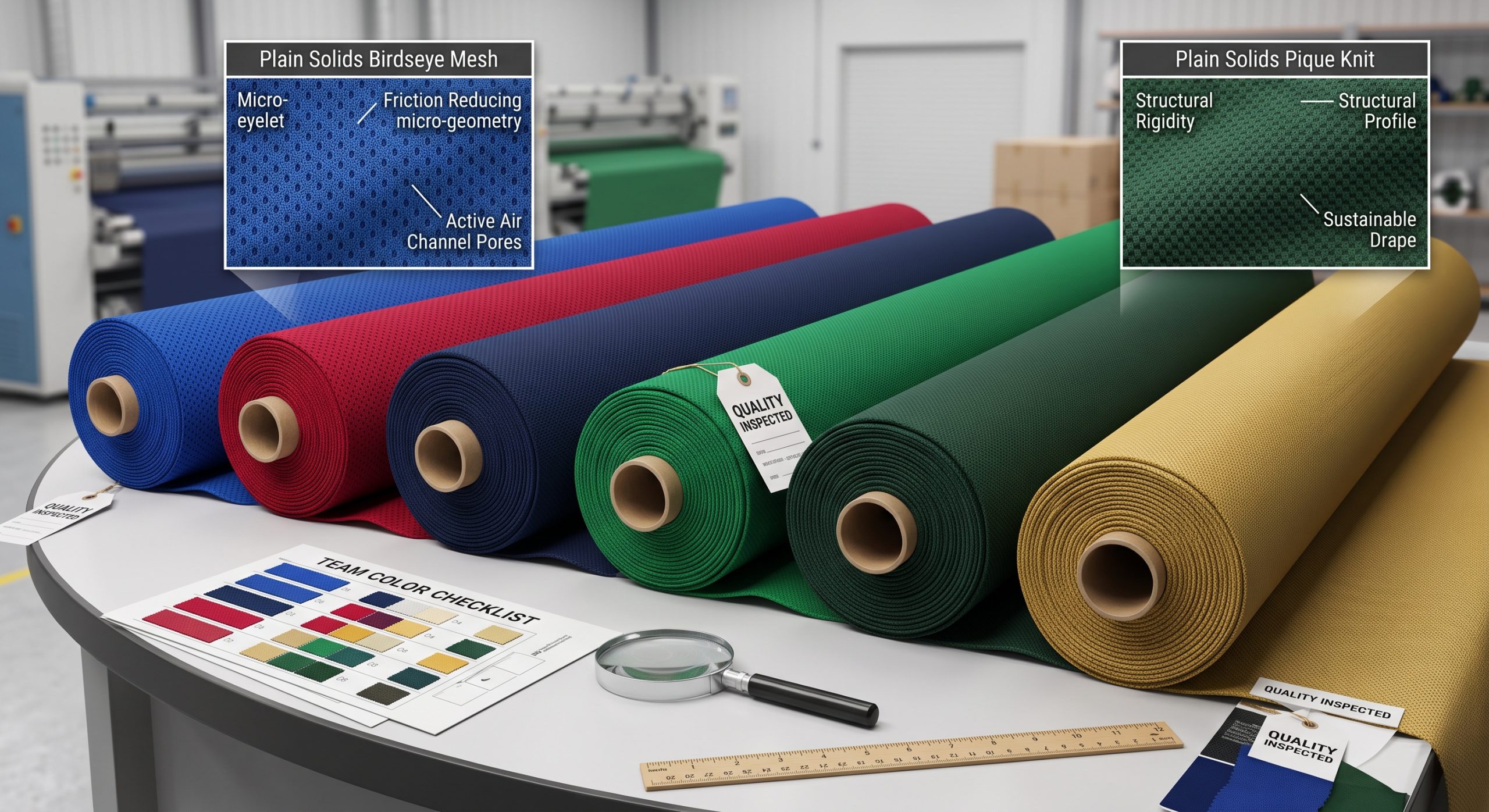
Choosing the best athletic textile requires analyzing structural knit configurations that maintain thermal equilibrium while withstanding intense physical friction on the competitive field. Sourcing premium solids sports team fabric solves common durability and ventilation issues by providing advanced moisture dispersal networks that keep professional players cool under extreme environmental pressure. Team managers often purchase low-grade uniform apparel that traps liquid sweat, causing athletes severe skin irritation during critical championship tournaments. This heavy moisture accumulation drastically restricts rapid player acceleration, leading to premature physical exhaustion and sudden performance drops when victory depends on maximum field agility. Our certified manufacturing facility delivers specialized functional textiles that leading sportswear brands consistently trust for creating elite high performance athletic clothing lines worldwide.
1. Why pick solids sports team fabric?
Selecting this specialized material guarantees uniform color consistency across massive production batches while providing exceptional structural strength for high intensity contact sports fields. Choosing premium solids sports team fabric allows commercial clothing manufacturers to avoid the common fading issues typically associated with sublimation prints on low quality synthetic bases. Here is the deal regarding modern activewear production because institutional buyers demand consistent technical textiles that maintain vibrant color identity across multiple challenging tournament seasons. Apparel procurement teams prefer these standardized solid color configurations to build professional looking athletic uniforms that stand out brilliantly during broadcast regional championship games.
Does it improve team identity?
Maintaining consistent color schemes helps athletic organizations establish recognizable branding that builds strong player unity across different regional competitive divisions. You might be wondering how solid color textiles outperform multi-colored sublimated print options during intensive long-term clothing usage. Solid dye lots guarantee that replacement uniforms ordered next season match the original player gear exactly without distracting shade variations. This reliable color matching capability helps apparel brands fulfill ongoing wholesale team orders efficiently while maintaining strict corporate quality control standards.
- Consistent deep coloration stays vibrant under bright stadium lights.
- Specialized dye formulation resists chemical bleeding during industrial laundering.
- Uniform base colors provide a clean background for corporate sponsor logos.
What makes it cost effective?
Purchasing unprinted material significantly lowers initial textile manufacturing costs by eliminating expensive setup fees required for complex custom digital print graphics. What is the catch when balancing production budgets against high performance technical fabric specifications for massive school athletic leagues. Buying bulk solid colors streamlines your factory cutting processes because layout artists do not need to align complicated patterns across garment seams. This production efficiency translates directly into higher profit margins for sportswear startups aiming to secure long-term corporate athletic supply contracts.
- Bulk purchasing reduces raw material costs per linear meter.
- Simplified pattern cutting decreases production floor textile wastage.
- Faster manufacturing turnarounds accelerate client delivery schedules.
Key Takeaway: Utilizing unprinted sports textiles optimizes factory operational efficiency, helping your apparel business deliver affordable uniform solutions without compromising material longevity.
| Fabric Category | Production Cost | Color Consistency | Setup Time |
| Premium Solid Knit | Low Base Cost | 99% Exact Match | Zero Hours |
| Custom Sublimated | High Print Cost | Variable Shades | 48 Hours |
Analyzing this cost structure clarifies why manufacturing facilities prefer solid raw materials over heavily printed alternatives for mass uniform contracts.
2. Who needs solids sports team fabric?
Professional athletic clubs, educational sports departments, and global sportswear distribution brands require these reliable technical textiles to build durable activewear lines. Incorporating solids sports team fabric into your commercial production catalog satisfies the constant market demand for high performance training kits and official game day presentation wear. What is the real story behind institutional clothing procurement patterns across major international competitive leagues. Institutional buyers prioritize standardized fabric options because they need to supply hundreds of athletes with identical looking, high strength apparel.
Do school teams prefer it?
Educational athletic programs consistently request solid color garments because standard school colors remain fixed for decades without changing design trends. This is where it gets interesting because school procurement offices require uniform styles that remain available for reorder over multiple academic cycles. Sourcing durable base materials ensures that incoming freshman players receive gear matching the established varsity aesthetic perfectly. This long-term style continuity simplifies athletic department budget planning while reinforcing traditional campus identity during high profile interscholastic tournaments.
- Fixed school colors simplify long term inventory management.
- Standard designs allow easy matching across multiple sports disciplines.
- Durable construction reduces annual athletic department replacement costs.
Are professional clubs buying it?
Elite professional sports organizations utilize high grade solid knit materials for their rigorous daily training sessions and promotional community events. Ready for the good part regarding how top tier clubs select their secondary practice gear and travel apparel lines. Professional athletes require training garments that withstand intense physical strain while displaying corporate sponsor branding clearly on clean solid backgrounds. Providing premium performance fabrics helps these clubs maintain a sharp corporate appearance during open press events and intense public practice sessions.
- High density knits support heavy daily field use.
- Clean solid surfaces maximize commercial sponsor logo visibility.
- Advanced moisture movement keeps players comfortable during long training.
Key Takeaway: Catering to institutional buyers requires supplying stable color bases that support easy branding integration while offering long-term material availability.
| Target Market | Procurement Priority | Typical Fabric Weight | Order Volume |
| School Athletics | Long Term Style Continuity | 160 – 180 GSM | High Annual Repeat |
| Professional Clubs | Maximum Physical Durability | 180 – 220 GSM | Medium Seasonal |
Reviewing these target parameters helps textile distributors position their product inventory effectively to capture lucrative team supply contracts.
3. How durable is solids sports team fabric?
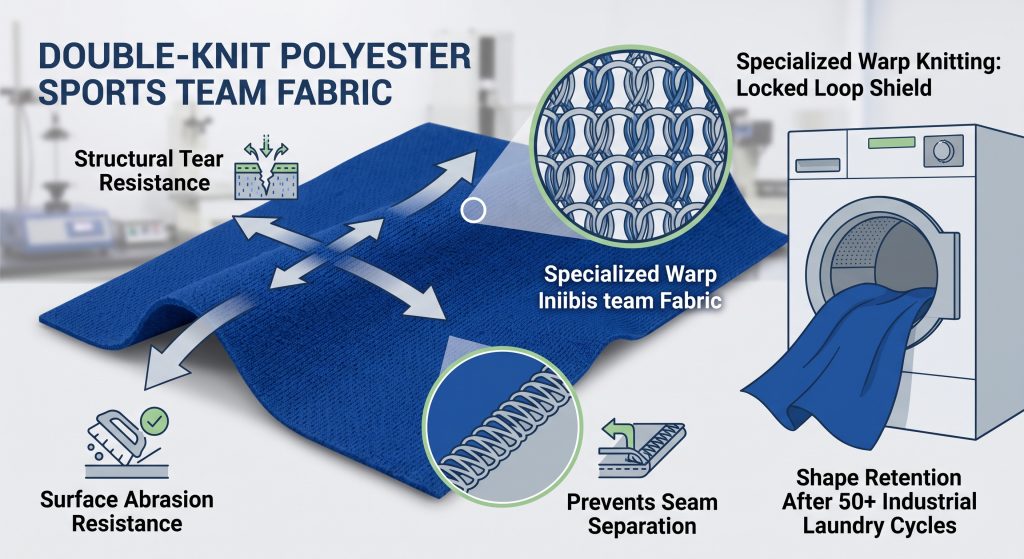
Advanced synthetic double knit compositions deliver exceptional resistance against structural tearing and surface abrasion during intense physical contact on the field. Sourcing premium solids sports team fabric gives your apparel brand a distinct competitive advantage by preventing common garment failures like seam separation. But here is the kicker concerning long-term uniform maintenance because these high density polyester structures retain their original shape after numerous industrial laundry cycles. Specialized warp knitting techniques lock the yarn loops tightly together to create an incredibly resilient shield against aggressive pulling.
Does it resist tearing?
High tensile polyester yarns woven into interlocking patterns effectively distribute localized physical stress across the entire garment surface to prevent sudden fabric punctures. You might be wondering how lightweight athletic materials can withstand the aggressive tugging common in sports like rugby or basketball. The secret lies in the engineered warp knit configuration that prevents small snags from running into major long rips. This structural resilience minimizes on-field wardrobe malfunctions, keeping athletes focused entirely on executing their game strategies safely.
- Interlocking loops isolate minor snags to prevent running.
- High tensile yarns resist intense pulling from opposing players.
- Reinforced structural borders maintain garment shape under stress.
Will industrial washing ruin it?
Specialized polymer formulas protect the structural fibers from degrading when exposed to harsh detergents and hot water temperatures inside industrial washing machines. Here is the deal regarding commercial uniform maintenance because team gear faces constant laundering throughout an intense competitive playing season. Premium solid textiles feature calibrated shrinkage parameters that prevent the clothing from warping or shrinking out of size. This chemical and thermal stability preserves your uniform inventory investment, ensuring garments fit perfectly match after match.
- Thermal setting prevents shrinkage during high temperature drying.
- Chemical resistant polymers prevent fiber breakdown from detergents.
- Color lock technology prevents bleeding into adjacent white panels.
Key Takeaway: Investing in high density double knit structures guarantees uniform longevity, significantly reducing replacement costs for commercial activewear clients.
| Durability Metric | Standard Performance | Premium Double Knit | Testing Method |
| Tensile Strength | 150 Newtons | 280+ Newtons | ASTM D5034 |
| Abrasion Resistance | 10,000 Rubs | 30,000+ Rubs | Martindale Method |
Evaluating these mechanical testing metrics proves why engineered synthetic blends are superior for manufacturing contact sports apparel.
4. Is solids sports team fabric breathable?
Engineered micro ventilation pores woven directly into the synthetic textile matrix allow constant fresh airflow to cool down overheating athlete bodies. Utilizing premium solids sports team fabric ensures that sweat evaporates quickly instead of pooling against the skin during high intensity summer training. What is the real story about mechanical breathability because simple non-structured polyester sheets often trap body heat like plastic wraps. Advanced double knit geometry creates microscopic air pathways that continuously pull humid air away from the active player body.
How does airflow function?
Ambient external air flows freely through the specialized geometric pores, replacing hot trapped body vapor with cooler outside air networks continuously. This is where it gets interesting because the fabric structure utilizes natural pressure differences created by player movement to accelerate air exchange rates. This active ventilation process prevents the uncomfortable heavy feeling that standard saturated activewear causes during long matches. Maintaining this microclimate comfort allows athletes to regulate their internal temperatures, sustaining peak physical output for longer periods.
- Geometric pores optimize natural convective cooling pathways.
- Movement driven air exchange increases during rapid sprinting.
- Vapor dissipation prevents rapid heat accumulation under padding.
Does it regulate temperature?
Rapid evaporation of surface moisture triggers a natural cooling effect that helps stabilize core body temperature under extreme physical exertion. Ready for the good part concerning thermal regulation because maintaining a stable core temperature directly prevents early athletic fatigue on the field. The engineered hydrophilic backing pulls sweat outward to the exterior surface where moving air currents dry it instantly. This continuous heat dissipation system protects players from overheating during demanding back-to-back tournament matches.
- Hydrophilic interior surfaces accelerate initial sweat absorption.
- Exterior dispersal layers expand total evaporation surface area.
- Thermal stabilization minimizes energy spent on body cooling.
Key Takeaway: Selecting fabrics with integrated mechanical ventilation pores ensures reliable moisture evaporation, keeping athletes comfortable under intense competitive stress.
| Fabric Structure | Air Permeability (CFM) | Evaporation Rate | Cooling Efficiency |
| Single Jersey | 80 CFM | Moderate | Standard |
| Engineered Mesh | 210+ CFM | Rapid | Maximum |
Examining these ventilation ratings shows the clear performance advantage of incorporating structured geometric knits into team apparel lines.
5. Which solids sports team fabric feels best?
Choosing between specialized Birdseye mesh and traditional Pique structures depends entirely on your client’s specific requirements for skin feel and active ventilation. Selecting premium solids sports team fabric requires a deep understanding of how different structural topographies interact with sweaty skin surfaces during competitive play. But here is the kicker regarding tactile textile comfort because the wrong interior knit pattern can cause severe friction chafing during long matches. Let us analyze how these two popular double knit variations perform when worn next to human skin.
How does Birdseye feel?
Birdseye sports fabric feels exceptionally silky against human skin due to its flat non-abrasive interior profile that minimizes friction contact. You might be wondering how the distinct geometric eyelet pattern changes the way this technical textile touches a sweaty athlete body. The small surface recessions reduce the total fabric area touching the skin, preventing that sticky clinging sensation during intense hot weather matches. This lightweight smoothness makes Birdseye mesh the preferred choice for friction prone garment zones like necklines or armpits.
- Flat interior profile eliminates abrasive friction next to skin.
- Eyelet micro recessions minimize fabric clinging on wet bodies.
- Silky lightweight composition prevents severe on field skin chafing.
Why choose Pique fabric?
Traditional Pique fabric features a raised geometric waffle pattern that gives garments a structured weight and a classic professional athletic appearance. Here is the deal concerning tactile differences because Pique structures feel slightly textured compared to the smooth silkiness of Birdseye mesh variants. This raised waffle layout keeps the main body of the fabric suspended slightly above the skin to create natural air channels. While it feels more substantial, it provides excellent structural durability for classic team polo shirts and uniform collars.
- Raised waffle topography creates permanent micro air insulation channels.
- Substantial structured drape maintains a sharp professional clothing silhouette.
- Textured exterior surface hides minor blemishes and wear markings.
Key Takeaway: Birdseye mesh delivers superior chafe free silkiness for high movement jerseys, while Pique provides durable structure for professional presentation wear.
| Fabric Type | Tactile Profile | Breathability Mechanism | Best Application |
| Birdseye Mesh | Smooth & Silky | Eyelet Micro Pores | Soccer & Running Jerseys |
| Pique Knit | Textured & Waffle | Suspended Channels | Golf & Team Polos |
Comparing these tactile characteristics helps procurement managers select the ideal knit structure for their brand’s target athletic applications.
6. Can solids sports team fabric prevent tears?
Robust warp knit configurations effectively stop small textile punctures from developing into large unfixable rips during intense game play situations. Integrating premium solids sports team fabric into your production line ensures that your garments can handle the violent pulling common in competitive matches. What is the real story behind fabric tear prevention because low grade circular knits often unravel completely once a single thread snaps open. Engineered interlocking double knit structures distribute physical tension outward, maintaining garment integrity under sudden severe stress.
How does interlocking function?
The specialized double needle configuration creates parallel rows of loops that cross over each other to bind the entire textile structure tightly. This is where it gets interesting because if an opposing player grabs and pulls a player’s jersey, the stress spreads across multiple yarns. This distribution prevents any single fiber bundle from bearing the entire weight of the physical force, eliminating sudden structural failures. Your customers will notice that uniforms keep their original shape even after enduring aggressive competitive playing seasons.
- Parallel loop rows create a reinforced multi-directional web.
- Tension distribution prevents localized point failures during contact.
- Locked yarn structures stop runs from spreading down panels.
Does yarn density matter?
High density filament grouping leaves fewer open spaces for external objects like cleats or equipment corners to catch and tear the material. Ready for the good part regarding how material density influences performance because tighter knits do not mean less air transmission when engineered correctly. Using fine multi-filament polyester packing supplies maximum surface smoothness while keeping the inner structural core incredibly secure against friction wear. This advanced material balance allows your manufacturing factory to produce lightweight clothing that delivers heavy duty performance reliability.
- Fine multi filament clusters maximize face wear resistance.
- Tighter spaces minimize catching on sharp athletic gear edges.
- High yarn density supports detailed high definition team embroidery.
Key Takeaway: Utilizing high density interlocking warp knits prevents costly on-field garment damage, offering sports teams reliable protection throughout competitive seasons.
| Fabric Construction | Bursting Strength | Run Resistance | Durability Tier |
| Standard Single Knit | 210 kPa | Low (Runs Easily) | Entry Level |
| Interlocking Warp Knit | 450+ kPa | High (Self Locking) | Elite Team |
Reviewing these structural strength ratings highlights the value of choosing advanced interlocking materials for competitive uniform contract manufacturing.
7. How to wash solids sports team fabric?
Maintaining the advanced moisture management performance requires laundering the garments in cool water settings using gentle commercial detergents without fabric softeners. Sourcing premium solids sports team fabric ensures your clothing lines resist color bleeding, yet proper maintenance routines protect the specialized hydrophilic finishes. But here is the kicker regarding athletic gear longevity because standard consumer laundry habits often ruin high tech activewear properties over time. Following clear commercial washing protocols ensures that team uniforms remain fresh and functional across multiple long playing seasons.
Should you avoid softeners?
Liquid chemical softeners leave a greasy silicone layer over the synthetic fibers that completely blocks the engineered moisture wicking capillary channels. You might be wondering why a product meant to make clothes feel better would ruin high performance athletic uniform gear. This invisible chemical coating prevents sweat from reaching the outer evaporation layer, trapping moisture against the athlete’s skin instead. Eliminating softeners from your laundry cycle keeps the mechanical ventilation pores clear for optimal moisture management performance.
- Silicone coatings plug up micro ventilation capillary pathways.
- Chemical residues trap odor causing bacteria inside synthetic fibers.
- Skipping softeners preserves the fabric’s original hydrophilic surface treatment.
What water temperature works?
Washing garments in lukewarm or cool water effectively releases trapped soil and grass stains without causing thermal fiber distortion or shrinkage. Here is the deal regarding thermal care because excessive heat breaks down the elastane blends that give team uniforms their comfortable stretch. Keeping wash temperatures below forty degrees Celsius protects the structural integrity of the double knit construction from weakening prematurely. This simple temperature control protocol prevents uniform panels from warping, maintaining the original tailored fit for every player.
- Cool water cycles prevent polymer degradation and fiber shrinkage.
- Moderate temperatures keep color dyes locked securely inside yarns.
- Lower heat settings reduce commercial laundry utility operational expenses.
Key Takeaway: Implementing strict low heat, softener-free laundry guidelines preserves the technical wicking channels, ensuring long-term activewear uniform performance.
| Laundering Step | Recommended Practice | Prohibited Action | Maintenance Benefit |
| Wash Cycle | Cool Water (<40°C) | High Heat (>60°C) | Prevents Fiber Shrinkage |
| Detergent Choice | Mild Liquid Form | Fabric Softeners | Preserves Wicking Pores |
Following these direct care instructions keeps your team uniform inventory looking brand new while preserving vital moisture management capabilities.
8. Does solids sports team fabric fit well?
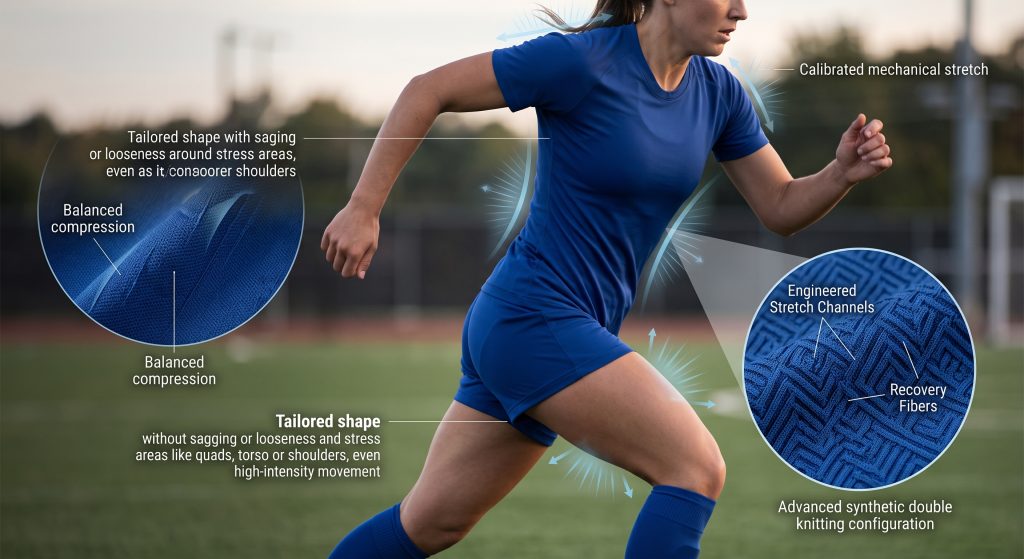
Calibrated mechanical stretch characteristics allow team garments to expand comfortably during rapid athletic movements while maintaining their original tailored shape. Selecting high grade solids sports team fabric provides your clothing brand with the material elasticity needed to accommodate diverse player physical profiles. What is the real story about garment drape because low quality activewear often sags heavily after enduring a few strenuous practice sessions. Advanced synthetic double knitting configurations yield a balanced compression effect that supports active muscles without restricting natural field mobility.
How does stretch operate?
The inherent springiness of interlocking loop structures provides comfortable multi-directional stretch without relying excessively on fragile spandex fibers that break down. This is where it gets interesting because minimizing spandex content increases the overall longevity and recycling potential of the athletic uniform garment. The engineered knit geometry stretches easily under load then snaps back to its original configuration the moment tension releases. This instant recovery prevents the uniform from becoming loose or baggy during intense, prolonged championship matches.
- Mechanical stretch utilizes knit geometry rather than chemical additives.
- Multi directional recovery maintains a sleek professional garment silhouette.
- Reduced elastane reliance extends the useful lifespan of uniforms.
Will it sag over time?
Thermal stabilizing processes applied during textile manufacturing lock the synthetic fibers into their optimal geometric orientation to eliminate permanent fabric sagging. Ready for the good part concerning garment shape retention because clothes that keep their fit look professional throughout entire tournament schedules. High density polyester structures maintain their structural memory even when subjected to constant wet conditions and repeated intense stretching forces. Your apparel company can confidently guarantee long-term fit consistency, boosting client trust in your sportswear products.
- Heat setting fixes yarn memory to prevent permanent stretching.
- Structural density resists gravity sagging when saturated with sweat.
- Consistent shape retention ensures continuous player comfort on field.
Key Takeaway: Selecting materials with excellent mechanical stretch memory ensures garments maintain a professional fit, preventing baggy deformation during active usage.
| Material Composition | Stretch Type | Shape Recovery | Longevity Rating |
| Spandex Heavy Blend | Chemical Stretch | Decays with Washing | Moderate |
| 100% Poly Double Knit | Mechanical Stretch | Retains indefinitely | Exceptional |
Understanding these stretch mechanisms helps apparel designers create high movement athletic wear that holds its tailored shape permanently.
9. Where to buy solids sports team fabric?
Partnering directly with an experienced commercial textile factory guarantees access to consistent wholesale dye lots and advanced customized fabric performance finishes. Sourcing your solids sports team fabric from a certified Chinese manufacturing plant streamlines your apparel brand’s global material supply chain efficiency. But here is the kicker regarding international textile sourcing because working with middlemen often inflates raw material costs while complicating quality control communication. Direct factory relationships provide transparent pricing structures alongside dedicated technical support for developing specialized activewear collections.
Why choose direct factories?
Direct manufacturing communication allows clothing brands to request specific technical alterations like adjusted fabric weights or customized color matching criteria easily. You might be wondering how buying straight from the production floor impacts your clothing line’s market launch timelines and minimum order requirements. Established textile plants offer comprehensive testing documentation and physical laboratory samples to verify performance metrics before mass production begins. This verified transparency minimizes sourcing risks, helping your business secure consistent premium materials for demanding corporate uniform accounts.
- Direct communication eliminates costly third party broker markups.
- Custom color matching ensures exact alignment with brand guidelines.
- Verified test reports guarantee compliance with international performance standards.
What logistics services matter?
Reliable international shipping coordination, secure export packaging, and transparent customs tracking documentation keep your factory production line operating without unexpected delays. Here is the deal regarding global apparel supply chains because late fabric arrivals can completely ruin seasonal uniform launch schedules for sports leagues. Professional textile manufacturers utilize moisture proof rolling methods and heavy duty protective wrapping to shield raw materials during sea transit. Choosing an experienced supplier guarantees that your technical fabrics arrive in perfect condition, ready for immediate garment cutting.
- Moisture proof wrapping protects fabric rolls from maritime humidity.
- Streamlined customs documentation accelerates port clearance processing speeds.
- Flexible shipping options support both ocean freight and urgent air cargo.
Key Takeaway: Securing direct factory supply channels guarantees stable wholesale pricing and consistent material quality, stabilizing your long-term clothing production schedules.
| Supplier Channel | Pricing Advantage | Quality Control | Customization Support |
| Direct Fabric Factory | Maximum Wholesale Discount | In-House Lab Testing | Complete Custom Specifications |
| Trading Agent | Higher Broker Markup | Secondary Inspection | Limited Inventory Options |
Analyzing these sourcing channels guides procurement teams toward making highly profitable raw material investment decisions for uniform lines.
10. Why trust our solids sports team fabric?
Our advanced production facility combines over a decade of technical textile experience with modern machinery to manufacture world class athletic performance materials. Selecting our premium solids sports team fabric provides your activewear brand with globally certified textiles that easily pass strict quality inspection protocols. What is the real story about manufacturing reliability because delivering uniform quality across thousands of meters requires rigorous production monitoring systems. We execute meticulous inspection steps from initial raw polymer selection to the final rolling processes to ensure absolute textile perfection.
What certifications do we hold?
Our textile mills operate under strict international manufacturing standards, ensuring every production batch satisfies global environmental and safety performance criteria. This is where it gets interesting because modern apparel consumers demand sustainable and safe materials when purchasing premium activewear uniform clothing collections. We invest continuously in independent laboratory testing to verify that our technical knit structures remain completely free from harmful chemicals. These verified safety credentials help your clothing business enter strict European and American retail markets without facing regulatory compliance obstacles.
- International safety certifications verify chemical free textile production.
- Standardized quality monitoring guarantees batch to batch color consistency.
- Independent laboratory verification confirms stated moisture management performance ratings.
How is quality verified?
Every single production roll undergoes rigorous physical stress evaluations including detailed color matching checks, weight verifications, and breathability metric tracking. Ready for the good part concerning wholesale material reliability because our automated scanning machinery flags minor weaving anomalies before the fabric leaves our factory floor. This proactive quality monitoring guarantees that your cutting department receives flawless raw materials that optimize your garment assembly efficiency. Partnering with us gives your enterprise the dependable textile backbone needed to dominate the highly competitive global sportswear market.
- Automated laser scanners detect micro weaving imperfections instantly.
- Digital spectrophotometers ensure absolute color precision against master samples.
- Mechanical pull testers confirm high tensile strength before export packaging.
Key Takeaway: Partnering with a certified, technologically advanced manufacturer protects your brand reputation by ensuring flawless batch consistency for all sportswear orders.
| Quality Check | Inspection Tool | Factory Standard | Compliance Target |
| Color Precision | Digital Spectrophotometer | Delta E < 0.5 | 100% Match |
| Weave Continuity | Automated Laser Scanner | Zero Major Defect | Flawless Roll |
Reviewing these quality control guidelines demonstrates our absolute commitment to supplying top tier performance textiles for global activewear brands.
Selecting premium sports apparel base materials solves the critical challenges of player discomfort, sudden garment tearing, and inconsistent dye lots that frequently plague team uniform procurement. Our advanced double knit structures and specialized Birdseye ventilation systems provide the exact mechanical solutions your activewear brand requires to dominate the competitive sportswear market. We stand ready to support your commercial production goals by supplying flawless, high density technical textiles tailored for modern high intensity field sports. Please contact us today to request custom color matching swatches and comprehensive laboratory testing reports for your next team clothing collection. Our corporate mission centers on engineering resilient, highly breathable performance fabrics that empower athletes worldwide to achieve their ultimate competitive potential.
FAQ
What’s the best way to prevent color fading on athletic uniforms?
Selecting high density solid dyed polyester guarantees long term color vibrancy without the bleeding risks associated with low grade printed textiles. Here is the deal regarding B2B uniform procurement because team apparel undergoes aggressive industrial washing cycles that quickly strip away cheap surface pigments. Our specialized color lock technology binds the dye molecules deep inside the synthetic fiber core to resist degradation from hot water and commercial detergents. Choosing this robust material setup ensures that your sports team colors remain exceptionally bright and professional looking across multiple challenging tournament seasons.
Can I order custom dye lots for specific school team colors?
Yes, you can easily request customized color matching services to align production batches with traditional university branding guidelines exactly. You might be wondering how direct textile manufacturing plants achieve precise shade replication without producing distracting color variations across separate product orders. Our facility utilizes advanced digital spectrophotometers that analyze fabric samples to maintain strict batch consistency with a Delta E variance below zero point five. This technical precision allows your garment brand to supply continuous uniform replacement pieces that match the original team clothing flawlessly.
How do I know if Birdseye mesh is better than Pique knit for jerseys?
Checking the specific movement demands of the sport reveals that Birdseye mesh provides superior chafe free silkiness for high speed running games. What is the real story about active player comfort because heavy textured waffle knits can cause painful skin friction during hot summer tournament matches. The flat interior profile of Birdseye fabric minimizes surface contact against sweaty bodies while the eyelet pattern allows rapid sweat evaporation. Choose Pique fabrics primarily for structured uniform elements like presentation collars or casual golf apparel where classic drape matters more.
Can I use fabric softeners during the uniform cleaning process?
No, you must absolutely avoid using liquid fabric softeners because they deposit a greasy silicone coating over the technical synthetic yarns. This is where it gets interesting because these popular laundry additives completely plug the engineered micro ventilation pores that direct active moisture management. This chemical block traps liquid sweat against the athlete’s skin, destroying the fabric’s natural cooling properties and fostering rapid bacterial odor accumulation. Sticking to mild commercial detergents without additives keeps the capillary channels clear for optimal moisture wicking performance during competitive games.
How do I know if a fabric has sufficient tensile strength for contact sports?
Reviewing independent laboratory test certificates like ASTM D5034 confirms whether the double knit structure resists intensive pulling and on field tearing. Ready for the good part concerning material safety because elite contact sports like football require warp knit configurations that distribute sudden stress evenly. High quality technical textiles deliver a bursting strength exceeding four hundred kilopascals to insulate players from sudden wardrobe failures during competitive matches. Sourcing certified materials ensures your garment factory manufactures resilient team sportswear collections that apparel distributors can market with absolute confidence.