
Basketball jersey mesh fabric is the gold standard because it provides an unparalleled balance of breathability, lightweight durability, and moisture management essential for high-intensity athletics. Imagine your athletes struggling in heavy, sweat-soaked uniforms that cling to their skin and restrict their range of motion on the court. This physical discomfort agitates their performance, leading to faster fatigue and ultimately reflecting poorly on your brand’s commitment to quality. High-performance basketball jersey mesh fabric provides the technical solution by facilitating constant airflow and rapid evaporation, ensuring players stay cool and focused until the final whistle.
Why choose basketball jersey mesh fabric for sports?
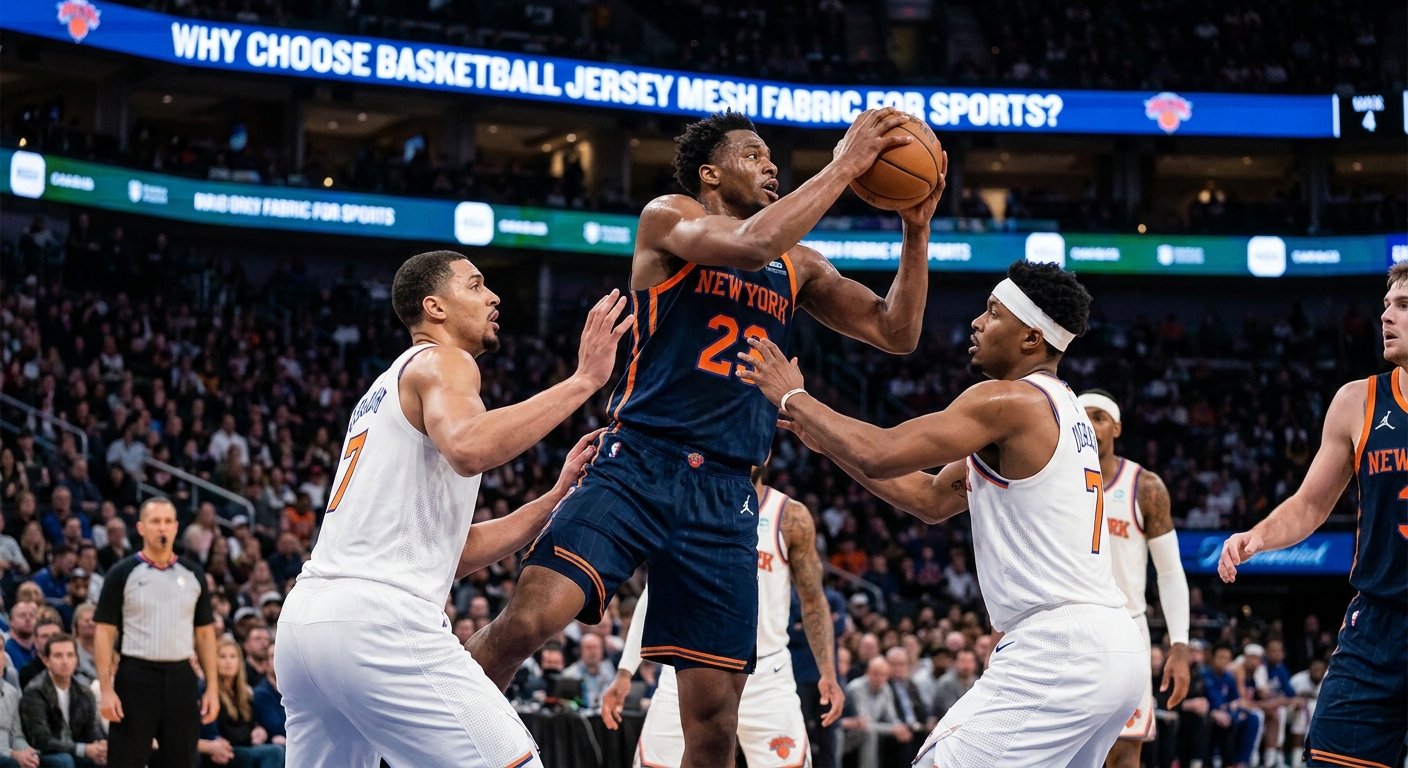
You choose this material because its open-weave architecture allows for maximum heat dissipation during high-intensity play. The primary function of basketball jersey mesh fabric is to regulate body temperature through superior ventilation. By selecting this fabric, you ensure that heat doesn’t remain trapped against the athlete’s skin.
Superior Ventilation and Airflow
The mesh structure features thousands of tiny perforations that facilitate constant air circulation. You will find that this prevents the “greenhouse effect” common in solid knits.
The best part?
- 30% increased airflow compared to solid polyester.
- Reduced core temperature for athletes.
- Improved comfort during peak activity.
Lightweight Performance Benefits
Averaging 50% less weight than traditional cotton alternatives, these fabrics reduce wearer fatigue. You can provide your customers with gear that allows for the explosive movements and agility required on the court.
Key Takeaway: Choosing mesh ensures your garments provide the thermal regulation and weight reduction necessary for professional-level athletic performance.
| Feature | Advantage | Benefit to Athlete | |
|---|---|---|---|
| Open-Hole Structure | Increased airflow | Enhanced cooling | |
| Synthetic Composition | Hydrophobic properties | Stays light when wet | |
| High Strength | Rip-resistant weave | Long-term durability | |
What is the best basketball jersey mesh fabric material?
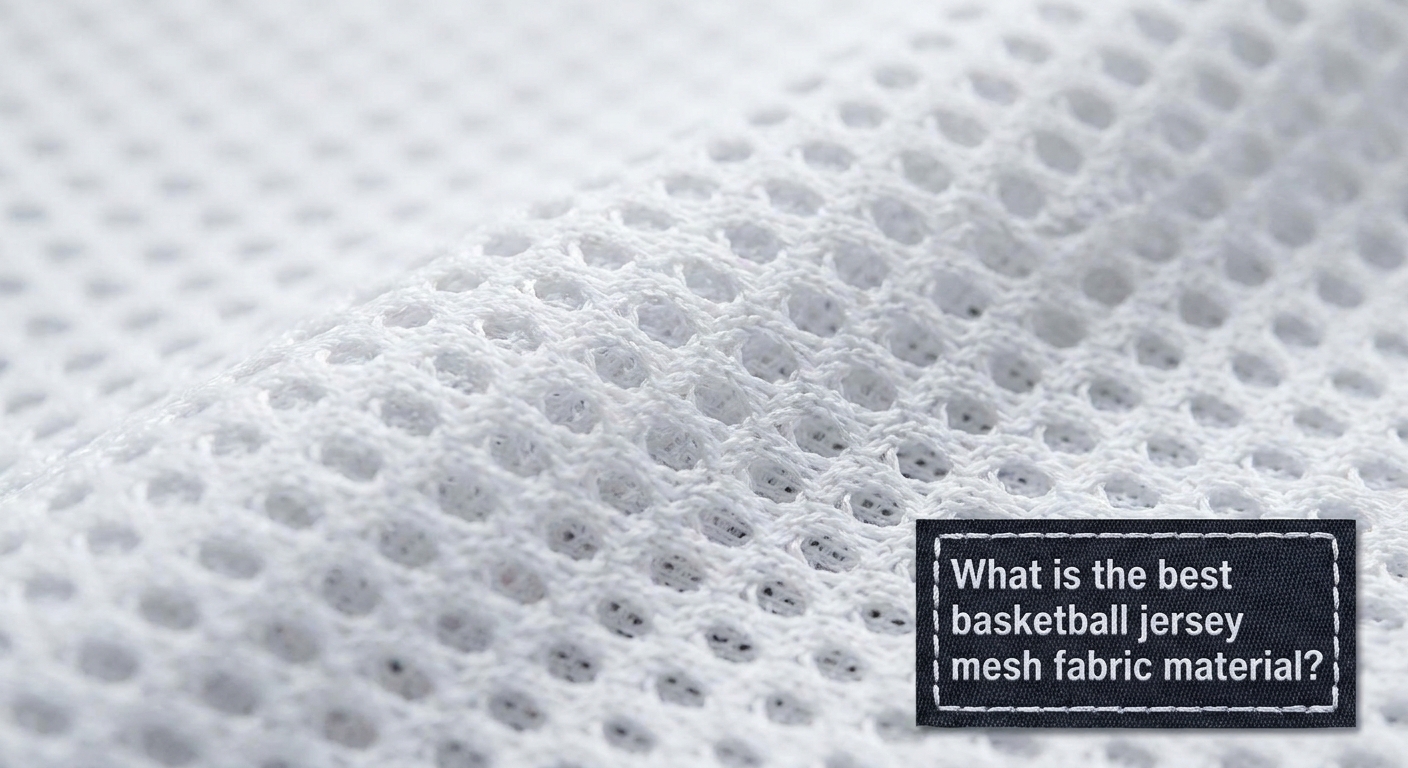
100% polyester is considered the best material due to its inherent moisture management properties and high tensile strength. When you source basketball jersey mesh fabric , you are prioritizing a synthetic fiber that maintains its shape even under extreme physical stress. This material is specifically engineered to resist stretching and shrinking over time.
Polyester vs. Nylon Performance
Polyester offers superior color retention and quick-drying capabilities for your team gear. You might consider nylon blends if you require a softer hand-feel, though polyester remains the industry standard.
Think about it:
- Polyester dries 50% faster than nylon.
- It resists UV degradation better.
- Higher resistance to pilling and abrasion.
Spandex Blends for 4-Way Stretch
Incorporating 5% to 15% spandex into the weave creates a “second skin” fit. You will notice this elasticity is vital for maintaining garment shape while allowing for a full range of motion.
Key Takeaway: 100% polyester is the reliable choice for most game-day jerseys, while spandex blends are reserved for elite, compression-fit uniforms.
| Material Type | Best Use Case | Performance Rank | |
|---|---|---|---|
| 100% Polyester | Standard game jerseys | High | |
| Poly-Spandex | Compression/Elite fit | Premium | |
| Nylon Blend | High-contact practice gear | Moderate | |
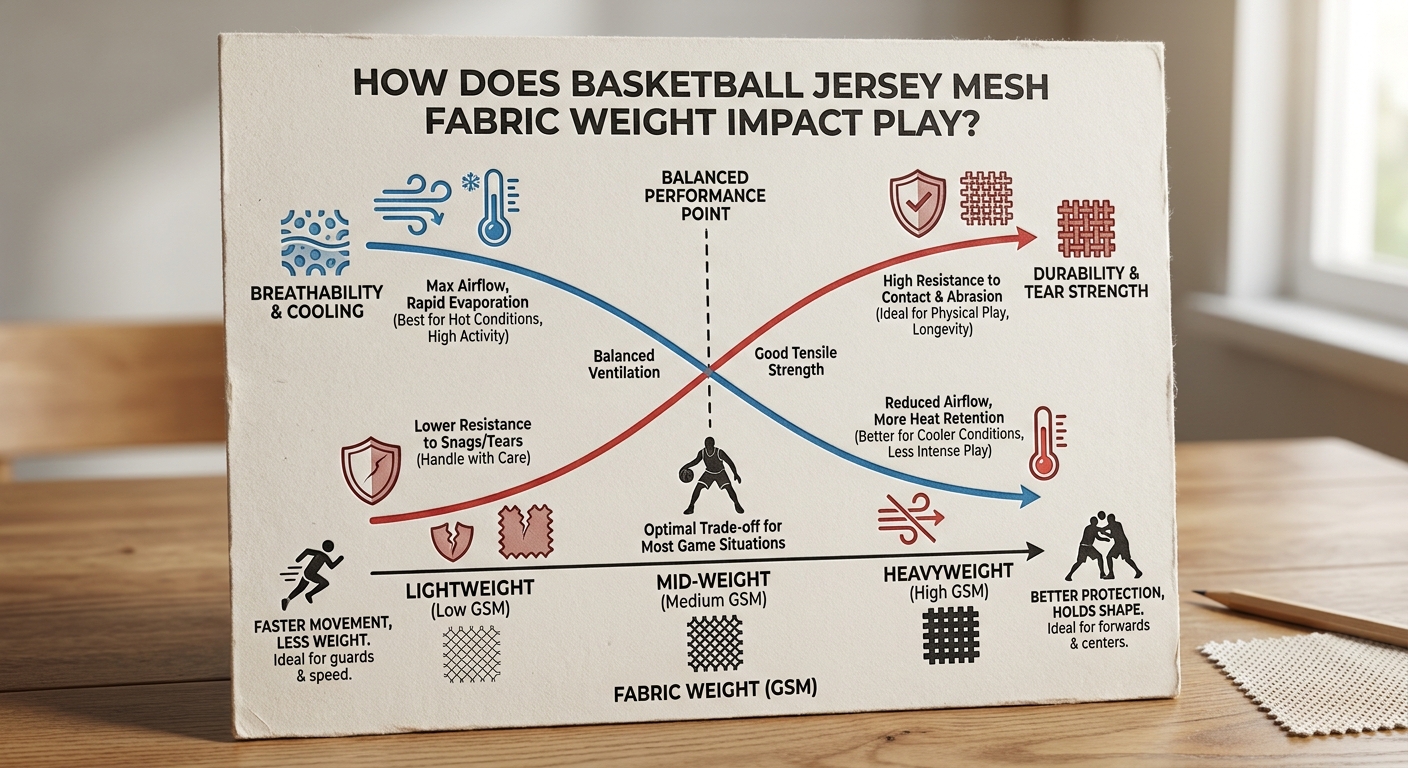
How does basketball jersey mesh fabric weight impact play?
Fabric weight dictates the balance between breathability and opacity, directly affecting how the jersey hangs on the player. Selecting the right basketball jersey mesh fabric weight ensures the garment is neither too fragile nor too restrictive. You must match the GSM (Grams per Square Meter) to the specific needs of the league level.
Lightweight 140 GSM for Speed
Ideal for amateur leagues and youth jerseys, 140 GSM provides a barely-there feel for your players. It maximizes ventilation but you may require specific lining for lighter colors to ensure opacity.
The kicker?
- Fastest moisture evaporation.
- Maximum agility for guards.
- Cost-effective for bulk orders.
Professional Grade 190 GSM Durability
Pro-level games often utilize a heavier 190 GSM mesh for increased structural integrity. You will find this weight offers a premium “hang” to the jersey and can withstand physical rigors.
Key Takeaway: Use lower GSM for recreational play and higher GSM for professional uniforms to balance speed with professional aesthetics.
| Weight Range | Classification | Common Application | |
|---|---|---|---|
| 80 – 130 GSM | Ultra-Light | Linings / Vests | |
| 140 – 180 GSM | Standard | Recreational Jerseys | |
| 190 – 240 GSM | Heavyweight | Professional Uniforms | |
Which basketball jersey mesh fabric knit is most durable?
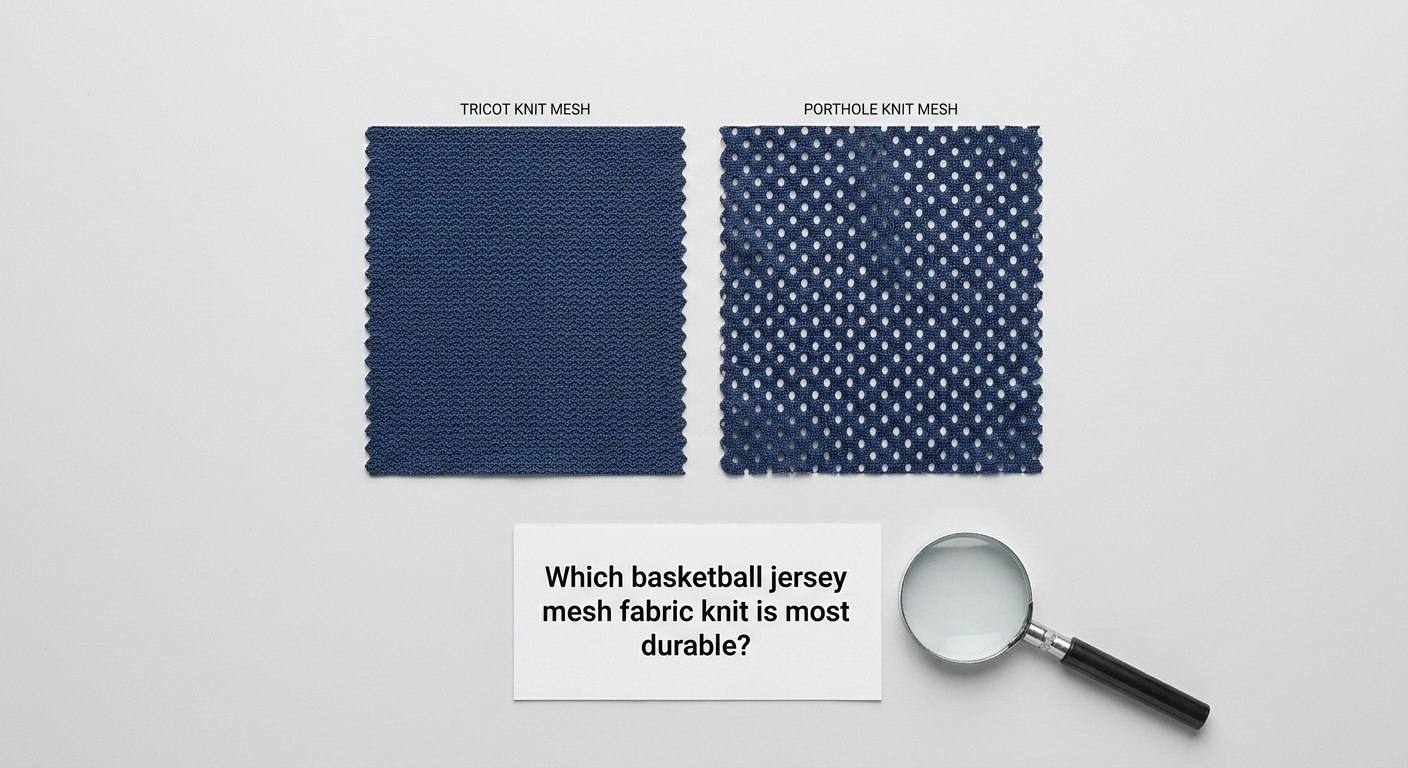
Tricot knit is the most durable option because its warp-knit construction is naturally run-resistant and stable. When you evaluate basketball jersey mesh fabric , look for a knit that maintains its hole geometry even when pulled. A stable knit ensures your branding remains undistorted during play.
Tricot Mesh Stability
Tricot is a warp-knit construction known for being stable and extremely difficult to snag. You will appreciate how it features small diamond or hexagonal holes, providing a classic professional look.
Here is the kicker:
- Resists running if a thread breaks.
- Excellent shape retention after washing.
- Smooth surface for printing.
Porthole Mesh for Heavy Use
Recognized by its visibly larger holes, porthole mesh is a heavyweight variant often used for practice. You can rely on its robust nature to withstand aggressive defensive drills without tearing.
Key Takeaway: Tricot is the gold standard for game-day aesthetics, while porthole mesh is the utility player for heavy-duty training equipment.
| Knit Type | Structural Property | Durability Level | |
|---|---|---|---|
| Tricot | Warp-knit / Run-resistant | Excellent | |
| Raschel | Textured / Breathable | Good | |
| Porthole | Heavyweight / Open | Superior | |
Is basketball jersey mesh fabric moisture-wicking enough?
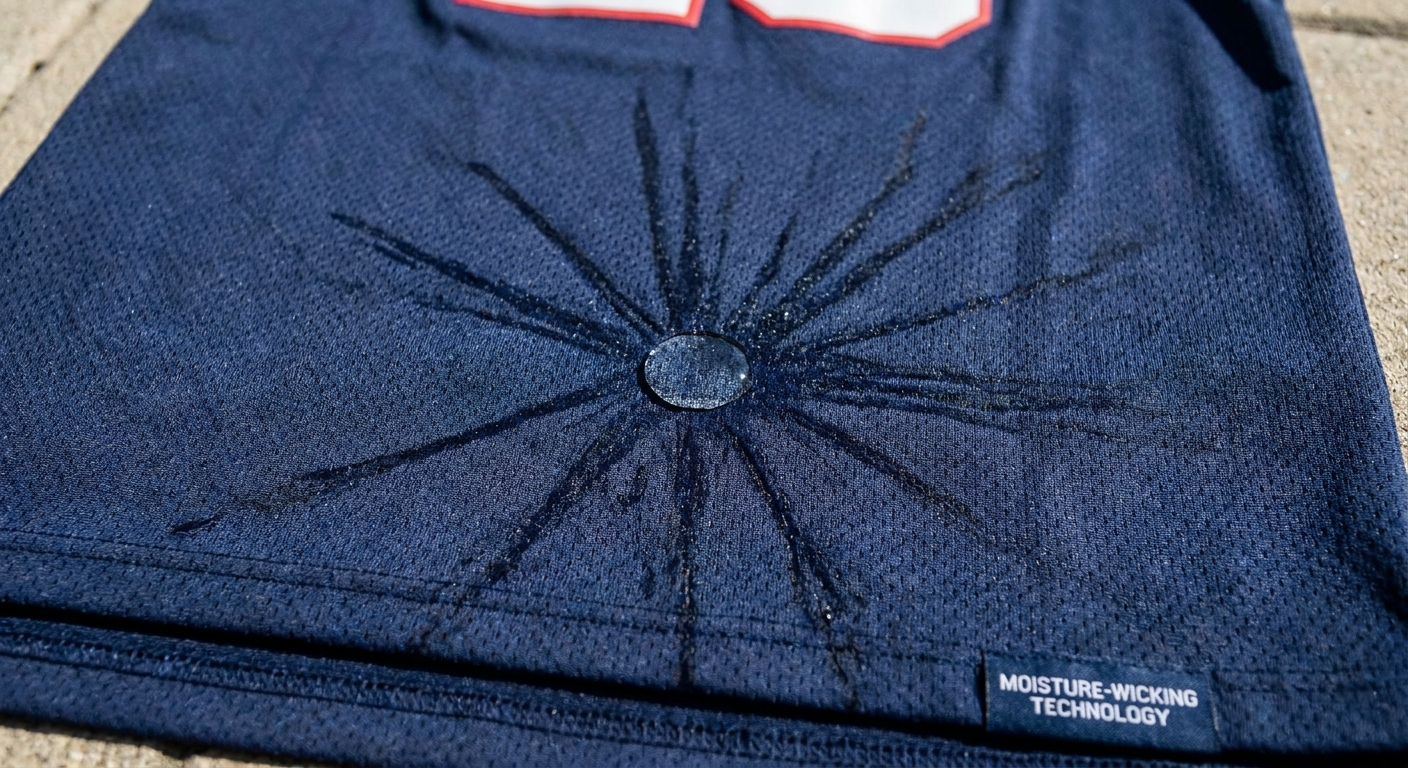
Yes, modern mesh is highly moisture-wicking because it utilizes capillary action to pull sweat away from the skin. High-quality basketball jersey mesh fabric uses cross-sectional fiber shapes that transport moisture to the outer surface. This physical modification ensures the athlete stays dry during high-exertion intervals.
Capillary Action Technology
Technical mesh does not absorb moisture like cotton; instead, it moves it. You will see that this prevents the jersey from becoming heavy and water-logged mid-game.
The best part?
- Dries up to 60% faster than cotton.
- Prevents skin irritation and chafing.
- Maintains lightweight feel throughout play.
Quick-Dry Comparison
Tests indicate that specialized mesh can evaporate moisture significantly faster than solid polyester knits. You can trust this quick-dry capability to maintain player comfort in humid gym environments.
Key Takeaway: Effective moisture management in mesh relies on the combination of fiber geometry and the open-weave structure for rapid evaporation.
| Property | Technology | Result | |
|---|---|---|---|
| Wicking | Capillary fibers | Drier skin | |
| Evaporation | Open structure | Faster drying | |
| Management | Hydrophobic finish | Lightweight feel | |
Can basketball jersey mesh fabric offer UV protection?
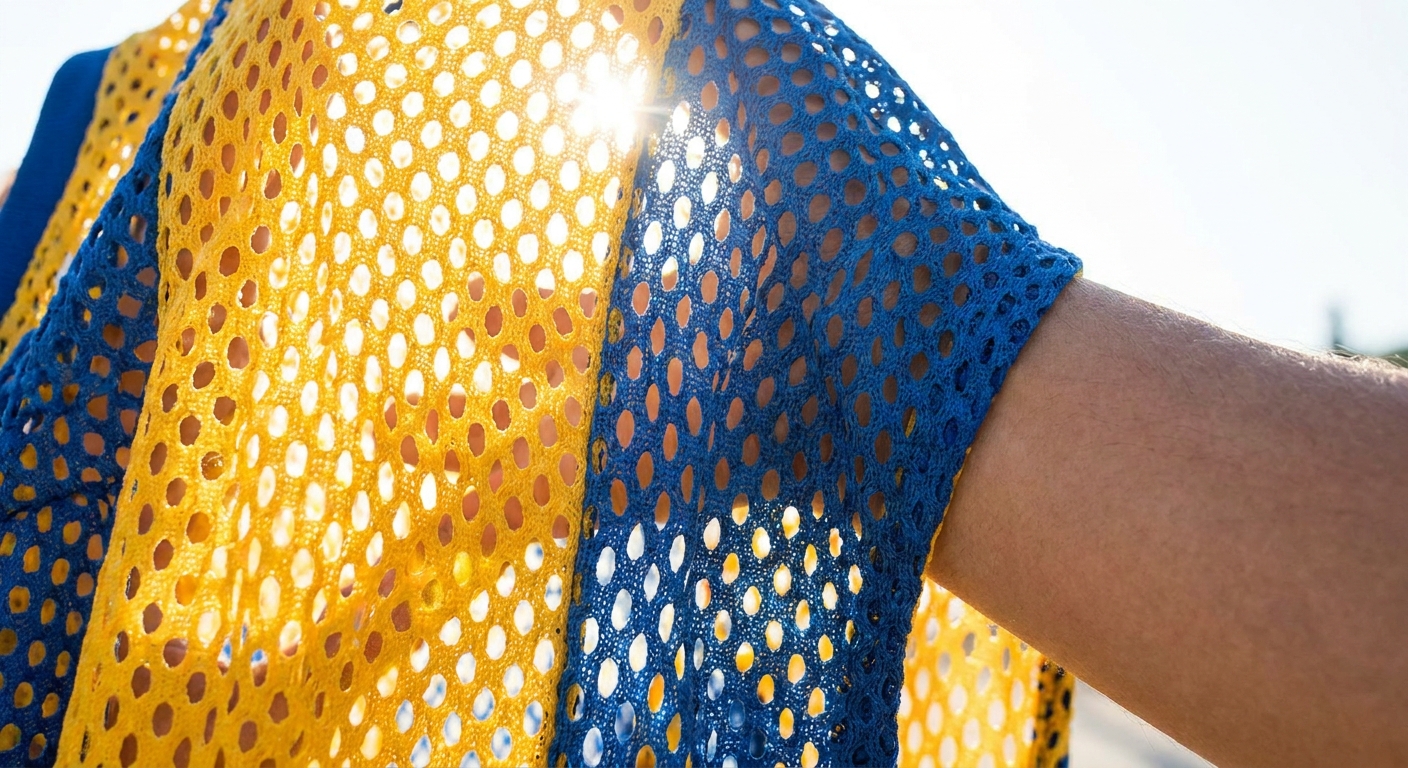
Yes, technical mesh can be treated to achieve a UPF 50+ rating, which is essential for outdoor tournaments. When you source basketball jersey mesh fabric, you should ask about UV-stabilizers that protect both the player and the fabric. These treatments prevent the sun’s rays from degrading the synthetic fibers over time.
UPF Ratings for Outdoor Use
Technical mesh can shield players from 98% of the sun’s harmful rays. You will find this particularly important for youth summer camps and streetball leagues.
Think about it:
- Protects skin during long outdoor exposure.
- Prevents fabric from becoming brittle.
- Maintains color vibrancy under sunlight.
Anti-Bacterial Finishes
Since mesh is designed for high-sweat environments, anti-microbial treatments are often applied. You can offer garments that inhibit the growth of odor-causing bacteria, extending the life of the uniform.
Key Takeaway: Integrated UV and anti-bacterial finishes are necessary value-adds for brands targeting the outdoor and professional athletic sectors.
| Feature | Protection Type | Importance | |
|---|---|---|---|
| UV Coating | Sun protection | Essential (Outdoor) | |
| Anti-Microbial | Odor control | High | |
| Color Fastness | Fade resistance | Essential | |
How to customize basketball jersey mesh fabric for brands?
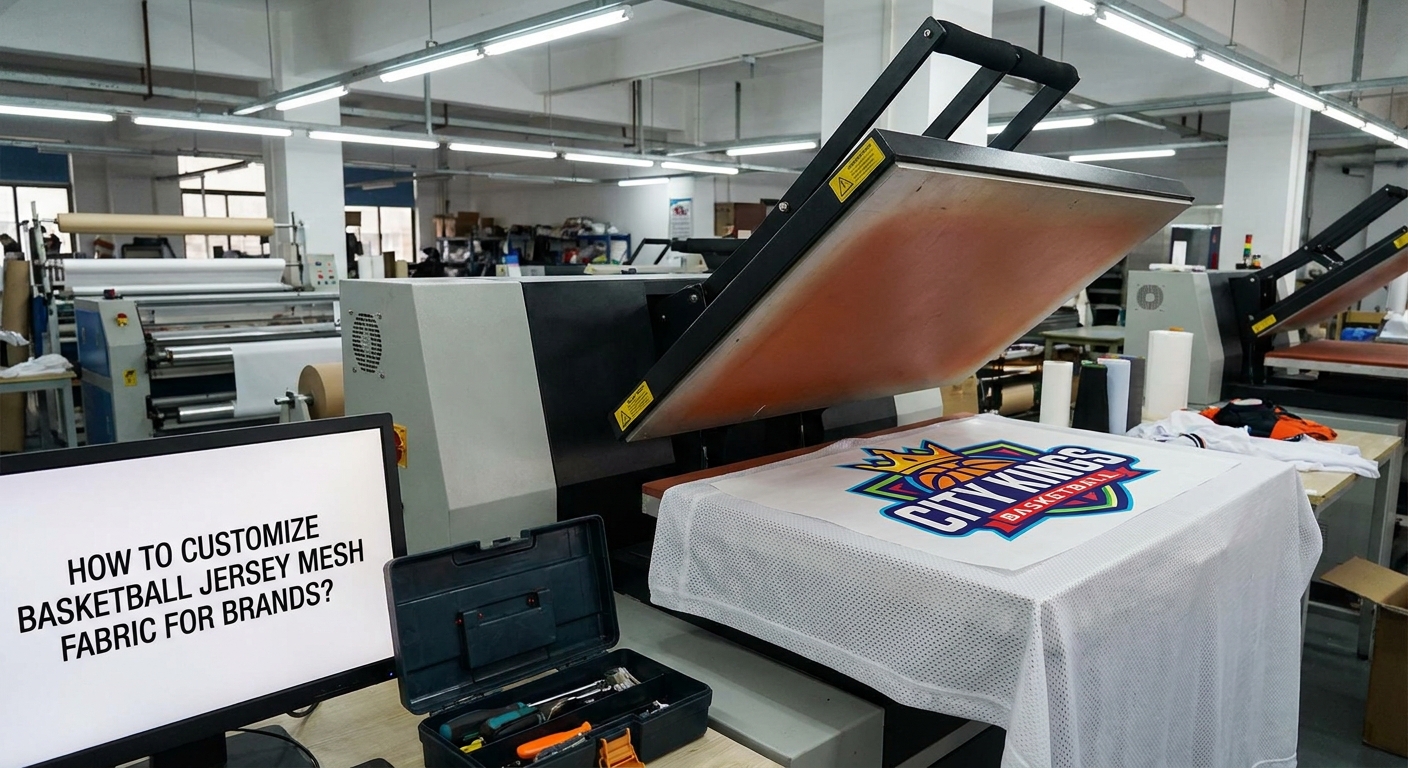
Customization is primarily achieved through sublimation printing, which bonds ink directly to the fibers without blocking the mesh holes. Basketball jersey mesh fabric is the ideal substrate for this process because it allows for vibrant, full-color designs. You will find that sublimated logos never crack, peel, or fade, even after heavy laundering.
Sublimation Printing Suitability
Polyester mesh is engineered for gas-infusion printing techniques. You can create complex, multi-color patterns that remain perfectly breathable because no thick ink sits on top of the fabric.
The kicker?
- Zero “hand-feel” for logos.
- Infinite color possibilities.
- Breathable graphics that don’t trap heat.
Custom Dyeing Standards
For brands requiring specific pantone matching, integrated dyeing plants can achieve high color fastness. You should look for suppliers that guarantee a grade of ≥ 3.5 to ensure professional appearances.
Key Takeaway: Sublimation is the superior choice for mesh customization as it preserves the fabric’s technical breathability while offering limitless design freedom.
| Customization | Process | Result | |
|---|---|---|---|
| Sublimation | Heat transfer | Breathable graphics | |
| Piece Dyeing | Vat immersion | Uniform solid colors | |
| Screen Print | Ink application | Durable branding | |
What are the care rules for basketball jersey mesh fabric?
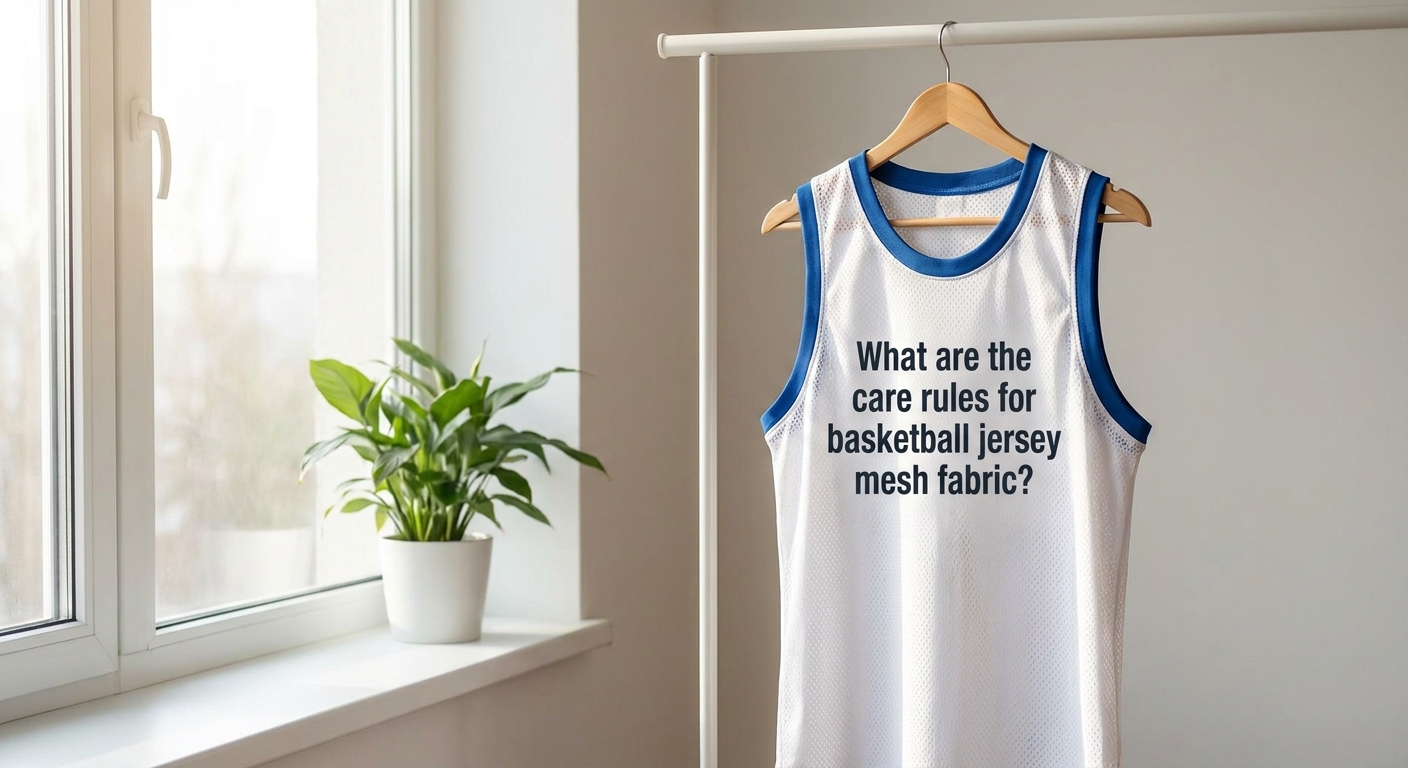
The golden rule for care is to wash in cold water and avoid all fabric softeners to preserve the moisture-wicking properties. Improper laundering of basketball jersey mesh fabric can lead to clogged pores and degraded elasticity. You must educate your customers on these protocols to ensure the longevity of their investment.
Washing Technical Fibers
Jerseys should be washed on a gentle cycle to prevent snagging on other garments. You should always turn the jersey inside out to protect any sublimated or printed graphics from abrasion.
Think about it:
- Cold water prevents fiber shrinkage.
- No softener maintains capillary action.
- Gentle cycles prevent mesh snags.
Drying and Storage
Air drying is the preferred method for maintaining the shape of synthetic mesh. If you must use a dryer, a low-heat setting is mandatory to prevent the polyester from melting or losing its stretch.
Key Takeaway: Longevity is dictated by avoiding heat and chemicals that break down synthetic fibers and block the fabric’s ventilation holes.
| Care Step | Action | Reason | |
|---|---|---|---|
| Wash | Cold water / No softener | Protects wicking | |
| Dry | Air dry / Low heat | Prevents shrinkage | |
| Iron | Avoid high heat | Protects fibers | |
Why source basketball jersey mesh fabric from a factory?
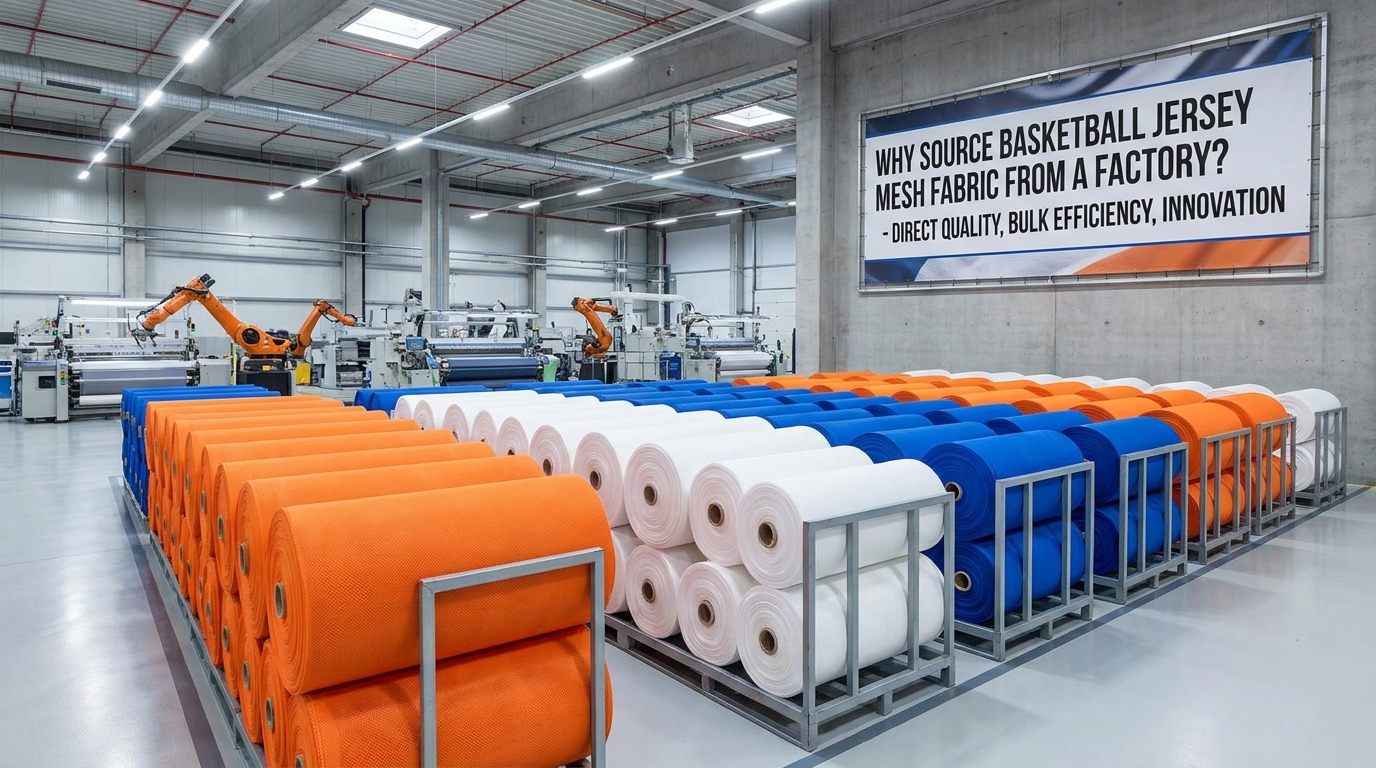
Direct factory sourcing provides you with better margins, faster time-to-market, and total control over the production specifications. Sourcing basketball jersey mesh fabric from an integrated facility ensures that knitting and dyeing are handled under one roof. This vertical integration eliminates the communication gaps and delays associated with trading companies.
Low MOQ and Flexibility
Working with a factory that offers MOQs as low as 100kg allows you to test new colorways without high financial risk. You can scale your inventory based on actual market demand rather than speculative bulk orders.
The best part?
- Reduced overhead costs.
- Faster custom sample turnaround.
- Direct access to technical expertise.
Quality Control and Consistency
Factories with in-house labs can guarantee that every roll of fabric matches your approved sample. You will receive consistent color matching across different batches, which is vital for team uniform consistency.
Key Takeaway: Factory-direct sourcing is the most efficient path for B2B buyers looking to optimize their supply chain and ensure technical textile consistency.
| Sourcing Factor | Factory Direct | Trading Company | |
|---|---|---|---|
| Unit Cost | Lowest | Higher | |
| Quality Control | Direct / Strict | Variable | |
| Lead Time | Rapid | Dependent | |
How to identify quality basketball jersey mesh fabric?
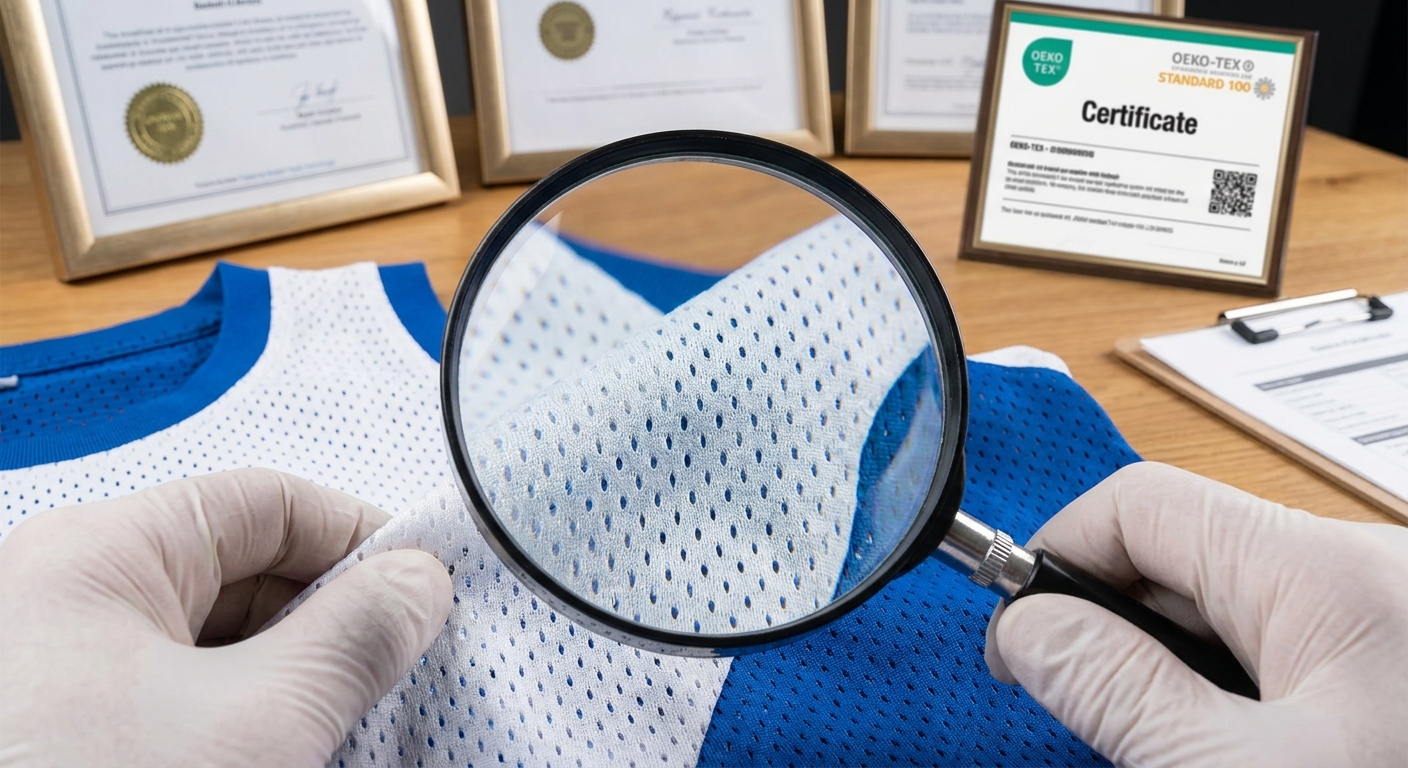
Quality identification relies on checking for consistent hole density and international certifications like OEKO-TEX Standard 100. High-quality basketball jersey mesh fabric should have a uniform pattern without irregular gaps or thin spots. You should also perform a “snap test” to ensure the fabric recovers its original shape instantly after stretching.
Certification and Compliance
Ensure your supplier holds GRS (Global Recycled Standard) if you are focusing on sustainable products. You will find that certified fabrics are easier to clear for North American and European market compliance.
Think about it:
- OEKO-TEX ensures skin safety.
- GRS proves environmental claims.
- ISO standards guarantee process quality.
Physical Inspection Tips
Hold the fabric up to the light to check for weaving defects or yarn impurities. You can tell a premium mesh by its smooth hand-feel and the absence of loose filaments or “fuzz” on the surface.
Key Takeaway: Professional sourcing requires a dual approach of physical testing for elasticity and verification of international textile certifications.
| Quality Check | Standard | Goal | |
|---|---|---|---|
| Elasticity | Recovery test | Shape retention | |
| Certification | OEKO-TEX / GRS | Compliance | |
| Fastness | Grade ≥ 3.5 | No color bleeding | |
| Verification of quality through testing and certification is the final safeguard for your brand’s reputation in the athletic market. |
Conclusion
Selecting the right basketball jersey mesh fabric is a strategic decision that directly impacts player performance and your brand’s long-term reputation. By focusing on GSM, technical knit structures, and moisture-wicking capabilities, B2B buyers can deliver superior products that thrive in high-pressure environments. At MAKITAPE, we bridge the gap between high-performance engineering and reliable supply chain management. If you are ready to elevate your sportswear line with industry-leading textiles, please contact us today to request a free sample pack and technical consultation.
FAQ
Can I use mesh fabric for outdoor jerseys?Yes, technical mesh with UV-stabilizers is ideal for outdoor use. It provides necessary sun protection while the open-weave structure ensures athletes stay cool in direct sunlight.
What is the best way to print logos on mesh?Sublimation is the best method for mesh garments. It allows the ink to bond with the fibers, ensuring the graphics are permanent and do not block the fabric’s essential ventilation holes.
How do I know if the fabric is moisture-wicking?Conduct a simple droplet test on the surface. High-quality moisture-wicking fabric will pull the water into the fibers and spread it out instantly, rather than letting it bead on the surface.
Can I order custom colors with low MOQs?Yes, many factories now offer MOQs as low as 100kg for custom dyeing. This allows smaller brands to source professional-grade, custom-colored fabric without the risk of excessive inventory.
What is the most durable mesh for practice gear?Porthole mesh is widely considered the most durable choice for practice. Its heavyweight construction and large-hole design make it resistant to tearing during high-contact training sessions.