
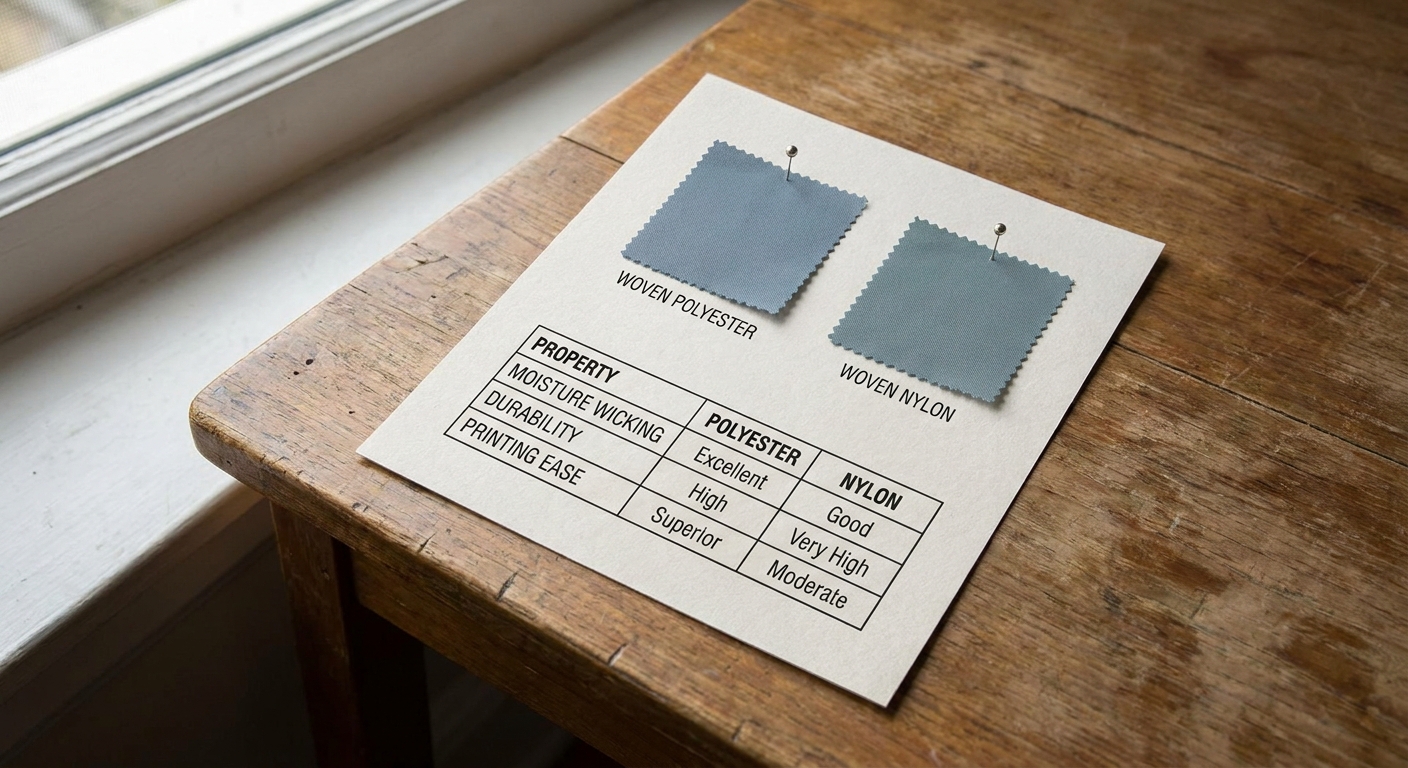
Polyester is ultimately the best fabric for team uniforms due to its superior moisture-wicking, sublimation compatibility, and cost-efficiency, though nylon serves as an exceptional high-abrasion reinforcement. Sports team coordinators and athletic apparel manufacturers frequently struggle to secure uniforms that can survive sliding on abrasive clay fields while remaining lightweight and visually striking. Choosing an incorrect textile can result in heavy, heat-trapping jerseys that restrict player speed, easily tear at the seams, and show severe color fading after only a few games, forcing clubs into expensive mid-season replacement orders. Fortunately, a technical comparison of Polyester vs Nylon for baseball uniforms provides clear, data-driven parameters for selecting the ultimate athletic textile profile.
Why analyze Polyester vs Nylon for baseball uniforms?
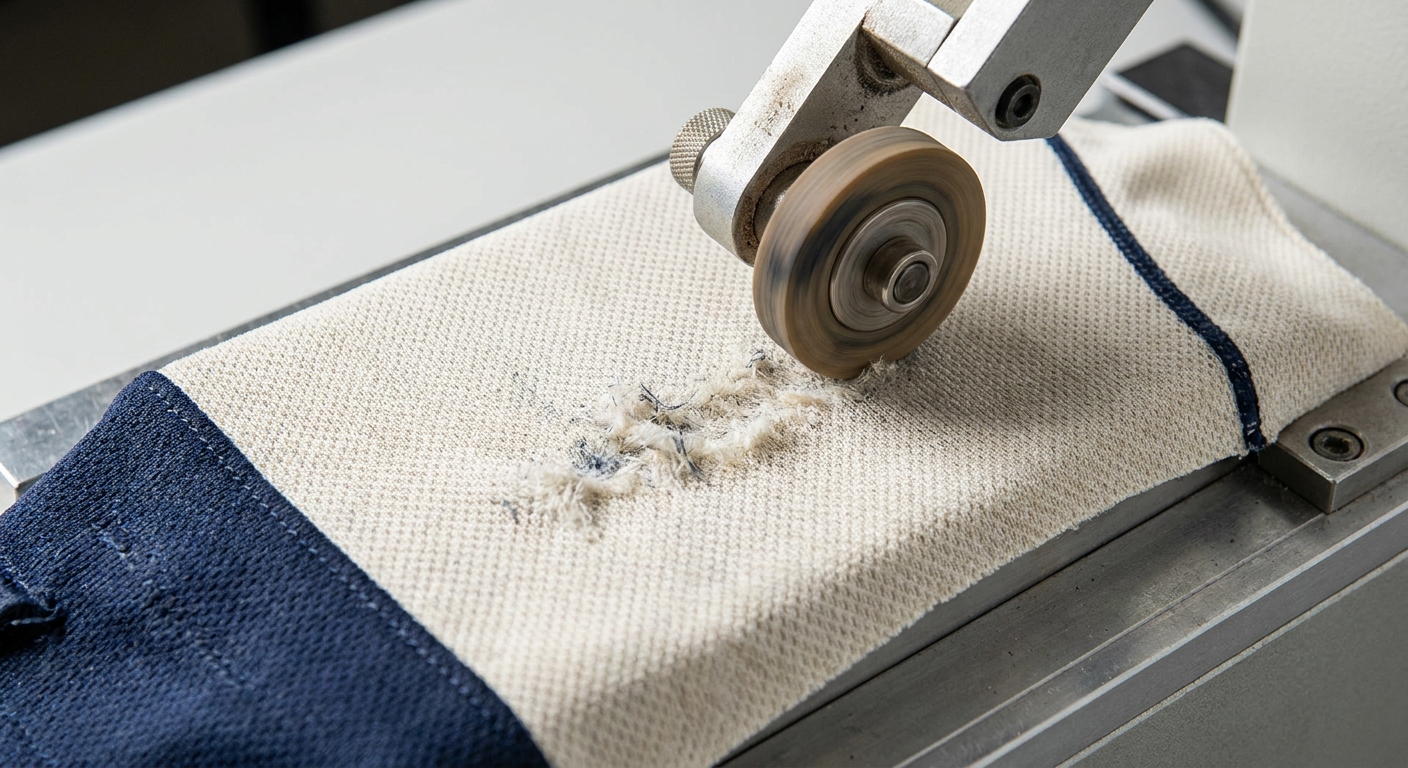
Analyzing Polyester vs Nylon for baseball uniforms is essential because athletic clubs require a precise balance between moisture management, abrasion resistance, and financial viability. This comparison allows apparel brands to optimize player speed and durability on the field. Different game positions demand varied material characteristics, making a thorough fiber analysis imperative.
By understanding how synthetic polymers perform under physical stress, you can make informed purchasing decisions that save money. Manufacturers can design hybrid uniforms that maximize the strengths of both materials. This technical approach ensures that the gear withstands intense doubleheaders without failing.
What are the physical demands of baseball?
Players sprint, slide, and dive on harsh dirt and turf surfaces, which subjects the uniform to severe frictional heat and structural strain. The fabric must be tough enough to prevent turf burns while remaining light enough to allow maximum swing speeds.
Think about it:
- Repetitive sliding on red clay requires extreme surface friction tolerance.
- Dynamic throwing motions demand multi-directional shoulder flexibility.
- Sudden temperature shifts necessitate advanced thermal regulation.
Why do synthetic polymers dominate team sports?
Traditional natural fibers like cotton absorb sweat and trap moisture, which weighs down the player and causes severe chafing during gameplay. Modern synthetic polymers are engineered with specific cross-sections that dry rapidly and resist stretching.
Here’s the deal:
- Hydrophobic properties prevent water-logging in humid weather.
- High tensile strength resists ripping during slides and dives.
- Engineered weaves facilitate active air circulation around the body.
| Feature | Polyester Polymer | Nylon Polymer | |
|---|---|---|---|
| Primary Benefit | Quick Drying & Easy Printing | Extreme Durability & Elasticity | |
| Typical Application | Jerseys & Outerwear | Sliding Pants & Reinforcements | |
| Sourcing Price | Highly Cost-Effective | Premium Sourcing Cost |
This baseline polymer comparison establishes that while both synthetics are highly durable, their moisture and stretch behaviors are fundamentally distinct.
Key Takeaway: Sourcing the correct synthetic polymer guarantees players stay lighter and cooler, reducing muscle fatigue over long athletic seasons.
What are Polyester vs Nylon for baseball uniforms pros?
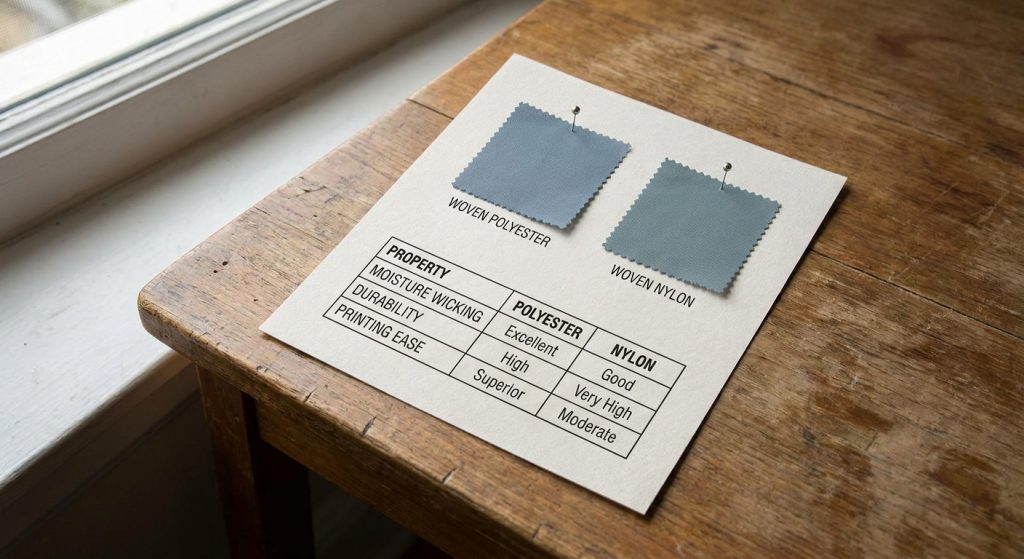
The main advantages of choosing Polyester vs Nylon for baseball uniforms are that polyester offers unmatched breathability and sublimation ease for jerseys, whereas nylon provides unmatched tear resistance for sliding pants. Sourcing teams can leverage these distinct performance benefits to design highly specialized apparel packages. Both fabrics offer superior modern alternatives to traditional natural cotton fibers.
While polyester dominates the lightweight custom printing market, nylon serves as the premium choice for high-wear areas. Selecting the correct fabric mix helps sports brands create uniforms that feel comfortable and look pristine. Understanding these distinct pros ensures your product line meets high athletic standards.
What makes polyester the jersey favorite?
Polyester is exceptionally lightweight and resists shrinking or wrinkling, making it the ideal base for high-performance athletic tops. Its molecular structure prevents moisture absorption, ensuring sweat evaporates almost instantly.
Truth be told:
- Exceptional dimensional stability maintains jersey shape after fifty hot washes.
- Inherent UV resistance protects athletes from prolonged direct sun exposure.
- Low raw material costs keep team production budgets highly competitive.
When does nylon become the preferred choice?
Nylon comes into its own when uniforms face intense mechanical wear, such as the hips and knees of sliding pants. The fiber features high elastic recovery and a supple hand feel that minimizes skin irritation.
Look at it this way:
- Unmatched tensile strength prevents seam blowouts during diving plays.
- Silky surface texture reduces sliding friction against dry dirt surfaces.
- Excellent memory retention prevents fabrics from bagging or sagging.
| Fabric | Key Advantage | Performance Limitation | |
|---|---|---|---|
| Polyester | Excellent sublimation & wicking | Slightly lower abrasion limits | |
| Nylon | Extreme abrasion resistance | High moisture absorption rate |
Balancing polyester’s cooling capabilities with nylon’s mechanical strength allows for optimal multi-piece uniform design.
Key Takeaway: Sourcing polyester for jerseys keeps players dry, while using nylon for bottoms prevents expensive mid-season gear damage.
How do Polyester vs Nylon for baseball uniforms stretch?
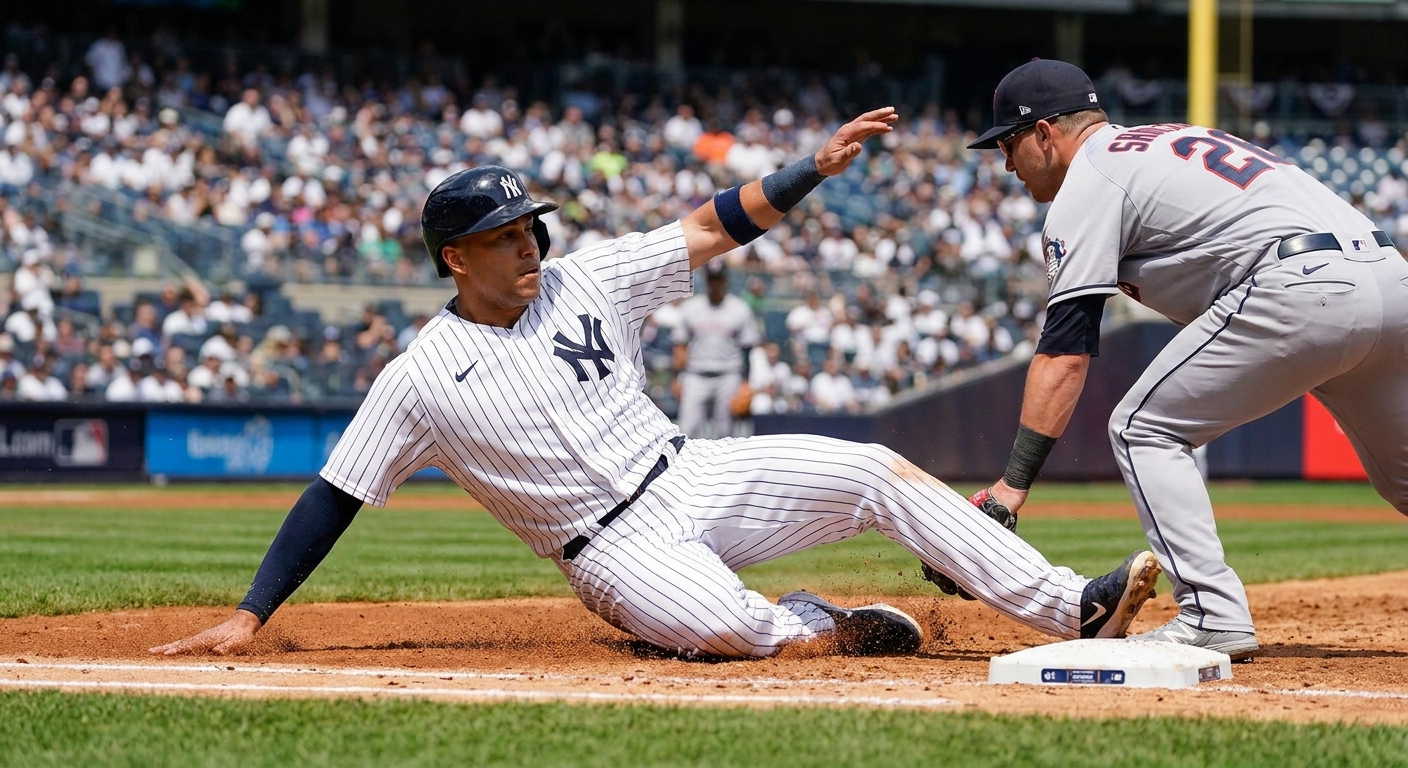
Nylon is inherently much stretchier than polyester, but evaluating Polyester vs Nylon for baseball uniforms reveals that both fabrics achieve excellent athletic flexibility when blended with elastane or knitted into high-performance mechanical stretch structures. Players require maximum range of motion to swing, run, and slide without fabric restriction. This mechanical flexibility is critical to preventing athletic injury on the diamond.
Raw nylon polymer boasts high natural elongation, returning to its exact shape without permanent deformation. Polyester can achieve a similar performance level when blended with spandex, creating a snug but flexible fit. Choosing the right stretch composition keeps the uniform sleek and functional throughout the season.
Does nylon offer superior natural stretch?
Nylon fibers can stretch significantly before reaching their breaking point, providing an elastic recovery that is ideal for compression wear. This high flexibility allows players to sprint and dive with total freedom.
Think about it:
- Natural polymer elasticity reduces the need for heavy spandex blends.
- Excellent rebound memory prevents saggy elbows and knees over time.
- Form-fitting knits improve aerodynamics and player confidence during sprints.
How does polyester match this elasticity?
To compete with nylon’s stretch, polyester fabrics utilize dual-knit interlock or circular mesh structures blended with spandex. These engineered knits offer multi-directional stretch while maintaining a lightweight feel.
Best of all:
- Polyester-spandex blends provide comfortable four-way stretch capabilities.
- Mechanical knits eliminate extra weight while preserving high breathability.
- Structured elasticity supports key muscle groups during explosive athletic moves.
| Stretch Type | Polyester (88/12 Spandex) | Nylon (88/12 Spandex) | |
|---|---|---|---|
| Elastic Recovery | Good (~92%) | Superior (~98%) | |
| Fabric Drape | Structured & Crisp | Soft & Flowing | |
| Stretch Range | Moderate-High (4-way) | Extreme (4-way compression) |
The physical data confirms that while nylon provides the best raw mechanical stretch, polyester-spandex blends offer highly reliable performance.
Key Takeaway: Specifying high-stretch fabrics ensures that players maintain their explosive agility without uniform restrictions.
Who wins Polyester vs Nylon for baseball uniforms durability?
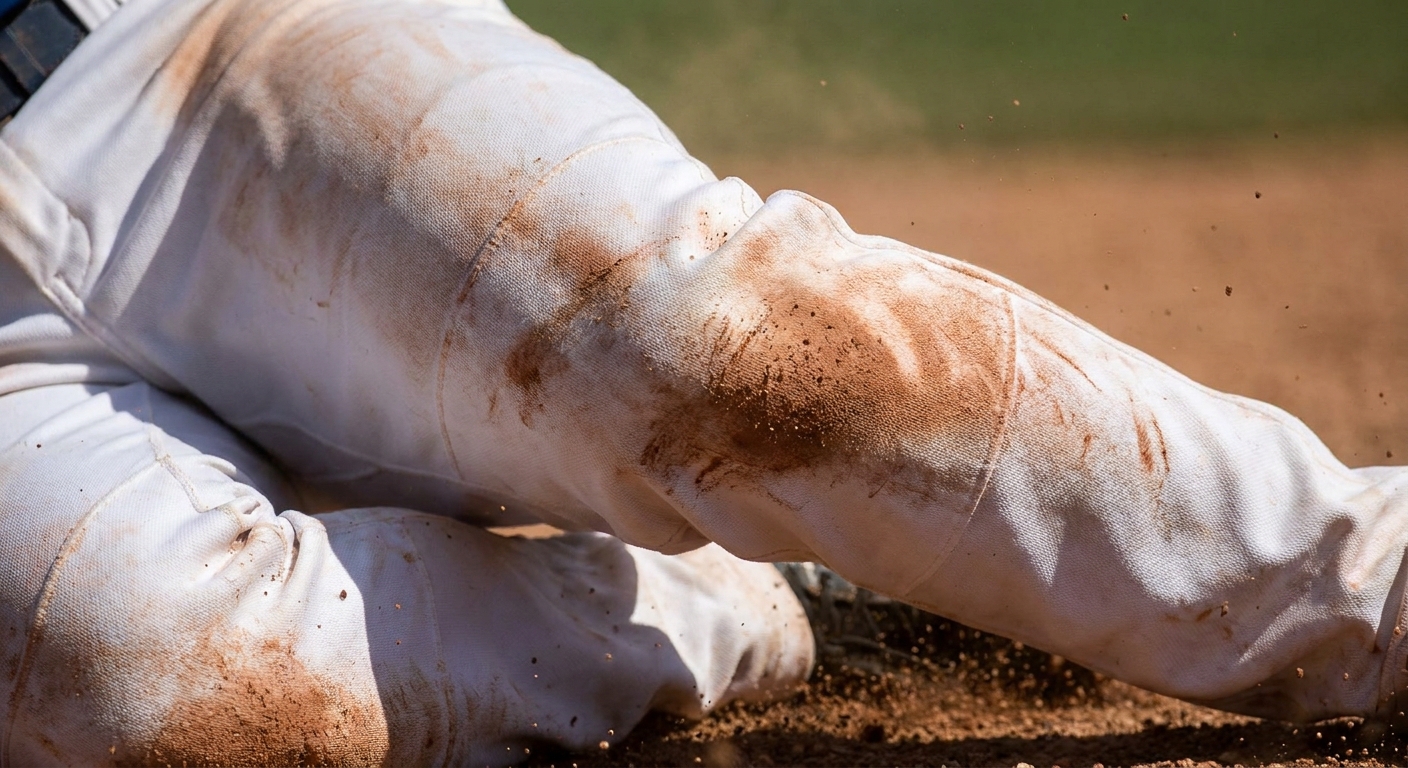
Nylon wins the direct durability matchup of Polyester vs Nylon for baseball uniforms due to its exceptional tensile strength and superior resistance to friction-induced tearing during slides. However, polyester remains highly durable against environmental factors like solar UV radiation and acidic sweat. Sourcing coordinators must look at both mechanical and chemical wear when evaluating long-term performance.
A uniform that splits during a slide is a major liability for any professional or youth sports club. Nylon fabrics are built to endure repetitive impact against clay, turf, and grass. Polyester remains a formidable contender by resisting mildew, stretching, and chemical laundry cycles.
How does sliding impact fabric integrity?
Base sliding subjects the uniform pants to high-speed friction, which quickly thins out and tears low-quality athletic knits. Nylon’s dense molecular structure absorbs this abrasive energy, shielding the athlete’s skin.
Here’s the deal:
- High-abrasion resistance prevents holes in knees and sliding zones.
- Smooth outer fibers minimize clay and dirt particles embedding in the knit.
- Double-reinforced knees are easily crafted with high-denier nylon panels.
Does UV exposure weaken these synthetics?
Direct sunlight and UV rays degrade synthetic fibers over a long summer season, leading to brittle threads and color fading. Polyester naturally resists UV degradation, whereas raw nylon degrades and yellowers under intense sun.
More importantly,
- Polyester uniforms retain their tensile strength during bright daytime doubleheaders.
- Nylon requires specialized UV stabilizers during the extrusion process to resist sun damage.
- Stable color fastness ensures team logos remain bright and professional.
| Durability Metric | Polyester (High GSM) | Nylon (High Denier) | |
|---|---|---|---|
| Tensile Strength | Very Good | Excellent (Industry Leader) | |
| UV Resistance | Excellent (Inherent) | Moderate (Requires Stabilizers) | |
| Pilling Resistance | Good (Grade 4) | Excellent (Grade 5) |
The durability tests prove that nylon excels in pure mechanical strength, while polyester leads in long-term weather resistance.
Key Takeaway: Using nylon reinforcement on pants prevents frequent team apparel replacements, saving sports clubs thousands in annual maintenance.
How dry are Polyester vs Nylon for baseball uniforms?
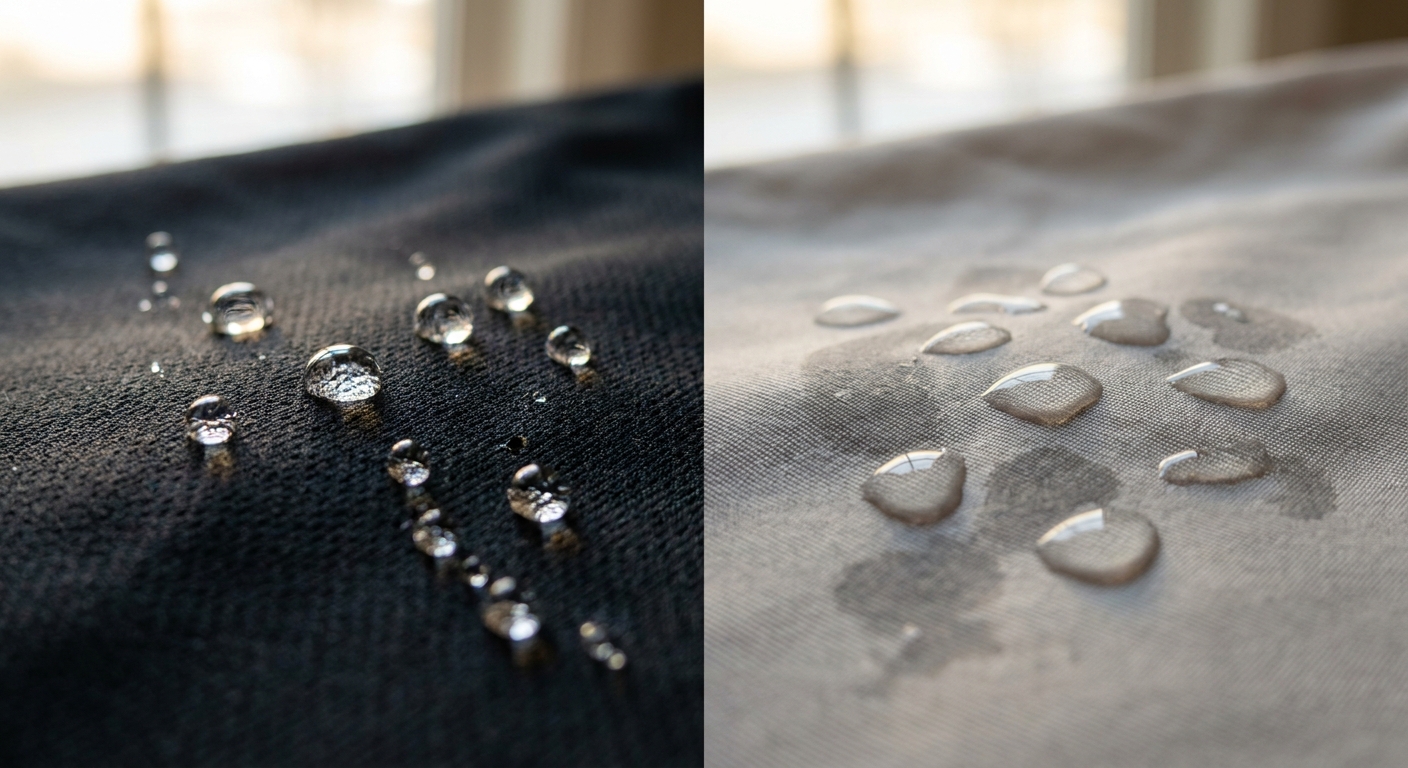
Polyester stays significantly drier than nylon when comparing Polyester vs Nylon for baseball uniforms because it is highly hydrophobic and absorbs less than one percent of its weight in water. This ensures that sweat is instantly transported away from the skin and evaporated into the air. Nylon absorbs up to four times more moisture, which can make it feel heavy and clingy on hot, humid days.
Sweat management is crucial for keeping players comfortable during long, hot doubleheaders. Polyester’s low moisture regain means the jersey remains lightweight even during peak physical output. Choosing a fabric with fast drying times is essential to maintaining athletic focus.
What is the physics of moisture wicking?
Moisture-wicking fabrics use capillary action to pull sweat through micro-channels in the yarn to the outer surface. Polyester’s dry fiber profile facilitates this process much faster than moisture-absorbing nylon.
Look at it this way:
- Hydrophobic fibers push liquid water outward instead of absorbing it.
- Specialized cross-sections (like W-shape fibers) maximize the evaporation surface.
- Players experience dry, friction-free comfort that prevents skin chafing.
Can you prevent jersey odor buildup?
Damp athletic gear is a breeding ground for bacteria, which leads to persistent post-game odors that are difficult to wash out. Polyester jerseys are often treated with silver-ion antimicrobial finishes to solve this problem.
Think about it:
- Antimicrobial finishes prevent odor-causing bacteria from colonizing the damp knit.
- Silver-ion treatments bond permanently to the polyester fibers during dyeing.
- Odor-free fabrics extend the shelf life and wearability of team uniforms.
| Property | Polyester Wicking Knit | Nylon Performance Knit | |
|---|---|---|---|
| Water Absorption Rate | < 0.5% | 4.0% – 4.5% | |
| Drying Speed | Extremely Fast (15 mins) | Moderate (35-45 mins) | |
| Cling Risk when Wet | Low | High |
The physics of moisture management highlights why polyester remains the standard choice for active athletic jerseys.
Key Takeaway: Selecting polyester uniforms keeps athletes dry and lightweight, improving on-field thermal regulation during high-heat matches.
What is Polyester vs Nylon for baseball uniforms B2B cost?
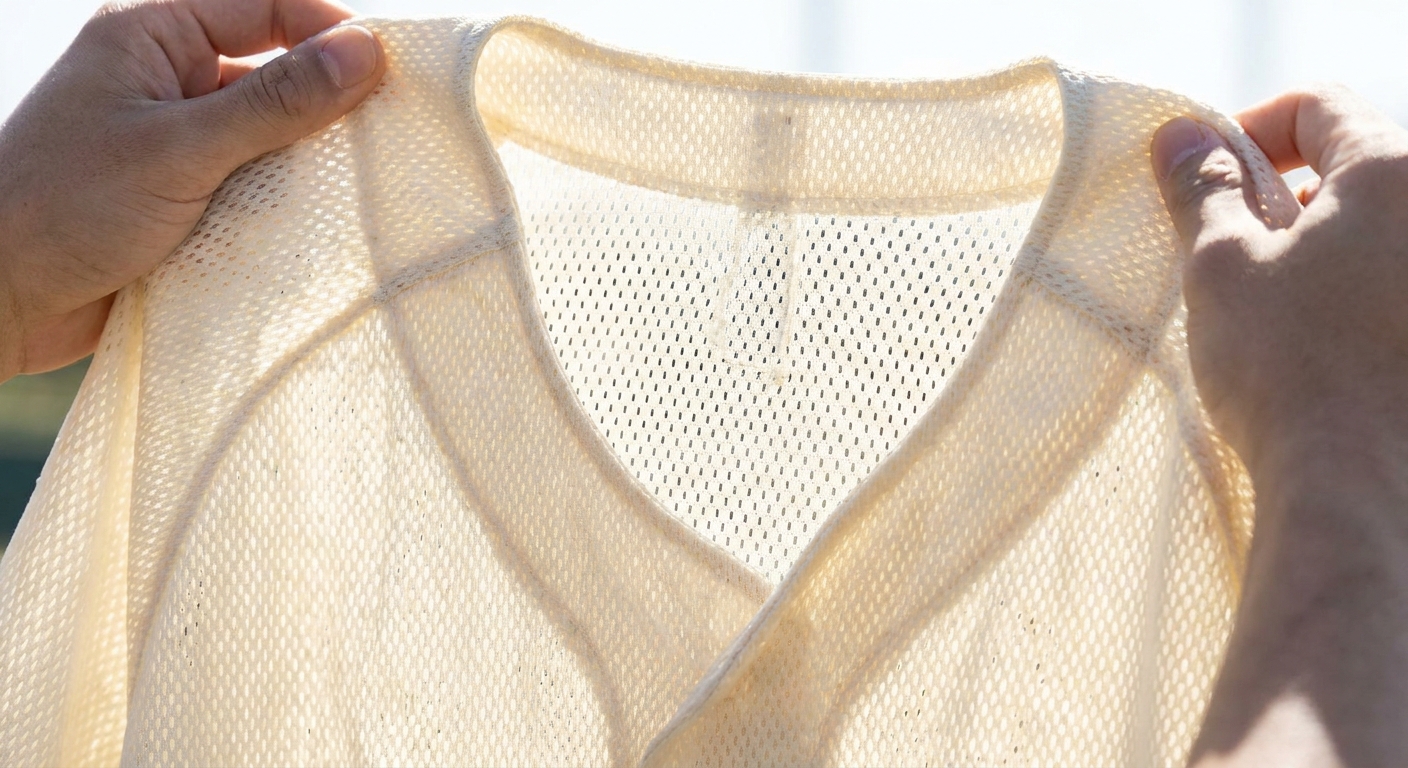
Polyester is substantially more cost-effective than nylon when evaluating Polyester vs Nylon for baseball uniforms in B2B markets, offering much lower raw material and manufacturing costs. Sports apparel brands can maximize their profit margins by sourcing polyester for large-volume custom uniform runs. Nylon requires complex chemical processing and extrusion, which increases its market price.
For youth leagues, school sports teams, and recreational clubs, budget is a major deciding factor. Sourcing polyester allows B2B buyers to acquire premium-quality gear at a fraction of nylon’s premium cost. Understanding this pricing structure helps you build competitive, high-margin product offerings.
Why is polyester cheaper to manufacture?
The global supply chain for polyester is highly optimized, keeping raw material costs low for mills and factories. Its straightforward chemical processing allows for high-speed, high-efficiency textile production.
Here’s the deal:
- Abundant polymer raw materials keep production pricing highly predictable.
- Lower melting points reduce energy consumption during fiber extrusion.
- High-efficiency vertical integration lowers wholesale minimum order quantities.
What is the return on investment over time?
While nylon pants require a higher upfront investment, their resistance to tearing reduces replacement rates, improving long-term value. Polyester jerseys provide a high ROI because their sublimation prints do not peel or fade.
Best of all:
- Fewer mid-season uniform replacements keep overall team budgets stable.
- Sublimated polyester jerseys look brand-new for multiple seasons.
- Hybrid uniform systems (polyester tops, nylon bottoms) balance upfront costs and durability.
| Expense Metric | Polyester Uniforms | Nylon Uniforms | |
|---|---|---|---|
| Raw Fabric Cost (per kg) | Low to Moderate | High to Premium | |
| Production Energy Needed | Low | High | |
| Overall Sourcing ROI | Outstanding | Good (High-wear zones) |
Sourcing data confirms that polyester delivers the most competitive unit cost, while nylon remains a specialized premium option.
Key Takeaway: Sourcing polyester jerseys maximizes profit margins, enabling B2B buyers to supply affordable, high-quality team packages.
Can you dye Polyester vs Nylon for baseball uniforms easily?
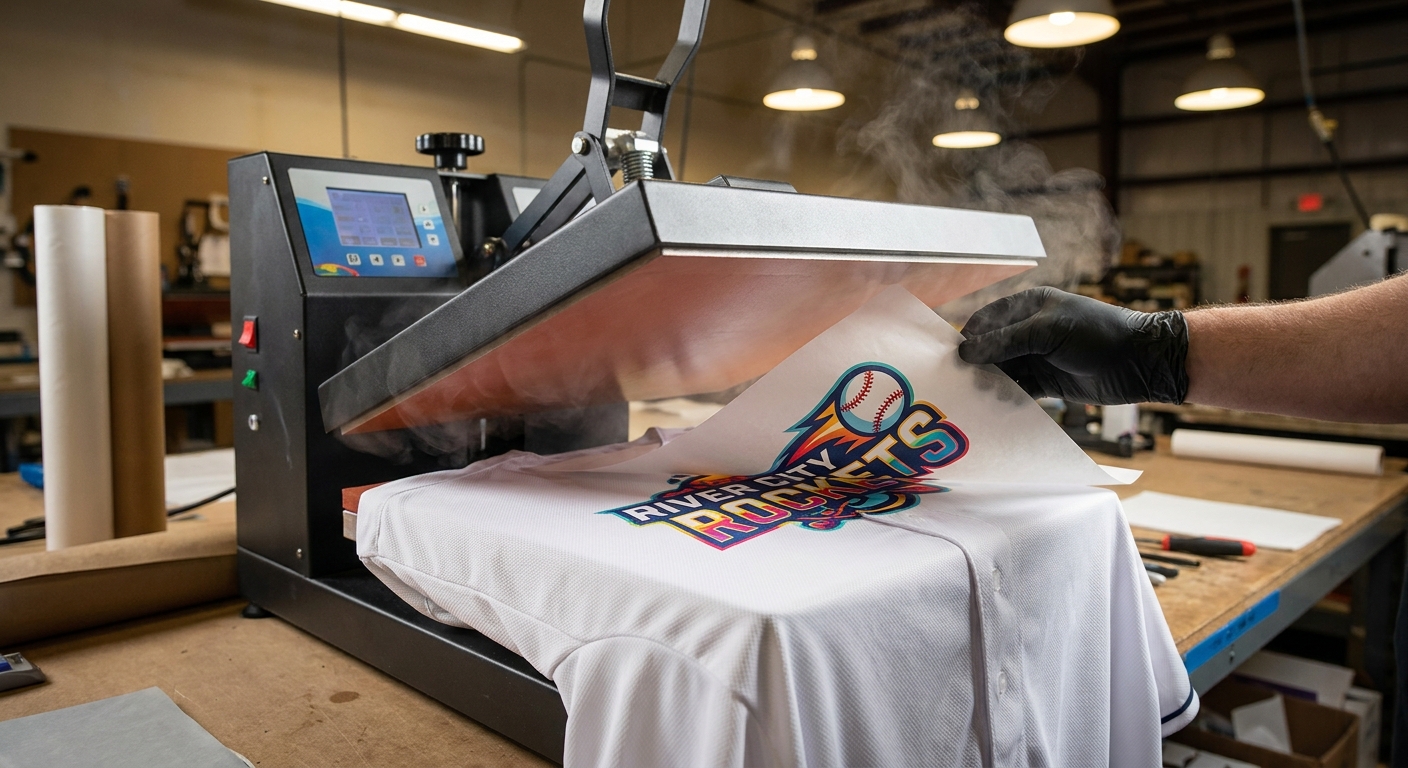
Polyester is exceptionally easy and highly reliable to dye using modern sublimation techniques, whereas Polyester vs Nylon for baseball uniforms shows that nylon requires complex acid dyes that are much harder to manage and prone to bleeding. Sublimation printing actually fuses the ink directly into the polyester fibers under high heat. This creates brilliant, long-lasting team designs that will never crack, peel, or fade.
Nylon cannot withstand the high temperatures of dye sublimation without melting or distorting. Instead, nylon relies on traditional screen printing or low-temperature heat-transfer vinyl for customization. This makes polyester the preferred choice for modern jerseys with complex logos.
How does dye sublimation benefit team design?
Sublimation printing allows for infinite graphic possibilities, from intricate pinstripes to detailed gradients. The gaseous ink bonds directly with the polyester molecules, leaving the fabric soft and highly breathable.
Truth be told:
- Unlimited color variations and detailed graphics can be printed on a single jersey.
- Zero heavy ink layers on the chest improve overall player comfort.
- Personalized player names and numbers do not peel off in the wash.
What are the color fastness limitations?
Color fastness refers to a fabric’s ability to retain its color when washed or exposed to sun. Polyester achieves a fastness rating of Grade 4.0 or higher, whereas nylon can suffer from dye migration and sun fading.
Look at it this way:
- Sublimated polyester resists fading under intense summer stadium lighting.
- Nylon requires specialized chemical binders to prevent bright colors from bleeding.
- Consistent quality control prevents white text from turning pink or grey.
| Coloring Method | Polyester Sublimation | Nylon Acid Dyeing | |
|---|---|---|---|
| Graphic Capability | Unlimited digital details | Solid colors & basic prints | |
| Heat Resistance | High (Up to 400°F) | Low (Scorches at high heat) | |
| Wash Color Fastness | Excellent (Grade 4.5) | Moderate (Grade 3.5) |
This chemical comparison explains why custom sports jersey manufacturers almost exclusively choose polyester for dye sublimation.
Key Takeaway: Specifying sublimated polyester jerseys ensures vibrant, crisp branding that survives endless wash cycles without fading.
How to print Polyester vs Nylon for baseball uniforms?
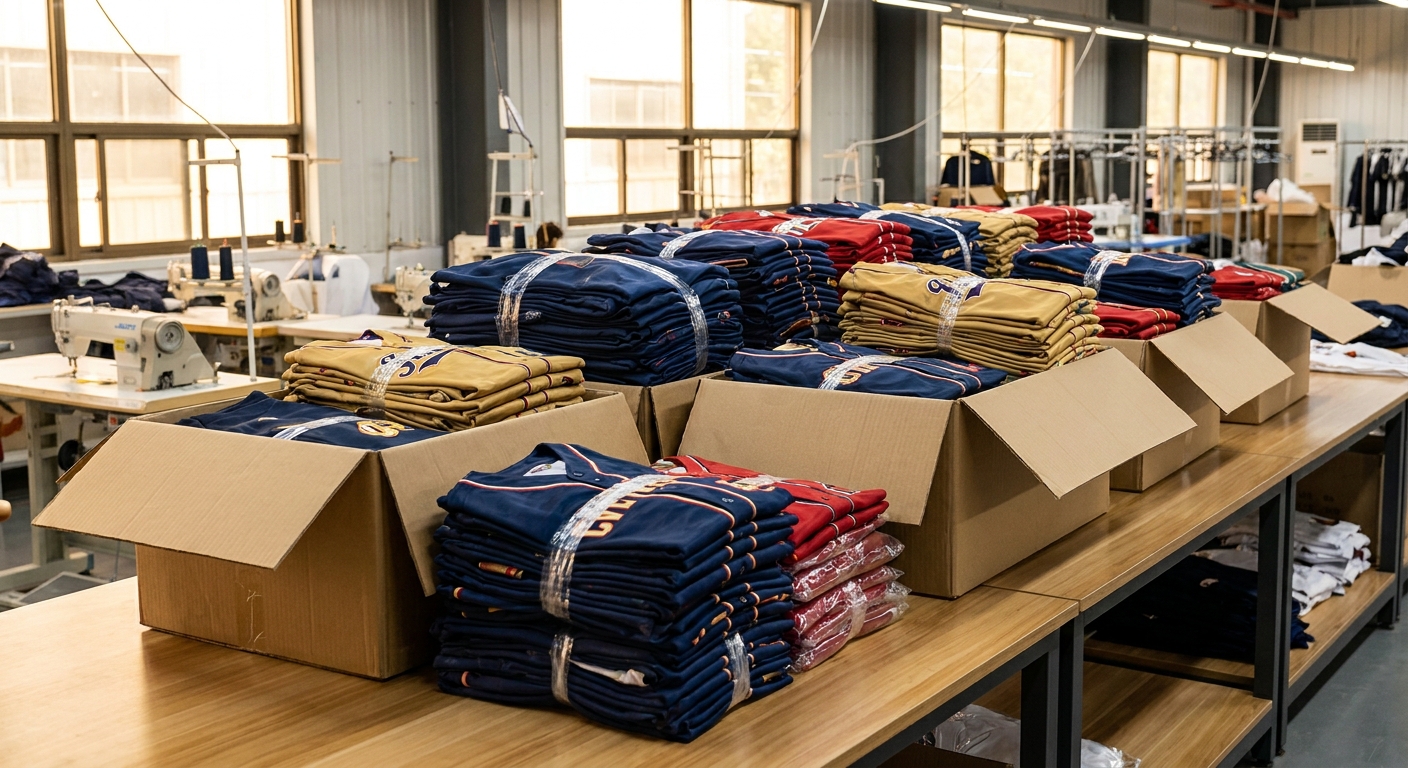
Printing on Polyester vs Nylon for baseball uniforms requires choosing between high-temperature dye sublimation for polyester and low-temperature screen printing or heat transfers for nylon. Because polyester is highly heat-resistant, it easily survives the high-temperature press cycles needed to fuse athletic graphics. Nylon requires low-curing inks and lower temperatures to prevent fabric shrinkage, warping, or scorch marks.
A printing mistake can ruin an entire batch of expensive team uniforms. Understanding the physical limits of each fiber helps printing shops avoid costly production delays. Selecting the right ink formulations ensures clean, professional logos that stay secure.
How do you print on performance polyester?
Printing on polyester is highly efficient and compatible with modern high-speed dye sublimation machinery. For screen printing, you must use low-bleed inks with carbon barriers to prevent the polyester dyes from bleeding into white ink.
Here’s the deal:
- Dye sublimation embeds the design directly into the performance fibers.
- Anti-migration barrier inks prevent dark jersey dyes from bleeding into white numbers.
- High-heat tolerance allows print shops to run faster curing cycles.
What is the best printing method for nylon?
Nylon requires careful, low-temperature screen printing using specialized plastisol or water-based inks with nylon catalysts. If you apply too much heat during curing, the nylon fibers will warp and shrink.
Think about it:
- Low-cure inks cure at 270°F, protecting nylon from heat distortion.
- Nylon catalysts improve ink adhesion to the slick, low-friction fabric surface.
- Heat-transfer vinyl must use specialized adhesives designed for nylon.
| Printing Aspect | Polyester Printing | Nylon Printing | |
|---|---|---|---|
| Preferred Printing | Dye Sublimation | Screen Print with Catalyst | |
| Curing Temp Range | 300°F – 400°F (High) | 250°F – 280°F (Low) | |
| Adhesion Reliability | Inherent Fusion | Requires chemical bonding |
This technical distinction shows that polyester supports a much wider and more reliable range of printing methods.
Key Takeaway: Using sublimated polyester avoids peeling letters, ensuring team uniforms maintain a professional look all year.
How to wash Polyester vs Nylon for baseball uniforms?
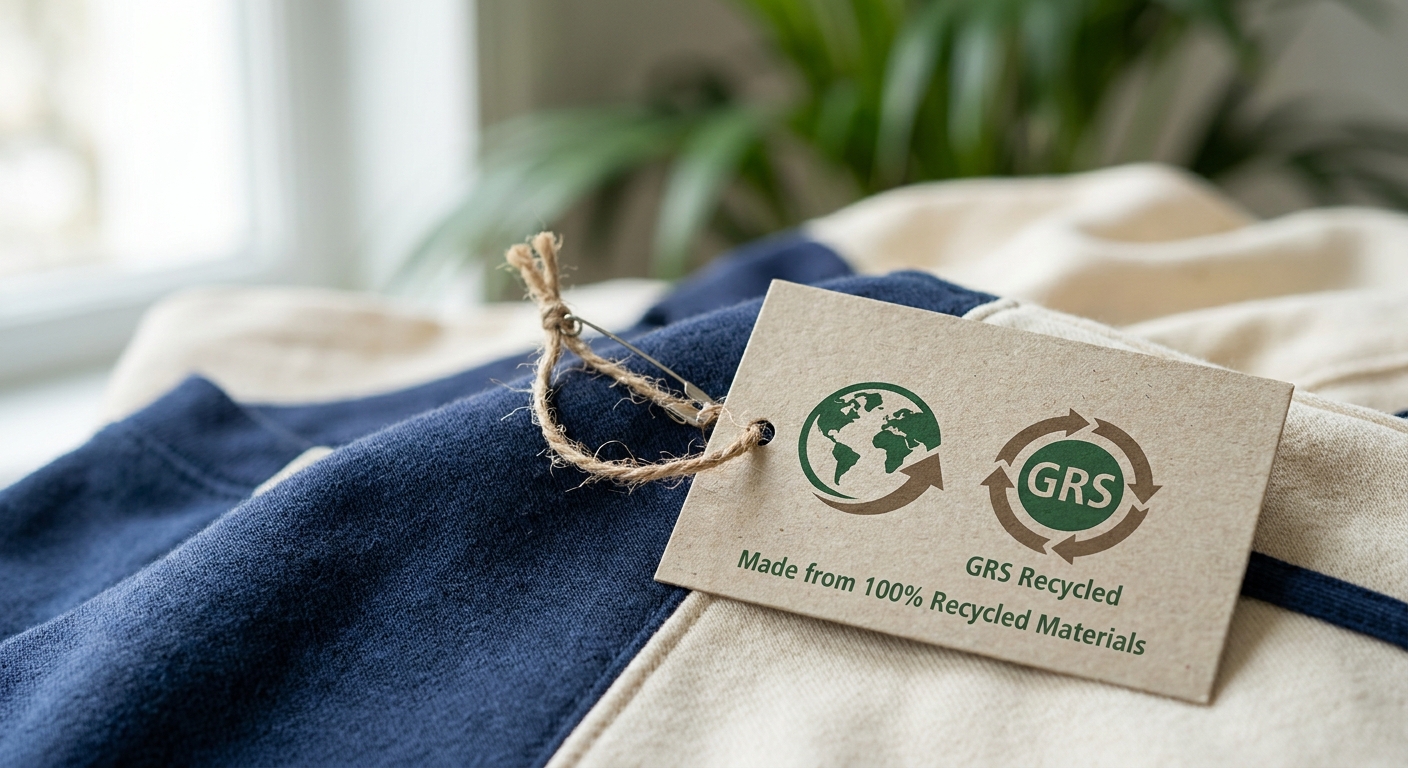
Washing Polyester vs Nylon for baseball uniforms is straightforward, but polyester is much easier to maintain because it naturally resists stains and tolerates standard hot wash cycles, while nylon requires delicate, cold-water washing to prevent fiber damage. Red clay, mud, and grass stains are notoriously difficult to clean after a baseball game. Because polyester is highly hydrophobic, it prevents dirty water from penetrating the fiber core, allowing stains to release easily.
Nylon absorbs water, meaning mud and clay stains can easily penetrate and dye the fibers permanently if not treated immediately. Equipment managers must use specific washing formulas to protect the structural integrity of nylon pants. Following proper laundering guidelines keeps uniforms looking bright and professional.
What is the best way to remove clay stains?
Saturated red clay can easily ruin white baseball uniforms if the mud is allowed to dry into the fabric. Scent-free, enzyme-based pre-treatments are highly effective at breaking down organic mud and grass stains.
Here is the deal:
- Enzyme-based pre-soaks break down tough grass and soil bonds.
- Warm water washes release clay particles from polyester’s hydrophobic fibers.
- Harsh chlorine bleaches must be avoided, as they yellow and weaken nylon fibers.
How should you dry these synthetic fabrics?
Excessive heat in industrial dryers can weaken synthetic fibers, leading to shrinkage and wrinkled logos. Polyester dries very quickly and can handle low tumble-drying, whereas nylon is best air-dried.
Look at it this way:
- Polyester’s low moisture absorption allows jerseys to dry on a low heat cycle in minutes.
- Nylon pants should be air-dried to preserve their natural elastic memory.
- Never use high heat settings, which can melt synthetic fibers and curl printed logos.
| Laundering Factor | Polyester Wash Guidelines | Nylon Wash Guidelines | |
|---|---|---|---|
| Wash Temp | Warm (Up to 104°F) | Cool (Under 86°F) | |
| Stain Release | High (Hydrophobic fibers) | Moderate (Prone to staining) | |
| Drying Method | Tumble Dry (Low) | Air Dry / Tumble Dry (No Heat) |
Establishing strict washing protocols ensures that both materials retain their structural shape and color brightness.
Key Takeaway: Following correct laundry guidelines extends uniform life and keeps white pants looking pristine season after season.
Which is best: Polyester vs Nylon for baseball uniforms?
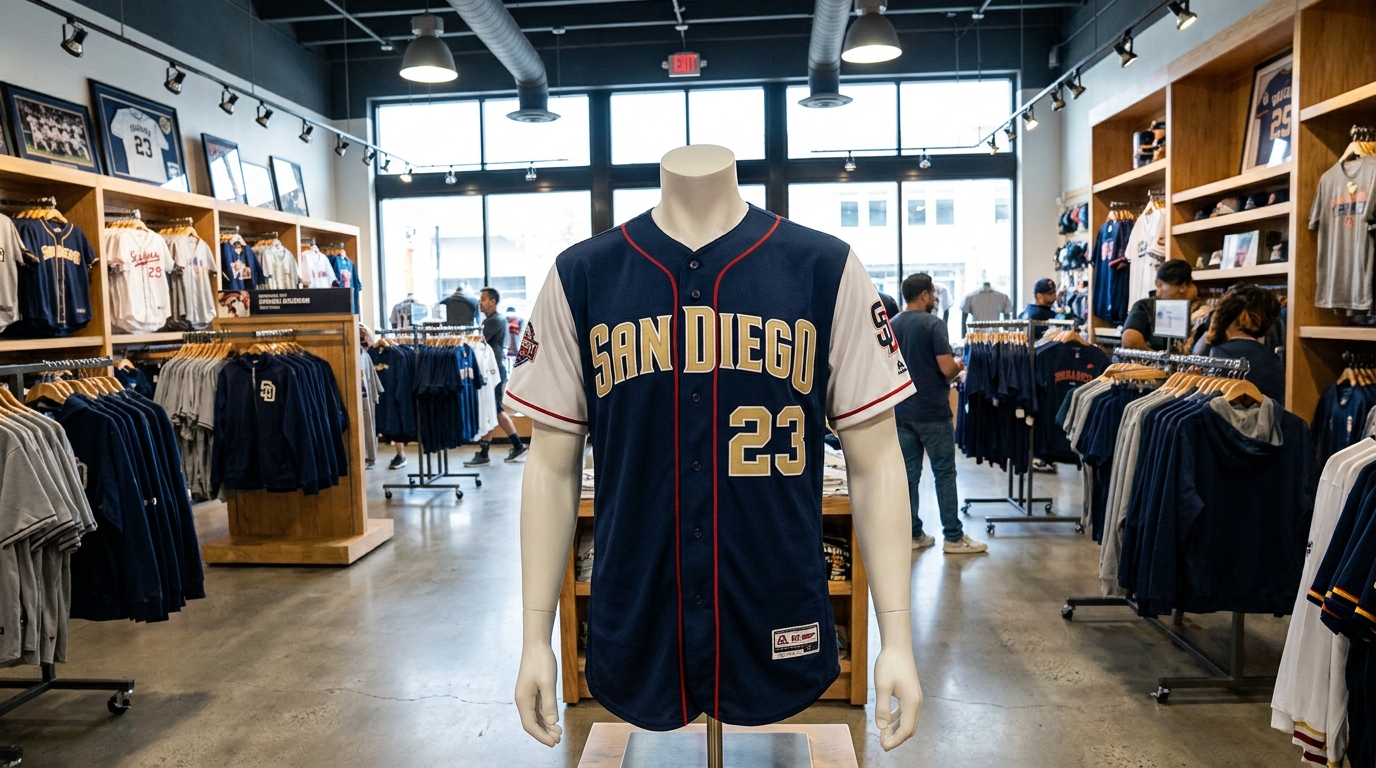
Sourcing polyester is ultimately the best choice for baseball jerseys due to its superior breathability, while nylon remains superior for sliding pants, making a hybrid uniform package the best option when analyzing Polyester vs Nylon for baseball uniforms. This hybrid design ensures that each area of the uniform uses the fabric best suited to its physical stress.
Sourcing coordinators can optimize both performance and budget by selecting the right fabric mix. Utilizing polyester for athletic tops keeps players dry, comfortable, and highly visible. Choosing nylon for pants prevents tears, reducing the need for mid-season gear replacements.
Why choose a hybrid fabric uniform system?
A hybrid uniform system combines the best qualities of both synthetics, deploying polyester where cooling is needed and nylon where impact occurs. This strategic design ensures maximum comfort and longevity on the field.
Best of all:
- Polyester jerseys keep players cool, dry, and lightweight during play.
- Nylon pants withstand high-velocity sliding on abrasive clay fields.
- Strategic fabric pairing maximizes team apparel budgets and athlete performance.
What should B2B sportswear buyers consider?
Sourcing coordinators must evaluate certified performance fabrics, low minimum order quantities, and vertical manufacturing capabilities. Partnering with a trusted, certified manufacturer guarantees fabric quality and color consistency.
Think about it:
- GRS and OEKO-TEX certifications confirm environmental compliance.
- Flexible MOQ limits allow for low-risk testing of new uniform designs.
- Consistent dye-lot quality prevents mismatching colors between tops and bottoms.
| Uniform Part | Recommended Fabric | Key Performance Benefit | |
|---|---|---|---|
| Jerseys / Tops | 100% Polyester Mesh / Interlock | Superior wicking & endless custom sublimation | |
| Pants / Bottoms | Heavyweight Nylon / Nylon Blend | Extreme abrasion protection for sliding | |
| Undergarments | Polyester-Spandex Blend | Lightweight, flexible compression |
Sourcing data confirms that combining polyester tops with nylon bottoms creates the ultimate athletic performance uniform.
Key Takeaway: Sourcing a hybrid uniform package delivers professional-grade durability and player comfort while maximizing purchasing budgets.
Conclusion
Selecting the right athletic fabric can be a major challenge, but analyzing moisture control, durability, custom printing, and cost makes the choice clear. Polyester jerseys offer unmatched sublimation graphics and dry speeds, while nylon pants provide the tough sliding protection athletes need to perform confidently. Sourcing from a factory that understands these technical differences ensures your products look great and hold up on the field.
By partnering with a vertically integrated manufacturer like MAKITAPE, sportswear brands can source GRS-certified recycled polyester, high-performance moisture-wicking interlock, and premium nylon-rich blends. We make sourcing easy with flexible minimum orders starting at just 100 kg, in-house knitting and dyeing, and dual-check quality assurance that guarantees color consistency and mechanical strength.
We are dedicated to providing global athletic brands with eco-friendly, certified, high-performance textiles that help athletes perform at their best. To request custom samples, verify fabric specs, or receive a quick bulk quote, contact us today and let us bring your team apparel vision to life.
FAQ
Can I sublimate on nylon baseball uniforms?
No, sublimating on nylon is not recommended because nylon’s lower heat tolerance means the high temperatures required for sublimation can scorch, melt, or shrink the fabric. For vibrant, full-coverage sublimation prints, polyester is the industry-standard choice.
What’s the best fabric weight for baseball jerseys?
A lightweight polyester knit ranging between 140 to 180 GSM is the best choice for baseball jerseys. This weight provides the perfect balance of breathability and structure, ensuring jerseys remain durable without weighing players down on hot days.
How do I know if my uniform fabric is sustainable?
You can confirm sustainability by checking if your fabric supplier has GRS (Global Recycled Standard) and OEKO-TEX Standard 100 certifications. Manufacturers like MAKITAPE provide certified recycled polyester and nylon blends made from post-consumer waste that match virgin fibers in performance and feel.
Can I mix polyester and nylon in a single uniform set?
Yes, mixing these fabrics is highly recommended to get the best performance from each. Using polyester for lightweight, breathable jerseys and nylon for durable, abrasion-resistant pants offers the ultimate combination of comfort, color customization, and sliding protection.