
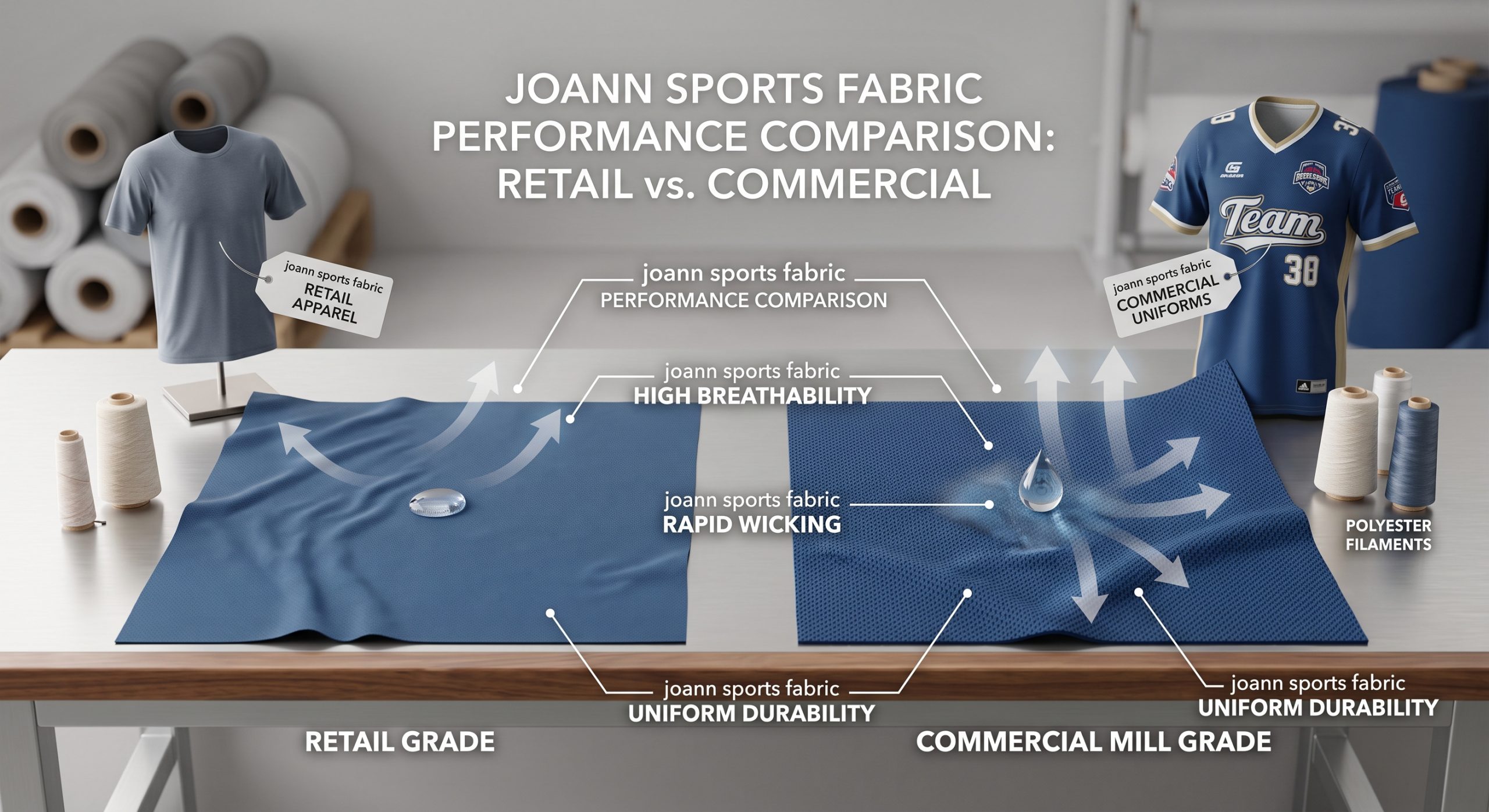
Joann sports fabric refers to versatile athletic textiles engineered by blending natural cotton fibers with synthetic polymers for custom apparel. Sportswear buyers face severe frustration when retail garments stretch out of shape after single washes. Faded printed graphics coupled with heavy sweat accumulation quickly destroy player confidence during intense games. Selecting specialized technical textiles like joann sports fabric solves these performance issues by combining durable fiber stability with rapid moisture dissipation channels.
What Is Joann Sports Fabric and How Is It Knitted?
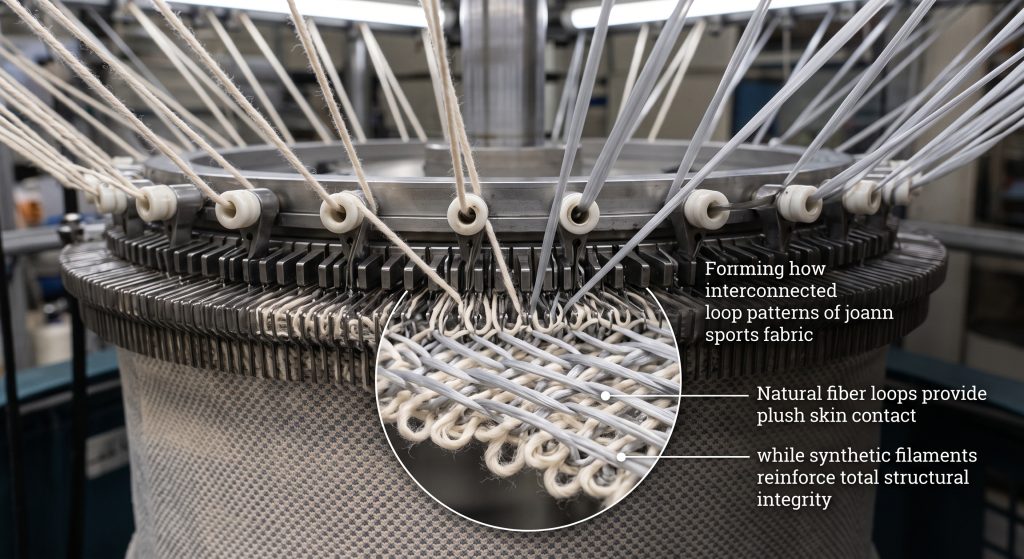
joann sports fabric is produced on circular knitting machines that interlace soft cotton yarns with resilient synthetic fibers. Mill technicians feed continuous yarn strands through needle beds, creating interconnected loop patterns. Natural fiber loops provide plush skin contact while synthetic filaments reinforce total structural integrity. Here is the deal. Combining natural cotton with synthetic polymers yields resilient activewear textiles.
How Are Cotton Yarns Blended with Synthetics?
Spinning plants blend ring-spun cotton with durable polyester strands.
- Natural cotton fibers deliver breathable comfort against skin
- Synthetic poly threads increase tensile stretch resistance
- Flexible spandex filaments enable dynamic four-way motion
Guess what? Hybrid yarn blends keep activewear looking crisp across full athletic seasons.
Why Does Knit Pattern Influence Activewear Quality?
Knitting structures determine how heat leaves active bodies.
- Open hole grids accelerate continuous air passage
- Raised surface knots lift damp cloth off human skin
- Tight interlock loops prevent fabric tearing during play
Think about it. Choosing improper knits ruins player comfort faster than improper garment sizing.
Key Takeaway: Combining cotton with synthetic yarns creates durable activewear textiles with balanced stretch and comfort.
| Material Component | Cotton Fiber Yarns | Polyester Filaments |
| Primary Function | Natural Skin Comfort | Structural Strength |
| Moisture Action | Absorbs Sweat | Dries Fast |
Analyzing yarn properties reveals why blended constructions outperform single-fiber fabrics during competitive matches.
Why Do Buyers Compare Joann Sports Fabric Alternatives?
Apparel managers compare joann sports fabric options because retail grade textiles often lack the commercial weight and stretch recovery required for team uniforms. Off-the-shelf retail swatches frequently suffer from inconsistent dyeing and fabric shrinkage after laundering. B2B buyers require technical textile mill solutions that withstand rigorous athletic laundering. What is the real story? Factory direct textiles offer higher commercial specifications for demanding athletic apparel brands.
What Problems Arise from Retail Grade Textiles?
Retail fabrics often degrade under heavy athletic demands.
- Inconsistent material weight leads to garment batch variance
- Low colorfastness causes vibrant team dyes to fade rapidly
- Poor elastic memory causes sagging armholes and necklines
Ready for the truth? Retail fabrics simply cannot support professional athletic performance needs.
How Do Factory Textiles Improve Uniform Durability?
Engineered mill fabrics utilize high-density knitting techniques.
- Reinforced yarn knots resist turf abrasion during slides
- Color locking treatments preserve bright team shades
- Dimensional stability prevents shrinking in warm washing
Check this out. Direct mill sourcing guarantees professional consistency across full production runs.
Key Takeaway: Sourcing commercial grade performance textiles prevents uniform sagging and dye fading across long seasons.
| Feature Grade | Retail Consumer Grade | Commercial Mill Grade |
| Elastic Memory | Low Recovery Rate | High Recovery Rate |
| Dye Fastness | Fades Quickly | Washing Resistant |
Reviewing performance metrics confirms commercial mill fabrics provide superior durability for athletic team uniforms.
How Does Birdseye Mesh Upgrade Joann Sports Fabric?
Birdseye mesh upgrades joann sports fabric by incorporating geometric micro-perforations that accelerate air ventilation across active bodies. Knitting needles form tiny diamond-shaped openings throughout the fabric face during production. Sweat vapors escape through these open pinholes while cool air enters continuously. Here is the kicker. Micro-hole mesh structures lower garment weight without sacrificing textile strength.
What Makes Diamond Micro-Holes Highly Breathable?
Diamond pinholes act as physical vents for trapped body heat.
- Perforated channels permit direct airflow to skin
- Low wind resistance cooling keeps core body temperatures stable
- Lightweight hole arrangement reduces total garment mass
Notice something? Open mesh structures keep players far cooler than flat knitted fabrics.
Why Is Birdseye Mesh Ideal for Running Apparel?
Endurance athletes require fast heat dissipation to maintain sprint speeds.
- Continuous ventilation prevents thermal heat buildup
- Fast moisture evaporation stops heavy wet fabric drag
- Flexible mesh construction moves naturally with body motion
This is where it gets interesting. Distance runners stay lighter when wearing perforated mesh jerseys.
Key Takeaway: Birdseye mesh maximizes ventilation through micro-perforations, making it the top choice for running uniforms.
| Textile Trait | Birdseye Mesh Knit | Flat Jersey Knit |
| Airflow Capacity | High Direct Passage | Restricted Air Flow |
| Fabric Weight | Ultra Lightweight | Medium Mass |
Measuring air passage rates proves micro-hole mesh provides faster thermal release than flat surface knits.
How Does Pique Structure Improve Joann Sports Fabric?
Pique structure improves joann sports fabric by introducing a raised waffle pattern that lifts damp cloth away from sweaty skin. Specialized knitting tucks build parallel cords across the textile surface. This geometric texture forms tiny air pockets that vent body heat indirectly. Want to know the best part? Structured pique knits maintain crisp tailored shapes on staff polo shirts.
What Creates the Textured Geometric Waffle Weave?
Tuck stitches create elevated geometric ridges across the fabric face.
- Dimensional waffle ridges reduce direct fabric contact with skin
- Structured cord knitting holds collar shapes firmly upright
- Heavy yarn tucks provide high resistance against surface tears
Look at this. Textured pique gives coaching apparel a professional, custom-tailored appearance.
Why Do Coaching Staff Polos Prefer Pique Knits?
Sideline managers need smart attire that tolerates outdoor weather.
- Raised waffle geometry creates space for body warmth to vent
- Dense knit body supports heavy embroidered team crests
- Durable surface cords resist snags from outdoor equipment
By the way. Pique apparel offers executive style along with reliable daily durability.
Key Takeaway: Pique waffle knits deliver structured elegance and snag resistance, ideal for sideline coaching polo shirts.
| Metric | Pique Waffle Knit | Smooth Jersey |
| Surface Texture | Raised Ridge Grid | Flat Smooth |
| Garment Structure | Rigid Tailored | Soft Drape |
Comparing structural stability scores shows why pique knits hold tailored garment shapes longer than smooth fabrics.
Which Joann Sports Fabric Offers Better Air Ventilation?
Birdseye mesh joann sports fabric offers higher direct air ventilation than pique knits due to open micro-perforations. Physical pinholes allow wind currents to flow straight through jersey panels during play. Pique knits rely on indirect surface spacing rather than open physical channels. Here is the truth. Micro-hole mesh dominates summer heat while pique suits moderate temperatures.
How Do Perforated Pinholes Speed Airflow Rates?
Open mesh holes function as direct cooling vents across the torso.
- Unobstructed pathways let body heat escape instantly
- Direct air currents evaporate accumulated surface sweat fast
- Low airflow resistance keeps core body heat manageable
Pay attention here. Open mesh structures outperform closed textures when ambient weather turns hot.
Can Pique Surface Ridges Vent Heat Indirectly?
Pique waffle textures create small air gaps between skin and cloth.
- Raised ridges lift damp fabric off active human pores
- Air space underneath allows sweat evaporation without open holes
- Dense weave shields athletes from chilly autumn wind drafts
The point is. Pique works best in cool weather while mesh leads in summer heat.
Key Takeaway: Birdseye mesh leads in direct air passage, while pique knit offers balanced indirect ventilation for mild weather.
| Ventilation Metric | Birdseye Mesh | Pique Weave |
| Direct Airflow | High Flow Rate | Moderate Flow |
| Cold Draft Defense | Low Shielding | Moderate Defense |
Testing ventilation volume confirms perforated mesh structures release body heat faster than textured waffle knits.
Which Joann Sports Fabric Feels Softest on Sensitive Skin?
Cotton blend joann sports fabric options feel softer on sensitive skin than pure synthetic mesh variants. Natural cotton fibers contain smooth cellular walls that prevent abrasive rubbing during long workouts. Hybrid spinning blends plush cotton with synthetic filaments to eliminate scratchiness. Make no mistake. Natural cotton content prevents painful skin chafe during extended athletic motion.
Why Does Fiber Content Control Surface Friction?
Natural cotton yarn purity stops skin irritation during movement.
- Soft rounded cotton fibers minimize skin friction
- Hypoallergenic yarn traits protect delicate athlete skin
- Hybrid spun yarns deliver smooth plush tactile touch
Here is why that matters. Comfortable players stay focused on winning games instead of adjusting scratchy shirts.
How Does Textile Texture Influence Tactile Touch?
Smooth inner fabric backings slide easily across the human torso.
- Flat inner knit faces prevent armpit skin chafing
- Soft cotton blended yarns cushion physical contact points
- Plush surface texture enhances overall wearing comfort
You might be wondering. Which feel suits your team best? It depends on preference for smooth or textured touch.
Key Takeaway: Cotton blend backings deliver plush skin feel and eliminate chafing during long athletic games.
| Tactile Metric | Cotton Blend Jersey | Pure Synthetic Mesh |
| Skin Friction | Low Abrasion | Mild Abrasion |
| Natural Softness | High Softness | Synthetic Touch |
Evaluating tactile comfort scores confirms cotton-infused knit backings minimize skin friction better than pure synthetics.
How Does Joann Sports Fabric Manage Heavy Perspiration?
Engineered joann sports fabric manages heavy perspiration by utilizing synthetic wicking yarns that draw sweat to outer surface layers. Capillary action channels pull moisture away from human pores before damp cloth clings to skin. Polyester micro-filaments spread liquid across wide surface areas for fast evaporation. Get this. Combining cotton absorbency with poly wicking keeps athletes completely dry.
How Does Capillary Action Drive Sweat Away?
Synthetic micro-filaments pull wetness outward toward open air.
- Microscopic channels move sweat off skin instantly
- Expanded liquid spread speeds up natural air drying
- Dry inner linings eliminate uncomfortable wet garment cling
Here is the secret. Hybrid yarn spinning turns slow-drying cotton into a fast-wicking athletic material.
Why Does Rapid Drying Prevent Garment Cling?
Soggy athletic gear increases runner fatigue and causes skin chafing.
- Fast evaporation keeps uniforms lightweight during long games
- Reduced water retention stops post-game body chills
- Dry textile fibers resist bacterial odor accumulation
Think about that. Dry garments preserve player stamina through multi-hour tournament matches.
Key Takeaway: Capillary action wicks sweat away rapidly, preventing heavy wet garment cling during high-intensity sports.
| Moisture Metric | Pure Natural Cotton | Poly-Cotton Wicking Blend |
| Absorption Speed | Instant Absorption | Rapid Absorption |
| Evaporation Rate | Slow Water Release | Fast Water Release |
Measuring drying speeds demonstrates how hybrid wicking textiles outpace traditional cotton fabrics in moisture management.
Which Joann Sports Fabric Withstands Intense Game Contact?
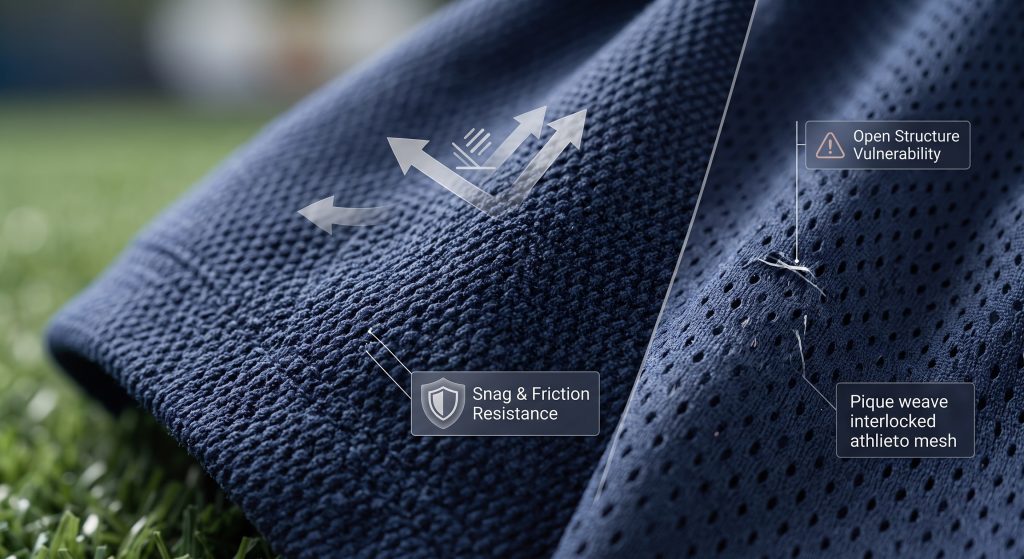
Pique weave joann sports fabric withstands intense game contact far better than delicate open mesh fabrics. Interlocked waffle cords form a defensive barrier against sharp fingernails and turf friction. High thread density prevents loose loops from pulling during aggressive player contact. Truth be told. Contact sports demand structural toughness to keep team uniforms intact.
Which Weave Pattern Shields Threads from Snags?
Tightly bound waffle knots resist surface snagging and thread pulls.
- Dense cord construction withstands sliding tackles on grass
- High seam strength holds team logos and numbers securely
- Abrasion-resistant surface protects textile body from wear
Ready for the truth? Rough contact sports require heavy pique knits to prevent jersey tearing.
How Does Birdseye Structure Handle Pulling Forces?
Perforated mesh relies on elastic stretch to absorb physical pulling.
- Flexible yarn loops stretch without popping underlying seams
- Reinforced mesh borders keep pinholes from expanding under stress
- Lightweight structure offers freedom during quick directional cuts
Kicker time. Birdseye works best for running while pique excels in tackle sports.
Key Takeaway: Pique waffle knits provide maximum snag resistance for contact sports, while birdseye mesh suits non-contact agility.
| Durability Standard | Pique Waffle Weave | Birdseye Mesh Knit |
| Snag Resistance | High Resistance | Moderate Resistance |
| Seam Tensile Strength | Very High | High Elasticity |
Comparing mechanical strength test data reveals pique structures resist surface snagging better than open mesh.
How to Select Joann Sports Fabric for Team Uniforms?
Selecting joann sports fabric requires matching textile breathability and fabric weight with player activity levels. High-speed running athletes require lightweight mesh ventilation to dump heat quickly. Coaching staff and sideline management need structured pique polos for professional appearance. See how it works? Matching sport demands with correct textile geometry guarantees peak athletic performance.
Which Structure Fits High Speed Sprinting Sports?
Endurance athletes need low fabric weight and continuous air passage.
- Select Birdseye mesh for soccer, track, and basketball jerseys
- Choose 140 to 160 GSM weights for maximum summer cooling
- Opt for synthetic poly blends to speed up drying rates
Plain and simple. Low garment mass combined with open mesh keeps sprinters fast.
Which Structure Fits Sideline Management Apparel?
Coaches and team managers require structured shirts that hold shape.
- Choose pique knit for golf polos and staff uniforms
- Select 180 to 220 GSM weights for crisp collar retention
- Opt for cotton blend yarns to maximize standing comfort
Check this out. Pique knits deliver executive style along with activewear durability.
Key Takeaway: Choose birdseye mesh for active player jerseys and pique knits for coaching staff polo shirts.
| Sport Role | Target Fabric Structure | Ideal Weight (GSM) |
| Active Player | Birdseye Mesh | 140 – 160 GSM |
| Sideline Staff | Pique Waffle Weave | 180 – 220 GSM |
Matching specific sport demands with the correct fabric structure guarantees superior comfort and complete team style.
Where Can You Buy Joann Sports Fabric Blends in Bulk?
You buy joann sports fabric blends in bulk by connecting directly with commercial textile manufacturing mills. Direct factory sourcing provides wholesale volume pricing and custom yarn development options. Cutting out trade intermediaries guarantees strict color batch consistency across large team orders. Here is the best part. Factory direct partnerships allow you to customize fabric weights and performance finishes.
What Questions Should Apparel Sourcing Managers Ask?
Evaluating mill credentials prevents quality issues on commercial production runs.
- Request colorfastness testing certificates for custom team shades
- Verify physical sample swatches before mass production
- Confirm minimum order quantities and bulk manufacturing lead times
- Inquire about custom wicking and anti-pilling textile treatments
Look closely. Partnering with established mills ensures consistent fabric quality every single order.
How Do Direct Factory Orders Lower Supply Costs?
Direct factory procurement provides distinct margin advantages for sportswear brands.
- Wholesale volume pricing lowers garment manufacturing expenses
- Custom yarn spinning meets exact elasticity specifications
- Direct factory shipping speeds up season delivery schedules
- Dedicated technical support solves custom fabric challenges quickly
Ready for action? Sourcing direct gives your sportswear brand a powerful competitive advantage.
Key Takeaway: Direct mill sourcing provides wholesale volume pricing, strict quality control, and custom specifications for sportswear brands.
| Supply Channel | Direct Manufacturing Mill | Local Retail Jobber |
| Bulk Pricing | Wholesale Factory Rates | Retail Marked-Up Rates |
| Customization | Full Control | Limited Stock Colors |
Direct mill partnerships consistently lower material procurement costs while offering total control over fabric specifications.
Selecting between Birdseye mesh and Pique knits determines how your athletic apparel performs under competitive game conditions. Birdseye mesh offers lightweight cooling for active sprinters, while Pique knit delivers structured durability for coaching staff polos. By choosing engineered fiber blends, activewear brands achieve plush skin comfort alongside long-lasting athletic toughness. We deliver custom performance textile solutions tailored specifically to your sportswear manufacturing requirements. If you need custom knitted fabrics for your next team garment collection, feel free to contact us today. Our vision is to empower global athletic brands with technical fabrics that elevate player performance on every field.
Frequently Asked Questions
Q1: Can I use birdseye mesh for winter athletic apparel?
No, birdseye mesh features open micro-perforations that let cold air enter easily. You should select double-knit cotton blends or brushed fleece fabrics for cold weather conditions.
Q2: What’s the best fabric weight for team polo shirts?
A fabric weight between 180 GSM and 220 GSM works best for team polo shirts. This weight maintains crisp collar shapes while providing reliable outdoor breathability.
Q3: How do I know if pique sports fabric will shrink?
Check if the material blend contains synthetic polyester reinforcement. Poly-cotton pique knits resist laundering shrinkage far better than pure unblended cotton swatches.
Q4: Can I print custom logos on birdseye mesh textiles?
Yes, sublimated printing works exceptionally well on synthetic birdseye mesh. The micro-perforated surface absorbs inks deeply without clogging air ventilation channels.
Q5: What’s the main difference between birdseye and pique?
Birdseye mesh features open diamond micro-holes for active air cooling, whereas pique knit features a raised waffle weave for structured garment body.