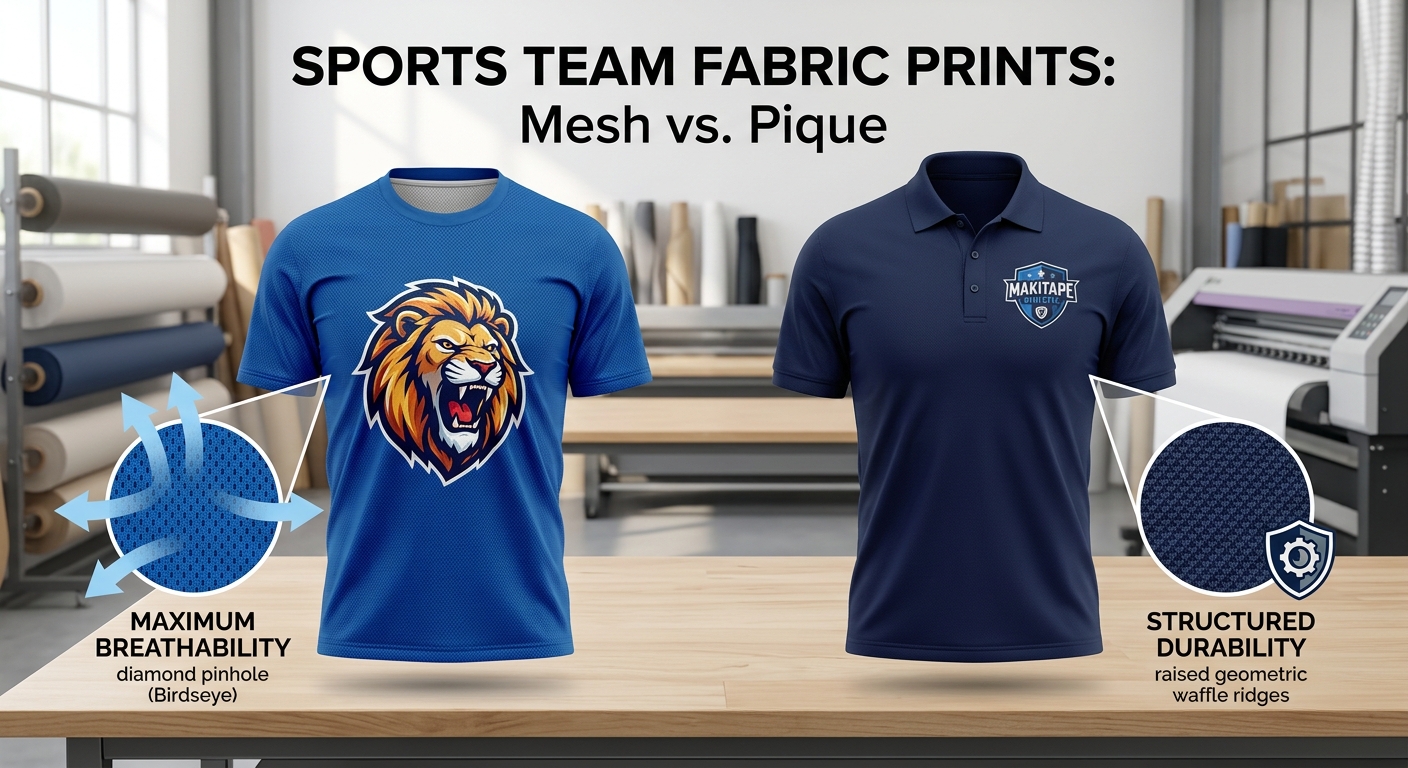
Choosing high-grade materials for sports team fabric prints requires balancing print clarity, thermal breathability, and fiber durability across game seasons. Apparel managers face severe headaches when custom printed jerseys fade, peel, or feel heavy with sweat during crucial championship matches. Bleeding ink colors and scratchy fabric textures destroy team pride and ruin athlete focus under pressure. Selecting engineered Birdseye mesh or structured Pique knit solves these performance issues by pairing vibrant dye retention with specialized cooling channels.
What Are Sports Team Fabric Prints and How Are They Made?
Sports team fabric prints are produced by transferring specialized inks onto engineered knitted textiles using heat presses or screen printing machines. Selecting the right sports team fabric prints guarantees that detailed team logos stay sharp without restricting natural fabric elasticity. Here is the deal. Combining precise dye application with structured yarn patterns yields crisp athletic uniforms.
What Printing Techniques Work Best on Knitted Fabric?
Different printing methods suit specific fiber compositions and fabric textures.
- Sublimation printing bonds dye directly into synthetic yarn fibers
- Screen printing provides thick opaque coverage on cotton surfaces
- Direct-to-film transfers handle detailed multi-color crests easily
Check this out. You get vibrant graphics when matching printing methods with compatible knit structures.
How Do Synthetic Blends Hold Dye Color Particles?
Polyester fibers trap sublimated ink molecules permanently inside yarn structures. You get fade-resistant graphics that survive dozens of industrial wash cycles. Think about it. Choosing quality yarn blends prevents washed-out team graphics before mid-season games arrive.
| Printing Method | Sublimation Printing | Screen Printing |
| Ideal Fiber Base | 100% Polyester / High Poly | Pure Cotton / Blends |
| Print Durability | Permanent Non-Fading | High Opaque Layer |
Evaluating printing compatibility ensures your team graphics remain vibrant throughout harsh laundry cycles.
Key Takeaway: Sublimation works best on synthetic knit structures, delivering vibrant graphics that never crack or peel.
Why Do Sports Team Fabric Prints Need Specific Textiles?
Athletic uniforms require specialized technical textiles because standard everyday fabrics fail to manage moisture and lack necessary stretch during intense physical play. Choosing incorrect materials for sports team fabric prints leads to heavy sweat accumulation and distorted logo graphics. What is the real story? Performance knits maintain structural integrity while allowing perspiration to escape rapidly through engineered knit channels.
Why Does Surface Texture Affect Printing Clarity?
Smooth fabric surfaces allow print heads to deposit ink evenly across every fiber.
- Flat knit faces prevent distorted logo edges during transfer
- Uniform yarn loops ensure consistent ink penetration
- Low surface fuzz prevents blurry graphic boundaries
Believe it or not. Smooth textile faces keep intricate team crests looking razor-sharp.
How Do Heavy Athletic Movements Strain Printed Logos?
Repetitive stretching during sprinting puts immense pressure on printed surface films. Flexible knit patterns stretch alongside human muscles without tearing surface ink layers. Guess what? High-elasticity textiles keep team crests looking sharp through every tackle.
| Textile Property | Smooth Flat Knit | Rough Textured Woven |
| Graphic Sharpness | High Definition | Distorted Edges |
| Stretch Recovery | Excellent Elasticity | Rigid Limited Motion |
Matching high fabric elasticity with flexible inks prevents graphic cracking during aggressive physical movements.
Key Takeaway: Performance knits protect graphic clarity while providing necessary stretch for unhindered athletic movement.
How Does Birdseye Mesh Handle Sports Team Fabric Prints?
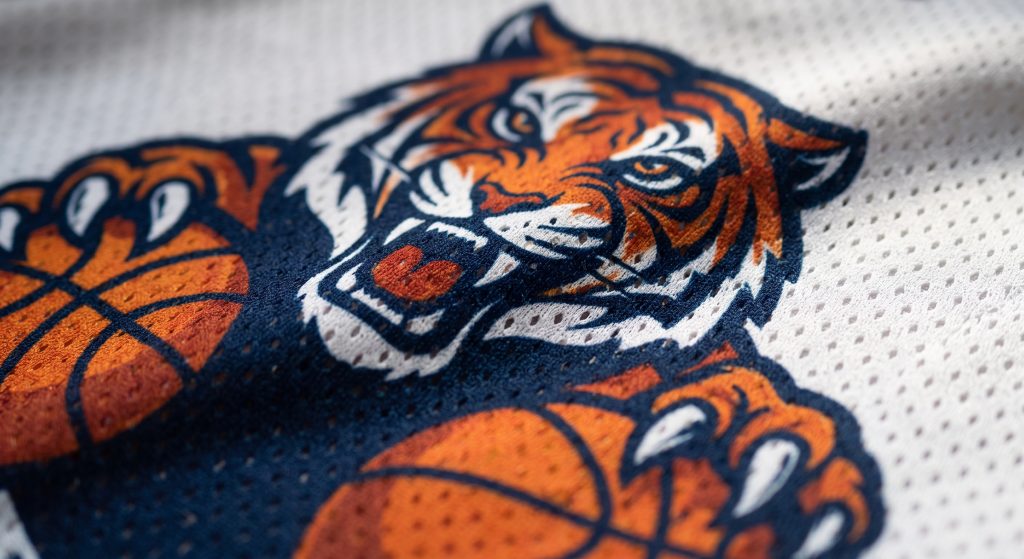
Birdseye mesh handles sports team fabric prints exceptionally well by allowing sublimated inks to penetrate around micro-holes without blurring detailed logo graphics. Selecting Birdseye mesh for sports team fabric prints gives your players maximum breathability paired with vibrant visual graphics. Here is the kicker. The tiny diamond pinholes provide continuous cooling without interrupting printed design patterns.
What Makes Birdseye Micro-Holes Ideal for Sublimation?
Micro-perforations allow heat and vapor to pass directly through printed areas.
- Diamond pinhole patterns promote active airflow across the torso
- Sublimated dyes color the hole borders without clogging air channels
- Lightweight knit structure lowers overall garment mass for runners
Ready for the good part? Your players experience constant cooling without compromising bold uniform colors.
How Does Birdseye Mesh Maintain Lightweight Agility?
Low fabric weight prevents energy drain during long endurance matches. You stay fast on your feet while enjoying vibrant team colors. This is where it gets interesting. Perforated mesh fabrics wick sweat away faster than heavy traditional textiles.
| Feature | Birdseye Mesh Structure | Heavy Flat Jersey |
| Air Circulation | Maximum Pinhole Flow | Restricted Surface Flow |
| Garment Mass | Extremely Lightweight | Medium to Heavy |
Utilizing micro-hole mesh guarantees rapid thermal release while retaining crisp sublimated team artwork.
Key Takeaway: Birdseye mesh offers superior cooling and vibrant printability for high-speed endurance sports.
How Does Pique Knit Upgrade Sports Team Fabric Prints?
Pique knit upgrades sports team fabric prints by providing a structured waffle texture that gives polo shirts and staff uniforms a premium appearance. Applying embroidery or screen techniques for sports team fabric prints on pique textiles creates a crisp visual presentation. Want to know the best part? The raised geometric cords lift wet fabric off skin while maintaining formal collar lines.
What Gives Pique Weave Its Distinctive Waffle Structure?
Specialized tuck stitches create raised geometric ridges across the fabric face.
- Dimensional waffle pattern creates subtle surface air pockets
- Thick cord construction adds substantial body to polo shirts
- Rigid knit structure supports heavy embroidered chest logos
Look at this. The elevated texture gives coaching apparel a professional, tailor-made feel.
Why Do Staff Polo Shirts Prefer Screen Printed Pique?
Coaches and sideline staff require sophisticated apparel that withstands outdoor weather. You project professional authority while remaining cool during long game days. Pay attention here. Pique knits resist wrinkles and maintain clean lines after hours on the bench.
| Metric | Pique Knit | Standard Mesh |
| Visual Appearance | Formal Tailored Look | Casual Athletic Look |
| Structural Body | High Rigidity | Soft Drape |
Choosing pique weave elevates staff polo presentation while providing reliable durability for outdoor games.
Key Takeaway: Pique knits offer structured elegance and durable body, making them ideal for sideline staff polo shirts.
Which Sports Team Fabric Prints Offer Higher Airflow?
Birdseye mesh offers significantly higher airflow than pique knits due to its open micro-hole geometry. Measuring air permeability reveals why Birdseye mesh sports team fabric prints excel in hot summer climates. Notice something? Physical micro-perforations permit wind to flow directly through jersey panels.
How Do Micro-Perforations Speed Up Air Circulation?
Open holes function as direct ventilation vents across the athlete’s body.
- Unobstructed pathways let body heat escape instantly
- Wind currents pass through printed sections without resistance
- Sweat evaporates rapidly from the outer fabric surface
Here is the truth. Open hole geometry keeps core body temperatures lower during high-intensity running.
Can Pique Knit Vent Body Heat During High Movement?
Pique waffle textures vent heat indirectly by holding cloth away from pores. You stay comfortable in moderate temperatures without feeling direct wind drafts. Make no mistake. Pique suits cooler evening games while mesh dominates high-heat mid-day matches.
| Airflow Factor | Birdseye Mesh | Pique Weave |
| Ventilation Mechanism | Direct Micro-Holes | Indirect Surface Pockets |
| Summer Heat Suitability | Outstanding | Moderate |
Comparing airflow metrics proves micro-hole mesh provides faster heat release under scorching summer conditions.
Key Takeaway: Select birdseye mesh for direct high-speed cooling, or pique knit for balanced ventilation in moderate weather.
Which Sports Team Fabric Prints Feel Softest on Skin?
Cotton blend knits feel softer on human skin than pure synthetic mesh fabrics due to their smooth natural fiber construction. Developing comfortable sports team fabric prints requires balancing natural cotton softness with synthetic performance filaments. Here is why that matters. Soft cotton backings prevent skin chafe during long hours of physical activity.
Why Does Fiber Composition Rule Skin Friction Levels?
Natural cotton fibers feature rounded cellular structures that feel gentle on skin.
- Soft cotton fibers reduce friction against sensitive skin areas
- Hypoallergenic properties minimize skin redness and irritation
- Hybrid spun yarns offer plush tactile touch during movement
Think about that. Comfortable athletes keep their focus entirely on game execution.
Does Surface Texture Impact Athlete Tactile Comfort?
Smooth inner fabric linings glide across the torso without sticking. You focus on game strategy rather than adjusting itchy uniform seams. What is the bottom line? Cotton-infused inner faces deliver superior touch comfort for sensitive players.
| Skin Contact Metric | Cotton Blend Jersey | Pure Synthetic Mesh |
| Surface Scratchiness | Non-Existent | Mild to Moderate |
| Chafing Prevention | High Comfort | Requires Friction Guard |
Testing skin touch preferences demonstrates cotton-rich backings minimize chafing far better than coarse synthetic meshes.
Key Takeaway: Cotton blend backings provide gentle skin feel and eliminate chafing during long tournament games.
How Do Sports Team Fabric Prints Resist Sweat and Moisture?
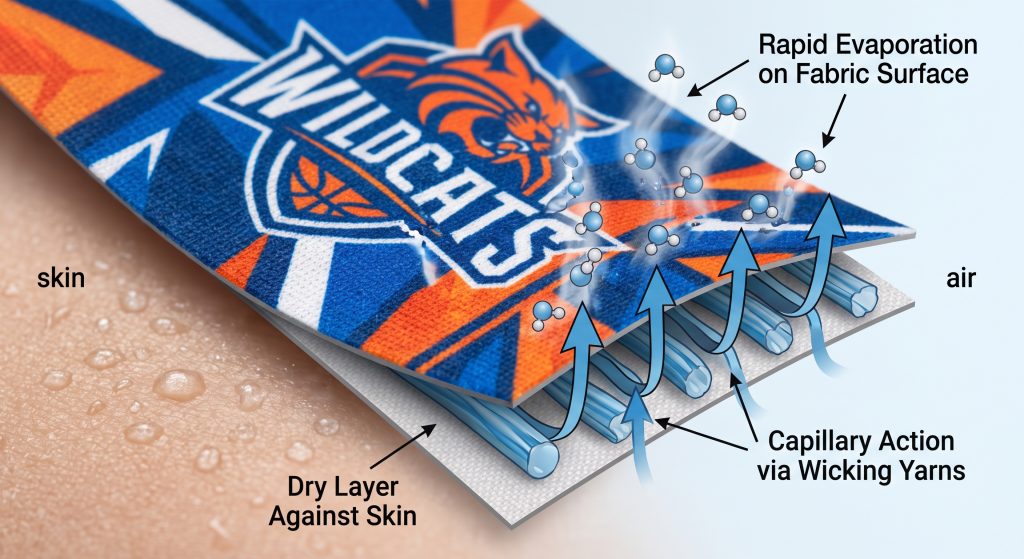
Sports team fabric prints resist sweat by using engineered moisture-wicking yarns that pull moisture away from skin to the fabric surface for rapid evaporation. Combining synthetic wicking fibers with high-definition sports team fabric prints keeps athletes dry under pressure. Get this. Capillary action pulls perspiration away before damp cloth can stick to skin.
How Does Capillary Action Pull Moisture Away From Skin?
Microscopic yarn channels channel liquid outward toward the air side.
- Synthetic micro-filaments draw sweat off skin surfaces instantly
- Expanded liquid surface area accelerates natural air drying
- Non-clogging inks maintain capillary movement through print areas
Here is the secret. Hydrophobic yarn treatments turn heavy sweat into fast-evaporating surface moisture.
Why Is Rapid Drying Essential for Printed Athletics?
Heavy wet jerseys slow down sprint speeds and cause post-game chills. You maintain peak body agility when your uniform stays lightweight and dry. Believe it or not. Advanced wicking prints keep players cool across whole overtime periods.
| Moisture Handling | Wicking Polymer Blend | Standard Unfinished Cotton |
| Evaporation Rate | Rapid Dry-Off | Slow Retention |
| Wet Cling Resistance | High Resistance | Heavy Cling |
Analyzing moisture management confirms engineered wicking yarns prevent heavy jersey cling during intense matches.
Key Takeaway: Engineered wicking yarns pull sweat away fast, keeping printed uniforms lightweight and dry.
Which Sports Team Fabric Prints Hold Up Best in Matches?
Pique knit fabrics hold up best in contact matches because their dense waffle structure resists surface snags and abrasion. Selecting tough material structures for sports team fabric prints prevents garment tearing during aggressive physical contact. Truth be told. High-density pique weaves survive rough player grabbing far better than lightweight open meshes.
Which Weave Pattern Resists Surface Snags and Tears?
Interlocked waffle cords shield individual threads from sharp turf abrasion.
- Tightly bound yarn knots resist snagging on opponent gear
- Thick cord construction withstands sliding tackles on grass
- Durable print backing prevents logo peeling after friction
Ready for the truth? Contact sports demand structural toughness to keep uniforms looking new.
How Does Birdseye Mesh Withstand Intense Contact Sports?
Birdseye mesh relies on elastic stretch to absorb physical pulling forces. You enjoy flexible movement without worrying about seam tearing during quick directional shifts. Here is the kicker. Reinforced mesh edges prevent pinholes from expanding under stress.
| Durability Factor | Pique Waffle Weave | Birdseye Mesh |
| Abrasion Resistance | Exceptional | Moderate |
| Tensile Stretch Strength | High | Very High |
Reviewing mechanical wear tests proves pique weave provides maximum defense against surface snagging in contact sports.
Key Takeaway: Choose pique weave for rugged contact sport durability, or elastic birdseye mesh for high-flex agility.
How to Choose Sports Team Fabric Prints for Your Uniforms?
You choose sports team fabric prints by evaluating your specific sport demands, local game weather, and preferred graphic style. Selecting ideal sports team fabric prints requires matching fabric airflow with athlete movement intensity. See how it works? Runners need breathable mesh while coaches need crisp pique polos.
Which Fabric Structure Fits High-Speed Running Teams?
Fast endurance sports require lightweight perforated textiles.
- Choose Birdseye mesh for soccer, track, and marathon jerseys
- Select 140 to 160 GSM weights for maximum summer cooling
- Opt for full sublimation printing for weightless team logos
Plain and simple. Low garment mass combined with open mesh keeps runners fast.
Which Fabric Structure Suits Sideline Staff Apparel?
Coaches and management staff need structured clothing that stays neat. You present a professional team image while maintaining outdoor working comfort. Check this out. Pique cotton blends keep staff looking sharp through long tournament days.
| Application | Recommended Structure | Target Weight (GSM) |
| Active Player Jerseys | Birdseye Mesh | 140 – 160 GSM |
| Coaching Staff Polos | Pique Weave | 180 – 220 GSM |
Matching specific sport roles with correct fabric structures guarantees optimal performance and clean team aesthetics.
Key Takeaway: Match birdseye mesh to active running players and pique knits to sideline coaching staff for best performance.
Where Can You Source Sports Team Fabric Prints In Bulk?
You source sports team fabric prints in bulk by partnering directly with specialized B2B textile manufacturers that offer custom knitting and printing capabilities. Ordering wholesale sports team fabric prints directly from manufacturing mills lowers production expenses significantly. Here is the best part. Direct factory partnerships allow you to customize fabric weights and color shades.
What Questions Should Apparel Buyers Ask Textile Mills?
Evaluating mill credentials prevents quality discrepancies on large orders.
- Request colorfastness certificates for custom dye shades
- Verify sample GSM weights before mass production begins
- Confirm minimum order quantities and bulk turnaround times
Look closely. Partnering with established manufacturers guarantees consistent textile batches every order.
How Do Direct Factory Orders Reduce Procurement Costs?
Cutting out trading intermediaries yields substantial margin savings for your brand. You secure wholesale rates while receiving direct factory technical support. Ready to scale? Direct sourcing gives your sportswear line a powerful market advantage.
| Sourcing Route | Direct Factory Manufacturing | Local Trading Agent |
| Bulk Material Cost | Factory Direct Rates | Marked-Up Rates |
| Customization Freedom | Full Control | Stock Selections |
Partnering directly with textile mills lowers material procurement costs while ensuring strict quality control.
Key Takeaway: Sourcing directly from specialized textile manufacturers yields better pricing, strict quality assurance, and custom fabric options.
Selecting between Birdseye mesh and Pique knits determines how your athletic apparel performs during critical games. Birdseye mesh provides lightweight airflow for high-speed endurance players, while Pique weave delivers structured durability for coaching staff polos. By matching engineered fiber blends with custom printing techniques, sportswear brands achieve vibrant logo clarity alongside long-lasting athletic toughness. We provide complete custom sportswear textile solutions tailored precisely to your production demands. If you need custom printed fabrics for your upcoming athletic season, feel free to contact us today. Our commitment is to power global athletic brands with premium performance textiles that elevate player confidence on every field.
Frequently Asked Questions
Q1: Can I use birdseye mesh for winter sports team fabric prints?
No, birdseye mesh features open micro-holes that let cold winds enter easily. You should select double-knit cotton blends or brushed fleece textiles for cold-weather athletic uniforms.
Q2: What’s the best fabric weight for sports team fabric prints on polo shirts?
A weight between 180 GSM and 220 GSM works best for sports team polo shirts. This weight maintains crisp collar shapes while offering reliable breathability during outdoor games.
Q3: How do I know if pique sports team fabric prints will shrink in the laundry?
Check if the material blend contains synthetic polyester reinforcement. Poly-cotton pique knits resist laundry shrinkage far better than unblended cotton swatches.
Q4: Can I apply custom sublimated graphics on birdseye mesh fabric?
Yes, sublimated dye printing works exceptionally well on synthetic birdseye mesh. The micro-perforated surface absorbs inks deeply without clogging air ventilation channels.
Q5: What’s the main structural difference between birdseye mesh and pique knits?
Birdseye mesh features open diamond micro-holes for active ventilation, whereas pique knit features a raised geometric waffle weave for structured garment body.