
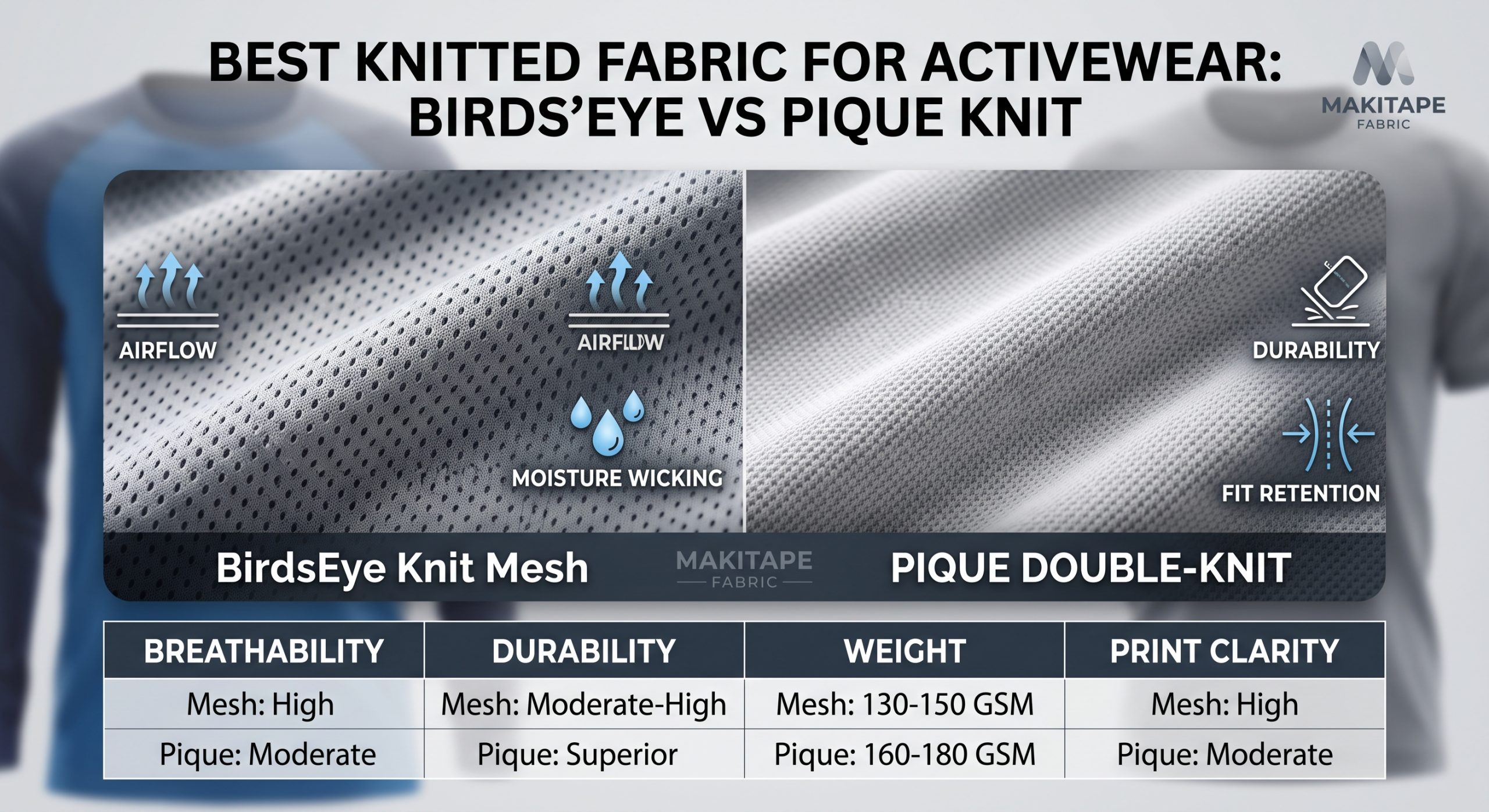
The main types of knitted fabric for activewear include Birdseye mesh, Pique double-knits, Single Jersey, and Interlock textiles engineered for fast moisture dissipation. Sourcing heavy non-breathable cloth leads to sweat-logged garments that irritate skin during high-intensity training sessions. Delivering uncomfortable sportswear restricts athlete movement, spikes customer returns, and harms your sales performance in competitive markets. Selecting specialized technical textiles built for rapid moisture transport and thermal management solves these manufacturing challenges immediately. Choosing appropriate knitted fabric for activewear allows apparel brands to balance cooling efficiency, structural durability, and tactile softness across performance product lines.
1. Which knitted fabric for activewear provides maximum breathability?
Synthetic micro-mesh knit delivers maximum ventilation among knitted fabric for activewear designed for intense physical conditioning. Apparel manufacturers choose open-pore synthetic structures to stop heat accumulation during workouts. Selecting engineered pore geometry lets ambient breezes reach skin surfaces continuously.
Understanding structural knit patterns helps purchasing managers choose materials that retain form despite heavy stretching. Lightweight constructions let sweat evaporate quickly while keeping garments structured.
Why do open micro-mesh structures ventilate so well?
Micro-porous eyelets draw cool air inward while discharging heat vapor across the cloth surface. Here is the deal: open knits function like miniature thermal vents when athletes sprint across the field. You will experience immediate cooling when replacing solid weaves with open mesh patterns.
- Hydrophobic synthetic filament yarns
- Micro-eyelet layout for rapid sweat drainage
- Minimal surface area sticking to wet skin
Using fine-gauge synthetic knits guarantees fabric panels stay non-transparent while delivering steady airflow.
How do synthetic yarns increase athlete comfort?
Synthetic fibers like polyester resist liquid retention far better than natural cotton yarns during active training. You might be wondering why traditional cotton performs poorly in high-intensity sportswear. Cotton traps liquid sweat and grows heavy, whereas synthetic filaments transfer moisture outward to air-dry rapidly.
- Minimal water weight gain during workouts
- Smooth tactile feel preventing armhole chafing
- Outstanding shade retention under repeated laundry cycles
Applying specialized yarn treatments improves surface softness without blocking fast sweat evaporation across fibers.
Key Takeaway: Selecting micro-mesh synthetic cloth keeps training tops light and cool without trapping excess heat.
| Fabric Category | Birdseye Mesh Knit | Standard Cotton Knit |
| Moisture Absorption | Very Low (<1%) | High (>8%) |
| Air Permeability Rate | High (>200 CFM) | Moderate (75 CFM) |
| Drying Speed | Fast (15 Minutes) | Slow (60+ Minutes) |
Analyzing physical testing data confirms why technical synthetic knits outperform traditional natural fibers in athletic apparel.
2. How does Birdseye knit define knitted fabric for activewear?
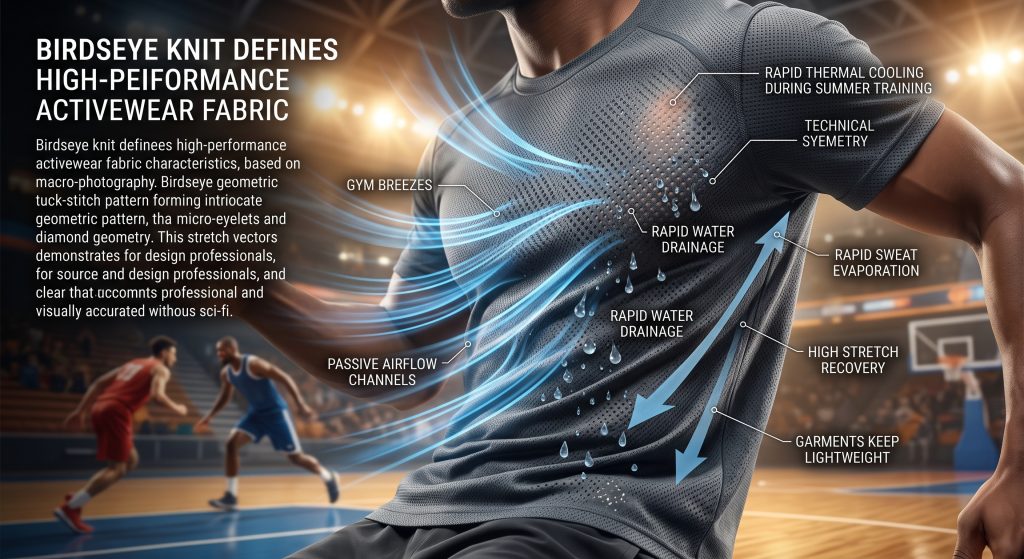
Birdseye knit defines knitted fabric for activewear by utilizing a tuck-stitch pattern that forms micro-eyelets for rapid water drainage. Apparel suppliers select this structured mesh for team jerseys and running apparel. The eyelet layout lets indoor gym breezes cool skin surfaces while keeping garments lightweight.
The diamond geometry establishes passive airflow channels across the garment face. This layout supports rapid thermal cooling during summer training sessions.
Why do eyelet patterns speed liquid drainage?
Open eyelet patterns reduce total cloth surface contact area and let liquid drops evaporate quickly. What is the real story? Micro-hole geometry stops water from lingering inside yarn bundles. You gain a distinct product advantage by supplying sportswear that dries within minutes after intense workouts.
- Immediate sweat expulsion through open stitches
- Reduced garment weight when damp
- Continuous airflow during fast body movement
Balanced stitch spacing prevents unwanted see-through transparency while maximizing air movement.
Can Birdseye knits withstand physical friction?
High-gauge synthetic construction provides excellent tear strength during physical contact on court surfaces. Think about it: every extra gram of trapped moisture slows down active athletes over time. You supply reliable athletic wear by specifying durable bird’s eye mesh structures.
- Featherlight feel on player shoulders
- Smooth surface optimal for dye sublimation prints
- High resistance to stretching out of shape
Durable synthetic construction preserves vibrant team colors despite constant friction and frequent washing.
Key Takeaway: Birdseye mesh provides rapid moisture expulsion and smooth print surfaces, making it a premier selection for active court wear.
| Performance Feature | Birdseye Eyelet Mesh | Solid Interlock Knit |
| Moisture Evaporation Speed | Immediate (<3 Seconds) | Slow (>20 Seconds) |
| Material Density (GSM) | 130 – 150 GSM | 180 – 220 GSM |
| Surface Smoothness Grade | Flat & Uniform | Smooth & Dense |
Reviewing structural attributes highlights why micro-porous eyelet knits work best for quick-drying teamwear lines.
3. Is Pique double-knit a durable knitted fabric for activewear?
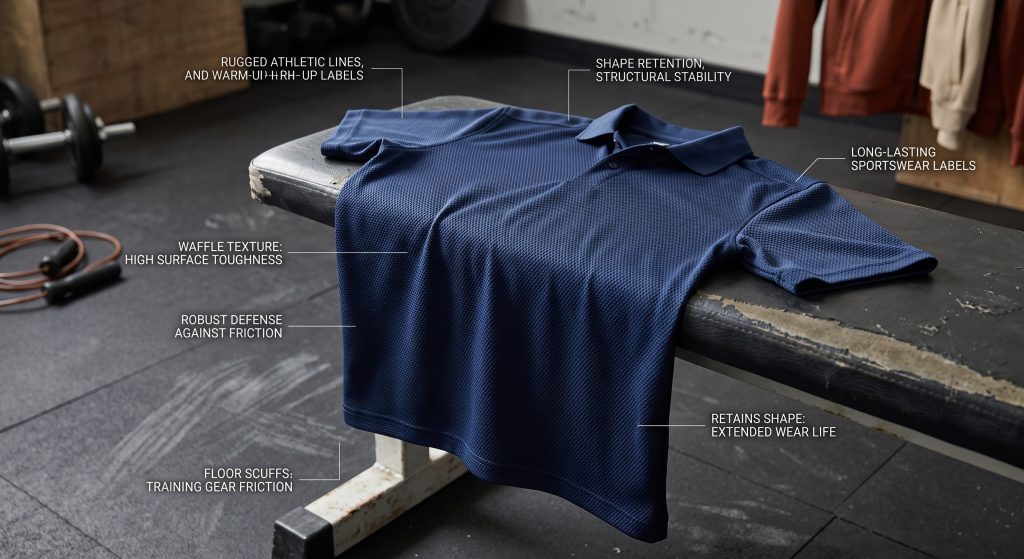
Pique double-knit represents a remarkably durable knitted fabric for activewear when surface toughness and shape retention take priority. Its waffle texture offers robust defense against floor scuffs and training gear friction. Sportswear labels choose pique structures for long-lasting polo shirts, shorts, and warm-up wear.
While slightly heavier than open eyelet mesh, pique delivers high structural stability. Understanding its mechanical properties helps procurement managers choose suitable options for rugged athletic lines.
How does honeycomb texture build toughness?
Raised waffle geometry absorbs physical friction, shielding inner yarn filaments from surface scuffs. Ready for the good part? This textured surface stops cloth from clinging directly to wet skin during exercise. You receive a structured silhouette that maintains form throughout heavy athletic usage.
- Raised surface loops protect inner thread networks
- Dense fabric construction increases tear resistance
- Structured drape holds crisp garment lines
The double-knit layout adds fabric body without restricting natural body movements during workouts.
When should you specify Pique double-knits?
Structured pique knits suit classic apparel collections where physical ruggedness takes priority over ultralight weight. Here is the bottom line: pique handles friction from equipment contact and floor dives exceptionally well. You minimize garment wear and surface pilling when outfitting competitive sports teams.
- Superior resistance against surface abrasion
- Classic appearance popular for athletic polos
- Tough yarn layout for extended garment lifespan
Modern polyester pique blends incorporate moisture management to combine classic styling with functional athletic performance.
Key Takeaway: Pique fabric delivers structured form and superior abrasion resistance against rough indoor and outdoor surfaces.
| Structural Property | Pique Honeycomb Knit | Birdseye Eyelet Mesh |
| Surface Texture Design | Raised Waffle Loop | Flat Diamond Hole |
| Abrasion Resistance Grade | High (Grade 4.5) | Moderate (Grade 3.5) |
| Garment Drape Quality | Structured & Firm | Soft & Fluid |
Comparing structural attributes assists activewear designers in matching fabric selections with intended garment applications.
4. How does handfeel alter knitted fabric for activewear selection?
Tactile handfeel alters knitted fabric for activewear selection because skin comfort directly impacts athlete concentration during intense games. Rough textiles irritate damp skin during repetitive movements and rapid directional changes. Sourcing specialists inspect micro-filament finishes to guarantee soft comfort across training wear.
Modern circular knitting uses fine synthetic filaments to build exceptionally smooth surface textures. Tactile inspections remain standard during bulk manufacturing approvals.
Does friction cause skin chafing during training?
Repetitive rubbing between damp cloth and sensitive skin creates uncomfortable friction during long workouts. This is where it gets interesting: soft micro-filament yarns eliminate scratchy points along collars and armhole borders. You shield athletes from skin redness by choosing smooth synthetic knits.
- Micro-denier yarns deliver silky softness
- Reduced friction along seams and hems
- Smooth surface prevents wet fabric sticking
Hydrophilic treatments improve tactile softness without blocking fast liquid movement across fibers.
Can finishing processes modify fabric softness?
Textile finishing steps soften synthetic fibers while preserving moisture evaporation speeds. Check this out: mechanical washing and mild softening agents refine surface feel without heavily coating fibers. You can customize handfeel to meet brand requirements easily.
- Softening finishes enhance garment drape
- Fine yarn knitting produces smooth surface fibers
- Anti-static treatments eliminate unwanted cling
Balancing finishing processes guarantees fabrics stay soft through repeated game play and wash cycles.
Key Takeaway: Specifying soft micro-filament finishes shields wearers from skin chafing while maintaining high garment comfort.
| Finishing Category | Tactile Softness Level | Moisture Dispersion Impact |
| Micro-Filament Standard | Smooth & Crisp | Unaffected |
| Silicone Softened | Very Soft & Silky | Slightly Reduced |
| Brushed Interior | Plush & Warm | High Liquid Retention |
Evaluating finishing methods ensures sourcing teams achieve tactile softness without compromising rapid drying speeds.
5. Why does airflow rate divide knitted fabric for activewear types?
Airflow rate divides knitted fabric for activewear types because thermal breathability dictates body cooling under physical stress. High air permeability allows heat to escape quickly while external air circulates through open pores. Textile engineers test air volume passage in cubic feet per minute to verify cooling capacity.
Testing fabric permeability under lab conditions guarantees uniform cooling performance across production lots. Higher airflow directly correlates with lower skin surface temperatures.
How do open pores dissipate body heat?
Open pores pull cool external air inward while venting warm sweat vapor outward. Look at it this way: steady air circulation transforms lightweight apparel into efficient cooling systems. You keep athletes comfortable during intense overtime periods.
- Passive thermal venting through micro-holes
- Rapid sweat vapor release from skin surfaces
- Temperature balance during indoor training
Combining breathable main body fabrics with mesh side panels optimizes ventilation across high heat zones.
Can knit density balance ventilation and opacity?
Balanced knit density establishes breathable air channels while maintaining total fabric opacity on court. What is the bottom line? Overly dense fabrics trap body heat, raising skin temperature quickly. You must balance open pore ventilation with non-see-through coverage.
- Balanced knit density permits steady airflow
- Adequate yarn volume prevents transparency
- Controlled permeability maintains cooling speeds
Selecting proper yarn gauges balances non-transparent coverage with effective air movement.
Key Takeaway: Balancing open pore ventilation with adequate yarn density provides efficient heat release and reliable fabric opacity.
| Fabric Construction | Airflow Rate (CFM) | Evaporation Speed |
| Birdseye Micro-Mesh | 215 CFM | Rapid (14 Minutes) |
| Pique Textured Knit | 140 CFM | Moderate (22 Minutes) |
| Flat Solid Interlock | 60 CFM | Slow (40 Minutes) |
Analyzing laboratory airflow data demonstrates that bird’s eye knits offer significantly higher air circulation than dense interlock options.
6. Which knitted fabric for activewear resists tearing under stress?
Pique and interlock double-knits lead the list when choosing which knitted fabric for activewear resists tearing under intense tension. Interlocking stitch geometry distributes stress evenly across yarn networks, preventing sudden rips during physical contact. Apparel brands specify high-bursting-strength synthetics to lower garment damage rates.
Durability evaluations measure bursting pressure, tear resistance, and color stability. Selecting tough synthetics reduces garment replacement rates for athletic programs.
Will sudden pulls rupture garment seams?
High bursting strength prevents garment seams from pulling apart during aggressive physical contact or quick movements. Here is the deal: double-knit structures absorb mechanical tension far better than thin single-knit fabrics. You preserve garment construction by specifying high-tensile synthetic yarns.
- High bursting pressure resistance
- Flexible stretch recovery along stress points
- Snag-resistant stitch loops prevent runs
Reinforced seam stitching combined with durable knits withstands intense physical strain during active games.
How does sweat contact affect material lifespan?
Accumulated sweat can weaken low-grade synthetic fibers if garments are not laundered properly after workouts. You might be wondering: why do cheap athletic shirts lose shape after a few washes? Inferior yarns suffer fiber degradation, whereas premium synthetics preserve shape and color.
- Colorfastness against body sweat and laundry detergents
- Dimensional stability prevents garment shrinking
- Anti-pilling surface remains smooth after washing
High-grade disperse dyes lock permanently into synthetic fibers, preserving color brilliance across many competitive seasons.
Key Takeaway: High bursting strength and sweat resilience protect production runs from seam tearing and fabric degradation.
| Durability Standard | Pique Double-Knit | Birdseye Single-Knit |
| Snagging Resistance | Grade 4.5 (High) | Grade 3.5 (Moderate) |
| Bursting Pressure | >440 kPa | >370 kPa |
| Pilling Resistance Rating | Grade 4-5 | Grade 4 |
Reviewing lab durability data reveals that pique textures offer higher resistance to physical snagging and floor friction.
7. How does GSM weight shape knitted fabric for activewear options?
GSM weight shapes knitted fabric for activewear options because material mass dictates garment drape, player mobility, and drying speed. Most performance activewear lines utilize synthetic knits weighing between 130 GSM and 180 GSM for optimal balance. Sourcing lighter materials gives athletes unrestricted motion during quick drills.
Measuring Grams per Square Meter (GSM) establishes precise manufacturing specifications. Balancing lightness with opacity stops garments from becoming see-through when wet.
What GSM range delivers lightweight comfort?
Selecting fabric weights between 140 GSM and 160 GSM provides a ideal balance of lightness and durability. Ready for the good part? Mid-lightweight fabrics drape naturally over body contours without feeling heavy when damp. You achieve a comfortable athletic fit with proper GSM control.
- 130-140 GSM: Ultralight running tops and practice tees
- 150-160 GSM: Balanced game jerseys and shorts
- 180+ GSM: Heavy-duty outerwear and training shorts
Lighter fabric weight reduces volumetric freight expenses during international shipping.
Does lighter weight accelerate drying times?
Reducing total cloth weight lowers water volume trapped within yarn bundles, accelerating air drying. Think about it: saving fabric weight keeps sportswear comfortable throughout long tournament days. You supply apparel that dries rapidly between athletic sessions.
- Less liquid retained in fine yarn bundles
- Rapid air evaporation across surface pores
- Enhanced comfort during continuous movement
Modern fine-denier filaments maintain fabric opacity even at lower GSM levels, preserving wearer modesty.
Key Takeaway: Specifying 140 to 160 GSM synthetic knits provides lightweight comfort, easy drape, and fast drying performance.
| Weight Range (GSM) | Product Category | Core Benefit |
| 130 – 145 GSM | Lightweight Practice Wear | Ultralight & Fast Drying |
| 150 – 165 GSM | Game Tops & Active Shorts | Balanced Coverage & Comfort |
| 170 – 200 GSM | Heavy Sportswear & Outerwear | High Toughness & Structure |
Establishing clear weight guidelines ensures your product line maintains fast drying speeds without sacrificing fabric opacity.
8. How to test stretch in knitted fabric for activewear materials?
Testing stretch recovery reveals critical performance traits in knitted fabric for activewear needed for unrestricted body motion. High-gauge knit construction provides natural mechanical elasticity without requiring excessive spandex threads. Sourcing resilient stretch fabrics ensures garments expand during deep bends and recover form immediately.
Testing elastic recovery prevents baggy necklines and loose armholes over time. High recovery rates keep athletic apparel fitting properly through intense use.
How does elastane content improve flexibility?
Blending small percentages of elastane into synthetic knits improves four-way stretch across active muscle groups. What is the real story? Pure polyester offers moderate mechanical stretch, but elastane addition permits maximum limb extension. You grant athletes full freedom of movement during dynamic workouts.
- Unrestricted shoulder extension during motion
- Instant shape recovery after heavy stretching
- Secure fit around necklines and waistbands
Controlled elastane blending maintains breathability while offering responsive flexibility on court.
Do elastic fibers degrade under tension?
High-quality synthetic blends resist fiber snap and elasticity loss under repeated athletic tension. This is where it gets interesting: inferior elastic threads degrade rapidly when exposed to heat and sweat. You guarantee lasting performance by specifying heat-set elastic filaments.
- High tension recovery prevents garment sagging
- Fiber stability through repeated wash cycles
- Structural shape preserved over full seasons
Proper yarn heat-setting locks structural stretch into knits without compromising soft surface feel.
Key Takeaway: Selecting high-recovery stretch knits ensures players maintain full mobility without risking fabric deformation.
| Stretch Category | Mechanical Polyester Stretch | Elastane Polyester Blend |
| Extension Rate | 15% – 25% | 40% – 60% |
| Recovery Rate | High (>95%) | High (>98%) |
| Material Durability | Superior | High |
Verifying elastic recovery parameters ensures your apparel line maintains crisp shape and flexible performance over time.
9. What cost factors drive knitted fabric for activewear bulk orders?
Yarn grades, custom dyeing setups, roll widths, and minimum order quantities drive pricing when purchasing knitted fabric for activewear in volume. Standardizing fabric widths optimizes pattern cutting yield and reduces waste scrap during apparel production. Sourcing directly from textile mills lowers manufacturing costs for growing activewear brands.
Managing fabric yield per kilogram keeps production margins healthy for clothing labels. Bulk unit prices decrease as order quantities meet full mill capacities.
What drives mill production costs?
Yarn quality, knitting machine gauge complexity, and custom color development directly influence unit price per meter. Here is the deal: high-gauge circular knitting machines require premium filament yarns that slightly modify raw material costs. You secure better profit margins by ordering roll widths tailored to your cutting patterns.
- Raw material fiber quality and yarn grade
- Custom dye lab dips and color matching
- Roll packaging and volumetric shipping fees
Selecting stock color cards removes initial laboratory dye fees for smaller production runs.
How do minimum order tiers reduce expenses?
Textile mills set minimum order tiers to cover setup costs for dyeing and knitting equipment. You might be wondering how smaller brands access factory-direct pricing structures. You can partner with mills offering stocked color cards or combine fabric volumes across styles.
- Stocked color cards lower MOQ barriers
- Custom shade matching requires larger volumes
- Volume tier discounts decrease price per meter
Evaluating delivery terms and roll packaging saves money during ocean container freight logistics.
Key Takeaway: Standardizing fabric widths and utilizing mill stock colors reduces waste scrap and lowers procurement costs.
| Order Tier Level | Pricing Scale | Minimum Volume |
| Sample Cut Lots | Standard Commercial Rate | 1 – 50 Meters |
| Small Production Run | Moderate Direct Rate | 300 – 500 Meters |
| Bulk Container Order | Factory Wholesale Rate | 2,000+ Meters |
Analyzing volume pricing tiers illustrates substantial unit cost reductions when consolidating orders above two thousand meters.
10. Which choice wins among knitted fabric for activewear selections?
Birdseye mesh wins among knitted fabric for activewear selections when requiring maximum breathability, lightweight cooling, and smooth sublimated prints. Conversely, pique fabric serves heavy-duty applications where surface texture and high abrasion resistance take priority. Choosing between these functional materials depends on your specific product line requirements.
Combining both fabrics across different garment panels produces a functional hybrid athletic solution. Custom knit selections help sportswear brands stand out in competitive markets.
Which knit style fits modern sportswear trends?
Modern athletic trends favor lightweight textiles offering high ventilation, smooth graphics, and eco-friendly recycled yarns. Check this out: bird’s eye mesh meets consumer demands for quick drying and lightweight air permeability. You keep product lines competitive by adopting market-preferred material structures.
- High demand for light 140 GSM eyelet knits
- Strong preference for eco-friendly recycled polyester
- Preference for smooth sublimated full-coverage graphics
Adding eyelet mesh side panels to pique main bodies creates a stylish, breathable contrast.
How to finalize bulk order specifications?
Finalizing bulk fabric orders requires requesting physical sample cards and swatches before mass production begins. Look at it this way: inspecting physical swatches eliminates surprises regarding weight, elasticity, and tactile feel. You maintain strict quality control by confirming technical specifications upfront.
- Request sample color cards for shade confirmation
- Conduct lab wash and stretch performance checks
- Confirm roll delivery schedules and freight terms
Partnering with experienced textile manufacturers streamlines sample approvals and bulk shipments.
Key Takeaway: Requesting physical fabric swatches and evaluating target customer requirements guarantees selecting the right knit structure.
| Selection Criteria | Birdseye Mesh | Pique Double-Knit | Optimal Selection |
| Moisture Evaporation | Rapid | Moderate | Birdseye Mesh |
| Print Surface Clarity | Flat & Sharp | Textured Surface | Birdseye Mesh |
| Friction Resistance | Moderate-High | Superior Toughness | Pique Knit |
Weighing functional parameters confirms bird’s eye mesh as an effective choice for modern performance athletic apparel.
Summary & Sourcing Recommendations
Comparing Birdseye mesh and Pique knit structures determines your apparel line’s breathability, weight, print sharpness, and physical durability. Birdseye mesh excels in rapid moisture drainage, lightweight ventilation, and smooth dye sublimation, while Pique provides structured strength for rugged training wear.
We solved common athletic wear challenges like sweat trapping, skin chafing, and fabric tearing by evaluating fabric weights, stretch recovery, and proper care guidelines. Our mill supplies high-grade synthetic functional textiles engineered to satisfy demanding international sportswear standards.
If you want to expand your activewear and team collections with custom performance textiles, contact us today to request sample swatches and mill-direct price quotes. We believe every brand deserves reliable fabric quality that keeps athletes comfortable and performing at their peak on the court.
FAQ
Q1: Can I machine wash synthetic activewear fabrics safely?
A: Yes, you can machine wash synthetic activewear fabrics using a gentle cycle with cold water and mild detergent. Cold water laundering prevents elastic degradation and maintains fabric structural integrity over long-term use.
Q2: What’s the best fabric weight for performance activewear?
A: A fabric weight between 140 GSM and 160 GSM offers an ideal balance for activewear garments. This weight range provides rapid drying, comfortable drape, and effective cooling during athletic activities.
Q3: How do I know if Birdseye mesh fits my activewear line?
A: You should choose Birdseye mesh if your core requirements are rapid moisture drainage, lightweight air permeability, and smooth graphic prints. It works exceptionally well for active training tops and breathable side panels.
Q4: Can I use dye sublimation on Pique knit fabrics?
A: Yes, you can sublimate on Pique knit fabric if it is composed of 100% synthetic polyester. However, the raised waffle texture of pique may create minor micro-gaps in intricate graphics compared to smooth Birdseye mesh.
Q5: How do I know if fabric has high tear strength?
A: Checking laboratory bursting strength ratings above 400 kPa indicates high tear resistance during physical activity. Double-knit structures like pique offer superior abrasion resistance against rough equipment surfaces.