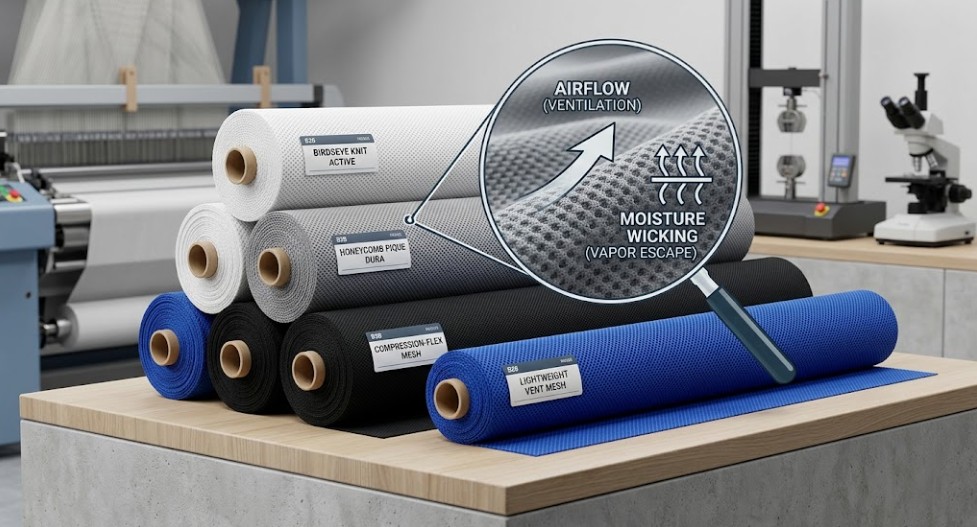
Netting fabric sports applications involve highly engineered mesh materials specifically designed with microscopic openings to maximize continuous airflow, structural durability, and capillary moisture wicking. You design high-performance activewear, yet selecting standard closed textiles traps intense sweat, causing severe skin irritation, heavy fabric drag, and immediate physical fatigue during workouts. This damp, uncomfortable feeling quickly ruins an athlete’s focus, generating widespread consumer frustration and triggering expensive bulk return requests from retail distributors. Sourcing our specialized netting fabric sports solutions instantly resolves these performance challenges by introducing specialized air circulation structures that keep active users dry and comfortable throughout long workouts.
1. What Is Netting Fabric Sports Selection Criteria?
Choosing the correct knit configuration depends on matching the specific physical demands of the sport to the material’s structural density and stretch capacity. When corporate procurement agents evaluate netting fabric sports options, they must carefully balance lightweight comfort requirements against long-term tearing resistance. Selecting cheap, unverified mesh materials causes premature garment splitting during competitive athletic contact matches, which rapidly destroys retail customer satisfaction. Our state-of-the-art Chinese factory offers highly robust warp-knitted options that perfectly preserve fabric shape and ventilation capacity under heavy physical stress. This industrial-grade design focus guarantees that your finished training jerseys remain incredibly durable while providing the maximum cooling effect necessary for elite field sports.
What Fabric Weight Do You Require?
Here is the deal because matching fabric weight to specific athletic movements directly dictates the ultimate comfort and efficiency of the final training uniform. Ultra-lightweight netting weighing under one hundred grams per square meter works beautifully for integrated ventilation panels, whereas heavier knit structures suit durable outer team jerseys. If you accidentally select the wrong material density, your athletes will feel unnecessarily restricted or weighed down during long-distance endurance training runs. You can prevent these fit issues by consulting with our technical team to match textile weight to your design requirements, protecting your production margins while guaranteeing that your sportswear line remains highly functional on the field.
- Lightweight linings (under 100 GSM) for inner garment wind protection.
- Medium-weight panels (100 to 150 GSM) for high-performance shirts.
- Heavy-duty structures (over 150 GSM) for rugged field gear.
How to Evaluate Tear Resistance?
You might be wondering how synthetic thread patterns successfully survive the sudden grabs and intense physical friction common in competitive contact sports. Highly resilient warp knit construction effectively prevents tiny surface punctures from spreading into large, costly rips, safeguarding overall garment structure during long training matches. You can easily inspect the interlocking stitch density to verify that the synthetic fibers remain locked together under severe physical tension. Sourcing textiles with high puncture thresholds protects your apparel brand from premature wear claims and negative retail feedback, validating your focus on manufacturing durability.
- Warp knit interlocking to block rip propagation.
- High-tensile nylon yarns for superior abrasion defenses.
- Double-needle stitched seams to lock edge threads securely.
Sourcing the appropriate weight and puncture resistance parameters completely shields your sportswear line from premature field failures, giving you a highly reliable product that retail buyers will trust completely. You can confidently market these durable activewear collections to elite athletic clubs, securing highly profitable bulk contracts that expand your market footprint. This structured approach to raw material selection minimizes customer complaints and eliminates the financial waste associated with product replacement cycles. Reaching out to our textile engineers helps you customize these parameters to lock down a highly competitive and durable sports line.
| Metric | Target Value | Practical Application |
| Fabric Weight | 120 GSM | High-ventilation running singlets |
| Puncture Threshold | Very High | Heavy-duty contact team jerseys |
| Stretch Recovery | 95% Snapback | Compression side panel inserts |
This performance dataset confirms that high structural density directly improves garment durability on the field.
2. How Does Netting Fabric Sports Mesh Keep Cool?
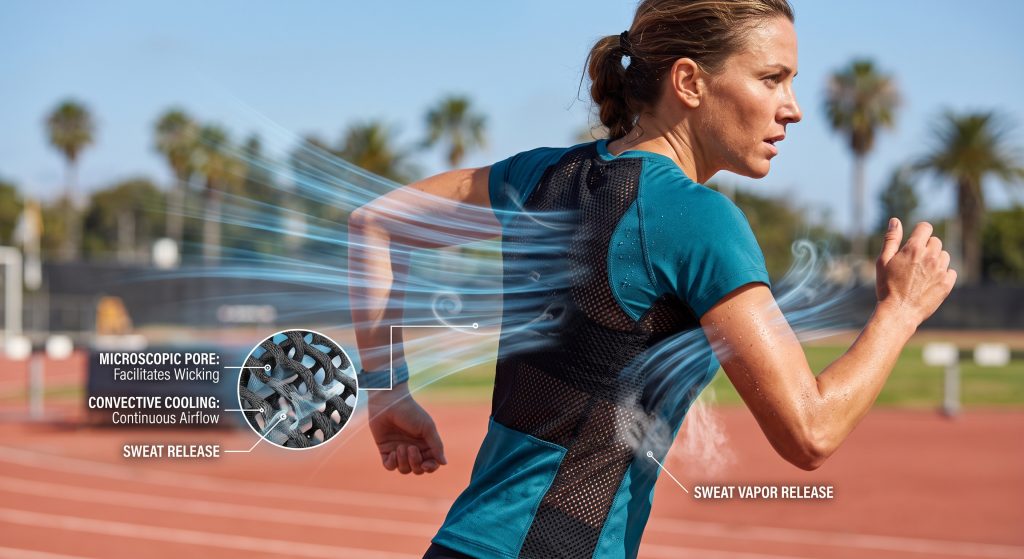
Microscopic knit openings lower body temperatures by facilitating rapid convective air circulation directly across the athlete’s skin. Incorporating netting fabric sports mesh into sweat-heavy zones like the back or underarms prevents the accumulation of dense, humid air. This strategic ventilation method keeps core body temperatures stable, preventing sudden dehydration and early physical exhaustion during intense summer training matches. Our customized technical solutions offer highly refined pore sizes that allow sweat vapors to escape while effectively blocking cool external winds from chilling active muscles. This thermodynamic design balance guarantees that athletes remain perfectly comfortable while pushing their physical boundaries in demanding environments.
What Is Convective Cooling?
What is the catch when standard workout shirts trap hot, humid air next to an athlete’s skin during high-intensity training sessions? Without adequate external airflow, sweat cannot evaporate properly, causing skin temperatures to spike quickly and reducing overall physical stamina. You can easily solve this performance problem by selecting open-knit meshes that allow fresh air to pass continuously through the garment fibers. This natural convective cooling cycle rapidly removes excess body heat, keeping players refreshed and focused during long competitive matches, which keeps your return rates exceptionally low.
- Continuous fresh air inflow to cool skin.
- Rapid expulsion of warm humid body vapor.
- Lower core temperature during heavy training drills.
How Does Evaporative Drying Work?
This is where it gets interesting because high-performance mesh fibers refuse to absorb liquid moisture into their core, instead pulling it to the exterior surface where it dries quickly. This rapid capillary pull prevents the garment from becoming waterlogged and heavy, maintaining a consistent lightweight feel during athletic workouts. You will notice that competitive athletes perform much better and remain focused longer when their training clothing remains completely dry. Sourcing these rapid-drying textiles gives your sportswear brand a significant advantage in the functional activewear market, strengthening your product line’s commercial appeal.
- Hydrophobic synthetic yarns that resist wetness.
- High-speed capillary action to pull sweat away.
- Broad surface areas for accelerated wind drying.
Prioritizing convective cooling and rapid evaporative drying features allows you to deliver high-performance sportswear that keeps athletes comfortable in extreme conditions. Your business can confidently market these technical advantages to professional sport clubs, securing lucrative long-term supply contracts. This thermodynamic focus reduces material defects and ensures your finished garments meet elite quality standards, protecting your brand value. Keeping players dry and cool heightens their endurance, driving positive reviews and high repeat sales for your custom apparel collections globally.
| Cooling Type | Mechanical Process | Primary Advantage |
| Convective | Direct air circulation | Immediate heat reduction |
| Evaporative | Capillary sweat pulling | Prevents heavy wet garments |
This thermal data proves that open mesh patterns provide superior cooling compared to standard closed fabrics.
3. Why Is Netting Fabric Sports Durability Critical?
High structural durability prevents athletic garments from tearing under intense physical strain and frequent washing cycles. Sourcing robust netting fabric sports materials guarantees that your finished products easily withstand the extreme friction and physical tension of competitive training. Cheap textile alternatives often suffer from severe thread slippage, causing the mesh ventilation holes to warp and lose their technical shape. Our premium warp-knit fabrics are specifically engineered to retain their original strength, guaranteeing long-lasting performance for your activewear brand. This mechanical resilience minimizes customer returns while building strong long-term trust with professional athletic teams and retail buyers alike.
Why Choose Warp Knit Construction?
Ready for the good part because warp knitting loops the synthetic yarns parallel to each other, creating a highly stable interlocking grid that resists unraveling. If a single thread breaks during a tough match, the surrounding knit structure remains perfectly intact, preventing large holes from developing. You can confidently rely on this advanced technical weave to protect your custom sports gear from sudden tearing during rugged outdoor activities. Sourcing warp-knit supplies guarantees that your garments maintain their structural integrity through multiple active training seasons, keeping your production highly reliable.
- Interlocking loops that resist thread unraveling.
- Stable cell structures that hold shape.
- High resistance to high-speed friction wear.
How to Prevent Fiber Pilling?
But here’s the kicker because low-quality synthetic meshes quickly develop ugly, fuzzy fiber pills after undergoing just a few standard domestic laundry cycles. We utilize high-filament polyester and nylon yarns that naturally resist surface abrasion, keeping your finished athletic garments looking pristine and professional. You will dramatically reduce your quality control and product replacement costs by investing in premium non-pilling technical fabrics. Delivering long-lasting clothing aesthetics helps establish your brand as a premier provider of elite sports uniforms, securing valuable commercial accounts.
- High-filament synthetic fibers that resist wear.
- Smooth surface finishes to reduce friction.
- Durable yarns that survive intense washing.
Utilizing robust warp-knit construction and anti-pilling fibers guarantees that your athletic apparel maintains its premium quality and structural durability over time. This mechanical security allows your brand to target elite markets with confidence, boosting customer retention and bulk order values. Protecting your products from premature wear saves significant corporate capital and minimizes the environmental waste of garment replacement. Choosing durable technical meshes guarantees that your sportswear performs flawlessly under the most demanding physical conditions, proving your commitment to high quality.
| Weave Style | Tear Resistance | Pilling Resistance |
| Warp Knit Mesh | Outstanding | High-filament smooth |
| Standard Knit | Low strength | Low-filament fuzzy |
This structural comparison reveals that warp-knitted architectures deliver far greater longevity than standard knitted materials.
4. How to Spot Netting Fabric Sports Thread Density?
Verifying thread density requires measuring the weight per square meter and inspecting the spacing of the knit pattern under magnification. High thread density in netting fabric sports materials provides a more substantial, premium feel while retaining necessary moisture-wicking breathability. If the weave is too loose, the fabric will quickly lose its structural strength and stretch recovery, leading to premature garment sagging. Our advanced manufacturing processes utilize precise yarn tension controls to deliver exceptionally uniform thread density across every production batch, protecting your brand quality. This meticulous engineering guarantees that your finished garments retain their perfect fit and technical performance over long-term physical usage.
Why Check GSM Values?
What’s the real story behind fabric weight and why does it dictate the ultimate performance of technical athletic wear? Grams per square meter, commonly called GSM, measures the exact density of the knit, helping you determine if a fabric is suitable for light inner linings or durable outer panels. You can easily select the perfect material for your activewear line by verifying that the GSM matches your physical design requirements. Matching fabric weight to athletic usage avoids garment failure and optimizes wearer comfort on the field, protecting your collection from negative reviews.
- GSM tracking to ensure consistent fabric weight.
- Lightweight choices for high-ventilation clothing.
- Heavy-density selections for durable team wear.
How to Inspect Weave Spacing?
You might be wondering how to inspect the tiny openings in a mesh fabric to ensure they provide adequate ventilation and structural strength. Measuring the spacing of the knit pattern under magnification reveals the uniformity of the weave, highlighting any potential weak points in the fabric structure before production begins. You can protect your brand’s reputation by sourcing directly from advanced mills that guarantee perfect weave consistency across all shipments. Checking weave patterns guarantees that your custom garments look professional and perform reliably during competitive matches, ensuring continuous brand growth.
- Microscopic inspection to find knit defects.
- Uniform pore sizes for even heat release.
- Consistent stretch pathways across the fabric.
Verifying GSM values and inspecting weave spacing protects your activewear brand from sourcing inconsistent textiles that compromise garment quality. This meticulous quality check allows you to deliver high-performance sportswear that meets the strict demands of elite athletic clubs. Preventing fabric sagging and structural failures builds long-term customer trust, driving repeat bulk orders for your business. Mastering thread density checks guarantees that your finished garments look premium, fit perfectly, and perform flawlessly under physical pressure, keeping your brand highly competitive.
| Inspection Metric | Target Focus | Quality Benefit |
| GSM Measurement | Fabric weight consistency | Matches garment design |
| Pore Spacing | Uniform knit openings | Uniform ventilation |
This density data shows how precise structural measurements guarantee premium fabric performance for your activewear line.
5. What Netting Fabric Sports Weave Is Birdseye Knit?
Birdseye knit is a technical weave characterized by a pattern of tiny, independent circular cells resembling a bird’s eye that elevate breathability. Incorporating this specific birdseye pattern in netting fabric sports production creates a highly tactile surface that effectively prevents the garment from clinging to sweaty skin. This physical separation allows fresh air to circulate underneath, accelerating cooling and drying times during hot-weather outdoor workouts. Our factory produces premium birdseye textiles that deliver exceptional softness and stretch, making them ideal for high-ventilation running singlets. This structural advantage keeps competitive runners dry and comfortable, helping them maintain peak speed and focus during intense training sessions.
Why Choose Birdseye for Running?
Here is the deal because birdseye fabric is incredibly lightweight and features specialized micro-pores that pull sweat away from the body instantly. This rapid moisture-wicking action keeps active runners feeling light and fresh, preventing the fabric from absorbing water and dragging down athletic performance. You can easily offer high-value running collections by selecting this premium, comfortable knit pattern for your upcoming seasonal lines. Giving athletes a dry, weightless garment during hot summer runs builds strong brand loyalty and drives positive reviews, raising your market share.
- Ultra-lightweight feel for unrestricted motion.
- Non-cling texture that separates fabric from skin.
- Instant sweat evaporation to keep players cool.
How Does Birdseye Feel?
This is where it gets interesting because the unique circular cells create a buttery-soft surface texture that feels wonderful against sensitive skin. This soft tactile profile completely eliminates the harsh scratching often associated with low-grade synthetic materials, preventing painful skin chafing during repetitive running movements. You will delight your retail customers and active buyers by choosing birdseye knit for high-movement summer sportswear. Providing a luxurious feel alongside technical performance establishes your brand as a premium competitor in the activewear market, boosting long-term sales success.
- Buttery-soft surface texture to prevent chafing.
- High elasticity for comfortable body conforming.
- Sleek profile that looks professional on field.
Selecting birdseye knit for running and high-ventilation apparel guarantees that your activewear delivers unmatched lightweight comfort and soft skin-friendly properties. This structural design choice keeps athletes cool and focused, allowing your business to charge premium retail prices for your finished garments. Preventing skin chafing and fabric dragging builds deep customer loyalty, boosting long-term brand equity for your sportswear business. Birdseye textiles provide the ideal technical balance of comfort and performance, making them indispensable for summer athletic training gear.
| Weave Attribute | Birdseye Knit | Athletic Benefit |
| Surface Texture | Ultra-soft circular cells | Zero skin chafing |
| Ventilation Level | Outstanding micro-pores | Instant sweat drying |
This structural data confirms that birdseye weaves provide the optimal combination of soft feel and rapid cooling for summer running.
6. Why Use Netting Fabric Sports Honeycomb Pique?
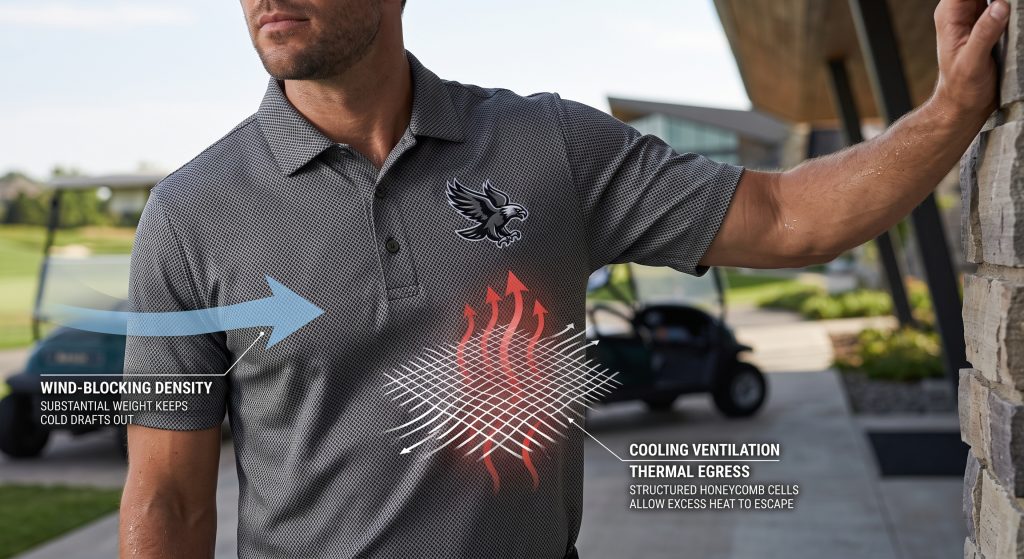
Honeycomb pique is a durable weave with a raised geometric pattern that provides a substantial weight and professional appearance for team polos. Utilizing this unique pique knit in netting fabric sports designs delivers an elegant, structured texture that holds its shape beautifully over time. This heavier material density blocks cool external drafts while allowing excess body heat to escape through its structured honeycomb cells. Our premium pique fabrics are highly favored by corporate brands creating upscale golf wear and smart athletic uniforms. This sophisticated textile choice guarantees that your finished sports apparel looks exceptionally crisp and professional both on and off the competitive playing field.
Why Choose Pique for Polos?
What’s the real story behind the classic golf polo and why does it rely so heavily on pique knit fabrics? The raised geometric honeycomb pattern provides a stiff, structured collar and premium drape that looks sharp and professional during corporate golf tournaments. You can easily elevate your teamwear designs by using this durable, elegant fabric for smart athletic apparel collections. Giving corporate clients a polished, premium look on the course secures high-value orders and boosts your business reputation, guaranteeing solid commercial growth.
- Stiff, structured collar drape that holds shape.
- Raised geometric knit for an elegant appearance.
- Excellent durability to resist long-term wear.
How Does Pique Breathe?
Ready for the good part because pique’s raised structure naturally creates small air pockets between the fabric and your skin, allowing excess heat to escape. This smart ventilation system keeps players cool without sacrificing the material’s thick, substantial hand-feel and high abrasion resistance. You will find that technical pique is the perfect choice for high-end, comfortable outdoor uniforms that must survive rugged field training. Sourcing this structured knit guarantees your corporate uniforms look premium while keeping active wearers fresh throughout long games.
- Raised air pockets to prevent fabric sticking.
- Structured ventilation pores for steady cooling.
- Thicker yarn composition for wind defense.
Selecting honeycomb pique knit for your athletic polo and teamwear lines guarantees your finished garments deliver a sharp, professional appearance and durable field performance. This premium textile drape enhances your brand’s market positioning, allowing you to secure profitable corporate accounts and large wholesale contracts. Preventing fabric sagging and collar warping keeps uniforms looking pristine, ensuring high satisfaction and repeat business for your firm. Pique’s unique textured architecture offers the perfect combination of classy styling and reliable on-field ventilation, validating your procurement choice.
| Fabric Pattern | Material Weight | Primary Application |
| Honeycomb Pique | Heavier, structured | Premium corporate golf polos |
| Circular Birdseye | Lightweight, soft | High-ventilation training tees |
This comparative matrix demonstrates how different weave structures align with specific apparel styles and performance needs.
7. Is Netting Fabric Sports Elastane Blend Better?
Blending elastane with technical netting polymers provides superior four-way stretch and shape recovery, maximizing athlete mobility and comfort. Incorporating this flexible elastic blend into netting fabric sports production allows garments to expand and snap back dynamically during intense training drills. This high elastic recovery prevents the activewear from bagging out or losing its snug fit after undergoing strenuous physical exercises. Our factory customizes these flexible elastane blends to match your exact compression specifications, securing optimal wearability for your customers. This engineering focus guarantees that your finished activewear provides a supportive, comfortable compression fit that enhances athlete speed and physical recovery.
Why Is Four-Way Stretch Needed?
Believe it or not but competitive athletes perform millions of multi-directional movements during high-intensity training, requiring fabric that moves smoothly with their bodies. Standard two-way stretch materials can pull or restrict extreme body motions, leading to localized discomfort and premature garment tearing at critical stress seams. You can easily solve these fit challenges by selecting premium four-way stretch netting blends for your activewear lines. Providing unrestricted physical mobility keeps players comfortable and agile, allowing them to achieve peak performance, boosting client loyalty.
- Horizontal stretch for easy chest expansion.
- Vertical stretch to accommodate torso bending.
- Smoother seam movement during intense runs.
How Does Shape Recovery Work?
Here is the kicker because low-grade activewear permanently deforms and bags out at the elbows and knees after just a few tough workout sessions. High-recovery elastane blends snap back to their original dimensions instantly, guaranteeing the finished garment keeps its snug, professional athletic fit over time. You will protect your brand’s reputation and minimize customer returns by sourcing high-recovery technical fabrics directly from our automated mill. Delivering long-lasting shape retention keeps your sportswear collections looking premium through extensive physical use, reinforcing your market position.
- Instant fiber snapback to prevent garment sagging.
- Maintained compression pressure for muscle support.
- Longer garment life through many washing cycles.
Sourcing high-recovery four-way stretch elastane netting guarantees that your sportswear collections deliver ultimate physical mobility and durable shape retention. This flexible design choice satisfies the rigorous demands of elite athletes, allowing your corporate brand to capture high-value training wear contracts. Preventing garment sagging and seam splitting protects your business from costly quality complaints and product replacements. Investing in flexible, high-recovery technical fabric blends positions your activewear line as a premium choice for high-performance training gear, driving commercial success.
| Fabric Blend | Stretch Capacity | Elastic Recovery |
| Nylon Spandex Mesh | 4-Way outstanding stretch | Superior snapback memory |
| Pure Polyester Mesh | 2-Way limited elasticity | Moderate shape retention |
This elasticity dataset demonstrates how integrating premium elastane yarns ensures superior garment flexibility and shape retention.
8. How Netting Fabric Sports Breathability Is Tested?
Measuring air permeability using specialized ASTM standards determines the exact volume of air that passes through the fabric mesh. Verifying netting fabric sports airflow metrics guarantees that your finished garments provide the necessary heat dissipation under extreme physical training conditions. If the fabric fails these rigorous lab tests, it will trap sweat and body heat, causing rapid body fatigue and retail customer returns. Our advanced mill conducts rigorous in-house testing on every batch to guarantee that the fabric delivers consistent, high-performance ventilation for your brand. This precise quality testing safeguards your technical sportswear brand from unexpected field performance failures, securing maximum consumer satisfaction.
Why Use ASTM D737 Testing?
What’s the real story behind the ASTM D737 standard and why do professional sportswear brands rely on it to verify fabric airflow? This standardized test measures the exact rate of air flow passing through a textile under specific air pressure, providing a clear numerical value for breathability. You can easily compare multiple technical fabric samples and choose the best option by reviewing these standardized laboratory testing reports. Relying on verified scientific data guarantees that your finished sportswear meets international performance standards, securing solid product positioning.
- Standardized testing to compare fabric samples.
- Clear numerical values for air permeability.
- Reliable proof of performance for retail buyers.
How to Verify Wicking Speed?
You might be wondering how to measure the exact speed at which a technical mesh pulls sweat away from the skin and spreads it out. Performing standard water droplet absorption tests reveals how quickly the fabric absorbs and disperses liquid, ensuring rapid drying during intense physical workouts. You will consistently deliver dry comfort to active wearers by choosing performance fabrics with certified wicking and drying speeds. Verifying these fast-drying properties protects your activewear brand from performance complaints in the competitive sportswear market, raising brand value.
- Water droplet tests to measure absorption speed.
- Moisture dispersion tracking to check drying rates.
- Certified wicking properties for elite sportswear.
Conducting standardized ASTM D737 airflow tests and verifying wicking speeds guarantees that your sportswear delivers certified, high-performance ventilation and moisture management. This technical data builds immense credibility for your brand, allowing you to secure lucrative corporate contracts with professional athletic organizations. Preventing fabric choking and sweat trapping protects your business from costly product recalls and negative retail reviews. Prioritizing scientific laboratory verification ensures that your finished garments perform flawlessly under the most extreme competitive conditions, guaranteeing business success.
| Test Standard | Measurement Focus | Performance Indicator |
| ASTM D737 | Air permeability rate | Continuous ventilation |
| Droplet Absorption | Wicking and dispersion speed | Rapid sweat drying |
This technical testing data proves that certified materials deliver consistent, high-performance breathability on the athletic field.
9. Where to Buy Netting Fabric Sports Rolls in Bulk?
Sourcing directly from certified textile mills in East Asia offers the most cost-effective bulk pricing and consistent quality control. Purchasing netting fabric sports rolls directly from the manufacturer completely eliminates middleman broker fees, saving significant corporate procurement capital. Our automated production facility offers extensive custom dyeing and technical finishing services to fit your specific activewear design requirements. We maintain exceptionally strict quality control standards to safeguard that every single fabric roll meets your high performance expectations. This streamlined supply chain partnership guarantees stable material delivery timelines and uncompromised structural consistency for your global clothing business.
Why Source Direct from Mills?
Here is the deal because working with unverified third-party brokers often leads to unexpected shipping delays and inconsistent material quality across multiple production batches. Cooperating directly with an automated textile mill gives you full access to detailed production logs, quality inspection files, and custom color matching services. You will achieve maximum design accuracy and material pricing efficiency by establishing direct factory relationships with verified manufacturers. Sourcing direct guarantees that your technical activewear collections meet the highest standards of international clothing brands, raising profit margins.
- Direct communication with technical factory engineers.
- Full control over custom synthetic polymer blends.
- Elimination of expensive middleman markup commissions.
What Sourcing Steps Avoid Delays?
This is where it gets interesting because planning your fabric procurement schedule well ahead of the busy seasonal manufacturing rush protects your delivery timelines. Confirming minimum order quantities and securing custom dye color batches early prevents unexpected bottlenecks on the factory floor. You can easily secure stable, year-round production runs and reliable shipping schedules by partnering with a high-capacity, automated textile mill. Proper scheduling coordination safeguards your market launch dates, guaranteeing your collections reach retail stores on time, avoiding financial loss.
- Early color batch approval using standard Pantone systems.
- Coordination of manufacturing schedules with mill capacity.
- Securing bulk freight lanes to streamline international customs.
Partnering directly with an automated textile mill for bulk material sourcing guarantees stable procurement pricing, custom design flexibility, and consistent product quality. This strategic supply chain relationship protects your corporate profit margins while ensuring your sportswear line performs reliably on the competitive field. Sourcing directly from verified manufacturers saves significant capital and eliminates the operational stress of unexpected shipping delays. Direct factory sourcing safeguards your raw material pipeline, allowing your business to expand its market share and capture premium retail accounts.
| Sourcing Channel | Pricing Efficiency | Quality Oversight |
| Factory Direct | Maximum discount | Direct production logs |
| Third-Party Broker | Inflated markups | Limited factory access |
This sourcing comparison confirms that factory-direct partnerships provide the highest economic value and quality control for your brand.
10. How to Care for Netting Fabric Sports Activewear?
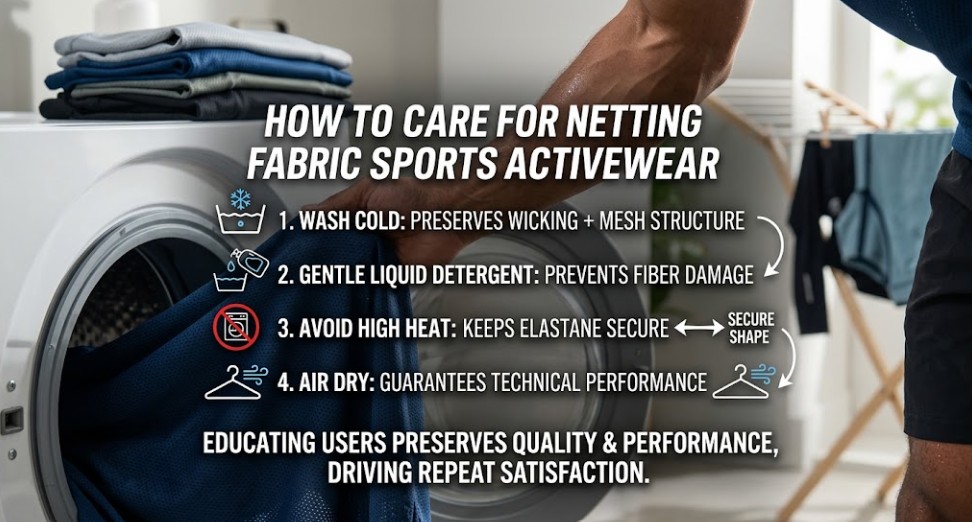
Preserving the technical wicking and open structure of synthetic mesh requires washing in cold water and avoiding heavy heat during drying. Laundering netting fabric sports items with gentle liquid detergents prevents fiber damage and keeps the mesh openings clear of waxy residues. High heat should be strictly avoided as it can warp elastic spandex threads, leading to permanent shape deformation. Our technical guidelines provide simple care labeling instructions that help retail customers maintain the quality and longevity of your finished garments. Educating end users on proper laundry methods preserves the activewear’s technical performance, driving positive reviews and high repeat customer satisfaction.
Why Wash with Cold Water?
You might be wondering if cold water is truly effective at cleaning sweaty athletic mesh garments after a tough physical workout. Cold machine washing protects the delicate synthetic polymer threads and prevents the fabric from shrinking or losing its natural elastane snapback. You can easily safeguard that your finished sportswear maintains its original shape and sizing by recommending gentle, cold-water cleaning methods on care labels. Cold cycles also save energy and protect color dyes from fading during repeat laundry washes, protecting visual aesthetics.
- Cold cycle setting to protect synthetic fibers.
- Prevention of color dye bleeding and fabric fading.
- Protection of elastane elasticity from heat decay.
How to Dry Technical Mesh?
What is the catch when you throw high-performance sports apparel into a hot commercial dryer after a quick laundry wash? High heat quickly melts synthetic polymer fibers, shrinking the mesh holes and turning a soft athletic shirt into a stiff, scratchy rag. You will preserve the buttery-soft feel and high stretch of technical activewear by hanging the garments to air dry naturally. Recommending safe drying methods protects your retail buyers from performance issues and eliminates complaints about fabric shrinkage, securing long-term brand equity.
- Air drying on hangers to preserve garment shape.
- Avoiding high-heat tumble dryers to prevent fiber melting.
- Gentle low-temperature cycles when rapid drying is needed.
Recommending cold water washes and natural air drying preserves the technical wicking properties and luxurious textures of your sports mesh apparel over time. This proactive customer education strategy reduces warranty replacement costs and reinforces your brand’s reputation for technical durability. Protecting the fabric from heat damage guarantees that uniforms perform beautifully on the field for multiple active training seasons. Proper garment care instructions maintain consumer satisfaction, driving positive reviews and steady repeat business for your athletic clothing line.
| Care Parameter | Recommended Process | High-Heat Risk |
| Washing Temp | Cold water (under 30°C) | Spandex shrinkage and sag |
| Drying Method | Natural line air dry | Fiber melting and stiffness |
This maintenance data confirms that gentle laundry protocols preserve technical mesh performance and shape recovery over long-term use.
Selecting the perfect technical mesh parameters solves common athletic wear design challenges like poor cooling, sweat retention, and premature fabric tear on the field. Sourcing premium birdseye knit for high-ventilation running singlets or substantial honeycomb pique for elegant team polos gives your sportswear brand a powerful competitive advantage in the global market. Our automated East Asian mill provides certified, high-tensile, and sustainable fabric rolls engineered to elevate athlete speed and comfort in the most challenging outdoor environments. We invite your development team to contact us today to request custom texture swatches and secure stable wholesale pricing for your upcoming seasonal lines. We envision a progressive, sustainable global textile industry where advanced synthetic engineering and clean maintenance protocols drive physical athletic achievement forward safely.
Q1: Can I use high-density pique mesh for lightweight summer running shirts?
No, you should avoid it because pique is a heavier, more structured fabric designed for smart team polos. It provides excellent shape drape but holds too much weight for high-ventilation, intense running singlets.
Q2: What’s the best alternative to chemical softeners for activewear?
Pure distilled white vinegar is the best alternative. This mild organic acid dissolves sweat lipids and detergent film without blocking technical mesh pores.
Q3: How do I know if my sports mesh has high stretch recovery?
You can verify it by pulling the fabric sample firmly in both directions and check if it snaps back instantly. High-quality elastane netting recovers 95% of its original shape, preventing sags.
Q4: Can I order custom Pantone colors for bulk textile orders?
Yes, direct factory sourcing allows you to request custom Pantone dye matching. Automated colorimeters ensure complete visual consistency across thousands of yards.
Q5: How do I know if a fabric mill is environmentally certified?
You must verify their active registration codes on global textile compliance databases. Valid GRS and OEKO-TEX badges guarantee clean, sustainable manufacturing.