
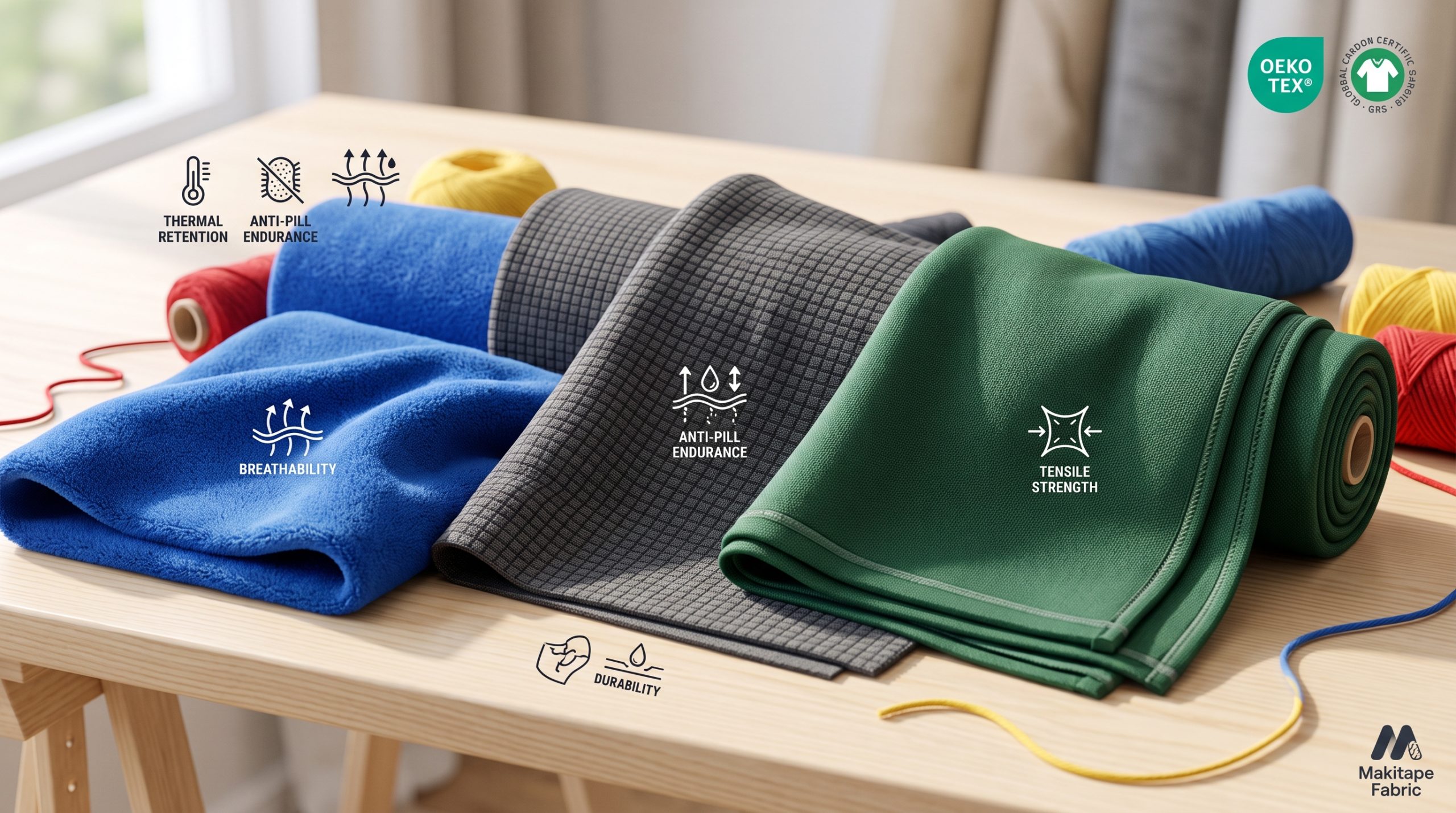
Selecting appropriate winter weights represents a critical decision for procurement managers who coordinate seasonal apparel manufacturing cycles for competitive athletic leagues. Imagine organizing a massive production run of team hoodies only to discover that the selected insulation material develops unsightly fiber pills after a single commercial laundry cycle. This immediate quality degradation compromises the professional presentation of the athletes and damages your corporate reputation among wholesale activewear clients who expect premium durability. Sourcing verified anti-pill sports team fleece fabric resolves these thermal and aesthetic vulnerabilities by combining excellent heat retention with permanent surface structural integrity.
Where to source quality sports team fleece fabric?
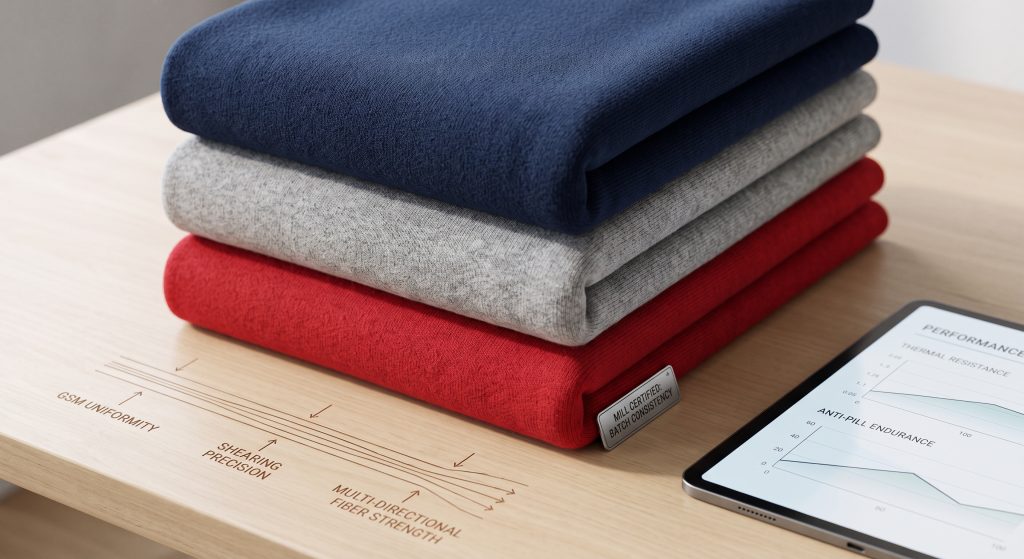
Wholesale buyers obtain high-grade sports team fleece fabric directly from integrated synthetic textile mills that possess specialized brushing and shearing machinery. Coordinating directly with a primary production factory allows apparel developers to secure absolute color continuity across large production quantities while avoiding heavy distributor markup fees. These advanced milling facilities utilize synchronized quality monitoring frameworks to ensure that every single yard of material delivers uniform thermal resistance and identical surface characteristics. Working with an established manufacturer protects your bulk investment and guarantees that your cold-weather sports lines satisfy strict commercial metrics.
Sourcing through direct textile manufacturers
Here’s the deal regarding global sportswear procurement logistics because establishing a direct link with an actual production mill completely stabilizes your raw material supply chain. When you purchase technical textiles from a certified source you bypass local broker inflation and gain complete control over custom yarn specifications:
- Direct factory integration provides clear component traceability documentation.
- High-volume manufacturing agreements secure predictable pricing structures for seasonal lines.
- Specialized textile laboratories verify material performance metrics before container loading.
Evaluating global supplier capabilities
You might be wondering how international clothing brands consistently maintain uniform product standards while shifting massive manufacturing contracts between global production centers. The solution relies entirely on verifying that your chosen manufacturing partner holds accredited quality management system certifications and utilizes high-speed automated weaving technology.
| Supplier Classification | Volume Minimums | Average Lead Time |
| Direct Milling Plant | High Volume Bulk | Twenty-Five Days |
| Regional Textile Broker | Minimal Quantities | Seven Business Days |
The operational breakdown demonstrates that direct factory contracts offer the most reliable path for large-scale corporate athletic apparel rollouts. Key Takeaway: Direct milling partnerships guarantee optimal material consistency and provide substantial cost savings for commercial sports apparel lines.
Why select anti-pill sports team fleece fabric?
Procurement teams select anti-pill sports team fleece fabric because specialized thermal processing prevents loose surface fibers from tangling into unsightly balls during intense physical activities. This specific structural resistance is achieved through precise mechanical shearing cycles that cleanly trim away weak yarn filaments before the fabric leaves the factory floor. Implementing this durable textile variant ensures that your team uniforms maintain a polished brand-new appearance through an entire season of demanding athletic competition. Choosing treated synthetic options guards your clothing brand against premature garment failure and lowers product return rates from wholesale distributors.
The science behind anti-pill shearing treatments
What’s the real story behind the persistent fiber knotting that frequently ruins low-cost fleece hoodies after their initial encounter with a commercial washing machine? Unfinished synthetic filaments naturally migrate to the fabric surface during physical friction and form micro-clumps that trap dirt and degrade thermal insulation properties. You can easily eliminate this aesthetic defect by utilizing double-sheared textiles that undergo advanced thermal setting processes to lock individual yarn loops permanently in place:
- Double mechanical shearing removes unstable loose surface fibers.
- Specialized thermal curing lines stabilize internal polymer bonds perfectly.
- Dense microfiber arrangements resist surface friction from heavy training gear.
Maximizing activewear product lifespans
Ready for the good part concerning the long-term financial advantages of incorporating premium treated insulation materials into your winter sportswear catalog? Garments constructed from double-sheared polyester retain their native softness index over years of use and continue to provide reliable thermal protection in freezing outdoor environments.
| Treatment Grade | Surface Wear Resistance | Laundering Endurance |
| Premium Anti-Pill | Maximum Shearing Rating | Exceeds Fifty Cycles |
| Standard Brushed Poly | Basic Finishing Rating | Minimal Wear Resistance |
The technical matrix proves that choosing high-grade finishing treatments prevents surface pilling and keeps athletic uniforms looking completely professional. Key Takeaway: Utilizing anti-pill finishing styles ensures your winter team apparel line maintains a premium presentation that drives repeat corporate orders.
How to test heavy sports team fleece fabric lots?
Quality control officers evaluate bulk shipments of sports team fleece fabric by running standardized mechanical friction tests and monitoring dimensional stability profiles under high heat conditions. These industrial testing procedures verify that incoming textile rolls possess sufficient tensile strength to endure the heavy tearing forces common in contact field sports. Running sample batches through rigorous laboratory trials before starting automated cutting schedules protects your apparel manufacturing firm from expensive processing mistakes. Specialized laboratory testing equipment helps procurement officers verify that delivered goods match the technical specifications outlined in contract documents.
Running standardized abrasion assessments
This is where it gets interesting for textile inspection teams because relying on basic hand-feel evaluations cannot accurately predict how a synthetic knit behaves during rough match play. Industrial laboratories utilize specialized testing machinery that rubs fabric samples together under heavy pressure to see exactly when surface fibers begin to break down:
- Mechanical friction testers simulate months of intense athletic wear.
- Digital weight scales confirm absolute consistency across different production lots.
- Spectrophotometer analysis guarantees perfect color matching with official team logos.
Verifying structural shrinkage limitations
Here’s the deal regarding thermal stability because poor polyester formulations can contract unevenly when exposed to standard drying temperatures in commercial laundries. Requiring verified testing data before approving container shipments keeps your manufacturing operation safe from producing misshapen hoodies that do not fit the athletes properly:
| Evaluation Criteria | Testing Protocol | Regulatory Benchmark |
| Surface Pilling Resistance | ASTM D3512 Method | Minimum Grade 4.0 |
| Dimensional Stability | AATCC 135 Washer | Under Two Percent |
The quality data demonstrates that following international testing frameworks provides the hard metrics required to clear fabric lots for immediate garment production. Key Takeaway: Executing strict laboratory trials before mass production protects your brand from material failures and preserves customer satisfaction.
Which weight suits sports team fleece fabric lines?
Selecting the correct thickness for your sports team fleece fabric requires matching the gram weight per square meter to the specific climate challenges of the sport. Lightweight microfleece options provide excellent flexibility for high-speed running jackets because they minimize material bulk and allow athletes to move without restriction. Medium and heavy insulation fabrics supply the robust warmth required for sideline parkas and stadium blankets that protect resting players from freezing winds. Working with a knowledgeable textile designer helps your brand balance physical weight limits against the warmth demands of outdoor winter sports.
Matching density parameters to athletic movement
You might be wondering how subtle adjustments to synthetic fabric density alter the ultimate mobility and endurance of an athlete during field training. A textile that is too thick will retain excessive heat and cause early physical exhaustion yet an overly thin material leaves players shivering during downtime:
- Performance microfleece configurations optimize speed for cross-country running teams.
- Midweight brushed materials supply reliable everyday warmth for school track hoodies.
- Heavy thermal liners block biting winds during extreme alpine sporting events.
Analyzing commercial material weight tiers
What’s the real story when product developers must decide between lightweight flexibility and heavy thermal insulation for upcoming winter sportswear lines? The goal involves selecting specific fiber weights that keep core muscle temperatures stable without adding unnecessary physical drag to the moving athlete.
| Material Weight Class | Density Range (GSM) | Targeted Winter Application |
| Microfleece Light | 140 – 160 GSM | High Speed Layering |
| Medium Fleece Core | 240 – 280 GSM | Standard Team Hoodies |
| Thermal Heavy Insulation | 320 – 360 GSM | Sideline Bench Coats |
The density matrix illustrates how adjusting fabric weight parameters allows sportswear manufacturers to target specific cold-weather environments accurately. Key Takeaway: Aligning material weights with explicit sport environments ensures your finished sportswear provides the perfect blend of warmth and movement.
Is sports team fleece fabric good for ventilation?
Standard insulation knits can trap stagnant warm air, but advanced sports team fleece fabric utilizes hollow-core yarn profiles to facilitate constant internal air circulation. This modern construction method allows metabolic moisture to pass through the fabric matrix quickly while keeping a protective layer of warm air near the body. Implementing these breathable synthetic options prevents the accumulation of cold sweat against the skin which causes a rapid drop in body temperature during rest periods. Sourcing smart breathable knits enables your manufacturing plant to supply premium winter activewear that regulates body heat during active field games.
How hollow yarns manage internal humidity
Ready for the good part concerning the internal mechanics of high-airflow performance knits used in modern winter sports championships? Microscopic spaces inside the technical threads pull sweat away from the body using basic capillary action and push it to the outer surface for rapid evaporation:
- Open loop patterns allow heavy heat loads to escape during workouts.
- Hydrophobic synthetic polymers prevent the fabric from holding onto heavy sweat.
- Structural air channels keep skin dry to prevent chilling after exercise.
Comparing breathability metrics across structures
You might be wondering if altering the mechanical brushing depth on the inside of the fabric impacts total air movement through the finished garment panels. Testing demonstrates that precision shearing keeps ventilation pathways open while deep unmanaged brushing can block airflow and cause overheating:
| Fabric Architecture | Airflow Performance | Vapor Dispersion Speed |
| Hollow Core Microfleece | Excellent Ventilation | Extremely Fast |
| Heavy Brushed Polyester | Restricted Ventilation | Moderate Surface Speed |
The technical data shows that engineered hollow-core structures deliver superior air circulation compared to old solid synthetic options. Key Takeaway: Sourcing high-airflow synthetic textiles ensures your winter sportswear line keeps athletes warm without causing uncomfortable sweat accumulation.
Can you print custom sports team fleece fabric rolls?
Industrial print shops customize sports team fleece fabric rolls using advanced digital dye sublimation machinery that fuses specialized ink molecules directly with the polyester fibers. This high-temperature printing technique ensures that team graphics, crisp player numbers, and vibrant custom patterns become a permanent part of the physical material structure. Sublimated patterns will never peel, crack, or fade when stretched on the field because the color bonds at a molecular level instead of sitting on top of the fabric. Choosing this printing path allows your activewear factory to produce highly detailed custom uniforms that keep their bright colors through multiple sports seasons.
The benefits of molecular sublimation printing
Here’s the deal regarding custom athletic clothing design because old screen-printing methods create a thick plastic layer that blocks breathability. Gaseous ink transfer methods embed the color pigments directly inside the individual yarn strands, keeping the soft surface texture completely unchanged:
- Gaseous ink transfer keeps the soft fabric face feeling flexible.
- Full-coverage printing configurations do not block natural ventilation pathways.
- Water-based sublimation inks meet strict international environmental safety guidelines.
Managing color accuracy for official branding
What’s the real story when production managers must match official school team branding guidelines across different types of synthetic textiles? Utilizing digital ink management software ensures that your custom patterns look identical on lightweight shirts and thick winter fleece garments:
| Customization Method | Color Longevity Rating | Structural Texture Impact |
| Digital Dye Sublimation | Permanent Fusion | Zero Surface Change |
| Traditional Screen Paint | Moderate Endurance | Thick Rigid Coating |
The manufacturing comparison highlights why modern sublimation processes represent the premier selection for complex corporate sportswear branding projects. Key Takeaway: Applying molecular sublimation printing techniques allows your business to deliver brilliant team graphics that remain permanently bright and flexible.
How to wash premium sports team fleece fabric items?
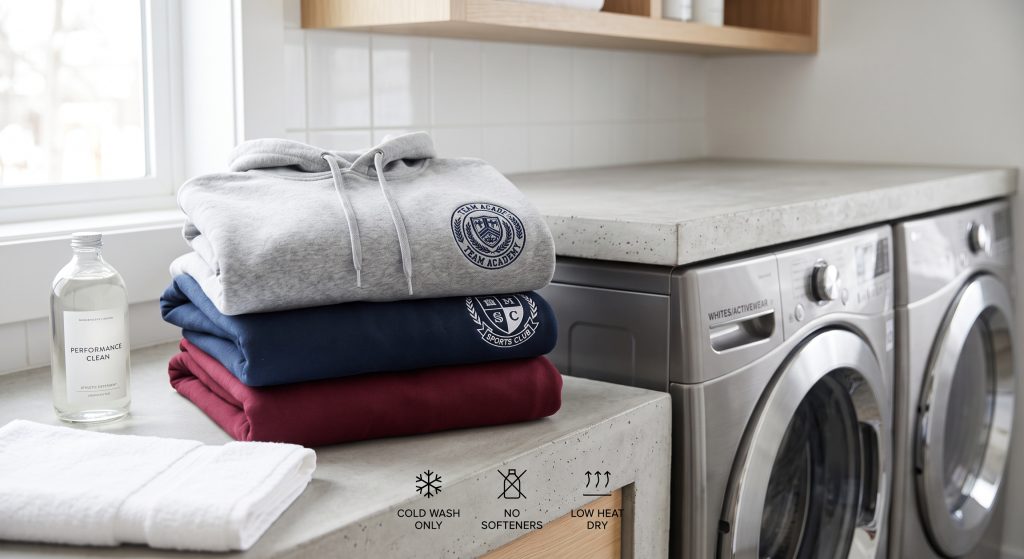
Laundering sports team fleece fabric items safely requires utilizing low-temperature wash cycles and avoiding harsh chemical softeners that can coat the performance microfibers. Commercial activewear buyers provide clear maintenance instructions to ensure that team garments keep their soft texture and thermal performance over multiple seasons of use. Running drying equipment on low heat settings prevents the synthetic polymer yarns from melting or becoming stiff and brittle. Teaching your wholesale clients correct care methods protects their apparel investments and reinforces your brand’s reputation for long-lasting quality.
Protecting performance fibers from chemical coatings
You might be wondering why standard household fabric softeners frequently ruin the moisture-wicking capabilities of premium synthetic sports apparel items. Liquid softeners leave a microscopic waxy film over the synthetic loops, which blocks the built-in ventilation channels and traps body odor inside the garment:
- Cold water wash cycles protect the synthetic polymer bonds from weakening.
- Mild commercial detergents remove tough field stains without stripping color.
- Air-drying methods preserve the native fluffy texture of the brushed pile.
Developing commercial care instructions
This is where it gets interesting because team managers require simple laundry routines that allow full uniform kits to be cleaned rapidly between weekly competitive games. Providing clear care documentation prevents laundry staff from using high heat settings that can cause permanent fabric shrinking or surface damage:
| Maintenance Parameter | Approved Laundry Setting | Performance Benefit |
| Cycle Water Temperature | Cold Wash Operation | Protects Synthetic Dye |
| Drying Heat Level | Low Temperature Tumble | Prevents Filament Melting |
The laundry guideline matrix confirms that using low-temperature cleaning methods is necessary to preserve the soft feel and performance features of activewear. Key Takeaway: Providing simple low-temperature washing instructions extends the active life of team uniforms and keeps colors looking bright.
Does sports team fleece fabric shrink in the wash?
High-quality sports team fleece fabric features excellent resistance against shrinkage because modern mills pre-stabilize the synthetic polyester fibers using industrial heat-setting lines. This advanced production step locks the synthetic loops into their final shapes, ensuring that finished athletic garments keep their exact size after machine washing. Procurement managers look for heat-stabilized materials to make sure that team jackets do not become misshapen or fit poorly after regular cleaning. Sourcing stabilized synthetic knits protects your inventory investment and ensures a reliable fit for athletes throughout the year.
The mechanics of industrial heat stabilization
But here’s the kicker concerning the physical stability of technical sportswear when exposed to the high temperatures found in commercial laundry dryers. Passing the raw knit material through high-temperature setting lines before garment assembly eliminates the internal fiber tensions that naturally cause shrinking:
- Heat-set polyester strands keep their exact length through numerous wash cycles.
- Uniform loop configurations prevent the fabric from twisting or warping out of shape.
- Stable garment sizes ensure that team numbers and sponsor logos remain perfectly aligned.
Evaluating material contraction risks
You might be wondering how cheap manufacturing methods skip these critical heat-setting steps to lower production costs at the expense of quality. Untreated synthetic knits can shrink up to eight percent when washed, which alters garment sizing completely and causes major complaints from team clients:
| Fabric Processing | Linear Shrinkage Rate | Long-Term Fit Reliability |
| Factory Heat-Stabilized | Less Than One Percent | Superior Fit Retention |
| Untreated Synthetic Knit | Exceeds Six Percent | High Risk of Distortion |
The technical comparison chart proves that heat-stabilized textiles provide the dimensional security needed for commercial clothing lines. Key Takeaway: Selecting factory heat-set synthetic fabrics ensures your winter uniforms maintain an accurate fit over years of regular laundering.
Why choose double knit sports team fleece fabric?
Premium clothing brands select double knit sports team fleece fabric because this advanced construction method uses two separate needle beds to create a thick, two-sided material. This professional setup produces a clean, smooth appearance on both the inside and outside faces of the garment, providing ultimate comfort against the skin without requiring extra fabric liners. The double-layered construction also adds excellent wind resistance and structure, ensuring the apparel keeps its shape during intense outdoor training sessions. Choosing double-faced materials allows your apparel firm to target high-end retail markets that pay a premium for luxury athletic streetwear.
The performance advantages of double needle beds
Here’s the deal about engineering top-tier sportswear items that look highly structured on retail racks while offering full freedom of movement on the field. The interlocking loop network provides double the recovery strength of single-knit alternatives, which prevents the material from sagging at the elbows or waist:
- Smooth interior faces eliminate the need for separate mesh garment liners.
- Dense dual-wall structures block cold winter winds more effectively.
- Increased fabric thickness provides extra protection against field scrapes.
Improving wholesale brand positioning
What’s the real story behind the impressive retail prices achieved by top fitness brands for their seasonal winter athletic collections? The substantial thickness and elegant drape of double-faced materials instantly signal luxury quality to professional buyers who are checking sample garments:
| Fabric Construction | Structural Thickness | Target Retail Market |
| Double Bed Interlock | Substantial Dual Wall | Premium Luxury Activewear |
| Single Bed Fleece | Standard Single Layer | Budget School Uniforms |
The manufacturing analysis demonstrates that using double knit production methods allows your factory to create luxury sportswear items that command much higher profit margins. Key Takeaway: Utilizing double knit structures allows your brand to capture the high-margin corporate wellness and premium athletic lifestyle markets.
When should you buy sports team fleece fabric lots?
Commercial activewear lines purchase sports team fleece fabric lots during low-demand spring months to secure optimal pricing and protect production schedules from seasonal shipping delays. Ordering raw materials at least five months before the winter sports season begins gives your design team plenty of time to run strict quality checks and complete custom printing without rushing. This proactive purchasing timeline keeps your business safe from peak season price spikes and unexpected yarn shortages at the mills. Managing your procurement calendar carefully guarantees that your retail partners receive their completed uniform shipments well before the opening game of the season.
Bypassing peak seasonal supply bottlenecks
You might be wondering why so many clothing brands face severe delivery delays that cause them to miss critical store launch dates for winter sportswear. Global shipping lanes and raw material supplies become heavily crowded during late summer months as thousands of factories rush to produce winter garments simultaneously:
- Off-season ordering guarantees you receive first choice of premium yarn lots.
- Extended production timelines allow for precise color matching and adjustments.
- Relaxed shipping dates lower your logistics expenses by avoiding costly rush fees.
Planning your wholesale purchasing cycle
Ready for the good part regarding the financial benefits of organizing your textile procurement calendar around off-peak manufacturing windows? Buying your fabric inventory early allows you to negotiate better payment terms with mills and ensures your factory machines run smoothly all year:
| Purchasing Window | Material Availability Status | Logistics Cost Trend |
| Spring Off-Peak Months | Full Unrestricted Inventory | Low Stable Freight Rates |
| Late Summer Peak | Limited Factory Capacity | High Rush Shipping Fees |
The scheduling matrix proves that off-season procurement keeps your supply chain safe from sudden market price spikes and factory delays. Key Takeaway: Arranging your raw material purchasing during low-demand months ensures on-time delivery and keeps production costs low for your sportswear brand.
Balancing Warmth and Performance Metrics
Sourcing the ideal winter athletic textile requires a clear understanding of fiber finishing grades, weight densities, and advanced double-knit construction methods. This technical sourcing guide has detailed how choosing anti-pill, heat-stabilized materials helps you solve common production issues like fabric shrinking, surface fuzzing, and slow drying speeds. Our manufacturing mill focuses on producing high-density, certified performance fabrics that allow global clothing brands to build deep customer loyalty through excellent product quality. We combine advanced textile engineering with verified safe supply chains to future-proof your apparel business against changing global environmental laws. To view our newest certified performance collections or discuss custom weight specifications for your upcoming winter line, contact us today for expert B2B assistance.
Frequently Asked Questions
Can I get custom color matching for sports team fleece fabric shipments?
Yes, you can absolutely request precise custom color matching according to international Pantone color codes when ordering bulk fabric shipments from our mill. Our professional dye facility uses digital spectrophotometers to check each production batch, ensuring your custom team colors stay perfectly consistent across separate shipments.
What’s the best fabric weight choice for outdoor winter training hoodies?
The best selection for standard winter training hoodies is a midweight anti-pill synthetic structure ranging between 240 and 280 GSM. This specific weight class provides optimal core warmth for athletes during outdoor practice sessions without adding unnecessary bulk or restricting rapid body movements on the field.
How do I know if a fabric lot will pill after machine washing?
You can confirm the anti-pilling quality of a fabric roll by checking its official laboratory test records and verifying it has a minimum Grade 4.0 rating on the ASTM D3512 random tumble test. Premium fabrics undergo mechanical shearing processes that cleanly remove loose fibers, ensuring the surface remains smooth through countless laundry cycles.
Can I use digital dye sublimation printing methods on thick double knit fleece rolls?
Yes, you can use digital dye sublimation printing on double-knit polyester fleece rolls with excellent, long-lasting results. The high-heat printing process changes the ink into a gas that fuses directly with the synthetic fibers, creating bright team graphics that will never crack, peel, or block airflow.
How do international safety certificates protect my sportswear brand from legal risks?
International safety certificates like OEKO-TEX Standard 100 prove that your fabric supplier does not use toxic processing chemicals or restricted dyes during production. Partnering with a certified clean factory protects your apparel business from expensive product recalls and guarantees your clothing items are completely safe for consumers.