
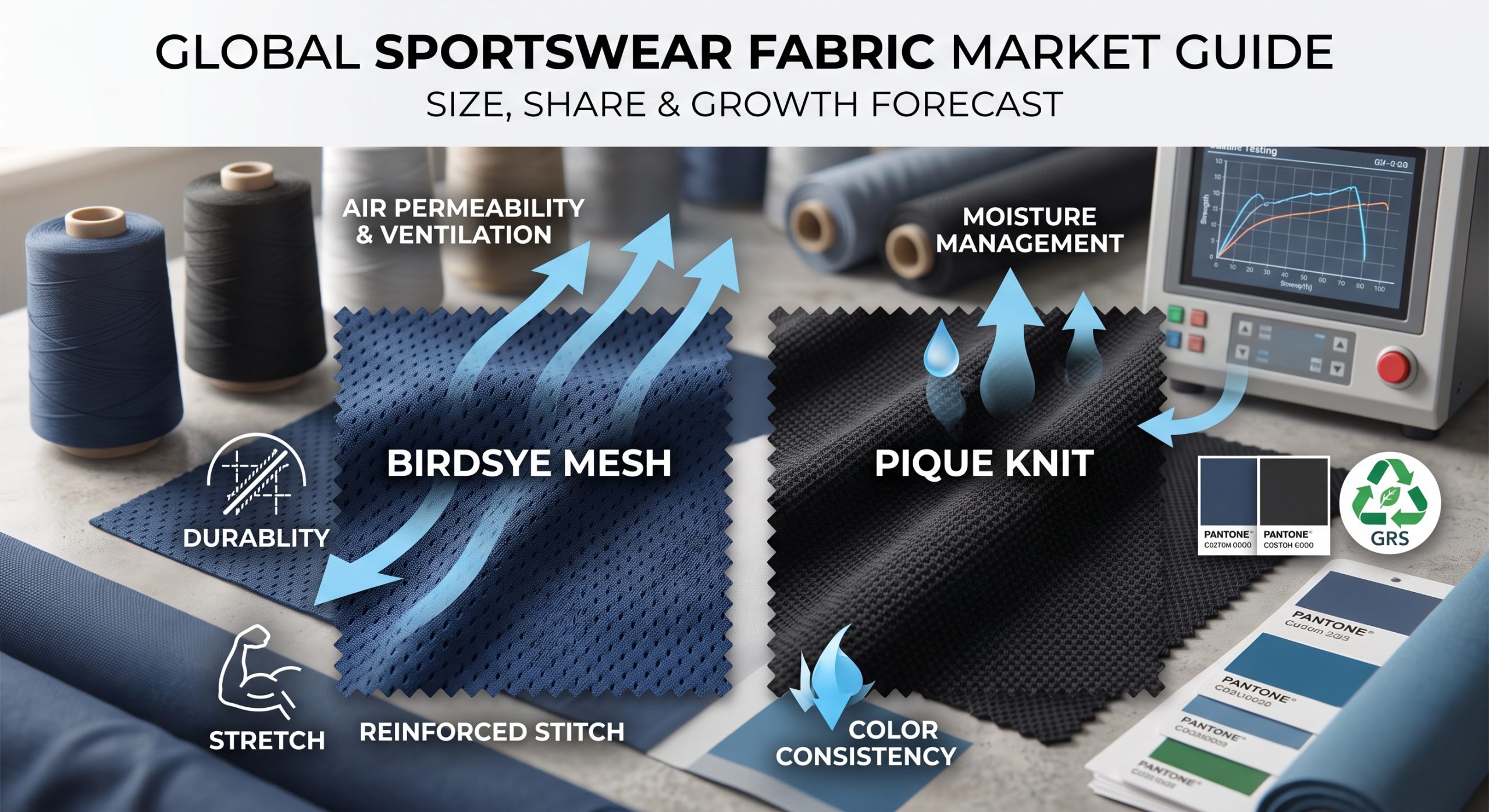
The global market for athletic textiles expands rapidly as sportswear brands seek lightweight, highly breathable, and moisture-wicking synthetic knits engineered for athletic performance. Apparel sourcing managers face costly customer complaints when activewear traps perspiration, feels coarse against active skin, or loses shape after high-intensity use. Sourcing low-grade fabrics damages brand reputation and triggers expensive product returns from unsatisfied athletic clients. Supplying apparel brands with dimensionally stable micro-mesh and structured pique knits resolves these sourcing headaches by guaranteeing high thermal regulation and long-term garment integrity. Understanding the evolving sportswear fabric market enables procurement teams to select raw materials that maximize player comfort and factory efficiency.
1. What Factors Drive Growth in the Sportswear Fabric Market?
Expansion in global athletic participation and casual activewear demand propels steady development across the sportswear fabric market today. Sourcing teams prioritize synthetic knits that offer superior liquid management and physical durability under strain. Natural fibers absorb heavy moisture, whereas advanced synthetic polymers move sweat outward immediately.
Garment manufacturers require raw materials that balance cost yield with high technical performance. Blending micro-polyester with dynamic elastane fibers allows activewear brands to deliver flexible, long-lasting garments.
How Do Performance Demands Influence Textile Sourcing?
Athletes require apparel that adapts to extreme movement while maintaining core body temperature. You can optimize apparel lines by choosing fabrics engineered specifically for quick evaporation.
- High-tenacity synthetic yarns resist heavy tearing during competition.
- Porous knit structures accelerate natural body cooling.
- Hydrophobic treatments prevent moisture absorption in fibers.
Why Are Lightweight Knits Replacing Heavy Fabrics?
Lightweight fabrics lower garment weight, reducing athlete fatigue during long tournament play. Here’s the deal, lighter fabrics reduce shipping costs per unit for growing apparel brands.
Soft micro-denier filaments maintain high opacity even at low gram weights.
Key Takeaway: Sourcing lightweight synthetic fabrics increases player agility while lowering per-unit transport expenditures.
| Growth Driver | Technical Requirement | Industry Impact |
| Activewear Demand | Rapid Moisture Evaporation | Higher adoption of synthetic mesh |
| Apparel Mobility | 4-Way Elastic Stretch | Increased elastane fiber blending |
Tracking primary growth drivers helps procurement officers allocate sourcing budgets toward high-demand performance textiles.
2. Which Synthetic Yarns Dominate the Sportswear Fabric Market?
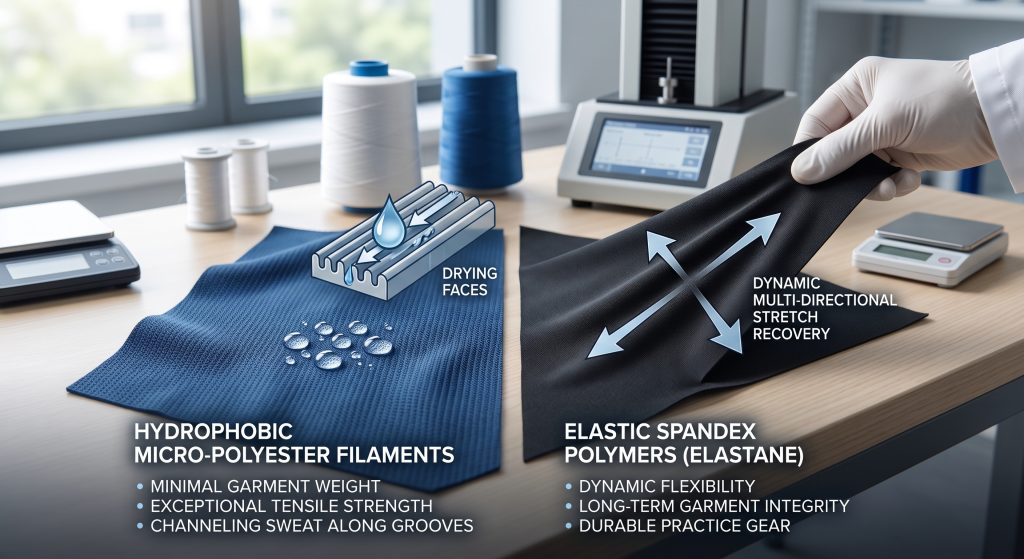
Hydrophobic polyester filaments and elastic spandex polymers dominate physical material selection within the sportswear fabric market. Micro-polyester provides exceptional tensile strength while keeping total garment weight minimal. Synthetic filaments resist liquid absorption, channeling sweat along micro-grooves toward outer drying surfaces.
Adding elastane gives textiles dynamic multi-directional stretch recovery. Sourcing officers depend on synthetic blends to build durable practice gear and professional game uniforms.
Why Does Polyester Lead Activewear Manufacturing?
Polyester filaments provide high color retention and dimensional stability through repeated washings. You receive clean print definition when applying custom sublimation graphics to synthetic polyester faces.
- 100% Micro-polyester yields lightweight game jerseys.
- Poly-elastane blends deliver flexible compression garments.
- Nylon additions enhance surface friction resistance.
How Does Elastane Spandex Improve Player Agility?
Small spandex percentages provide flexible recovery without adding heavy bulk to active garments. What’s the real story? Flexible yarns allow full movement freedom during quick directional changes.
High elastic recovery prevents sagging waistbands and loose knee openings over time.
Key Takeaway: Combining micro-polyester with spandex creates durable, stretchable activewear that holds its original shape.
| Fiber Polymer | Primary Advantage | Typical Garment Usage |
| Micro-Polyester | Superior moisture wicking | Lightweight mesh shorts |
| Spandex / Elastane | Dynamic 4-way flexibility | Compression gear & liners |
Selecting the right yarn composition forms the baseline for durable and high-performing athletic garment lines.
3. Why Does Birdseye Mesh Lead the Sportswear Fabric Market?
Birdseye micro-eyelet grid constructions lead ventilation choices within the sportswear fabric market for summer heat applications. Tiny geometric eyelets act as continuous airflow channels across active muscle zones. Sourcing managers specify birdseye mesh for intense gym training garments due to its continuous heat release capabilities.
Porous eyelet geometry pulls perspiration away from inner skin, spreading liquid thin across outer surfaces. Ready for the good part? Ambient air evaporates moisture in seconds, keeping athletes cool.
What Makes Birdseye Micro-Mesh Excel in Airflow?
Micro-perforations reduce air resistance across the fabric surface without compromising structural opacity. You can count on birdseye mesh to maintain ultra-lightweight drape during heavy sweating.
- Thousands of micro-eyelets vent body heat constantly.
- Lightweight construction minimizes total garment weight.
- Smooth exterior face accepts sharp sublimation dye printing.
How Does Eyelet Geometry Accelerate Evaporation?
Targeted micro-channels draw liquid outward through natural capillary action. This is where it gets interesting, liquid spreads wide across open eyelets rather than pooling inside fibers.
Flat interior loops keep skin friction low during repetitive running movements.
Key Takeaway: Birdseye mesh maximizes active cooling by pairing continuous air passage with accelerated surface drying.
| Structural Metric | Birdseye Mesh | Standard Plain Knit |
| Surface Ventilation | High-density micro-eyelets | Solid continuous face |
| Drying Velocity | Rapid liquid evaporation | Slow moisture trapping |
Engineered micro-eyelet grids make birdseye mesh the preferred choice for high-intensity summer sportswear collections.
4. How Do Pique Knits Expand the Sportswear Fabric Market?
Three-dimensional pique waffle knits broaden style options across the sportswear fabric market by blending technical function with street fashion aesthetics. Raised geometric tuck stitches elevate fabric off sweaty skin, preventing uncomfortable body clinging. Sourcing executives choose pique knits when designing structured streetwear shorts and premium athletic polo shirts.
Natural fabric body supports clean pocket structures and structured waistbands without sagging. You might be wondering, how does pique compare visually to flat activewear knits?
What Gives Pique Knits Superior Garment Structure?
Geometric tuck stitches establish a firm grid pattern that holds tailored silhouettes effortlessly. You achieve an elevated visual texture that transitions smoothly from athletic workouts to casual wear.
- Textured surface reduces full-contact skin friction.
- Sturdy knit density resists wrinkling in gym bags.
- Firm drape supports structured pocket assembly.
Why Do Lifestyle Activewear Brands Prefer Pique?
Lifestyle sportswear collections select pique fabrics to deliver high-end visual appeal alongside active cooling. Believe it or not, pique combines rich geometric texture with functional moisture management.
High yarn density protects garment faces from surface fuzzing over extended use.
Key Takeaway: Pique knits give sports garments structured body and a sophisticated texture suitable for lifestyle collections.
| Performance Attribute | Pique Geometry | Flat Jersey Knit |
| Garment Structure | Firm geometric drape | Soft limp structure |
| Skin Contact Area | Reduced point contact | Full flat contact |
Integrating pique knits allows activewear brands to target premium lifestyle markets with structured, versatile garments.
5. How Do Mesh and Pique Compare in the Sportswear Fabric Market?
Evaluating structural differences between micro-mesh and pique knits clarifies product positioning within the sportswear fabric market for procurement managers. Micro-mesh relies on open perforations for passive air cooling during intense games. Pique utilizes raised waffle tucks to maintain structural body and anti-cling comfort.
Choosing between these textiles depends on target retail price points and intended athletic usage scenarios. Think about it, game gear demands micro-mesh ventilation while casual shorts benefit from structured pique.
What Are the Primary Structural Differences?
Birdseye mesh features high-density micro-eyelets engineered for maximum airflow permeability. Pique knits feature raised geometric waffle points that reduce direct skin contact area.
- Birdseye mesh delivers ultra-lightweight game performance.
- Pique knit provides structured drape for lifestyle apparel.
- Both synthetic knits utilize hydrophobic quick-drying yarns.
How Do You Select Based on Handfeel and Application?
Selecting the ideal fabric requires balancing softness demands against garment structural needs. Here is what matters most, matching fabric weight to garment utility prevents premature product failure.
Smooth interior backings prevent skin chafing during aggressive physical movement.
Key Takeaway: Matching structural properties to specific athletic applications maximizes product functionality and buyer satisfaction.
| Comparison Factor | Birdseye Micro-Mesh | Textured Pique Knit |
| Primary Feature | High air permeability | Structured geometric drape |
| Ideal Application | Pro competition shorts | Lifestyle streetwear gear |
Understanding these material differences guides procurement teams toward precise textile specification decisions.
6. Why Is Air Permeability Key in the Sportswear Fabric Market?
Air permeability directly dictates thermal comfort limits and sweat evaporation rates in the sportswear fabric market during hot tournament play. Open porosity ratios measure the proportion of open space within a knit matrix relative to solid yarn. Higher surface porosity allows body heat to vent outward continuously during exercise.
Sourcing controlled porosity knits prevents athlete overheating during intense practice sessions. Fabric buyers match air permeability metrics to specific regional playing environments.
How Does Open Porosity Speed Up Sweat Evaporation?
Open mesh eyelets establish low-resistance pathways for continuous air passage across active muscles. You can customize pore density specifications to suit warm outdoor or indoor gym conditions.
- Open eyelets create low-resistance ventilation paths.
- Continuous airflow stabilizes core body temperature.
- Custom pore density satisfies varied climate demands.
Which Structure Performs Best in High Heat?
Lightweight micro-birdseye mesh outperforms dense interlock knits when temperatures rise on court. Here’s the deal, open pores release body vapor far faster than solid fabric faces.
Hydrophobic yarn treatments prevent moisture absorption, keeping garments lightweight throughout games.
Key Takeaway: Matching fabric air permeability to climate conditions protects athletes against heat fatigue.
| Climate Condition | Target Porosity Ratio | Recommended Knit Type |
| High Heat (> 30°C) | Open Ratio (> 25%) | Light Micro-Birdseye Mesh |
| Moderate Gym Climate | Balanced Ratio (15% – 20%) | Structured Geometric Pique |
Selecting precise porosity levels ensures activewear brands deliver optimal thermal management across global markets.
7. How Does Tactile Handfeel Shape the Sportswear Fabric Market?
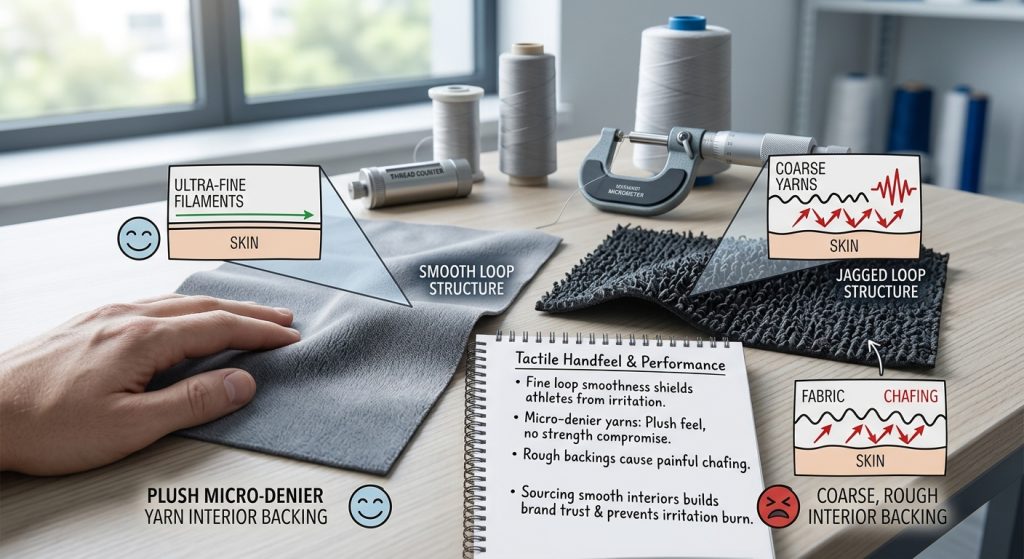
Interior loop smoothness and filament fineness dictate skin comfort levels across the sportswear fabric market during long tournament play. Athletes wearing fitted apparel notice surface friction instantly during full-court sprints. Coarse interior backings rub against active skin, causing painful friction chafing.
Sourcing smooth interior backings shields athletes from irritation burn and increases brand trust. Micro-denier yarns yield plush handfeel without compromising physical fabric strength.
How Do Smooth Backings Prevent Skin Chafing?
Flat interior loops eliminate abrasive contact points against sweaty skin during movement. You protect players from skin irritation by specifying high filament counts in raw knit orders.
- Flat back loops eliminate point-pressure rubbing.
- Fine micro-denier yarns feel soft against skin.
- Plush interior linings maintain comfort during play.
What Yields Soft Skin Contact During Active Play?
Micro-denier yarns double surface softness while preserving overall textile tensile durability. What’s the real story? Finer individual filaments create a smooth, non-abrasive interior face.
Chemical softening finishes combined with smooth knits maximize tactile comfort for athletes.
Key Takeaway: Prioritizing smooth interior backings prevents friction chafing during long, repetitive athletic movements.
| Tactile Property | Micro-Filament Mesh | Standard Coarse Mesh |
| Surface Friction | Low smooth glide | Moderate abrasive rub |
| Skin Comfort Level | High anti-chafing comfort | Potential skin irritation |
Choosing smooth interior backings increases customer satisfaction and builds long-term brand loyalty.
8. Which Quality Metrics Control the Sportswear Fabric Market?
Hydraulic burst strength and Martindale abrasion resistance define long-term durability standards in the sportswear fabric market today. Quality control laboratories test tensile limits to ensure athletic gear withstands rough contact. High burst strength prevents seam blowouts during aggressive physical play.
Apparel brands suffer severe financial loss when garments tear or snag prematurely. Sourcing high-tenacity textiles protects brands from costly product returns and warranty claims.
How Does Bursting Strength Resist Heavy Strain?
Interlocked knit structures distribute mechanical tension evenly across the fabric face during movement. You can set strict burst strength standards during mill procurement to guarantee garment longevity.
- Interlocked knits withstand high hydraulic pressure.
- High-tenacity synthetic yarns keep strength when wet.
- Reinforced constructions resist tearing under strain.
What Stops Fabric Snagging During Contact Sports?
Compact micro-loop construction prevents sharp fingernails or velcro equipment from pulling individual yarns. Ready for the good part? Tight micro-eyelets lock yarn loops firmly into place.
Snag-resistant knits maintain smooth exterior surfaces through rough gym use and repeated washings.
Key Takeaway: Enforcing strict bursting strength and snag resistance standards reduces warranty return rates for apparel brands.
| Quality Parameter | Target Specification | Commercial Benefit |
| Bursting Strength | > 400 kPa | Prevents seam ruptures under pressure |
| Snagging Resistance | Grade 4 or higher | Preserves smooth face appearance |
Establishing clear laboratory test requirements secures garment integrity and protects brand reputation.
9. How Does Roll Stability Boost the Sportswear Fabric Market?
Uniform gram weight and flat selvage edges significantly lower factory defect rates in the sportswear fabric market during automated cutting. Factory managers require dimensionally stable fabric rolls to maintain high sewing throughput. Weight stability eliminates sizing inconsistencies across finished garment lots.
Inconsistent roll weight causes variable stretch behavior during sewing, leading to misaligned seams. Delivering flat, lay-flat fabric layers speeds up automated spreading and cutting machinery.
How Does Weight Stability Prevent Sewing Defects?
Consistent GSM weight guarantees equal stretch behavior across every pattern piece cut on factory floors. You avoid costly sizing variances by enforcing strict roll weight tolerances with suppliers.
- Equal weight distribution ensures accurate sizing.
- Uniform stretch keeps sewing assembly running smoothly.
- Stable density prevents needle breakage during stitching.
Why Is Flat Edge Behavior Vital for Cutting?
Flat selvage edges prevent fabric edges from curling on vacuum cutting tables during spreading. This is where it gets interesting, flat layers allow automated blades to cut exact pattern shapes effortlessly.
Low edge curl prevents misaligned pattern cuts and eliminates twisted side seams.
Key Takeaway: Supplying cutting rooms with dimensionally stable fabric rolls improves cutting precision and cuts fabric waste.
| Factory Metric | Standard Quality Tolerance | Production Line Impact |
| Weight Variance (GSM) | ± 3% maximum | Ensures consistent garment sizing |
| Edge Curl Index | Flat (< 2mm) | Speeds automated cutting machines |
Partnering with mills that deliver lay-flat fabric rolls optimizes factory productivity and protects manufacturing margins.
10. Why Do Direct Mill Partnerships Win the Sportswear Fabric Market?
Direct mill partnerships grant activewear brands complete control over custom shade dyeing, technical finishes, and compliance standards within the sportswear fabric market. Establishing direct factory relationships removes middleman markups and speeds pre-production approvals. Direct technical communication prevents costly manufacturing errors.
Emerging sportswear brands benefit from flexible minimum order quantities that minimize financial inventory risks. Partnering with established textile mills secures long-term supply chain stability as order volumes scale.
How Does Direct Mill Access Speed Product Launch?
Working directly with fabric manufacturers shortens lab-dip approvals and custom swatch development cycles. You receive fast technical support and customized fabric weight options tailored to your brand specifications.
- Rapid lab-dip color matching speeds sample approval.
- Custom fabric weights match exact garment designs.
- Direct technical communication resolves issues quickly.
Why Are Low Minimum Orders Essential for New Lines?
Low minimum order quantities allow growing apparel brands to test new market designs safely. You might be wondering, how can new brands launch custom colors without excess inventory?
Flexible batch orders minimize capital risk on unproven seasonal colorways.
Key Takeaway: Direct mill collaboration gives apparel brands customization control, lower inventory risk, and faster market delivery.
| Sourcing Channel | Lab-Dip Approval Speed | Customization Range |
| Direct Mill Partnership | Fast (7 – 10 business days) | Custom shade, weight & finish |
| Stock Lot Traders | Immediate availability | Restricted to leftover stock |
Collaborating directly with specialized fabric manufacturers secures your supply chain with fully customized performance textiles.
Conclusion
This guide analyzed how synthetic fiber selection, micro-eyelet birdseye mesh, and structured pique knits shape activewear sourcing decisions across the athletic market. Sourcing high-tenacity, dimensionally stable synthetic fabrics resolves factory defects, improves player breathability, and protects long-term brand reputation. Selecting engineered performance textiles ensures your activewear line meets rigorous athletic standards. Ready to optimize your sportswear fabric sourcing? Please contact us today to request custom fabric sample swatches and start building your high-performance athletic collection.
Frequently Asked Questions
Q1: Can I use birdseye mesh for winter athletic apparel?
No, birdseye mesh is engineered specifically for summer heat dissipation and ventilation. Its open micro-perforations let cold air penetrate quickly, so double-knit or brushed fleece fabrics work much better for cold-weather gear.
Q2: What’s the best fabric weight for performance basketball shorts?
A weight between 140 GSM and 160 GSM provides the optimal balance for basketball shorts. This weight range offers durable drape and opacity without adding heavy bulk during intense game movement.
Q3: How do I know if pique fabric suits my sportswear collection?
You can test pique suitability by evaluating your desired garment silhouette and target retail positioning. Pique delivers a structured, premium texture that resists body clinging, making it ideal for high-end lifestyle sportswear.
Q4: Can I order custom Pantone shades for small batch orders?
Yes, direct mills provide custom lab-dip shade matching for flexible batch quantities. Working directly with fabric manufacturers allows emerging brands to launch custom colorways without holding excessive inventory.
Q5: What’s the main cause of fabric snagging in activewear?
Loose surface yarn loops catching on sharp equipment or velcro cause most fabric snagging. Tight micro-eyelet structures and continuous filament polyester yarns significantly increase snag resistance during contact play.