
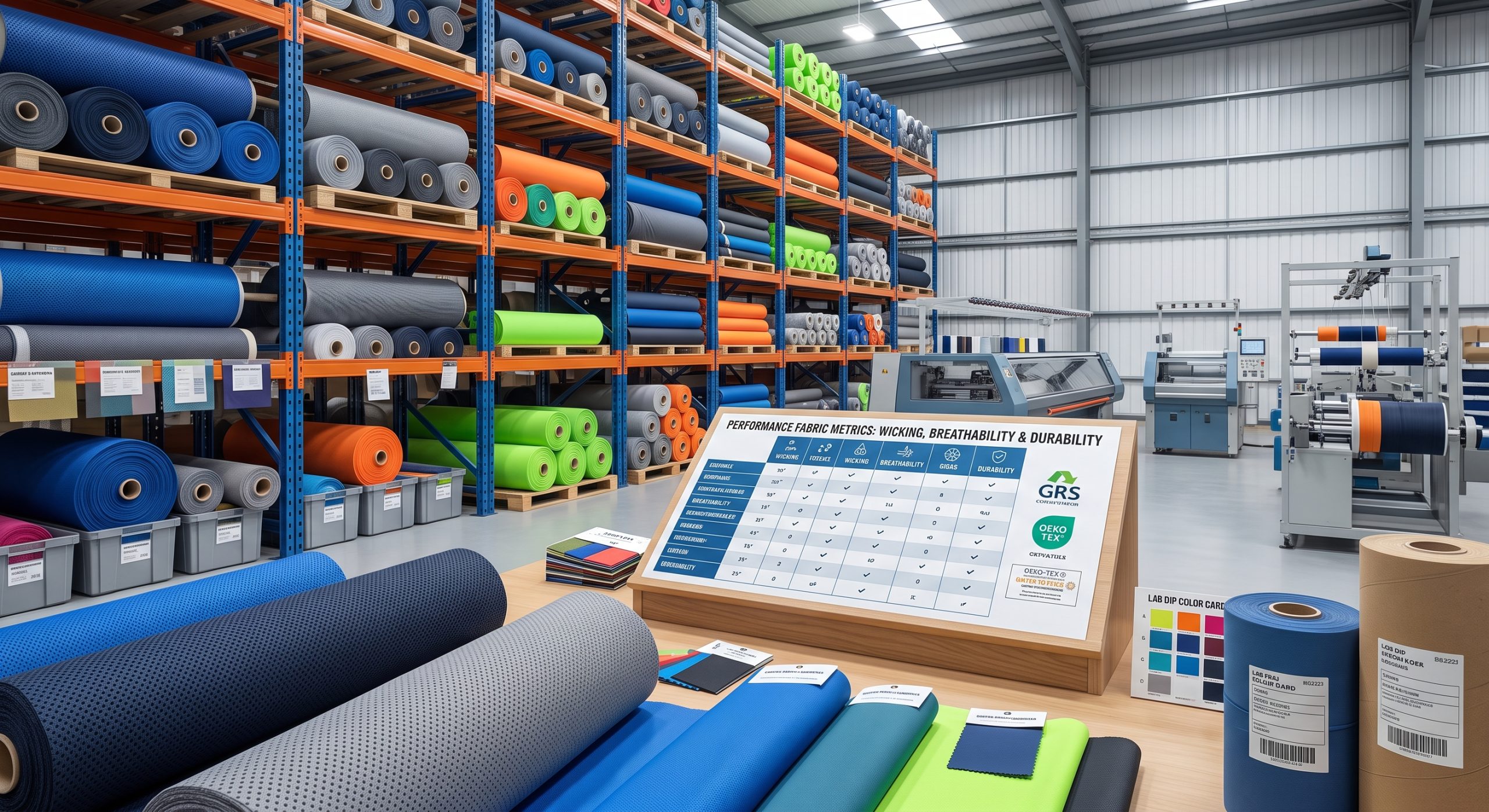
Selecting reliable manufacturing partners requires a meticulous evaluation of structural production capacity alongside specialized international material certification standards. Many apparel brands confront massive supply line disruptions due to highly inconsistent textile batches or excessively delayed shipping schedules originating from unverified overseas manufacturing entities. This volatile material variance severely compromises your hard-earned consumer market trust while simultaneously ballooning operational overhead costs through unexpected defective waste production cycles. Partnering with stable, vertically integrated global sports fabric suppliers establishes an unshakeable corporate foundation by rendering raw manufacturing steps transparent from initial yarn selection to final quality assessment.
1. Why Do Brands Struggle to Find Activewear Fabric Partners?
Sourcing entities frequently struggle because unverified middlemen obscure true factory capabilities and misrepresent structural material specifications during initial negotiations. Procurement teams often receive flawless golden samples yet the subsequent bulk textile orders arrive with compromised elasticity or altered hand feel parameters. This unpredictable supply variation creates severe friction for growing apparel businesses that require absolute batch consistency to satisfy meticulous corporate clients. Engaging directly with premier industrial sports fabric suppliers eliminates these costly transactional blind spots by providing direct access to raw manufacturing machinery data.
How Do Middlemen Obscure True Mill Output?
Here is the deal. Broker networks frequently patch together bulk material lots from fragmented small workshops instead of utilizing single uniform production facilities. This decentralized compounding means your technical performance textiles vary wildly in dye lot matching and stretch recovery metrics across different seasonal color variants. Procurement managers must maintain strict vigilance when dealing with hidden trading entities disguised as genuine mills. Scrutinize these primary structural warning indicators that signal broker interference:
- Unexplained refusals to provide real-time factory floor video demonstrations.
- Inability to supply localized certified tracking documentation for recycled yarns.
- Sudden fluctuations in minimum volume requirements during seasonal shifts.
- Excessive delays when requesting custom color adjustments or laboratory dip variations.
Key Takeaway: Direct mill relationships safeguard your product rollout timelines by completely bypassing profit-skimming brokers who systematically distort real manufacturing throughput capacities. Working alongside genuine source factories grants your procurement team immediate visibility into specific circular machine allocations which translates into highly predictable shipping schedules. This structural transparency allows corporate apparel operations to schedule expansive seasonal retail marketing campaigns with absolute inventory security. Utilizing factory direct options ultimately drives sustainable commercial expansion by securing stable raw material supply chains.
| Sourcing Channel | Batch Consistency | Lead Time Accuracy | Margin Retention |
| Direct Factory | Exceptional Control | High Predictability | Maximum Performance |
| Third-Party Broker | Unreliable Variance | Frequent Extensions | Heavily Compromised |
Evaluating these structural avenues clearly demonstrates why direct factory integration protects long-term brand equity.
2. How Can You Verify a Performance Textile Factory Real Output?
Verifying genuine mill output requires auditing physical facility blueprints alongside active machinery counts rather than relying on glossy digital marketing brochures. Many global corporate entities misrepresent their true manufacturing footprints by showcasing stock industrial imagery instead of their authentic operating floors. Discerning sportswear brands look for established sports fabric suppliers operating large-scale physical facilities equipped with multi-line circular knitting setups. This verified industrial footprint guarantees that your chosen partner possesses the mechanical capability to process large volume wholesale textile demands without outsourcing to secondary unrated processing mills.
What Operational Features Confirm Authentic Mill Infrastructure?
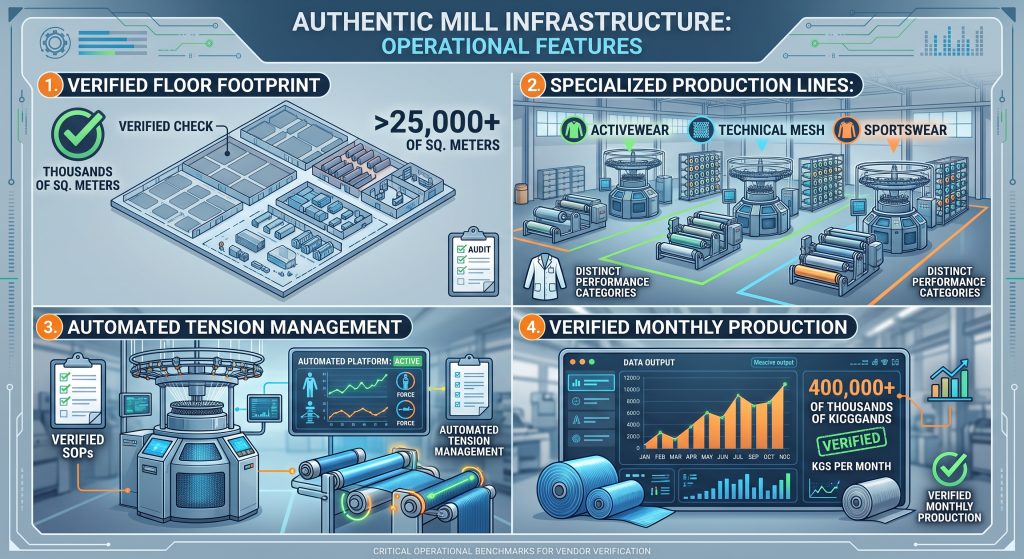
Think about it. True manufacturing facilities maintain absolute control over their mechanical assets and eagerly present real-time telemetry or physical verification documentation upon corporate request. Authentic operators willingly share detailed floor spacing specifications including their dedicated sections for yarn storage and quality control testing laboratories. These operational details separate industrial leaders from superficial broker networks that fail under strict corporate supply audits. Observe these critical operational benchmarks during your vendor verification phase:
- Minimum factory floor footprint exceeding thousands of square meters.
- Presence of specialized three-line production setups for distinct performance categories.
- Standard operating procedures utilizing automated material tension management platforms.
- Verified monthly production metrics reaching hundreds of thousands of kilograms consistently.
Why Are Verified Plant Assets Security for Bulk Sourcing?
What is the real story? Possessing dedicated physical assets guarantees that your manufacturing priority remains protected during peak global procurement seasons when smaller subcontracted shops face massive operational backlogs. Industrial facilities operating extensive physical footprints absorb sudden spikes in custom order configurations without sacrificing delivery speed or structural textile composition integrity. This massive manufacturing scale offers unparalleled stability for enterprise apparel operations navigating volatile consumer demand cycles worldwide. Partnering with asset-heavy textile producers insulates your business from the chaotic fulfillment failures common to underfunded trading agents.
Key Takeaway: Confirming physical asset ownership mitigates significant operational risks associated with third-party manufacturing delays and unverified material substitutions. Brands that enforce strict factory audit procedures enjoy seamless production transitions from early prototyping phases straight through to massive multi-ton inventory fulfillment cycles. Protecting your supply chain continuity relies heavily on choosing partners with robust physical industrial footprints. This calculated verification step establishes an unshakeable foundation for processing large volume orders with zero unexpected quality adjustments down the line.
| Infrastructure Element | Factory Direct Sourcing | Subcontracted Assembly |
| Quality Auditing | Direct Source Transparency | Segmented Third-Party Risks |
| Capacity Allocation | Dedicated Production Lines | Unpredictable Shared Spindles |
Analyzing these key operational differences underscores why physical asset verification forms the foundation of secure corporate sourcing.
3. What Metrics Separate Premium Mesh Material From Low Grade Options?
Superior performance mesh material stands apart through precise structural knit uniformity and the complete absence of yarn snagging under intense multidirectional tension testing. Inferior textiles frequently utilize cheap low-twist yarns that degrade rapidly during standard domestic laundering cycles which leaves garments looking worn and structurally compromised. Top-tier global sports fabric suppliers utilize advanced tension-controlled circular knitting platforms to yield flawless mesh configurations that retain shape flawlessly over time. This mechanical precision guarantees that the resultant athletic apparel maintains its premium aesthetic appeal throughout rigorous training sessions.
How Do Knit Specifications Dictate Performance Longevity?
Ready for the good part? High-grade mesh incorporates highly optimized technical yarn selections that balance structural durability with luxurious next-to-skin comfort characteristics. Selecting appropriate knit parameters prevents premature fiber breakdown and minimizes pilling defects along high-friction garment areas like underarms or side panels. These technical considerations remain paramount for product developers crafting enduring teamwear collections. Look for these structural benchmarks when evaluating mesh samples:
- Tensile strength metrics exceeding standard industrial athletic apparel thresholds.
- Elongation recovery percentages hovering above ninety-five percent under stress.
- Uniform aperture distribution across the entire width of the textile roll.
- Balanced material composition blending premium synthetic polymers with flexible elastomer chains.
Why Does Pure Composition Control Prevent Structural Snagging?
This is where it gets interesting. Eliminating irregular polymer contaminants during the initial extrusion phase guarantees that every single filament possesses uniform structural load capacity. This deep chemical consistency prevents micro-tears from forming when the finished activewear fabric encounters abrasive surfaces during intense outdoor sports activities. Premium processing pathways deliver immaculate textures that elevate the end-user sensory experience substantially. Fashion brands secure long-term loyalty by delivering robust athletic garments built around high-purity performance ingredients.
Key Takeaway: Prioritizing strict composition metrics when choosing technical mesh variants eliminates costly post-production returns driven by sudden material failures or fiber unraveling. Savvy apparel brands invest heavily in verifying raw textile specifications prior to initiating full-scale manufacturing commitments to protect corporate profitability. Achieving long-term market success requires an unyielding dedication to high-tier material components. Demanding thorough chemical laboratory validation maps directly to consistent manufacturing praise from discerning professional athletes globally.
| Mesh Quality Grade | Snag Resistance | Aperture Stability | Filament Purity |
| Premium Technical | Advanced Polymer | Heat-Set Uniformity | Ultra-High Filtration |
| Commodity Grade | High Failure Risk | Shifting Micro-Holes | Industrial Remnants |
Reviewing this quality spectrum highlights how premium mesh selections secure your reputation for producing durable high-performance sportswear.
4. Can Birdseye Fabric Structures Outperform Traditional Pique Weaves?
Birdseye textile topologies outperform traditional pique configurations specifically in rapid sweat dissipation due to their unique tuck-stitch micro-aperture arrangement pattern. Traditional pique utilizes an alternate tuck structure that creates a distinct geometric waffle effect which provides robust body but limits direct air transfer pathways. Leading performance sports fabric suppliers recommend shifting to specialized birdseye structures when designing elite athletic gear intended for high-intensity warm-weather environments. Understanding these specific geometric knitting variations empowers design teams to engineer highly specialized sportswear lines tailored to demanding physical activities.
What Controls the Distinct Texture of Birdseye Knitting?
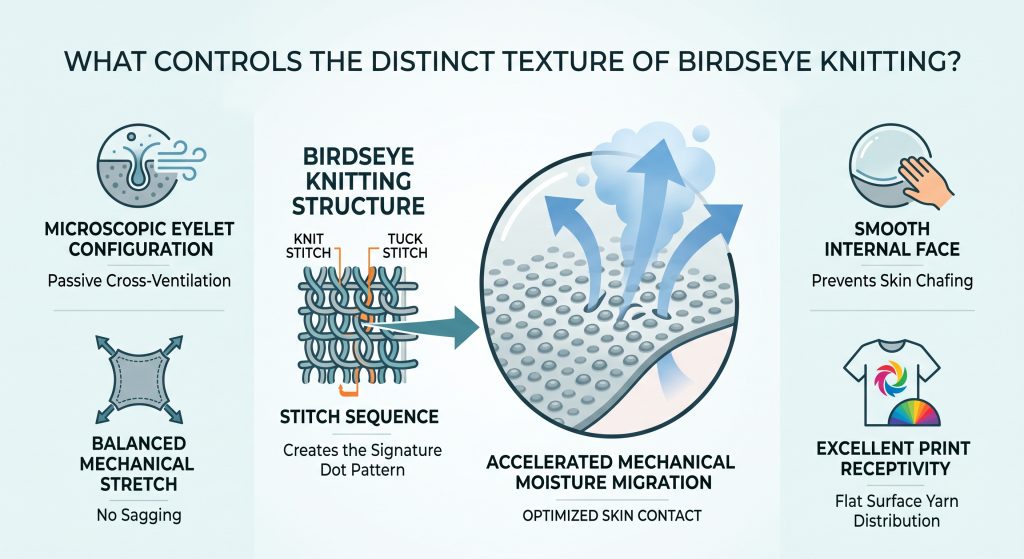
But here’s the kicker. The signature dot pattern of birdseye materials arises from an intricate sequence of knit and tuck stitches that optimizes surface area contact against human skin. This unique design minimizes tactile friction while simultaneously creating passive channels that accelerate mechanical moisture migration outward toward the garment exterior. These specific characteristics make it highly desirable for lightweight training shirts. Evaluate these distinct structural attributes during selection:
- Microscopic eyelet configurations that optimize passive cross-ventilation dynamics.
- Smooth internal faces that prevent skin chafing during repetitive motions.
- Balanced mechanical stretch across both corporate grain directions without sagging.
- Excellent sublimation print receptivity due to flat surface yarn distribution profiles.
Why Choose Pique Geometries for Structural Garment Elements?
What’s the real story? Pique weaves excel at maintaining crisp garment profiles which makes them highly appropriate for corporate golf polos or structured athleisure collar assemblies. The dimensional weight inherent to pique patterns resists curling along collar lines and hem borders even after extended exposure to moisture. This physical durability makes pique an enduring choice for classic athletic styling applications worldwide. Sourcing departments balance their collections by utilizing both geometric styles where their unique physical strengths are fully realized.
Key Takeaway: Selecting between birdseye and pique geometries allows apparel brands to balance technical cooling efficiency against corporate tailored styling needs perfectly. Matching structural knit advantages to specific consumer athletic use cases enhances product utility and drives repeat brand purchasing patterns. Smart material engineering underpins every successful modern activewear collection. Diversifying your textile inventory according to structural weave blueprints maximizes your relevance across broad lifestyle garment sectors.
| Knit Architecture | Surface Profile | Primary Application | Tensile Weight |
| Birdseye Eyelet | Flat Micro-Dot | High-Intensity Tops | Lightweight Pack |
| Classic Pique | Raised Honeycomb | Corporate Athleisure | Medium Heavy Body |
Analyzing these geometric attributes guides product development teams toward making optimal textile selections based on intended garment utility.
5. How Does Knit Topology Direct Airflow Selection for Activewear?
Knit topology dictates airflow dynamics by altering the physical porosity and moisture-wicking capillary forces embedded within the finished textile structure. Choosing an improper weave architecture causes heat retention which leads to premature athlete fatigue during competitive field sports events. Top-tier industrial sports fabric suppliers engineer specialized open-cell material matrices that maximize breathability without compromising structural opaque density metrics. Implementing these advanced geometric fiber alignments allows modern activewear brands to deliver superior climate regulation capabilities across their entire product catalogs.
How Do Birdseye and Pique Differ in Hand Feel and Airflow?
You might be wondering. Birdseye structures provide an ultra-soft silky touch that glides effortlessly across moving muscles while pique alternatives deliver a distinctly textured crisp tactile feedback. This structural variance fundamentally shifts how air circulates around the athlete torso during intense thermodynamic metabolic output phases. Product engineers leverage these distinct material properties to build zoned ventilation systems inside performance apparel lines. Consider these comparative tactile vectors when building your next line:
- Birdseye yields supple fluid drape suitable for streamlined racing singlets.
- Pique offers a rugged texturized exterior that hides fabric wrinkling efficiently.
- Air permeability ratings favor birdseye profiles under static environmental conditions.
- Pique structures create a thicker insulating boundary layer ideal for cooler climates.
Why Does Surface Area Contact Control Moisture Evaporation Rates?
Ready for the good part? Minimizing the physical surface area touching sweaty skin prevents the uncomfortable cling effect that commonly plagues low-quality synthetic garments. By engineering raised micro-topographies or localized aperture fields, advanced textiles pull moisture away via capillary pressure gradients rapidly. This advanced thermodynamic regulation keeps athletes dry and focused during demanding endurance challenges. Selecting advanced structural topologies provides an immediate competitive advantage over brands relying purely on cheap chemical finishes.
Key Takeaway: Mastering the balance between birdseye smoothness and pique structural body enables design teams to satisfy distinct regional consumer touch preferences effectively. Aligning tactile touch profiles with localized performance climate expectations accelerates consumer adoption and minimizes post-purchase dissatisfaction rates. Elevating your fabric choices transforms basic athletic garments into elite performance tools. Partnering with mills focused on structural air pathway development yields products that speak for themselves through superior field testing results.
| Textile Pattern | Tactile Hand Feel | Air Permeability | Cling Resistance |
| Birdseye Eyelet | Silky Smooth | Maximum Air Transfer | High Hydrophobic Lift |
| Pique Honeycomb | Substantial Texture | Moderate Passive Draft | Dimensional Separation |
Examining these physical performance matrices allows sourcing professionals to deploy the exact fabric texture required for targeted training environments.
6. What Compliance Certificates Guard Against Global Customs Risks?
International compliance credentials safeguard your imports by validating chemical safety and verifiable raw material origin documentation during strict cross-border customs inspections. Importing uncertified textiles exposes your business to massive financial penalties and total inventory seizures by vigilant federal regulatory agencies. Reputable global sports fabric suppliers maintain current compliance records including OEKO-TEX Standard 100 and Global Recycled Standard (GRS) verifications. Presenting these authenticated credentials at entry portals guarantees smooth logistical transit pipelines and builds ironclad brand authority among regulatory watchdogs.
Why Does OEKO-TEX Verification Protect Consumer Health?
This is where it gets interesting. OEKO-TEX testing ensures that your high-performance athletic apparel contains absolutely zero traces of dangerous heavy metals or volatile organic chemical processing residues. Since athletic garments contact warm perspiring skin directly for extended durations, eliminating toxic substances remains a foundational corporate liability requirement. Brands failing to verify chemical purity risk severe public recalls that permanently destroy customer loyalty. Review these mandatory safety verification metrics before signing vendor agreements:
- Complete absence of banned azo colorants and irritating chemical dye carriers.
- Strict verification of acceptable pH values matching human skin profiles.
- Rigorous testing for formaldehyde outgassing under simulated storage conditions.
- Phthalate-free compliance for all flexible elastic components embedded within weaves.
How Does GRS Tracking Secure Your Environmental Claims?
What’s the real story? The Global Recycled Standard implements an unbroken chain of custody system that traces post-consumer plastic bottles from reclamation centers straight to finished yarn spindles. This comprehensive ledger system protects your brand from greenwashing litigation by providing solid mathematical proof of recycled material composition claims. Authentic certification pathways allow your business to confidently charge premium eco-friendly retail margins. Embracing verifiable traceability builds long-term institutional value that attracts modern high-profile corporate account procurement teams.
Key Takeaway: Maintaining verifiable compliance credentials eliminates catastrophic border delays while reassuring eco-conscious corporate buyers regarding your product line safety profiles. Partnering with fully accredited textile factories insulates your enterprise from shifting international environmental import mandates seamlessly. Compliance investing forms an imperative shield for modern international supply operations. Aligning your procurement protocols with certified regulatory frameworks preserves global expansion capabilities over multi-year business planning timelines.
| Certificate Standard | Primary Verification Scope | Supply Chain Benefit |
| OEKO-TEX Standard 100 | Chemical Non-Toxicity | Consumer Safety Clearance |
| Global Recycled Standard | Recycled Content Origin | Legal Green Claim Auditing |
Synthesizing these compliance protocols reveals how certified manufacturing frameworks actively insulate international fashion brands from border operational friction.
7. Why Are Flexible MOQs Necessary for Rising Sportswear Brands?
Flexible Minimum Order Quantities (MOQs) prevent catastrophic capital tying by permitting small-scale custom color runs for emerging boutique fashion labels. Traditional multi-ton volume requirements dictate that brands purchase miles of single-color textiles which heavily drains liquid operating cash reserves. Forward-thinking sports fabric suppliers provide accommodating low-volume entry thresholds that empower growing apparel companies to launch highly diverse seasonal collections without accumulating excessive dead inventory risk. This flexible corporate positioning allows brand strategists to test niche consumer design preferences across diverse markets before executing massive manufacturing commitments.
How Do Low Entry Thresholds Protect Corporate Liquidity?
But here’s the kicker. Shifting away from restrictive inflexible raw volume requirements enables corporate fashion houses to reallocate foundational financial assets toward targeted consumer acquisition campaigns. Minimizing warehouse storage exposure for unproven styles protects your bottom-line net margins against deep post-season discount clearing events. This agile financial model represents a major competitive advantage in fast-moving apparel markets globally. Utilize these strategic sourcing targets to optimize inventory overhead:
- Target initial batch runs under one thousand meters per custom colorway.
- Negotiate blended aggregate volume tiers across multiple complementary material styles.
- Use standard base fabrics with localized custom digital sublimation printing options.
- Establish rolling monthly procurement caps to stabilize ongoing operational cash flows.
Why Does Agile Sourcing Outperform Bulk Speculation?
You might be wondering. Consumer purchasing habits shift rapidly due to digital media trends which makes massive forward material commitments highly dangerous for young operations. Agile sourcing mechanisms allow fashion brands to replenish hot-selling items within weeks rather than waiting quarters for slow overseas replacement runs. This operational speed captures maximum full-price retail revenue during peak seasonal demand spikes. Protecting liquid reserves through responsive asset planning remains a hallmark of enduring commercial garment groups.
Key Takeaway: Partnering with low-MOQ textile specialists allows your design team to iterate rapidly based on real-time customer purchasing analytics. Bypassing massive stock requirements preserves capital agility while simultaneously shielding your business from sudden shifts in textile popularity trends. Maintaining structural procurement flexibility constitutes an essential operational practice for modern apparel market leaders. Securing accommodating raw material lines forms the financial backbone of rapid, low-risk brand growth.
| Sourcing Strategy | Capital Exposure | Market Responsiveness | Excess Inventory Risk |
| Flexible MOQ Factory | Minimal Risk Tie | Ultra-Fast Turnaround | Negligible Dead Stock |
| Legacy High-Volume Mill | Heavy Financial Strain | Rigid Multi-Month Delay | Massive Liquidation Exposure |
Reviewing this operational contrast demonstrates how flexible procurement guidelines actively preserve working capital while maximizing responsiveness to shifting retail trends.
8. How Do Accelerated Prototyping Timelines Prevent Revenue Loss?
Rapid prototyping turnarounds minimize revenue losses by shortening product development cycles and securing early market retail window placements before competitors replicate your concepts. When sample approvals drag on for months due to slow laboratory dip creation, fashion brands completely miss critical seasonal holiday sales windows entirely. Dynamic sports fabric suppliers utilize dedicated fast-sampling workflows to deliver perfect physical match swatches to international development teams within mere days. This extreme operational efficiency compresses overall time-to-market metrics and guarantees that your finalized activewear lines hit retail shelves precisely when consumer interest peaks.
What Accelerates the Development of Physical Color Samples?
Here’s the deal. Automated color spectrophotometers and high-speed laboratory dipping machinery remove human guesswork from matching critical corporate brand palette specifications. These advanced optical systems calculate exact chemical formulation recipes instantly which dramatically cuts down on the iterative adjustments required to secure final design sign-offs. This automated consistency bridges the gap between digital concepts and tangible physical garments effortlessly. Watch for these structural milestones in fast prototyping setups:
- Receipt of digital color formulation matches within forty-eight hours maximum.
- Dispatch of physical laboratory dips via expedited international express couriers.
- Immediate availability of pre-knitted raw base material rolls for rapid strike-offs.
- Direct communication lines with on-site dye masters to troubleshoot tint variances.
Why Does Sample Velocity Safeguard Retail Placement Success?
What’s the real story? Retail buyers operate on exceptionally rigid seasonal procurement calendars that leave zero margin for vendor manufacturing delays or administrative errors. Arriving late to a major design presentation review because your textile samples are stuck overseas completely destroys high-value wholesale accounts. Securing an agile sample pipeline guarantees that your firm presents polished prototypes ahead of competing fashion houses. Maintaining operational momentum during early development cycles acts as a strong protective barrier for retail revenues.
Key Takeaway: Investing in rapid sample development ensures your apparel enterprise maintains a steady cadence of fresh product introductions to capture consumer attention. Compressing the timeline between initial design inspiration and physical verification reduces financial vulnerability during fast-evolving fashion macro cycles. Velocity in prototyping functions as a primary driver of modern commercial retail success. Selecting vendors who respect your speed-to-market demands represents an indispensable asset for fast-growing global athletic clothing labels.
| Prototyping Milestone | Fast-Track Production | Standard Legacy Processing |
| Lab Dip Delivery | 2-3 Business Days | 2-3 Operational Weeks |
| Sample Strike-Off | 5 Days Maximum | 30 Days Industry Average |
Analyzing these precise milestone variations illustrates why selecting fast-tracking manufacturing partners drastically reduces product launch vulnerabilities for expanding global fashion lines.
9. What Direct Communication Channels Ensure Order Accuracy?
Direct communication networks verify order parameters instantly by connecting your design team straight to factory production managers without intermediary messaging distortion. Relying on slow convoluted automated email ticketing lines frequently leads to massive manufacturing mistakes due to subtle translation errors regarding technical fabric finishes. Top-tier industrial sports fabric suppliers provide dedicated instant messaging contact options including active corporate WhatsApp channels for real-time order updates. This immediate contact format allows procurement personnel to upload visual reference files and receive instant machine-side verification regarding customized knitting patterns.
Why Use Instant Messaging Channels for Industrial Sourcing?
This is where it gets interesting. Instant digital communication allows factory floor technicians to send real-time video demonstrations of your active fabric run directly to your smartphone. This instant visual confirmation eliminates anxiety regarding color accuracy or width dimensions before the finished rolls are loaded onto international shipping containers. Having direct mobile access to your textile mill minimizes administrative friction and accelerates rapid problem resolution cycles. Prioritize these direct communication benchmarks when choosing vendors:
- Availability of dedicated multi-lingual account executives reachable via mobile apps.
- Daily production status photos provided directly from active circular machine bays.
- Instant digital transmission of packing lists and tracking data upon container loading.
- Direct access to quality engineering leads during critical batch inspection phases.
How Does Real-Time Contact Minimize Administrative Order Errors?
Ready for the good part? Misunderstandings concerning complicated packaging guidelines or international shipping marks disappear completely when conversations occur via real-time collaborative interfaces. This ongoing alignment prevents costly logistical mix-ups at receiving ports that disrupt downstream cut-and-sew assembly operations. Transparent communication bridges geographical distances and fosters deep collaborative partnerships between brands and manufacturing facilities. Eliminating complex corporate switchboards keeps operations lean and perfectly focused on delivering flawless material shipments.
Key Takeaway: Establishing instant direct communication links with factory floor representatives eliminates the costly administrative delays typical of old-school corporate sourcing arrangements. Real-time visual confirmations protect your capital investments by catching minor manufacturing discrepancies before goods depart the factory premises. Clear communication remains the single finest tool for ensuring cross-border product specification compliance. Cultivating accessible, open dialogue windows removes project execution uncertainty across long-distance global supply partnerships.
| Communication Method | Resolution Speed | Visual Verification | Error Probability |
| Direct WhatsApp Line | Minutes | Real-Time Video/Photo | Exceptionally Low |
| Legacy Email Systems | 24-48 Hours | Static Document Links | Moderate to High |
Comparing these communication models demonstrates how direct digital avenues protect procurement teams from costly misunderstandings throughout long-distance manufacturing campaigns.
10. How Do Production Failures Impact Wholesale Apparel Sourcing?
Uncaught textile production failures cause devastating financial losses by causing catastrophic structural tearing or extreme size distortion inside finalized consumer apparel merchandise inventory lots. Severe shrinkage variations or color bleeding defects during retail laundering cycles destroy brand equity and trigger massive consumer product return waves. Ethical, high-capacity sports fabric suppliers enforce multi-tier quality inspection protocols across every single stage of the circular knitting process to capture anomalies early. Investing in flawless base materials guarantees that your finished clothing products withstand the intense physical demands of competitive athletics flawlessly over years.
What Internal Protocols Prevent Damaged Fabric Shipments?
But here’s the kicker. Modern textile mills utilize advanced automated camera scanning arrays mounted directly onto knitting frames to identify dropped stitches or yarn anomalies instantly. These advanced monitoring systems pause production mechanics immediately when a defect appears to prevent flawed sections from being wound onto finished shipping rolls. This strict machine-level vigilance ensures that every yard delivered meets pristine commercial grade thresholds. Look for these internal quality controls during factory evaluations:
- Continuous automated optoelectronic monitoring across all active circular knitting frames.
- Standardized four-point inspection grading systems enforced during final material winding.
- In-house laundry testing laboratories validating shrinkage limits below three percent.
- Spectrophotometric shade matching tracking consistency across multi-ton dye lots.
Why Does Multi-Tier Testing Secure Long-Term Brand Trust?
What’s the real story? Athletes expect performance garments to function as a dependable second skin that withstands heavy friction and extreme stretching without structural failure. Delivering garments that pill fuzz or lose elasticity rapidly alienates your customer base and drives them directly toward competing activewear options. Implementing strict multi-tier testing regimens ensures your products consistently match premium global retail expectations. Defending your corporate brand integrity requires choosing partners who maintain absolute zero-tolerance policies regarding structural weave flaws.
Key Takeaway: Partnering with quality-focused manufacturers that enforce rigorous internal testing standards safeguards your brand from catastrophic public product failures. Eliminating defective textiles before they reach your cutting tables protects downstream assembly efficiency and maximizes total garment yield metrics. Quality assurance at the fabric level forms the cornerstone of enduring athletic fashion brands. Choosing verified excellence over unrated low-cost commodities cements your corporate survival within hyper-competitive modern global clothing sectors.
| Quality Protocol | Impact on Yield | Consumer Retention | Defect Rate |
| Automated 4-Point Audit | Maximum Efficiency | High Customer Loyalty | Under 1 Percent |
| Manual Spot Inspection | Unpredictable Waste | Frequent Brand Attrition | Variable Risk Spikes |
Analyzing these strict quality control mechanisms reveals how automated manufacturing oversight systematically removes material defects before bulk shipping containers depart international docks.
Securing Your Activewear Supply Chain Moving Forward
Resolving complex procurement challenges requires shifting away from unverified middlemen and anchoring your corporate supply chain with transparent, asset-heavy manufacturing facilities. This technical blueprint has successfully answered your pressing concerns regarding batch consistency, specialized birdseye versus pique structure selection, and international safety compliance tracking. Our massive industrial facility stands ready to accelerate your product development cycles via rapid prototyping workflows and flexible minimum order options tailored for expanding labels. Reach out to our specialized engineering team and contact us today to secure premium, certified performance textiles that elevate your athletic brand apparel collections to market dominance. We forge the foundational high-performance materials that empower global athletes to redefine physical boundaries without compromise.
Frequently Asked Questions
Q1: Can I request custom performance fabric colors with low minimum volumes?
Yes, you can absolutely secure tailored dye runs even when ordering smaller batches. Modern flexible manufacturing mills maintain specialized small-scale dyeing vats designed specifically to assist expanding sportswear brands with market testing phases. This adaptive operational setup allows your design team to execute highly customized color matching protocols without draining critical corporate cash reserves on massive upfront material inventory commitments. Releasing boutique capsule collections becomes financially viable when working alongside factories that prioritize flexible procurement partnerships. Securing these agile arrangements eliminates dead inventory exposures while maximizing seasonal styling versatility across your entire performance catalog.
Q2: What’s the best way to determine if Birdseye fabric is superior to Pique for my teamwear line?
Evaluating the specific athletic intensity and environmental climate of your target end-users provides the clearest direction. Birdseye topologies excel during high-sweat active training sessions because their specialized micro-apertures accelerate passive moisture dispersal rapidly away from moving muscle groups. Conversely, pique structures offer excellent heavy-body drape that perfectly suits structured casual corporate polos or classic athleisure garments requiring sharp tailored edges. Reviewing physical material swatches under tension lets your developers match texture preferences directly against consumer product requirements. Choosing the correct structural weave directly enhances finished garment utility and reinforces long-term customer satisfaction metrics.
Q3: How do I know if an overseas textile factory owns real production assets?
Requesting live machine-side video demonstrations and verified third-party compliance audit registries reveals true factory ownership instantly. Superficial brokerage operations consistently decline to share real-time machinery telemetry or specific plant floor layout documentation because they lack physical industrial footprints. Genuine manufacturing establishments willingly share current international certificates like Global Recycled Standard and OEKO-TEX declarations mapping directly back to their corporate registration details. Enforcing rigorous administrative verification steps prior to transferring financial deposits insulates your enterprise from common middleman supply line disruptions. True industrial capability always stands up perfectly to thorough professional supply chain investigation methods.
Q4: Can I trust uncertified polyester options for premium international retail distribution?
No, utilizing uncertified raw synthetic materials introduces catastrophic legal risks concerning customs processing delays and chemical safety standard violations. Global import clearance agencies regularly seize textile shipments that lack traceable chemical purity verifications or sustainable material origin documentation. Partnering with certified mills guarantees that your activewear line completely avoids dangerous residues while cleanly satisfying modern corporate environmental mandates. Traceable manufacturing chains protect your enterprise against costly public product safety recalls that permanently damage hard-earned marketplace authority. Certified inputs form the absolute baseline for brands competing within regulated global clothing spaces.
Q5: How do quick prototyping turnarounds protect my apparel business from losing seasonal revenue?
Securing rapid laboratory dip and sample strike-off deliveries prevents you from missing highly rigid retail calendar presentation deadlines entirely. Slow material development processes drag on for weeks, which frequently causes fashion houses to miss critical seasonal holiday sales windows. Working alongside fast-tracking manufacturing partners compresses your entire time-to-market window down to mere days rather than traditional slow quarters. This extreme operational speed allows your company to respond dynamically to fast-moving digital media fashion trends ahead of slower competitors. Accelerating the prototyping phase effectively guards your liquid working capital while maximizing full-price inventory sales velocity.