
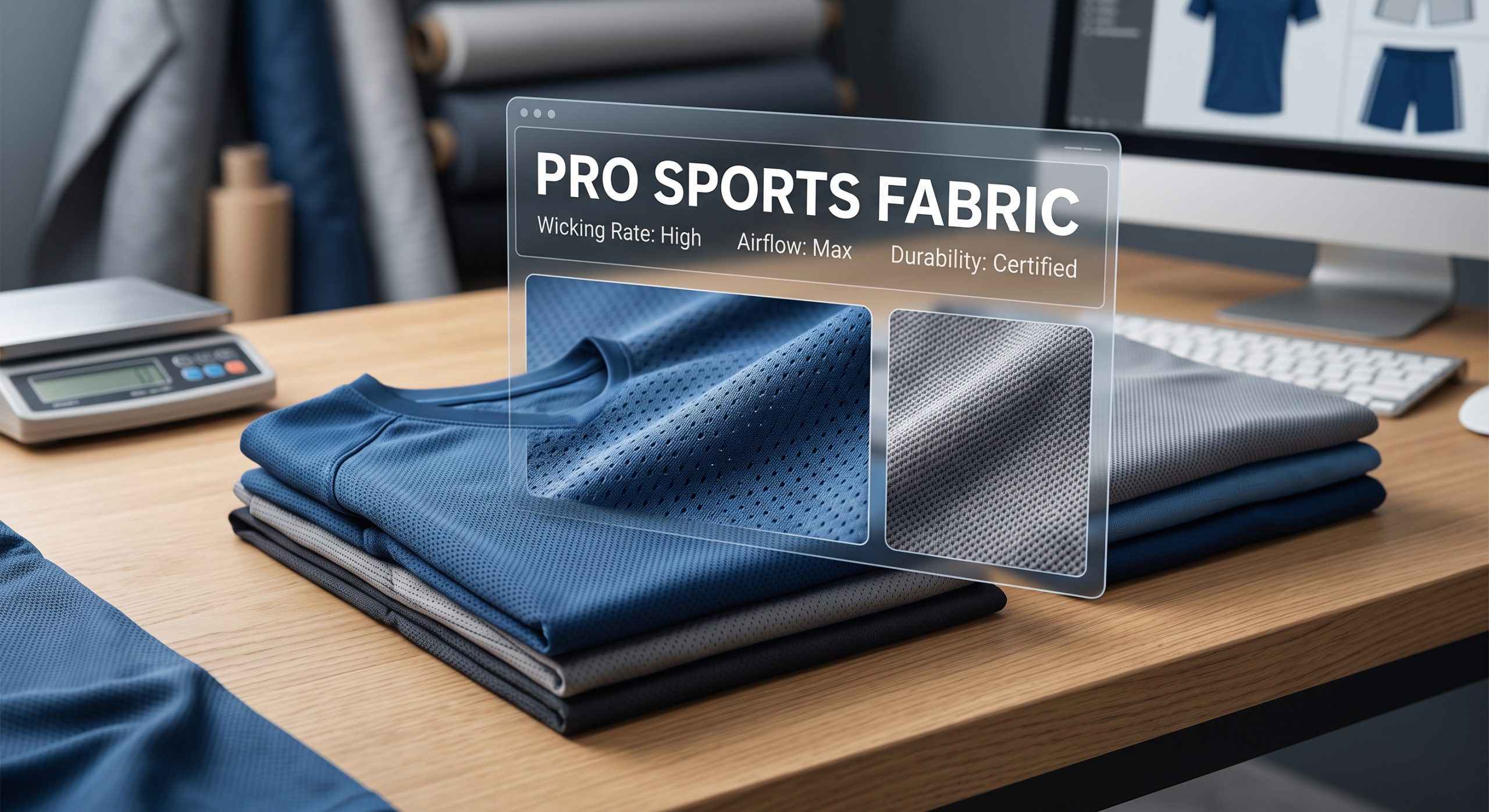
Pro sports fabric is a specialized performance textile engineered with moisture-wicking synthetic fibers and targeted knit structures to deliver high airflow, durability, and skin comfort during athletic activities. Selecting athletic fabric for a new apparel line often causes major headaches for sourcing managers when garments retain sweat and feel heavy against the skin during intense matches. Choosing wrong knit textures leads to chafing, rapid color fading, and angry customer reviews that destroy brand reputation overnight. Selecting engineered pro sports fabric like birdseye mesh or pique knit solves ventilation issues and delivers durable moisture control. Our textile mill produces technical activewear materials that help sportswear brands build superior team gear.
1. Why Does Pro Sports Fabric Matter for Apparel?
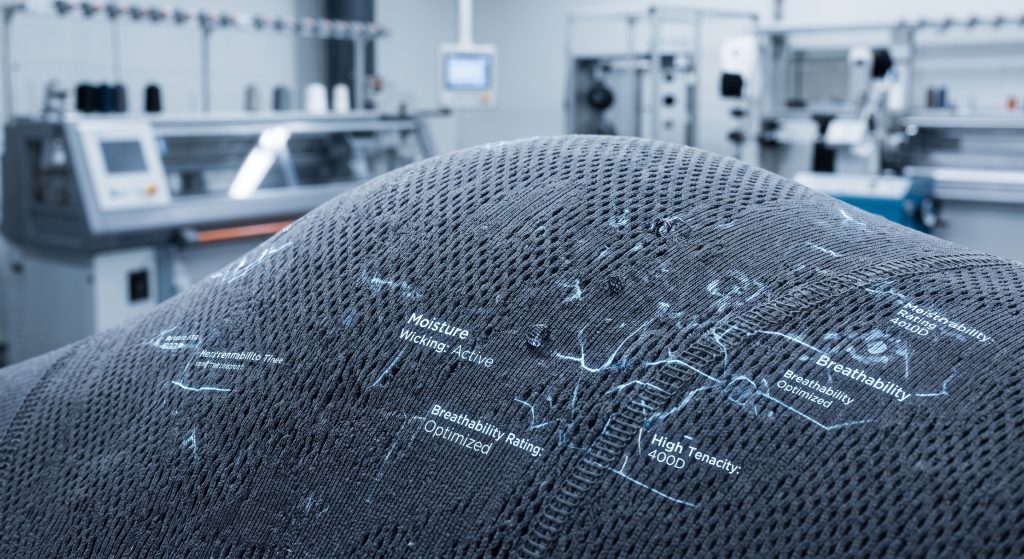
Pro sports fabric matters because engineered synthetic knits regulate body temperature while providing physical durability during high-intensity athletic performance.
Modern activewear buyers demand technical textiles that eliminate sweat buildup quickly while holding shape during rigorous physical motion. High-grade synthetic activewear materials combine specialized fiber geometry with advanced knitting techniques to meet professional athlete standards.
Can Advanced Knits Improve Player Experience?
Advanced knit structures create dimensional micro-gaps that allow sweat to move away from skin fast. Players remain focused on performance when lightweight clothing avoids soaking up moisture. Check this out. Synthetic microfibers maintain dry surface contact even during humid outdoor matches.
- Light yarn construction reduces body fatigue.
- Hydrophilic treatments draw sweat outward fast.
- Smooth surface finishing prevents painful skin chafing.
Does Surface Texture Affect Wicking Speed?
Textured yarn patterns expand total fabric surface area to speed up moisture evaporation rates. Dimensional knits pull liquid through capillary channels to keep athletes dry. Key Takeaway: Choosing textured performance materials keeps team uniforms dry and comfortable during long athletic competitions.
| Performance Metric | Standard Cotton | Pro Sports Fabric |
| Moisture Retention | High Liquid Absorption | Low Absorption / Fast Wicking |
| Drying Velocity | Slow Evaporation Rate | Rapid Air-Drying Speed |
| Skin Comfort | Heavy & Sticky When Wet | Lightweight & Dry Contact |
Selecting engineered performance textiles gives athletic brands clear functional advantages over standard natural fibers.
2. What Traits Define Pro Sports Fabric Structures?
Unique surface geometric patterns and specialized yarn interlock systems define pro sports fabric structures.
Textile engineers manipulate needle arrangements on circular knitting machinery to create distinct surface textures. Understanding structural variations between birdseye mesh and pique knit helps product developers select ideal materials for specific athletic lines.
How Does Birdseye Mesh Vent Air During Play?
Birdseye mesh features a continuous matrix of tiny pinhole openings that allow maximum air circulation. Heat escapes through micro-perforations while cooler outside air passes directly toward the body. You might be wondering how lightweight hole patterns withstand severe mechanical pulling. High-tenacity polyester threads lock loops together to preserve tear resistance.
- Pinhole matrix provides non-stop airflow.
- Open ventilation channels accelerate heat release.
- Flexible breathable sports mesh maintains garment shape under stress.
Why Does Pique Knit Offer Structured Body?
Pique knit utilizes raised geometric tuck stitches that create a classic waffle or honeycombed surface texture. This dimensional construction adds natural body weight, making it ideal for collar stability in sportswear. Key Takeaway: Structural knit variations allow manufacturers to balance ventilation with crisp garment tailoring.
| Structural Property | Birdseye Mesh Knit | Pique Honeycomb Knit |
| Surface Texture | Flat with Micro-Pinholes | Raised Geometric Waffle |
| Air Permeability | Maximum Airflow Rate | Moderate Airflow Rate |
| Fabric Drape | Soft & Fluid Drape | Structured & Crisp Hold |
Comparing structural parameters helps apparel creators align fabric selection with functional garment requirements.
3. How Does Birdseye Compare to Pique Pro Sports Fabric?
Birdseye mesh provides superior softness and maximum ventilation, whereas pique knit offers greater structural firmness and classic aesthetic appeal.
Comparing these popular activewear knits reveals key differences in tactile handfeel and moisture management behavior. Choosing between them depends on whether your target garment requires fluid movement or structured collar support.
Which Knit Touch Feels Best Against Sensitive Skin?
Birdseye mesh delivers a smoother face against skin because its surface loops lay flat without rough ridges. Friction stays minimal during repetitive running motions, preventing skin irritation across long distances. Here is the deal. Soft micro-denier yarns give birdseye mesh a silky touch that athletes appreciate.
- Smooth yarn loops minimize skin abrasion.
- Soft handfeel enhances base layer comfort.
- Lightweight structure drapes smoothly around body contours.
Does Hole Geometry Influence Drying Efficiency?
Geometric hole arrangements in birdseye mesh create larger open air paths that double evaporation speed compared to dense knits. Pique waffle textures hold small air pockets that provide light insulation while wicking moisture steadily. Key Takeaway: Birdseye mesh maximizes drying speed for high-sweat sports, while pique knit offers balanced comfort for golf and casual team wear.
| Functional Aspect | Birdseye Mesh Fabric | Pique Knit Fabric |
| Primary Application | Running & Soccer Jerseys | Golf Polos & Sideline Wear |
| Tactile Handfeel | Silky, Smooth, Soft | Textured, Firm, Crisp |
| Drying Speed | Fast Moisture Evaporation | Steady Moisture Removal |
Analyzing functional properties ensures apparel brands match correct textiles with intended athletic activities.
4. Which Pro Sports Fabric Suits High-Cardio Uniforms?
Birdseye mesh suits high-cardio sports uniforms best due to its open perforation network that maximizes heat release.
Competitive field sports like soccer, basketball, and track generate intense body heat that demands immediate thermal regulation. Lightweight open knits allow excess heat to dissipate before sweat accumulates inside garment layers.
Is Birdseye Mesh Superior for Soccer Uniforms?
Birdseye mesh excels in soccer jerseys because its breathable construction prevents heavy sweat buildup during full match play. Players maintain body speed when light synthetic jerseys stay dry throughout two grueling halves. Believe it or not. Modern sublimation dyes print cleanly over micro-perforations without blurring design lines.
- Micro-mesh holes vent sweat during intense sprints.
- Low garment weight reduces player drag on the pitch.
- Durable polyester spandex blends allow dynamic stretching.
When Should Apparel Designers Choose Pique Knits?
Apparel designers should select pique knits when creating polo shirts, tennis apparel, and coaching staff uniforms that require structured collars. Raised geometric knits hold crisp lines through frequent laundering, maintaining a professional team appearance. Key Takeaway: High-cardio game gear demands lightweight birdseye mesh, whereas casual team apparel benefits from pique structure.
| Sport Category | Preferred Fabric | Functional Reason |
| High-Cardio (Soccer / Track) | Birdseye Mesh | Maximum heat dissipation |
| Moderate Activity (Golf / Tennis) | Pique Knit | Tailored look with wicking |
| Sideline / Travel Wear | Pique Knit | Crease resistance & body |
Matching textile properties to sport intensity levels optimizes athlete comfort and team presentation.
5. How Does Sweat Management Work in Pro Sports Fabric?
Sweat management in pro sports fabric works through capillary yarn action that pulls liquid off skin and spreads it across outer fabric surfaces.
Synthetic micro-denier filaments create narrow microscopic pathways that draw moisture outward automatically. Hydrophilic chemical finishes applied during fabric dyeing boost this wicking action to maintain dry skin contact.
Do Micro Channels Accelerate Sweat Evaporation?
Microscopic channels between tightly twisted synthetic filaments pull liquid away from skin toward the fabric surface instantly. Spreading liquid over a wider surface area accelerates evaporation under surrounding air movement. This is where it gets interesting. Moisture disappears before it can condense into heavy sweat drops.
- Filament channels move sweat outward rapidly.
- Expanded surface area hastens liquid evaporation.
- Skin surface stays cool and dry during workouts.
Can Surface Texture Stop Fabric Clinging to Skin?
Raised waffle textures in pique knits reduce total fabric contact area against damp skin, preventing uncomfortable garment clinging. Air moves freely underneath raised knits, maintaining comfortable ventilation during heavy sweating. Key Takeaway: Advanced wicking channels and textured surfaces prevent wet fabric from sticking to active muscles.
| Technology Component | Working Mechanism | Athletic Advantage |
| Micro-Denier Yarns | Capillary fluid transport | Rapid sweat absorption |
| Hydrophilic Finish | Chemical surface attraction | Spreads liquid widely |
| Raised Knit Nodes | Reduced skin touch points | Eliminates fabric cling |
Understanding sweat management mechanics enables activewear sourcing teams to specify high-performing activewear materials.
6. How Durable Is Pro Sports Fabric Under Heavy Friction?
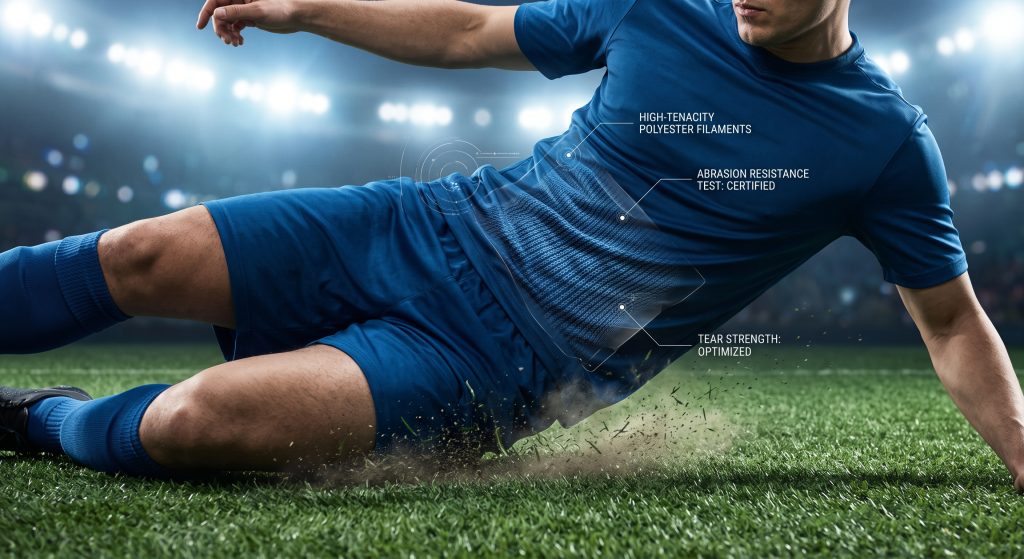
Pro sports fabric delivers exceptional durability against physical friction when knitted with high-tenacity polyester or nylon filaments.
Contact sports subject athletic apparel to continuous pulling, turf sliding, and frequent washing machine stress. Synthetic filament yarns resist physical tearing and abrasion far better than natural staple fibers.
Does Birdseye Mesh Resist Snagging on Sports Turf?
Tight loop interlock construction protects birdseye mesh from snagging when players slide across synthetic sports turf. High-density filament knitting ensures micro-perforations remain stable under heavy tension. Ready for the good part? Turf burn friction will not distort the underlying pattern structure.
- High filament counts resist surface pilling.
- Locked needle stitches prevent seam unraveling.
- Durable custom athletic textiles preserve garment integrity.
How Does Pique Structure Withstand Washing Cycles?
Pique honeycomb knits hold structural shape through dozens of industrial wash cycles without stretching out of proportion. Dense tuck stitches lock warp yarns together, preventing garment shrinkage or sagging over time. Key Takeaway: High-tenacity synthetic filament construction keeps athletic uniforms intact through tough game friction and repeated laundering.
| Durability Test | Standard Cotton | Pro Sports Fabric |
| Martindale Abrasion | Low Resistance (<10,000 Rubs) | High Resistance (>35,000 Rubs) |
| Tensile Stretch Recovery | Sagging After Washing | Instant Shape Recovery |
| Color Fastness Rating | Fades Fast (Grade 2-3) | Fade Resistant (Grade 4.5) |
Comparing durability test metrics shows synthetic performance fabrics withstand tough field conditions reliably.
7. What Weight Specs Fit Pro Sports Fabric Orders?
Gram weights between 130 GSM and 180 GSM fit pro sports fabric orders best for game jerseys and active training apparel.
Fabric gram weight per square meter (GSM) dictates garment thickness, drape, warmth, and physical strength. Selecting appropriate GSM specifications ensures garments perform well across different seasonal climates.
Should Activewear Brands Choose Low GSM Materials?
Low GSM fabrics ranging from 130 to 150 GSM work best for hot-weather sports gear where light weight and rapid cooling take priority. Reducing overall fabric mass minimizes heat retention during summer endurance events. What is the real story? Lighter fabrics cut shipping costs for bulk sportswear orders too.
- 130 GSM suits light marathon tanks and running tees.
- 150 GSM offers ideal strength for soccer match kits.
- Low weight improves player agility on hot days.
How Does Heavy GSM Construction Support Team Polos?
Heavier fabric weights between 180 and 220 GSM provide crisp structure for polo collars, button plackets, and travel wear. Denser knits offer warm coverage without losing moisture-wicking properties. Key Takeaway: Match fabric GSM precisely to garment type and seasonal weather conditions for optimal performance.
| Weight Range | Typical GSM | Target Garment Type |
| Ultra Light | 120 – 140 GSM | Running Singlets & Summer Mesh |
| Standard Active | 150 – 170 GSM | Soccer, Basketball & Gym Shirts |
| Heavy Structural | 180 – 220 GSM | Golf Polos & Warm-up Gear |
Categorizing fabric weight specs simplifies material selection across multi-garment team collections.
8. Can Pro Sports Fabric Stretch Support Athletic Action?
Yes, pro sports fabric stretch supports explosive athletic motion when integrated with elastane or flexible mechanical knit loops.
Unrestricted body movement remains essential for sprinting, jumping, and dynamic field positioning. Combining stretch elastane yarns with circular knits enables garments to expand with muscle movement and recover shape instantly.
Does Spandex Addition Stop Gear Deformation?
Adding 8% to 15% spandex filament prevents garment sagging by delivering powerful elastic recovery after maximum stretching. Activewear fits snug against muscles without pulling tight at shoulders or knees. Here is the kicker. Shape memory yarns preserve tailored garment silhouette across multi-season use.
- Elastane fibers allow multi-directional expansion.
- Fast elastic snapback prevents baggy fabric zones.
- Form-fitting cuts reduce wind resistance.
How Does Four-Way Stretch Function Across Knits?
Four-way stretch construction permits fabric elongation horizontally and vertically during complex athletic maneuvers. Flexible yarn loops absorb mechanical tension, preventing garment seams from popping under heavy load. Key Takeaway: Four-way stretch elastane integration preserves garment shape and supports unrestricted physical movement.
| Stretch Type | Elongation Capacity | Recovery Percentage | Ideal Gear Type |
| 2-Way Mechanical Stretch | 15% – 30% Horizontal | 85% Recovery | Loose Training Shorts |
| 4-Way Spandex Stretch | 50% – 80% All Directions | 98% Recovery | Compression & Jerseys |
Testing stretch capacity metrics ensures athletic apparel delivers total movement freedom during intense play.
9. How to Source Pro Sports Fabric Wholesale Directly?
You can source pro sports fabric wholesale directly by partnering with specialized circular knitting mills that provide certified lab testing and custom swatches.
Direct mill sourcing eliminates middleman markups while allowing customization of GSM weight, color dyeing, and moisture-wicking finishes. Working closely with textile manufacturers ensures consistent quality across large bulk roll shipments.
What Quality Checks Stop Defective Textile Rolls?
Sourcing teams must inspect fabric roll weight consistency, color fastness, and horizontal stretch recovery before approving mass production runs. Truth be told. Requesting physical lab dip samples prevents costly shade variations between separate dyeing lots.
- Verify GSM weight consistency across rolls.
- Conduct wash tests to check color fastness.
- Inspect knit surface for dropped stitches or snag lines.
How Can Sourcing Teams Get Factory Swatches Fast?
Sourcing teams can secure sample swatches by submitting detailed tech packs specifying desired fiber content, GSM, and target handfeel. Direct factory communication speeds up lab dip approvals from weeks to days. Key Takeaway: Establishing direct mill partnerships secures better wholesale pricing and guarantees strict quality control standards.
| Sourcing Channel | Order Minimums | Customization Potential | Cost Efficiency |
| Direct Knitting Mill | Flexible Bulk MOQs | Full Custom (GSM, Color, Finish) | Maximum Savings |
| Stock Fabric Trader | Small Batch Ready | Limited to Stock Items | Higher Unit Cost |
Evaluating sourcing channels helps activewear brand owners optimize production budgets and supply timelines.
10. Where Is Pro Sports Fabric Innovation Heading Next?
Pro sports fabric innovation is heading toward eco-friendly recycled polyester yarns and advanced multi-channel knitting technologies.
Global sports apparel brands face growing consumer demand for environmentally responsible production without compromising active performance. Recycled synthetic yarns derived from plastic bottles deliver identical moisture management while reducing environmental impact.
Will Recycled Fibers Match Virgin Yarn Quality?
Recycled polyester filaments match virgin synthetic yarns in tensile strength, color absorption, and moisture-wicking speed. Modern recycling processes create clean microfibers that meet professional performance standards. Here is the bottom line. Eco-conscious performance textiles attract modern athletes and sustainability-focused sports clubs.
- Recycled PET yarns reduce plastic waste.
- Fiber strength matches virgin polyester specs.
- Accepts sublimation dyes cleanly without fading.
How Are Custom Knits Transforming Activewear?
Advanced circular knitting machines now produce zoned ventilation panels directly into seamless fabric tubes. Seamless body-mapping technology reduces stitching seams, lowering friction and enhancing overall player movement. Key Takeaway: Recycled synthetic yarns and seamless zoned knits represent the future of sustainable high-performance activewear.
| Future Trend | Core Technology | Market Advantage |
| Recycled Synthetics | Post-consumer PET recycling | Eco sustainability appeal |
| Seamless Knits | Engineered body-mapping | Reduced seam chafing & drag |
| Smart Finishes | Plant-based odor control | Freshness during extended wear |
Tracking textile innovation trends helps activewear brand leaders stay ahead of market demands.
Final Thoughts
Finding performance textile solutions that combine dry skin comfort with rugged durability no longer requires guesswork. This B2B guide analyzed how structural differences between birdseye mesh and pique knit impact ventilation, handfeel, and sweat management across high-cardio sports and structured team apparel. Our modern textile mill produces engineered circular knits, custom moisture-wicking finishes, and certified wholesale rolls to bring your activewear designs to life. When you are ready to upgrade your team sportswear lineup with premium materials, contact us today to request custom swatch books and factory quotes. We believe champion athletes deserve technical activewear fabrics that perform relentlessly under game pressure.
Frequently Asked Questions
Q1: How do I know if birdseye mesh or pique knit fits my sportswear line?
You should choose birdseye mesh for high-cardio sports gear like soccer or running jerseys that need maximum airflow. Select pique knit for structured garments like team polo shirts that require collar body and a classic textured appearance.
Q2: What’s the best gram weight for competitive summer running shirts?
A light weight range between 130 GSM and 150 GSM works best for summer running shirts. This low weight minimizes heat retention and speeds up sweat evaporation during hot endurance activities.
Q3: Can I customize color shades for pro sports fabric wholesale orders?
Yes, you can fully customize color shades through Pantone color matching and lab dip approvals. Modern dyeing methods guarantee precise color accuracy and high wash fastness across bulk textile rolls.
Q4: Does sublimation printing block ventilation pores in birdseye mesh?
No, digital dye sublimation printing does not block ventilation pores because gaseous inks bond inside synthetic fibers without creating a rubbery surface film. Air moves freely through mesh micro-perforations after printing.
Q5: How do I evaluate fabric breathability before placing bulk orders?
You can evaluate fabric breathability by testing air permeability rates using standard ISO 9237 lab methods or reviewing physical sample swatches. Requesting sample swatches allows sourcing managers to verify handfeel and air circulation firsthand.