
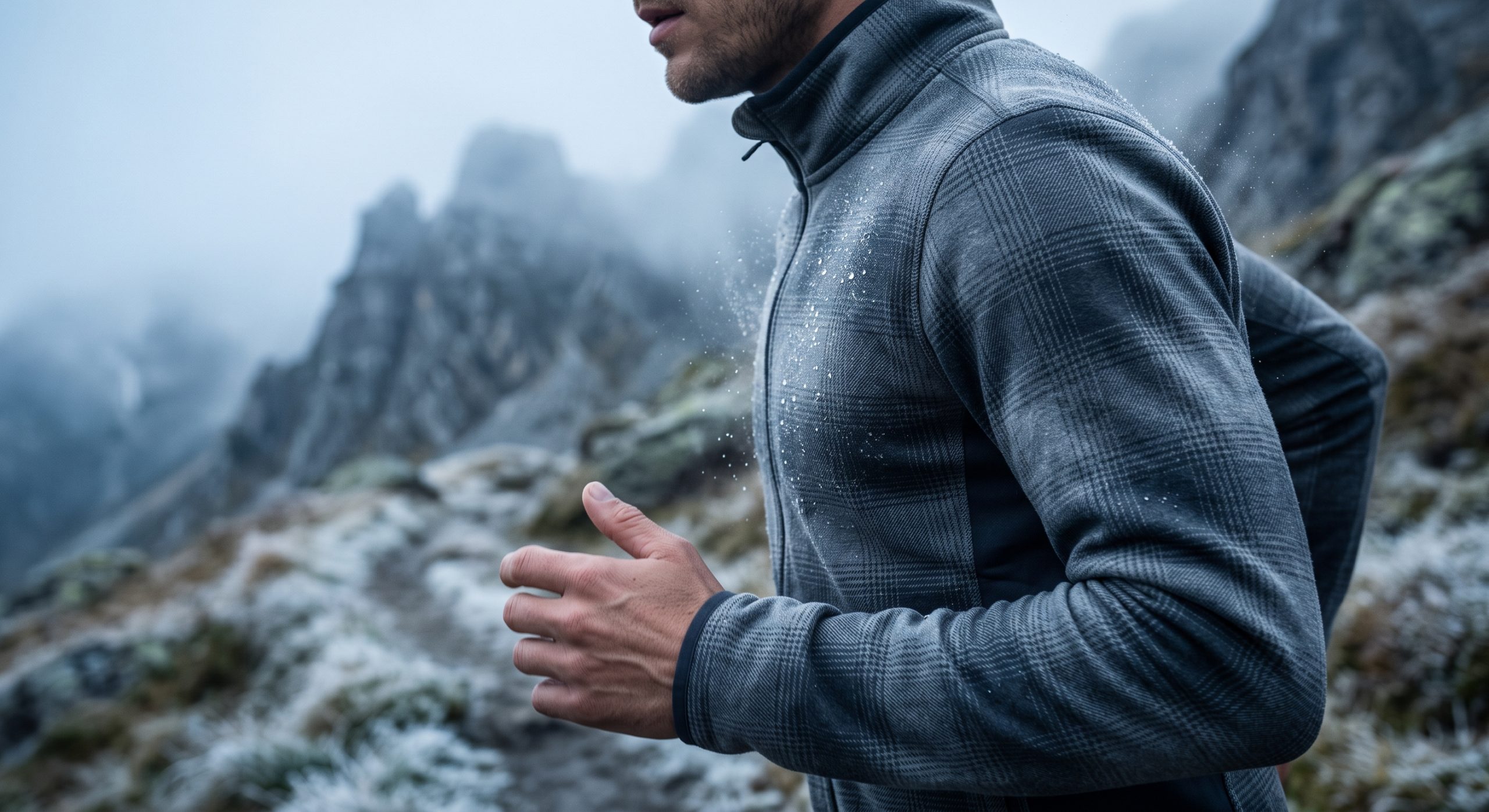
A custom sports flannel fabric combines specialized mechanical napping methods with high performance synthetic fibers to deliver exceptional heat retention alongside swift moisture evaporation. Imagine your athletes training outside during freezing winter mornings while shivering in damp sweat soaked shirts because their heavy standard outerwear traps cold wet perspiration close to skin surfaces. This standard product failure destroys athletic focus but choosing a specialized activewear textile solves this frequent insulation dilemma by moving sweat away from bodies swiftly. Our extensive milling experience guarantees premium cloth solutions that satisfy strict global sportswear design standards so international clothing brands can purchase inventory with complete peace of mind.
Why choose sports flannel fabric for activewear garments?
Brands select sports flannel fabric for performance garments because this specialized insulation material combines soft physical touch with rapid drying capabilities during intensive winter exercise. Global clothing distributors prefer brushed athletic items because standard outdoor gear often stores cold moisture instead of releasing body heat safely during heavy training. Choosing a technical brushed knit material effectively prevents rapid post workout chilling by trapping warm air inside small microscopic pockets near human skin surfaces. This smart product selection allows corporate apparel buyers build premium cold weather sportswear lines that fully satisfy demanding professional outdoor training requirements globally.
What makes thermal regulation successful?
You might be wondering how specialized brushed synthetic fiber structures maintain excellent core warmth without adding heavy physical weight during long winter running sessions. Finely napped textile surfaces generate a dense layer of dead air that acts like a defensive shield against freezing external winter wind currents. Active professional athletes require reliable temperature defense when training outside but they also need constant internal airflow avoiding excessive body sweat accumulation. This brushed performance cloth meets both functional requirements perfectly by pairing smart insulation metrics with rapid capillary moisture movement mechanisms across yarn surfaces.
- Polyester microfibers optimize thermal performance.
- Mechanical brushing creates uniform dead air insulation.
- Hydrophobic yarn selection prevents heavy water retention.
Can moisture management improve client comfort?
What is the real story behind sudden muscle cramping during cold outdoor training matches when athletic players wear substandard heavy cotton apparel items? Wet garments pull critical heat away from active muscle groups rapidly but synthetic napped products channel liquid moisture away via technical yarn gaps. Your sportswear company will gain a major market advantage by supplying athletic gear that dries much faster than standard retail fleece options. Ordering high performance brushed textiles from an experienced production facility will minimize product quality complaints from your global commercial clothing buyers smoothly.
- Rapid evaporation prevents post-exercise hypothermia.
- Capillary channels drag sweat away from skin.
- Synthetic fibers retain zero moisture inside yarns.
| Performance Feature | Standard Cotton Flannel | Premium Sports Flannel |
| Moisture Retained | High Weight Accumulation | Minimal Fluid Retention |
| Dry Velocity | Slow Evaporation Process | Rapid Moisture Clearance |
| Wind Resistance | Low Thermal Shielding | Excellent Dead Air Trap |
This structured dataset highlights why synthetic napped yarn configurations outclass traditional alternatives in demanding outdoor sports applications. Key Takeaway: Selecting performance brushed materials protects your athletic users from sudden temperature shifts while securing excellent market reviews for your growing activewear catalog.
How does sports flannel fabric regulate body heat during runs?
This sports flannel fabric regulates body heat during intense runs by balancing microclimate insulation parameters with structural breathability channels embedded deep within knit rows. When runner energy spikes human skin releases heat alongside liquid moisture that must pass through your apparel layers without creating uncomfortable wind chill barriers. Advanced manufacturing plants brush the backside of knit panels creating miniature air locks that hold heat when wind speeds increase during outdoor field workouts. This engineered textile design prevents overheating during steep hill climbs while keeping muscles warm during essential post workout recovery periods across changing outdoor conditions.
Why do microclimates matter for athletes?
Ready for the good part concerning athletic wear development since maintaining a stable temperature zone next to skin decides ultimate physical output during marathon events? If garment cloth allows body heat to escape too quickly your clients will experience muscle tightness that directly harms total running efficiency metrics. Selecting engineered napped materials provides consistent protection by stabilizing airflow across your garment panels during rapid speed alterations on competitive cross country tracks. You will discover that professional sportswear procurement managers look for fabrics that manage these microclimates efficiently under rigorous testing protocols before signing bulk contracts.
- Stable skin microclimates boost athletic stamina.
- Regulated airflow reduces sudden cardiac stress.
- Consistent insulation maintains fast muscle reaction.
Can air permeability prevent overheating?
This is where it gets interesting because high quality brushed garments must never create an airtight envelope that suffocates skin surfaces during intense cardio training sessions. Air must pass through the yarn matrix continuously to carry away excessive humidity build up before water droplets form on internal clothing faces. By choosing a manufacturing source that utilizes precise knitting gauges you receive cloth that offers ideal wind blocking utility along with continuous air exchange. This careful structural balance helps active sports enthusiasts push their limits without experiencing heavy clothing weight caused by trapped sweat inside clothing apparel systems.
- Balanced porosity allows continuous humidity release.
- Controlled air permeability blocks sharp wind.
- Optimal stitch distance prevents moisture pooling.
| Fabric Parameter | Low Permeability Knits | Balanced Sports Flannel |
| Airflow Rate | Restricts Thermal Shedding | Steady Air Circulation |
| Sweat Pooling | High Internal Condensation | Instant Vapor Dispersal |
| Wind Deflection | Maximum Outer Blocking | Moderate Protective Shield |
This metric analysis demonstrates that controlled stitch gaps provide much better vapor dispersion than fully dense standard outerwear designs. Key Takeaway: Balancing air movement with thermal buffering protects runners from temperature exhaustion while expanding seasonal utility metrics for your outdoor sportswear clothing catalog.
Can sports flannel fabric provide superior breathability performance?
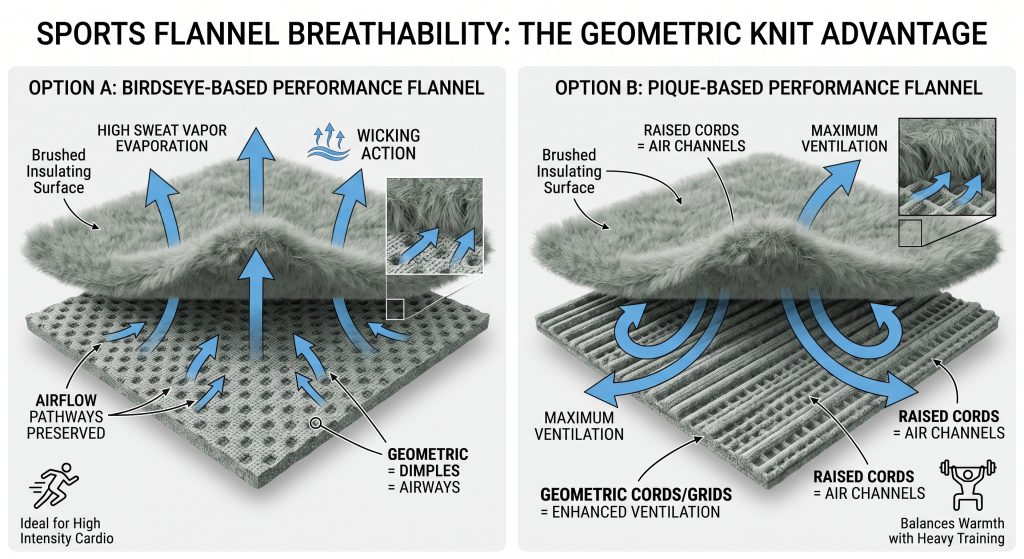
Your custom sports flannel fabric provides superior breathability performance when it utilizes a specialized knit base like birdseye or pique before undergoing mechanical surface brushing operations. Many procurement managers assume that napped materials always suffocate skin but choosing a geometric knit base preserves necessary air pathways across your finished sports clothing. By examining underlying stitch layout patterns you can easily source premium products that offer maximum ventilation alongside a soft brushed insulating surface clothing texture. This structural choice proves critical for activewear brands trying to balance physical warmth with high volume sweat evaporation during high intensity functional athletic training.
How does birdseye structure affect airflow?
But here’s the kicker regarding birdseye knit configurations because this geometric pattern creates tiny diamond shaped recesses that mimic real bird eyes across cloth faces. These micro dimples hold small pockets of moving air while providing rapid exit paths for body moisture trying to escape from hard working athletic bodies. When a manufacturing plant applies a light napping process to this specific diamond layout the fabric maintains excellent ventilation while gaining incredible skin comfort. You should choose this specific configuration if your main product goal involves creating lightweight training shirts that feel exceptionally soft against bare human skin surfaces.
- Diamond geometry creates natural heat drop zones.
- Lightweight construction cuts overall clothing load.
- Hydrophobic knit points speed up drying times.
Does pique structure offer better durability?
What’s the real story when you compare birdseye with a traditional pique structure that uses raised parallel cords or geometric waffle grids across yarn faces? Pique knit patterns supply a more substantial physical hand feel along with a textured profile that withstands heavy abrasive contact during rugged outdoor training. Brushing a pique base yields a thicker sports flannel fabric layer that offers higher wind resistance while allowing steady moisture movement through open knit channels. Your purchasing department must select pique bases when developing heavier sportswear items like outdoor track jackets or rugged cold weather mountain hiking apparel hoodies.
- Waffle cord style protects against rough abrasion.
- Substantial thickness yields structural garment stability.
- Open channels maintain continuous heat dispersal.
| Knit Base Option | Birdseye Structure | Pique Structure |
| Geometric Layout | Tiny Diamond Dimples | Raised Waffle Ribs |
| Breathability Level | Maximum Fluid Evaporation | Balanced Air Regulation |
| Physical Hand Feel | Smooth Silk Softness | Textured Robust Weight |
This comparison chart displays how base geometry alters product weight parameters and determines final garment application targets for international textile buyers. Key Takeaway: Sourcing birdseye bases maximizes ventilation for high energy cardio clothing while choosing pique bases delivers rugged wear resistance for heavy outdoor training jackets.
Is sports flannel fabric better than standard fleece materials?
This sports flannel fabric outclasses standard fleece materials because it provides sleek low profile insulation without causing excessive fabric pilling or trapping moisture inside heavy yarns. Fleece options become bulky and hold static charges during indoor winter training but high performance napped knits maintain flat profiles suitable for athletic layering systems. Choosing a streamlined performance textile allows modern sportswear companies manufacture tailored athletic gear that looks incredibly sophisticated while delivering top tier outdoor utility. You will achieve superior garment longevity by choosing advanced napped polyester structures over cheap standard fleece options that lose shape after few commercial laundry washings.
Why does low profile design matter?
You might be wondering why modern competitive fitness enthusiasts avoid bulky outerwear when training outdoors in cold climates during technical winter athletic running sessions. Excess material volume limits arm movement and increases wind drag coefficients during high speed competitive running exercises or intense field sports movement drills. Utilizing low profile napped cloth allows apparel pattern designers craft tight fitting compression garments that insulate bodies without reducing critical agility movement parameters. Your sportswear company can capture a growing professional athleisure market segment by replacing heavy traditional sweatpants with modern streamlined brushed athletic garment silhouettes.
- Sleek profiles minimize wind resistance factor.
- Compact fiber alignment increases layout efficiency.
- Lightweight composition improves athletic posture control.
Does napped cloth resist pilling?
Ready for the good part regarding material durability since traditional cheap fleece fabrics usually develop ugly little fuzz balls after passing through standard home dryers? High grade brushed polyester utilizes long filament fibers that lock tight inside the knit matrix preventing surface fibers from tangling into pills during friction. Sourcing fabric from an advanced factory with strict anti pilling finishes guarantees your sportswear inventory maintains a crisp professional look for multiple active training seasons. This long term structural integrity protects your commercial reputation among professional fitness distributors who demand high utility apparel products that look excellent over time.
- Filament yarns block fiber migration pathways.
- Special anti-pilling treatments seal exterior faces.
- Smooth surfaces resist heavy friction wearing.
| Performance Index | Standard Polar Fleece | Premium Napped Knit |
| Bulk Volume Metric | Thick Space Consuming | Thin Streamlined Profile |
| Anti-Pilling Grade | Low Lifecycle Durability | High Performance Rating |
| Mobility Freedom | Restricts Quick Twisting | Allows Full Extension |
This performance evaluation clearly demonstrates that modern brushed filament textiles provide vastly superior structural life cycles compared to basic low cost fleece alternatives. Key Takeaway: Selecting low profile napped knits guarantees that your activewear line looks sleek while offering high abrasion resistance that outperforms traditional bulky fleece alternatives.
How do mills produce high quality sports flannel fabric items?
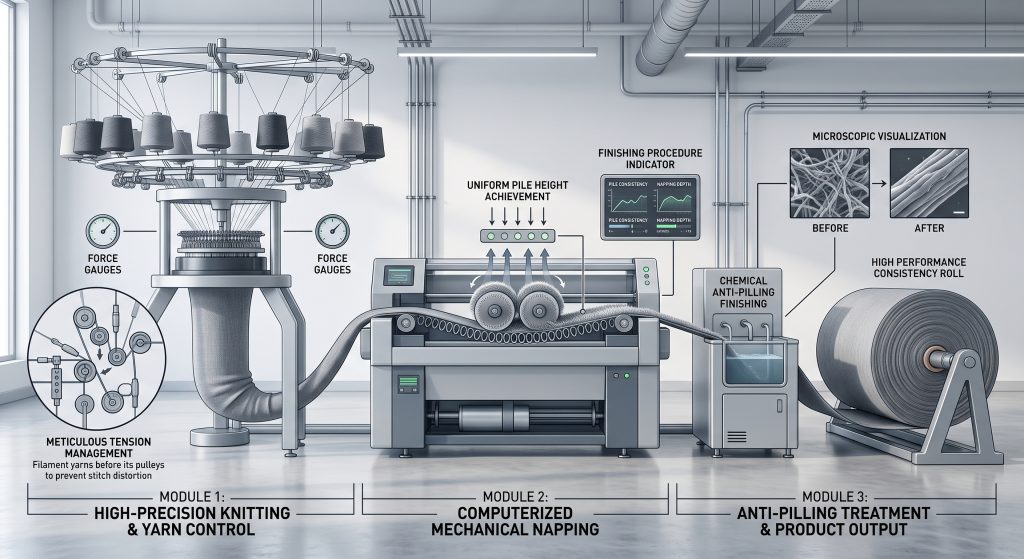
Experienced industrial facilities manufacture premium sports flannel fabric items by combining high precision circular knitting operations with computerized mechanical napping and chemical anti pilling finishing procedures. Creating this specialty material requires meticulous control over yarn tension to prevent stitch distortion before the delicate wire brushing rollers touch the knit loops. Professional textile engineers monitor every automated step to achieve uniform pile height across massive production rolls destined for global athletic apparel clothing brands. This rigorous milling discipline delivers high performance consistency which helps commercial clothing buyers secure reliable product inventory for massive multi market distribution projects.
Why does precision circular knitting matter?
This is where it gets interesting because initial knitting stages establish structural density metrics along with directional elasticity for your finished active sportswear material items. Advanced circular knitting machines use fine steel gauges to weave tight interlocking loops that provide high tear strength during extreme outdoor physical stretching movements. If a factory utilizes low grade knitting equipment the base fabric will suffer from variable thickness that causes uneven brushing results down production lines. You must demand verified production metrics from your textile suppliers to confirm that your garment raw materials possess adequate structural weight consistency always smoothly.
- Fine gauge cylinders create dense loop arrangements.
- Automated tension control limits vertical stitch drifting.
- Uniform base layouts maximize brushing depth control.
How does mechanical napping create soft textures?
What’s the real story regarding that signature cloud like touch which sets performance flannel options apart from raw unfinished polyester athletic jersey cloth textiles? Automated finishing lines feed the knitted base through high speed rollers covered with tiny wire needles that gently scratch individual filament yarn strands. This precise mechanical picking lifts microfibers away from the core yarn body to form a velvety insulating surface without weakening core fabric construction. Sourcing from an experienced plant with modern napping machinery guarantees that your final sportswear garments retain a plush hand feel after multiple commercial laundry cycles.
- Micro-wire rollers lift surface fibers carefully.
- Computerized depth regulation protects structural yarn cores.
- Multi-pass brushing systems achieve perfect plush uniformity.
| Production Phase | Machinery Type Used | Quality Control Focus |
| Base Loop Creation | High Speed Circular Knit | Stitch Density Uniformity |
| Pile Fiber Lifting | Automated Wire Napping | Precision Depth Regulation |
| Fabric Stabilization | Heat Setting Finish | Shrinkage Rate Limitation |
This production layout demonstrates that meticulous mechanical calibration during finishing phases directly creates premium tactile qualities required by global fashion buyers. Key Takeaway: Understanding industrial milling procedures allows your brand verify manufacturer capability while securing premium brushed fabrics that maintain consistent density across large orders.
Does sports flannel fabric prevent bad odors during heavy workouts?
This sports flannel fabric prevents bad odors during heavy workouts by incorporating specialized silver ion finishes or charcoal infused yarns that inhibit odor causing microbial growth. Standard brushed materials can trap skin oils and sweat bacteria inside their plush pile loops creating unpleasant smells after long intensive gym training sessions. Selecting custom processed textiles treated with antimicrobial agents guarantees that your activewear line stays fresh even during high heat endurance sports matches. You will notice that professional fitness clients prioritize odor resistant attributes when selecting premium athletic gear for their seasonal wholesale sports clothing choices.
How do silver ions stop bacteria?
But here’s the kicker about synthetic performance wear because moisture plus human body heat creates an ideal breeding ground for various microscopic skin bacteria types. Integrating microscopic silver elements during finishing stages allows the cloth to release active ions that puncture bacterial cell walls effectively during intense exercise. This chemical defense system neutralizes smell generation at the source before sweat breakdown creates foul aromas inside your technical athletic clothing items. Sourcing these treated fabrics helps your apparel company market highly functional garments to professional training facilities that demand maximum freshness from activewear garments.
- Silver treatments disrupt bacterial metabolism chains.
- Continuous ion release maintains durable product freshness.
- Wash-resistant treatments protect performance over extended lifecycles.
Can charcoal infusions extend garment freshness?
What’s the real story regarding natural alternative treatments like bamboo charcoal which production facilities embed directly into synthetic polymer filament extrusion pipelines? Activated charcoal particles possess highly porous structural surfaces that absorb volatile odor compounds like sponge blocks trapping smells until regular laundry washings. This embedded approach provides lifetime freshness because the odor fighting properties remain locked inside yarn cores instead of washing off over time. Your design team should specify charcoal infused knits when developing high end base layer apparel items meant for multi day wilderness hiking excursions.
- Porous charcoal capture structures adsorb organic odor molecules.
- Core fiber embedding guarantees permanent functional textile life.
- Natural additive choices appeal to eco-conscious sporting demographics.
| Treatment Mechanism | Topical Silver Finish | Embedded Charcoal Yarn |
| Action Strategy | Kills Microscopic Microbes | Absorbs Volatile Odor Gas |
| Performance Lifespan | Gradual Wash Reduction | Permanent Lifetime Utility |
| Major Advantage | High Efficiency Output | Natural Sustainable Option |
This chemical comparison indicates that combining topical finishes with core yarn additives offers the most robust shield against odor accumulation in sportswear. Key Takeaway: Incorporating anti odor technologies prevents bad smells from lingering in brushed sportswear while upgrading your product line to a true premium performance tier.
What features define durable sports flannel fabric components?
Top tier sports flannel fabric components are defined by exceptional bursting strength indices high colorfastness ratings and minimal dimensional shrinkage properties after multiple washing machine operations. Commercial buyers require durable materials because athletic garments suffer massive physical stress during competitive contact sports or rigorous outdoor training maneuvers. Sourcing fabric with verified test certifications prevents premature product failures that could ruin your brand standing among corporate fitness garment distributors. You must check industrial laboratory parameters before signing bulk procurement contracts to verify that your chosen textiles meet modern activewear performance standards perfectly.
Why does bursting strength matter?
You might be wondering why textile technicians measure multi directional bursting strength instead of basic linear tensile metrics when evaluating premium knit sportswear options. Knitted loop structures expand in every direction during intense athletic movements like deep squats or fast torso twisting turns on open field tracks. High bursting resistance guarantees that your seams and fabric faces remain fully intact under heavy load forces without tearing unexpectedly during matches. Sourcing raw material from a mill utilizing high tenacity polyester filaments secures this critical structural safety threshold for your entire activewear athletic garment catalog.
- Multi-directional knit loops distribute localized muscle pressures.
- High tenacity filament selection blocks sudden stitch failures.
- Verified laboratory testing confirms fabric resistance under strain.
Can colorfastness preserve brand look?
Ready for the good part concerning visual quality since premium activewear items must retain vibrant color depth despite heavy sweat exposure and frequent hot laundering? Substandard dye applications bleed rapidly when coming into contact with acidic human perspiration causing ugly color migration across contrasting garment panel configurations. Choosing a mill that implements advanced disperse dyeing methods guarantees your dark shades remain sharp and bright through dozens of harsh washings. This high color stability keeps your garments looking brand new on retail shelves which directly boosts customer confidence during initial consumer purchasing decisions.
- Disperse dye molecules bond deeply inside synthetic fiber matrices.
- Perspiration resistance treatments prevent lateral color bleeding faults.
- UV-stabilized chemical finishes block rapid solar fading during sports.
| Durability Metric | Standard Market Target | Elite Performance Grade |
| Ball Burst Strength | Minimum 250 Newtons | Exceeds 400 Newtons |
| Color Fastness Grade | Grade 3 Standard Scale | Grade 4.5 Superior Scale |
| Laundering Shrinkage | Under 5 Percent Shift | Under 2 Percent Shift |
This laboratory data confirms that selecting materials calibrated to elite standards dramatically reduces fabric deformation over extended product wear lifecycles. Key Takeaway: Prioritizing high bursting strength and elite colorfastness scores preserves your garment appearance while eliminating product liability concerns for your wholesale apparel firm.
Can you wash sports flannel fabric without causing shrinkage?
You can wash this sports flannel fabric without causing shrinkage by utilizing low temperature water cycles and selecting polyester based materials that undergo industrial heat setting stabilization. Traditional cotton alternatives shrink severely during hot machine drying cycles because natural plant fibers possess low thermal structural memory parameters over time. Choosing synthetically engineered textiles avoids this size warping flaw entirely helping your garment line maintain correct fitment profiles over multiple domestic washings. Professional fashion buyers prioritize dimensionally stable materials to avoid customer returns that hurt retail store profit margins across global apparel distribution networks.
Why does heat setting stabilize fibers?
This is where it gets interesting because synthetic fabric manufacturing includes a critical step where raw cloth passes through an intense heated stenter machine. Exposing polyester to controlled high temperatures locks the polymer chains into a fixed grid layout that resists further movement during household drying. This thermal processing removes internal yarn tensions completely preventing the finished sports garments from shorting or tightening after exposure to laundry moisture. Sourcing pre stabilized materials allows your clothing brand pattern departments cut panels accurately without worrying about fabric distortion during final assembly phases.
- Stenter thermal fixing locks internal fiber arrangements permanently.
- Stress relief processing removes manufacturing knit tension defects.
- Fixed polymer structures block moisture induced fabric tightening.
What laundry practices preserve plush pile?
What’s the real story when dealing with consumer maintenance routines since brushed finishes require specific handling steps to preserve that soft fleece like texture? Turning garments inside out before washing protects the delicate napped microfibers from rough friction against heavy zippers or buttons inside metal drums. Avoiding liquid fabric softeners prevents chemical wax build up that coats capillary channels and destroys the excellent moisture wicking capabilities of your cloth. Your brand must include clear care labels on every garment to guide retail buyers toward maintenance habits that preserve garment performance features indefinitely.
- Inverted washing routines shield fragile brushed loop structures.
- Mild chemical detergents prevent waxy residue accumulation faults.
- Low temperature tumble drying guards against synthetic fiber melting.
| Care Variable | Hazardous Practice | Safe Maintenance Method |
| Wash Temperature | High Heat Setting | Cold Water Configuration |
| Chemical Softeners | Liquid Waxy Additives | Zero Residue Detergents |
| Drying Protocol | Intense Commercial Heat | Low Air Tumbling Cycle |
This maintenance breakdown proves that adhering to specialized synthetic care protocols completely eliminates fabric shrinkage while preserving original fiber softness. Key Takeaway: Sourcing pre stabilized synthetic knits protects your apparel line from sizing complaints while keeping the brushed pile plush through endless laundry cycles.
Why is sports flannel fabric growing popular in athleisure lines?
This sports flannel fabric is growing popular in athleisure lines because it perfectly fuses retro outdoor fashion elements with modern high performance athletic fabric utility. Consumers demand versatile clothing items that transition smoothly from city streets to demanding mountain hiking paths without requiring multiple wardrobe changes during weekends. Designers can utilize this texturized cloth to create sophisticated garments that offer superior warmth while looking far sharper than basic gray cotton fleece sportswear. Sourcing this trendy material grants apparel wholesalers a significant sales edge when pitching new design collections to major online fashion retailers globally.
How does style blend with function?
But here’s the kicker regarding modern fashion design since consumers no longer accept boring activewear that lacks aesthetic appeal or unique textured surface patterns. Brushed performance fabrics offer a rich heritage look reminiscent of winter mountain cabins while using advanced synthetic yarns that handle extreme sweating easily. This hybrid aesthetic allows your brand produce sophisticated flannel shirts that double as high efficiency mid layers for intense outdoor snow skiing trips. You can attract high spending millennial buyers by offering garments that deliver excellent technical specs alongside clean high end street style presentation models.
- Classic outdoor textures evoke premium vintage winter fashion themes.
- Technical polymer backing guarantees modern moisture vapor expulsion metrics.
- Sophisticated drape profiles look elegant across casual urban social environments.
Does lifestyle versatility drive clothing sales?
You might be wondering if investing in multi functional fabric varieties really expands your overall corporate profit margins during difficult retail economic cycles. Modern corporate professionals want apparel pieces that function during morning gym sessions but still look appropriate for relaxed office meeting schedules later. Providing items made from high utility napped knits satisfies this massive market demand by blending soft loungewear luxury with advanced athletic utility properties. Your distribution company can capture bigger retail orders by proving that your garments replace multiple separate seasonal clothing items for final end users.
- Cross-functional garments minimize consumer closet accumulation rates.
- Premium texture attributes justify higher wholesale pricing matrix structures.
- All-day comfort designs capture dominant lifestyle apparel industry trends.
| Market Drive | Basic Single Use Knits | Hybrid Sports Flannel |
| Application Scope | Restricted to Training | Gym to Office Versatility |
| Fashion Appeal | Low Utilitarian Profile | Premium Classic Aesthetic |
| Retail Margin Pot | Standard Commodity Pricing | High Added Value Markups |
This market distribution chart demonstrates that lifestyle versatile materials command far greater consumer interest and higher premium retail margins than traditional basic training fabrics. Key Takeaway: Adopting hybrid napped textiles allows your fashion firm tap into lucrative athleisure markets by offering products that fuse timeless heritage looks with sports utility.
Where can brands source premium sports flannel fabric varieties?
Apparel brands can source premium sports flannel fabric varieties directly from established large scale manufacturing factories in China that hold international quality certifications like OEKO-TEX Standard 100. Partnering directly with an actual industrial production mill cuts out expensive trading middlemen while guaranteeing complete transparency regarding raw yarn origins and chemical processing. Large facilities operate massive machine fleets that secure stable output capacities for global clothing distributors requiring reliable delivery schedules throughout peak seasons. You will achieve maximum business security by selecting supply partners who possess verified testing infrastructures and sustainable recycling credentials like Global Recycled Standard.
Why do international textile certifications matter?
Ready for the good part regarding supply chain verification since major clothing retailers now refuse inventory that lacks verified independent chemical safety standard documentation? Holding recognized certificates like OEKO_TEX proves that your brushed textiles contain zero dangerous chemical residues that could cause skin irritation during exercise. Sourcing from certified mills protects your business against custom clearance rejections and expensive product safety lawsuits in highly regulated international apparel market zones. Your corporate brand will attract premium eco conscious retail accounts by showcasing verified recycled yarn components that satisfy modern environmental corporate governance standards.
- OEKO-TEX benchmarks confirm complete freedom from hazardous textile compounds.
- GRS certification validates authentic post-consumer recycled plastic yarn sourcing.
- ISO manufacturing compliance ensures stable quality replication across all orders.
Does production capacity secure delivery?
What’s the real story when your brand hits sudden viral success online but your small textile supplier lacks machinery to double yarn production instantly? Selecting an infrastructure partner with dozens of advanced circular knitting machines guarantees your reorders get processed quickly to capture peak seasonal consumer demand. Large scale production mills maintain extensive raw material stockpiles allowing them to absorb market supply shocks without inflating your contracted wholesale fabric prices. You must prioritize scale and manufacturing depth when building your global distribution network to secure smooth business operations over multi year commercial product timelines.
- High circular machinery volume prevents production line bottlenecking delays.
- Massive monthly output capabilities support aggressive corporate retail expansion.
- Raw yarn purchasing leverage keeps bulk wholesale fabric costs lower.
| Supplier Variable | Small Scale Trading Agent | Direct Large Scale Mill |
| Infrastructure Power | Outsource Manufacturing | Owns 80 Circular Knits |
| Quality Backing | Unverified Third Party | OEKO-TEX and GRS Certified |
| Order Scalability | Low Batch Limits | Monthly 1 Million Kilos |
This enterprise capability matrix proves that direct mill partnerships deliver much better volume flexibility and verified safety backing than basic intermediary trading operations. Key Takeaway: Sourcing from an accredited large scale industrial mill protects your supply chain from sudden delays while verifying that your fabrics meet global chemical safety standards.
Strategic Synthesis for Functional Fabric Procurement
Overcoming technical winter sportswear challenges requires moving away from heavy traditional materials and adopting specialized textiles that master thermal regulation and moisture management smoothly. Fuzhou HG Textile Co., Ltd. from China provides elite circular knitting and mechanical napping solutions to deliver high performance fabrics that never sacrifice skin comfort. You can contact us today to request custom product samples engineered with precise birdseye or pique bases to upgrade your seasonal sportswear inventory collections. Our corporate vision focuses on driving international clothing innovation through sustainable certified manufacturing processes that empower active brands to achieve lasting marketplace success.
Frequently Asked Questions
Can I use sports flannel fabric for summer activewear lines?
You should avoid using heavy napped textiles for mid summer collections because brushed surfaces are specifically engineered to trap body heat during cold weather scenarios. High temperature environments require maximum skin cooling which is better achieved using lightweight single jersey panels or unbrushed mesh fabric configurations instead. Utilizing brushed insulation materials during hot summer weather training will cause rapid overheating and excessive sweating that harms absolute athletic performance safety limits. Save these cozy performance fabrics for autumn training hoodies, mountain trail jackets, and winter layering merchandise where thermal defense is a primary brand requirement.
What’s the best knit base structure for maximum workout ventilation?
The birdseye configuration represents the top choice for high humidity environments because its diamond layout creates natural structural pathways for rapid moisture clearance. While pique structures provide excellent physical strength and textured looks, they retain slightly more weight due to their dense parallel cord geometry patterns. Selecting birdseye patterns guarantees that your final athletic garments maintain constant airflow which helps keep high energy cardio runners completely dry and comfortable. Consult your manufacturing partner closely to review raw airflow test data before choosing between these geometric knitting layouts for your next sportswear design release.
How do I know if my supplier fabric resists surface pilling?
You can verify anti pilling performance by requesting certified laboratory test documentation showing a verified rating of Grade 4 or higher on standard scales. Premium factories utilize long continuous filament synthetic yarns along with dedicated chemical stabilization procedures that lock loose microfibers securely inside core stitch matrices. Cheap textile options often cut costs by blending short staple fibers that break away easily under friction forming ugly surface fuzz balls rapidly. Conducting preliminary friction tests inside your own product laboratory guarantees that your bulk fabric inventory maintains its premium look across commercial wear lifecycles smoothly.
Can I order custom dye weights to match specific regional climates?
Yes you can customize fabric weight parameters easily by coordinating directly with an actual production mill equipped with modern adjustable circular knitting machinery assets. Large factories adjust cylinder stitch settings to manufacture lightweight items around 180 GSM or heavier outdoor jacket materials exceeding 300 GSM smoothly always perfectly. This volume flexibility enables your brand service diverse geographical territories possessing totally unique weather patterns without changing your core activewear design aesthetics. Inform your milling engineer regarding target temperature application scopes early so they can select ideal yarn configurations for your bulk merchandise batches perfectly.