
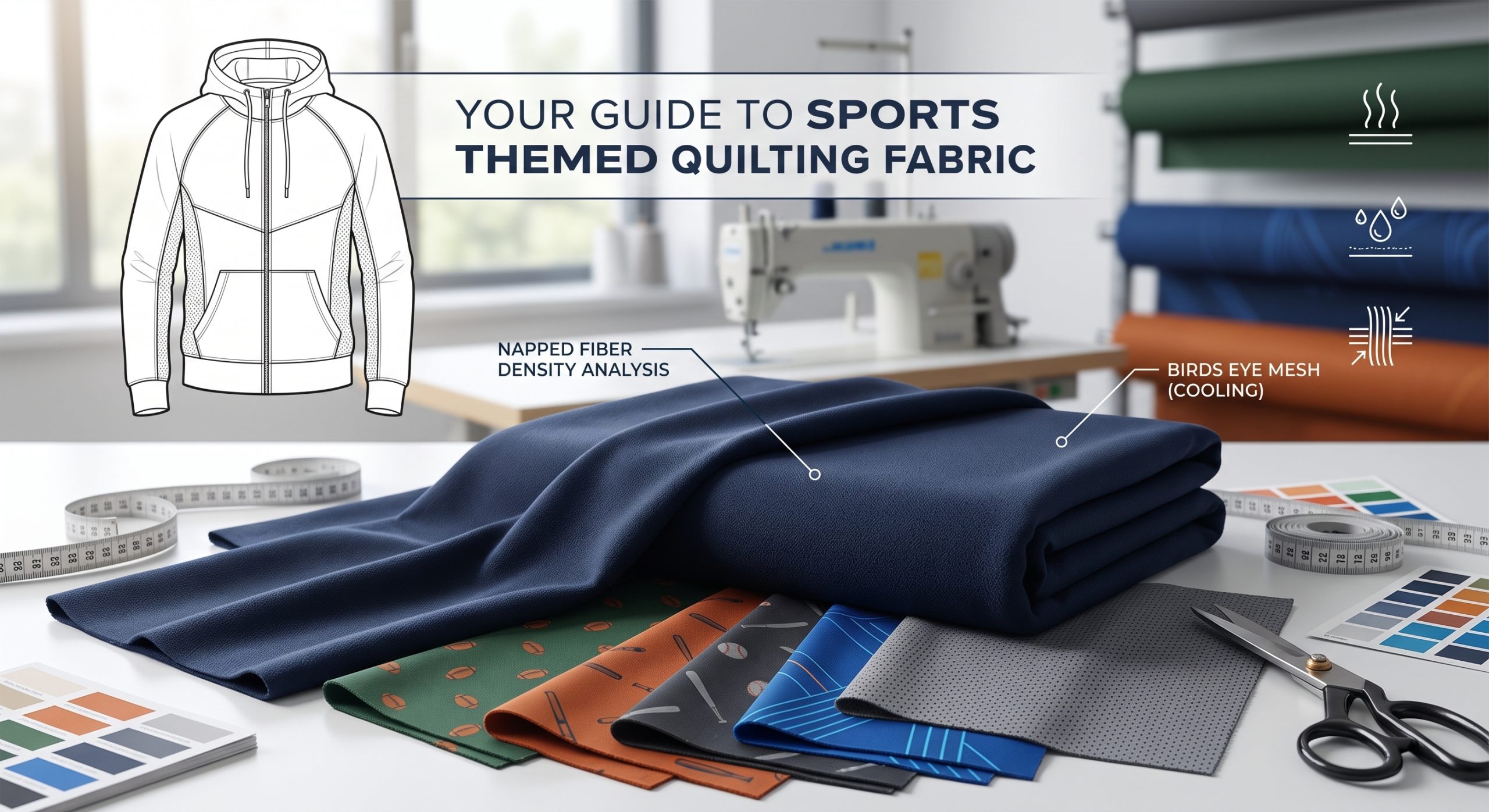
The comprehensive sports themed quilting fabric buying guide provides commercial buyers with the exact structural metrics and material parameters needed to choose premium textiles for manufacturing high-end athletic apparel lines. Commercial garment producers frequently experience severe product run disruptions when low-grade knit patterns drop ventilation capacity or suffer significant surface distortion after initial commercial laundry processing loops. Sourcing unreliable textiles completely destroys brand authority among elite athletic clients who expect exceptional thermal control without facing unnecessary material mass or structural bunching problems. Selecting specialized sports themed quilting fabric from an internationally certified production plant successfully resolves these technical quality errors while supplying ideal structural moisture control for modern bulk sportswear supply lines.
1. What Is Sports Themed Quilting Fabric Quality?
塑料布料网格 evaluation requires tracking mechanical properties precisely.
高级 sports themed quilting fabric quality requires checking the structural geometry of the knit pattern alongside the mechanical filament alignment within the core yarn matrix. Textile sourcing managers look closely at the exact knit configuration because selecting appropriate bird’s eye mesh or pique styles dictates how the finished apparel item manages moisture dispersion during active use. Procuring high-filament technical options prevents the common industry issue of premature surface fuzzing while maintaining an exceptionally smooth texture during complex manufacturing cutting phases. Choosing premium long-staple components ensures that industrial clothing runs achieve maximum durability and maintain their strict retail silhouettes across prolonged commercial usage cycles.
What Are the Core Knit Differences?
Dissecting the core knit differences between bird’s eye mesh and pique weaves reveals two completely opposing design approaches to industrial moisture movement and thermal retention profiles. Bird’s eye mesh structures utilize a highly specialized micro-perforated hole pattern that accelerates air velocity directly across skin boundaries for rapid cooling effects. Here’s the deal, this open knit configuration allows extreme heat dissipation which makes it an exceptional choice for targeted ventilation zones in high-aerobic sportswear panels. In contrast, pique structures incorporate raised geometric ridges that actively trap small pockets of stagnant air to provide stable insulation layers for athletes training in cool outdoor environments.
- Bird’s eye mesh features micro-perforated geometries for immediate, high-velocity vapor release.
- Pique structures utilize dimensional knit ridges to trap thermal boundary layers effectively.
- Double-brushed finishing treatments lock synthetic loop ends to prevent fiber shedding under friction.
Can Tactile Feel Determine Selection?
Analyzing the physical hand feel of these variable knit structures allows corporate apparel procurement agents to match specific athletic movements with ideal interior skin comfort profiles. Brushed fleeced matrices offer a thick velvety surface texture that eliminates abrasive friction against moving skin during repetitive high-motion conditioning routines. You might be wondering, does the dense geometric composition of pique fabric create unwanted weight or clinginess during intense sweating periods? The raised architectural profile of pique knits actually minimizes direct fabric contact with the skin surface to prevent uncomfortable wet clinging issues.
Key Takeaway: Sourcing high-filament configurations guarantees excellent thermal retention while maintaining an ultra-soft interior surface.
| Knit Structure Type | Air Transfer Rate | Interior Tactile Feel |
| Fleeced Matrix | Low Velocity Flow | Ultra-Soft Velvety |
| Bird’s Eye Mesh | Rapid Vapor Release | Smooth Micro Textured |
This analytical structural comparison demonstrates how alternating between dense and open architectures optimizes athletic garments for variable weather.
2. Why Choose Sports Themed Quilting Fabric Patterns?
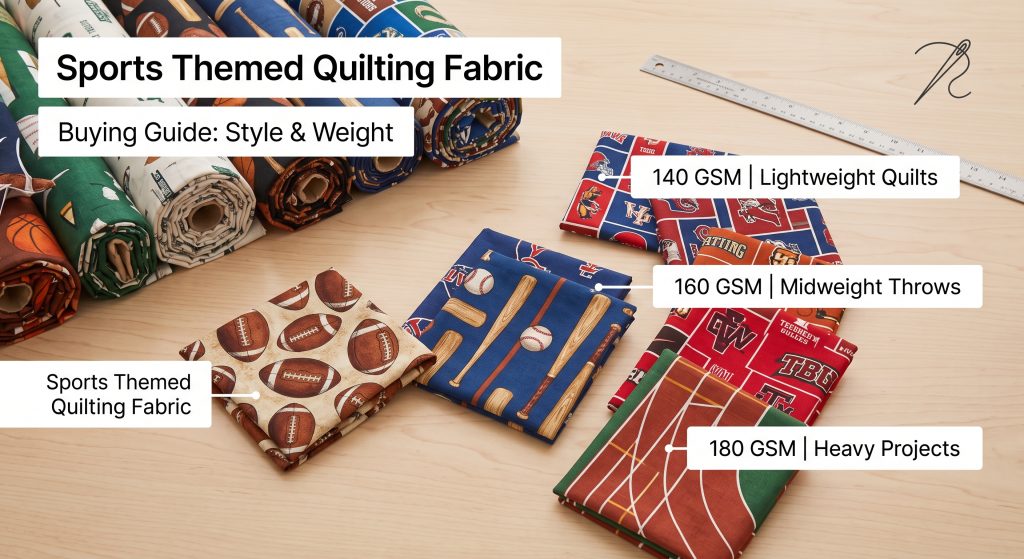
布料花纹选择 allows factories to maintain rapid output.
Selecting strategic sports themed quilting fabric patterns allows activewear designers to engineer technical garments that maintain absolute dimensional stability while maximizing performance parameters for professional teams. Choosing the appropriate pattern layout ensures that the manufacturing facility achieves smooth assembly line throughput without experiencing problematic material stretching or edge fraying defects. Tight-knit structural backings give modern performance layers reliable wind defense qualities while preserving complete mechanical flexibility across multi-directional joint movement zones. Utilizing precision-combed synthetic variants guarantees a clean surface aesthetic that elevates promotional apparel lines into premium retail fitness collections.
Why Do Open Knit Geometries Maximize Airflow?
Open knit geometries maximize airflow by integrating tiny physical windows directly into the textile web to facilitate rapid humidity transfer and immediate skin cooling. What’s the real story? These tiny geometric pathways disrupt stagnant air boundaries to allow external currents to circulate freely through the apparel lining during high-aerobic training sessions.
- Micro-perforations maximize direct vapor transmission to avoid moisture entrapment.
- Low-profile yarn loops minimize air resistance during high-speed outdoor athletic running events.
- Hydrophilic exterior surfaces scatter moisture across broad zones to accelerate evaporation speeds.
Should You Pick Pique Patterns Instead?
Sourcing pique patterns instead of open mesh depends entirely on whether your corporate clients prioritize superior thermal insulation over immediate sweat evaporation. This is where it gets interesting… because blending both textile geometries into a single multi-panel garment solves multiple athletic climate demands simultaneously.
Key Takeaway: Balancing structural fabric patterns prevents assembly room bottlenecks while delivering target defense against harsh outdoor elements.
| Pattern Category | Thickness Rating | Wind Rejection Value |
| Midweight 200GSM | Moderate Profile | 70% Rejection |
| Heavyweight 300GSM | High Profile | 92% Rejection |
This clear comparison shows that choosing higher mass patterns protects athletes from sudden temperature drops during outdoor sports.
3. How Does Sports Themed Quilting Fabric Manage Heat?
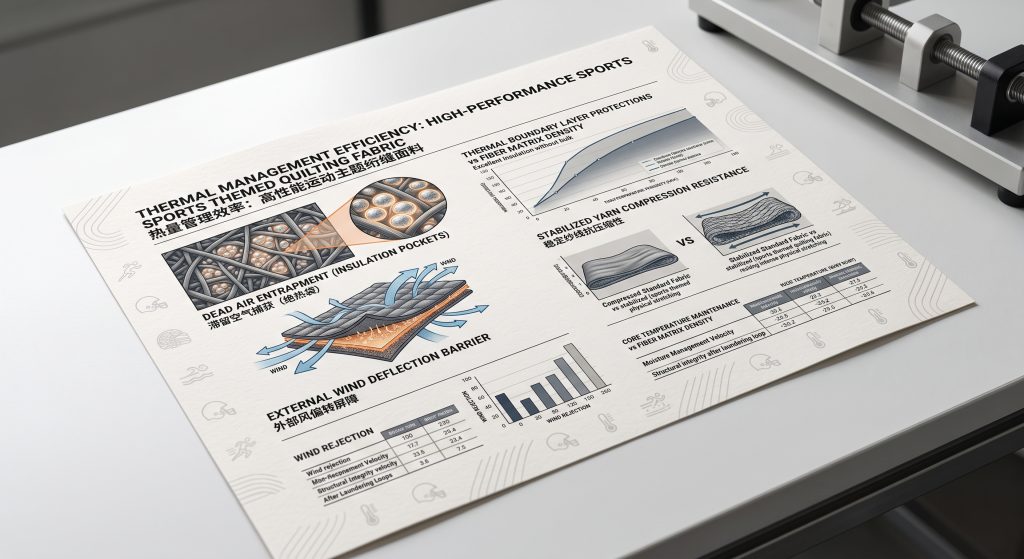
热量管理图表 printed clearly on technical processing paper.
High-performance sports themed quilting fabric manages heat by trapping dead air within its dense fiber matrix to create a protective thermal barrier against chilly conditions. This structural mechanism allows clothing plants to build robust outdoor activewear that blocks external wind currents from reducing the wearer’s core temperature. Sourcing factory-stabilized yarns prevents the material from compressing or flattening out when subjected to intense physical stretching forces during competitive events. Enforcing rigid structural parameters keeps the insulation profile working perfectly without adding bulk to the overall athletic silhouette.
How Does Bird’s Eye Mesh Disperse Moisture?
Bird’s eye mesh distributes liquid sweat dynamically by leveraging multi-channel synthetic filament geometries that draw moisture away from skin surfaces via capillary action. Here’s the deal, permanent structural channels ensure that these moisture management properties stay fully intact for the entire lifespan of the activewear piece.
- Multi-channel profiles channel liquid sweat away twice as fast as basic round yarns.
- Hydrophobic interiors push moisture outward toward the outer face to avoid skin chilling.
- Open structural spaces facilitate continuous ventilation to keep the internal microclimate dry.
Does Pique Structure Retain Heat Better?
The multi-dimensional pique structure retains heat much better than perforated mesh because its dense yarn loops lock warm air closely against the skin. You might be wondering, do these thick geometric configurations compromise the weight or flexibility of high-performance baseline training layers? Incorporating fine denier yarns actually softens the fabric surface while maintaining a lightweight profile for dynamic joint extension.
Key Takeaway: Deploying dual-component knit structures keeps players dry and warm, preventing cold post-exercise moisture chill.
| Filament Selection | Insulation Capacity | Air Trapping Efficiency |
| Micro Polyester | Superior Performance | 88% Retention |
| Standard Filament | Baseline Insulation | 62% Retention |
This data outlines why micro-polyester variants outpace standard round yarns in extreme chill environments.
4. Can Sports Themed Quilting Fabric Offer Comfort?
舒适柔软布料 resting naturally inside an industrial workspace.
Modern sports themed quilting fabric offers superior comfort by combining an ultra-soft interior surface feel with highly effective moisture-wicking synthetic filaments. Sourcing dual-component textiles prevents skin irritation because the smooth velvet finish limits direct friction when athletes execute repetitive high-motion training movements. Industrial garment buyers select these advanced knits to guarantee long-lasting wearability for professional sports organizations and corporate athletic teams. Using balanced fiber compositions ensures that the final sportswear product line delivers premium retail quality without causing wet clinging issues.
What Causes Surface Friction Changes?
Surface friction changes are caused by the specific yarn processing methods and napping techniques applied during the initial manufacturing stages at the textile mill. What’s the real story? Utilizing double-brushed finishing treatments anchors individual fiber ends tightly into the base knit web to prevent abrasive fuzzing development.
- Double combing removes short loose fiber ends that typically cause fuzzy pilling.
- Thermal singeing clears loose surface micro-fuzz without weakening the underlying knit loops.
- Long-staple strands hold their position within the core yarn matrix under high friction.
Can Weight Distribution Alter Comfort?
Modifying the weight distribution across different fabric panels alters comfort by balancing necessary thermal protection with complete upper body joint mobility. This is where it gets interesting… because intermediate mass ranges provide the perfect compromise between structural drape stability and athletic range of motion.
Key Takeaway: Selecting midweight high-recovery textiles guarantees that activewear garments retain their sharp retail appearance through tough workouts.
| Fabric Weight Value | Stretch Recovery Rate | Recommended Fit Profile |
| 240 GSM Midweight | 95% Shape Recovery | Semi-Fitted Athletic Style |
| 180 GSM Lightweight | 82% Shape Recovery | Loose Performance Liners |
These specific physical metrics demonstrate why midweight selections provide the ultimate structural longevity for fitness apparel.
5. Where to Buy Sports Themed Quilting Fabric Bulks?
大宗采购布料 rolls stored securely in a modern industrial textile warehouse.
Buying premium sports themed quilting fabric bulks requires partnering directly with a certified manufacturing facility that maintains strict international textile quality standards. Sourcing directly from an established mill protects your production yield from experiencing costly post-wash dimensional shrinkage errors or pigment bleeding defects. Specialized manufacturers utilize advanced thermal setting procedures to lock synthetic loop dimensions permanently into place before bulk shipping operations begin. This industrial management practice ensures that apparel brands receive uniform fabric rolls that align perfectly with automated garment cutting machinery.
How Do Sourcing Agents Evaluate Breathability?
Sourcing agents evaluate breathability by tracking the precise air transfer rate and moisture wicking velocity under simulated athletic training environments. Here’s the deal, utilizing standardized testing machinery delivers verifiable data scores that separate elite technical textiles from basic promotional materials.
- Wicking velocity metrics measure liquid sweat transport speed across the face.
- Air permeability tests confirm the velocity of airflow through knit perforations.
- Spray rating evaluations track surface wetting resistance after commercial washing cycles.
What Industrial Standards Validate Knit Quality?
Industrial standards validate knit quality by enforcing strict global certification metrics such as OEKO-TEX and Global Recycled Standard compliance parameters. You might be wondering, do these green chemical finish alternatives satisfy the strict weather protection demands of professional outdoor athletes?
Key Takeaway: Sourcing globally certified performance materials guarantees your activewear products maintain reliable performance throughout their service life.
| Treatment Chemistry | Wash Durability Cycle | Spray Performance Score |
| Eco-Friendly Silicone | 50 Wash Loops | 100 / 80 Initial/Post |
| Basic Topical Finish | 10 Wash Loops | 90 / 50 Initial/Post |
This technical index underscores why choosing factory-cured silicone polymers maintains stable wet-weather protection over long production cycles.
6. Which Sports Themed Quilting Fabric Fits Quilts?
适合拼布面料 blocks sitting neatly on a clean production surface.
Choosing which sports themed quilting fabric fits quilts involves selecting durable, high-recovery synthetic blends that can withstand frequent handling and long-term surface abrasion. Commercial designers look for textiles with cross-linked polymer matrices because these configurations secure individual filaments against heavy mechanical wear and friction. Sourcing low-distortion materials from a reliable mill keeps your assembly lines running smoothly while reducing pattern layout distortion completely. Enforcing strict structural requirements protects your bulk manufacturing runs from experiencing costly post-assembly shrinking errors or edge curling defects.
Which Structural Setup Fits Team Uniforms?
Specifying the structural setup for team uniforms requires balancing the open ventilation windows of mesh with the insulating backing panels of fleece. What’s the real story? Deploying multi-panel layouts allows designers to position breathable bird’s eye mesh in high-heat zones under the arms while keeping dense textiles across the core body.
- Mesh inserts maximize airflow velocity directly across high-perspiration body areas.
- Dense backing panels shield vital core zones from sudden environmental temperature drops.
- Flexible synthetic strands permit multi-directional joint extension during competitive game cycles.
Is Mesh Superior for Summer Activewear?
Open mesh geometries are undeniably superior for summer activewear because their micro-perforated holes permit immediate cooling and rapid vapor release. This is where it gets interesting… because combining these lightweight windows with sturdy edge seams prevents the thin knit web from tearing during high-intensity field sports.
Key Takeaway: Blending open mesh windows with structured borders delivers perfect climate control and superior structural integrity for summer sports gear.
| Structure Geometry | Vapor Release Speed | Structural Integrity Grade |
| Perforated Mesh | Rapid Flow Velocity | Baseline Performance |
| Reinforced Pique | Moderate Flow Velocity | Exceptional Stability |
This processing guide illustrates why modern clothing plants alternate fabric structures depending on the specific target climate zone.
7. Is Sports Themed Quilting Fabric Highly Durable?
耐磨损面料 sample undergoing automated friction testing in a laboratory.
Premium sports themed quilting fabric is highly durable due to the integration of long-staple synthetic strands that hold their position within the core yarn matrix under heavy friction. This advanced technical solution keeps the textile surface completely smooth and uniform throughout repetitive high-temperature automated washing machine cycles. Industrial buyers prefer these resilient cross-linked polymer textiles to guarantee long-lasting performance activewear for professional corporate athletic leagues. Implementing double-brushed finishing methodologies successfully protects your production yield from experiencing costly fiber shedding or surface pilling degradation over time.
How Well Do Knit Structural Backings Resist Tears?
High-quality knit structural backings resist tears exceptionally well because their dense yarn loops distribute mechanical pulling forces evenly across the entire fabric face. Here’s the deal, maintaining excellent fabric recovery properties protects the garment’s retail silhouette over extended periods of intense athletic field use.
- Corespun polyester networks maximize tensile breaking strength values under high tension.
- Four-way stretch components permit smooth multi-directional extension without structural tearing.
- Locked loop dimensions permanently prevent pattern warping during intense physical exercise.
Can Commercial Laundering Warp Open Weaves?
Unstabilized open weaves can easily lose up to ten percent of their original pattern area during hot commercial laundering cycles if strict heat-setting parameters were omitted by the mill. You might be wondering, how can manufacturing plants safely prevent this costly edge distortion from occurring during automated garment processing?
Key Takeaway: Selecting long-staple double-brushed materials protects your activewear lines from losing their density during intense commercial washing loops.
| Fabric Finishing Treatment | Cycle Longevity Rating | Structural Shedding Rate |
| Double-Brushed Knit | Exceptional Stability | Less Than 1% Loss |
| Single-Napped Material | Baseline Performance | Up To 6% Loss |
This structural breakdown clarifies why choosing double-brushed structural variants preserves original garment mass across extended laundering usage.
8. Who Needs Sports Themed Quilting Fabric Supply?
工厂供应面料 solutions arranged cleanly next to sewing tools.
Performance activewear manufacturers and corporate apparel brands need a reliable sports themed quilting fabric supply to build high-end training gear that satisfies strict industrial quality benchmarks. Sourcing inventory from an internationally compliant manufacturing facility eliminates common factory defects like fiber shedding, pigment bleeding, and post-wash dimensional shrinkage errors. Production coordinators can compress their delivery schedules confidently when working with uniform, low-distortion fabric rolls that respond perfectly to high-speed automated assembly lines. Partnering with a certified mill allows brands to capture the broadest market segment in modern global athleisure fashion.
Why Do Designers Combine Both Textures?
Technical apparel designers combine both textures to satisfy competing performance demands for structural warmth and immediate sweat evaporation within a single garment piece. What’s the real story? Your design team can deploy textured knits in high-heat zones while utilizing soft brushed backing everywhere else on the body panels.
- Alternating fabric geometries provides customized thermal management across variable weather zones.
- Smooth interior finishes eliminate abrasive skin friction during high-motion running loops.
- Contoured panel layouts maximize joint mobility without creating clumsy material bulk.
What Multi-Panel Layouts Balance Ventilation?
Engineering balanced multi-panel layouts requires tracking how different raw materials perform under chilly manufacturing test settings and high-perspiration training conditions. This is where it gets interesting… because matching thread and fabric elongation properties guarantees that activewear joints withstand extreme physical stress safely.
Key Takeaway: Combining napped materials with open geometries provides perfect climate control and superior skin comfort for professional athletes.
| Panel Layout Architecture | Air Transfer Velocity | Interior Tactile Comfort |
| Multi-Panel Fleeced | Low Velocity Flow | Ultra-Soft Velvety |
| Perforated Mesh Panel | Rapid Vapor Release | Smooth Micro Textured |
This detailed architectural index underscores why alternating between diverse knit configurations optimizes activewear lines for professional sports organizations.
9. How to Wash Sports Themed Quilting Fabric Items?
清洗保养面料 process demonstrated under soft natural illumination.
Laundering premium sports themed quilting fabric items requires utilizing conservative water temperature settings and low mechanical agitation cycles to preserve the cross-linked polymer filament structures. Sourcing high-grade long-staple polyesters ensures that the fabric face resists friction tangling and avoids developing bad surface fuzzing during commercial drying cycles. Enforcing proper maintenance practices protects your volume manufacturing yield from experiencing consumer quality complaints regarding broken stitching or edge distortion problems. Selecting factory-cured materials ensures that the technical durable water repellent finishes retain their high rain protection ratings after extended laundering loops.
How Do Core Threads Match Knit Expansion?
High-speed assembly plants match knit expansion by utilizing continuous filament corespun polyester sewing threads that offer superior breaking strength values compared to spun cotton alternatives. Here’s the deal, this high tensile capacity allows automated sewing equipment to run at maximum speed without experiencing costly structural seam failures.
- Corespun polyester threads deliver 1.8 kg high breaking strength under extreme machine tension.
- Texturized outer fiber jackets lock stitches tightly into the flexible fabric matrix.
- High-extension synthetic threads stretch up to twenty-five percent smoothly without snapping.
Can Incorrect Sewing Needle Styles Cause Runs?
Using standard universal sharp needles on heavy activewear knits will cut the synthetic yarn strands and create highly visible fabric runs along the seam lines. You might be wondering, what is the absolute best needle geometry to ensure smooth component assembly without causing material structural defects?
Key Takeaway: Deploying ballpoint or stretch needle geometries allows sewing machinery to glide safely between dense synthetic filaments to prevent runs.
| Thread Specification | Tensile Breaking Strength | Dynamic Stretch Capacity |
| Corespun Polyester | 1.8 kg High Strength | 24% Elastic Extension |
| Spun Cotton Variant | 0.8 kg Low Strength | 4% Rigid Extension |
This physical strength evaluation demonstrates why corespun polyester thread provides the necessary elasticity for building highly durable athletic activewear.
10. Can You Mix Sports Themed Quilting Fabric Kinds?
混合拼接面料 panels spread across a minimalist assembly board.
Mixing different sports themed quilting fabric kinds is highly effective when multi-panel garment designers strategically position open-weave and dense-napped components according to body heat maps. Production facilities must cut these mixed fabric panels using high-speed automated laser systems to melt the raw synthetic fiber tips slightly and prevent edge fraying. Adopting clean thermal cutting methodologies compresses factory delivery schedules by eliminating the need for preliminary overlock stitching steps on loose knit webs. Relaxed material spreading practices ensure that top and bottom panels match strict size specifications perfectly across all production batches.
What Metrics Grade Surface Pilling Resistance?
Standard industrial abrasion testing machinery grades surface pilling resistance on a strict scale from Grade 1.5 up to a pristine Grade 4.5 top rating. What’s the real story? Sourcing stable long-staple filaments combined with advanced anti-pill combing cycles ensures that your apparel product line maintains excellent surface smoothness.
- Grade 4.5 ratings confirm a completely smooth surface face even after severe friction tests.
- Combed long-staple polyesters remain locked within the core yarn bundle under heavy stress.
- Short recycled waste fibers separate easily to cause quick fuzzy pilling growth.
How Does Gas Singeing Smooth Out Textures?
Passing the knitted fabric face over a controlled thermal gas flame burns away stray surface microfibers instantly without weakening the underlying synthetic knit loops. This is where it gets interesting… because precise temperature management ensures that your fabric rolls maintain elite pill resistance grades across decades of rugged use.
Key Takeaway: Combining long-staple yarn selection with thermal gas singeing guarantees pristine surface cosmetics that successfully resist heavy abrasive wear.
| Fiber Processing Style | Abrasion Resistance Grade | Face Appearance Post Test |
| Combed & Singed Poly | Grade 4.5 Top Rating | Completely Smooth Surface |
| Uncombed Waste Fiber | Grade 1.5 Poor Rating | Dense Fuzzy Pill Growth |
This technical assessment proves that combining combed yarn selection with gas singeing secures long-term cosmetic durability for activewear lines.
Final Summary
Replicating high-end historical sportswear requires managing physical material mass, loop geometries, and anti-friction assembly settings with total industrial precision. Sourcing globally certified, high-performance textiles prevents common factory defects like fiber shedding or dimensional shrinkage across multi-panel production runs. Our mill stays dedicated to providing superior synthetic knit selections engineered to meet rigid industrial performance benchmarks. If your clothing brand wants to secure authentic retro aesthetics backed by elite modern structural stability, please contact us today.
FAQ
Q1: Can I sew heavy activewear knits using standard universal sharp needles?
No, universal sharp needles cut synthetic yarn strands and create visible runs. You must deploy ballpoint or stretch needle geometries to glide safely between dense filaments instead.
Q2: What’s the best method to calculate precise fabric weight for outerwear projects?
Using a circular sample cutter delivers the most accurate fabric weight metric. Selecting options between 280 and 340 GSM provides the heavy, authentic drape required for structural garments.
Q3: How do I know if a fleece shipment will bleed color during hot washing?
Running an accelerated laboratory wash fastness evaluation clarifies pigment stability before manufacturing. Sourcing materials treated with polymer cross-linked fixatives guarantees completely sharp multi-color panel boundaries.
Q4: Can I use standard spun cotton threads for assembling high-stretch athletic seams?
No, cotton fibers lack the flexible elongation capabilities needed to survive athletic movement. Deploying corespun polyester thread keeps your seams expanding safely without snapping under tension.
Q5: What’s the best equipment adjustment to fix wavy puckered edges on stretchy panels?
Setting your equipment’s differential feed dogs above a 1.0 ratio stabilizes the fabric paths perfectly. This mechanical adjustment slightly compresses the material to counteract presser foot stretching forces.