
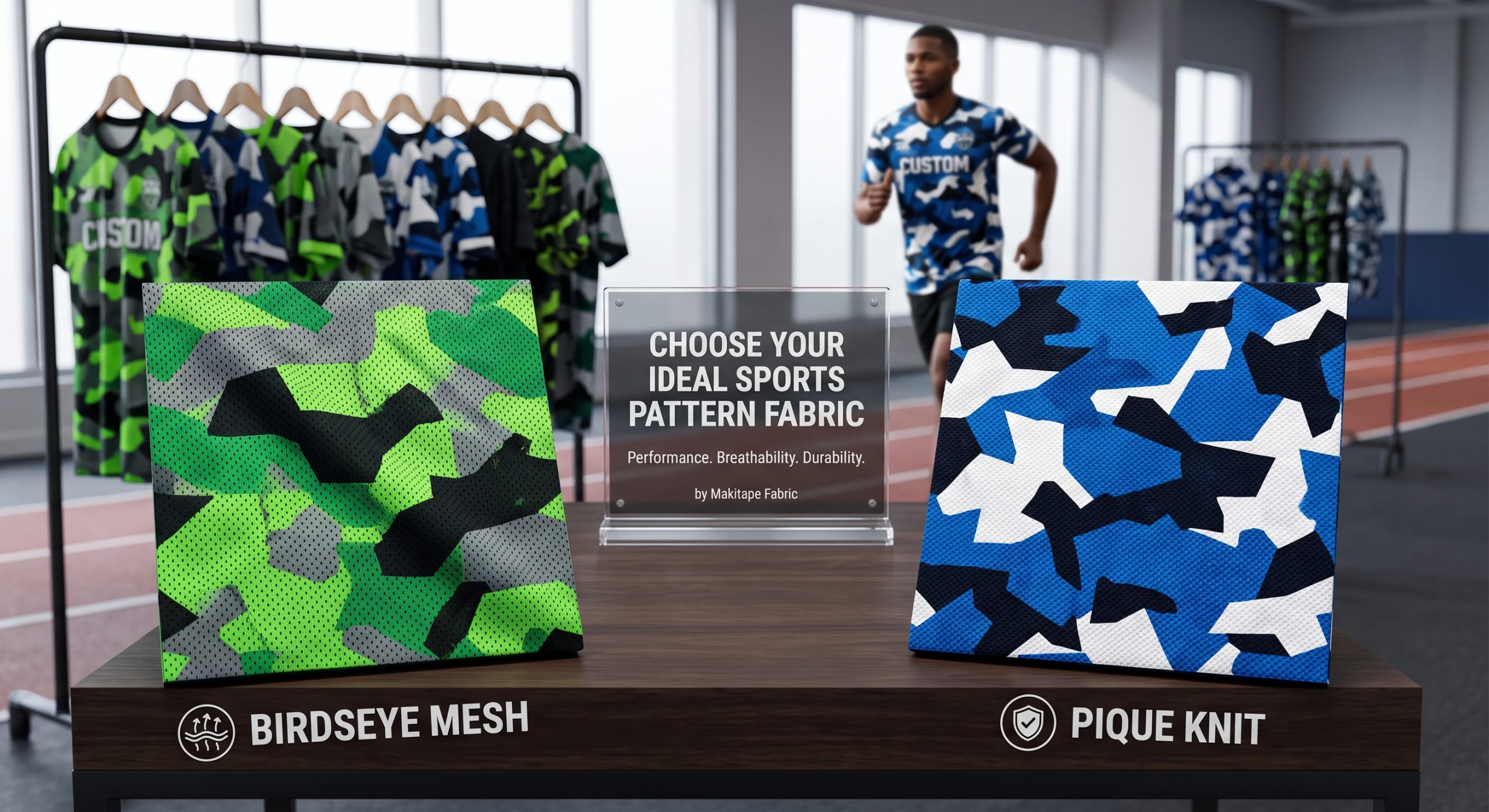
Choosing the ultimate athletic textile requires matching your manufacturing requirements to high-performance knits that offer outstanding breathability, vibrant dye sublimation compatibility, and superior durability. Imagine your corporate procurement team dealing with constant complaints from active apparel brands regarding dull prints and uncomfortable uniforms that restrict player movement on the field. This persistent manufacturing failure ruins customer retention, dampens team spirit, and destroys your factory’s hard-earned market reputation among elite sportswear distributors. Fortunately, utilizing premium sports pattern fabric provides the ideal solution by blending engineered circular patterns with moisture-wicking technology to deliver striking team aesthetics alongside elite performance.
1. What Is the Best Sports Pattern Fabric?
The finest selection for custom team sportswear is a high-tenacity polyester technical knit that perfectly balances ink saturation with structural stability during high-temperature dye sublimation processing. Selecting this specialized sports pattern fabric allows apparel factories to construct lightweight jerseys that remain durable during aggressive game play. Professional buyers must prioritize materials that resist structural deformation while maintaining clean aesthetic properties over long seasons. By utilizing premium synthetic filaments, your garment enterprise can deliver elite uniforms that satisfy strict athletic regulations.
Should You Opt for Birdseye Mesh or Pique Knit?
Deciding between these two dominant performance structures depends entirely on the physical movement demands and aesthetic preferences of your target sports clients. This is where it gets interesting… because while both variations accept complex sublimation designs flawlessly, their surface configurations provide completely distinct performance experiences for active players:
- Birdseye mesh features tiny circular surface indentations that optimize fast ventilation.
- Pique knit utilizes a raised geometric double-knit method that offers premium structural thickness.
The key takeaway is that selecting the appropriate knit geometry allows your factory to custom-tailor team apparel lines to specific outdoor weather variables.
| Fabric Selection Properties | Engineered Birdseye Mesh | Structured Pique Knit |
| Structural Knit Style | Single circular knit pores | Double-knit tuck stitches |
| Surface Texture Profile | Smooth, uniform feel | Raised geometric pattern |
| Primary Athletic Target | High-velocity tracking sports | Classic team golf and polo apparel |
Apparel manufacturers can review this structural layout to allocate the proper textile style based on intended player movement intensity.
2. How Does Sports Pattern Fabric Breathe?
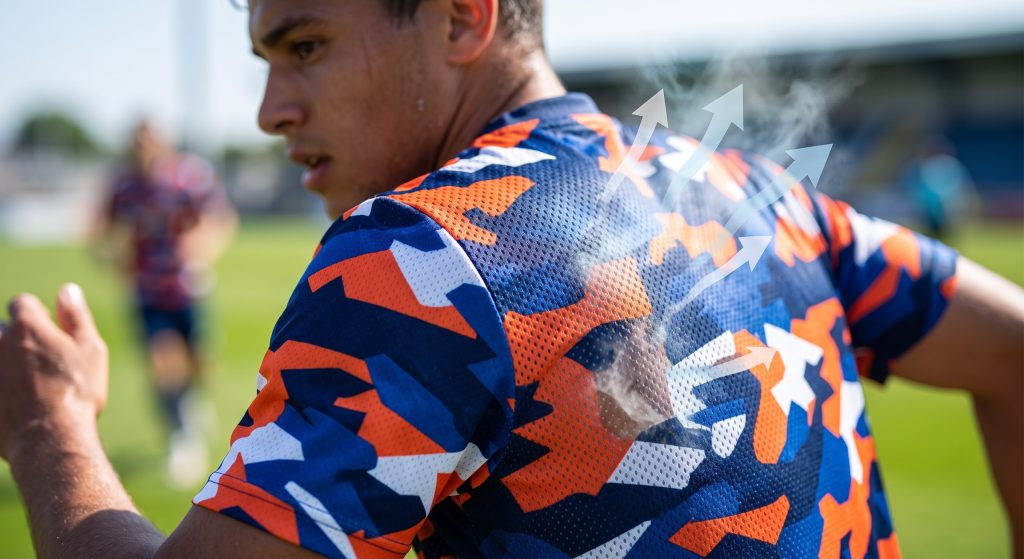
Advanced athletic textiles facilitate superior cooling by creating continuous mechanical ventilation pathways that pull hot air away from the skin surface during intense physical competition. This high-airflow sports pattern fabric design allows synthetic garments to function as a thermal regulation barrier against intense outdoor heat conditions. Incorporating specialized birdseye mesh patterns ensures that your custom jerseys do not trap body moisture during competitive match play. Apparel production managers favor these open-cell configurations because they guarantee consistent comfort across long team tournaments.
Why Do Engineered Pores Prevent Overheating?
When players push their physical limits, their clothing must act as an active heat-dissipation mechanism to prevent rapid stamina loss. You might be wondering… how a synthetic polyester thread can provide such immediate relief without relying on chemical cooling agents:
- Microscopic knit holes allow convective heat currents to escape freely from the body.
- Air circulation channels sweep humid air vapor away before it condenses into heavy sweat.
The key takeaway is that mechanical knit venting provides permanent climate control that never washes out over repeated laundry cycles.
| Thermal Airflow Metrics | Open Mesh Structures | Tight Interlock Weaves |
| Air Permeability Rating | High cubic feet per minute | Low cubic feet per minute |
| Heat Dissipation Method | Direct convective airflow | Slow conductive transfer |
| Humidity Escape Speed | Immediate vapor release | Delayed moisture retention |
This thermal data points to open knits as the superior choice for high-aerobic summer sports uniforms.
3. Is Sports Pattern Fabric Durable Enough?
Engineered sports pattern fabric delivers exceptional structural integrity because it is manufactured using multi-filament polyester yarns that resist high tensile stress and rough turf friction. Producing field uniforms with this rugged sports pattern fabric ensures that garments resist ripping when pulled aggressively by opposing players. Industrial apparel buyers require high abrasion resistance numbers to protect their long-term custom clothing investments. Utilizing robust lock-stitch sewing methods alongside this material guarantees long-lasting apparel performance for school athletic clubs.
Can Your Uniforms Survive Constant Friction?
Contact sports present a hostile environment where low-grade materials quickly fail, resulting in unraveled seams and ruined team graphics. But here’s the kicker… the tight loop configuration of premium athletic knit fabrics stops minor surface snags from developing into massive garment tears:
- Smooth filament surfaces allow rough gear pieces to slide off harmlessly.
- Interlocking knit knots secure adjacent fibers to contain sudden high-stress impacts.
The key takeaway is that sourcing high-tenacity synthetic textiles prevents expensive mid-season uniform replacements for your institutional clients.
| Fabric Ruggedness Ratings | Premium Polyester Knit | Standard Cotton Blend |
| Tensile Breaking Strength | Superior rating under load | Low rating under tension |
| Pilling Resistance Score | Grade 4.5 clean finish | Grade 2.0 fuzzy surface |
| Tear Extension Limit | Maximum stretch recovery | Immediate structural failure |
This durability chart demonstrates why professional teams depend entirely on synthetic polymers rather than organic fibers for game day.
4. Which Sports Pattern Fabric Feels Better?
Determining the ideal hand-feel depends on whether your athletic market prefers an ultra-smooth, lightweight synthetic layer or a more substantial, textured tactile experience. High-quality sports pattern fabric should always minimize skin chafing by using low-friction interior yarn placements across the garment panels. Custom apparel brands often choose premium pique knit styles to give their team apparel a classic, executive feel during formal tournaments. Evaluating these sensory details allows your design team to craft garments that match the exact comfort preferences of your distribution network.
Does Surface Pattern Affect Inner Skin Comfort?
The geometric design on the exterior of your athletic clothing directly influences how the inner material interacts with human skin during heavy motion. What’s the real story? Advanced knitting mills configure the interior side of the fabric to remain flat and soft, even when the outer layer features complex textures:
- Flat-knit interior loops minimize rough skin contact points to eliminate severe chafing.
- Specialized texturized yarns provide a natural feel that mimics soft organic cotton fibers.
The key takeaway is that premium athletic textiles deliver a luxurious interior feel without sacrificing the performance advantages of synthetic garments.
| Textural Comfort Factors | Light Circular Mesh | Heavy Double Pique |
| Contact Skin Sensation | Silky and ultra-lightweight | Substantial and structured |
| Friction Coefficient | Extremely low surface drag | Moderate structural grip |
| Weight Impression | Disappears during hard play | Feels premium and secure |
Reviewing these tactile characteristics helps developers match the correct material weight to their clients’ comfort expectations.
5. Can Sports Pattern Fabric Dry Quickly?
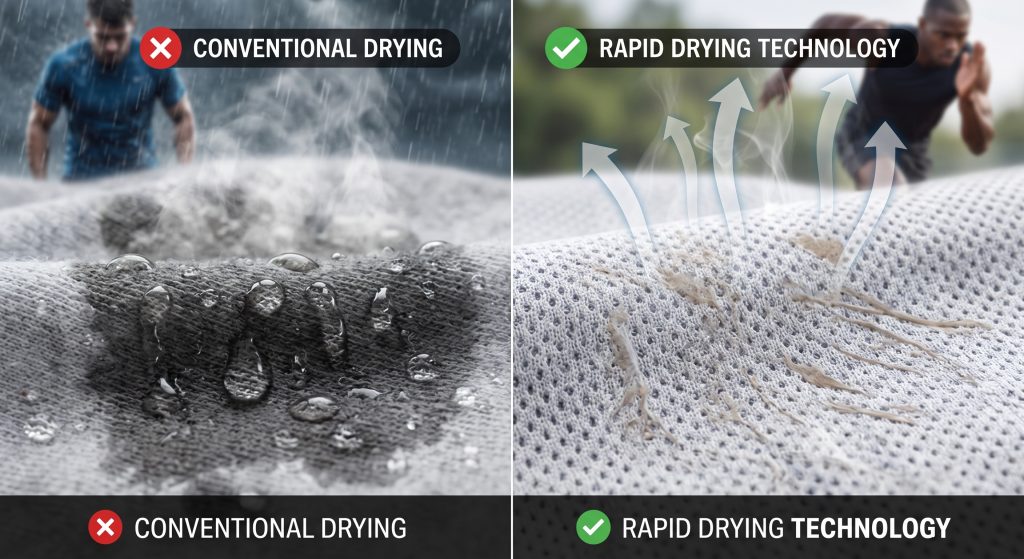
Technical sports pattern fabric achieves rapid drying performance by using specialized non-absorbent polyester fibers that spread moisture across a wide surface area to maximize evaporation speeds. Utilizing this advanced sports pattern fabric prevents uniforms from gaining water weight during heavy rain matches or intense sweating periods. Sportswear procurement teams prioritize fast drying speeds to keep players dry and nimble throughout multi-hour athletic matches. Delivering garments with these advanced drying capabilities keeps your B2B customers ahead of traditional clothing competitors.
How Does Capillary Action Remove Heavy Sweat?
When an athlete perspires heavily, the garment must immediately transport that liquid away from the body to keep the player comfortable. Ready for the good part? The unique star-shaped cross-section of advanced performance fibers acts as a mechanical pump to move water outward:
- Hydrophobic fiber properties push liquid moisture away from the inner skin layer.
- High surface area channels spread the water across the outer face for fast air drying.
The key takeaway is that swift moisture transport prevents heavy, wet fabric from clinging to athletes and slowing down their movements.
| Drying Velocity Metrics | Wicking Synthetic Mesh | Traditional Absorbent Cloth |
| Water Transport Speed | Seconds to outer layer | Absorbs and retains liquid |
| Fabric Weight When Wet | Minimal increase recorded | Doubles in physical weight |
| Total Evaporation Time | Minutes under air movement | Hours to dry completely |
This speed assessment highlights how engineered synthetic structures preserve player agility by shedding moisture instantly.
6. How to Select Sports Pattern Fabric Weight?
Selecting the correct material weight requires analyzing the specific physical contact levels and outdoor weather conditions of your target athletic market. Lightweight sports pattern fabric options ranging from 130 to 150 GSM provide incredible speed and cooling for track or basketball applications. Midweight alternatives between 160 and 200 GSM supply the necessary structural thickness needed for rugged rugby and football kits. Sourcing your materials from a versatile sports fabric mill gives your production team access to the exact fabric thickness your seasonal projects require.
Which GSM Layer Fits Precision Printing Best?
Different material thicknesses respond uniquely to the high heat and pressure used during industrial sublimation transfer printing. This is where it gets interesting… because thicker knit structures can absorb more ink density, while thinner meshes offer unmatched lightweight comfort on the field:
- Light 140 GSM panels print quickly with ultra-sharp graphic line definitions.
- Heavy 190 GSM textiles maintain design depth without showing transparency when stretched.
The key takeaway is that matching your textile weight to your printing equipment setup prevents fabric shrinkage and ink bleeding defects.
| Weight Application Chart | Recommended GSM Range | Target Athletic Apparel |
| Ultra-Light Performance | 130 GSM – 145 GSM | Running vests and tracking jerseys |
| Balanced Team Wear | 150 GSM – 170 GSM | Soccer kits and custom league uniforms |
| Heavy Duty Uniforms | 175 GSM – 200 GSM | Industrial work shirts and polo gear |
This operational chart helps factory managers select the appropriate fabric thickness based on specific commercial apparel uses.
7. Does Sports Pattern Fabric Hold Colors Well?
Premium sports pattern fabric displays incredible color retention because its molecular structure forms a permanent chemical bond with sublimation inks under high temperatures. Designing team uniforms with this high-grade sports pattern fabric prevents intricate team emblems and pattern details from fading after months of sun exposure. Athletic buyers expect custom team wear to maintain bright colors despite constant washing and tough game conditions. Utilizing high-purity polyester bases ensures your finished products look brand new throughout the entire tournament schedule.
Can Your Custom Designs Face Intense Sun Exposure?
Outdoor playing fields expose custom team apparel to harsh ultraviolet radiation that quickly destroys low-grade textile dyes. What’s the real story? Sublimation dyes become part of the actual polyester fiber matrix, shielding the color pigments from UV breakdown:
- Deep ink locking stops colors from bleeding during intense sweating or rainy games.
- Clear polymer filaments preserve design contrast across multiple seasons of outdoor play.
The key takeaway is that utilizing color-stable synthetic knits protects your sportswear brand’s image by eliminating early uniform fading issues.
| Colorfastness Test Types | Sublimated Performance | Surface Printed Cotton |
| UV Light Exposure Test | Grade 4.5 stable rating | Grade 2.0 rapid fading |
| Perspiration Resistance | No visible dye bleeding | High color loss recorded |
| Commercial Laundry Test | Zero color transfer observed | Noticeable fading after washes |
This testing data confirms that sublimation-ready synthetic textiles deliver the best color performance for outdoor team uniforms.
8. Is Sports Pattern Fabric Easy to Sew?
High-performance sports pattern fabric offers great processing efficiency on automated factory lines when using specific ballpoint needles that glide through synthetic loops without cutting threads. This stable material allows fashion factories to produce complex athletic garments without dealing with frustrating puckering or stitch slipping errors. Partnering with an experienced custom sublimation supplier ensures that your fabric rolls arrive with straight, even grain lines that stay aligned on automated cutting tables. Keeping your garment assembly lines running smoothly minimizes production waste and helps you hit tight customer shipping dates.
How Can You Eliminate Seam Puckering Faults?
The flexible nature of athletic knit textiles requires precise machine calibrations to avoid creating wavy, uneven seams during mass production. You might be wondering… what specific adjustments your production team can make to maintain flat, professional seams on highly elastic garments:
- Differential feed systems balance fabric tension evenly across the feed dogs.
- Fine synthetic threads expand and contract along with the stretch of the panel.
The key takeaway is that using dimensionally stable technical knits simplifies your production line training and lowers factory defect rates.
| Factory Sewing Parameters | Recommended Setup | Production Pitfalls to Avoid |
| Needle Selection Style | Chrome ballpoint needles | Sharp cutting needles (causes runs) |
| Industrial Thread Type | Flexible textured polyester | Rigid cotton thread (causes snaps) |
| Machine Feed Calibration | Positive differential setting | Heavy manual pulling (stretches seams) |
Following these factory parameters ensures your production line maintains high efficiency while producing durable, retail-ready athletic garments.
9. How to Wash Sports Pattern Fabric Safely?
Washing sports pattern fabric safely requires using cold water cycles and mild liquid detergents to protect the wicking fiber structures and maintain print clarity. Laundering custom uniforms with this specialized sports pattern fabric requires avoiding fabric softeners, which can coat the microscopic wicking paths and ruin performance features. School athletic departments need simple wash routines that clean out tough grass stains without destroying fabric performance. Providing clear care instructions protects garment performance and extends the lifespan of your custom uniform orders.
Why Do Fabric Softeners Damage Wicking Paths?
Many team managers think adding liquid softeners will make their performance uniforms feel better after long tournament games. But here’s the kicker… these chemical softeners leave behind a waxy layer that blocks the fabric’s natural ability to manage moisture:
- Waxy residues coat performance fibers, stopping sweat from entering the wicking channels.
- Clogged mesh pores trap body heat inside the jersey, causing players to overheat quickly.
The key takeaway is that using simple liquid soap preserves the technical wicking features of your sportswear products for their entire lifecycle.
| Laundry Performance Variables | Safe Cleansing Routine | Forbidden Fabric Care |
| Washing Temperature | Cool setting below 35°C | Boiling hot cycles (warps fibers) |
| Chemical Additive Use | Pure liquid detergent | Liquid fabric softeners (clogs pores) |
| Drying Equipment Setting | Low heat tumble air | High heat commercial drying |
Sharing this laundry guidance table with your bulk uniform clients reduces product performance complaints and strengthens customer satisfaction.
10. Where to Buy Sports Pattern Fabric Bulk?
Sportswear production companies can purchase premium sublimation-ready materials directly from established textile facilities that operate advanced circular knitting machinery and quality control systems. Buying directly from a specialized mill helps your garment business secure low factory prices, consistent dye lots, and reliable shipping timelines for large seasonal production orders. Evaluating physical fabric samples firsthand allows your purchasing team to confirm material weight, stretch recovery, and print clarity before signing bulk production agreements. We encourage you to contact us today to request your free fabric sample booklets and explore competitive pricing options for your next custom apparel collection.
Our main takeaway is that sourcing technical polyesters directly from specialized knitting facilities gives your sportswear business an immediate edge in quality, cost control, and product performance. Our team provides high-performance textiles engineered specifically to help your corporate clients stand out on the field and scale their market presence.
Q1: Can I sublimate complex multi-colored camouflage graphics onto this material?
Yes, you absolutely can. The high-purity polyester filaments bond completely with sublimation inks, ensuring intricate patterns look sharp and never peel.
Q2: What’s the best material weight for active competitive soccer uniforms?
We highly recommend a lightweight 140 GSM birdseye mesh knit. This fabric balances excellent durability with rapid sweat evaporation to keep players quick on the field.
Q3: How do I know if fabric softeners have clogged my uniform’s wicking pores?
You can easily test this by dropping a small amount of water onto the fabric. If the water beads up instead of soaking in instantly, chemical residues are blocking the wicking pathways.
Q4: Can I order customized material weights tailored to specific climate demands?
Yes, custom manufacturing is fully available. Our facility allows commercial buyers to adjust GSM thickness to match specific seasonal needs.
Q5: How do I stop seam running issues during high-speed garment assembly?
Always use specialized ballpoint needles on your production lines. These needles slide between the fabric loops rather than piercing and tearing the synthetic threads.