
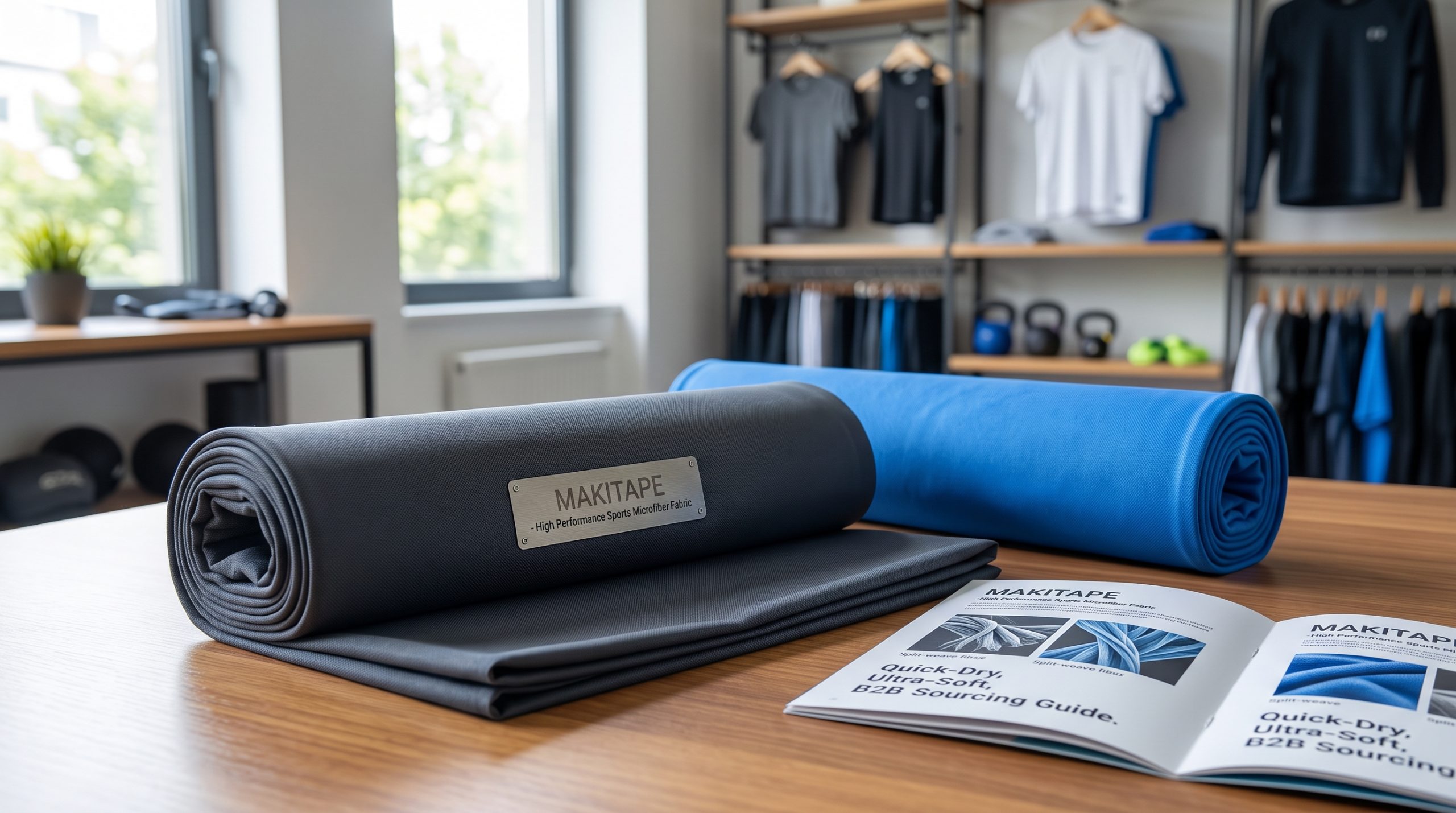
The absolute best microfiber fabric for activewear is a premium synthetic blend that combines high-density polyester with flexible elastane to deliver superior moisture-wicking and durable stretch. Sourcing high-quality apparel materials is a major challenge for athletic brands when they face customer complaints about heavy, sweat-soaked clothing that causes painful skin chafing during intense training sessions. This freezing moisture trapped against the skin degrades physical performance during winter workouts and also dampens consumer satisfaction, leading to negative reviews and lost sales. By adopting high-grade sports microfiber fabric, your athletic brand can supply lightweight, fast-drying garments that maintain complete physical comfort during extreme athletic activities. Sourcing this technical textile guarantees that your activewear collections satisfy the strict quality requirements of modern sport professionals in the international market.
Why choose sports microfiber fabric for custom activewear?
You choose sports microfiber fabric because its ultra-fine filaments provide a luxurious next-to-skin touch that prevents friction chafing during high-speed athletic movements. These advanced synthetic threads offer exceptional tensile strength while keeping the finished garment lightweight and comfortable during daily exercise. Sourcing high-quality materials from specialized manufacturers protects your brand reputation among competitive athletes and helps your business grow. Your activewear line will immediately stand out for its superior durability and comfortable feel during active physical workouts.
Does it offer superior hand feel?
Synthetic ultra-fine fibers create a velvety surface that mimics premium natural cotton without retaining wetness during heavy cardiovascular training. This is where it gets interesting… You will immediately observe how smoothly the material moves against your skin during strenuous activity because the smooth filaments reduce friction. This luxurious touch is especially helpful for close-fitting garments like compression shirts and gym leggings that require a gentle feel. Sourcing this material helps your brand establish a reputation for producing high-quality apparel items that customers love to wear.
- Ultra-soft micro-filaments minimize skin irritation during training
- Lightweight construction prevents garment drag during running
- Resilient drape maintains a polished look after washing
How does it benefit B2B bulk buyers?
Purchasing high-performance fabrics in bulk allows your apparel business to maintain excellent profit margins while delivering top-quality sportswear garments. Ready for the good part? You can easily request custom colors and specific weights to match your exact seasonal design guidelines. Working directly with specialized manufacturers ensures that you receive consistent fabric batches that reduce overall production waste. This reliable supply chain helps your corporate brand scale up production quickly to meet rising market demands.
- Custom dyeing options for brand consistency across lines
- Consistent batch quality reduces apparel manufacturing waste
- High-yield production supports rapid market scaling plans
Key Takeaway: Sourcing premium synthetic textiles helps your corporate apparel business establish a strong reputation for offering highly reliable sportswear garments that keep active athletes comfortable.
| Fabric Parameter | Standard Polyester | Premium Microfiber |
| Filament Fineness | > 1.0 denier | < 0.3 denier |
| Weight Efficiency | Moderate | Exceptional |
| Surface Texture | Slightly rough | Smooth and luxurious |
This technical data shows why ultra-fine threads deliver a much smoother touch than conventional synthetics.
How does sports microfiber fabric regulate body temperature?
This sports microfiber fabric regulates temperature by creating mini insulation zones that trap warm air while venting excess humidity during active exercise. This balanced breathability keeps your core warm in chilly weather and cool during high-intensity indoor gym training sessions. Maintaining a stable microclimate is a key factor for preventing sudden post-workout muscle chills and improving recovery. Your design team can utilize these smart thermal properties to create highly versatile all-weather training gear collections.
Why is thermoregulation key for runners?
Cold winter winds can quickly lower your body temperature if your clothing remains damp from perspiration after hard running drills. But here’s the kicker… You can rely on specialized synthetic knits to act as a smart thermal shield that breathes during intense physical stress. This adaptive thermal control prevents muscles from cramping and helps outdoor athletes train longer in harsh weather conditions. Sporting brands select these advanced textiles because they offer a reliable solution to the challenges of cold-weather training.
- Vents heat during maximum aerobic exertion outdoors
- Retains warm air during rest intervals to prevent chills
- Blocks freezing wind from chilling damp skin surfaces
Can it adapt to seasonal changes?
Lightweight construction allows these versatile materials to serve as excellent summer layers or warm winter liners depending on your design. What’s the real story? You will find that the specialized weave adjusts naturally to external temperatures by allowing rapid air circulation through the fibers. This high adaptability makes the material a perfect choice for year-round sportswear lines that target active outdoor consumers. Investing in multi-season fabrics helps your business reduce inventory risk and simplify your sourcing process.
- Dual-action cooling and heating properties for year-round wear
- Seamless integration with outer windproof shell jackets
- Low-density weave supports summer airflow during workouts
Key Takeaway: Utilizing temperature-regulating textiles allows your clothing business to target outdoor runners who require reliable year-round thermal comfort in changing weather.
| Thermal Property | Air Permeability | Heat Retention | Season Fit |
| Cool-Weave Microfiber | High | Low-Moderate | Spring / Summer |
| Brushed Microfiber | Controlled | High | Autumn / Winter |
Adjusting yarn thickness allows manufacturers to customize materials for different seasonal climates.
What weight of sports microfiber fabric fits winter apparel?
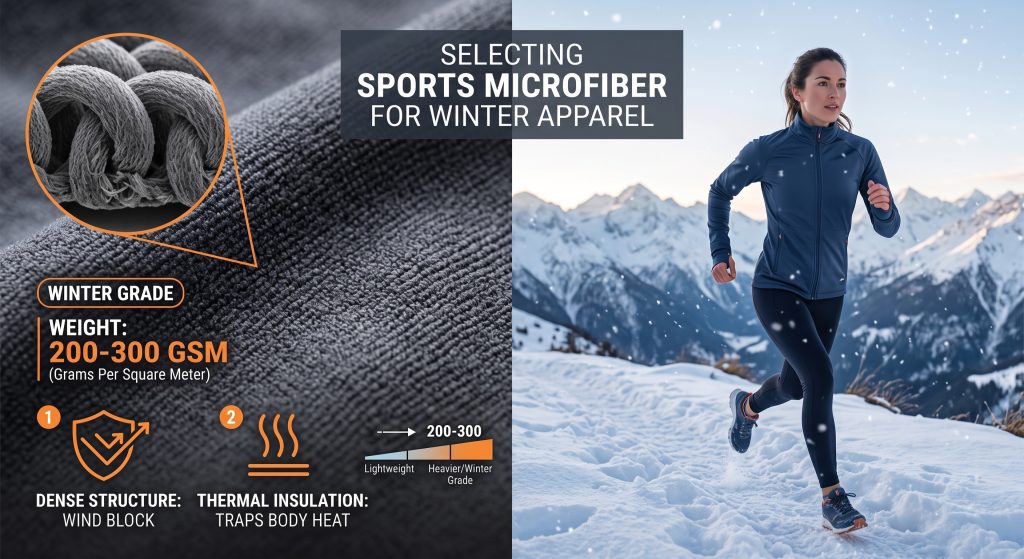
Selecting a heavier weight of sports microfiber fabric ranging from 200 to 300 grams per square meter provides the necessary insulation for freezing winter activities. This dense fabric structure prevents chilly winds from piercing through the garment while remaining highly comfortable during physical workouts. Choosing the correct weight ensures that outdoor athletes stay warm without carrying unnecessary weight that slows down movement. Your winter sportswear lines will benefit from a tailored level of insulation that keeps clients fully protected.
Is mid-weight fabric the most versatile?
Mid-weight options offer a balanced compromise between extreme warmth and lightweight athletic movement for cold weather sports. What’s the catch? You must carefully evaluate regional weather patterns to select the exact fabric density that your target market demands. This versatile weight is highly popular for intermediate active wear because it fits comfortably under heavy outer jackets. Sourcing mid-weight materials allows your brand to capture a broad customer base of outdoor fitness enthusiasts.
- Perfect for autumn training pullovers and running shirts
- Easy to layer beneath heavy winter parkas and coats
- Maintains excellent drape and fit over long-term use
How do you choose for alpine sports?
Alpine environments demand high-density textiles that can withstand sudden sub-zero temperature drops during mountain climbs. Here’s the deal… You will find that heavyweight synthetics offer supreme wind resistance while keeping athletes warm in extreme snow. This rugged fabric layer protects outdoor adventurers from freezing elements while supporting maximum agility during hard climbs. Your brand can confidently market these heavyweight products as extreme-weather gear that stands up to severe cold.
- Maximum thermal protection for ski and snowboard wear
- Excellent durability against mountain trail debris and friction
- Brushed back surface feels incredibly warm on bare skin
Key Takeaway: Matching your fabric weight to the local training climate helps your retail business supply highly functional winter athletic gear that satisfies customers.
| Weight Class | GSM Range | Best Active Use | Thermal Rating |
| Light | 100 – 150 | Running, cycling shirts | Moderate |
| Mid-Weight | 150 – 250 | Alpine hiking, base layers | High |
| Heavyweight | 250 – 350 | Cold mountaineering coats | Maximum |
Sourcing across these precise weights allows activewear brands to build layered performance lines.
Can sports microfiber fabric offer maximum active stretch?
High-grade sports microfiber fabric achieves incredible multi-directional stretch by blending resilient elastane yarns into the knit structure. This elastic combination allows athletic garments to flex smoothly during intense movements and return quickly to their original shape. Sportswear brands rely on this high-recovery material to design compression shirts and durable yoga pants that maintain snug support. Selecting flexible textiles ensures that athletes move freely without experiencing fabric sagging that ruins the garment look.
Why is four-way stretch critical?
Standard knit fabrics often tear or lose their shape when subjected to extreme physical extensions during training. This is where it gets interesting… You will discover that premium elastane blends distribute physical stress evenly across the entire garment surface to protect seams. This flexible structure supports natural body mechanics and allows sports players to achieve their peak performance without restriction. Your activewear brand can leverage this technical benefit to market superior athletic gear that outperforms basic textiles.
- Supports natural body mechanics during high-intensity exercise
- Reduces seam stress to prevent tearing during movement
- Maintains a flattering fit after many washing cycles
Does shape recovery protect your brand?
Low-quality garments often stretch out permanently after a few workouts, leading to customer complaints and high return rates. But here’s the kicker… You can secure absolute shape retention by sourcing materials with a high recovery rating from top manufacturers. This ensures that training leggings and active shirts maintain their tight, supportive fit over years of hard use. Providing long-lasting, resilient apparel is a powerful way to build customer loyalty and strengthen your brand.
- Prevents baggy knees in training pants and leggings
- Maintains targeted compression benefits over long-term use
- Boosts consumer trust in product quality and durability
Key Takeaway: Using highly resilient stretch materials protects your apparel business from quality complaints and expensive product returns.
| Spandex Content | Stretch Factor | Recovery Rate | Recommended Apparel |
| 0% to 5% | Light | Moderate | Loose training shirts |
| 8% to 15% | High | Exceptional | Tight compression gear |
Blending higher percentages of spandex provides the structural recovery needed for tight sportswear.
Is sports microfiber fabric durable under intense friction?
Exceptional durability defines premium sports microfiber fabric because its tight synthetic weave resists tearing and abrasions from repetitive movements. This robust physical structure ensures that heavy-duty athletic clothing withstands contact with rough training surfaces during workouts. Sourcing high-durability fabrics prevents early garment wear, which keeps your customers highly satisfied with their purchases. Your brand can confidently offer long-lasting apparel that performs beautifully in challenging sports training environments.
How does it survive gym friction?
Gym equipment and velcro straps can easily snag low-grade knits, leaving fuzzy pills and tears on the fabric surface. What’s the real story? You will find that high-tenacity polyester threads resist friction damage during rigorous lifting sessions and outdoor training. This ensures that your garments look professional and clean even after years of intense physical use. Choosing durable materials is an effective way to separate your sportswear line from cheap discount apparel.
- Resists friction from heavy fitness equipment and weights
- Prevents snagging during high-speed outdoor running drills
- Maintains a clean outer face after extensive rubbing
Does high tensile strength matter?
Designing apparel with a high tensile threshold means your products can survive sudden extreme stretches without tearing. Ready for the good part? You can utilize our high-quality spandex breathable sports fabric to craft garments that hold up under severe load. This ensures that your activewear maintains its structural integrity and supports active muscles during training. Partnering with a skilled manufacturer ensures that you receive high-strength materials that meet every athletic standard.
- Withstands high-pull training movements easily and safely
- Protects seams from popping during intense fitness workouts
- Extends the overall lifespan of active training wear
Key Takeaway: Using wear-resistant synthetics in your clothing lines guarantees that active customers receive highly durable gear that stands up to rough treatment.
| Fabric Fiber Type | Tensile Strength | Snagging Resistance | Lifespan Rating |
| Standard Cotton | Low | Moderate | Low |
| Heavy Nylon Blend | Extreme | High | High |
| Premium Microfiber | High | Exceptional | Outstanding |
Friction testing indicates that high-grade synthetic blends survive severe wear.
How does sports microfiber fabric manage extreme sweating?
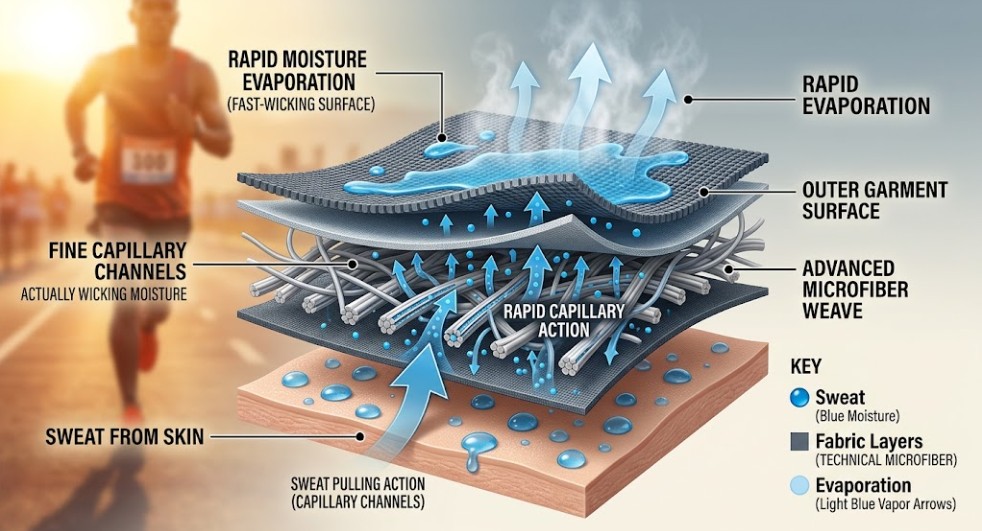
This advanced sports microfiber fabric manages extreme moisture by pulling sweat away from your skin through fine capillary channels. This fast-wicking action ensures that wet perspiration evaporates rapidly off the outer garment surface, keeping athletes fully dry. Keeping players dry prevents chafing and maintains physical comfort during hot summer sports and intense cardio workouts. Sourcing these high-performance materials helps your brand design top-tier running and training gear that meets modern standards.
Why does synthetic fiber dry so fast?
Polyester fibers absorb virtually no water, meaning moisture stays on the outer surface to dry instantly under moving air. What’s the catch? You will find that natural cotton fibers hold wetness for hours, which slows down active athletes and causes discomfort. Quick-dry synthetic materials allow sports players to focus entirely on their training without feeling weighed down. Your athletic brand can highlight this fast-drying benefit to attract serious competitors who demand premium performance.
- Maintains a dry feel during hard workouts and races
- Prevents cold sweat from clinging to skin after exercise
- Speeds up laundry drying times for busy athletic users
How does capillary action work?
Thousands of tiny microscopic grooves in the fiber structure draw liquid moisture upward like a pump to accelerate evaporation. Here’s the deal… You will notice how quickly sweat moves away from the body during intensive cardio training on the field. This smart movement prevents sweat from pooling inside the garment and keeps the clothing feeling light. Sourcing these technically advanced knits guarantees that your active wear line remains functional during the most intense workouts.
- Engineered grooves pump moisture outward fast for rapid drying
- Keeps garments light by shedding liquid weight during exercise
- Prevents heavy sweat pooling on training tops and shirts
Key Takeaway: Incorporating rapid-dry technology into your sportswear catalog helps your business attract active customers who hate damp workout clothes.
| Fabric Material | Wicking Speed | Moisture Absorption | Drying Duration |
| Standard Microfiber | 50 mm / 10 min | Under 1% | 25 minutes |
| Premium Cotton Jersey | 12 mm / 10 min | Over 8% | 90 minutes |
Capillary testing confirms that synthetic microfibers dry faster than cotton.
Which sports microfiber fabric blends are best for jackets?
Combining premium sports microfiber fabric with tough nylon or soft rayon fibers creates the best hybrid material for outdoor active jackets. These specialized blends provide a strong outer wind barrier while keeping the inner lining incredibly soft against the skin. Choosing the correct fiber blend allows you to craft versatile windbreakers that block rain and cold during outdoor training. Your outerwear collections will deliver the perfect balance of weather protection and style to satisfy modern outdoor enthusiasts.
Why is nylon-microfiber so strong?
Nylon adds extreme tear resistance and reliable water-repellent properties to the soft microfiber base for rugged outdoor use. This is where it gets interesting… You will find that these jackets resist rough trail damage during mountain hikes and high-speed trail runs. This durable shield allows athletes to train outdoors in windy, wet weather without worrying about garment damage. Sourcing these strong blends gives your apparel company a highly protective product line for extreme weather.
- Blocks biting cold winds during running and hiking
- Sheds light rain and misty mountain fog effectively
- Protects inner layers from tearing on rough branches
Does rayon add luxurious softness?
Blending rayon into the synthetic mix improves the fluid drape and luxury touch of casual athleisure jackets. But here’s the kicker… You can design stylish outerwear that transitions easily from the gym to daily city commutes. This hybrid feel appeals to modern urban consumers who demand versatile clothing that looks great anywhere. Investing in soft, stylish blends helps your brand expand into the rapidly growing premium athleisure market.
- Delivers a silky, premium hand feel for comfort
- Creates a flattering, stylish retail fit for customers
- Maintains excellent breathability during long daily walks
Key Takeaway: Sourcing high-performance hybrid fiber blends helps your clothing business target active lifestyle customers who value versatile, high-end outerwear.
| Blend Composition | Wind Resistance | Water Repellency | Best Apparel Use |
| Polyester / Nylon | High | Outstanding | Weatherproof running jackets |
| Polyester / Rayon | Moderate | Low | Premium lifestyle athleisure |
Selecting the correct fiber mix ensures that jackets perform perfectly in cold weather.
Should you pick sports microfiber fabric or pique mesh?
Choosing between high-performance sports microfiber fabric and traditional pique mesh depends on whether your design requires smooth, dense warmth or open cooling ventilation. While sports microfiber offers a solid, velvety face that insulates and blocks wind, pique and bird’s eye structures use open knitting patterns to maximize airflow. Comparing bird’s eye mesh and pique fabric reveals how structural geometry alters hand feel and cooling performance. Your team can use these distinct knit styles to segment your seasonal collections effectively and help clients choose.
What makes bird’s eye mesh so cool?
Bird’s eye mesh features a micro-perforated knit pattern that looks like tiny circular openings to speed up heat loss during exercise. What’s the real story? You can utilize our specialized sports nylon fabric with a bird’s eye structure to create ultra-light summer running shirts that breathe easily. This structural pattern lets hot air escape instantly while drawing cool air in to keep the athlete comfortable. It is the perfect material choice for high-intensity training gear used in hot summer temperatures.
- Tiny circular loops maximize physical air intake during training
- Incredibly fluid drape feels silky and weightless on skin
- Ideal for intense summer athletic training and racing
How does pique fabric feel different?
Honeycomb pique uses a raised geometric waffle weave that gives shirts a crisp, structured hand feel and prevents clinging. Ready for the good part? You will find that pique is perfect for classic tennis polo shirts because it holds its shape during physical activity. The raised cells keep the fabric slightly raised from wet skin to maintain a dry, professional look. Sportswear brands select pique to design smart casual clothing items that blend performance with classic style.
- Structured waffle texture stands away from sweaty skin surfaces
- Crisp collars and cuffs retain their professional look longer
- Offers a classic smart-casual sports aesthetic for golf
Key Takeaway: Understanding these geometric knit differences allows your brand to supply the perfect fabric texture for either hot summer tennis matches or chilly winter training.
| Fabric Texture | Knit Geometry | Touch and Drape | Ventilation Rating |
| Bird’s Eye Mesh | Micro-circular loops | Silky, light, fluid | Maximum cooling |
| Honeycomb Pique | Raised waffle cells | Firm, structured, crisp | High airflow |
| Brushed Microfiber | Solid flat face | Velvety, soft, dense | Controlled warmth |
This structural analysis helps apparel buyers select materials based on ventilation demands.
How to find premium sports microfiber fabric manufacturers?
Finding premium sports microfiber fabric manufacturers requires evaluating their industrial knitting technology, quality certification compliance, and bulk custom formulation capabilities. Partnering directly with experienced Chinese mills that control the entire production process ensures consistent batch quality and lower manufacturing costs for your business. Direct communication with factory technicians allows your team to develop unique custom fabric specifications easily. Your B2B apparel brand will enjoy reliable supply chains and highly competitive wholesale pricing to support business growth.
Why look for verified GRS certificates?
Verified Global Recycled Standard credentials guarantee that your sustainable fabrics are traced back to post-consumer plastic bottles. Here’s the deal… You can safely export sustainable activewear to strict global markets because our verified supply chains meet every environmental rule. This clean sourcing process protects your company from legal issues and appeals to eco-conscious shoppers worldwide. Ethical manufacturing is a major selling point in the modern international sportswear market.
- Guarantees true environmental tracking of recycled materials used
- Satisfies strict import laws in Western nations and regions
- Builds deep trust with modern eco-conscious sportswear consumers
Does ISO quality control matter in B2B?
Strict laboratory testing protocols ensure that every batch of fabric meets your required elasticity and colorfastness standards. What’s the catch? You will face costly production delays and high return rates if your supplier fails to maintain consistent quality. Sourcing from a factory with strict quality control guarantees that your shipments arrive on time and match your exact specifications. This professional consistency is necessary for maintaining healthy relationships with retail business partners.
- Reduces batch-to-batch color variations significantly for consistency
- Maintains consistent stretch parameters across multiple separate orders
- Minimizes defective material shipments for your apparel brand
Key Takeaway: Partnering with a fully certified manufacturing plant secures your supply chain and ensures your products always meet high quality standards.
| Factory Standard | Quality Assurance | Customization | Supply Reliability |
| Certified Mill | Extreme (Lab-tested) | High (OEM/ODM) | Highly Stable |
| Trading Agent | Variable (Visual test) | Low (In-stock only) | Unpredictable |
Partnering with certified mills protects your business from quality and compliance issues.
Will sports microfiber fabric resist pilling after washing?
Yes, top-grade sports microfiber fabric resists unsightly pilling because advanced thermal shearing processes and specialized chemical finishes lock the synthetic fibers in place. This high-performance treatment prevents loose threads from tangling into tiny fuzzballs after repeated rubbing during intense athletic training. Maintaining a clean, smooth outer surface is critical for keeping your activewear apparel looking professional and brand new over time. Your customers will appreciate high-end clothing items that retain their premium look even after months of intensive machine washing.
What causes fabric pilling?
Friction during exercise or machine washing pulls loose microfiber ends to the fabric surface, where they knot together. This is where it gets interesting… You can completely avoid this issue by selecting fabrics that have undergone strict heat-setting and shearing treatments. Protecting your apparel from pilling ensures that athletes enjoy a smooth, friction-free feel during their workouts. Sourcing high-grade materials from the start is the most effective way to prevent these cosmetic quality defects.
- Friction from backpacks pulls out loose synthetic fibers
- Harsh washing cycles accelerate surface fuzzing and wear
- Low-density knits suffer from severe pilling issues quickly
Does double-shearing prevent fuzzballs?
Passing the knitted material through state-of-the-art cutting blades cleanly removes any protruding fiber ends before the fabric is rolled. But here’s the kicker… You will receive incredibly smooth, high-end garments that stay flawless through hard physical training and frequent washes. This mechanical finish locks the yarn structure together to guarantee a smooth outer face for your jacket lines. Your brand can confidently promise superior durability when using these double-sheared synthetic materials.
- Double-sheared surfaces remain perfectly flat and smooth over time
- Singeing treatments lock synthetic thread ends into place
- Boosts wear-durability ratings to Grade 4.5 for high quality
Key Takeaway: Sourcing double-sheared anti-pilling textiles protects your brand reputation by ensuring your sportswear garments look brand new for years.
| Fabric Treatment | Anti-Pilling Rating | Wash Lifespan | Surface Quality |
| Double-Sheared | Grade 4.5 (Excellent) | Over 100 washes | Remains smooth |
| Untreated Synthetic | Grade 2.0 (Poor) | Under 10 washes | Becomes fuzzy |
Anti-pilling data demonstrates that double-shearing prevents long-term friction wear.
Final Thoughts
Choosing the ideal athletic textile requires balancing stretch, durability, and moisture control to satisfy the strict requirements of modern athletes. We help activewear brands resolve performance issues by supplying certified synthetic textiles that maintain their soft touch and elastic structure under intense training conditions. Partnering with a specialized factory allows your business to optimize your supply chain and deliver highly reliable athletic clothing to global retail markets. To review our custom manufacturing solutions and request premium fabric samples, please contact us today to start building your next successful sportswear line. Our Fuzhou HG Textile manufacturing plant is dedicated to supporting your brand with sustainable, high-performance fabrics that lead the industry in quality and durability.
FAQ
Q1: Can I print custom logos on sports microfiber fabric?
Yes, you can print detailed custom designs because synthetic polyester fibers are fully compatible with high-temperature sublimation ink printing. This process dyes the fibers directly, preventing the logo from cracking or peeling during workouts.
Q2: What’s the best way to clean premium sports microfiber fabric?
The best approach is washing garments in cold water without using heavy liquid fabric softeners. Softeners coat the synthetic capillary grooves, which severely degrades the fabric’s natural sweat-wicking performance.
Q3: How do I know if my sports microfiber fabric has high elasticity?
You can verify elasticity by checking the exact percentage of spandex integrated into the knit pattern. Fabrics with at least eight percent spandex deliver the necessary four-way stretch needed for tight compression gear.
Q4: Can I use sports microfiber fabric for extreme weather jackets?
Yes, this fabric works beautifully when blended with water-repellent nylon threads to block wind and light rain. This hybrid combination keeps the inner lining soft while providing a tough outer protective shield.
Q5: How do I know if the fabric is ethically manufactured?
You can confirm ethical standards by requesting verified GRS certificates and OEKO-TEX Standard 100 compliance documents from the manufacturer. These certificates prove that the production process meets global safety and environmental rules.