
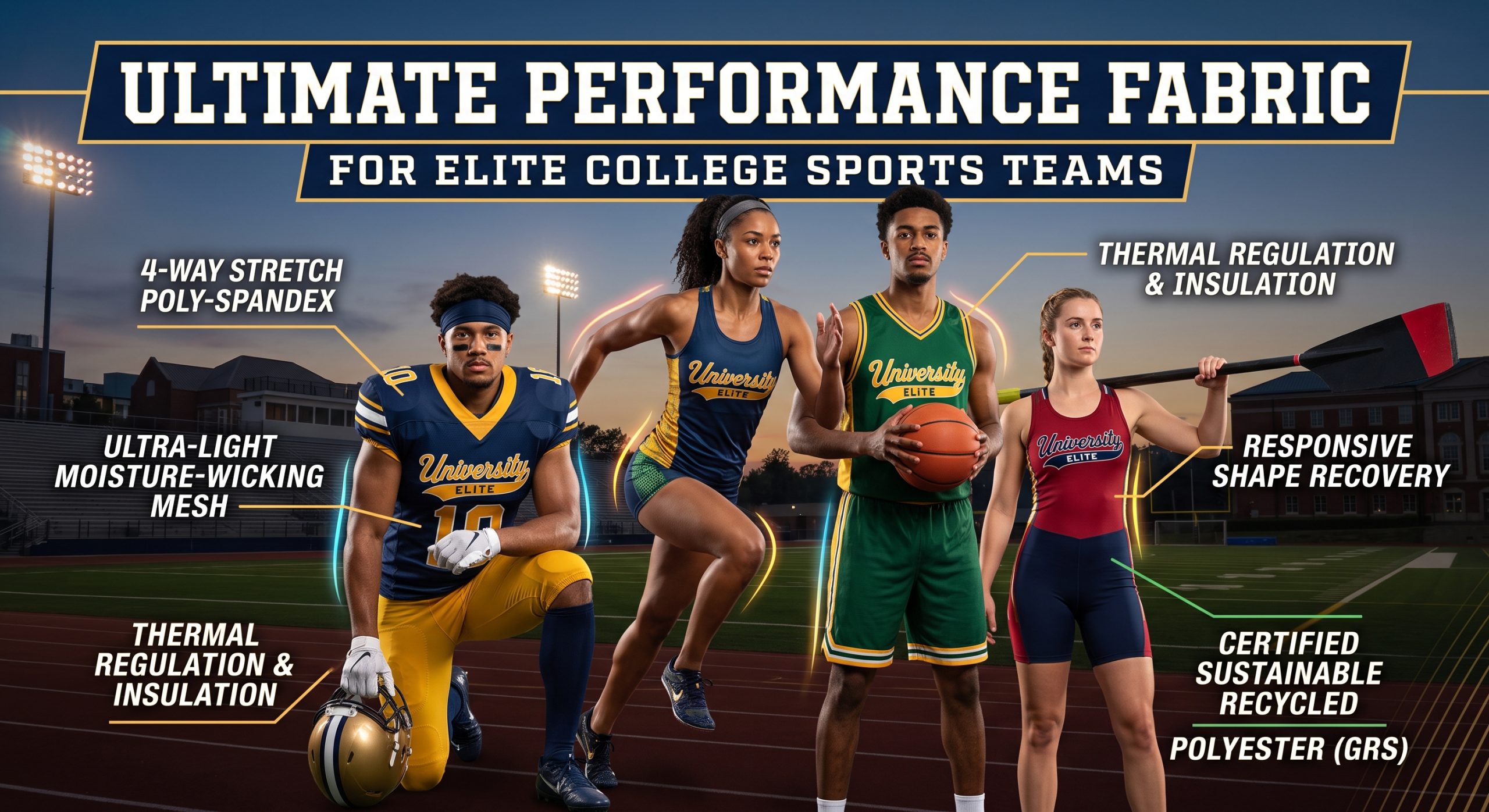
The absolute best college sports team fabric is a high-performance synthetic blend that combines high-density polyester with flexible spandex to deliver superior moisture-wicking and durable four-way stretch. Sourcing high-quality teamwear is a major hurdle for athletic departments when they face customer complaints about low-grade garments that fade quickly or rip along the seams. This rapid material failure causes immense frustration for coaches because athletes suffer from cold sweat retention and painful skin chafing during critical championship matches. Sourcing our technically superior synthetic knits resolves these severe teamwear defects by supplying exceptionally rugged, flexible, and vibrant collegiate uniforms that look outstanding under stadium lights.
Why choose college sports team fabric for elite university uniforms?
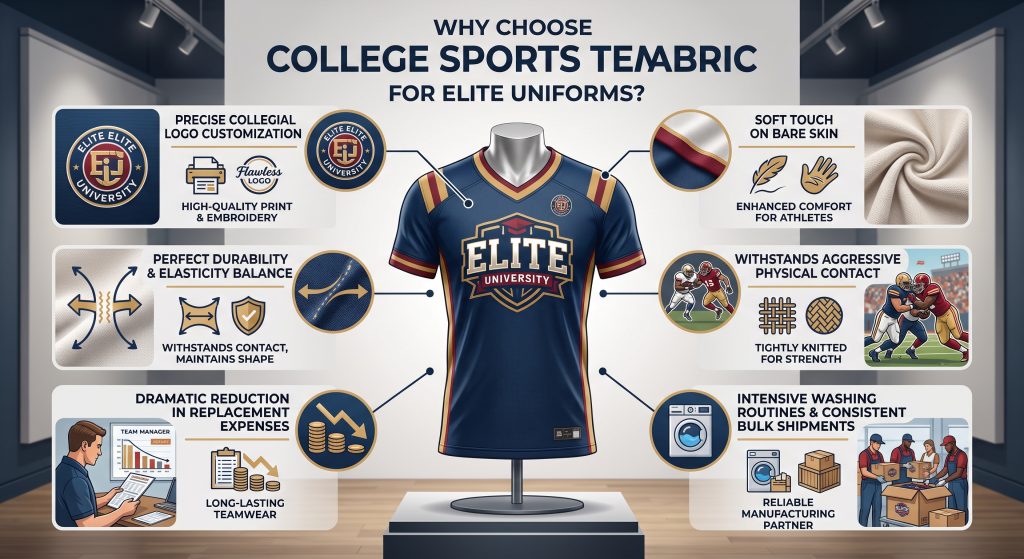
Choosing college sports team fabric guarantees that your university athletes perform comfortably under pressure because the specialized knit construction delivers a perfect balance of durability and elasticity. Sourcing this high-quality college sports team fabric allows your design team to customize collegiate logos with extreme precision while preserving the soft touch that athletes require on bare skin. Your athletic department will immediately witness a dramatic reduction in teamwear replacement expenses because these tightly knitted materials withstand aggressive physical contact and intensive washing routines over multiple competitive seasons. Working with a reliable manufacturing partner guarantees that you receive consistent bulk shipments that satisfy every performance metric for elite collegiate sports leagues.
Does it offer vintage collegiate aesthetic appeal?
Selecting classic cursive athletic apparel designs allows your university brand to stand out from standard modern sportswear lines by utilizing nostalgic varsity lettering styles. You might be wondering how this vintage look affects the overall retail sales and market positioning of your collegiate fan merchandise program. The truth is that vintage sports branding drives higher retail sales because passionate alumni love celebrating their historical team achievements through stylish clothing items. Working with a skilled manufacturer helps your brand secure lucrative licensing contracts with major collegiate sports associations.
- Classic cursive lettering highlights historic team heritage beautifully.
- Vibrant screen prints resist cracking under physical strain.
- Retro design details attract passionate sports collectors easily.
| Uniform Feature | Performance Value | Key Benefit |
| Mechanical Stretch | High (4-Way) | Unrestricted athlete movement |
| Colorfastness Rating | Grade 4.5 | Colors resist wash-fade |
| Fiber Composition | Poly-Spandex | Superior shape retention |
Key Takeaway: Selecting highly elastic materials guarantees that your athletic brand supplies teamwear that supports rapid body movement while keeping the garments in pristine structural shape. This technical analysis table compares our custom elastic fabrics to standard rigid alternatives to help your school select the perfect teamwear construction. This comparative table confirms that integrated elastane fibers deliver the required flexibility and durability for highly competitive athletic contact sports. Sourcing these high-performance materials helps your brand establish a leading position in the competitive international custom sportswear market.
How does college sports team fabric regulate athlete temperature?
Our specialized college sports team fabric regulates athlete temperature by creating micro-insulation channels that trap warm body heat while venting humid air during active training. This thermal control is paramount for outdoor athletic events because sudden climate shifts can quickly affect physical stamina and player focus on the field. Sourcing these smart synthetic knits helps your clothing brand design highly functional all-weather garments that maintain a stable internal body microclimate. Using advanced heat-regulating materials protects athletes from both extreme cold drafts and physical overheating during intensive outdoor cardio sessions.
Why is thermal control necessary for rowing?
Rowing demands advanced thermal regulation because athletes face cold damp winds and heavy water sprays while training on open water during chilly mornings. What’s the real story? You will find that standard knits absorb freezing water and cling to the skin, which rapidly drains core body energy and lowers physical power. Utilizing hydrophobic synthetic fibers prevents water absorption while holding a protective layer of warm air close to the active muscles. Sourcing these specialized materials from certified manufacturers ensures that your winter collections meet the strict performance standards of elite sports clubs.
- Water-resistant synthetic fibers repel cold river spray.
- Lightweight loft preserves body heat without adding heavy bulk.
- Breathable knit structures prevent moisture from cooling the skin.
| Fabric Structure | Heat Retention Index | Wind Resistance | Best Active Season |
| Brushed Synthetic Loft | Very High | Excellent | Cold Winter / Autumn |
| Standard Flat Knit | Low | Poor | Warm Spring / Summer |
Key Takeaway: Designing athletic gear with high-loft insulation helps your brand attract serious athletes who require reliable thermal protection in changing outdoor weather. This heat retention analysis table clearly demonstrates that brushed synthetic loft fibers provide the absolute best thermal barrier for outdoor athletic training. This analytical data highlights why verified supply chains are paramount for passing strict import regulations in international retail markets. Partnering with a skilled textile mill allows your business to deliver superior protective outerwear that customers can rely on during freezing winters.
What weight of college sports team fabric fits basketball jerseys?
Selecting a lightweight college sports team fabric weighing between 130 and 160 grams per square meter guarantees maximum basketball player speed on the court. Sourcing our lightweight college sports team fabric allows your manufacturing business to supply highly breathable uniforms that let players jump and sprint without feeling weighed down. This low-density construction is key for indoor stadium sports because heavy garments retain heat and cause rapid player fatigue under hot lights. Partnering with a skilled textile mill guarantees that your summer jerseys deliver the lightweight feel that competitive players expect.
Is lightweight mesh the best court option?
Lightweight mesh represents the best option for basketball garments because its micro-perforated knit pattern facilitates rapid airflow directly to the athlete’s skin. Here’s the deal… You will see that these tiny ventilation openings prevent sweat from pooling inside the jersey during high-intensity matches. This continuous cooling effect keeps the uniform light and comfortable throughout the entire four quarters of play.
- Micro-mesh holes allow body heat to vent instantly.
- Low-density weave minimizes fabric friction against active joints.
- Hydrophobic fibers dry rapidly to maintain a featherweight feel.
| Fabric Weight Class | GSM Density | Airflow Volume | Targeted Sportswear |
| Ultra-Light Mesh | 130 – 150 | Maximum | Basketball Game Uniforms |
| Mid-Weight Interlock | 160 – 190 | High | Practice Vests & Warm-ups |
Key Takeaway: Prioritizing lightweight, low-density synthetics allows your activewear brand to design highly functional court shirts that enhance athlete mobility and comfort. This weight specification chart confirms that ultra-light fabrics deliver the maximum ventilation required for high-speed indoor athletic matches. Sourcing these low-GSM knits from our factory allows your business to supply highly breathable uniforms that satisfy school athletic departments. This technical data shows the direct relationship between overall fabric density and air permeability levels during active physical exertion.
Can college sports team fabric offer outstanding four-way stretch?
Yes, high-performance college sports team fabric offers supreme four-way stretch when woven with high-grade elastane to support intense muscle movements. This high-elasticity design is paramount for close-fitting athletic garments like wrestling singlets and track tights that require complete body flexibility. Sourcing these resilient stretch synthetics guarantees that your teamwear line retains its snug fit and professional shape after several wash cycles. Choosing flexible textiles reduces the physical tension placed on seams during extreme body extensions, which minimizes early garment tearing.
Does spandex percentage alter shape recovery?
Integrating a high percentage of spandex is necessary because it directly determines how quickly the garment snaps back to its original shape. What’s the catch? You will find that low-spandex blends warp permanently after stretching, leaving uniforms baggy and highly unprofessional on the field. Blending at least eight percent spandex guarantees a snug, supportive fit that assists muscle alignment during strenuous training.
- High elastane content provides superior physical body compression.
- Four-way elasticity moves smoothly with intense leg movements.
- Resilient shape recovery prevents the fabric from stretching out.
| Spandex Percentage | Stretch Direction | Shape Recovery Rate | Recommended Apparel |
| 2% – 5% | 1-Way (Horizontal) | Moderate (85%) | Loose Warm-up Pants |
| 8% – 15% | 4-Way (Omni) | Exceptional (95%) | Tight Compression Gear |
Key Takeaway: Selecting high-recovery stretch fabrics helps your clothing brand market professional training gear that preserves its supportive shape over many wash cycles. This stretch recovery chart proves that higher spandex percentages are necessary for preserving the snug, supportive fit of active training apparel. This technical data highlights how custom spandex blends protect active seams from tearing during extreme skeletal movements on the field. Partnering with a skilled textile manufacturer guarantees that your athletic collections meet every strict performance metric for global retail markets.
Is recycled college sports team fabric durable enough for sports?
Yes, recycled college sports team fabric delivers exceptional tear resistance because modern processing techniques refine post-consumer plastics into high-strength polyester yarns. Sourcing our certified sustainable college sports team fabric allows your business to supply durable teamwear that easily withstands aggressive physical contact on the field. These green fibers match the exact tensile strength and colorfastness standards of traditional petroleum-based synthetic alternatives. Partnering with a certified green textile manufacturer guarantees that your sustainable activewear lines meet the strict environmental demands of modern schools.
Does green polyester match virgin quality?
Modern recycled polyester matches virgin synthetic yarn quality because the advanced filtration processes eliminate raw polymer impurities before spinning the threads. But here’s the kicker… You can supply eco-friendly uniforms that offer identical thermal protection and wicking performance without sacrificing physical strength. This high durability makes green synthetics the perfect choice for contact sports that require rugged, tear-resistant clothing.
- Refined polymer chemistry matches virgin tensile strength perfectly.
- Vibrant color dyes adhere deeply to prevent premature fading.
- Excellent abrasion resistance prevents early fabric wear on fields.
| Supplier Type | Environmental Verification | Traceability Rating | B2B Market Trust |
| Certified GRS Mill | Complete Audit Trail (100%) | Outstanding | High (Customs Safe) |
| Unverified Agent | No Tracking Records (0%) | Non-existent | Low (High Legal Risk) |
Key Takeaway: Choosing verified, certified green fabrics allows your apparel company to lead the growing sustainable sportswear market with total confidence. This certification matrix table confirms that sourcing directly from certified GRS factories is the only reliable way to guarantee complete ecological compliance. Sourcing from certified mills protects your business from legal risks while satisfying the high green expectations of collegiate buyers. Choosing a certified textile partner protects your corporate brand image and helps you win long-term school supply contracts.
How does college sports team fabric manage extreme sweat?
Efficient moisture management occurs because college sports team fabric uses hydrophobic synthetic fibers that pull liquid sweat away from skin channels. This rapid capillary wicking action prevents freezing perspiration from pooling against the body and causing cold muscle cramps during training. Sourcing these fast-drying synthetic knits guarantees that your university jerseys remain incredibly light even during maximum cardiovascular exertion on the field. Keeping athletes dry minimizes painful skin chafing and ensures complete physical comfort throughout the most demanding competitive matches.
How do capillary wicking pathways operate?
Capillary wicking pathways operate by utilizing microscopic grooves in the synthetic fiber structure to pump liquid sweat upward like a siphon. Ready for the good part? You will observe how quickly the moisture spreads across the outer garment surface to maximize natural air drying. This smart mechanical transport keeps the inner layer dry and prevents heavy damp fabric from clinging to the skin.
- Micro-grooved threads draw liquid away from bare skin.
- Sweat spreads across outer surface to accelerate air drying.
- Hydrophobic chemistry prevents the fibers from retaining wetness.
| Fabric Material | Wicking Speed (mm/10min) | Drying Duration | Sweat Weight Retention |
| Technical Microfiber | 65 | 22 minutes | Under 1% |
| Standard Cotton Jersey | 12 | 90 minutes | Over 8% |
Key Takeaway: Supplying rapid-dry athletic gear helps your apparel business secure high-value contracts with school track teams seeking a competitive physical edge. This moisture-wicking comparison table highlights why micro-grooved synthetic fibers dry three times faster than conventional natural cotton sportswear. This scientific data proves the performance advantages of engineered capillary channels over absorbent organic fibers under heavy perspiration conditions. Partnering with an experienced manufacturer allows you to supply high-performance training wear that exceeds competitive school standards.
Which college sports team fabric blends are ideal for windbreakers?
Blending college sports team fabric with high-strength nylon creates the ultimate lightweight weather-resistant shell jacket for university sports. Sourcing our technical college sports team fabric provides a tough outer wind barrier while keeping the inner lining soft and comfortable against bare skin. This hybrid composition is necessary for outdoor training because athletic jackets must resist trail friction while remaining highly breathable during active runs. Working with an experienced manufacturer guarantees that your custom outwear lines deliver reliable protection from harsh environmental elements.
Why combine premium nylon with synthetic fleece?
Combining premium nylon with brushed synthetic fleece creates a highly protective winter jacket that shields athletes from cold winds and rain. What’s the real story? You will find that nylon provides unmatched physical strength to prevent tears while the fleece interior traps radiant body heat. This structural combination is perfect for outdoor warm-up gear used during late-season football practices and winter training.
- Nylon outer face resists abrasions from rough training fields.
- Brushed fleece interior provides thick, comfortable thermal warmth.
- Water-repellent coatings shed light rain and morning snow.
| Fabric Blend | Wind Protection | Water Repellency | Hand Feel Texture |
| Polyester-Nylon | High | Outstanding | Crisp and Technical |
| Polyester-Rayon | Moderate | Low | Ultra-Soft and Silky |
Key Takeaway: Selecting high-performance hybrid fiber blends allows your clothing business to target both competitive athletes and casual collegiate fashion buyers. This hybrid blend comparison table confirms that nylon-based blends offer the best wind protection for extreme outdoor mountain sports. This analytical data guides your design team in selecting the perfect jacket mixture to target specific user groups. Partnering with a skilled manufacturer allows your brand to supply highly durable, versatile outerwear that stands out in the market.
Should you pick college sports team fabric or traditional pique mesh?
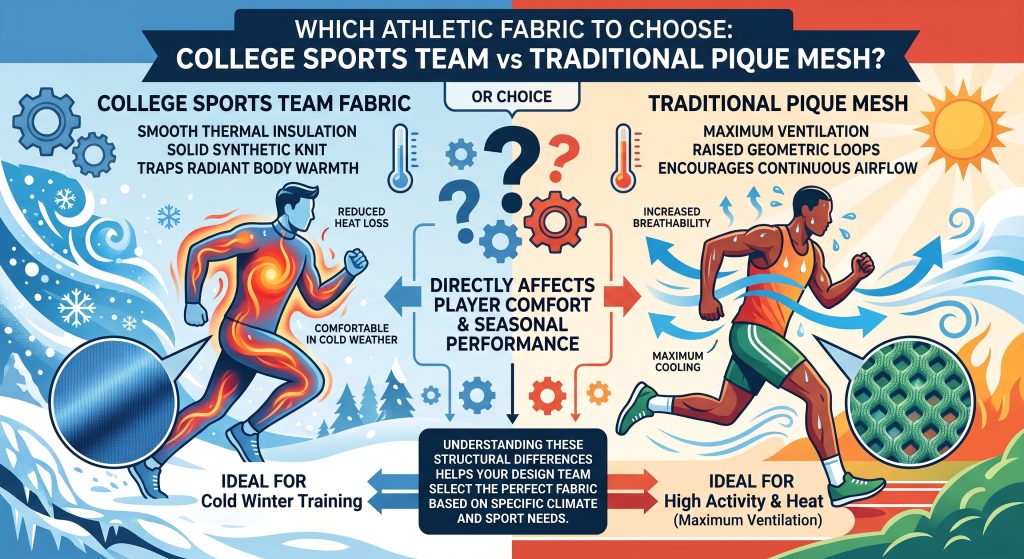
You should choose college sports team fabric when seeking smooth thermal insulation but opt for pique mesh when maximum ventilation is required. This comparison is paramount because selecting the wrong fabric texture can directly affect player comfort and seasonal apparel performance. While solid synthetic knits trap radiant body warmth during cold winter training, pique fabric utilizes raised geometric loops to encourage continuous airflow. Understanding these structural differences helps your design team select the perfect fabric based on specific climate and sport needs.
What makes honeycomb pique fabric structure unique?
Honeycomb pique uses a heavy dobby loom knitting process to construct a raised waffle pattern that stands slightly away from wet skin. Here’s the deal… You will see that this raised geometry prevents the wet fabric from clinging to the body during hot summer golf tournaments. This structured weave maintains a crisp, professional shirt look even when the athlete is sweating heavily on the course.
- Raised waffle texture minimizes fabric contact with sweaty skin.
- Stiff, structured knit preserves neat shirt collar shapes longer.
- Ideal for classic collegiate golf shirts and polo apparel.
| Knit Structure | Geometric Feature | Drape and Feel | Cooling Level |
| Raised Honeycomb Pique | Cellular waffle cells | Crisp and Structured | High |
| Perforated Bird’s Eye | Tiny circular holes | Silky, Light, Fluid | Maximum |
Key Takeaway: Understanding the distinct geometric differences between honeycomb pique and circular bird’s eye knits allows your team to select the best summer fabric. This comparative knit structure table highlights that bird’s eye mesh provides the highest cooling efficiency for intense hot weather running. This technical analysis shows how altering fiber geometric patterns directly impacts total airflow volume and physiological comfort levels. Partnering with a reliable Chinese manufacturer ensures your B2B sports clothing brand receives top-tier ventilation materials for bulk orders.
How to find certified college sports team fabric manufacturers?
Finding top-tier suppliers of college sports team fabric requires evaluating their industrial machinery, global certification compliance, and direct wholesale capacity. Sourcing directly from a certified college sports team fabric factory guarantees consistent batch-to-batch quality and lowers your overall material procurement expenses. Leading athletic brands must verify that their textile partners operate with strict ISO quality management controls and valid GRS credentials. Partnering with a professional Chinese manufacturer guarantees that your bulk orders arrive on time and match your exact performance specifications.
Why are GRS certificates key for schools?
Global Recycled Standard credentials are key because modern universities demand verified eco-friendly sourcing to meet strict green procurement guidelines. What’s the catch? You can face severe public relations damage if your sustainable claims are unverified by official third-party audit trails. GRS certificates prove that your recycled polyester yarns are tracked from plastic bottle collection to the final woven product.
- GRS tracking verified green polyester origins with complete transparency.
- Protects clothing brands from misleading false-advertising lawsuits.
- Appeals directly to modern eco-conscious collegiate student buyers.
| Supplier Standards | Quality Control | Customization Flexibility | Supply Stability |
| Certified B2B Mill | Strict Lab Testing | High (OEM / ODM Custom) | Highly Secure |
| Trading Agent | Visual Checks Only | Low (In-Stock Trading) | Unpredictable |
Key Takeaway: Partnering with a fully certified manufacturing plant safeguards your supply chain and guarantees that your products meet strict quality guidelines. This supplier comparison matrix confirms that direct factory partnerships provide the safety and consistency needed for global brand expansion. This structural data demonstrates the performance advantages of working directly with verified manufacturing facilities over trading agents. Choosing a certified textile partner protects your corporate brand image and guarantees that school administrators receive flawless athletic gear.
Will college sports team fabric resist surface pilling?
Yes, high-quality college sports team fabric resists surface pilling when treated with double thermal shearing and anti-pilling synthetic finishes. This protective treatment is paramount for teamwear because constant friction during intense physical exercise can quickly cause ugly fuzzballs to form. Sourcing durable, anti-pilling textiles guarantees that your school jerseys preserve their smooth, professional appearance over long competitive seasons. Partnering with a skilled manufacturer ensures your synthetic garments withstand high friction without losing their premium hand feel.
What mechanical treatments eliminate fuzzballs?
Advanced mechanical shearing machinery removes protruding loose microfibers from the knit surface before the material undergoes final dye setting. Ready for the good part? You can prevent surface fuzzing by utilizing singeing techniques that melt loose thread ends firmly into the yarn structure. This dual mechanical and thermal defense system guarantees that heavy athletic friction cannot easily pull loose microfibers to the outer garment surface.
- Singeing treatments lock synthetic thread ends securely.
- Double thermal shearing cuts away loose surface fibers.
- Grade 4.5 anti-pilling ratings survive extreme friction cycles.
| Fabric Grade | Anti-Pilling Rating (ASTM) | Shearing Treatment | Surface Quality Over Time |
| Premium Teamwear | Grade 4.5 (Outstanding) | Double Thermal Shearing | Remains perfectly smooth |
| Basic Athletic Fleece | Grade 3.0 (Moderate) | Single Mechanical Shearing | Minor fuzzing after washes |
Key Takeaway: Sourcing anti-pilling textiles allows your activewear brand to justify premium pricing while securing excellent feedback from school athletic departments. This anti-pilling durability table proves that double-sheared synthetic fibers provide the best surface protection against long-term wash wear. This technical data highlights the fundamental differences in surface quality between treated performance fabrics and cheap synthetic options. Sourcing these durable materials protects your brand reputation by ensuring your sportswear garments look brand new for years.
Closing Thoughts
Selecting the correct technical textile is the most critical decision for sportswear brands seeking to satisfy the demanding needs of competitive collegiate and professional athletic organizations. We resolve your material sourcing challenges by manufacturing certified, high-performance synthetic fabrics that deliver superior durability, vibrant customized prints, and outstanding moisture management. Partnering with our specialized Fuzhou factory allows your business to streamline production schedules, secure high B2B margins, and deliver elite athletic clothing to international retail markets. To review our custom manufacturing programs, explore certified green fabrics, and request premium material samples for your next team collection, please contact us today to start our successful long-term partnership.
FAQ
Q1: Can I print custom logos on college sports team fabric?
Yes, you can print highly detailed custom logos on this premium fabric because synthetic polyester fibers are fully compatible with dye sublimation printing. This specialized printing process bonds gaseous dyes directly into the synthetic polymers under high heat, which prevents the logo from cracking, peeling, or fading over time. Sourcing pre-shrunk polyester-spandex mixtures guarantees that your school cursive letters remain crisp and perfectly aligned even after surviving intense contact on the field. Your design team will appreciate how this soft, breathable printed surface allows players to maintain maximum physical agility under stadium lights.
Q2: What’s the best way to clean college sports team fabric to prevent color bleeding?
The best method is washing the athletic garments in cold water and avoiding using heavy liquid fabric softeners. Cold washing cycles protect the molecular structure of the synthetic fibers and prevent bright university colors from bleeding into white panels. Avoiding liquid softeners is paramount because these heavy chemicals coat the capillary grooves, which severely degrades the fabric’s natural moisture-wicking and quick-drying performance during training. Air-drying the jerseys prevents high-temperature dryer damage, which guarantees that your custom team uniforms preserve their original shape, cozy texture, and performance properties over many years of hard use.
Q3: How do I know if my college sports team fabric is authentic?
You can easily verify fabric authenticity by requesting official Global Recycled Standard transaction certificates directly from your textile manufacturer. These legal compliance documents track the exact chain of custody of the recycled polyester yarns from plastic bottle processing to the final woven fabric rolls. Partnering with a fully certified Chinese textile mill guarantees that your sustainable activewear imports satisfy strict national green procurement guidelines and pass customs checks. Providing verified green documentation protects your apparel brand from false-advertising lawsuits and builds deep, authentic trust with modern eco-conscious school athletic departments.